Sometimes you wanna put the past in the past/ but every generation gets bit in the ass
Portastatic
Note: This is a series of “scenes” from Saint George’s, the school in Spokane, Washington I attended back in the 1980s and early 1990s. Although this was all a while ago and I forget all kinds of stuff, I remember a few things. Saint George’s was a good school in many ways, but it was also a pretty loose environment. I’m sure it’s changed now, but back in the day a lot of pretty wild stuff happened. These pieces will collect a few incidents as I recall them; the scenes at best loosely connected; most are funny—a few are maybe a little serious. I plan do a few installments in this series, so if you like this one stay tuned.
Also I make no claim to my memories being authoritative in any sense. As with all memories, these have been colored, and eroded, by time. However, I will try to write only about things I witnessed first hand, or things that I have on what I believe to be pretty good authority.
My Brother Mike Looks for Erosions
When I was in the lower school (elementary school) at Saint George’s I had a teacher we will call L.K. In the lower school each grade had a main teacher, what you might call a homeroom teacher, and students also had classes with other specialist-type teacher such as Science or Music. L.K. was an OK homeroom teacher for me, not very memorable, but not terrible either. However a few years later when she was serving as the homeroom teacher for my brother Mike, things changed.
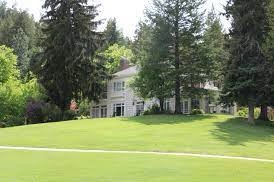
By the time Mike was in her class, L.K. was apparently in a little entanglement with the headmaster at the time called George Edwards, whom I believe was separated, or separating, from his wife. The headmaster of Saint George’s always lived on campus in a fancy house called The Davenport House, and I guess the action between himself and L.K.’s was pretty widely known. It must have been if even I, as like a fifth grader, was aware of it. I think this relationship, whatever it consisted of, must have been on the rocks though by this time, and there may have been some bad action. In any case, L.K. was totally checked out from her job. Now teachers sometimes totally check out, and this can go unnoticed for weeks or even months. Teaching is an important job, but it’s not like flying a plane or something; a checked out teacher generally doesn’t put students’ lives on the line.
Note: Since I published this piece, none other than the one and only George Oglethorpe Edwards, my former Principal, has responded at some length in a comment for this piece. He states that the rumored affair described above did not take place, and that L. was dismissed and subsequently sued the school. I have left the original text intact as a reflection of how events were understood at the time, but readers should be aware of his account.
Anyway, L.K. was way checked out. Saint George’s was, and presumably still is, situated on a very large piece of property down there by the Little Spokane river and was surrounded by wilds that were not Saint George’s property, but that students could explore. The lower school in particular was set up against a hill that went for a mile or so up above the school building. So there was a lot of space. However, there was also a basically bounded playground and lower school students would also play on the large lawn of the Davenport House, so there was no need for them to be foraging way up on the hill. Except in L.K.’s class though, because she developed a kind of genius strategy to do no teaching at all for my brother’s class. What she would do was, at the start her assigned homeroom teacher block, let’s say it was three periods in the morning, just tell her students to “go look for erosions.” The students must have learned about erosions in Science class or something, because Mike knew the word as like a second grader. The students would go up on the hill on their own and scout around for erosions, of which there were many, all morning and come back for lunch.
Now, a day of looking for erosions would have been one thing— a little erosion location could easily be justified as a Science class extension, ideally supervised—however L.K. didn’t just pull out this move once. In fact she pulled it out day after day for, I believe, a matter of weeks. Everyday Mike would come home and my mother would ask “what did you do today?” Mike would reply “went looking for erosions.” Like most parents, mine probably didn’t pay super careful attention to the ins and out of what was going on with our schooling, however after some weeks of this my mother started to find all this erosion action a bit strange.
“You went looking for erosions again?”
“Yup,” said my brother. “More erosions.” I think Mike was totally fine looking for erosions all day, as I would have been, however my mother had heard enough.
“That’s too much looking for erosions. It’s been weeks and you’re still looking for erosions. I’m going to talk to somebody.”
I believe my mother did talk to somebody, because L.K. changed up her all-erosion-all-the-time strategy. I think she was still checked out, but maybe made an effort to disguise it a little better. She left the school at the end of that year as I recall and I don’t know what happened to her after that.
That’s the funny thing about teachers—they are often remembered by students for the strangest thing they did. I don’t remember a single thing from L.K.’s class or anything else about her really, but I do remember that she loved her some erosions.
Drawing a Sun for N.C.
As I mentioned, Saint George’s had the Davenport House, which was right across from the lower school, and one of the rooms of the Davenport House was used as a classroom when I was there. We had Science class in this room for a while. One day, the teacher asked us to draw the solar system or something like that, and I started by drawing the sun. Now I had always seen the sun depicted with like pointy rays of light coming out of it—you know, the sun looks kind of angular most of the time. So that’s how I drew it.
There was a girl in my class we’ll call N.C. I don’t know if anyone else from Saint George’s back then remembers her because she wasn’t there for too long, but I do and I had a huge crush on her. In fact, I thought about her all the time. We would play tag games on the lawn on the Davenport House, “freeze tag,” and “television tag,” (I don’t remember the rules) and I would always try to tag N.C. just to be close to her. Anyway, N.C. was in Science class with me, and I showed her my sun, which I thought was pretty solid. Then, another classmate, a boy whose name I forget but who was a bad seed, interrupted my little chat with N.C.
“That’s not what the sun looks like. The sun doesn’t really have rays like that. It’s actually just round. Look at my paper, I have it the right way.”
Sure enough, this little brat had drawn the sun like a big red circle. Now I suspected at the time that on some level this guy was probably right, and that the sun as an actual mass or whatever didn’t have physical rays. But his sun looked super ugly, and also he was putting my drawing down in front of N.C. and just basically being terrible. So I turned to N.C.
“What do you think N.C. Which sun do you like better?”
And N.C. just smiled at me and said “I like your sun better.”
That was all I needed to hear. N.C. was on my team, and the little brat could stick his sun where…well you know. I was elated by N.C.’s appreciation; my sun had carried the day. I was totally in love with her, more than ever, after this sun incident.
A while back I tried looking N.C. up online, and although her name is not super common, I found four or five people who could have been her. I was hoping to send her the sun story and say thanks, but I didn’t want to just fire this anecdote over to a bunch of random N.C.’s, so I held back. If you do know who I’m talking about and you know where she’s at, let me know. Maybe she remembers my pretty solid sun.
More George Edwards Action (with a cameo from the Manimal, Kenneth Faried)
I mentioned above that when he was headmaster of Saint George’s George Edwards was entangled up with L.K. And this is true. He was headmaster for a while though, so he also did some other stuff.
All in all I would say George Edwards was a mediocre headmaster. He looked more or less the part, wore a mustache that was less Frenchy than my middle school French teacher Mr. Dreyer’s, and generally didn’t intervene too much in school matters, which was a positive. He was a decent public speaker, and put on a good showing at the annual auction and things of that nature. On the other hand, he was not especially inspiring, and as we’ve seen, had some stuff going on in his personal life which distracted him. He was from Texas originally and when he first came to the school his wife came with him, but I think this was just for show because she was out of there pretty soon after. Like I said, he was at the school for a while and I actually took a class from him in high school. More on that in a second.
I was at the school a lot because my father taught there and also coached basketball and stuff into the evenings, and myself and my friend J.T., whose father also taught at the school, kind of had the run of the place. J.T. somehow got copies of the master keys to the middle school and upper school made and gave me a set, and we would just open up the buildings whenever we wanted and go wherever. J.T. and I would sneak into the faculty lounge in the high school and pinch sugar cubes from the teacher’s coffee area, and later on we snuck into the science room to appropriate some ammonia packs from the first aid kits. I think someone eventually noticed that the first aid kits were always running out of ammonia. Yeah, that was us. George Edwards was gone a lot, and we would also go on into the Davenport House, which somehow was just open, and poke around. We probably even did this a few times when George Edwards was staying there, which is admittedly a little bizarre. The Davenport House had a kind of servants’ area as I recall, and a back set of stairs which was really cool.
Anyway, because I was always around, George Edwards asked me one time to babysit his daughter when he was off doing something. I was probably in middle school at this time, and his daughter was about 8 or 9. His daughter is probably a lovely person today, but at the time she was known to be a bit of a handful. In addition to the L.K. factor, George Edwards was, in my recollection perpetually, going through a divorce and things may have been a little tense on the Edwards family front. I didn’t know his daughter too well, but I said sure, I’ll babysit. Good he said, you can do whatever you want but just don’t let her dance on the roof.
This seemed like a very specific instruction, and I wondered what he meant. Was he just giving me a general example of a bad idea, or was she an inveterate roof dancer and I’d somehow have to try to control this tendency? It turned out to be the latter. The babysitting was going fine for a while, until she said:
“I’m going to go dance on the roof.”
“Uh, I’m not sure that’s a good idea. Your dad told me not to let you do that.”
“Yeah, I’m going to go dance on the roof. Are you coming?”
Now I was bigger than her, and a guy, but still it’s not exactly easy to corral an 8 year old girl hellbent on roof dancing, and I clearly wasn’t going to be able to talk her out of it. So, I thought, the best thing to do was to go with her and keep an eye on things. The “roof” was actually not the roof of the house exactly, more like an open patio area that a window on the second floor opened on to. It didn’t really have any railings or anything around it, and all in all it was not the safest spot for dancing. However, it was medium big and looked kind of OK. Also she was clearly a veteran roof dancer, so I figured she had it under control.
She danced for a while and I watched, and then we went back inside. I had a pretty nice day with her as she was actually pretty cool, and then George Edwards came home.
“How’d it go,” he asked. “She didn’t dance on the roof did she?”
“No sir, nothing like that at all. We just stayed inside mostly and read books and talked.”
“Good job. She does like to dance on that roof. I’m glad you handled her today.”
I told George Edwards a fib, it’s true, but I felt like I earned my money you know. Roof dancing had occurred, but it has also been contained. You’re welcome there George Edwards.
One day during the George Edwards era, when I was poking around the Davenport House for reasons passing understanding, I came across a soft-core videotape in the TV room on the second floor. There was a picture on the box of some frolicking beach babes and it had some kind of suggestive title. Interesting, I thought, George Edwards likes himself some beach babes. More interesting than that though was the fact that he just left this lying around. Maybe George Edwards needed a couple of lessons in headmaster trade craft. Or perhaps he didn’t expect that J.T. and I would just be cruising around his house uninvited. In any case, I would get a different kind of glimpse into the person behind the role via a story my classmates related to me which happened one day when I was staying home with my trick knee.
What is a trick knee? Well, the trick knee was the patented move of a Seattle Seahawks defensive lineman called Joe Nash back in the day. Basically Nash, and sometimes his teammates, would fake an injury (thus the “trick knee”) to stop the clock late in the game. In American Football it is super important to stop the clock in late game situations; this is why you always see players trying to get out of bounds in these spots. Joe Nash and the Seahawks found a loophole in the rules, which at the time didn’t prohibit the fake injury move. I believe the rules have now been adjusted.
I found an article from the South Florida Sun-Sentinel by one Sharon Robb from 1989 that talks about this. (The South Florida Sun-Sentinel has some super organized archives by the way.) Robb is talking about the 1988 AFC title game between the Seahawks and the Cincinnati Bengals. “Clarke” here is Ken Clarke, Nash’s fellow defensive lineman.
Seven times Nash (five) and Clarke (two) took turns faking injuries on third-down situations to enable the Seahawks’ nickel defense to get onto the field. After the third time Nash went down, the crowd of 58,560 caught on and started booing. Cincinnati coach Sam Wyche and his players were livid, complaining to whatever official was within earshot. The fourth time, Nash went down and feigned injury without ever getting hit, and walked off the field under his own power.
I remember watching this game and marveling at Nash’s trick knee move. To me this was an example of exactly the kind of player I liked. Nash was probably not the best lineman in the league, but he did what he had to to try and help the Seahawks win. I played basketball for a while at Saint George’s and later on as well. As a basketball player I had strengths and weaknesses, but was never going to be the go to scorer. So I developed other skills, especially offensive rebounding. This was my specialty, and my favorite NBA player of all time is the Manimal Kenneth Faried. Like me, Faried wasn’t a great scorer, but he made up for it with his dominating offensive rebounding. He stuck around the league for a while because of just this one skill.
When I was in graduate school in Arizona in my 20s I played a lot of pick-up at the gym there. Pick-up is interesting because players mostly don’t know each other and just have to kind of fit together on the fly. This process is pretty hit or miss; however I was a good pick-up teammate because I could score if need be, but was just as happy to try and dominate the glass on both ends, especially the offensive glass. Most pick-up players don’t rebound all that hard, so by just going all out in that aspect of the game I could pretty much control things a lot of the time. One day I was matched up against a slightly older guy and I was kicking his ass on the glass. I was pulling out all my moves, and he basically had no chance. He started getting mad and began pushing me in the small of the back when I was going for a rebound. In basketball a little pushing and elbowing is acceptable but pushing your opponent in the small of the back is bad form. I let him know his play was out of line and told him:
“Hey dude, you can push me all you want and I’m still going to eat your lunch on the boards.” This was the last straw and my guy said something I’ll never forget:
“You aren’t a real basketball player. You’re just a fucking garbage man.”
What he meant was I was just picking up all the rebounds and loose balls like a garbage man picks up trash. He intended it as an insult, but I took it as a huge compliment. I am absolutely a garbage man, me and the Manimal both.
Anyway, I loved Joe Nash so I copied his trick knee move. Not on the football field though, my trick knee would flare up on days when I didn’t feel like going to school. “My knee hurts,” I’d tell my mother, and she’d let me stay home. I didn’t pull this move out much because I basically liked going to school, but once and a while my chronic knee condition got the best of me. One day in what must have been 1990 (just a bit after Joe Nash’s epic playoff performance) I was trick-kneeing it and missed George Edward’s class, which I recall was some kind of government class or something. The fabulist and video game loser John Innes will remember.
The reason that I know this happened in 1990 is because this was when the First Gulf War was kicking off. It turned out that George Edwards had once upon a time been in the military, or more precisely I think he was at the time in the military reserves. The gulf action must have made him feel nostalgic or something, because the next day after my knee had healed I went back to school and my classmates told me something extraordinary had happened in government class. What was that? I asked. George Edwards had us go outside and march, they told me. March? What kind of marching? Military marching, they told me. He had us do military marches and gave this big talk about the military and he was actually crying.
Now this all sounded pretty odd, and I felt like my trick knee had worsened on just the right day because I sure wasn’t up for any marching.
“What was going on with him?” I asked.
“We don’t know. He was just getting super emotional and he made us march on the road all class.”
Although I was glad to have missed it, I found this story interesting. To be fair, this was not an L.K.-like move where George Edwards just didn’t feel like teaching that day. He was out leading the marching, apparently. He wasn’t a great government teacher, however after I heard about the marching I liked him better. This incident, I felt, provided a little window into the real guy, the Texas native who liked beach babes, didn’t want his daughter falling off the roof, and felt a deep connection to the military reserves.
One thing I wonder about is if any other teacher at the school was aware that all this marching was going on. I think they must have been because it apparently took place right on the road in front of the school. I wrote in my Mr. Dreyer piece about how back in the day teachers would just do questionable stuff and nothing happened. George Edwards was the principal, so he probably had carte blanche on the marching front in any case, but did no one ask him, “hey there George Edwards, everything OK out there today? Maybe we should chill a bit on all the marching” or anything? It can be really tough to tell principals what to do, although I’ve gotten pretty good it in my own career. Anyway, I wonder.
George Edwards moved to Seattle later on and got another head of school job. My brother Mike ran into him over there and says he’s a really good guy. As for his daughter, I hope she’s still out there, dancing her little heart out.
Dedication: For N.C., wherever you are.
to be continued…