The Adventures of the Thin Man and Andrea II: The Thin Man’s Son. CHAPTER 3: The Thin Man in Costa Rica

Matt texts the Thin Man before he has even fully decided to.

There is a kind of threshold in sending a message like that, where intention arrives slightly after action. The screen shows the name and then the words appear as if they were always going to exist.

Found her.

There is no immediate reply.

Matt goes to the hotel rooftop pool instead, because the body refuses to remain still when the mind is doing work it cannot complete. The city below is a port city, functional rather than beautiful, ships moving like punctuation marks across water that does not care about narrative.

He swims slowly. Not exercise. Just repetition. Something to keep him inside himself.

The Thin Man arrives without announcement.

Matt sees him later in the lobby, as if he has always been there and only now decided to become visible. There is nothing theatrical about his movement. He is dressed simply, unremarkable in a way that only becomes noticeable after you have already started paying attention.

They do not greet each other like friends. They never have. They greet each other like continuity.

Matt watches him cross the space and feels, not for the first time, that proximity to him changes the temperature of events.

LUCÍANA

The café is near the port, where the air carries salt and fuel in equal measure. Luciana arrives slightly early, not because she is nervous, but because she is efficient. She chooses a table where she can see the entrance without appearing to be watching it.

When Niko arrives, she recognizes him immediately, though recognition does not translate into welcome. Time has done what time does, which is soften edges without removing structure. He is older now, but not unfamiliar in the way she expects him to be unfamiliar.

They sit.

For a long moment, neither of them performs memory. When they finally speak, it is careful, almost formal. He asks about her life. She answers without inviting him into it. There is warmth in her tone, but it is bounded. Controlled.

She tells him about their son. He listens without interrupting.

“He is in Dubai,” she says after a time. “He is working in media. Content. Travel. He is doing well for himself.”

Niko nods once. No visible reaction beyond that. But something in the air shifts slightly, as if a long thread has been acknowledged without being pulled.

Luciana continues. She has a daughter now. A marriage. A life that has moved forward without apology. When Niko asks nothing more, and she is briefly grateful. Then she tells him, clearly and without cruelty, that this is not something she wants reopened.

He understands. He does not argue. He never argues with time.

MATT THOMAS AT THE HOTEL

I am still at the hotel when he returns. He does not look like a man who has just been refused something. He looks like a man who has confirmed a hypothesis and chosen not to act on it. There is a difference, and I am beginning to understand it.

I ask him if he saw her. He says yes.

I ask what she said. He does not answer immediately. Then he tells me about Dubai, about the son, about the fact that life has continued in a direction that does not require his permission.

I wait for more. There is no more.

That is when I realize how little I actually know about him, even now. Later that night, I finally ask the question I have been circling since Tokyo.

“What is your real name?”

He does not look surprised.

He never looks surprised.

He says he is from Georgia. That his name is Niko. That he was born in 1977.

Nothing more.

And somehow that is enough to change the entire shape of what I thought I was holding.

CODA — MATT THOMAS IN KOYTO

I am back in Kyoto, but I am not fully back in anything that resembles ordinary life. The school still exists. I still teach. I still perform the version of myself that can explain narrative voice to students who are mostly thinking about lunch. I have had readings now—one in Kyoto, one in Tokyo—and people are starting to treat me as if I might become something recognizable.

It does not go to my head. But the Thin Man does. He’s always there.

We talk on Signal in fragments. Nothing structured. No schedule. Just interruptions in time that feel more real than the rest of the day. I sit in shisha places after work and try to write, but what I am actually doing is waiting for the next message.

Book II is already taking shape in my head.

I am just not sure yet whether I am writing it is writing me.

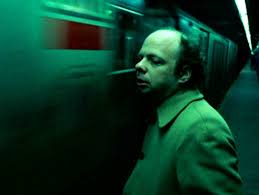
On the Film “My Dinner with Andre” Part I: Wally in New York

Note: Opening a multi-part early series from my first blog Classical Sympathies back in 2009, this piece takes up the beginning of Wallace Shawn’s walk through New York en route to his meeting with André Gregory in My Dinner with Andre, using Wally’s voice-over as a lens on artistic precarity, everyday survival, and the comic disproportion between existential weight and mundane errands. The note situates the film’s opening movement as both narrative setup and philosophical framing: a winter city of post offices, xerox shops, and unanswered calls becomes the psychological prelude to a conversation that will later expand into memory, performance, and self-mythology. This installment follows Wally up to his arrival at the restaurant for the pre-dinner drink, where the film’s central encounter is still suspended in anticipation, and meaning is generated less by action than by the act of getting there.

My Dinner with Andre is the famous, or infamous, 1981 film of a dinner conversation between Wallace Shawn, the actor and playwright, and Andre Gregory, the theater director. If I were to make a twofold claim for the film: i) that it is one of the most action packed films ever made, and ii) that it effectively encapsulates the thematics of the entire 20th century, I do not think this would be overstatement. My intent here, however, is not to establish either of these postulates, but rather to simply “blog” the script in the hopes that what needs to be said works its way to the surface. Fair warning: the undertaking will require several posts.

Money crops up on two of the first three pages of the script, and because money, and the lack of it, is a theme that runs beneath the entire script: Andre has money, has the freedom to travel and to spend several years trying to “find himself”; Wally does not. Still, “having money” is, as ever, a relative concept. At the opening of the film, Wally is seen walking through the streets of New York, heading for the restaurant where he is to meet Andre. It appears to be winter, maybe February. In the opening voice-over, Wally ruminates on the life of the artist: The life of a playwright is tough. It’s not easy, as some people seem to think. You work hard writing plays, and nobody puts them on. You take up other lines of work to try to make a living–acting, in my case–and people don’t hire you. So you spend your days crossing the city back and forth doing the errands of your trade. Today wasn’t any easier than any other day. I’d had to be up by ten to make some important phone calls, then I’d gone to the stationary store to buy envelopes, and then to the xerox shop. There were dozens of things to do. By five o’clock I’d finally made it to the post office and mailed off several copies of my plays, meanwhile checking constantly with my answering service to see if my agent had called with any acting work. In the morning, the mailbox had been stuffed with bills. What was I supposed to do? How was I supposed to pay them? After all, I was doing my best (17).

One of the marvelous things about the film is the tongue-in-cheek humor that is rarely, if ever, directly alluded to. A deeply serious film, Andre is also a comedy, a fact which we can recognize because we see that the writers are having fun with the characters who are in turn themselves. That is, Wally and Andre are playing versions of themselves–we assume that most of the experiences that Andre recounts in the film are based on real experiences, and that Wally’s account of his home life is more or less true to life–but exaggerated versions. As Shawn says in the preface to the script, “I knew immediately that {…} I’d have to distort us both slightly–our conflicts would have to become sharpened–we’d have to become–well–characters {…} It would be an enormously elaborate piece of construction” (14). In this initial passage, the humor lies in Wally’s conception of a difficult life: “I’d had to be up by ten to make some important phone calls.”

Wally’s sense of pressure is, from the outset, deliberately out of proportion to the scale of his circumstances. The tone is one of genuine complaint, but the complaint itself is almost comically domestic: the architecture of a “hard day” is built out of errands, envelopes, xerox shops, and an answering service that may or may not contain salvation in the form of an acting job. What Shawn achieves here, and what the film quietly sustains, is a recalibration of seriousness—where existential weight is not attached to grand events but to the texture of administrative survival. Wally’s New York is not a place of romance or revelation, but of circulation: between post office, mailbox, and telephone, as though modern artistic life has been reduced to a loop of deferred contact with recognition.

At the same time, the humor is never fully separable from sincerity. Wally is not merely being mocked; he is also articulating a recognisable condition of artistic precarity, one that the film refuses to glamorize. The genius of the opening monologue lies in this double register: we are invited to laugh at the disproportion between emotional tone and material fact, but we are also made to recognise how easily that disproportion becomes a lived reality. The “dozens of things to do” are not nothing; they are just insufficiently legible as crisis, which is precisely what makes them feel like crisis.

By the time Wally finally moves through the city toward the restaurant, the structure of the film has already been quietly established: this is a world in which meaning is not delivered through events but through the way events are narrated to oneself while walking between obligations. New York, in this sense, is not a backdrop but a medium of self-composition—an environment in which thought is constantly being assembled under mild pressure, as though consciousness itself were an errand.

He checks the time again, as he has been doing throughout the afternoon, and adjusts his route slightly, not out of urgency so much as orientation. The meeting with André already exists in his mind as something slightly unreal, a fixed appointment that has not yet been granted substance by arrival. He crosses another block, passes into the thinning evening light, and begins to approach the restaurant where, for the first time that day, the structure of waiting will shift from solitary to shared.

to be continued…

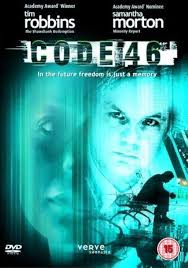
Review of the Film Code 46

Note: We don’t do a lot of film reviews here, but Code 46 earns the exception—partly because Michael Winterbottom is one of my very favorite directors, and still wildly underrated, and partly because this film quietly seeps into you in a way that feels unshakable; set in a world that is clearly not ours but just similar enough to be discomforting—real Shanghai that isn’t quite real, deserts that feel earned, a system of “cover” and genetic law that replaces freedom without ever announcing itself—the film follows William, a kind of intuitive investigator who lives more than feels, and Maria, who works in a bureaucratic “fate factory” and senses, before she knows, that something is already off; their connection unfolds in fragments—interrogation as flirtation, impulse as rebellion, intimacy as violation—until the central truth emerges: in a world where memory can be edited and biology legislated, even love itself can be illegal; the genius of the film is its restraint.

Tim Robbins and Samantha Morton don’t overwhelm you with chemistry, which actually makes the relationship feel more provisional, more real, more doomed—and by the time the system reasserts itself (memory erased, lives restored, Maria exiled with the burden of remembering), you realize the film hasn’t been building to a climax so much as a quiet erasure; it’s less than 90 minutes, barely announces its futurism beyond small details (languages blending, empathy viruses, low-fi surveillance), and yet it lingers in a way much louder films don’t; it also clearly fed into the DNA of the Thin Man—this idea of movement through controlled spaces, of intuition over evidence, of relationships that feel both fated and structurally impossible—and in that sense it’s not just a film I admire, it’s one that got under the skin and stayed there.

Michael Winterbottom’s Code 46 is less a conventional sci-fi film than a drifting, half-lucid meditation on love, control, and memory. It runs under 90 minutes, but it feels strangely elongated—like a dream you keep slipping back into.

The hero, William (Tim Robbins), isn’t exactly living—he’s existing. A kind of insurance investigator, a “driver” moving through a world defined by pollution, restriction, and bureaucratic control. This isn’t the neon overload of something like Blade Runner—Shanghai here feels real, but off. The deserts outside the cities are harsh and empty; if people can’t get “cover” to move, there’s a reason. The world is closed, stratified, quietly oppressive.

William is established early as compassionate—at a checkpoint, he shows a kind of human softness that marks him apart. But he’s also slippery. He bluffs and charms his way through situations, his “cunning” explicitly noted as one of his professional tools. He doesn’t rely on evidence so much as intuition: “It’s intuition you’re paying for.”

Maria (Samantha Morton) narrates parts of the film, grounding it in something more intimate and unstable. Her sense of time is fractured—lucid dreaming, recurring visions, a sense that something is about to happen. “Every year I have this dream… is this the night I wake?” There’s a constant feeling that fate is closing in. She works in what is essentially a “fate factory,” issuing the cover documents that determine where people can go and what they can do. In this world, fate substitutes for freedom.

When William meets Maria, there’s an immediate sense of déjà vu—she feels she’s met him before. Their early interactions blend interrogation and flirtation. The dynamic is unusual: older man, younger woman, but the aesthetic—her shaved head, the stripped-down environments—blunts the cliché. Their connection feels tentative, exploratory. She tests him; he reads her. There’s attraction, but it’s not fully trusted on either side.

Their relationship develops in fragments: subway encounters, shared meals, small rule-breaking gestures. William knows she’s impulsive—she admits it. The film introduces the idea of engineered “viruses” that alter human ability—perfect pitch, empathy. It’s a strange, understated sci-fi touch that reinforces how mediated everything is, even emotion.

There’s a looseness to their chemistry. Robbins and Morton don’t generate overwhelming heat, but that actually works. The relationship feels uncertain, provisional—two people circling something they don’t fully understand. Their intimacy is uneven, sometimes tentative, sometimes urgent. Maria seems to need William more than he needs her, or at least she feels the stakes more sharply.

The world around them continues to intrude. There are hints of smuggling, of bureaucratic corruption, of quiet desperation. Maria has lived “outside” for ten years—without cover, presumably—which raises questions the film never fully answers. William’s moral stance, when it emerges, feels weak, almost performative.

When he returns home, he tries to reassert control—rejecting Maria, then calling her back. But the narrative destabilizes. A colleague dies; William is sent back to investigate. The technology—video links, surveillance—feels oddly low-fi, as if the future never quite fully arrived.

As William digs deeper, the film’s central taboo emerges. Maria has violated Code 46—a genetic restriction law. Through fragments of dialogue and investigation, William pieces together the truth: they are biologically too similar. A “50% match.” Worse, her mother was a clone—one of many. The implications are quietly devastating.

Maria’s past is altered—an illegal pregnancy erased, along with the associated “memory cluster.” Identity itself becomes unstable. Memory, love, and experience can all be edited, removed, rewritten.

Their attempts to escape—to flee together, to build something outside the system—feel almost doomed from the start. The idea of Jebel Ali, drawn from her father’s stories, becomes a kind of imagined refuge. But the system closes in. A car crash. Memory erasure. Reintegration.

In the end, William is returned home, restored to his life, his wife, his routine. Covered for. Maria, by contrast, is exiled—sent out into the desert with her memories intact. She becomes the one who remembers, who carries the weight of what happened.

The final note is pure loss. Lost love, stripped of even the possibility of reunion. Maria staring out into the distance, holding onto something the world has decided should not exist.

Code 46 is not a perfect film. It’s uneven, sometimes opaque, and emotionally muted in ways that can frustrate. But its ideas linger. It captures something rare: a future where control is soft but absolute, where love is possible but prohibited, and where memory itself becomes the final battleground.

It doesn’t hit you all at once. It seeps in.

WAYFARER: A PLAY

Note: This piece is a five-act play based loosely on a week I spent in Oxford in 2018. Unlike my previous narrative essays on the same material, (here, here, and here), this is written as a staged work, with dialogue, silence, and structure doing the heavy lifting. At its core, the play explores the tension between experience and narration—what happens when a person tries to turn a living moment into a story too quickly, and what is gained (and lost) in that process. While grounded in real events, it is not strictly autobiographical; it is a shaped and curated version of those experiences. As with all my work, the hope is that it resonates beyond its immediate context. Thank you for reading.

A Five-Act Play


EPIGRAPH

I can’t believe all the good things that you do for me
Sat back in a chair
Like a princess from a faraway place
Nobody’s nice
When you’re older your heart turns to ice

Mark Kozelek Have You Forgotten

ACT I — THE WAYFARER


Scene 1 — Registration Desk (Threshold)

Lights: institutional white. Gradual warm shift beneath it, as if memory is already leaking into the space.

Sound: distant conference murmur. A faint, unresolved piano note.

A desk. A GATEKEEPER. A lanyard laid out like an object of passage.

MATT enters. Slightly lost. He has clearly been walking longer than intended.

GATEKEEPER
Name?

MATT hesitates. Reaches for something that is not yet ready.

MATT
Here. I think.

He presents credentials.

Stamp sound. Too loud for the space.

The badge is handed back.

CHORUS (from off, soft, not fully placed in space)
Arrival.
Conference.
Inn.
Story begins again.

NARRATOR-MATT (aside, not heard by others)
I thought I came to learn.

The badge feels heavier than it should.

Lights soften.


Scene 2 — Inn Common Room

Warm, slightly unreal hospitality lighting.

Tables. Cups. A space that feels both public and private but refuses to decide which.

ELODIE is present as if she has always been there.

MATT notices her immediately.

NARRATOR-MATT
Voltage.

ELODIE
Tea?

MATT
Yes. Thank you.

Beat. Nothing rushed.

CHORUS (slightly brighter, almost encouraging)
House lady.
Innkeeper.
Muse—

(a correction, quieter)
No. Person.

ELODIE does not acknowledge the Chorus.


Scene 3 — “Sing for Your Supper”

Sound: faint guitar motif. The room subtly shifts into performance space without fully becoming one.

CHORUS subtly rearranges space like memory editing.

MATT sings quietly:

MATT (singing fragment — The Clientele, “The Violet Hour”)
so that summer came and went
and I became cold
yeah I became cold

ELODIE listens. No visible transformation.

NARRATOR-MATT
Hospitality is not destiny.

The room remains unchanged.

Blackout.


ACT II — THE HOT ZONE


Scene 1 — The Casino

Green felt lighting. Rotating overhead spot.

CROUPIER replaces Gatekeeper.

CROUPIER
Place your bet.

MATT
Meaning.

CHORUS
Luck.
Chance.
Myth begins when odds are misread.

MATT places chip.

Sound: chip hits felt—final, sharp.


Scene 2 — Triptych (Three Trips)

Lighting pulses three times. Distinct beats.

MATT (low, repeating)
Three trips.
No more trips.

CHORUS fractures into three figures: GENIE / GHOST / MESSENGER.

NARRATOR-MATT
Inspiration gone.

GENIE (brief, playful)
First.

GHOST (slow, distant)
Memory.

MESSENGER (clear, neutral)
Transmission.

All fade.


Scene 3 — Jungle Confrontation

Green light. Reduced set. No realism.

MATT
Her.
Leave everything.
Frontman.
Practice.

ELODIE
No.

MATT
What is this?

ELODIE
Not your exorcism.

CHORUS
Brink.

Blackout.


ACT III — NAMING THE PATTERN


Scene 1 — Needy Boys

Two chairs. Neutral white light.

ELODIE
Don’t narrate me.

MATT pauses. This lands fully.

NARRATOR-MATT
I was writing her.

Silence.


Scene 2 — Chapel

Stillness. Breath-level sound only.

CHORUS (barely present)
Meaning.
Destiny.
Story.

NARRATOR-MATT
Room, not revelation.

Silence holds.


Scene 3 — Pattern Recognition

Lighting: subtle timeline shifts—memory flickers, not time travel.

NARRATOR-MATT
Senior year.
Again.

ELODIE
Your pattern is yours.

MATT
I see it.

CHORUS
First choice.

Blackout.


ACT IV — RELEASE


Scene 1 — The Offer

Dusk light.

MATT
Part-time.
Scout.
Not jungle.

ELODIE
Boundaries are kindness.


Scene 2 — The Pivot

Warm domestic light replaces earlier symbolic tones.

MATT
Family.
Music.
Life.

CHORUS
Myth.
Escape.
Hero.

MATT
No.

Silence holds. No response from Chorus.


Scene 3 — Chorus Dissolves

Lighting: references dim one by one.

CHORUS removes masks.

NARRATOR-MATT
The story stayed.
The spell lifted.

Blackout.


ACT V — OXFORD CODE


Scene 1 — Gesture

Morning Oxford grey. Minimal space.

ELODIE
Take care.

MATT
You too.

Beat.

No escalation. No closure ritual.


Scene 2 — Benediction (Chapel Revisited)

Same chapel. Quieter now.

Sound: Arvo Pärt piano. Sparse. Non-declarative.

NARRATOR-MATT
Gratitude.

Silence. Breath.

MATT listens without narrating.


Scene 3 — Train

Sound: distant platform announcement. Train readiness.

Gatekeeper becomes CONDUCTOR.

CONDUCTOR
All aboard.

CHORUS
Run back.
Declare.
Confess.

MATT
No.

MATT boards train.

NARRATOR-MATT
The jungle is real.
The girl is real.
The story remains.

Beat.

NARRATOR-MATT (softer)
You think you’ve finished it. Then it comes back different.

NARRATOR-MATT (aside)
She knew more than I could say.

Train departs.

Lights fade with motion, not blackout.


FIN

Scenes from Hamilton College II: Freshman Year Continued (with cameos from Honey, the Print Shop, and Billy Bragg)

Note: In Part I of this series I wrote about my freshman year at Hamilton, focusing on two friends, Ian and Jake. Part II will branch out and cover a fairly wide, and somewhat random, set of memories.

Epigraph:

I had an uncle who once played for Red Star Belgrade
He said some things are really best left unspoken
But I prefer it all to be out in the open

Billy Bragg

I have already written quite a bit about the characters who lived in the North Dorm freshman year at Hamilton, however there are a few more to cover. First were the first floor stoners. Basmo was a stoner, and he lived on my side of the dorm, but on the other side of the first floor lived the hardcore stoners. This consisted of a quad of guys whose names I don’t totally recall, but one was Peter Kimber, and who got baked at all waking hours and played Roger Waters’ Amused to Death solo on repeat. Next to them, in a double I believe, lived Keys. Keys’ actual name was Caleb, but everyone called him Keys because of the six to eight keys he had dangling from around his neck at all times. What on earth did he need all those keys for? One for the dorm, maybe one for a car (although he should not have been driving at all because he was the single biggest stoner in the dorm and perhaps on campus), what else? I can’t imagine.

Keys and I were not that close, but I did see a lot of him because we had the same job, which was in the school print shop. I don’t know if print shops still exist in the same form in this digital age, but back then the print shop was busy as. We held the campus down. There were two slightly older women who worked at the print shop full-time and three of us students helping out. The full-timers were Sally and Deb. Deb was the boss, and she was kind of motherly and kind to the students. Sally was nice too, but she could be tough. She would bark at us when we made mistakes, which was often because we were running large machines that would glitch pretty frequently. Sally was both the little sister to Deb and also the enforcer. I liked them both, even though Deb ended up firing me, which I’ll get to later.

So Keys would come in lit every day and sort of fumble through his work, which consisted mostly of stapling and collating. I was trusted more than Keys, with good reason, so I ran the machines, but I also did stapling and collating. We printed things for professors, menus for the dining halls, the school newsletter, and a bunch of other stuff. The third student was a girl whose name I don’t recall, and she was a super-hardcore feminist. Everything in the world that was wrong was men’s fault, and it was her only topic. She didn’t seem to dislike me so much as just want to lecture Keys and I all through work, which usually lasted two to three hours in the afternoon, about the ills of men. I was, and am, up for a little feminist theory but Keys was no help and I don’t even think he noticed her, so it was kind of just me and her. Serious feminism and collating are, perhaps, not best paired.

I didn’t originally want the print shop job. I needed work, and there was kind of an intake for all working students where you put your first choice. I put library, but didn’t get the gig. John Innes put audio/video and he got it, which meant he often had to get up early to set up videos for professor’s classes. I would not have been good at that. The print shop was more my speed, but eventually it got really repetitive and I started skipping work more and more. I would go walk in the woods behind campus, or just drink coffee with about a half cup of honey and hang around after class. I also improved as a student through the year, and took my English classes pretty seriously so I was spending more time in the library, although still not sleeping much.

My money situation was tight, although not as bad as it would later be during my junior year abroad in New Zealand where it was super tight. I had a little income from the print shop and my parents sent a small allowance once in a while, but I usually didn’t have more than about 15 bucks in my pocket at any one time. What money I did have went mostly to CDs, as many as I could afford. I had a dining hall pass, but the dining hall food was not really my style so I mostly lived on toast and coffee with honey. Then at night people would order pizza from a local shop, but that was too expensive for me so I would get “friend dough.” Fried dough is just what it sounds like–deep friend pizza dough with powdered sugar, and it cost about $1.50 for a big box. Not the best diet, but it was what I could afford.

One time the father of one of my classmates from high school visited for some reason; he must have been in the area. We met for lunch, and when he left he handed me $100 bucks. This was a serious windfall, and I immediately blew it on CDs, perhaps Neil Young’s Harvest Moon and others. My CD collection, although no rival to Ian’s was slowly increasing and I liked it.

Back in the dorm, in addition to the guys I have discussed, there were also girls, who lived on the second and fourth floor. I got to know the girls directly above us on the second floor pretty well, although not many of the others in the dorm. Among these was Rochelle, who was the girl I was closest to. Rochelle was, I think, from New York, and when she arrived on campus she made a big deal about having a boyfriend. This didn’t last long however, and although I didn’t want her to be my girlfriend I did like hanging out with her. She kind of mothered me a bit though, which I wasn’t so into, because I was going to do what I was going to do. I still have her contact, and I believe she might even read this piece! I think I also met Marie Bishko freshman year, and Marie is someone I thought was really cool.

I don’t really remember any us North guys hooking up with the second floor girls, but it must of happened. Another incident which occurred around this time had to do with my roommate B. and his girlfriend from high school. Like Rochelle, and even more so, he made a big deal of his girlfriend and told us all kind of semi-salacious details. Then one day he told us she was coming to visit and he wanted the three of us in the quad to go to a hotel for a night. I told him sure, if you pay, but he said no. He was dead serious but we told him to forget it, so sure enough she arrived and they hooked up while we all pretended to sleep. That only happened once, thankfully, and it still strikes me as pretty odd. He later broke up with her and fell in love with a Jewish girl, but that didn’t last either because he wasn’t Jewish.

I mentioned in Part I that Jake pledged the fraternity Sig. Ian and John Slack also pledged, Chi Psi (I had to Google the spelling). I spent some time at Chi Psi as well as, where I was alleged to sit on the steps in my trench coat, but I preferred Sig. There was another frat called Deke, and that was where the wildest, and the worst parties were. At Deke there was copious amounts of Milwaukee’s Best (the fabled Beast) and jungle juice. The parties were terrible, but there was a pool table which was a bonus. I didn’t drink much at college, mostly because I had no money, but I did drink some at Deke, with exactly the results you would imagine. I believe it was at Deke where Marc Campbell pulled off his famous pacification move. I didn’t pledge a frat, and I was and remain glad I didn’t. Greek life wasn’t for me.

One guy who I believe lived in North was called Gabe. Gabe was super popular at first in freshman year, and he played guitar on the grass outside the dorm. He was pretty good and he would play “Sexuality” by Billy Bragg which was surprisingly popular in 1992. People, including girls, would flock around him, but over time something seemed to happen to Gabe. He ran for class president and lost to a guy called Kerry who was African American. Kerry lived down the hill in a different part of campus, and he ran really hard for the job. I think Gabe’s ran mostly on a music ticket, and although he got a lot of votes I think he came in second. He may have taken this hard, because he kind of faded into the background, or maybe he just changed up his action. I think I voted, but may have voted for Kerry.

As I mentioned, Jake and I saw less of one another once he started pledging, however we still saw each other in English class and in the English building. We overlapped professors, although he knew some I did not. The two best professors in the English department were George Balkhe and Fred Wagner. Balkhe was still in his prime, maybe late 50’s, whereas Wagner was older and I believe in a semi-emeritus role. I wasn’t even sure I ever took a class from Wagner, but it’s been confirmed that I did, Modern British and American Drama, which makes sense. I didn’t much like 20th century American plays, as plays are mostly blueprints anyway. In any case, Mr. Wagner knew me early in the year because Balkhe praised my reading knowledge to him. Jake and I would go to Wagner’s house, also down the hill toward the town of Clinton (the closest town to Hamilton, about a 15 minute walk), and I recall once we played him the song “Marlene Dietrich’s Favorite Poem” by Peter Murphy, formerly of Bauhaus, with Peter Murphy murmuring “sad-eyed pearl and drop lips…”

Peter Murphy is super underrated by the way, and Wagner liked the song, which just showed how cool he was.

I took a few classes with Balkhe, and we studied poems, and novels–typical choices mostly. I enjoyed these and read most of them, even Faulkner who is really dense. For the ones I didn’t I just faked it. Like I said, Balkhe thought I was amazing because on the first day of class he asked for a list of books we had read and I listed like 200. These were mostly Agatha Christie and John LeCarre and such, but I guess it was good enough. Balhke liked the singer Donovan and the song “Mellow Yellow.”

Electrical banana
Is gonna be a sudden craze

(I later saw Donovan at a new age convention in Boston when I was visiting Ian after college, which I will recount later).

Wagner and Balkhe are both passed away now, so rest in peace to two great English teachers and mentors.

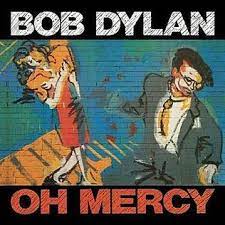
That’s about all I have on freshman year. The last thing is about the featured image for this post, which is the album cover for Bob Dylan’s Oh Mercy. I have written about The Pogues quite a bit, but the album I listened to most freshman year was Oh Mercy. After geology class had a break before lunch and would go back and semi-sleep to Oh Mercy. The quad was always empty at that time of day, and this was the best rest I would get. The album still makes me sleepy to this day, and features excellent production from the famed producer Daniel Lanois. So thank you Bob and Daniel.

Dedication: For Fred. And for George–I hope you are enjoying a little electrical banana up there in heaven.

to be continued…

On the Safe Space (aka Corner Girl)

Epigraph:

Heather, remind me how this ends

Dolorean

I’ve been trying, lately, to understand the early spaces in my life where safety and memory intersect — the brief rooms in time that opened something in me before I even had language for it. Some moments don’t turn into stories, but they still leave a shape. This is one of those moments.

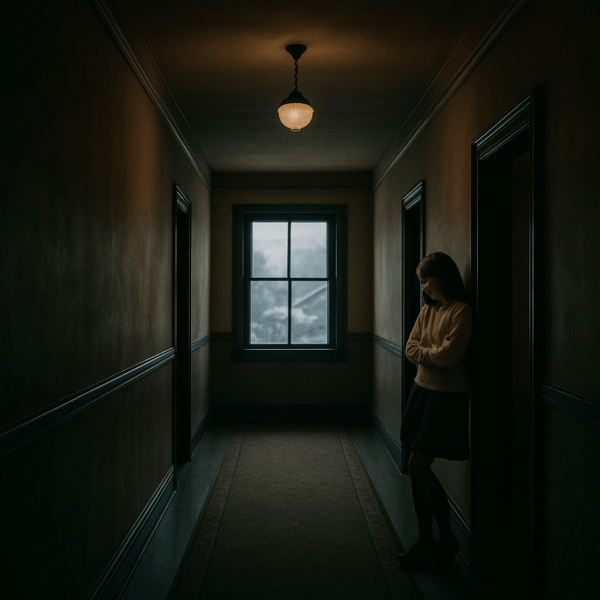
The Christmas Dance wasn’t held in the high school that year at all. It was downtown, in one of those Spokane venues that tried to look older than the city around it — chandeliers, carpeted floors, bathrooms with real mirrors. We had been dancing all night, the kind of teenage drifting where everyone is shy and bold by turns. And then it was over, and people were peeling away, breaking into rides and carpools and winter air.

She and I ended up in the hallway.

We were already wrapped into each other — that soft, accidental teenage cuddle that feels both unplanned and absolutely right. The near-near kiss wasn’t something either of us aimed for. It was just the way our faces happened to be turned, the warmth, the pause, the sense that one more inch would have turned the moment into something else entirely. Instead it stayed suspended, held in the exact shape it needed to take.

Her name was Blythe.

I used to say I wrote poems “for girls who told me they were pearls,” but that was just self-mythology. In truth, I only ever wrote for one girl. And she never asked for anything.

Most of the real fun we had wasn’t during dances at all. It was in the gym at Saint George’s in Spokane. For high school games, boys and girls, the gym would be packed, and during the boys games she would sit in the front-row, and every single time I did anything even vaguely ok — a decent pass, a shot that actually went in, a little rebound — I’d look over mid-play and smile, and she’d already be smiling. She was in my corner before I understood what that meant. She didn’t push. She didn’t need to. She just stayed.

There was a suspended electricity in those years — innocent, unclaimed, lightly glowing. We never really dated. We never made a move beyond the moment that almost happened and didn’t. But she calibrated me. She was my corner girl. And that mattered.

The ending came the way some endings do when you’re young — clean as scissors. She graduated. Life tilted. The season shifted. Nothing dramatic, nothing painful. Just a quiet snap. A door that didn’t slam but simply shut.

I miss what we could have been, but I don’t regret a thing.
Some connections aren’t meant to become stories.
They’re meant to become orientation.

I don’t go back to that time for longing. I go back because that was the first time safety arrived before desire — and because that pattern stayed with me. It’s how I know when something is real.

I don’t need anyone to remind me how it ends.
A hallway, a graduation, a clean break.
What I keep going back for isn’t the ending anyway.
It’s the part before — the girl in my corner,
the room that opened in front of me,
the feeling I carried forward.


Dedication


For Blythe, who stood in my corner before I even understood what that meant.

Note: If you enjoyed this piece, you might also enjoy the ones below which take up somewhat similar themes.

https://thekyotokibbitzer.com/2026/02/10/simona/