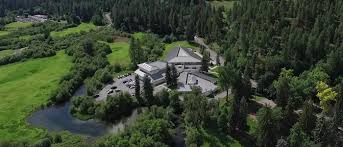
Scenes from Hamilton College III: Sophomore Year I (with cameos from Sonic the Hedgehog, Ani DiFranco, and Candle Time)

Note: In Part I and Part II of this series I wrote about my freshman year at Hamilton. Part III will take up sophomore year where I lived down the hill in Bundy Dorm.

All you ladies and gentlemen
Who made this all so probable

Big Star

After freshman year I returned back to Washington State for the summer. I have written glancingly about this period, suffice it to say I was not up to much. Still broke, I did have a short lived girlfriend but she dumped me mid-summer. I spent a few days moping around playing nerf golf at my parents’ house, then got over it. I don’t remember much else from that summer except that I got back in good running shape, and when I got back to campus in the fall I turned out, once again, for the running team.

One thing I neglected to mention in my pieces on freshman year is that I actually competed on the JV running team at Hamilton for a time and ran a few races. I was not in great shape that year, and JV was not that exciting. As I have written, I had other pursuits. Sophomore year, however, I was in better shape and had a shot at making the top five. The only other runner I recall was called Harry. I thought Harry lived in Sig, but Jake tells me he was in a frat called THX, about which I remember nothing. In any case, Jake knew him. Harry was a hardcore runner and scolded me about my lifestyle, wanting me to devote myself to the team. I was not going to do this, but I was able to run with Harry and the first team for a number of practices. In the long run though it didn’t work out–they ran mornings and afternoons, and my summer shape wasn’t going to carry me through a hyper-competitive season. I was a good runner, but I just didn’t have the drive. Sooner or later I left the team, this time for good. I look back fondly on Harry however–he was right; I was lazy and needed a kick in the rear.

As a sophomore I roomed in a double with John Innes (there were two John’s in my friend group, John Innes and John Slack), in a dorm halfway down the hill to Clinton called Bundy. Marc Campbell was also on our floor. Ian was living in his frat, but spent a lot of time in Bundy as he was dating Ann, someone who I became close with over the year as well. Jake was over at Sig and I didn’t see much of him, mostly for geographic reasons.

Bundy was a way different story than North. First, I spent a lot more time in my dorm room with John Innes. Innes would watch the soap opera Days of Our Lives and insist I watched it too. I could have cared less, but watched it to be a good friend. We also played Sega, almost exclusively Sonic the Hedgehog and Sega Hockey, at which John usually beat me (however not in the biggest matches, as I’ll get to later). Innes liked rap music and had a pretty good collection. I could get into some of the rap; I liked Public Enemy, KRS One, De La Soul, and a minor band called Basehead which wasn’t really rap. However I was by then deep into what would today be described as alternative or indie music, so Innes’ taste and mine mostly diverged. We were both good about sharing airtime though, so he got to know my music and I his.

The record I listened to the most, by far, that year was Big Star Third: Sister Lovers from the then mostly forgotten American band Big Star. I loved this record (which was on Rykodisc), and played it endlessly while trying to advance in Sonic the Hedgehog. I stuck my mattress in the closet and hung a tapestry over the door area so I had a little cubby to sleep in. Overall, the whole scene was much more domestic than the pretty chaotic North.

Other than Marc and John Innes, I don’t remember exactly who the other guys who were on our floor, but I’ve been reminded that John Slack was one of them. Ian and Jake were living in frats, and over the year I got to know a new crew of people, including several girls. These included firstly Jenny and Jen, who lived in the female area on our same floor (maybe the second floor? Innes will remember). Innes and I became very close to Jenny and Jen, and spent almost every evening hanging out in their room doing something called “Candle Time.” Candle Time was pretty much exactly what it sounds like–we would turn down the lights, light candles (which was probably against school rules) and talk for hours. We would talk about our days, people and goings on in the dorm, and just life in general. It was really wholesome and again, a major change from North.

Candle Time lasted, in my recollection, for a number of months, but not all through the year. Despite spending so much time together, there was no romantic involvement, although I believe Innes and Jen did get together later, and briefly; I’m not really sure. I think it was supposed by some that I myself had a crush on Jen; however although I liked her a lot this was not the case. I did have a little bit of a crush on Jenny, but she had other people who were interested in her and we all hung out so nothing ever happened. That was fine–it was actually really nice to just have close female friends with no expectations.

Jenny and Jen were both from the upstate New York area, broader Rochester as I recall. My guess is they came from relatively less money than many of our classmates, who came from preppier areas, and schools. I actually visited Jenny’s house once or twice, and I think a bunch of us slept over once and watched the film Glengarry Glen Ross. These included Amy Holland, who was one of the coolest chicks around. She was called “Red,” on account of her red hair, and was totally my speed. Everyone else fell asleep during the movie except Amy and I and as I recall she loved what is, to be fair, a pretty stereotypically male film.

Jenny’s house was nice, but seemed pretty middle-class and maybe that’s part of why we all bonded–the richer kids, although I obviously hung around with them a lot, had their own life ways to some extent. I remember one evening Jenny and I went to see the band The New Dylans on campus. I thought they were a good band, and had found their cassette at the campus radio station where John Innes and I had a sports talk show. Their record has a song I liked called “The Prodigal Son Returns Today.” They sounded kind of like a minor league Big Head Todd and the Monsters or something, and are kind of dated today if I’m honest, but I was excited for the show. At first it was pretty full, but people left little by little and by the end it was just me and Jenny. The band played their hearts out for the two of us, including encores! After the show, I joined them for a cigarette outside and chatted. I told them that I really liked the show and they said thanks and all with no mention of the fact that the venue was totally empty. That’s professionalism, I thought, and I imagined that as a band trying to break through playing small colleges and sending cassettes to radio stations they’d had their share of ups and downs. I doubt they are still around, but if so I’m rooting for you guys!

A bigger star that played Hamilton was Ani DiFranco. I saw Ani several times, both on campus and off, as she was pretty huge in New York State at the time. She had not yet released Dilate,” which came in 1996 and was her mainstream breakthrough to the extent she ever had one, but she was a star on campus, mostly with the women but with a lot of the guys too. Ani put on a great show, and I totally got the appeal. She was kind of the Jeff Rosenstock of the day I suppose.

Shawn Colvin also came, and I knew some of the people who were assigned to take care of her backstage. They reported that she was a total asshole, asked for coke, and generally threw her weight around big time. Shawn Colvin was OK, but no so great that she could act like a diva I don’t think. Full on divas are acceptable-like Joni Mitchell might be a diva and what are you going to do–but minor league divas pretty much suck.

Anyway, like I say over the year although we still saw each other, I saw less of Jenny and Jen, and more of other people like Ann, Amy, and Matt Thornton. I’m not sure where Matt lived, maybe Bundy and maybe not, and I don’t recall either how or when I met him, but we soon became fast friends. Matt was full speed ahead, and argumentative, but I can handle my own in an argument, and I really liked him. Matt ran with an interesting group of friends, including several Asian-Americans who I believe lived on the Kirkland side of campus. Hamilton used to be a guys’ school and Kirkland was the attached girls’ school. Then at some point they merged, but the Kirkland side and the old Hamilton side always felt distinct to me and were separated by a bridge.

One time we were talking about going to New York and Matt told me about some clubs for Asians that he was interested in. Matt’s friends told him that he (or I) could not go to these clubs because we would get the shit kicked out of us. Had to be at least half-Asian apparently. But I think Matt went to these kinds of clubs anyway and did not get beat up, because he just sort of rolled that way.

Matt and I and Ian did go to New York eventually, and spent a few days uptown at some person’s apartment where I commandeered a prime sleeping space and we ordered pizza three times a day. I believe this was actually after graduation, as Matt transferred before graduating from Hamilton.

As I mentioned in an earlier piece, this was also the year Ian and I went to Boston to see music shows. We went with a fellow called Cale who was a freshman. Cale was cool, and also we liked him because of his name, reminiscent of John Cale, violist for the Velvet Underground who Ian and I were both fans of. With Ian and Cale I felt like I was in good company–we were all very simpatico.

My academic performance sophomore year was just OK. I took more English classes, and also started to take some History classes including some Asian History with Tom Wilson. Tom Wilson was a good professor, but I think he was one of those guys who really saw himself at U. Chicago or Yale or something. A lot of academics are like that. Nevertheless, Tom was good–tough but fair–and pushed me to really deepen my research abilities. Outside of Tom’s class, my effort was a little mixed, and during the dead of winter I skipped some morning classes because the climb up the hill was just too tough. The winters in upstate New York are pretty brutal, and I preferred to stay local down in Bundy a lot of the time.

One more thing I remember from this year is starting, and then dropping, photography class. I had an old camera that barely worked, and was interested in learning how to develop film in a darkroom. However, photography class was really expensive because we had to regularly buy these huge rolls of film which cost like $50 at the school store. A classmate I’ll call C. to protect his identity told me, “just tuck your pants into your socks and drop the film down your pants and walk out. That’s what I do.” But I wasn’t going to steal film all year and there was no way I could pay the outrageous costs. On top of that, I wasn’t all that good–certainly my classmates outclassed me, crappy camera or not. So I dropped it after six weeks or so; however now that I think about it I may well have met Matt Thornton in that exact class. It’s a possibility.

Note: That will do it for Part III. In Part IV I’ll write more about my friendship with Ann as well as the Sports Talk Show we did on the Hamilton radio station.

Dedication: For the whole Bundy dorm, actually. It was a pretty chill year.
to be continued…

On it, Pete

Note: Some stories get better in the telling. This one doesn’t need to. It arrives fully formed—one line, perfectly placed—and has stayed that way ever since. I’ve told it for years and it still lands exactly the same. No embellishment required.

It’s September, 1989.

Two new teachers had just arrived at St. George’s School in Spokane, WA. These are Paul Hogan and Pete Aiken. Paul would go on to have a long and distinguished career, eventually becoming Principal of Jesuit High School in Portland—a major job, the kind that makes a life. I have no idea where Pete is today.

That night, my dad Ross invited them over to the house for dinner. It was one of those late-summer evenings that still carried a little warmth but hinted at the coming turn. Ross was out back at the grill, working over the barbecue with a beer in hand. The adults clustered nearby, talking, drinking, getting to know the new arrivals. There was that particular tone of adult conversation—half-professional, half-social, everyone just slightly aware of roles and impressions.

Out in the yard, it was just the three of us: Pat, Mike, and me. We were playing catch with a tennis ball. Nothing serious. Just throwing it around, loose, casual, the way kids do when the game isn’t really the point. At some point, either Mike or I made a bad throw. It sailed wide of Pat—too far, too high—and rolled past him.

A completely ordinary moment. The kind of thing that happens a hundred times in a backyard, in a summer, in a childhood.

Pat was six. He didn’t chase the ball. He didn’t complain. He didn’t turn to us. Instead, he turned—calmly, deliberately—and looked over at Pete Aiken, one of the brand-new teachers, a guest in our home, a man he had just met. And in a tone of quiet assurance, as if assigning responsibility in a meeting, he just said:

“On it, Pete.”

That was it. No smile. No wink. No awareness of what had just happened. The ball was recovered. The game went on. The adults kept talking. The evening continued. But something had shifted, just slightly, just enough.

Because in that moment, a six-year-old child had somehow crossed the boundary between worlds—between kids and adults, between play and work—and issued a line that did not belong to him, but fit him perfectly.

I don’t remember what happened next. I only remember that line. And I remember that we have been laughing about it ever since.


The On It Pete Blues (Pete’s POV)

I was new to the city, new shirt, new street,

Standing in a backyard trying hard to be discreet,

Ross on the grill and the talk running deep,

Just another first night—then I heard, “On it, Pete.”

I hadn’t been briefed, hadn’t learned the terrain,

Didn’t know the house or the shape of the game,

Just a beer in my hand, trying not to overreach,

Then a six-year-old turned and delegated to Pete.

Now I’ve worked in schools, I’ve handled my share,

Rooms full of noise, moments needing repair,

But nothing quite like that clean little feat—

Being calmly assigned by a kid in bare feet.

No panic, no pause, no doubt in his beat,

Just a glance and a nod—“On it, Pete.”

And the ball got found, and the night rolled on,

But I knew right then something strange had gone on—

In a yard full of voices, one line cut through the heat:

I wasn’t just visiting.

I was on it.

Pete.

Dedication:

For my brother Pat. And for Pete. Just get on it already baby.

Note: If you liked this story you may also like the stories below, which also cover my time at St. George’s High School.

On the Cultural Field Around St.Georges School and Spokane, WA


Epigraph:

“…yeah I got out,
but it’s still a cage.”
—after Ryan Adams, “Still a Cage”


I. — Launch vs. Escape

I didn’t understand Spokane’s sexual landscape until years after I left it, and by then it was already too late to pretend it had ever been the clean, conservative city adults insisted it was. The truth was simpler and messier: it was secretly wild and not so secretly wild, a place where desire slipped between the cracks of churches, cul-de-sacs, river pullouts, and private-school parking lots, and everyone knew more than they admitted. St. George’s launched me academically, but it did nothing to contain the currents running just outside its gates—the coded parties, the silent scandals, the hookups that lived like rumors, the older stories whispered by kids who shouldn’t have known them. What I didn’t realize then was that I wasn’t leaving Spokane away from anything. I was leaving toward other things—Japan, NAU, a life that moved. Only later did I understand I wasn’t going back.


II. — The Erotic City

What I didn’t see as a kid—but can’t unsee now—is that Spokane’s real wildness wasn’t teenage at all. It was adult. It was erotic energy humming under a conservative façade, the kind that starts as a pulse under the collar and ends in the kind of self-destruction people call “mistakes” years later. The city pretended to be a grid of churches, schools, tidy neighborhoods, and Rotary breakfasts, but the truth lived in back booths, river pullouts, dim bars off Division, and the long shadows of marriages that weren’t working. People were hungry. Not for sin—Spokane isn’t interesting enough for that—but for escape, for intensity, for feeling anything sharper than the soft monotony the town served as a diet. And because the city couldn’t admit that hunger, it acted it out sideways: affairs disguised as mentorships, private shame masked as judgment, the moral guardians always the ones who ran the hottest at night. And threaded through that landscape was Brookie, the wild boundary cat who drifted into our yard for weeks and then vanished for weeks, living with the kind of unashamed freedom the rest of Spokane pretended not to want. As a kid I only caught the edges of it, like smoke under a door. As an adult investigator returning later, it became obvious: the cage wasn’t made of rules, it was made of denial. And denial is the most erotic fuel a city can generate.


III. — SGS (Light Touch) and the Return

St. George’s sat just outside all that, or at least it pretended to. The river, the quiet paths, the small classes—SGS was the aesthetic of order laid gently over a city that hummed with contradiction. It launched me because it was designed to: college essays, seminar rooms, teachers who pushed hard without ever naming the ecosystem we were all standing in. It was a runway, not a refuge. I didn’t learn about Spokane from St. George’s; I learned about leaving from St. George’s. The city taught the rest. And when I go back now—if I do—it isn’t to recover anything. It’s as an investigator walking his old beat. I drive past the river, the schools, the neighborhoods that used to feel like separate worlds, and I can see the seams of the place with adult clarity: who lived double lives, who never left, who couldn’t leave, who escaped and reinvented themselves entirely. The old stories fall apart under scrutiny, but the architecture remains. The church parking lots. The dim bars. The hills where people walked off their secrets. Spokane didn’t change so much as reveal itself the moment I had enough distance to investigate it. And once you see the truth of a place, you can’t unsee the way it shaped you—even after you’ve run as far as you can from the cage you didn’t know you were inside.


IV. — Palo Alto

When I think of California, it’s never the big, cinematic pieces people imagine. It’s the little house we lived in in Palo Alto and the Whole Foods with the organic cookies — the kind of small domestic details that register as safety when you’re young and don’t yet have a name for that feeling. California wasn’t a fantasy; it was texture. Light off the sidewalk. Air that felt like it was already holding you up. And those drives with my dad to Foothills — Foothills Nature Preserve now, but back then it was still just Foothill Park — the private reserve only Palo Alto residents could enter. That’s the part that gets me now: how effortlessly belonging felt there. You didn’t have to explain yourself, or hide anything, or decode a system of silences. You just drove up into the hills and the world opened without consequence. Spokane had its wildness, but California had a kind of spaciousness that felt like permission. Even now, I miss it with an ache that catches me off guard. It’s not that I necessarily want to move back — it’s that a part of me never really left. California became the template for what openness feels like, the first geography that suggested freedom wasn’t an escape but a way of being.


V. — Cameo (Ian)

Sometimes, when I need a reminder of who I was before I understood any of this, I think of a photo from just after college — me and Ian and Matt Thornton in New York, staying way uptown in a borrowed flat, ordering pizza three times a day, probably getting high, taking the train like we were immortal. I grabbed the prime sleeping spot and held onto it, a small personal victory in an era when I rarely asserted myself. In the picture, Ian’s in front, already carrying that air of someone who had strong, fully-formed opinions about every band on earth. I’m behind him in my dark brown leather cap, looking like someone still half-becoming himself. That version of me had no understanding of cages. He just assumed the world was big.


VI. — Still a Cage

Maybe that’s why the Ryan Adams line hits the way it does. “Yeah, I got out, but it’s still a cage.” I didn’t hear it as confession the first time — I heard it as geography. That’s Spokane for me: a place I ran from without realizing I was running, a system I slipped out of long before I understood the bars. It wasn’t trauma; it wasn’t exile. It was something quieter and stranger — a recognition that the place that formed me was also the place I could never fully inhabit. California taught me what openness felt like. Japan gave me the life I wanted. But Spokane shaped the part of me that investigates, the part that reads cities like case files, the part that knows desire and denial can live under the same roof for decades without ever breaking stride. When I hear “Still a Cage,” it’s not about being trapped. It’s about understanding, finally, the architecture of the place you outgrew — and how long it takes to see it clearly. You can leave early, leave clean, leave without resentment. But the line only lands when you come back years later, driving those old streets like an investigator, realizing the cage was never the city itself. It was the silence. And the moment you see the silence for what it was, the lock falls open, and you know for sure you’re never going back.

Epigraph

“…yeah I got out,
but it’s still a cage.”
—after Ryan Adams, Still a Cage


I.

I didn’t understand Spokane’s emotional landscape until years after I left it, and by then it was already too late to pretend it had ever been the clean, conservative city adults insisted it was. The truth was simpler and messier: it was a place where desire moved quietly through the cracks of churches, cul-de-sacs, river pullouts, and private-school parking lots, and where people knew more than they said aloud.

St. George’s launched me academically, but it did nothing to contain the currents running just outside its gates—the coded parties, the silent scandals, the hookups that lived like rumors, the older stories whispered by kids who shouldn’t have known them. What I didn’t realize then was that I wasn’t leaving Spokane away from anything. I was leaving towardother things—Japan, NAU, a life that moved. Only later did I understand I wasn’t going back.


II. — The Erotic City

What I didn’t see as a kid—but can’t unsee now—is that Spokane’s wildness wasn’t teenage at all. It was adult. Not theatrical or decadent, but quiet and unresolved, an erotic energy humming beneath a conservative façade. The city presented itself as orderly: churches, schools, tidy neighborhoods, Rotary breakfasts. But the real emotional life lived in the margins—in dim bars off Division, in river pullouts, in the long shadows of marriages that had settled into routine.

People weren’t hungry for scandal. Spokane isn’t interesting enough for that. They were hungry for intensity, for escape, for moments that felt sharper than the soft monotony the town served as a daily diet. And because that hunger couldn’t be named directly, it surfaced sideways: affairs disguised as mentorships, judgment masking private confusion, moral certainty coexisting with private longing.

Threaded through that landscape was Brookie, the wild boundary cat who drifted into our yard for weeks and vanished for weeks, living with a freedom the rest of Spokane pretended not to want. As a kid I caught only the edges of it, like smoke under a door. As an adult returning later, the pattern became clearer: the cage wasn’t made of rules. It was made of denial. And denial, more than rebellion, is what gives a place its quiet erotic charge.


III. — SGS (Light Touch) and the Return

St. George’s sat just outside all that, or at least it seemed to. The river, the quiet paths, the small classes—SGS was the aesthetic of order laid gently over a city that hummed with contradiction. It launched me because it was designed to: college essays, seminar rooms, teachers who pushed hard without ever naming the broader ecosystem we were all standing in. It was a runway, not a refuge.

I didn’t learn Spokane from St. George’s; I learned leaving from St. George’s. The school offered direction without interpretation, preparation without excavation. The city supplied the rest.

And when I go back now—if I do—it isn’t to recover anything. It’s as an investigator walking his old beat. I drive past the river, the schools, the neighborhoods that once felt like separate worlds, and the seams of the place become visible with adult clarity: who lived double lives, who never left, who couldn’t leave, who escaped and reinvented themselves entirely. The stories shift, but the architecture remains. Spokane didn’t change so much as reveal itself the moment I had enough distance to see it.


IV. — Palo Alto

When I think of California, it’s never the cinematic version people imagine. It’s the small house we lived in in Palo Alto and the Whole Foods with the organic cookies—the quiet domestic textures that register as safety when you’re young and don’t yet have a name for that feeling. California wasn’t fantasy; it was atmosphere. Light off the sidewalk. Air that felt like it was already holding you up.

And those drives with my dad to Foothills—Foothills Nature Preserve now, but back then simply Foothill Park—the private reserve only Palo Alto residents could enter. That detail lands differently now: belonging there felt effortless. You didn’t have to decode silences or manage contradictions. You simply moved through the hills and the world opened without consequence.

Spokane had its wildness, but California offered spaciousness, a geography that suggested freedom didn’t need to be disguised. Even now, I miss it with an ache that catches me off guard. Not because I want to return permanently, but because a part of me never fully left. California became the first place that suggested openness wasn’t escape but orientation.


V. — Cameo (Ian)

Sometimes, when I need a reminder of who I was before I understood any of this, I think of a photo from just after college—me and Ian and Matt Thornton in New York, staying way uptown in a borrowed flat, ordering pizza three times a day, probably getting high, riding the train like we were immortal. I grabbed the prime sleeping spot and held onto it, a small personal victory in an era when I rarely asserted myself.

In the picture, Ian stands in front, already carrying that air of someone with strong, fully formed opinions about every band on earth. I’m behind him in my dark brown leather cap, looking like someone still half becoming himself. That version of me had no concept of cages. He simply assumed the world was big.


VI. — Still a Cage

Maybe that’s why the Ryan Adams line lands the way it does. “Yeah, I got out, but it’s still a cage.” I didn’t hear it as confession the first time. I heard it as geography.

That’s Spokane for me: a place I left without fully understanding why, a system I slipped out of long before I could see its contours. It wasn’t trauma or exile. It was something quieter—the recognition that the place that formed me was also the place I could never fully inhabit.

California taught me openness. Japan gave me the life I wanted. Spokane shaped the investigator—the part of me that reads cities like case files, that sees how desire and denial can coexist for decades without ever openly colliding.

When I hear “Still a Cage,” it isn’t about entrapment. It’s about understanding the architecture of a place you outgrew and how long it takes to see it clearly. You can leave early, leave clean, leave without resentment. But clarity arrives only later, when distance converts memory into interpretation.

The cage was never the city itself. It was the silence. And the moment you recognize the silence for what it was, the lock falls open. Not with anger or triumph, but with quiet certainty. You understand that leaving was less an escape than a translation—and that some places shape you most profoundly precisely because you cannot return to them.


Dedication

For Brookie