The Adventures of the Thin Man and Andrea II: The Thin Man’s Son. CHAPTER 3: The Thin Man in Costa Rica

Matt texts the Thin Man before he has even fully decided to.

There is a kind of threshold in sending a message like that, where intention arrives slightly after action. The screen shows the name and then the words appear as if they were always going to exist.

Found her.

There is no immediate reply.

Matt goes to the hotel rooftop pool instead, because the body refuses to remain still when the mind is doing work it cannot complete. The city below is a port city, functional rather than beautiful, ships moving like punctuation marks across water that does not care about narrative.

He swims slowly. Not exercise. Just repetition. Something to keep him inside himself.

The Thin Man arrives without announcement.

Matt sees him later in the lobby, as if he has always been there and only now decided to become visible. There is nothing theatrical about his movement. He is dressed simply, unremarkable in a way that only becomes noticeable after you have already started paying attention.

They do not greet each other like friends. They never have. They greet each other like continuity.

Matt watches him cross the space and feels, not for the first time, that proximity to him changes the temperature of events.

LUCÍANA

The café is near the port, where the air carries salt and fuel in equal measure. Luciana arrives slightly early, not because she is nervous, but because she is efficient. She chooses a table where she can see the entrance without appearing to be watching it.

When Niko arrives, she recognizes him immediately, though recognition does not translate into welcome. Time has done what time does, which is soften edges without removing structure. He is older now, but not unfamiliar in the way she expects him to be unfamiliar.

They sit.

For a long moment, neither of them performs memory. When they finally speak, it is careful, almost formal. He asks about her life. She answers without inviting him into it. There is warmth in her tone, but it is bounded. Controlled.

She tells him about their son. He listens without interrupting.

“He is in Dubai,” she says after a time. “He is working in media. Content. Travel. He is doing well for himself.”

Niko nods once. No visible reaction beyond that. But something in the air shifts slightly, as if a long thread has been acknowledged without being pulled.

Luciana continues. She has a daughter now. A marriage. A life that has moved forward without apology. When Niko asks nothing more, and she is briefly grateful. Then she tells him, clearly and without cruelty, that this is not something she wants reopened.

He understands. He does not argue. He never argues with time.

MATT THOMAS AT THE HOTEL

I am still at the hotel when he returns. He does not look like a man who has just been refused something. He looks like a man who has confirmed a hypothesis and chosen not to act on it. There is a difference, and I am beginning to understand it.

I ask him if he saw her. He says yes.

I ask what she said. He does not answer immediately. Then he tells me about Dubai, about the son, about the fact that life has continued in a direction that does not require his permission.

I wait for more. There is no more.

That is when I realize how little I actually know about him, even now. Later that night, I finally ask the question I have been circling since Tokyo.

“What is your real name?”

He does not look surprised.

He never looks surprised.

He says he is from Georgia. That his name is Niko. That he was born in 1977.

Nothing more.

And somehow that is enough to change the entire shape of what I thought I was holding.

CODA — MATT THOMAS IN KOYTO

I am back in Kyoto, but I am not fully back in anything that resembles ordinary life. The school still exists. I still teach. I still perform the version of myself that can explain narrative voice to students who are mostly thinking about lunch. I have had readings now—one in Kyoto, one in Tokyo—and people are starting to treat me as if I might become something recognizable.

It does not go to my head. But the Thin Man does. He’s always there.

We talk on Signal in fragments. Nothing structured. No schedule. Just interruptions in time that feel more real than the rest of the day. I sit in shisha places after work and try to write, but what I am actually doing is waiting for the next message.

Book II is already taking shape in my head.

I am just not sure yet whether I am writing it is writing me.

The Adventures of the Thin Man and Andrea II: The Thin Man’s Son. CHAPTER 1: The Thin Man in Tokyo

TOKYO — 1:13 PM, late January

He wakes up without remembering the descent. Not the drinking. Not the last message. Not the shape of the night leaving his body. Just the slow return of weight.

The house is rented, not lived in. A clean, architectural expanse in western Tokyo—glass, pale wood, too much air between objects. The kind of space that does not ask questions because it assumes nothing will answer.

He sits up once, then stops. 1:13 PM. The afternoon has already begun without him. He lies back for a moment and listens to the silence of money maintaining itself. There is a bottle on the floor beside the bed. Half-finished. Warm now. He doesn’t look at it again.

He stands, showers without thinking, dresses in the order that muscle memory dictates: black shirt, trousers, jacket. No tie. Never a tie unless someone insists.

His phone is already lit when he returns. Two messages. One from Tomoyo.

“Weekend still okay?”

One from Mina.

“Bar As One. Late.”

He reads them without responding yet. Then another notification appears. A different rhythm. Alejandro.

No name attached. Just the letter cluster, like something filed incorrectly in a system that never bothered to correct itself.

“Need you in Akasaka. KBS situation. Quiet, but messy.”

He stares at it longer than he should. Then:

“Corporate accounting discrepancy. Possibly internal extraction.”

That word—extraction—is always a translation problem. It never means only one thing. He exhales, once.

And for the first time that day, he is fully awake.

KYOTO — That Same Day

I am in my classroom when I see the notification. I’m not during anything important. Just one of those pauses between things where students are pretending to work and I am pretending not to notice they aren’t.

The phone is face down. I flip it. It’s Signal. I don’t even check the sender first anymore; I know it’s from the Thin Man.

“Akasaka. KBS. Quiet job.”

That’s it. No greeting. No explanation. No punctuation beyond necessity.

I look up at the room. The students are writing essays on narrative voice, ironically enough. I tell them to keep going and step into the hallway.

Outside, the corridor smells like floor wax and winter coats that never fully dry. I write back:

“You’re back?”

A pause.

Then:

“Always.”

I sit down on the stairs and realize I’ve been waiting for this message more than I admitted to myself. Not because I want the job. Because when he appears, the world becomes legible again.

Even if it shouldn’t.

TOKYO — 5:57 PM That Same Day

Akasaka in daylight is almost offensive in its normality. Glass buildings pretending they are neutral. People moving like they have somewhere else to be even when they don’t. He enters KBS through a side entrance.

Not invited. Not uninvited. Just expected. The problem is explained in fragments.

A mid-level finance manager has flagged irregular payments in a production budget. Someone else has flagged the flag. A third layer has erased the second.

Now everyone is quietly pretending nothing happened while insisting something must be done. He listens. He does not take notes. He asks three questions.

The answers contradict each other in useful ways.

By 4:02 PM, he knows what happened. By 4:07 PM, he knows who benefited. By 5:12 PM, he knows why no one will say it out loud.

He leaves without announcing that anything is resolved. This is the job. 

On the street outside, he finally replies to Tomoyo who he has beeb seeing for about two moths now:

“Saturday still okay.”

Then Mina:

“Later.”

Then Alejandro:

“Done.”

No embellishment. No summary. Just closure.

KYOTO — 10:02 PM That Same Day 

I am in a shisha place near Sanjo when he updates me. Not the kind of shisha place you imagine. Cleaner. Quieter. Students pretending to be older than they are. A place where time slows down but doesn’t stop.

I have a draft open on my laptop. A text arrives. It is about him. It is always about him these days.

“KBS resolved.”

That’s all. No story. No detail.

I type:

“What was it?”

Three dots appear. Disappear. Return.

“Accounting.”

That word again. He uses it the way other people use weather reports. I lean back.

Outside, Kyoto is doing its careful thing—bicycles, soft neon, the sense that nothing ever fully arrives here.

I realize I’ve stopped writing fiction and started writing evidence. 

TOKYO — 11:35 PM That Same Night

Bar As One is half-lit, as always. Mina is behind the counter like she has been there longer than the building. She does not ask what happened in Akasaka. She never asks anything that can be answered incorrectly.

He sits and orders a whisky ginger. They talk about nothing that matters. Tomoyo arrives later. She wears corporate black like it is a second job. She kisses him once, briefly, like a scheduled interruption. He notices everything about her that is real and nothing about her that is performance. That is what he likes about her.

At some point, his phone vibrates again. A new Signal message. It’s from Matt.

KYOTO — 11:26 PM. That Same Night.

I’m still at Shisha, still thinking about the Thin Man, I shouldn’t be doing this in public. But I am.

Me:

“I think I understand what you do in Tokyo.”

A reply comes faster than expected.

“You don’t.”

I almost smile. Then I don’t. I type:

“I’m going to Costa Rica.”

This time there is a long pause.  Then:

“Why.”

I look at the ceiling of the shisha place. Smoke moves like it has intention.

“Luciana.”

The name sits there on my screen like it has weight. I don’t know if he will respond. 

But I know I’ve crossed a line.

TOKYO — 12:14 AM The Next Morning

He reads the name once. Then again. Luciana.

Not spoken in years. Not held in any current system. Not part of any job file. He steps outside for a smoke. 

Akasaka is quieter at night, but not safer. Just less honest about itself. He does not ask Matt not to go. That would be meaningless.

Instead he writes:

“Don’t dig wrong.”

Then, after a pause:

“If you’re going, be precise.”

He puts the phone away. Tomoyo is still inside, laughing at something someone said that is not funny. Mina is polishing glasses that are already clean.

He thinks, briefly, of leaving Tokyo again. Not because something is wrong. Because something has started.

And that is usually enough.

KYOTO — 12:44 AM The Next Morning

I read his message twice.

Be precise.

As if precision is the problem. As if I have ever been anything else. 

I close my laptop. Outside, Kyoto continues as if nothing has happened. But I know it has.

I have a name now. And names are how you begin to lose your distance from things.

Border Dream

Note: From time to time, we shall intersperse our other work, with dream journaling.  There is no excuse for this exercise other than a simple attempt to register some of the content that comes from beyond and beneath in the course of one person’s ongoing encounter with the subconscious.  Are dreams mere kaleidoscope regurgitations of the mundane facets of everyday life, or do they partake of something deeper, something broader, something transpersonal?  We shall leave this judgment to the reader.

Dream: Series of loosely connected dream incidents, but in the dream itself they flowed seamlessly into one another. First, although of course something was happening before this as well, I am watching my son play in the PGA. He is on the 16th hole, and the only kid in the field. Later I learn that it is unusual for kids to play in the PGA championship, but at the time this does not seem odd. You do not have to qualify, only sign up. He is playing well for his age, but nowhere near winning. Suddenly, he slows up and shows signs of being tired. He walks off the course and his group moves on. The leader is in his group. I take him off the course and he says he wants to quit. I tell his that’s OK, but he only has two more holes. He jumps up and runs back to finish, but his group is already done (very fast) and the player from his group who was leading has won. He is accepting the trophy, and plays the two holes quickly. The course is mostly clear.

Jump cut to a field in what seems to be Venezuela, but is never absolutely demonstrated to be so. I am a soldier, probably an American, with a pack on my back. I am in a platoon and we are moving. The grass is pretty high and we are in a small valley, perhaps. There is a sense of tension, but not of great danger. We sit down and open our packs to eat. There is barely enough food to subsist, and I have a few dollars US and a few pieces of Venezuelan currency. Later, it will emerge that I have about 17 US and maybe 80 or so of the local currency. This does not seem sufficient, especially because I get the sense that this money will need to last for a while. Other soldiers have the same meager food rations, but appear to have more money.

Jump to a bar/ food area that same night. Still in the same country. I want to eat, and drink, so I circle the choices, but everything looks expensive. There are many people, some soldiers, some businessmen with women, maybe locals, and some random expat drunk types. The scene is not very dignified, but people appear to be having a good time. It is pretty loud. As far as food and drink go, there does not appear to be any other choice in the city. So, I order a red wine from a very nice woman at a bar. She says I can pay her a few dollars. I pull out my American money and the local currency, and she nods at the American.

I lay down three, and she shakes her head. I add another five, which I feel should be sufficient.  She shakes her head again and quotes me her retail price, which seems absurdly high. I pay her another five American which is nearly all I have. She is still not happy, but is placated, and I leave quickly. A few people are watching. I look at food stalls, especially one offering pastrami sandwiches. The price is quoted in the local currency, and I just afford one sandwich. Although I am very hungry, I do not purchase one. In fact, the whole night passes without my having anything to eat.

Sometime later, after more wandering and an interlude in another bar which is well lit (or is that later?) I find Kelly Rudd, one of my oldest friends. He is fully himself. We decide to go to an outdoor bar where there is a tent shelter structure, pretty large, which we sit in. I look at the menu and can afford just one drink. I tell Kelly this, and he halfway indicates that he will take care of the bill. I am unsure about this. I want to tell him about my life–maybe we haven’t seen each other for a while, but on the other hand maybe he is a soldier in my platoon.

I begin to tell him about a shotgun I have smuggled into the country. Although I am military, he reacts like this is a highly dangerous act. Thinking more about it, I probably didn’t smuggle a gun, because my luggage is not large enough. Aware that I am probably fibbing, I continue with the story. A waitress asks us through the tent wall what we want to order. Kelly orders red wine, after a lot of trouble getting her to hear us. I look around the edge of the tent, but somehow it is clear that we need to communicate through the tent wall. Looking around the corner I get the sense that she has been listening to our conversation for some time. Maybe not so long, but long enough to have heard about the gun. I am concerned that she will go to the police.

I tell Kelly about some of the things that are on my mind, and he seems only partially interested. He gives me little in return. We are drinking, and I am almost finished with my drink when I realize that it is a Corona, not red wine. I am mildly put out by this, but more puzzled by why I didn’t notice. All of the sudden we are no longer in a tent but on a blanket or ground sheet in roughly the same position. However, there is a large auditorium (whose shape I know from previous dreams, I think) behind us. I see the head of my high school, walking downhill toward us. I think that he is going to censure me about some various work issues, but instead he walks a short distance away behind some bushes and urinates. He is quite drunk.

Several more people from work stumble by, some of them urinate. Then, the blind teacher, who retired last year, comes down the hill with his cane. He is looking for a place to urinate. My mother’s aunt, indicates a spot just a few paces past our blanket. I tell them that it is too close, but it is too late. Somehow I am given to understand that I am supposed to be in the auditorium for some kind of speech or ceremony. I decide to avoid this if at all possible and stall by getting up and milling around.

Jump to the inside of a large gymnasium. This may or may not be the same building, possibly not. Instead of the ceremony, I am at basketball practice. There are a couple of coaches, and the head coach is in a white T-shirt. I am kind of involved with the play, kind of talking to the coaches. John Innes may or may not be a coach. Practice seems to go on for a long time. Not much happens. Then, on the far side of the floor I am talking to the coach and see a play developing. A strong point guard is driving the right side baseline and beats his defender for a lay up. Most of the players are female, and this point guard may have been a female at the start of the drive as well. The defense gives up, but I can tell he/ she will miss the layup. I circle in from the left and, taking the rebound, I dunk it without coming down. The dunk transpires in slow motion. I expect everyone in the gym to be amazed, but only a few people notice.

Practice is moving on, but I try to call it to a stop by explaining how the weakside defenders should have been blocking out and how when defenders don’t a player can get offensive rebounds. A few people start to listen, probably because I seem like a coach/ adult figure. Then, more people are listening, then they are sitting down, they they are all in the bleachers as I talk. I go through the matter in detail. My father becomes the coach. I can’t see his reaction to my speech, but at some point I realize that it is time to cut it off. Practice is over, and the players spill out of the gym. My father comes over and takes me by the arm. He tells me that some of the more intelligent players may have been able to follow what I said, but that most players are not intelligent enough to follow more than one idea at a time.

I don’t really know what he is talking about, because, although I spoke for a while, the ideas were pretty simple and obvious. I try to push back a little, but he becomes increasingly strident. Finally, we are outside and I see my mother. I tell my father that he is obviously uncomfortable with complex ideas, and shake free of his arm. My mother makes an inquisitive face, but I just shake my head. Out of the dream, a little timer beeps, and I wake up. It is just after 6 AM.

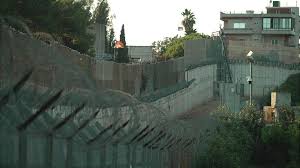
That’s the end of the dream proper, but either after this of before it, or running throughout, there is anxiety on my part about how I will get out of this country (all the basketball activity took place in the same country). I visualize the border crossing, which I seem to have been to before in a previous dream. There are logs across the border and soldiers. It is not terrifying, perhaps because I have been there before and crossed, but it does create anxiety. Again, it is not clear when this anxiety comes to me, if it is a postscript to the dream or sort of a running commentary.

First interpretations: This dream is about communication, specifically my poor communication skills. At different turns I am frustrated by my inability to communicate clearly and with my audience’s lack of interest and/ or capacity to understand. Whether negotiating the price of a drink (small matter) or talking about my life to an old friend or giving a speech to a large group, what I expect in terms of a reaction and what I actually get are at odds. It is not clear who is at fault in any of these incidents, and in fact in the dream I feel an alternating sense of frustration with others and frustration with self.

Especially with the bar woman, I am aware that I “do not speak the language” and should be more intuitive about what she means, but also in the basketball speech, even as I am speaking I know that I am going on too long, and insisting on the importance of what I am saying too much. This dream seems important in that it encompasses most of my life stations, parents, my own family, work, and friends. Interestingly, my communication with my son seems to be the most effective, and the golf is the only incident that does not seem to take place in Venezuela.

Impressions: At least two things in the dream reference other dreams–the auditorium and the border. Thinking about it while awake, I have memories of both of these dreams. Of course, not having kept a dream journal at the time, I am not absolutely clear whether these dreams really took place in previous months or if there were in fact part of last night’s dreams. I had a lot more dreams last night as I woke up from dreams several times, and this dream sequence here recorded was, I think, only the last tail end bit.

The drunk coworkers, one of them literally blind! are instructive. First reaction is perhaps overly positive–although I am poor at communicating, they are worse and require me to take control of communication. Finally, the long night trope is a staple of my dreams, especially those I remember well. This dream fits very well into the long night theme, although the basketball practice was in the late afternoon, and may have therefore been a flashback. Especially the drunken revelers, the various types of ladies of the night in the background, and the stumbling from place to place are characteristic of my “long night” dreams.

Note: If you enjoyed this piece, you may also enjoy “Everest Dream.” Available below.