
On a Guy Called Whit (with a Cameo from Ambassador Rahm Emanuel)

New Note: I am republishing this piece for two reasons: First it’s been three years since I wrote it and it is one of my all time favorites. Second, as the title shows the politician Rahm Emmanuel makes a cameo and there is at least a possibility that he will run for President in 2028. This is a funny piece and it totally speaks for itself. I hope you like it.

Note: This is a piece about a guy called Whit. Over the past little while I’ve run into this guy in a couple of craft beer pubs in North and Central Kyoto. In a sense, it’s faithful to the original intention of thekyotokibbitzer—to check stuff out around the local area. Naturally, “local” is a highly fungible term, which is what makes it so excellent, but it feels good to get back to basics.

Interested readers may also want to revisit my earlier piece about my North Kyoto run-in with musician Damon Krukowski—currently a prominent critic of Spotify’s business practices, but formerly a dick to my face.

I met this guy called Whit at a Kyoto pub we’ll call T’s. T’s is owned and operated, naturally enough, by T. It’s a pretty nice place, although not everyone thinks T is a nice guy. He and I, though, rub along fine. T likes to wear sandals. So do I.

T’s seats about twenty-odd and lets people stand around without a chair, so it can get crowded. On the night I met Whit, though, it wasn’t. There was just me at the L-shaped corner near the entrance, Whit and three male friends at a table, a lone woman mid-bar, and a few other strays.

Whit and his buddies were winding things down, and before they paid, Whit sidled up to the lone woman.

“Genki desu ka?” he asked.

To understand what’s happening here, you need a little context on the phrase. Literally it means “are you cheerful?” but in practice it’s “how are you?” — a totally standard, everyday greeting. It is also, however, a classic Japanese pick-up line. Both the pickup artist and the garden-variety sleazeball deliver their “genki desu ka” with a little extra—an undertone, a wink, a leer.

This guy called Whit, I could see immediately, was leaning heavily into the leer.

I have no idea of how this guy called Whit would have fared with his approach if it had been allowed to develop because T himself came flying around the bar and snapped at Whit (in Japanese) “don’t talk to her, get away from her.” As a mere observer to the developing situation this seemed excessive, especially because T’s is the kind of place where fairly easy conversational congress between the sexes is not only tolerated but actually encouraged. T and his crew will proactively introduce men to women and women to men on the regular. Later in the evening, all sorts of events may transpire at T’s. So this was out of character for sure.

This guy called Whit was taken aback, and soft-pleaded with T to let him join the woman, however T was firm. “If you don’t go back to your table you will have to leave. If she comes to talk to you you can talk to her. Not before.” Again, I cannot stress enough how out of character this is for T’s, so naturally I was curious. I am not normally nosy, however when curious I can be. Whit took the L and slunk back to his table. His friends didn’t seem to have noticed the action, but I did, so I said to him, “hey man, that was pretty crazy. What did you do?” “Nothing,” said Whit, “I just wanted to talk to the lady.” “Yeah,” I said, “I’ve never seen T react that way.” “He just doesn’t like me,” said Whit, “maybe I’ll never come back here.”

Whit and his crew left shortly after and I asked T what was going on. “Whit always hits on women,” he explained, “I don’t like it.” “What about Philip?” I asked (“Philip” here being someone T and I both know), “Philip is always hitting on women too.” “Case by case,” said T, “case by case.” Case by case arguments are very hard to rebut as they index in advance their non-adherence to norms of “fairness” or “consistency.” Also, I knew nothing about Whit and was in no way invested in manning his corner. T and Whit have a history, I supposed, and T would not kick a customer out just because. Such was my first meeting with this guy called Whit.

Not long after this first meeting I was with a friend at a pub we will call K’s, which is in Central Kyoto. K’s is smaller than T’s, seating only about 8-10 inside with some flexible outdoor space as well. Unlike T’s, at K’s there is not much flirting and the like as the space just doesn’t really allow for it. I was there with a buddy and who should come in but this guy called Whit. Now I didn’t mention that at T’s Whit had an American accent. (I later learned he is from Philadelphia by way of San Fransciso.) However he rolled into K’s rocking a full-on British accent, and not a bad one at that. He was standing right next to me, and I did a double take. “That’s that guy called Whit,” I thought, “but it can’t be, Whit’s American.” I looked again. Definitely Whit.

So I asked him, “hey guy called Whit, what’s with the British accent?” He slipped back to his American accent, “oh yeah mate, that’s just something I do sometimes.” OK. We chatted a bit and it was clear that he didn’t recognize me. I reminded him of our meeting at T’s, and he recalled the incident. But I could tell he wouldn’t remember my name next time. He left K‘s after one beer.

My buddy hadn’t met this guy called Whit before, however I had already told him the story of his getting shit-canned at T’s. “That was the guy,” I told him, “the guy called Whit.” “What was with the British accent?”my buddy asked. “I don’t know, some kind of affectation. Maybe he lays it on when he tries to pick up women.” Just a guess on my part, but a pretty good one considering later events.

A few weeks later I was at a pub we will call M’s, also in North Kyoto with another friend we shall call “Philippe” in order to easily differentiate him from “Philip.” It was just before seven in the evening, when who should walk in but the guy called Whit with none other than the newly appointed United States Ambassador to Japan Rahm Emanuel and his wife Ann. They just strolled on in and it was clear that Whit was somehow chaperoning them. I stared over at Rahm Emanuel for a bit and then said “hey there Mr. Rahm Emanuel.” Rahm Emanuel (or just Rahm, as I like to call him) acknowledged his identity and he and I started chatting. At the same time Ann was chatting with old Philippe there at the bar. Before I said hello to Rahm I wondered what on earth he was doing with Whit. And then I thought well, I know Whit doesn’t have a job, he seems to frequent pubs all the time, probably he has some money somewhere, tech money or something. Maybe he’s some kind of VC and the Rahmster has gone out of his way to meet him in Kyoto. Implausible as this scenario seemed, I didn’t know what another explanation for this threesome could be. However, I was off-base.

Had this guy called Whit in fact been a prominent VC it would have added layers to my understanding of him for certain. So I asked him, “hey there guy called Whit, how do you know Rahm Emanuel?” “I just met him,” he replied, “across the street at L’s. We got to talking and I brought him over here.” (L’s is a cocktail bar I have never been too, which is 15 feet from K’s.) It turned out that Rahm and Ann were in Kyoto en route to Hiroshima where they were to visit the Hiroshima Peace Museum with none other than the Prime Minister of Japan. In the meantime here they were, hanging with Whit. Rahm explained the situation thusly: “here in Kyoto my minders let us off the leash so we can walk around freely. This would never happen in Tokyo, because we have security around us all the time.” He seemed genuinely happy to be minderless, and was as relaxed as could be at the bar. In no time he was dropping f-bombs, dapping up the waitresses, and asking me how to say things in Japanese. Rock and roll Rahm baby.

(As promised in the title, Rahm is only supposed to have a cameo in this story, however I have to recount our brief conversation about politics. After I introduced myself, Rahm asked me “are you on the team?” I understood him to mean was I a Democrat. I replied that I was basically on the team, but that I was kind of a left libertarian. “No such thing,” said Rahm. “Well then you’re looking at a unicorn baby,” said I.)

In any case, once I had gotten a bit of a feel for my new buddy Rahm I had to fill him in on something. “Hey Rahm, you know this guy called Whit likes to go into bars and put on a fake British accent?” Rahm didn’t miss a beat as he turned to Whit and, I swear, elbowed him in the ribs, saying “did that help you score buddy? Did you get across the finish line?” Rahm Emanuel, former chief of staff to President Obama, former Mayor of Chicago, and presently the honorable ambassador to Japan, had already grasped the essential nature of this guy called Whit. And he, for one anyway, had no issues with it.

Read more
On the Prefix “Soft”: Part I

The prefix “soft” is incredibly useful. Generally speaking, it indicates either actual relative softness (e.g. “soft cream,” a softer form of ice cream), or a certain gentleness and/ or flexibility obtaining to a non-tangible concept (e.g. soft schedule). This piece (which will be broken up into a couple of posts) will explore a number of instances of the prefix “soft” at greater or lesser length.

“Soft-schedule”

Francis Wade in the classic blog post “Hard vs Soft Scheduled Items” comments thusly on soft scheduling:

Professionals who undertake the discipline of Scheduling at higher skill levels (Orange and Green belts) have their calendar as the central point of focus (…) Their lives would be made much easier if Outlook were to distinguish between different kinds of segments, recognizing them as either “hard” or “soft.

(Let’s just pause for a moment to appreciate Wade’s capitalization of “Scheduling,” as well as his reference to “Orange and Green belts” as scheduling skill levels. This dude is serious about scheduling.) Wade here hits on an essential point, Outlook (the Microsoft program) does not (or did not, Wade was writing in 2011) allow users to classify schedule items as “hard” or “soft,” viewing instead all items as identically fixed. In Outlook, something is either on or off one’s schedule. This is a problem according to Wade because:

A soft item is one that only involves the user, and can easily be moved around one’s calendar, with few immediate consequences. They might have great importance, but a late start would not endanger the end result.

Obviously, Wade is differentiating a soft item from a “hard item.” Thus, in the realm of scheduling, “soft” indicates that the item is flexible because it is individually owned. For example, a teacher may have “grade papers” on her schedule at an appointed time, however in practice everyone knows that this schedule item is fungible.

In my opinion, Wade is right on as far as he goes. His point about Outlook is a seminal one. However, I do not agree that we can only soft schedule something that applies only to ourselves. I believe we can just as easily soft schedule a call with a friend or a meeting at the pub. If my friend texts me and wants to speak on the phone tomorrow, I might reply with “sounds great, let’s soft-schedule that for 2 PM.” This means, clearly, that 2 PM is the target time, however it may be a little earlier, or, more probably, a little later. If you think about your own life you will probably recognize the role that soft scheduling plays in it. In fact, soft scheduling is everywhere, you probably just don’t use the term.

(Before we go any further I want to address the issue of hyphens. Mr. Google suggests that “soft schedule” should not be hyphenated, nor, in fact, should basically any of the terms this piece will examine. I can give this one to Mr. Google because it is just easier to skip the hyphen. However, logically, and even emotionally, I like the hyphen for a lot of “soft” prefixes. This is because the hyphen, in my view, serves to attach the prefix to the term, thereby underlining the fact that we are engaging in an act of proactive and meaningful categorization.

An additional grammatical point here is that nowhere in Wade’s piece, for example, does he use “soft schedule” as a verb phrase, or indicate that we can do so. Folks in general massively underrate the effectiveness of turning a noun phrase like “a soft scheduled item” into a verb phrase “to soft schedule.”)

In any case, you get the idea with soft scheduling. Let’s move on.

“Soft pedal”

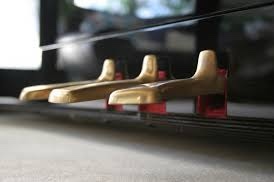
A soft pedal originally referred to a piano pedal, which is interesting, however for our purposes it means something else. According to Collins dictionary: “If you soft-pedal something, you deliberately reduce the amount of activity or pressure that you have been using to get something seen or done.” (Look at this s***—Mr. Collins Dictionary is hyphenating soft-pedal! Mr. Google, though, disagrees. Why would we hyphenate soft-pedal and not soft schedule? What’s going on?)

We see soft-pedaling all the time in politics. A politician or party will advance an idea and then back away slightly from said idea without entirely abandoning it. They just turn down the temperature around it. It will be apparent that soft-pedal is lexically and conceptually related to a number of other idioms, for example “tap the breaks,” “put on the back-burner,” “let’s put a pin in that,” and, my favorite and perhaps quasi-original to me, “to bracket.”

(When we bracket something, we acknowledge the existence, and importance, to one or more parties in a conversation, of the item in question while indicating that the item needs to wait or be placed in the background for the time being. We may bracket an item because we don’t have time to deal with it right now, because it doesn’t fit conceptually with what else we are doing, or because it is too sensitive, political, or otherwise complex to address at the current moment. As an example, let’s imagine a newly hired HR manager at a large company. In the first week on the job she is told by multiple people of an alleged instance of sexual harassment from a senior male manager to a subordinate younger female. The HR manager is told that everyone knows about this instance and that nothing has been done or said on any level. Now, our HR manager (let’s call her Jessica) is in a tight spot—obviously the allegation is a live issue, and perhaps a growing one as it has not even been acknowledged. Also, by very virtue of the fact that this complaint has come to Jessica several times immediately after her hiring it is clear that other employees are expecting her to do something about it. And she should. On the other hand…Jessica is brand new. She probably does not have a full handle, or even much of a grasp, of the corporate culture or power dynamics at the company. She does not know who to go to, necessarily, and even if there is a specified reporting flow for these kind of complaints, and, this point is crucial, she knows already that even if there is a flow it is not functioning properly. In fact, if she was to bring the matter immediately to a direct superior she could well be stepping on a political land mine. So our Jessica, god bless her, may say to her colleague something like: “I get it. This sounds like a serious issue and I understand that the fact that it has not been addressed only exacerbates the situation. However, let’s bracket it for the time being, and in the meantime I’ll try to learn more and see what the right next step might be.” Now in theory is this the right call? Maybe not. Maybe Jessica should go guns blazing up the chain. But no, she really shouldn’t. She should listen, observe, assess. In other words, she should probably bracket.)

Back to soft-pedal. Unlike soft schedule, which is basically always a positive, soft-pedaling can cut both ways. Soft-pedaling can be a risk. Take for example the Democratic primary contest for the 2020 presidential nomination in the United States. As any political watcher knows, candidates in primaries generally tack further to the left or right and in the general tack back to the center. The reasons for this are obvious, however in the digital age where every word, every micro-shift in a candidate’s position, gets analyzed in depth in real time, it is becoming far harder to tack from side to side without coming off as inauthentic. In the 2020 primary, Bernie Sanders’ plan for Medicare for All became the default position of anyone running anywhere near the left lane of the party. Now, the fact that Medicare for All was unlikely to get passed even under a Sanders administration, much less that of a bandwagon candidate like Kamala Harris, made it basically safe for a leftish candidate to champion the cause right through the primary.

Two candidates, Kamala Harris and Elizabeth Warren, initially jumped on-board with Medicare for All as they were trying to run in the left (Warren) or center-left (Harris) lane. Other candidates including Joe Biden (the eventual winner) and Pete Buttigieg were running basically as centrists, so they weren’t obligated to support it. Others, such as Andrew Yang, were niche candidates and/ or somehow on a tangent to the left/ center axis, and were therefore not endangered by the issue one way or the other. Harris and Warren could have just stuck with their support, however as the primary advanced they felt compelled to soft-pedal their position. This was probably from some combination of media demands for them to differentiate their plan from Sanders’, advisors telling them they needed to triangulate ahead of the voting, and, in Harris’ case, a lack of a political core that left her susceptible to political wobbling. Harris was going to lose in any case; she was a bad candidate with a toxic relationship to her staff and a habit of telling ridiculously embellished life stories. Warren, on the other hand, arguably lost her shot at the nomination because of her decision to soft-pedal Medicare for All. She couldn’t get her position straight, started to dissemble and flop-about, and her candidacy stalled in the Fall of 2019 as a pretty direct result. Such was the fall-out from her soft-pedal.

Nonetheless, in politics and in organizational settings the soft-pedal can be a crucial move. In an office environment a manager or manager group may try to roll out a new initiative and run into headwinds from employees. Said managers then have a choice, they can continue to push straight through and force the initiative, in the process risking the goodwill and enthusiasm of the team, or they can soft-pedal. Here, the soft-pedal is often the right call because it is quite different from “the climb down.” When managers climb down (or “back down” in more common parlance), they may put the issues to rest however they will likely lose face. Sometimes a climb down is necessary and hygienic, as when the managers realize the initiative is simply a non-starter and it’s best to cut their losses. The soft-pedal, however, allows for two things: i) it allows the managers to save face and to maintain the flexibility to bring the initiative back, perhaps in a revised form, at a later date, and ii) by leaving the initiative on the theoretical table while taking it “off the front burner” employees are reminded that the point behind the initiative may still be important in the future. When and if the initiative is brought back, the issue set has been “seeded,” and this seeding can “prime” employees to be more receptive the next time around when the initiative (by this time re-packaged) is re-introduced. Of course, the managers can also just allow the initiative to die off of its own accord over time while avoiding the (more sudden) climb down.

Such are the pros and cons of the soft-pedal. Handle with care.

to be continued…