Everest Dream

images-1

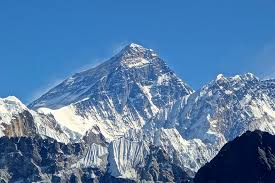
The night of December 31, 2012: Long dream about climbing Mt. Everest.  This third Everest dream was very different from the first two.  First, I was at a school and then climbed up a small opening, kind of a snowy slit barely big enough to fit through.  There were some basketball games going on and I planned to be back in 20 minutes or so.  Therefore, the school was probably my high school.  At first, the slit was just itself, but then Everest loomed up over me to my left.  I entered the frame, from the left.  Everest was enormous, black, and composed of huge blocks of ice-like mini-mountains such that it was difficult to discern where the actual peak was, or the possible way up. 

I was all alone and it seemed to be dawn, then two figures sleeping on the ice in orange suits started to stir.  They arose and then there were 20-30 more, mostly kids led my two overweight men.  We all spilled down to a kind of small clearing that may also have been a breakfast space.  The men explained that they could take the group only to 11’000 feet, no higher.  There was some disappointment, not much.  Everyone looked very well outfitted, except the speaker who was plump and wearing a kind of jersey. 

This group went away and there were other climbers, one or two of whom I spoke to.  It all started to take a rather long time and I knew I would be late getting back.  I started to head back up to the ridge that would lead back to the slit, but realized that I had forgotten a shoe in the clearing.  Eventually I got back to the ridge with the shoe, looked up, and saw what was probably Everest’s peak.  It was rounded and covered in black ice.  It looked very far away, although at one point in the dream, perhaps before, I had analyzed what looked like a viable path toward the top.  Back at the snowy slit, I ran back down it at full speed, cheerfully.

First Interpretations: The Everest dream is the third in a series.  The first Everest dream I climbed Everest overnight.  It took about 12 hours.  Everest was covered in asphalt and climbing it was a breeze.  The second one I was with my son.  We did not get to the top, and the mountain was somewhat more realistic, craggly with ravines.  There were shops alongside the ravine we were climbing made of wood and we ate there and also climbed around through the shops that were all connected and made up a kind of maze. 

There was no pressure to get to the top, lots of climbers on the mountain.  In this most recent one, Everest was at its most interesting and symbolic.  It was massive and loomed above me with presence.  It was to be revered, feared, awed.  The access is interesting as well–the slit almost like a birth canal, covered back over itself and very narrow.  Then, it opened unto another world entirely.

Impressions: The birth canal to a spiritual world.  Most people, even well equipped, cannot go above 11’000 feet (you can do this in a day hike).  Also, 11 could signal the 11th house, with the 12 house of mystery being difficult to access.  I could make out the top, but didn’t have the time and wasn’t equipped just now.  Still, it was an honor to have been there, and I came back exhilarated.

Note: If you enjoyed this piece, you may also enjoy “Border Dream.” Available below.

On the Ump

Epigraph I:
It’s better to burn out than to fade away.
Neil Young
Epigraph II:

I’m seething in the feeling that I’m driving the dynamite truck

Seam (originally by Breaking Circus)

Epigraph III:

Anything can come

John O’Donohue

New Note: I first wrote and published this piece in September of 2018, after I left my job, temporarily, and was casting about in a somewhat indistinct way. It’s about 1200 words, and I wrote in about 12 minutes on my phone, which is not normal. What was happening of course was, I was recovering my childhood abuse through PTSD symptoms, and this led me, at least at this moment, to a kind of hyper-clarity. PTSD is really quite interesting, in that it can lead to hyper-clarity and the total opposite, sometimes within the course of a pretty short amount of time. Such it was with this time period.

This piece was about me trying to enlist my father, specifically, into understanding and taking some kind of action, on the abuse that I had suffered. This was not happening at the time, and I was a little frustrated by it, but then I hadn’t fully worked out all the pieces, so how could he have, I guess? Basically, I was saying “read what I have to say and you be the judge.” Instead, other things occurred, which I won’t get into at this time; I got over the immediate PTSD phase, and went to New York to see rock bands. 

I am still working on getting my father to come up to the plate on this whole issue, and I think he is getting there. The other night I discussed with him Oedipus at Colonus, the play by Sophocles, written between 406 and 405 BCE. That’s a while back. Here is the AI summary (yes I’m giving way to AI summaries):

Oedipus at Colonus is a Greek tragedy by Sophocles that follows the blind and exiled king Oedipus as he arrives in Colonus, near Athens. Accompanied by his devoted daughter Antigone, Oedipus learns that this sacred ground is prophesied to be the place of his death, and his burial there will bring blessings to Athens. The play chronicles his final days as he confronts his past, is threatened by his brother-in-law Creon, and is unlimitedly received by King Theseus of Athens, who helps him find a peaceful end.

That’s a pretty heavy plot; the ancients knew their business for sure. My own father is neither blind nor exiled, although he is a little deaf and tends to repeat himself from time to time, but I think he is still on top of things, or has the capacity to be. What I believe is, there is still time, because there is always time.
=====

Original Preface: This little piece alighted on the author a few weeks ago when he was undergoing a bit of a midlife re-orientation.  The piece is presented as it presented itself, with edits for cleanliness only. 

Karma is simply the field of what you put in place in your last lifetime.  As a person you arrange your life in such a way that it leaves clues as to the road you took.  When it’s time to switchback, all you have to do is have the courage to take the turn.  After the turn, it’s basically just a matter of reading the tree markers in the forest.  The challenge is, some of the tree makers have fallen in the leaves, been washed out by rain, or moved by the wind.  So you are in new territory.  The map, the degraded set of markers you left behind, is not the territory.  However the last path was so densely specific that we keep trying to use our old map on the new path.  We need that old map for a bit because those markers are the only ones we have.   However we need to find our footing pretty darn quick in order to learn to navigate the new territory.  Otherwise, we follow the markers and mistake them for fresh signs.  Very quickly, the old signals become noise. And then we are in a deep dark wood and are in danger of over-exposure, or, worse, pure confusion and terror about where the path may lie.

The individual is mortal, and beyond mortality is the mystery.  Tribes and societies are forms of collectives, and collectives form a spiral pattern that we call a system. Collectives, and spirals, are mortal as well, and when a spiral approaches its switch back point, the map begins to degrade and the particles of the spiral, the people in the current incarnation of the pattern, must attempt to discriminate the signal from the noise.  Of course this is a much more difficult task than it is for an individual because there are many more tree markers and the winds and rains are howling all about.  This is simply because the field is larger to accommodate so many souls.  So instead of just having to read a few old tree markers, folks must try to receive the field.

To receive the field you have to read the field, and the only way to read the field is to be looking right at it.  In baseball, there is only one position that can see the field and this is the catcher.  That’s why catchers are said to be good management material in general. Another way to say this is they have a wider view of the constraint set.  However, although the catcher can see the field and understand the constraint set in front of him, there is one variable he cannot control.  And this is, of course, the umpire.  The ump.

The ump calls the balls and strikes and the ump is a court of no appeal.  After all, he has the power to toss you from the ballgame altogether.  The only way to deal with this particular variable is to hone the craft of a catcher.  The first piece of craft is the act of framing a pitch.  Here the catcher subtly adjusts his glove in order to obstruct the ump’s view of the location of the pitch.  It is easy for the catcher to whip his glove on a ball in the dirt back to the strike zone, but the ump will spot that in a second.  So a catcher, if he wants to be any good, has to learn a little guile.

This guile can taken pretty far; and there are other ways to work an ump as well.  The classic, “ah come on ump,” is OK, but it’s the same as whipping the bill out of the dirt really.  A more effective trick is chatting the ump up.  Becoming his friend and letting him think you are actually on his side.  This is effective to a point as well, and extends the craft.   However here is where we need to remember our Dylan.  From “Just Like the Tom Thumb Blues,” we learn the following:

As Dylan once sang, you can start out soft and end up hitting the hard stuff — thinking people will stand behind you when things get rough, only to find out the bluff was your own. Sometimes you just want to go back to New York City and say you’ve had enough.
after Bob Dylan

Dylan is saying that though the use of guile helps you work the ump, you can start to mistake guile for the deeper craft.  You start to fall into your own trick.  You start to think you are the ump.  And these are deeper waters indeed.  In fact, this is the most dangerous game.  And in this zone, we need a secret weapon.

The idea of a secret weapon is apparently popular in many superhero movies these days, and we can read the field just a little to see why.  These so-called secret weapons may take the outward form of a literal weapon, one which defends against the apparent enemy and leaves death and destruction in its wake.  However when we use this kind of weapon, the forest we are in is in fact that of the irreal, where the furies shriek and howl.  However the superhero’s true secret weapon is something altogether different.  His true secret weapon is the light within, which can be transmuted into gold and used to navigate the irreal, and hunt the most dangerous game.  Where is that light within?  To find it, the catcher has to go pretty far back into things to find it.  In certain eras, folks may need to do something a little difficult to get there—as the Chinese say, may you live in interesting times.  The catcher, here, has to remember.

The first song I remember my own father singing, and one of the only ones I head from him, was from Bob Dylan.  I didn’t know who Dylan was, nor did I know the name of the song. The line my father sang was one of those old Dylan riddles — something about a pump that won’t work because someone stole the handles. I didn’t understand it then, but it landed in me like a talisman.
after Bob Dylan .

If the catcher is blessed to have such a talisman, he has a fighting chance.  The thing to do here is to keep your eyes and ears on the field and your gut and your body tuned into the ump.  Only this way can the little catcher tell when it’s time to play his card, which is of course the joker.  People have sought Dylan in all his guises to the ends of the earth and no one, to my knowledge, has caught onto his tricks.  I can’t say for sure that I’m onto all of them either, but I knew one thing.  When the vandals have those handles, the pump ain’t working. This is the moment the catcher makes his break with the ump. This is when he calls his bluff.

Dedication: For my Father, who caught me how to catch.