Scenes from Hamilton College II: Freshman Year Continued (with cameos from Honey, the Print Shop, and Billy Bragg)

Note: In Part I of this series I wrote about my freshman year at Hamilton, focusing on two friends, Ian and Jake. Part II will branch out and cover a fairly wide, and somewhat random, set of memories.

Epigraph:

I had an uncle who once played for Red Star Belgrade
He said some things are really best left unspoken
But I prefer it all to be out in the open

Billy Bragg

I have already written quite a bit about the characters who lived in the North Dorm freshman year at Hamilton, however there are a few more to cover. First were the first floor stoners. Basmo was a stoner, and he lived on my side of the dorm, but on the other side of the first floor lived the hardcore stoners. This consisted of a quad of guys whose names I don’t totally recall, but one was Peter Kimber, and who got baked at all waking hours and played Roger Waters’ Amused to Death solo on repeat. Next to them, in a double I believe, lived Keys. Keys’ actual name was Caleb, but everyone called him Keys because of the six to eight keys he had dangling from around his neck at all times. What on earth did he need all those keys for? One for the dorm, maybe one for a car (although he should not have been driving at all because he was the single biggest stoner in the dorm and perhaps on campus), what else? I can’t imagine.

Keys and I were not that close, but I did see a lot of him because we had the same job, which was in the school print shop. I don’t know if print shops still exist in the same form in this digital age, but back then the print shop was busy as. We held the campus down. There were two slightly older women who worked at the print shop full-time and three of us students helping out. The full-timers were Sally and Deb. Deb was the boss, and she was kind of motherly and kind to the students. Sally was nice too, but she could be tough. She would bark at us when we made mistakes, which was often because we were running large machines that would glitch pretty frequently. Sally was both the little sister to Deb and also the enforcer. I liked them both, even though Deb ended up firing me, which I’ll get to later.

So Keys would come in lit every day and sort of fumble through his work, which consisted mostly of stapling and collating. I was trusted more than Keys, with good reason, so I ran the machines, but I also did stapling and collating. We printed things for professors, menus for the dining halls, the school newsletter, and a bunch of other stuff. The third student was a girl whose name I don’t recall, and she was a super-hardcore feminist. Everything in the world that was wrong was men’s fault, and it was her only topic. She didn’t seem to dislike me so much as just want to lecture Keys and I all through work, which usually lasted two to three hours in the afternoon, about the ills of men. I was, and am, up for a little feminist theory but Keys was no help and I don’t even think he noticed her, so it was kind of just me and her. Serious feminism and collating are, perhaps, not best paired.

I didn’t originally want the print shop job. I needed work, and there was kind of an intake for all working students where you put your first choice. I put library, but didn’t get the gig. John Innes put audio/video and he got it, which meant he often had to get up early to set up videos for professor’s classes. I would not have been good at that. The print shop was more my speed, but eventually it got really repetitive and I started skipping work more and more. I would go walk in the woods behind campus, or just drink coffee with about a half cup of honey and hang around after class. I also improved as a student through the year, and took my English classes pretty seriously so I was spending more time in the library, although still not sleeping much.

My money situation was tight, although not as bad as it would later be during my junior year abroad in New Zealand where it was super tight. I had a little income from the print shop and my parents sent a small allowance once in a while, but I usually didn’t have more than about 15 bucks in my pocket at any one time. What money I did have went mostly to CDs, as many as I could afford. I had a dining hall pass, but the dining hall food was not really my style so I mostly lived on toast and coffee with honey. Then at night people would order pizza from a local shop, but that was too expensive for me so I would get “friend dough.” Fried dough is just what it sounds like–deep friend pizza dough with powdered sugar, and it cost about $1.50 for a big box. Not the best diet, but it was what I could afford.

One time the father of one of my classmates from high school visited for some reason; he must have been in the area. We met for lunch, and when he left he handed me $100 bucks. This was a serious windfall, and I immediately blew it on CDs, perhaps Neil Young’s Harvest Moon and others. My CD collection, although no rival to Ian’s was slowly increasing and I liked it.

Back in the dorm, in addition to the guys I have discussed, there were also girls, who lived on the second and fourth floor. I got to know the girls directly above us on the second floor pretty well, although not many of the others in the dorm. Among these was Rochelle, who was the girl I was closest to. Rochelle was, I think, from New York, and when she arrived on campus she made a big deal about having a boyfriend. This didn’t last long however, and although I didn’t want her to be my girlfriend I did like hanging out with her. She kind of mothered me a bit though, which I wasn’t so into, because I was going to do what I was going to do. I still have her contact, and I believe she might even read this piece! I think I also met Marie Bishko freshman year, and Marie is someone I thought was really cool.

I don’t really remember any us North guys hooking up with the second floor girls, but it must of happened. Another incident which occurred around this time had to do with my roommate B. and his girlfriend from high school. Like Rochelle, and even more so, he made a big deal of his girlfriend and told us all kind of semi-salacious details. Then one day he told us she was coming to visit and he wanted the three of us in the quad to go to a hotel for a night. I told him sure, if you pay, but he said no. He was dead serious but we told him to forget it, so sure enough she arrived and they hooked up while we all pretended to sleep. That only happened once, thankfully, and it still strikes me as pretty odd. He later broke up with her and fell in love with a Jewish girl, but that didn’t last either because he wasn’t Jewish.

I mentioned in Part I that Jake pledged the fraternity Sig. Ian and John Slack also pledged, Chi Psi (I had to Google the spelling). I spent some time at Chi Psi as well as, where I was alleged to sit on the steps in my trench coat, but I preferred Sig. There was another frat called Deke, and that was where the wildest, and the worst parties were. At Deke there was copious amounts of Milwaukee’s Best (the fabled Beast) and jungle juice. The parties were terrible, but there was a pool table which was a bonus. I didn’t drink much at college, mostly because I had no money, but I did drink some at Deke, with exactly the results you would imagine. I believe it was at Deke where Marc Campbell pulled off his famous pacification move. I didn’t pledge a frat, and I was and remain glad I didn’t. Greek life wasn’t for me.

One guy who I believe lived in North was called Gabe. Gabe was super popular at first in freshman year, and he played guitar on the grass outside the dorm. He was pretty good and he would play “Sexuality” by Billy Bragg which was surprisingly popular in 1992. People, including girls, would flock around him, but over time something seemed to happen to Gabe. He ran for class president and lost to a guy called Kerry who was African American. Kerry lived down the hill in a different part of campus, and he ran really hard for the job. I think Gabe’s ran mostly on a music ticket, and although he got a lot of votes I think he came in second. He may have taken this hard, because he kind of faded into the background, or maybe he just changed up his action. I think I voted, but may have voted for Kerry.

As I mentioned, Jake and I saw less of one another once he started pledging, however we still saw each other in English class and in the English building. We overlapped professors, although he knew some I did not. The two best professors in the English department were George Balkhe and Fred Wagner. Balkhe was still in his prime, maybe late 50’s, whereas Wagner was older and I believe in a semi-emeritus role. I wasn’t even sure I ever took a class from Wagner, but it’s been confirmed that I did, Modern British and American Drama, which makes sense. I didn’t much like 20th century American plays, as plays are mostly blueprints anyway. In any case, Mr. Wagner knew me early in the year because Balkhe praised my reading knowledge to him. Jake and I would go to Wagner’s house, also down the hill toward the town of Clinton (the closest town to Hamilton, about a 15 minute walk), and I recall once we played him the song “Marlene Dietrich’s Favorite Poem” by Peter Murphy, formerly of Bauhaus, with Peter Murphy murmuring “sad-eyed pearl and drop lips…”

Peter Murphy is super underrated by the way, and Wagner liked the song, which just showed how cool he was.

I took a few classes with Balkhe, and we studied poems, and novels–typical choices mostly. I enjoyed these and read most of them, even Faulkner who is really dense. For the ones I didn’t I just faked it. Like I said, Balkhe thought I was amazing because on the first day of class he asked for a list of books we had read and I listed like 200. These were mostly Agatha Christie and John LeCarre and such, but I guess it was good enough. Balhke liked the singer Donovan and the song “Mellow Yellow.”

Electrical banana
Is gonna be a sudden craze

(I later saw Donovan at a new age convention in Boston when I was visiting Ian after college, which I will recount later).

Wagner and Balkhe are both passed away now, so rest in peace to two great English teachers and mentors.

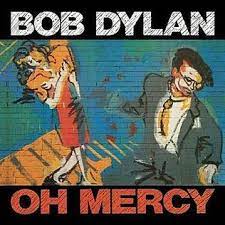
That’s about all I have on freshman year. The last thing is about the featured image for this post, which is the album cover for Bob Dylan’s Oh Mercy. I have written about The Pogues quite a bit, but the album I listened to most freshman year was Oh Mercy. After geology class had a break before lunch and would go back and semi-sleep to Oh Mercy. The quad was always empty at that time of day, and this was the best rest I would get. The album still makes me sleepy to this day, and features excellent production from the famed producer Daniel Lanois. So thank you Bob and Daniel.

Dedication: For Fred. And for George–I hope you are enjoying a little electrical banana up there in heaven.


to be continued…

The Most Insane People of All Time: #3 Elizabeth Holmes (aka You’re Outta Control!)

Epigraph: 

“This is the dawning of the age of Aquarius…”

— Aquarius/Let the Sunshine In, The 5th Dimension

Elizabeth Holmes emerges in Silicon Valley with the full prodigy package: Stanford dropout, world-changing ambition, and a carefully constructed persona. She leans hard into the comparison with Steve Jobs — black turtlenecks, minimalist language, intense seriousness — and presents herself as the young visionary who will revolutionize medicine. The pitch behind Theranos is irresistible: hundreds of diagnostic tests from a single finger prick. Investors, politicians, and media figures line up. The board fills with heavyweight names including George Shultz, and the company’s valuation soars to roughly $9 billion. Holmes becomes, on paper, the youngest self-made female billionaire. It’s classic Silicon Valley moonshot energy — bold claims, secrecy, and belief outrunning reality.

The problem, as insiders begin to realize, is that the technology doesn’t work at all. Engineers and lab staff struggle to produce reliable results, while Holmes and her partner Ramesh Balwani continue presenting the system as revolutionary. The company begins quietly using conventional lab equipment while maintaining the illusion. Whistleblowers emerge, including Shultz’s own grandson, who raises concerns at significant personal cost. The leadership circles the wagons. Meanwhile, John Carreyrou of The Wall Street Journal begins investigating, encountering secrecy, evasive answers, and mounting contradictions. His reporting — later expanded into the book Bad Blood — becomes the turning point. The narrative collapses, regulators move in, partnerships evaporate, and the once-mythic startup implodes.

Legal consequences follow. Holmes and Balwani are charged with fraud, and after a long, high-profile trial she is convicted on multiple counts. She delays reporting to prison after becoming pregnant, later giving birth with partner Billy Evans. Eventually she begins serving her sentence in a minimum-security federal facility. Even there, the mythology lingers — supporters, critics, and observers debating whether she was a calculating fraud, a true believer, or some combination of both. The arc is striking: Stanford prodigy, Jobs imitation, $9 billion valuation, total collapse, and prison. Less chaotic than John McAfee, less creepy than Keith Raniere, but still unmistakably outta control — a billion-dollar story built on belief, performance, and a technology that never worked.

Steve Jobs represents the template Elizabeth Holmes tried to emulate. Jobs cultivated a minimalist aesthetic, black turtlenecks, product mystique, and a “reality distortion field” that persuaded investors, employees, and customers to believe in things before they fully existed. But the crucial difference is that Jobs ultimately delivered. From the original Macintosh launch in 1984 to the iPod in 2001 and the iPhone in 2007, Apple shipped real, transformative products. Jobs bent reality rhetorically, not technically; Holmes attempted to bend reality where physics and chemistry refused. The comparison highlights both the ambition and the failure — she borrowed the style, but not the substance.

Bernie Madoff represents the classic institutional fraud parallel. A former NASDAQ chairman, Madoff operated a decades-long Ponzi scheme through Bernard L. Madoff Investment Securities, promising steady returns that attracted elite clients, charities, and feeder funds. By the mid-2000s, billions were under management, including investments tied to major institutions and wealthy families. In December 2008, amid the financial crisis, Madoff confessed to his sons, was arrested, and the scheme collapsed, revealing losses estimated at roughly $65 billion in paper value. The deception persisted largely through reputation and trust — investors assumed competence because of his stature. Holmes operated similarly: prestigious board members, high-profile endorsements, and a narrative of inevitability masked a system that didn’t work. Like Madoff, she benefited from credibility cascading downward — once enough influential people believed, the illusion sustained itself.

Sam Bankman-Fried provides the modern startup-era comparison. Bankman-Fried founded the cryptocurrency exchange FTX in 2019, and within a few years it was valued at around $32 billion. He cultivated a quirky, disheveled persona and promoted “effective altruism,” pledging to donate vast sums to global causes. FTX attracted major investors including venture firms and high-profile endorsements, while its sister trading firm Alameda Research operated closely behind the scenes. In November 2022, liquidity concerns triggered a rapid collapse, revealing commingled funds and massive shortfalls. Bankman-Fried was arrested in December 2022 and later convicted in 2023 on fraud and conspiracy charges. The arc mirrors Holmes: meteoric rise, media fascination, complexity masking weakness, and sudden implosion once scrutiny arrived. Where Jobs built something real and Madoff ran a traditional financial fraud, Bankman-Fried and Holmes sit in the same modern category — startup mythology outrunning reality.

In the end, the most astonishing thing about Elizabeth Holmes is not just the scale of the deception but the audacity of it. How, exactly, did she think she was going to get away with it? Blood testing is not social media. It’s not software. It’s chemistry, biology, physics — things that eventually either work or don’t. Yet she and Ramesh Balwani kept pushing forward, covering, deflecting, and doubling down as the gap between claim and reality widened. That’s the outta-control element: the belief that charisma, secrecy, and prestige could override science indefinitely. At some point, the story had to collapse. But like many figures in this series, Holmes seems to have inhabited a gray zone between calculation and belief — part fraud, part self-hypnosis — which made the whole thing both more dangerous and more surreal.

Then there’s the broader cultural context, including the willingness of powerful people to buy in. Even Barack Obama publicly embraced the Theranos narrative early on, holding Holmes up as a symbol of innovation and entrepreneurial promise. Chump. In retrospect, it’s striking how easily the image worked: the black turtleneck, the calm intensity, the world-changing pitch. Smart people — very smart people — saw what they wanted to see. It’s a reminder that charisma plus narrative can override skepticism, especially when wrapped in Silicon Valley optimism. The episode becomes a cautionary tale: will future founders learn from this, or will the same hubris reappear in new forms? The myth of the visionary is powerful, and the temptation to believe in it hasn’t gone away.

The quiet hero of the story, meanwhile, remains the Theranos whistleblower — George Shultz’s grandson — who raised concerns when doing so meant alienating family, risking his career, and standing against a multibillion-dollar narrative. He saw that the technology didn’t work, said so, and held his ground. In a story dominated by hype, status, and belief, that kind of stubborn insistence on reality stands out. Holmes’s rise is outta control, her fall inevitable, but the ending belongs to the people who refused to play along.

Note: If you liked this piece, you may also like the other ones in out “You’re Outta Control” series.

Are There Aliens In Our Oceans? An Objective Investigation

Note: This essay is written in the spirit of amused inquiry rather than firm conclusion. Human history is filled with reports of strange visions, unexplained lights, divine visitations, and unidentified aerial phenomena. The interpretation of such experiences has tended to shift with the cultural vocabulary of the time. Medieval Europeans often described encounters with saints or angels. In the twentieth century the language of extraterrestrials became available.

The psychologist Carl Jung famously suggested that UFO sightings may function partly as modern mythologies—symbolic attempts by societies to understand mysterious experiences in technological terms. Jung also observed, with characteristic dry humor, that UFOs often appear to be “somehow not photogenic.”

The present investigation was prompted by my brother Mike, who recently asserted via text message that extraterrestrials are currently residing in Earth’s oceans. His wife Coleen agreed. “They are everywhere,” she said. While this claim remains unverified, the oceans themselves are vast, poorly explored, and capable of sustaining a wide range of speculative hypotheses.

The purpose of the essay is therefore not to prove or disprove the existence of extraterrestrial life in the ocean. Rather, it is to examine why such ideas persist, how they resemble earlier historical visions—from medieval religious phenomena to modern UFO culture—and why the possibility continues to feel strangely plausible to otherwise reasonable adults.

Epigraph

There are aliens in our midst.

Wussy

The Jung Problem

At this point in the investigation one is reminded of a dry observation by the Swiss psychiatrist Carl Jung.

Jung noted that UFOs possess a curious property: they are “somehow not photogenic.” Sightings multiply, witnesses speak with conviction, yet the documentation remains just slightly blurry.

Jung’s larger argument was that such phenomena often behave like modern myths. They appear at moments when societies are under stress, technological change is accelerating, and people are searching for new symbolic explanations of the world.

In other words, the sky fills with things.


Medieval Precedents

This pattern is not entirely new.

During certain periods of medieval Europe, particularly when grain supplies were contaminated by the fungus ergot, communities reported vivid religious visions: glowing figures in the sky, saints appearing in fields, the Virgin Mary materializing in unexpected places.

Ergot poisoning, now understood scientifically, can produce powerful hallucinations. But to the people experiencing them the visions were not chemical side effects. They were divine manifestations.

Entire crowds could witness miraculous shapes in the heavens or detect holy images in the crust of bread. A modern observer might diagnose environmental intoxication or collective suggestion. The participants experienced revelation.

The important point is that the content of the vision reflected the cultural vocabulary available at the time.

Medieval Europe saw saints. Modern America sees aliens.

One can see this dynamic clearly in the case of Joan of Arc. Joan reported hearing voices and receiving instructions from heavenly figures whom she identified as saints.

Historians generally accept that Joan sincerely believed these visions were divine communications.

But it is difficult not to notice that saints were the most advanced category of non-human intelligence available in fifteenth-century France. The conceptual vocabulary for extraterrestrials would not be invented for several hundred years.

Had Joan lived in the late twentieth century, it is at least possible that the same experience might have been interpreted somewhat differently.

She might have reported a craft.


The Cold War Sky

By the late 1940s the heavens had acquired a new cast of characters.

The famous incident near Roswell occurred in 1947, just as the Cold War was beginning to reorganize the world’s imagination. Reports of flying saucers multiplied. The mysterious visitors were described with increasing consistency: small grey beings with large heads and enormous eyes.

The explanation most often offered by the authorities was considerably less glamorous.

Weather balloons.

Strange objects falling from the sky during the early Cold War often turned out to be classified surveillance equipment. Unfortunately, the phrase “weather balloon” never fully satisfied the public imagination.

Aliens, after all, are much more interesting than meteorology.


The Mulder Doctrine

By the 1990s the entire mythology had been carefully systematized by American television.

The X-Files:

In the series, FBI agent Fox Mulder dedicates his career to investigating extraterrestrial activity after his sister Samantha is abducted from their home during childhood.

The abduction occurs at night. A strange light fills the room. The sister disappears.

Mulder spends the rest of his life attempting to prove that what he witnessed was real.

His partner, Dana Scully, is assigned to bring scientific skepticism to the enterprise. Their relationship gradually becomes one of the most beloved partnerships in television history, built on the productive tension between belief and doubt.

Entire generations of viewers absorbed the idea that somewhere in the sky—or possibly beneath the ocean—extraterrestrial activity might be quietly unfolding.


A Modern Lens

Seen from a slightly greater distance, the pattern begins to look familiar.

Medieval villagers saw saints because saints were the explanatory language available to them. Cold War Americans saw aliens because aliens had become the new vocabulary of the unknown.

Both phenomena may reflect the same basic human impulse: when confronted with mysterious experiences, we populate the heavens with the most compelling figures our culture provides.

Which brings us back to Mike.


So Are There Aliens In Our Oceans?

It must be admitted that if an advanced civilization from another planet wished to observe humanity without attracting attention, the deep ocean would offer several practical advantages. The environment is dark, difficult to access, and rarely visited by surface-dwelling primates equipped with submarines that can only remain operational for limited periods of time.

From a strategic standpoint, it would be an excellent hiding place.

This possibility has occurred to more than one observer, including my friend Mason, who recently suggested that a technologically sophisticated off-world civilization might simply have decided that the bottom of the ocean was the most convenient place to avoid the rest of us.

Provisional Conclusions

My brother Mike believes there are aliens in the ocean.

Carl Jung might have suggested that mysterious phenomena often adopt the symbolic clothing of their era. The Middle Ages had saints. The twentieth century produced extraterrestrials.

Mike has simply moved the story offshore.

The oceans remain vast and poorly explored. The woods remain dark and occasionally unsettling at night. Both environments have the correct atmospheric conditions for unexpected encounters.

If extraterrestrials are present, they may well prefer the sea.

But it would be a mistake to rule out the woods.

In either case, it seems wise to remain polite.

Footnote: The Ocean Logic

It must be admitted that if extraterrestrials wished to establish a long-term observational presence on Earth, the ocean would offer several advantages. Humans rarely visit the deep sea, and when we do we tend to leave fairly quickly due to crushing pressure, darkness, and the general inconvenience of breathing water.

From the perspective of an advanced extraterrestrial civilization attempting to avoid unnecessary interaction with our species, the ocean may therefore represent the single most sensible real estate on the planet.

Mike may, in other words, be thinking strategically.

POSTSCRIPT: Supplemental Testimony

Shortly after the investigation began, the primary witness—my brother Mike—provided additional clarification regarding his position.

According to Mike, extraterrestrial life has not only visited Earth’s oceans but has been present there for a considerable period of time. The aliens, he explained, appear to prefer the environment and have constructed bases beneath the sea.

When asked for supporting evidence, Mike cited the well-known Navy pilot videos showing unidentified aerial objects performing unusual maneuvers.

These videos—often referred to as the “Tic Tac” incidents—have circulated widely in recent years and are frequently interpreted as evidence of advanced technology of unknown origin.

Mike considers them decisive.

A second observer, his wife Colleen, agreed with this general assessment while expanding the hypothesis somewhat.

In her view, extraterrestrials may not be confined to the ocean at all. Rather, they may be present around us at all times.

According to Colleen, it is entirely possible that aliens walk among us.

At this stage of the investigation, these claims remain under review.

Dedication: For my brother Mike. I love you bro, but I still thinks them shits are in the woods.

Note: If you liked this piece, you may also like the pieces below, which also discuss the famous psychologist Carl Jung.