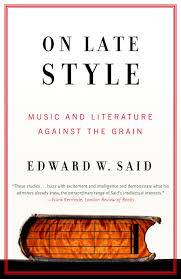
On Edward Said’s “On Late Style.”

Note: This piece takes up On Late Style, the posthumously published and deliberately unfinished work by Edward Said on what he, following Theodor Adorno, calls “lateness”—not serenity or resolution at the end of a career, but tension, contradiction, and a refusal to reconcile. It’s a short book that opens out into large questions, and this will be less a full treatment than an attempt to think alongside it, particularly around the strange fact that a book about unresolvedness arrives in a form that is itself, in some essential way, unresolved.

Edward Said’s On Late Style is as rich a book as an unfinished work can be.  Published posthumously, On Late Style expands on Theodor Adorno’s concept of “late works.”  Late works are works with fall toward the end of an artist’s career, but not those like The Winter’s Tale or The Tempest which “reflect a special maturity, a new spirit of reconciliation and serenity often expressed in terms of a miraculous transfiguration of common reality” (6), but those like Beethoven’s Missa Solemnis or Lampedusa’s The Leopard–works which, in Adorno’s words are “devoid of sweetness, bitter and spiny, they do not surrender themselves to mere delectation,” or, in Said’s phrasing, are “uncoopted by a higher synthesis: they do not fit any scheme, and they cannot be reconciled or resolved” (12).

Said died in September 2003, before On Late Style was completed.  In the foreward, his wife, Miriam writes of how Said was planning to get to work and get it done: “{In late August} he said to me as we were having breakfast that morning, ‘Today I will write the acknowledgments and preface to Humanism and Democratic Criticism {…} The introduction to From Oslo to Iraq and the Road Map I’ll finish by Sunday.  And next week I’ll concentrate on completing On Late Style, which will be finished by December” (vii).  He didn’t make it, and the little quote is a moving reminder that we never know how much time we have left.  But Michael Wood, who arranged the various fragments Said had written on the topic of late style into this nearly seamless finished product, says that he doesn’t believe that Said ever wanted to finish the book: “Or rather, he wanted to finish it but was waiting for a time that would perhaps never have come.  There would have been a time for this book about untimeliness, but this time was always: not quite yet” (xvi-xvii).

What does Adorno, and Said, mean by “late style,” and why would Said perhaps have not wanted to finish his work on this topic?  Again, to understand what the term means we need to understand that late style is not simply synonomous with work accomplished late in life.  Wood puts it this way, the “type of lateness {that Said was interested in} is quite different {…} from the unearthly serenity we find in the last works of Sophocles and Shakespeare.  Oedipus at ColonusThe Tempest, and The Winter Tale are late enough in their way, but they have settled their quarrel with time” (xiii).  In other words, these works are transcendent yet resigned–the author, knowing perhaps that death is coming to claim them, moves to preempt death by surrendering his grasp on reality and moving in the direction of a “higher synthesis,” and in the process attaining “a remarkable holiness and sense of resolution” (6).  Said has nothing against such works at peace with themselves and with time, but these are not his subject.  Lateness here seems to take its raison d’etre from Dylan Thomas; it rages against the dying of the light.  As Said puts it, “Late style is what happens if art does not abdicate its rights in favor of reality” (9) and is “a form of exile” (8).

But if late style finds its power in a righteous rage against resignation, senescence, and serenity, it is at the same time complicit with disintegration and ultimately with death. In other words, an artist can embrace lateness in Said’s conception of the term, but can never be quit of it. Said writes: “For Adorno, lateness is the idea of surviving beyond what is acceptable and normal; in addition, lateness includes the idea that one cannot really go beyond lateness at all, cannot transcend or lift oneself out of lateness, but can only deepen the lateness” (13). Here, we understand why it was the Said, though he worked on the idea of lateness for over a decade, was not able to finish off what at only 160 pages is still a relatively slight work–only death itself can put a period on lateness. Wood writes: “for all his deep interest in lateness {…} Said was not attracted by the idea of a late, dissolving self. {…} Said wanted to continue with the self’s making, and if we divide a life into early middle, and late periods, he was still in the middle when he died at the age of sixty-seven {…} Still a little too early, I think he would have said, for real lateness” (xviii).

Another reason why On Late Style cannot exactly be classified as a “late” work is the urbane depth of its learning and its lightness of touch. Though deeply serious, Said in On Late Style wears his learning lightly, as only a true elitist can. For the fact is that despite its topic the book is oddly comforting; I can open it to any page in the moments before sleep and feel a rush of almost narcotic satisfaction and harmony. This effect is obtained not because Said takes an oppositional stance to his topic but because the extent of his learning is so colossal that it seems to achieve “a remarkable holiness and sense of resolution” based on its own gravitational force, even though acting in opposition to Said’s own thesis.

Thus, although we have only begun to scratch the surface of what Said has to say about lateness, it is already clear that while the relation between late style and classicism must for the moment remain unresolved, On Late Style as a text is a deeply classical enterprise, and this classicism is rooted in the remarkable range and depth of Said’s mind. Wood reminds us that being in opposition need not always mean manning the barricades–and this at least sets up the question raised in an earlier post about the ability of leftism and classicism to co-exist: “It is part of the generosity of Said’s critical imagination that he sees ‘amusement’ as a form of resistance. He can do this because amusement, like pleasure and privacy, does not require reconciliation with a status quo or a dominant regime” (xiv).

So perhaps On Late Style is complete in the only way a book about lateness can be. It circles, it deepens, it resists arriving. Edward Said writes against resolution, and the book quietly enacts that refusal, never quite allowing itself the satisfaction of a final statement. There is something fitting in this. Lateness, as he and Theodor Adorno understand it, is not a stage one passes through and exits, but a condition one can only move further into. Said, still “in the middle” by his own reckoning, never closed the circle. And so the book remains open—not unfinished in the sense of lacking something, but unfinished because its subject will not permit an end.

Some Older Poems

Note: These four poems come from an early era of my writing life—where satire, associative logic, and linguistic mischief are all still operating at full voltage and without much concern for genre stability. They move freely between cultural detritus, private irritation, and comic metaphysics, as if trying to test how far language can bend before it either collapses into nonsense or reveals a hidden structure underneath it. What holds them together is less any single theme than a consistent tone of alert instability: a mind watching itself generate connections in real time, amused by its own excesses but also half-suspicious of what they might mean. Read together, they sit somewhere between parody, dream-logic, and cognitive overproduction—early signals of a style that treats thought not as expression of meaning, but as an event that happens in language.

Inspired by Robyn Hitchcock

The urge to pen nonsense descending

This seems an appropriate forum

For all my synapses are blending

And my skull has become rather warm

Hurrah for men in long white beards

Kris Kringle and Komani

Who, hypnotized, disclose deep fears

Of the seamstress Miss Delany

‘Cause there’s a mistake with a head-cold

There’s a death-wish with nine lives

There’s a blowpipe with a blindfold

And it’s stalking both your wives

There’s my niece in a wave function

A control freak in a kilt

And they waltz without compunction

On the philosophy you built

When skeletons meet

Bones get up on their feet

For square dancing

The mandibular dreamers

Mirrored a phalanx of femurs

And they all started prancing

Yes, the babe he loves best is his manageress

But she’s frigid

Everytime she comes round

His spirits get down

But he’s rigid 

The houses she owns

Are deliberate clones

Of the suburbs

Lights go on with a clap

Every mouse to its trap

In the cupboards

I found a crème-egg in a fern

It was hatching and snatching in turn

I chose not to come all that close

For fear that it might be verbose

Oh, I wish I could write an acrostic

And that chemicals weren’t so caustic.

I wish that my lunch-trays were blue

Or speckled like they are at the zoo

But quarrels came as quarrels will

Concerning pilfered cherries

When I got up to press a pill

Some bastard thieved my necessaries

A creaking neck, a morbid thought

The story of an evening

We wish we were what we are not

And now I must be leaving

The Paperless Office

The paperless office is dead

It’s long since been put to bed

Though we claim to ‘ave gone green

You must know what I mean

The paperless office’s been stood on it’s head

The paperless office has flipped

The idea was just a blip

We print quite promiscuously

Use A4 insistently

The paperless office papers on at a clip

The paperless office’s defunct

The concept has flat-out flunked

The paradox being

We’re surrounded by screens

But the paperless office is sunk

The Present

a form is filled

money is sent

a conscience is salved

a small difference is made

while somewhere

under the cover of darkness

or in the light of day

the beat down goes on

Limerick

A pious reformer named Mather

was frequently known to blather

about the great judgment hour

but the word from the shower

was that Mather knew his way around lather

On Subcultures and Scenes in Craig Finn’s “It’s Never Been a Fair Fight”

New Note: It has been a little while since I last posted this piece, and I’m glad to bring it back into view. It remains my very favorite essay on the Kyoto Kibbitzer, and has continued to circulate far beyond what I ever expected, with many hundreds of reads over time. In an entirely unscientific but pleasingly persistent corner of the internet, it still seems to rank #2 in search results for the term “Katie Park Bad Moves,” just behind Wikipedia, which is pretty cool. I have no idea what to make of that, but I’m not complaining.

The piece itself—on Craig Finn’s “It’s Never Been a Fair Fight”—has always felt to me like one of the most complete things I’ve written about music, scenes, and subcultures, and I’m grateful for the continued readership and responses it has received. Reposting here in full for anyone who missed it the first time around, or wants to revisit it.

Original Note: This piece is about an absolutely amazing song by Craig Finn called “It’s Never Been a Fair Fight” released in 2020 on All These Perfect Crosses from Partisan Records. We will also expand on the song’s theme, which is how subcultures (and “scenes”) operate. Finn is, in my opinion, the greatest lyricist working today (not the greatest living lyricist, that’s still Dylan). I’ve written about about Finn before here, and here.

Craig Finn himself has commented on this song and says that “It’s Never Been A Fair Fight”:

“Is about the extreme difficulty of staying true to the rigid rules of a subculture as you get older. The character in the song revisits an old peer and finds struggle and disappointment in the place he left behind.”

In this case, the narrator had been part of the punk/hardcore scene in the 1980’s and 1990’s, has left the scene, and reflects on his time there and what it meant as he meets his old friend—and we suppose former lover—Vanessa. I’m not sure I understand the entire chronology of the song, as it engages in some apparent time jumps that can be a little hard to follow. Overall however, it is pretty clear what the song is about.

The opening verse sees the narrator (let’s call him C., because while we will grant Finn the understanding as an artist that his characters are characters, in this case the song feels pretty autobiographical) checking in with Vanessa. The song opens in the present day.

Finn has C. meet her “right in front of her building,” Vanessa “vague in taste and drowning,” telling him she’s “got a new man…in a new band,” and “they’ve got a new sound.”

We get the impression that C. has been out of the scene for a while, while Vanessa is very much still in it: new man, new band, new sound, same old place. Vanessa’s man, we assume, is in a hardcore band, and I believe it is the case that Finn came up through the hardcore scene before forming his first band Lifter Puller. Lifter Puller is not a hardcore band, and I don’t know if Finn was actually in a hardcore band or just in the scene.

Then comes one of Finn’s perfect little deadpan truths. C. shrugs that “hardcore’s in the eye of the beholder,” a funny line for a number of reasons (it also reminds me of the classic David Berman line: “punk rock died when the first kid said / punk’s not dead.”) The humor hits because it’s both self-aware and scene-aware.

After C. recalls his “broken heart from 1989,” Finn pivots the timeline. The song shifts back—back to when C. was attending hardcore shows, hot and sweaty, elbows in his eyes. The chronology bends, but the emotional logic stays firm.

Vanessa says there are “threads that connect us,” and “flags and wars we should never accept.” Angelo’s off seeing “snakes in the smoke” from someone’s cigarette. And Ivan? He isn’t concerned at all — for him it’s mostly just about “what you wear to the show.” C. admits he “heard a song…on the radio” that he liked, which we can assume violates at least one of Vanessa’s unwritten rules.

Finn is an absolute master of sketching characters in just a line or two. Here, he uses a sort of pointillistic approach to introduce us to two additional members of the scene, Angelo and Ivan. With just a few short verses we already understand a great deal about “the scene.” Here is what we can deduce:

i) All four members of the scene have very differently valenced loyalties. Put another way, they want different things from it. Vanessa is a purist; for her being part of the scene is like being part of an tribe, an army, and we take her to be a fierce protector of the in-group/ out-group aspects that tend to arise in subcultures. Angelo, it seems, is a little out there; he’s seeing snakes in the cigarette smoke and probably not all that interested in the ultimate nature or meaning of the scene. Ivan likes the t-shirts and jeans, likes the look. He’s not a purist either. And C., well he likes a little pop music, an inclination we assume is strictly verboten for folks like Vanessa.

ii) Probably because of the differences in ideas and ideologies between the scene members, C. sees things coming to an end, both with the scene and between he and Vanessa. Here we are reminded of the difficulty of keeping any kind of group together, whether a scene, a band, or just a group of friends. Everyone knows the feeling of having a group of friends who tell each other they will be tight forever, however life doesn’t usually work that way. The best film about this dynamic is Whit Stillman’s Metropolitan, which depicts a young group of friends in Manhattan who come together and then slowly, but inevitably, come apart over the course of a winter. There is a great moment in Metropolitan where the main character, Tom, looks around and realizes the scene is dead. Where did it go? It was here one day, gone the next. Scenes are like that, and this is what Finn is writing about.

iii) The inherent differences between people which make keeping the scene together are also something that Finn celebrates to a certain extent I think. One of the most salient features of Finn’s writing is his compassion. Finn has compassion for Angelo and his snakes, Ivan and his jeans, and for Vanessa, in all of her rigidity. As of the time of the song we know for sure that Vanessa is still in the scene and C. is not. I guess that neither Angelo nor Ivan is still around, however if only one of them is my money’s on Angelo, if he’s still alive.

Through the course of my own life, I have been involved, for a shorter or longer time, with a variety of subcultures. One category of subculture that I have frequented is what we could broadly call “new age.” My explorations of this category have been reasonably extensive. Back in my early 20s, I was involved for about 4–5 months with a Tibetan Buddhist group back in Washington State. I would get up at 4 AM, drive an hour across town to a beautiful old house on the hill, and meditate with the folks there. This group also organized some outings, such as mountain hiking.

I enjoyed the group and the meditation. The group leader, a slightly older woman who was lovely, asked me to pay like 6 dollars for a little book with chants in it, which I did. There was a total cross-section of people in the group of different ages and backgrounds, and all in all I liked it there. However, I peeled off from the group after a time for reasons very similar to those discussed by Finn. There were two specific things that led to me leaving. The second I’ll discuss a little later. The first was one day I was chatting with one of the members on the street outside after meditation. He was telling me how his daughter used to play chess, however he would no longer allow her to do so because it was interfering with her studies of Tibetan Buddhism. “There’s just not enough time,” he told me.

I had talked with this guy before and he was a perfectly nice guy, but I didn’t agree with his approach. I felt, in fact, that it was bad action. Now, I understood that people joined the group for different reasons and had different levels of investment. I was not looking to become a Tibetan Buddhist or anything—I was just “checking it out.” To circle back to Finn, the valence gap between this fellow’s take on the subculture and my own was vast, and his entire approach turned me off. This was the first step in my deciding to leave.

The next three verses of “It’s Never Been a Fair Fight” see C. trying to keep the door open to Vanessa even as he edges out of the scene. He wants to meet her and if she agrees he will know that she like him feels that “punk is not a fair fight.” Finn doesn’t say, but I’m guessing Vanessa doesn’t show.

If things change quickly/ just remember I still love you/ and I’ll circle ’round the block tonight/ between 9 and 10 o’clock tonight

If you’re still standing here, I’ll take that as a sign/ that you agree it was a sucker punch/ punk is not a fair fight/ it’s never been a fair fight

We said there weren’t any rules/ but there were so many goddamn rules/ we said that they’d be cool/ but then there were so many goddamn rules

Verse VII is the hinge-point of the song and basically its thesis. Finn’s point is straightforward: the appeal of the scene is the potential for freedom, exploration, rebellion, however once inside the subculture C. finds himself increasingly hemmed in by the strictures of that culture and the requirements necessary to remain within it. The very thing that drew C. to the subculture (flight from an over-determined social reality) is that thing that ultimately drives him away. “It’s Never Been a Fair Fight,” appears in two versions on All These Perfect Crosses; the main version is horn driven and upbeat, and there is also an acoustic version. On the main version, Finn, realizing perhaps that the repeated line is a bit poetically unorthodox, spits out a laugh on the “then” in “but then there were so many goddamn rules,” and in the process underlines the centrality of the sentiment to the song as a whole. It’s a great verse, and one which tells us something fundamental about C.’s nature: he likes the action, and as such needs to be free to pursue it wherever it may be. Action is not limited to the Minneapolis hardcore scene, after all.

Read more

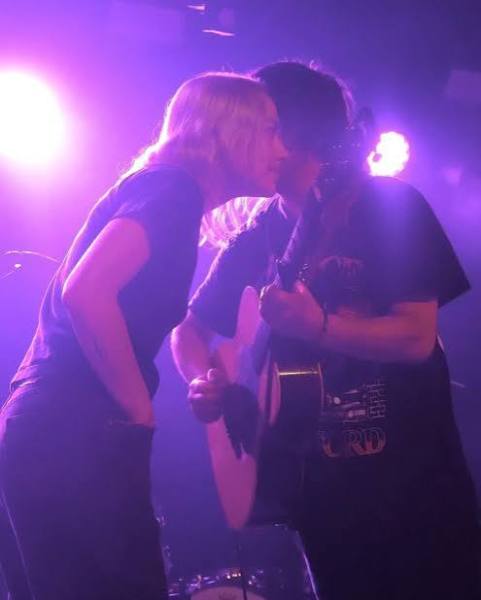
On the Song “Encounter at 3 AM”

Note: This piece sits at the intersection of music, memory, and atmosphere rather than narrative disclosure. It reflects on a late-night encounter whose emotional resonance exceeded its visible duration, while respecting the privacy of the people involved and the ambiguity that gives such moments their meaning.

The essay is less about what happened than about how certain hours alter perception — the thin, liminal spaces where experience feels lightly refracted and ordinary interaction carries unexpected depth. References to artists like Franz Wright, Clem Snide, and Steve Earle, function as interpretive companions rather than explanatory frameworks, illustrating how art often provides language for encounters that resist direct narration.

If the piece feels intentionally incomplete, that is by design. Some experiences are best preserved as atmospheres rather than stories — moments acknowledged without being fully claimed, interpreted without being resolved.

In that sense, this essay is not an account but a calibration: a quiet recognition that certain hours open briefly, rearrange something internal, and then close without explanation.

And that noticing, in itself, is enough.

A brief reflection on songs, hauntings, and the thin hour of the night

Epigraph
“All I wanted was a little money / All I needed was a week or two…”
— Steve Earle, What’s a Simple Man to Do? (2002)

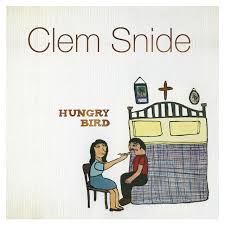
I first learned the shape of this feeling not through Steve Earle, but through Clem Snide’s cover of Franz Wright — an artistic relay in which one voice carries another’s encounter across distance and time, transforming the original into something that feels simultaneously intimate and secondhand. That is often how hauntings arrive for me: sidelong, refracted, mediated by art before experience recognizes itself inside the echo.

A borrowed door into an original room.

And that is where the hour begins.

There exists a space late at night — or early in the morning, depending on temperament and life stage — when cognition thins and the world grows slightly porous. The clock reads 3 AM, but the number matters less than the condition: the hour when ordinary structures loosen their grip, when language quiets, when identity becomes less declarative and more receptive.

At that hour, the city changes character.

Sound carries differently.
Light softens into suggestion.
Distance feels compressed.
Time feels elastic.

Even familiar rooms acquire the faint strangeness of places visited in dreams. Furniture appears slightly displaced from its daytime certainty. Street sounds arrive as fragments rather than narratives. The mind, deprived of external reinforcement, becomes a receptive surface for impressions that would dissolve immediately under daylight scrutiny.

It is not mystical.
Not dangerous.
Not even especially dramatic.

Just thin.

I have had moments there — most of us have — when the boundary between witnessing and participating becomes ambiguous. One moment in particular remains lodged in memory like a quiet shoulder tap. There were real people involved, real conversation, real movement through space. And yet layered within the literal event was something harder to categorize: a presence that did not claim metaphysical authority but nonetheless altered the emotional pressure of the moment.

I cannot narrate specifics. Confidentiality holds the center, and the encounter was not fully mine to claim. But proximity alone can leave residue. Sometimes you do not own the story, yet the story alters you.

Earle’s character inhabits a world of visible stakes — border desperation, economic precarity, the sudden rearrangement of circumstance that forces moral improvisation. His question, What’s a simple man to do?, is less rhetorical than existential. It captures the sound of a human recognizing that the script he believed himself to be following has dissolved without warning.

Franz Wright’s terrain is quieter but no less destabilizing. His encounters are interior, structured around visitations that resist empirical verification yet exert undeniable psychological gravity. Wright’s presence is not law enforcement but the invisible: the sudden sense that one’s life has drifted subtly from its intended trajectory, that something unsummoned has stepped forward and is waiting for acknowledgment.

My hour lived somewhere between those poles.

Not danger.
Not mysticism.
A pressure change.

A moment when the ordinary surface of experience felt slightly displaced by depth — as if an unseen observer had entered the room and paused long enough for recognition without introduction. The encounter unfolded within the grammar of everyday interaction, yet its emotional register belonged to a different frequency.

Here is the calibration, because honesty matters more than narrative ownership:

I turned.

And what I saw was both literal and not literal at all. A person whose presence carried echoes beyond biography. A crossing of emotional currents that felt disproportionate to duration. A moment whose significance resided less in content than in atmosphere.

These encounters are rarely sustained. They appear, register, and dissolve before interpretation can fully assemble. But dissolution does not negate impact. Some experiences operate as quiet rearrangements — subtle shifts in perception that reveal themselves only through later reflection.

You do not leave with answers.
You leave with altered attention.

Music offers a framework for understanding this phenomenon. Covers, reinterpretations, and artistic relays mirror the structure of thin-hour encounters: one experience passing through another consciousness, reshaped without losing origin. Clem Snide’s refracted Wright, Wright’s visitation, Earle’s desperation — each functions as a mediated echo, a reminder that human experience rarely arrives unfiltered.

The encounter at 3 AM belongs to this lineage of mediation. It was not an event demanding explanation but an atmosphere demanding acknowledgment.

Afterward, the memory settles differently from ordinary recollection. It does not assert itself loudly or demand retelling. Instead, it persists as a quiet calibration tool — a reference point that subtly informs later perception. You find yourself recognizing similar atmospheric shifts more quickly, attuned to moments when reality thins and emotional depth approaches the surface.

Such experiences resist mythologizing not because they lack significance but because their significance depends on restraint. To narrate them too fully would distort their nature. They exist precisely in the space between explanation and silence.

You live with them quietly.

Without overclaiming.
Without dramatizing.
Without converting them into personal mythology.
Without pretending you earned, summoned, or deserved their arrival.

They came because certain hours open.

Most do not.

You do not chase these moments. Pursuit transforms them into performance. Instead, you cultivate a form of attention that allows recognition without grasping. When the next thin hour arrives — and it will, though unpredictably — the task is simply to remain receptive enough to notice.

The encounter does not require interpretation.
It requires witness.

And perhaps that is the deeper resonance linking Earle, Wright, and the thin-hour experience itself: each represents a moment when life’s ordinary narrative pauses just long enough to reveal underlying possibility. A reminder that identity is less fixed than assumed, that meaning often arrives indirectly, and that some of the most consequential experiences unfold without external spectacle.

They do not change your life in visible ways.
They change the way your life feels from within.

You return to ordinary routines — morning coffee, daylight conversations, the practicalities of schedule and obligation — carrying an unspoken awareness that certain hours remain portals rather than merely timestamps. The world resumes its solidity, but the memory of porosity lingers.

And so the encounter remains:

not a story,
not a revelation,
not a lesson,
but a quiet rearrangement.

A reminder that sometimes the world steps slightly closer without explanation, offering a glimpse of emotional depth that cannot be captured but can be carried.

You do not chase it.
You do not interpret it.
You do not claim it.

You simply remain awake enough to notice when the hour opens again.


Dedication
For the hour that opened.

The Process Has a Point of View: A Poem

Author’s Note: This little ditty comes from my first blog, which was called “Classical Sympathies.” When I started Sympathies, I didn’t really know what I was doing. I still don’t.

the process has a point of view

the process has a plan

it consecrates opinion

of the group or of the man

the process can be tampered with

but one must take great pains

to regard the ghouls which process fronts for

ghouls weighted down with chains

when we wantonly with process toy

one chain process doth loose

if the ghouls become untethered

we have ourselves cooked goose

blood rites, human sacrifice, motions carried

parliamentary procedures of every kind

serve well to prettify men’s base designs

yet their rigidity may insult the mind

so make your end run around the process

subvert the stated order, bring fresh thinking

but beware the ghouls of process

whichll claim their pound of flesh

or better yet submit to process, to “the rules”

establish your credentials and sanctify intent

until you see that form is but an empty suit

and process, when respected, can be bent

Note: If you like this poem, you may also like “Some Things I’ve Learned: A Poem.” You can find that here.

Some Things I’ve Learned: A Poem

6AD91397-DC97-465E-808C-E0BD7853ACF3.jpeg

There’s a lot I don’t know

and a few things I might

life’s a hell of a show

a bit tough to get right

well, some folks they want you

and other folks don’t

some folks they will

and other folks won’t

you’ll get plenty of chances

you’ll blow the best part

you’ll twirl at some dances

you’ll get shot through the heart

some folks you can trust

up to a point, more or less

others? trust’s a bust

they’ll split the joint, leave a mess

try and tell the truth

you’ll take blow after blow

don’t tell the truth and

no one’ll save your soul

anything’s possible, in dreams

who’s better than you?

everyone, it seems

but it just isn’t true

they’re all full of bull

faking til’ they make it

so just push when they pull

baby stand when they sit

cause no one knows shit

and everything’s thin

I’ve been around a bit

a never was, a has-been

but that ain’t you baby

it ain’t me anymore

no one can save me

I’ve outlasted the war

so all you got is today

and maybe not that

that’s all I’ve got to say

take the meat, leave the fat.

FIN

If you enjoyed this poem, you may also enjoy “Some B-Side Poems” found here.

Some B-Side Poems

New Note: From the vault: a gathering of poetic B-sides written across different places and phases — high school experiments, graduate-school bursts, open-mic oddities, and fragments that have lingered in notebooks for reasons I still don’t fully understand.

None of these pieces are “major” poems in my own internal ranking. Some are absurd couplets that make me laugh for no clear reason. Others are character sketches that appeared all at once and refused revision. A few feel like relics of earlier influences: nonsense poetry, limericks (clean and otherwise), and the general discovery that poetry can be playful, strange, and even a little ridiculous without apology.

Still, I’ve always been interested in process as much as product. The artistic life isn’t only the finished work; it’s also the fragments, the experiments, the throwaways, and the pieces that stubbornly stay in memory despite their minor status. These B-sides belong to that category.

Note: This post collects some shorter “poems” I have written at different times. In my opinion, none of these are as good as “Half Hours on Earth,” although “For Ann” could be if I could finish it. In other words, all of these are pretty minor, although “Check-Out Girl” is not bad. A more prudent writer might hesitate to publish fragments like “My Uncle” or “The Pomegranate.” I, for one, am always interested in the artistic process, and part of my process includes coming up with little pieces of stuff I don’t know what to do with. For each “poem,” I have included a comment—the comments are just there to provide a little context. Basically, these are all “b-sides.”

“My Uncle”

I think about my uncle
when my uncle comes to mind

Comment: This couplet is completely ridiculous, doesn’t rhyme, and doesn’t mean anything. I have no idea when I came up with it, however for some reason it sticks with me. So much so, in fact, that I closed my “set” at a poetry open mic in Tokyo a little while back with “My Uncle.” The audience there was surprisingly receptive. “Right on,” they said, “that’s when you do think about your uncle.” Thanks folks, means a lot.

“The Pomegranate”

The pomegranate is essential to the sophisticated palate
Far more evolved than onion, watercress or shallot

Comment: Another couplet from god knows when, this one at least rhymes so let’s call it complete.

The Proposal”

A potatoey fellow
skin papery yellow proposed to you once in the rain.
But though he bleated intently
from the back of his Bentley
you said ‘potato, you give me a pain.’

Comment: This is one of my sneaky favorites. It’s also totally absurd, and I don’t remember when I wrote it, however I think I had seen some guy getting blown off by a girl and so I came up with the potatoey fellow. Although not exactly finished, it also has nowhere to go, so let’s call this one done too.

“Mod-Con (for Joe)”

A friend remarked to me,
as we reposed I and he
“Which mod-con
could be improved on?”
And I,
dull and droned as a sun-drugged fly,
I didn’t know.
“The washing machine
I mean, dirty clothes revolving in
dirty water
come out clean?”
Hmm.

Comment: Back in the day I had a friend called Joe. Joe was kind of a sleazy dude, but he was a good photographer and taught me a few things about that. He also came up with some left field ideas, such as when he critiqued the entire concept of the washing machine. Joe didn’t get the washing machine, and so I wrote a poem about that. Although finished I don’t think this one is really very good, so I’ll just leave it here, as a b-side.

Overdue Haircut”

I’m gonna get my haircut soon
maybe in the month of June
man, it’ll be smooth

Way up in Bostontown
to Atlanta they’ll get down
with the news

I’ll have girls on every hand
who’ll all think I’m the man
I can’t lose

Yeah I’ll play that haircut game
to popular acclaim
among gentiles and Jews

Comment: One time I needed a haircut, so I wrote about that. This was a popular one with my readers back in the day, and I like it too.

“For Ann”

Ann belle princess of the isles
the orbs whisper your name even if you’ve gotten piles
or if you’re on the game

Buxom barmaid or bellicose barfly
begs the inevitable question
booze improves the poet’s eye. but ruins her digestion

Comment: My friend Ann from Hamilton College went to England after graduation and she and I exchanged a few letters, back when people still wrote letters. She wrote me that she was drinking some, so I wrote a poem about my image of her over there. The original poem had two or three more verses, but they were terrible. Then a little while back I reconnected with Ann, which was great, and re-worked the poem, which wasn’t. It might have been a little better, but it was still bad. These two stanzas, on the other hand, are awesome, and maybe that’s all there ever needs to be said about Ann in England, you know?

“Jerome”

In a glade near his home roamed a boy called Jerome when he met with the sight of the devil

who asked for his soul in a Tupperware bowl in a voice smug and typically level

though of manner quite mild the cunning wee child prepared a surprise for the devil

who felt sorely deceived when the soul he received belonged to the neighbor’s boy, Nevil

Comment: This little poem is one of the first things I wrote that I liked. I wrote it sometime during high school. At that time I was influenced by limericks (both dirty and clean) and nonsense poetry such as Edward Lear. One doesn’t write stuff like this without having read a bunch of nonsense poetry.

“Check-Out Girl”

jim went to the store on Tuesday to buy eggs
and fell in love with the red-haired check out girl
jim of the drab brown suit and bifocals
of the pint size milk cartons on the floor of his car
jim who at sixteen thought he might have a calling
who would have made a good camp counselor
kids for christ
jesus youth,
jim fell in love with the red-hired girl and her little turquoise earrings
when he went for his groceries
jim of the tedious but inevitable self-gratification
jim who is definitely not (not) gay
who recently gave up hair tonic
but still has a fine head of hair for a man his age
(thirty four in september)
thank you very much
who always wanted to see Topeka, Kansas
just because of the name
Topeka
jim of no artistic pretensions
who nevertheless sits down to compose a poem
to the check-out girl
with the red hair, the turquoise earrings and the toothy smile
who’s nineteen if she’s a day
he’s in love
no question about it

Comment: I wrote this one in Flagstaff, Arizona when I was going to graduate school. I was playing basketball one day and this poem started to come into my head all at once. So I went home and wrote it down. I don’t know where any of this came from, but it’s not bad. Maybe it’s actually OK, I don’t know.

Note: If you like these poems, you may like An Open Book. You can find it here.

On the Song “Dylan Thomas” and Comments on Ryhme

This post is about the song “Dylan Thomas” from the first Better Oblivion Community Center record. For the uninitiated (which is probably everyone reading this–recently a friend texted me a funny article from The Onion entitled “Study: No Two People Have Listened To Same Band Since 2003”), Better Oblivion Community Center is Conor Oberst and Phoebe Bridgers. “Dylan Thomas” is the single, if singles still existed. You still won’t know them.

I want to write about the song because it has a killer structure and is awesome. The structure is based around a neat rhyme scheme with fabulous use of “near rhymes” and also around a see-saw in the verses between fairly pointed political commentary and apolitical hedonism. As with all interpretation, I can’t be sure that what I hear was intended, but what the hell–communication is what the listener does after all.

Now, a lot of songs, most, rhyme. That’s obvious. But not too many songs really hold up on the page as well, as poetry. I think “Dylan Thomas” does and I’d like to explore why.

Verse I:

It was quite early one morning/ hit me without warning/ I went to hear the general speak/ I was standing for the anthem/ banners all around him/ confetti made it hard to see

So the first verse clearly alludes to our political moment–it appears politically engaged to some extent. The reference to “the general” is redolent of South American politics (I am reminded of the fabulous Drugstore song “El President”). The rhyme scheme is tricky–it’s AABCC(D), where (d) “see” almost rhymes with “speak” in the delivery although the words don’t actually rhyme, instead being only vaguely alliterative.

Verse II:

Put my footsteps on the pavement/ starved for entertainment/ four seasons of revolving doors/ so sick of being honest/ I’ll die like Dylan Thomas/ a seizure on the bathroom floor

Verse II sees a clear shift from the political to the personal, the hedonistic, the depraved. While Thomas is famous for his “rage against the dying of the light,” Better Oblivion taps the seedier side of Thomas’ legacy–the singers (most of the songs on the album including “Dylan Thomas” are duets) in verse II are seeking pleasure and there is no hint of the macro picture here. So, verse I=macro, verse II=micro.

The rhyme scheme shifts to AABCCB, with a definite rhyme between “doors” and “floor.” “Entertainment” and “pavement” I would consider near-rhymes, and the slightly off-kilter near-rhymes are for me what really make this song stand out as a piece of writing.

Chorus:

I’m getting greedy with this private hell/ I’ll go it alone, but that’s just as well

Hard to say exactly what “this private hell” refers to, however we get a sense of doubling down on the dissolute–in for a penny in for a pound as they say.

Verse III:

These cats are scared and feral/ the flag pins on their lapels/ the truth is anybody’s guess/ these talking heads are saying/ “The king is only playing/ a game of four dimensional chess”

Verse III is clearly political again, setting up a 1 for 1 see-saw (so far). “Cats” here cuts both ways–on the one hand “people” with flag pins in the era of truthiness, on the other, well real cats are feral. It’s a very clever, subtle move. Is the general from verse I the king from verse III? Probably. We live in an era where world leaders are not in the business of leading, but rather of playing elaborate, endless games.

The rhyme scheme here is a AABCCB where the second C and the second B are part of a single quote. Very nicely done.

Verse IV:

There’s flowers in the rubble/ the weeds are gonna tumble/ I’m lucid but I still can’t think/ I’m strapped into a corset/ climbed into your corvette/ I’m thirsty for another drink

This is where the song really comes into its own as a mini-masterpiece. On its own, this verse is nakedly apolitical and local–I am reminded of one of my favorite lines of all time from the final Replacements album. The song is “Someone Take the Wheel” and the line goes: “they’re fighting again in some fuckin’ land/ ah throw in another tape man.”

In 1990, Paul Westerberg didn’t give a shit about the Iraq War and wanted nothing more than to listen to music on the road. That’s an understandable point of view on the level of the human individual. What I love about what Oberst and Bridgers do with this song is how they alternate verses between the macro and the micro, the engaged and the depraved. The same conceit is used on the first song of the record, “Didn’t Know What I Was In For”:

I didn’t know what I was in for/ when they took my belt and strings/ they told me I’d gone crazy/ my arms are strapped in a straight jacket/ so I couldn’t save those TV refugees

I get this sentiment. Seriously I do. If we zoom out a bit on our world situation these days, we could easily say that every person with even a patina of ethical conscience ought to be on the front lines in one way or another. And then I look at myself and…well, I chose Medicine Sans Frontiers as the charity that gets some small percentage of my Amazon purchases. Will the future see me as a head in the sand hedonist? Probably, and with some justification.

The rhyme scheme in verse IV is again a clear AABCCB with near-rhymes (probably the first time in history “corset” has been rhymed with “corvette”), in fact the same scheme as limericks. I f***ing love AABCCB. God bless it. Also, the line “I’m lucid but I still can’t think” pretty much summarizes my entire life to date.

Verse V:

If advertised, we’ll try it/ and buy some peace and quiet/ and shut up at the silent retreat/ they say you’ve gotta fake it/ at least until you make it/ that ghost is just a kid in a sheet

AABCCB again, the scheme which carries the song with the striking exception on verse I. Verse V alludes to the theme of the record–Better Oblivion Community Center is some kind of partially defined wellness retreat–and kind of splits the difference between the political and the personal, the macro and the micro. It also serves as a commentary on the commercialization of “wellness” and is a cheeky meta-comment on the cover of Bridgers 2017 debut:

Is this a shot at some critics? A self-aware reference to a DIY cover? I don’t know, and I love the line.

Following the logic of this piece, we have a kind of scheme of the verses as well. Let’s call is ABABC where A=political, B=apolitical, and C splits the difference.

Verse VI/ Outro:

I’m getting used to these dizzy spells/ I’m taking a shower at the Bates Motel/ I’m getting greedy with this private hell/ I’ll go it alone, but that’s just as well

It’s a simple AABB with the outro calling back the chorus from mid-song. The see-saw between the personal the political sort of resolves itself in the killer couplet. “I’m getting used to these dizzy spells” suggests acclimatization to the altitude–metabolization of the fear. “I’m taking a shower at the Bates Motel” is an amazingly effective counterpoint line–we are living at the knife point of maniacs. Ah well, let’s hit the bar. I’m thirsty for another drink.

Seriously, check out “Dylan Thomas” and the whole record. I know no one listens to anything I listen to, but still.

Postscript: So Mr. Spotify seems to have decided that “Dylan Thomas” is my very favorite song, and cues it up time after time after I’ve finished listening to whatever I have selected. I do love this song, by Mr. Spotify there is almost making me tired of it. Change it up there Mr. Spotify please.

On John Innes, the Fabulist (with cameos from Bruce Innes and Hunter S. Thompson)

John Innes is a high school English teacher in Oregon. He works at a Catholic School there where he also coaches basketball, and probably does some other stuff. His players call him “Coach Innes,” and I think they respect him. And this is reasonable enough. Innes is a good coach, and good teacher, and most of the time a pretty good guy. He used to be a good golfer, but I think he lost it. Too much water on the elbow, can’t control the slice. But teachers show one side of themselves in the classroom and another outside of it. What John Innes has kept hidden from his students and players is that he is big old fabulist.

I know this because Innes, probably to fill the time when his lesson plans peter out or something, is known to tell stories to his students about the days when he and I were in high school and university together. And these stories are all completely bonkers. Innes will tell his students a story about me throwing people into the Little Spokane river back in high school. But I would never do that. I mean the Little Spokane is cold, and what kind of person would toss a fellow student into a cold river just because? Also, to get to the Little Spokane, which ran by our school, you had to cross a super long bridge. I’m not dragging some chick or dude across a super long bridge just to get them wet. Doesn’t make sense. I don’t know where Innes gets this stuff. It’s totally ridiculous. Innes is big old fabulist.

In another of his little “stories,” Innes claims that during university at Hamilton College I snuck into the chapel there on campus and climbed up into the bell tower. Now, there might have been a chapel at Hamilton, sure. There might have been a lot of things. Hamilton has some pretty old buildings, and it’s not impossible that a chapel would have some kind of bells in it. But I’m not gonna go climbing up there. Innes fancies himself a “literature” teacher, and maybe he’s mixing in some part of a Dorothy Sayers plot or something. Also, Innes may be extrapolating from the notion that I generally may attempt to access certain spaces that might seem “off limits.” That’s possible. I mean, if I see a “Members Only” sign on the door of a club, I’m gonna think “hey there pal, I’m a member. In fact, I’m a permanent member baby” and I’m gonna go right on in. I have also noticed that in buildings where there may be some public spaces and some private or closed spaces, if you are dressed nicely, as I can, and are pretty tall, as I am, you can sometimes just wander wherever and people will, by and large, just let you, especially if you wear some kind of lanyard around your neck. But this doesn’t mean I’m going to go poking around a bunch of bells. It’s totally ridiculous. Innes is a big fabulist, and he needs to get over it.

Innes tells another story about me graduating from university in linen. What’s he even talking about? I mean, I did graduate and have a piece of paper somewhere I think, but linen? What a bizarre thing to say. And for that matter, what if I did? Linen is a cloth, clothes are made from cloth, I was presumably clothed at graduation. So what? I think what may be going on here is that the water from his elbow is migrating up to his brain. I want to give him the benefit of the doubt, and what I do recall is that I wore a little purple flower in my hair at graduation and some dude from the newspaper took a picture of me and this ran somewhere. Innes may have remembered the flower thing and then imagined a whole bunch of other nonsense around it. Linen. It’s totally ridiculous. His fables are just getting out of control.

So Innes apparently thinks it’s funny to spin a bunch of nonsense about me. I don’t know exactly why he does this, but he may come by his mendacity honestly, so to speak. Innes has a father called Bruce Innes. Bruce Innes is a Canadian, and a pretty interesting guy. He used to be in a band called The Original Caste, and they had a hit called “One Tin Soldier.” The song is still pretty well known to a certain generation, which is cool. That band split and Bruce Innes must have drifted around blowing his money for a while, cause he ended up in Spokane in the late 80s, which is when I met the fabulist John Innes. I went to Bruce Innes’ house sometimes in order to crush John Innes at a video game called “R.B.I. Baseball.” I don’t play a lot of video games, but it doesn’t matter. I crushed John Innes at Sega Hockey a few years later as well and he whined about it for weeks. Guy has water on the elbow from way back.

Anyway, Bruce Innes’ Spokane house was pretty large and had a fully soundproofed music studio in the basement. I’d never seen anything like this and assumed that he must have some serious cash. But I don’t think this was actually the case. Like I said, I think Bruce Innes had spent most of his money from his music heyday by this time. My brother Mike, who remembers some stuff and forgets other stuff, told me recently that Bruce Innes made his living around this time by writing jingles for an audio and video store in town called Huppins. I don’t remember anything about this, but it’s too specific not to be at least a little bit true. It can’t all have been Huppins though, right? He must have done other stuff. Bruce Innes ended up leaving Spokane and moving to Sun Valley where he became the go to guy to play music sets at rich people’s parties. Then he moved to Oregon. I don’t know where he lives now. So yeah, he’s had an interesting life.

Back in the days when Bruce Innes was high on the hog with his music royalties he ran around with some famous folks. He met Leonard Cohen, and told me one time that Cohen was a total dick. Leonard Cohen is a legend of course, and is now remembered best as a genial older statesman, but this doesn’t preclude the possibility that back in the 70’s he may have been a dick. Doesn’t preclude it at all. Mr. Google says that Bruce Innes also knew Joni Mitchell. More well known though is Bruce Innes’ association with the writer Hunter S. Thompson. Most people of a certain age will remember Thompson, the “gonzo” inheritor of Hemingway and a pretty major figure in American literary history. Thompson wrote Fear and Loathing on the Campaign Trail ’72, in which he relates a funny anecdote of bonding over college football with President Richard Nixon in the back of a car sometime, despite the fact that Thompson hated Nixon. Thompson also wrote Fear and Loathing in Las Vegas, which I also have read. This is the book that the Terry Gilliam movie is based on, the one where Benicio DelToro plays Thompson’s sidekick and always advises him “as your lawyer…,” a phrase that has entered popular culture and is still widely used.

This is also the book that features Bruce Innes and some story about a monkey. I’m not sure if this next part is in Las Vegas or not, and in fact I think it isn’t, but another story is that Thompson and Bruce Innes were hanging out in Colorado somewhere and decided they would run for political office on the same ticket. Thompson would run for sheriff and Bruce Innes would run for something else. Now, Thompson’s run for sheriff is a well known piece of his mythos, and he did actually have a platform under the umbrella of “Freak Power,” but I imagine that whatever this run really entailed, Thompson exaggerated it pretty dramatically in later telling. I’ve heard Bruce Innes talk about this as well, and he makes it sound like the two of them were actually aspiring politicians for a time. But I don’t believe it. I’ll bet you what happened was these two guys were hanging out and getting stoned, and thought it would be funny if they “ran” for office. They probably got a poster or two made and hung them up around town, told all their friends about it as a lark, and talked a bunch of BS for a while. Bruce Innes is a great guy, but I think he and Thompson are kind of full of it. So like I say, John Innes probably comes by it honestly.

Whatever the source of John Innes’ struggles with the truth, one time after he had told some of his usual whoppers about me, one of his students found these stories interesting and wrote me a request for more information. He actually wrote it in verse, which was pretty creative, so I wrote him back in the same style on a flight out of Adelaide. The poem basically attempts to correct the record that the fabulist John Innes so regularly distorts. It also touches on some of the lowlights of my college career, including my fondness for writing excuses for students who needed extensions, the fact that I sported a tan trench coat for much of my first year, and my inability to get a steady girlfriend. John Innes, the fabulist, is referred to as “J.I.” in the poem. In the interest of having some of my “b-sides” back in print, I am re-posting this guy in its original form. It’s called “An Open Book,” and I gotta say, it’s still pretty good.

“An Open Book”

Not really in the mood
but you’ll think me quite rude
if I don’t make a reply
around me on the plane
folks eat, are entertained
no one’s writing save I

So I’ll take a look back
to days at the dog track
where I ended up by mistake
thought we could beat the odds
just silly teenage sods
there was no money to make

I know not if J.I.
has spun a pack of lies
concerning my personhood
Yes, I wrote poems for girls
who told me they were pearls
ah–but they weren’t any good

About a cold river,
and the rest of his quiver
of myths and exaggerations
well if someone was shoved
it was done out of love
or congratulations

So to upstate New York
in a trench coat–what a dork
but the world took pity
the life there was fine
but naught was on the line
should have gone to the city

I did two things quite well,
needing something to sell
I wrote brilliant excuses
‘bout ridiculous capers,
couldn’t finish my papers
I claimed aces, held deuces

My second great skill
is one I hold still
I fell for crazy ladies
locals, Russians, and Turks
they all drove me berserk
with a boatload of maybes

Four years in the dorms
and countless reforms
led to little of note
I left sans a sob
a plan or a job
and without my trench coat

Dedication: For John Innes, the fabulist. You know I won that Sega game, but I confess I may have tried to get up in that bell tower. So let’s call it a tie there baby.

Postscript: Since this piece was first published, Bruce Innes has sadly passed away, I believe in Vermont. As I said in the piece, Bruce had a fascinating life, and he was also a genuinely sweet guy. I really liked him. RIP Bruce, maybe you can win an election or two up there in heaven.

Note: If you enjoyed this piece, you may also enjoy “An Open Book,” also about the character known as John Innes. You can find that here.

The Respectable Man (A Poem)

Note: I wrote this poem when I was in my twenties and it shows. Back then I wrote poems really fast. Today I still write really fast, but can barely write poetry at all. Anyway, this is sort of my version of a punk tune. It’s called “The Respectable Man,” and kind of speaks for itself.

The respectable man
reflects if he can
but the world won’t wait for reflectors
the respectable man
sits on the can
sits on the board of directors

The respectable man
hawks wares to the clan
who cannot tell shit from shinola
the respectable man
sees a water ban
and irrigates crops with a cola

The respectable man
works on his tan
en route to his room at the Hilton
the respectable man
is pimping a plan
with robust tax-giveaways built-in

The respectable man
spits on his hands
and scurries his way up the ladder
the respectable man
looks over the land
and respectfully empties his bladder