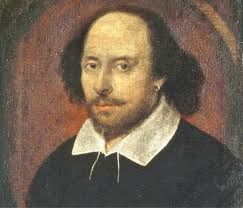
Some Older Poems

Note: These four poems come from an early era of my writing life—where satire, associative logic, and linguistic mischief are all still operating at full voltage and without much concern for genre stability. They move freely between cultural detritus, private irritation, and comic metaphysics, as if trying to test how far language can bend before it either collapses into nonsense or reveals a hidden structure underneath it. What holds them together is less any single theme than a consistent tone of alert instability: a mind watching itself generate connections in real time, amused by its own excesses but also half-suspicious of what they might mean. Read together, they sit somewhere between parody, dream-logic, and cognitive overproduction—early signals of a style that treats thought not as expression of meaning, but as an event that happens in language.

Inspired by Robyn Hitchcock

The urge to pen nonsense descending

This seems an appropriate forum

For all my synapses are blending

And my skull has become rather warm

Hurrah for men in long white beards

Kris Kringle and Komani

Who, hypnotized, disclose deep fears

Of the seamstress Miss Delany

‘Cause there’s a mistake with a head-cold

There’s a death-wish with nine lives

There’s a blowpipe with a blindfold

And it’s stalking both your wives

There’s my niece in a wave function

A control freak in a kilt

And they waltz without compunction

On the philosophy you built

When skeletons meet

Bones get up on their feet

For square dancing

The mandibular dreamers

Mirrored a phalanx of femurs

And they all started prancing

Yes, the babe he loves best is his manageress

But she’s frigid

Everytime she comes round

His spirits get down

But he’s rigid 

The houses she owns

Are deliberate clones

Of the suburbs

Lights go on with a clap

Every mouse to its trap

In the cupboards

I found a crème-egg in a fern

It was hatching and snatching in turn

I chose not to come all that close

For fear that it might be verbose

Oh, I wish I could write an acrostic

And that chemicals weren’t so caustic.

I wish that my lunch-trays were blue

Or speckled like they are at the zoo

But quarrels came as quarrels will

Concerning pilfered cherries

When I got up to press a pill

Some bastard thieved my necessaries

A creaking neck, a morbid thought

The story of an evening

We wish we were what we are not

And now I must be leaving

The Paperless Office

The paperless office is dead

It’s long since been put to bed

Though we claim to ‘ave gone green

You must know what I mean

The paperless office’s been stood on it’s head

The paperless office has flipped

The idea was just a blip

We print quite promiscuously

Use A4 insistently

The paperless office papers on at a clip

The paperless office’s defunct

The concept has flat-out flunked

The paradox being

We’re surrounded by screens

But the paperless office is sunk

The Present

a form is filled

money is sent

a conscience is salved

a small difference is made

while somewhere

under the cover of darkness

or in the light of day

the beat down goes on

Limerick

A pious reformer named Mather

was frequently known to blather

about the great judgment hour

but the word from the shower

was that Mather knew his way around lather

On the Song Prince Hal’s Dirge: Confidence, Reformation, and the Politics of Self-Making

Note: This short essay takes Loudon Wainwright III’s song “Prince Hal’s Dirge” as a lens through which to revisit Shakespeare’s Prince Hal in Henry IV, focusing on the idea of self-fashioning across time. It reads Hal’s apparent debauchery and later reform not simply as moral transformation, but as a theory of confidence—either consciously staged, in Shakespeare’s version, or more instinctively internalized in Wainwright’s. Moving between text and song, the piece explores how both versions hinge on the same underlying question: what kind of inner structure allows a self to pass through disorder, delay, and social misreading without collapsing, and to reconstitute itself as effective action when the moment arrives.

Epigraph:

Take me to the ale house
Take me to the whorehouse.
If I vomit, keep me off of my back.

Loudon Wainwright

This piece takes as its source the song “Prince Hal’s Dirge” by Loudon Wainwright III, itself based on Shakespeare’s character Prince Hal from Henry IV. The figure of Hal is one of Shakespeare’s most carefully constructed political selves: a young man who deliberately inhabits disorder in order to make his eventual reformation into kingship appear all the more legitimate, even necessary.

In Henry IV, Hal openly announces this strategy to Falstaff and the other tavern companions:

I know you all, and will awhile uphold
The unyoked humor of your idleness.
Yet herein will I imitate the sun,
Who doth permit the base contagious clouds
To smother up his beauty from the world,
That, when he please again to be himself,
Being wanted, he may be more wondered at
By breaking through the foul and ugly mists
Of vapors that did seem to strangle him.

And again:

So when this loose behavior I throw off
And pay the debt I never promised,
By how much better that my word I am,
By so much shall I falsify men’s hopes;
And, like bright metal on a sullen ground,
My reformation, glitt’ring o’er my fault,
Shall show more goodly and attract more eyes
Than that which hath no foil to set it off.
I’ll so offend to make offense a skill,
Redeeming time when men think least I will.

Hal’s logic is explicit: he will cultivate disorder as a kind of aesthetic and political foil. His apparent immersion in low company is not failure but strategy. Falstaff and the tavern world become, in effect, instruments in the staging of legitimacy.

Paraphrased, Hal is saying: I will live among you for a time, but only in order to abandon you later in a way that maximizes my transformation into kingship. He is a political animal who understands reputation as something staged across time.

Loudon Wainwright III’s “Prince Hal’s Dirge” takes up this same figure, but shifts the emphasis in a revealing way. Wainwright—still best known to many for novelty songs like “Dead Skunk,” though his broader body of work is far more substantial—reimagines Hal less as calculating strategist and more as self-contained performer of confidence within disorder.

The song opens in full immersion in debauchery:

Give me a capon
And some roguish companion,
A wench and a bottle of sack.
Take me to the ale house
Take me to the whorehouse.
If I vomit, keep me off of my back.

Here Hal is not yet strategy, but appetite. The political mask is absent; what remains is the world of consumption, drink, sex, and collapse.

But Wainwright then pivots:

My father, he thinks I’m a good for nothing
that I won’t amount to much.
But he’s not aware of my secret weapon.
I can count on myself in the clutch.

This is the key transformation. Shakespeare’s Hal is self-consciously future-oriented: he plans his reformation as spectacle. Wainwright’s Hal, by contrast, carries an interiorized assurance that he will simply “come through.” The emphasis shifts from calculation to instinctive resilience.

This continues in the song’s martial register:

Show me a breach,
I’ll once more unto it.
I’ll be ready for action any day.
I’ll straighten up, and fly most righteous.
In a fracas, I’ll be right in the fray.
I can drink you under twenty-five tables,
Fight and be a ladies man.
But all this will change,
When I’m good and ready,
To become the king of this land.

The phrase “any day” is doing important work here. It carries the rhetoric of readiness without commitment to timing. It suggests immediacy while quietly deferring it indefinitely. The transformation is always available, never enacted.

What emerges is a different psychological structure from Shakespeare’s original. Shakespeare gives us a political actor who consciously engineers perception over time. Wainwright gives us a man who believes in a durable inner core of competence—someone who can be disordered without being undone.

And yet both versions converge on the same underlying mechanism: confidence as political force. Whether staged (Shakespeare) or internalized (Wainwright), Hal’s power rests on the belief that identity can survive its own contradictions and ultimately reorganize them into legitimacy.

Singing “Prince Hal’s Dirge” before work, I find myself struck less by the irony of Hal’s transformation than by the necessity of something like an unbreakable interior core—something sealed enough to survive fluctuation, failure, and delay, but still flexible enough to return to action when required.

That, ultimately, is what both Shakespeare and Wainwright are circling: not morality, not reform, but the strange political psychology of self-belief under time pressure.

Dedication:

For my father, the biggest Shakespeare lover I know.

Note: If you liked this piece, you may also like the pieces below which also take up various literary works.

When the Taxi Driver Loses the Plot: A Poem

Note: This poem is a reconstruction. The original version appeared briefly on my first blog, Classical Sympathies, sometime around 2010, and like many things from that early site it was eventually lost in the digital shuffle. What remains here is an attempt to recreate the spirit of the piece from memory.

The poem itself is a mash-up of two real taxi rides that somehow fused together in recollection. One took place in Adelaide, Australia, during a ride from a hotel to the airport where the driver became thoroughly disoriented and began looping through unfamiliar streets. The other occurred years later in Kyoto, somewhere north of Sanjo, when a similarly confused driver managed to transform a short ride into a wandering tour of the nighttime grid.

Over time the two rides merged in memory into a single universal experience: the moment when a passenger realizes that the person holding the wheel may no longer fully know where he is going.

The result is presented here, perhaps a little mythologized, as a small recovered relic from the early days of the archive — a lost classic of the wandering taxi ride.

The haunted sweating taxi driver
took another right,
the meter ticking bravely
in the middle of the night.

The city slid past sideways
in a crooked grid of light,
and every turn he promised
somehow made the journey slight.

The haunted sweating taxi driver
muttered to the wheel,
as if the streets were hiding
some essential missing deal.

A restaurant we’d passed before
returned into my sight,
which meant the haunted driver
had again chosen wrong from right.

The haunted sweating taxi driver
took another right,
and wiped his brow dramatically
beneath the yellow light.

Now when your taxi driver loses the plot
this could go on all night,
because the man who holds the wheel
is captain of your flight.

You sit behind his kingdom
like a mildly troubled guest,
while every wrong decision
slowly multiplies the rest.

The haunted sweating taxi driver
leans forward in his seat,
as though the road might whisper
some confession through the street.

The meter ticks its steady hymn
to time and mortal plight,
while hostage to the haunted man
who’s searching for the right.

The haunted sweating taxi driver
takes yet another right,
and somewhere in the city
dawn prepares its quiet light.

But we remain in orbit
of his navigational blight—

for when your taxi driver loses the plot
this could go on all night.

Note: If you like this poem, you may also like the poems linked below. Happy reading!