
On the Phrase “I Got a Guy For That”

Note: Few phrases carry as much quiet social power as “I got a guy for that.” At first glance, it sounds casual, almost throwaway — a shorthand for convenience. Yet beneath the surface, the phrase reveals an entire architecture of trust, reputation, and informal networks that operate parallel to official systems. To have “a guy” is to possess access: access to knowledge, skill, discretion, or opportunity that cannot be easily found through public channels.

The phrase also reflects a deeper human instinct toward relational problem-solving. Rather than relying solely on institutions, we rely on people — plumbers, lawyers, bartenders, mechanics, editors, fixers — individuals whose reliability has been tested through experience and passed along through recommendation. In this sense, “I got a guy” is less about exclusivity than about social capital built over time, a small badge of belonging within overlapping communities.

At its most benign, the phrase signals efficiency and mutual support; at its most ambiguous, it hints at shadow networks, informal economies, and the gray zones where trust replaces regulation. Either way, it captures something fundamental about modern life: solutions are rarely abstract, and almost always relational. The phrase persists because it compresses an entire worldview into five words — a worldview in which problems are solved not by systems alone, but by people who know people.

If you enjoy this piece you might enjoy “The Hired Hand, Part I: Azerbaijan, 1990,” one chapter from my upcoming book The Adventures of the Thin Man and Andrea.

The broker said that he should sell the wine/ they got this guy that can arrange a buy.

Craig Finn

There are different types of marketplaces in the world. First there are legitimate, above-board markets, the shops and such you go to everyday. Then there are black markets, the so-called underground economy. Poised somewhere in between the legitimate and the underground, however, lies another type of market. This is a liminal sort of market, a market for which we need an experienced navigator. This is the realm of “the guy for that.”

We know we are in the realm of this kind of guy whenever we hear someone say “I got a guy for that.” Need a passport in three days? There’s a guy for that. Want to build a greenhouse but don’t want to drop thousands at the home center? There’s a guy for that too. Need to dump some garbage from a construction job but the landfill rates are exorbitant? Go get a guy. Need a prescription but your country doesn’t allow generic pills to cross the border? Another guy. Need to offload your wine cellar to pay the alimony? Craig Finn can find you a guy.

Now the great thing about the guy for that is, although in some cases all the above may be different guys, there are some guys that do it all. This is the type of guy who can get you cut-rate auto parts one day, scalped tickets to the Garden the next, and a little something something for your loft party on the third. Life is divided into specialists and generalists, and here we have the generalist version of the guy for that. Mike Ehrmantraut from the Breaking Bad and Better Call Saul TV series is a classic example of a generalist guy for that.

How does one become a generalist guy for that I wonder? What winding set of life ways leads someone to be able to source whatever you need at short notice? What even are the essential skills of such a guy? I don’t know, but I think the generalist form of the guy for that pops up fairly regularly in the army. Soldiers, whether confined to base or in the field, generally have tightly restricted access to the many pleasures that life can afford. An abundance of rules, meals ready to eat, and a dreary PX may be all they have to work with. That’s where the guy for that comes in. This is the guy who knows when a few ladies are coming through town, down to party. This guy has a line of a van full of meats, has those sweet French cigarettes from across the border. This guy is on top of it. Army fiction is full of these kinds of guys, scamps and scoundrels who are yet always portrayed quite sympathetically by the author. The reason for this is easy to see—if the author has actually been in the army (as a great many nineteenth and mid-twentieth century writers were) he (usually he here) would know and appreciate the many benefits of having a guy for that around, no matter what other undesirable qualities the guy might possess. After all, anyone who hooks you up with quality meats is easily forgiven.

And then there is the specialist guy for that. The specialist guy for that usually possesses a certain rare and highly developed technical skill of some kind. While the generalist guy for that is basically a fixer, good at procuring items and turning them over at a mark up, the specialist guy for that is a technician, an artist even. Here we have the counterfeiter and the stamp forger. The guy who can jailbreak your phone, the safecracker. Here too we have the saboteur, and, of course, the bomb maker. As is easily apparent from this run down, the specialist guy for that tends more toward outright criminality than does the generalist.

There is a great scene in the film The Battle of Algiers where the Algerian rebels who are involved in an insurrection against the French are planning some bombings in the city. They go to a bomb maker, a guy in the back of a dingy shop, naturally, who leisurely and precisely wires the bomb. The scene is entirely wordless, and features close-ups of the bomb maker’s hands as he arms the bomb. The director Steven Soderberg has said that he could watch a whole film about this guy, and I know what he means. He means, I think, that there is a whole world behind the bomb maker guy that could be explored. Who is he? Where does he come from? How did he come to be the go-to-guy for bomb wiring in Algiers in 1961? What does he do in his spare time? We get answers to none of these questions, just a sparely presented introduction to his art. But that’s enough to know for certain that he’s the guy for that.

We will close with a couple of questions. First, what about the gal for that? My theory is that while the gal for that surely exists somewhere, it’s more likely that—proximal to the guy for that—she plays a slightly different role. Shady guys hang with shady gals, no doubt, but the gals tend to occupy another, perhaps larger and certainly less easily definable, place in the proceedings. This is a subject for a future post.

Second, what happens to the guy for that in a future where more of our movements, financial transactions, and even thoughts are tracked and monitored? Will the guy for that slowly go extinct? I don’t think so—at least I hope not. I suspect there will always be a place for the guy for that: the hustler who can see the angles, play the edges, middle the situation before anyone else even knows there is a situation.

All in all, regardless of the relative morality of guy for that activities, I salute him. Also, I gotta go build a greenhouse. I got a guy for that.

Note: If you enjoyed this piece, you may also enjoy another foray into linguistic anthropology “On “Dude” Usage.” You can find that here.
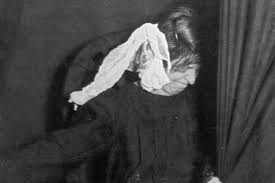
Carl Jung’s Collected Works: I

Volume I of Jung’s Collected Works is titled Psychiatric Studies, and begins with his dissertation, “On the Psychology and Pathology of the So-Called Occult Phenomena.” The editor’s preface to Volume I characterizes the dissertation as reflecting “simple descriptive research,” while acknowledging that many of Jung’s later concerns are foreshadowed herein (vi). In our posts on Volume I we shall attempt to draw out some of these foreshadowings, while also taking seriously this most “scientific” of the phases of Jung’s career and work.

It is of course highly significant that occult phenomena signify in Jung’s first major published work, as Jung’s reputation, for better or worse, is to this day closely linked with the occult, mysticism, astrology, post-material synchronicity, and the unconscious archetype. That Jung refers to “the so-called occult phenomena” here is suggestive, on its face, of at least some measure of empirical leaning in the young Jung.

As we shall see in later posts, Jung waged a decades-long internal battle to preserve his belief in himself as a man of science, rather than an artist, and the question of whether he was primarily a scientist or an artist would play a significant role in his mid-life crisis which set in during the decade of the 1910s. It is interesting to note here that Freud also held fast to the label of “scientist,” even as critics such as Roger Brown have suggested that he surrendered all claims to the title as early as 1896 (Storr, 24).

It is well known that Jung’s early years were suffused with religion and spiritualism, with several members on both sides of his extended family being parsons (MDR 42). From his earliest writings, however much he clung to the idea of himself as an empiricist (understood in its more typically narrow sense), Jung’s interest in the faint intimations of the “other world,” in the liminal zone between normal experience and those experiences or states which stray over the borderline of normal consciousness and everyday apprehension and into the dark underbelly of the unconscious, betrays the awestruck and bemused metaphysical wanderer who at seven would sit on a stone and wonder, “Am I the one who is sitting on the stone, or am I the stone on which he is sitting?” (MDR, 20).

“Liminality” is defined nicely by Wikipedia as “a psychological, neurological, or metaphysical subjective state, conscious or unconscious, of being on the ‘threshold’ of or between two different existential planes” (Wikipedia, “Liminality,”) and from the first paragraph of “On the Psychology and Pathology of the So-Called Occult Phenomena,” we can see Jung’s interest in liminality at play:

In that wide domain of psychopathic inferiority from which science has marked off the clinical pictures of epilepsy, hysteria, and neurasthenia, we find scattered observations on certain rare states of consciousness as to whose meaning the authors are not yet agreed. These observations crop us sporadically in the literature on narcolepsy, lethargy, automatisme ambulatoire, periodic amnesia, double consciousness, somnambulism, pathological dreaminess, pathological lying, etc. (Collected Works Vol. I, 3).

The author makes no claims to being a psychologist or to having any detailed empirical knowledge of the difference between automatisme and somnambulism, but briefly, for the sake of clarity, epilepsy refers to an overly active electrical circuit in the brain which causes seizures; neurasthenia is an outdated term that referred to deep exhaustion; what Jung and Freud referred to as hysteria we would more probably call neurosis; narcolepsy is a threshold state between sleep and waking which may include hallucinations; automatisme ambulatoire and somnambulism, as far as I can make out, both refer to sleepwalking or other actions taken while one is technically asleep.

Pathological dreaminess appears to be a coinage of Jung’s own, and pathological lying is best understood to be a state where one lies repeatedly with no motive force, no hope for, or anticipation of, gain.

What all these mental states have in common is a significant lack of control which those so afflicted have over their symptoms. Indeed, in all of the above cases it can fruitfully be asked, “who or what is in control of our psychological processes?” This is precisely the question that certain childhood experiences forced Jung to ask himself.

As recounted in Memories, Dreams, Reflections, at a very early age Jung had experienced the force of unbidden subterranean psychic contents which pushed their way to the surface of his consciousness. At the age of three, Jung dreamed of an “ithyphallically enthroned” ritual phallus entombed underground behind a thick green curtain. The ritual phallus “was made of skin and naked flesh, and on top there was something like a rounded head with no face and no hair. On the very top of the head was a single eye, gazing motionlessly upward” (MDR, 11–12).

The young Jung equated this ritual phallus with “a subterranean God ‘not to be named'” as well as with the Jesuits, whom at that point he believed feasted on human flesh (MDR, 12). Looking back from late middle age, Jung writes that the symbolically freighted symbolism of such a dream is far beyond what any child’s psyche would be able to produce without some kind of blueprint. His conclusion was that someone or something was already speaking with or through his mind:

It {became} clear to me how exceedingly unchildlike, how sophisticated, and oversophisticated was the thought that had begun to break through into consciousness {…} Who was it speaking in me? Whose mind had devised them? What kind of superior intelligence was at work? {…} Who talked of problems far beyond my knowledge? Who brought the Above and Below together and laid the foundation for everything that was to fill the second half of my life with stormiest passion? Who but that great alien guest who came both from above and from below? (MDR, 14–15).

Although these ruminations are retrospective, it is fairly clear that the inner autobiographical events that Jung highlights in MDR lay the groundwork for the young scientist’s interest in psychic liminality in all its manifestations. While the early studies mostly center upon the symptomatology of young, hysterical women, Jung’s early efforts to exteriorize his investigations would eventually give way to a deeper probing of his own levels of consciousness.

Indeed, the bulk of Jung’s mature, original work draws directly from his own borderline experiences, half-induced and half-received, during and after the outbreak of the First World War.

Therefore, while the early writings of Jung may with some justice be described as “simple descriptive research,” his choice of subjects and range of interests immediately plunge us into deep metaphysical waters, as Jung wrestles with questions such as where conscious control over the psyche ends, what exists or pertains beyond this control, and who or what is exerting itself when the formerly and apparently autonomous psyche cracks and the great unknown — the serpent in the garden, the siren on the farther shore, the vast propulsive other, or the slime of the deep — makes manifest its eternal will to power.