On Larry King, the Radio GOAT

Epigraph:

“I listened to the radio / I waited all night long…”
— Radio Radio, Elvis Costello

Note: This piece reflects my personal memories of listening to Larry King’s overnight radio show in the late 1980s and early 1990s, along with later impressions from television appearances, interviews, and conversations with people who knew him. It is written in the spirit of appreciation and nostalgia rather than media criticism, and emphasizes the uniquely loose, humane, and unpredictable quality of King’s radio work, which for me remains the defining core of his legacy.

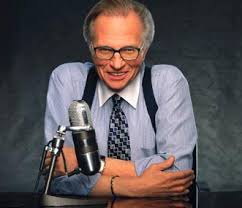
I grew up listening to Larry King’s overnight radio show between roughly 1988 and 1992, and in my opinion — which happens to be correct — the radio show was much better than the television version that later made him famous. The TV show was good, even great at times, but radio was longer, looser, freer, and far more unpredictable. It had weird guests, weirder callers, and the feeling that anything might happen at two in the morning. That’s where Larry really lived.

I would listen in my bedroom at my parents’ house in Spokane, Washington, the volume turned low, the house quiet, insomnia hovering. The Spokane AM station — KGA 1510 — carried the show from around 9 PM Pacific time, and then, wonderfully, they would run it again. So I’d listen from nine to midnight, fade, wake at two or three, and hear the same segment again in a half-dream. The effect was surreal. Didn’t I just hear that caller? Didn’t Larry just say that? It created a strange loop of late-night déjà vu that only made the whole thing more atmospheric. The show felt less like programming and more like a continuous nocturnal conversation.

My friend Kelly Rudd loved Larry too. When we were in high school we were both big fans of the radio show, and we talked about it constantly. There were a couple of things that we especially liked. The first was that Larry famously did no preparation. He knew a huge amount about the world, of course, but he didn’t read guests’ books ahead of time. He wanted to come in cold. If his guest was a firefighter, he’d ask, “So what’s it like to be a firefighter?” It sounds lazy, but it was brilliant. By staying open and getting out of the way, he let the conversation go anywhere. This way the show became eventful.

Another thing we loved was what happened after the guest left. Larry would open the lines and take questions about absolutely anything. Most of the time he was generous and patient, but when callers went off the rails he had a signature phrase. He’d cut them off gently: “Cold compress, ma’am,” or “Cold compress, sir.” Basically: lie down, ice your head, regroup. It was hysterical, especially because he used it sparingly. When “cold compress” dropped, you knew things had gotten weird.

Anyway, Kelly and I loved Larry so much that when the station suddenly dropped the show, Kelly proposed we drive to the radio station and protest. So we skipped school, drove across town, and rang the intercom demanding to speak to someone about the cancellation. The station manager eventually came down and heard us out. We knew we weren’t changing anything, but it felt right to try. Larry never came back to Spokane radio, and the show faded not long after, but the whole episode captured what the show meant to us. It wasn’t just background noise. It felt alive.

Larry’s on-air style was the key. He was unbelievably relaxed. By the late ’80s you could tell he had done thousands of hours. Nothing fazed him. Weird guests, drunk callers, eccentrics — all the same to Larry. He absorbed everything. He had pet phrases — “cold compress” chief among them — and he deployed them like a veteran reliever, only when needed. He famously did no prep, and he leaned into naïve questions. He’d ask something simple and let the guest do the work. The effect was disarming. People opened up. He also had real humanity. He listened. He didn’t mock callers. He didn’t rush them. There was compassion there, and I think that’s what I loved most.

And the show could get wonderfully out of control. In one story Larry told from his old Miami days, an adult actress he was interviewing suggested they just have sex during the commercial break. Larry, amused, asked the producers to clear out — but there wasn’t enough time. That kind of anecdote captures the looseness of late-night radio. It wasn’t polished. It was alive.

Larry left the overnight Mutual Radio show in 1994 to focus on television. By then I had already drifted away, but I still caught Larry King Live on CNN over the years. I remember watching during the O. J. Simpson trial while at Otago University in New Zealand, when the show became part of the nightly noise. Later there were the Vladimir Putin interviews — classic Larry, conversational and oddly disarming. And of course there were the great comic moments, like the interview with Jerry Seinfeld where Larry suggested the show had been canceled and Seinfeld snapped back in disbelief, and the Norm Macdonald appearance where Norm kept repeating, “I’m a deeply closeted homosexual,” and Larry tried earnestly to parse it. “So that means you’re gay?” “No, Larry,” Norm replied, “it means I’m deeply closeted.” Pure Larry: sincere confusion meeting absurdist comedy.

Larry’s personal life was famously complicated. He married eight times, had several children — including sons Chance and Cannon later in life — and lived in a kind of perpetual romantic improvisation. The marriages came and went. The last ended painfully and publicly. He once joked he’d never leave his wife unless Angie Dickinson came along — and when she did, he married her. That was Larry: impulsive, affectionate, slightly chaotic. Despite decades of success, he didn’t leave the kind of massive fortune people assumed. The money came and went, as did the marriages. It was a life lived in motion.

My friend Sergio Mandiola actually knew Larry in his later years in Los Angeles. Sergio was running an independent studies program at Beverly Hills High School, and Larry’s sons Cannon and Chance, and he taught his sons for three years. Larry would come by for open nights or just to chat.

Sergio Mandiola: “Larry would come in from time to time and we would talk. He was lovely and open. He talked about his family and his career. One time he told me, ‘Sergio, you should totally have a radio show!’ I was flattered. One thing about Larry is his politics were more to the left than he let on on air. He had strong views and wasn’t afraid to share them in person. Larry was a true mensch and I’m glad I got to spend time with him. I miss him.”

In the end, I’ll say it plainly: for me, Larry King is the radio GOAT. There was no one like him, and there probably never will be. It wasn’t just longevity. It was the curiosity, the looseness, the humanity, the love of people, politics, baseball, and life. He trusted the conversation. He let the night unfold.

And then there was that absurd, wonderful USA Today column, which read like a diary gone completely outta control. Mets lose 6–4…Rain in Baltimore…Clinton flies to Ireland…You’d read it and think, Larry, baby, WTF is this? And also, Mr. USA Today, WTAF are you doing paying for this? But somehow it worked. It was pure Larry — fragmentary, observational, intimate.

And that’s how I remember him most clearly: late nights in high school, the radio turned low, insomnia hanging in the room, Spokane quiet outside.. Sometimes I’d listen from nine to midnight, fade, then wake again to the rerun, half-dreaming, half-aware, caught in that strange déjà vu — didn’t I just hear this? — while Larry kept talking, calm as ever, taking calls from truckers and insomniacs and eccentrics. My listening years were brief, but they stuck. And when I think of Larry now, that’s where I go back to: the low hum of AM radio, the half-fade, and the sweet sounds of his voice in my ear.

Dedication:

For the one and only GOAT, Larry Motherfucking King. RIP baby.
On the Theory of Condensation

Note: This story is drawn from memory and from an ongoing oral history conducted via group text with the surviving members of the expedition. As with many events that took place more than thirty years ago, certain details remain contested, most notably the identity of the fourth passenger and the exact geographic location of the cigar-ash pasta incident. Mason Anderson, when consulted, quickly clarified that he was not present, as he was living with an uncle in Key West that summer, thereby removing himself entirely from responsibility for the expedition.

Kelly, whose scientific theory regarding condensation remains central to the story, has not yet submitted his official rebuttal, though one is expected shortly. Should further testimony arrive—especially if it sheds light on the fate of the firearm hidden somewhere near the California border—I will append a brief postscript.

In the meantime, the above account represents the best reconstruction available.

Epigraph:

Bullshit baffles brains. 

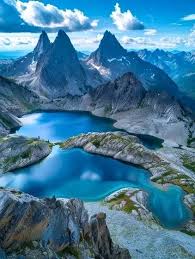
We graduated from St. George’s in June of 1992 and, like many newly minted high-school graduates, we had what we considered a very solid plan. We were going to drive from Spokane into the Selkirk Mountains in Idaho and spend several days trekking around in the wilderness like the rugged outdoorsmen we assumed we were.

The crew consisted of myself, Kelly, and Richard Barkley, along with a fourth member whose identity I am currently attempting to reconstruct through the miracles of modern group text. Mason Anderson, when contacted for this oral history, quickly clarified that he had nothing to do with the expedition whatsoever, as he was living with an uncle in Key West that summer and therefore cannot be blamed for any of the events that followed.

I had just gotten my driver’s license—rather late by American teenage standards—and was eager to demonstrate that I was now a fully functioning member of the motoring public. Richard had the car, Kelly had the confidence, and somewhere along the way we acquired a gun which I believe belonged to Will Rafferty, a year behind us at school.

Right away you may notice that this was not shaping up to be the most carefully planned expedition in the annals of Pacific Northwest mountaineering.


The Tarp

One of the first disagreements arose over equipment. I had suggested, quite reasonably I thought, that we bring a tent. Kelly rejected this idea outright.

A tarp, he assured us, would suffice.

Now, the Selkirks are a beautiful range, but they are not known for their gentle weather. Sure enough, as soon as we reached the foothills it began to rain. Not a polite drizzle either, but the kind of steady mountain rain that makes you realize nature has the upper hand.

Nevertheless we pressed on and eventually found a place to bivouac for the night.

We rigged Kelly’s tarp as best we could, laid out the sleeping bags, and attempted to cook something on the camp stove while water ran in small rivers through the campsite. At a certain point, after watching the tarp sag ominously under the weight of the rain, I reached what seemed to me the obvious conclusion.

“Dudes,” I said, “I don’t know about you, but I’m sleeping in the car.”

Kelly immediately objected. What followed was one of the great scientific claims of our generation.

“That’s a bad idea,” he said. “You’ll get more wet in the car because of the condensation.”

Now I’m no meteorologist, but even at eighteen this struck me as extremely unlikely. Outside the rain was falling steadily. Inside the car was, well, a car.

Nevertheless Kelly was confident in his theory. I was confident in my skepticism. We agreed to disagree.

Kelly, Richard, and at least one other member of the expedition slept under the tarp. I reclined the passenger seat of the car and slept quite comfortably.

In the morning, everything under the tarp was soaked.

To this day Kelly maintains that the condensation principle was sound.


The Pasta

Having discovered that trekking in the Selkirks during a mountain downpour was not especially enjoyable, we decided to improvise. The road trip continued deeper into Idaho, or perhaps Montana, where we eventually stopped beside a river to camp for the night.

This time tents were involved, which was already a step forward.

Kelly assumed responsibility for dinner and set about cooking pasta on the camp stove. Things seemed to be going well until he produced a cigar, lit it, and began tapping the ash—quite generously, I might add—into the simmering red sauce.

I objected immediately.

“Knock it off,” I said.

Kelly waved away my concerns.

“No, no,” he said. “Italian guy Joe does this. He says it’s the secret to a great sauce.”

I have never met Italian guy Joe, but I remain confident that he does not exist.

Kelly continued tapping ash into the pot. At that point I made the executive decision not to eat the pasta.

Kelly and I, despite being great friends, were at philosophical loggerheads for the first two days of the trip.


The Gun

At some point we decided to drive into California. This raised a new issue, namely that we were traveling with a gun.

I had been against the gun from the start. Kelly, however, had insisted that it was necessary. Necessary for what exactly was never entirely clear, but the gun had come along anyway.

Approaching the California border, we held a brief council and concluded that crossing state lines with a borrowed firearm might not be the wisest course of action.

The solution we arrived at was simple.

We would hide the gun in some bushes and retrieve it on the way back.

I pointed out that once a gun was hidden in random roadside bushes somewhere near the California border, the odds of ever finding it again were approximately zero.

Kelly disagreed.

We hid the gun.

We crossed into California without incident.

Later, as it turned out, we headed east anyway and never went back for it. Somewhere in a patch of roadside shrubbery, the gun presumably remains to this day.


Wyoming

Eventually the road carried us into Wyoming. We drove up onto a plateau above a large spread owned by the Mann family, who were something like Spokane and St. George’s royalty. My family and the Innes family had visited the place in previous summers to fish and wander around.

We had no invitation.

For a moment there was some discussion of whether we might simply camp there anyway, but cooler heads prevailed. As we were debating the matter, a caretaker appeared and asked what we were doing.

We explained that we were friends of the Manns and asked if it would be alright if we camped for the night.

He was entirely copacetic.

“Sure,” he said. “No problem.”

And just like that, after tarp disasters, pasta controversies, and the abandonment of a firearm somewhere in California shrubbery, we finally spent a perfectly pleasant night camping.


The Drive Home

The next day we drove back to Spokane, which I remember as being about fourteen hours straight.

It was Richard’s car. He asked me at one point if I wanted to take the wheel for a while, but I had only recently gotten my license and didn’t feel especially confident about highway driving yet. I declined and slept in the back seat while Richard drove most of the way and Kelly took a few turns.

Eventually we rolled back into Spokane.

We had not trekked the Selkirk Mountains.

We had lost a gun somewhere near California.

And we had proven absolutely nothing about condensation.

But we did come home with stories for life

Dedication:

For legal professionals everywhere.

Shotgun in Seth’s Ford Explorer

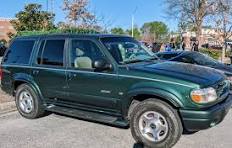
Note: This piece takes place in Spokane, Washington in the fall of 1991, during our senior year at St. George’s School. CDs were still a relatively new luxury item for teenagers, Zip’s runs counted as real excursions across town, and a hunter green Explorer in the school parking lot could serve as the center of an entire small social world.

Epigraph:

Out with the posse on a night run
Girls on the corner, so let’s have some fun
Donald asked one if she was game
Back Alley Sally was her name
She moved on the car and moved fast
On the window pressed her ass
All at once we heard a crash
Donald’s dick had broke the glass

Ice T

Seth drove a green Ford Explorer, which meant two things: he was always the driver, and John Innes almost always called shotgun.

Ours was a class of twenty-eight boys at St. George’s School, which meant the social landscape was less a battlefield than a small archipelago of cliques. Everyone knew everyone, and everyone more or less supported everyone else. Still, there were natural groupings. Seth, Innes, and I spent a good deal of time together, with Kelly sometimes orbiting the car and Richard Barkley frequently around as well.

The Explorer usually lived in the SGS parking lot behind the lower school. During the day it sat there waiting for the moment seniors could leave campus, which we could do whenever we wanted. When that moment came, Seth’s Jeep became a kind of small republic on wheels.

There were rules, or something close to rules. Seth drove. Innes called shotgun. He cared about it the most and therefore usually got it. Occasionally Barkley or I would challenge him, which would inevitably produce an argument about whether the call had been made properly or whether the timing had been unfair. The exact legal framework of shotgun was never fully settled, but the outcomes were usually predictable.

Inside the Explorer there were CDs everywhere. Not in a messy way—Seth kept the car pretty well—but there were dozens of them, probably stored in one of those large CD wallets that seemed to exist in every car in the early nineties. Seth would sometimes come back from Hastings with six or eight discs at a time. I remember watching those purchases with something close to disbelief. I could rarely afford a CD myself, so when I did manage to acquire something like Tindersticks or Billy Bragg’s Spy vs. Spy, it was a very big deal.

The music rotation in the Explorer was remarkably tolerant. Seth tended to favor Judas Priest and Metallica, while Innes leaned toward Ice-T. Joe Tyllia loved Cat Stevens and so Cat Stevens appeared frequently. I personally preferred Dire Straits at the time, which never quite made the regular rotation, so I generally waited for Warren Zevon or Cat Stevens to come back around. Nobody vetoed anyone else’s music. Whatever disc was in play generally stayed there.

The Explorer had a few regular destinations. State B basketball games were one. Another was Zip’s on the north side of town. Seniors could leave campus whenever they liked, and sometimes that meant simply deciding that a run across Spokane for burgers was necessary. Seth’s house was another stop, as was Hastings, where the CD acquisitions occurred.

Occasionally the driving extended further into the South Hill at night. Sometimes we would pass near Manito Park, though I remember doing those wandering drives more often with a slightly different crew—Dyche, Jonah, Karin, and Lisa. Once that group went to a show by They Might Be Giants, and afterward Kelly reported that the band had stiffed the opening act and paid them only ten dollars. Kelly knew this because his cousin was in the opening band.

The one time I ever took shotgun from John Innes without calling it came on the ride home from the state cross-country meet during our senior year. Our team had finished second by a single point, which felt at the time like the most unfair outcome imaginable. James Johnson had been our first runner, Cam Turner second, and I was third.

When we piled into the Explorer for the three-hour drive back to Spokane, I simply grabbed the seat. No call. No discussion. Just took it. And for that ride home I ran the decks.

For a while Seth’s Explorer was simply part of the landscape of our lives. It sat behind the lower school during the day, appeared at the Coleman house west of the South Hill at night, and carried us between games, fast-food runs, music stores, and wherever else we decided to go.

Then, like most small countries of teenage life, it quietly disappeared

Dedication: For my homies.