The Thin Man in Singapore Part V: Alice’s Birthday and a Guardian Angel

You clean yourself to meet/ a man who isn’t me/ you’re putting on a shirt/ a shirt I’ll never see/ ’cause you’re too smart to remember/ you’re too smart/ lucky you

The National

Dateline Singapore: November 3rd, 13:06

The phone rings, jarring the thin man out of sleep. “Where the/ what the/ who the…” Images in shards–his grandmother’s house and he is six, sun streaming through a late afternoon window. He rolls over. No by god, a bed, an adult body within. He picks up the phone. “Uh huh?”

“It’s Alejandro. Your passport will be ready tomorrow morning and you’re on an Emirates flight to Rome via Dubai tomorrow at 9 PM. In the meantime Alice is having a birthday party and you’re invited.”

“Alice?”

“Miller’s secretary. You might have heard the rumors, but she’s a cool cat and it’ll be fun. 17:00 at Chijmes. Be there.”

“Seriously? I don’t know Alice and, I’d rather just rest up you know.”

“Not an option. You’re not invited, more required. From Miller directly. Buck up man and see you at 5.”

Holy Jesus, another evening. The thin man rises, splashes cold water on his face and when this doesn’t do the trick, fills the sink with cold water and plunges his face into the water, eyes wide open. He exhales; water goes everywhere. He dabs at it with a hand towel. Breakfast is long over–lunch is a maybe. 20 minutes later he has showered and shaved and limps downstairs.

“Lunch is still open?”

The man’s smile masks a scowl. Rolling into a buffet that closes at 14:00 at 13:46 is no way to endear yourself to staff. He takes a seat by the window, wanders the buffet. Two bowls of mushroom soup, two watermelon juices, a roll with butter, salmon sashimi and an Americano. Vague feelings of humanity follow.

On his phone the thin man peruses “The Essentials of Casino Game Design” as he eats. This is more out of habit than interest–he has no desire to re-enter the gambling demi-monde. Reflex is a bitch though. The waiter circles, pressing his point from 5 feet away. “I got you babe,” thinks the thin man. He makes marginal eye contact, figures he has another 20 minutes give or take. He resolves to relax into the spacetime as fully as possible before the waiter pulls rank. He has no desire to make trouble but at the same time, a customer is a customer and soup is soup. A game for two players. Eventually, he makes his move before the waiter is forced to make his.

“On my room please, 727,” he says, with studied nonchalance. Everything takes all afternoon.

The thin man has a number of flaws but he does clean up well. That’s a skill, a blessing, a bonus. Re-showered, shaved, and an app-assisted breathing exercise later, he shows at Chijmes on time and on point. Miller himself greets him with a slap on the back.

“Mr. Bishop, your work is appreciated. Much appreciated. I heard that you will be staying with the firm. Rome is beautiful this time of year. You are a lucky man.”

“It is my pleasure to be of service.” The thin man is not serious, yet not unserious. The work is the work and he has no other. “Anyway, happy birthday to Alice hey?”

“Hehe, haha. Alice, yes,” salivates Miller.

Another day, another passport thinks the thin man. Several people he doesn’t know are there. The crew moves to an outdoor restaurant; the usual wrangling over orders ensues and Long Island Ice Teas appear. There is no drink more perfectly positioned to cause trouble than a Long Island Ice Tea. The thin man downs two before the Nachos arrive. A waitress circles. “White or red,” she asks. “Both please” replies the thin man. It’s early and he has no intention of sticking with this group after dinner. Why not make the most of the moment.

The food is a B at best, but the drinks are loaded. The sun shines in the late evening. The usual Singapore rain squall has not appeared today. 6 PM, the magical hour, and the thin man begins to fade into the perfect liminality that only occurs between drinks three and four.

Titters from Alice. Winks from Alejandro. Miller sits straight up, what a spine. The thin man is bored. Time passes; the sun sets.

“One more?” asks Miller.

“How about the hotel bar?”asks the thin man. The sooner near home the better. Miller covers the bill and tracks are made.

The thin man and crew enter the bar and the mood is boisterous. The thin man feels as thin as paper. He needs an ally. As his party makes its way to a table, he approaches the barmaid. Her tag identifies her as “May.” Always approach service workers with kindness and respect–they get so little of it so it goes a long way.

“Good evening May. My friends and I are looking to enjoy the bar tonight. Only, I have been on the road for weeks and I’m a little tired.” He slips her a $50 bill. “I know bars don’t love to serve water, but if you could keep an eye on me and refill my water glass I’d be in your debt.”

May looks him up and down.

“No problem. Rely on me.”

The thin man makes it to the booth where Company X holds court. Miller and Alice’s hands dance a protracted duet. Alejandro sits a foot away, just keeping an eye on things.

A round of drinks, another. May keeps her end of things and the thin man hydrates, for a while. A woman called Marta had introduced herself at dinner and slides into the booth next to the thin man.

“How do you know Alice?” she asks.

“I don’t.”

“Oh. I have a bet with Jeffrey over there. He thinks you are on his team.”

“On his team?”

“You know,” she drops into a stage whisper, “Jeffrey likes men.”

“I see. I don’t have a team,” replies the thin man. “I’m a free agent.”

“Not so fast,” interjects Alejandro, who seems to register everything that is said at the table. “You are on our team. You have a contract.”

“A contract? I haven’t seen anything like that. And besides I don’t see how that would be possible. Text is dead, or that’s what I’ve heard.”

“Don’t mind him,” says Alejandro, “he likes being heavily humorous.”

Marta doesn’t seem to mind. Somehow her arms and legs are entangled with the Thin Man’s. How does that even happen? he thinks. He’s lost the touch he never had, but matters seems to be progressing anyway. Amazing. He hears Jeffrey calling for champagne. Now, even from deep in a haze the thin man knows that ordering a bottle of champagne in a hotel bar is not exactly value for money. A commotion is taking place across the bar. Men from the Green Group are hassling the bar staff, something has gone wrong with an order they allege. The Thin Man swivels his head around to take a look and his mind recedes into fantasy:

Shut your traps and stop hassling the waiter! We’re trying to enjoy a birthday! And if I have to tell you again, we’re gonna take it outside and I’m gonna show you what it’s like! You understand me? Now, shut your mouths or I’ll shut’em for ya, and if you think I’m kidding, just try me. Try me. Because I would love it!

He glances at the bar, catches May’s eye. She shakes her head imperceptibly, reading his mind. Absurd ideas of accosting the group and defending her honor recede. He breathes a sigh of relief.

A second bottle of champagne arrives, a third. We are at the stage of the evening where petty arguments break out all of the sudden, and are as quickly forgotten. The thin man, Marta and the sofa seem to have merged into a single entity. This is pleasant.

He snaps back into consciousness. The party seems to have thinned out. Miller and Alice are gone. Alejandro gets up to leave and Jeffrey waives off his efforts to pay. It’s true Alejandro drank only club soda. A steady hand, this guy. He leans over to the thin man, lets him know his passport will arrive in the morning.

“We’ll be in touch.”

“Oh good.” It’s all he can think of to say. He sees 120 Singapore dollars on the table, begins to calculate. The bill will be a lot higher than that. What’s happened here is he has fallen prey to the cruel economics of party leaving whereby early leavers underestimate their impact on the total bill. Marta is warm but the future is cold. It’ll be him and Jeffrey splitting the bill.

“Maybe we should call it an evening,” he says. He draws himself to his feet, a mighty effort, and approaches May. “What do we owe?”

“It’s all taken care of,” she says.

“Miller paid on his way out?”

She shakes her head, whispers in his ear, “your bill was charged to the Green Group. They probably won’t know the difference and if they do, they check out the day after tomorrow so…” May places her index finger on thin man’s lips and presses gently. He goggles, is in love.

“You are an angel,” he says.

“Shhh, silly. You’ll get me in trouble.”

He circles back to the table. “The bill is paid,” he tells Marta and Jeffrey. “Leave the cash as a tip.” They don’t bat an eye–too far gone to care. “I told you he isn’t on your team,” says Marta. “I win the bet.”

“It’s too early to tell,” says Jeffrey.

The thin man gives Marta a kiss goodnight. “I’ve got to fly tomorrow.”

“I know.” Theirs was an encounter based in a specific locale, a specific moment. Some encounters are like that.

Dateline Singapore: November 4th, 10:00

Ah the Sabbath. The thin man had managed to set his alarm for 10:30 but it’s not needed. The phone rings at 10 AM, and the receptionist tells him he’s been cleared for a late check out of 17:00. How did that happen? She doesn’t know. “It says right here sir.” 11 hours before the flight. What would a human do with 11 hours, he thinks? He takes a swim, showers, eats mushroom soup and indulges in a few slices of roast beef this time. He remembers a much loved song:

I’m so sorry but the motorcade will have to go around me this time/ ’cause God is on my side

That’s attitude. He tries to summon 1/10th of that mood, says a little prayer to his angels. On the way back to room 727 a maid smiles at him. “You must be the British gentleman,” she says.

“Oh, why is that?”

“Because your room, it’s so neat and clean.”

British rooms are neat and clean? That’s news to the thin man. Am I British, he wonders? The reason his room is clean is because there’s next to nothing in it.

“Thank you. Have a wonderful day.”

“You too sir.” There is nothing that he has ever done in his life to deserve such respect, he feels. Life is good.

Under his door there is a manila envelope. Inside is a passport in the name of Jack Bishop and $3000. There is also an index card with a phone number. At the bottom of the card he reads “May.” Life is good? Hell, god is good man. The thin man smiles and packs his valise. 8 hours later he is airborne en route to Rome.

to be continued…

Dedication: For Mint.

The Thin Man in Singapore Part IV: Marcus

Señor, señor, I can see that painted wagon
Smell the tail of the dragon
I can’t stand the suspense here anymore
Can you tell me who to contact here, señor?

Bob Dylan

Dateline The Alligator Pear: November 2nd, 16:25

The thin man met the accountants for an early drink at the Alligator Pear as promised. They drank Mojitos, a ridiculous drink that is invariably watered down. The thin man had a vodka and soda, a safe choice ahead of what could be a long night.

The mood of the men swung between giddy and glum. One of them was on some kind of app, choosing an escort for later on. The men advised him on his choice with the surgical precision of serious professionals. The thin man hoped that he could be as precise in his own operation tonight.

“Did you folks get wristbands yet?” a waiter in his early 20s asked. They hadn’t, so they did. Yes, the event security is poor, but to be fair they all looked the part of party goers. And so they were. All going to the party.

The party must have been paid for weeks ago because all the stops were turned out. A full bar, lobster tails, sushi, fondue, steak tartare, champagne. Sometimes the best way to look prosperous is to look prosperous. The guests were high in no time. The future was unwritten, terrifying. All they had was tonight.

Nursing his second vodka and soda, the thin man scoped out the scene. Anderson was not present, nor was Rink. The highest ranking Green Grouper seemed to be a regional vice-president called Lewis. It was he that gave the toast, “to a glorious future, the Green Group!” Salut. Lewis was in his early 40s, too young and too on the spot. The thin man needed someone older, someone with less to lose.

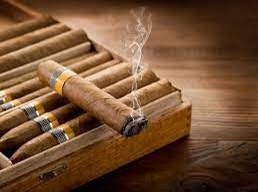
Outside on the pool deck a group of three men had lit up cigars. This was surely against regulations, however a payment must have passed under the table, either that or tonight was one of those nights were regulations just weren’t in effect. Regulations are like that, even in Singapore. They are human created and human maintained. Or, in this case, not.

Cigar smokers, mused the thin man. Cigar smokers tend toward the genial and the venial. Toward the cynical and the amoral. Toward the reckless and the egotistical. In that moment, he loved cigar smokers. Cigar smokers were excellent. The only issue was he might have to have one too.

He approaches the group a little gingerly. The move here is a little different than cozying up to the accountants. There he wanted to be taken in as a peer and fit in. Here, his role is of the acolyte, the younger man. Now which one is our mark? Individual one appears in his mid-sixties, and sports a brown jacket that is at least three years past its prime. His feet are shuffling an alcoholics’ shuffle. No thank you. Individual two is in his 50s dressed in a tux. Hair slicked back with pomade, a little glassy eyed. A greaser who got lucky. No.

The third man, however, is of a different type. Also in his 60s, he wears a pale red sweater over a tieless pink shirt. He is handsome for his age, white hair adding a touch of distinction. He is slightly overweight but in a way that suggests ease not sloth. The thin man cages a cigar from the brown jacket, lights it, and stares into the middle distance. A few puffs later he casually turns to the man in the red sweater.

“Jack,” he says, “quite a view eh?”

“Marcus,” says the man, “view of the end of the world if you ask me.”

“The company? The rumors?”

“Rumors? Boy, ain’t no rumors about it. We’ve got a ringside seat on the Titanic.” His laugh is actually merry. The thin man is elated, an emotion he subsumes into wide-eyed curiosity. He wills himself to look 10 years younger, like we said, an acolyte.

“I heard Rink is making his move by Monday,” says the thin man. He has heard no such thing, it just makes sense in context.

“Made his move already. Anderson is bleeding like a stuck pig. Rink will announce the coup on Monday at the latest. The wires may have it before then.”

The thin man is getting warm. He turns gently to face Marcus, cutting off communication lines with the other men. Drink in his right, he stretchres his left arm out part way as if he is about to put his arm around the older man. But not quite. It’s all in the mechanics. Marcus takes a few steps away from the edge of the pool and toward a padded bench for two.

“Can I get you another drink, sir?” asks the thin man.

“You sit with me boy,” says Marcus. “Drinks are his job.” He gestures to the young waiter. “Two Gibsons, and make ’em strong.” At they sit the Thin Man channels “boy.”

“So Rink will really pull it off eh? That should get us right back on track.” Fishing.

“Balls boy. Back on track! Anderson siphoned so much money out of the company that Rink will have to go hat in hand to Company X. Won’t have a choice.”

“Oh, the merger? I forgot about that. Well, we should get a good price right? I mean, our fundamentals are still strong.”

“Fundamentals? Boy what have you been smoking? Anyway, Rink doesn’t want to lead Green Group any more than I do. He’ll sell and take a pretty title, head off to the desert on his dune buggy.”

“At a good price, of course.”

“Phah, he’d like 60% on the dollar and would die for 51%.”

“I see. And what would he take?”

“45%. Lot of whores out there on the dunes boy. Rink’s no dummy.”

“Naturally. And what will you do sir, once the ship has sailed?

“Fuck off to Venice and blow the lot. Or, stick around and see how things develop.” Marcus leans in close to the thin man. “Do pass that on to your paymasters, will you? Marcus is ready to play ball. Marcus knows where the bodies are buried and where the light shines.” He puts his arm around the thin man, paternally which just the slightest touch of menace. “Take care of old Marcus, eh kid?”

The man knew, or guessed. The thin man draws a breathe to recalibrate. “I’ll see what I can do.” And he meant it.

Dateline The Street Outside the Swissotel: November 2nd, 16:25

It is still early-ish and the thin man has what he needs. He decides to phone Alejandro, and makes sure to exit the hotel and walk around the corner before he places the call. Alejandro picks up on the second ring, and the thin man fills him in on the basics. Alejandro tells him to come to the office, gives an address. It is a 10 minute taxi ride. The taxi driver is an ex-policeman. “I drive for my enjoyment and because it gets me out of the house,” he explains. I could drive a taxi, thinks the thin man, there are plenty of worse ways to earn a living.

Alejandro meets him at the door and escorts him through building security. The security guard asks for the thin man for ID and Alejandro shakes his head vigorously. His whole being shakes with indignation.

“We are going to the 14th floor,” he hisses with equal parts insistence and menace. “The 14th floor.” The guard, recognizing a losing hand when he sees one, waves them through.

“That reminds me, says the thin man,” I need a passport. The company can take care of that yes?”

“Sure,” says Alejandro. “As long as you’re willing to take a job overseas we can provide identification. Are you still Jack Bishop?

“Yes.”

“OK Mr. Bishop. Let’s go make the report and see where else you might be of use in this little world of ours.”

On the 14th floor the team is waiting, 11 people strong. The man in the middle crosses the room and shakes the thin man’s hand. “I’m Mr. Miller, Head of Operations for the region,” he says. “I hear you have some news for us?”

“Yes. Anderson’s a dead duck. Rink will have control by early next week. He’ll take a haircut on the shares and a sinecure. You’re good to go.”

“How much of a haircut?” asks Miller?

“Offer him 41%,” replied the thin man. It’s a brutal lowball, and the thin man feels great saying it.

A man in a yellow jacket pipes up from the left corner. “41% is nothing. We’ll risk poisoning the negotiations entirely with such a number. Where is your information from?”

“The information is sound.”

“Who did you have to deep throat then,” asks the man in yellow.

“I’m sorry, who are you?”

“I’m director of security. It’s my job to assess risk.”

Standing in a fucking room on the 14th floor. The ocean is a great place to watch movies, and the thin man had seen his share. He turns to Miller. “I came here because Alejandro asked me to. He asked me for a favor.” He points to the security man. “I said, the real favor, follow my advice and fire his fuckin’ ass because a loser is a loser.”

You can hear a pin drop. “41% percent,” repeated the thin man. “Thank you for this opportunity. And, there is a man called Marcus, as in Aurelius. He’s an asset.” He’s bone tired as he turned to walk out the door.

Alejandro tags behind. “Well done, well done. Miller is pleased.” Alejandro possessed the eternal skill of reading the boss’ moods from micro-inflections, a true corporate survival skill.

“Thanks,” says the thin man. “When is the earliest I could get that passport?”

“Day or two. Let me get into it.” The black market economy is a marvel of efficiency, thinks the Thin Man. To live outside the law you must be honest. “And you’ll be available for international work?”

“I’m available.”

“Then we are all good.”

“See you on the dunes partner,” says the thin man. Alejandro’s look is quizzical.

“Sorry, inside joke.”

“Yeah, inside to you and you alone.”

“See you around,” says the thin man. What he means is, “it’s funny to me,” but he doesn’t want to push it. He staggers back home in a second taxi, making no eye contact until he is safely ensconced in his room. He manages to take his shoes off, and doesn’t even text Desiree before he passes out.

Dedication: I had a cigar once.

to be continued…

The Thin Man in Singapore Part II: The Ask

Well apart from the things that I touched/ nothing got broke all that much/ and apart from the things that I took/ nothing got stolen babe, and look.

Matthew Houck

Dateline Singapore: October 30th, 8:02

The thin man woke at the 1887 happy to be alive and went on down to breakfast as instructed. He picked out his guy immediately. The broker was perfectly of his type, his suit barely disguising, indeed almost accentuating, the hustler inside. The thin man ordered orange juice and eggs, the broker drank coffee. He had probably already eaten.

The broker, like all of his kind, couldn’t give a shit who he was pimping as long as he got his 10% commission. He took the thin man’s data points and promised to turn them into a resume that would emphasize the high stakes, low reference point nature of his previous work. “I’ll get something going,” said the broker.

Dateline Singapore: November 1st, 11:43

The thin man stayed on at the 1887, hoping that the bill was paid for a few days at least. On Wednesday the phone rang, and the man on the other end introduced himself as Alejandro from Company X. The broker knew his lane, apparently.

“I have work for you,” Alejandro said.

“What sort of work?” asked the thin man.

“The best kind, the kind where you get in and out.” The thin man could hear Alejandro’s razor thin smile through the phone.

“I deal cards,” replied the thin man, “I’m not a safecracker.

“Of course not. We are a respectable company with a 400 year history. This work is simple. The company is in negotiations around a merger with Green Group Ltd. They are playing hardball and we need to know their real intentions.”

“Basically you want to know if they are bluffing?”

“Precisely. And who better than an operator such as yourself to find this out?”

“And what do I have to go on?”

“The Green Group will be having a party at the Swissotel downtown tomorrow night. There will be about 200 guests. You will infiltrate the party and get the lowdown. That is what you British say yes, “the lowdown.”

The thin man was not British but it didn’t matter. “Yes, that’s right. OK, book me a room on the club floor starting today. I’ll need a new suit, a haircut, and a cell phone. How’s $500 a day for expenses and $20,000 for the job?”

“What about the broker?”

“That’s your end,” said the thin man. My end is $20,000.”

“Deal. Don’t fuck up.”

“I don’t intend to.” And with that the conversation was over. The thin man had acquitted himself well, but only by the grace of god. Several things were running through his mind;

i) was $20,000 a lot or a little for a one-night stint of corporate espionage? Alejandro had bit right away so perhaps he was underselling his services. Or, Company X was desperate;

ii) 200 people at the party and the thin man knows not a one of them. He’ll have to research, chose a few likely targets, although after five weeks of carousing there wasn’t a lot of research energy left. He’ll need to make minimal and efficient moves;

iii) he has no bank account. His severance was paid in cash and he does not intend to stay in Singapore forever, however appealing the locale. He’ll need to get legal sooner rather than later.

Dateline Singapore: Around 17:07

The thin man is up for the job, however like we said he could use a little up-front information. So he checks out of the 1887, which is all paid up, and grabs a taxi to the Swissotel where he checks in, showers, and scopes out the premises. The Alligator Pear is the poolside bar at the Swissotel, fancy, and the thin man figures tomorrow’s party will be at held around the pool. Thus, this visit is classifiable as reconnaissance–this visit is billable, baby. A single couple lingers over a menu across the way.

“What’ll it be?” asks the bartender?

“Do you have any eggnog” asks the thin man, more out of habit than preference. The bartender gives him a sideways look, as if he is not sure who the joke is on.

“No sir, I am afraid we only serve eggnog during the Christmas week. How about one of our signature Manhattans?”

Manhattans, they taste like mouthwash.

“Sure a double Manhattan. And pop an egg in it would you?” This time the bartender doesn’t even blink.

“Of course, sir. One Manhattan with a raw egg.”

The drink is served and the thin man knocks it back straight. It is as disgusting as an adult beverage can be. “Perfection,” says the thin man. I’ll take a double martini with a sprig of Rosemary please.” As the barkeep makes his second drink the thin man turns to survey the space. Despite knowing no one and nothing about tomorrow evening’s party, he has a few advantages. First, event spaces are inherently permeable. More on this later. Second, he has nothing to lose. Nothing whatsoever. The $20,000 is what you call a titular payment. Hypothetical. His sainted mother has long passed; his widowed sister could be anywhere. The Costa Rican chick who claimed he’d knocked her up in ’04 was probably still out there, but he had no confidence in her presentation of events. He was only on shore for 48 hours and months on the water tends to take a few miles off a guy’s fastball. She was sweet, but it was probably a hustle. So like I say, nothing to lose, and therefore easy to underestimate. That’s what the thin man is counting on.

He’d better; the bastard’s precious little else.

The martini is served and the thin man takes a deep drink. Three men approach the bar, lanyards around their neck, ties beginning to come undone, voices high. The Green Group, thinks the thin man, excellent. He takes a deep breath and turns his head slightly to the right, cementing his presence in their field of vision without being in any way threatening or intrusive. “Can you fuckin’ believe Bill?” asks one of the men. Pulling up sick on a day like this, the company going to shit?” “I think he’s faking,” says the second man, a lifer in his early 50s. “He’s always been weak like that. Looking to cover his ass.” “Fucking wanker, if you ask me,” replies the first man. “Pussy.”

The thin man looks up at the men and smiles. He sympathises. He will be their good friend tonight. Corporate espionage, he decides, is like everything else. It’s just a matter of intention.

to be continued…

Dedication: For salarymen everywhere. I sympathise.

Peter Berger and Thomas Luckmann’s “The Social Construction of Reality” and Related Issues

Author’s Note: This piece is a re-write of a piece from my first blog, Classical Sympathies. At that time I was interested in the relationship between the individual and his or her place of work/ organization. Classical Sympathies was fortunate to have a number of regular readers, some of whom took the time to comment, sometimes at length. The blog got a surprising amount of traffic for some reason, although it is now lost to time. Some pieces from back then are, looking back, a little too flowery, however the style was the style. Andrew Inch, a guy that a uncatagorizable cross-section of people here in Japan knew back in the day, was one of the most prolific and interesting commenters, and I have left his remarks in this re-write.

Berger and Luckmann’s The Social Construction of Reality:

This piece will look in some detail at Peter Berger and Thomas Luckmann’s The Social Construction of Reality, and comment on some of the ideas that it raises. Anyone who works in an organization will be aware that the intersection of the individual, in all of her preferences and particularities, and the institution can involve some friction. In The Social Construction of Reality, Berger and Luckmann spend 45 pages on the topic of “institutionalization,” so they had obviously gave the matter some thought.

They make the point that while man (The Social Construction of Reality, published in 1966, uses the gender-specific term), makes his world, he is given to losing sight of this and projecting (or “reifying”) aspects of the social world so that they are perceived as entirely external and beyond his control. They write:

“Man’s self-production is always, and of necessity, a social enterprise. Men together produce a human environment, with the totality of its socio-cultural and psychological formations” (51).

Human culture, then, is invented. However, being prone to reification, people tend to:

“{apprehend} the products of human activity as if there were something else than human products–such as facts of nature, results of cosmic law, or manifestations of divine will. Reification implies that man is capable of forgetting his own authorship of the human world {and experiencing it} as a strange facticity, {…} over which he has no control” (89).

When mis-apprehending social reality as something other than the product of his own action and consciousness, man forgets that:

“the social world was made by men–and, therefore, can be remade by them,” but, ironically that,“reification is a modality of consciousness {…} Even when apprehending the world in reified terms, man continues to produce it” (89).

We can extrapolate the statement “even when apprehending the world in reified terms, man continues to produce it” to suggest that the perception of sedimented, externally controlled or created, facticity continually creates the very facticity in question. Put slightly differently, the denial of agency diminishes, even uncreates, free-will, while the exercise of free-will depends in large part, perhaps entirely, on the strength of one’s belief in it.

Now, this is not to argue that reification is simply false-consciousness, or that groupings within society do not go to considerable trouble to perpetuate and legitimate reification of their activities. Berger and Luckmann make this quite clear in their analysis of what they call “socially segregated subuniverses of meaning” such as “Hindu castes, the Chinese literary bureaucracy, or the priestly coteries of ancient Egypt” (85), (and we would add to this list lawyers, doctors, television pundits, university English departments, etc.). They write that subuniverses:

“become esoteric enclaves {…} to all but those who have been properly initiated into their mysteries {…} The outsiders have to be kept out {but} if the subuniverse requires various special privileges and recognitions from the larger society, there is the problem of keeping out the outsiders and at the same time having them acknowledge the legitimacy of this procedure. This is done through various techniques of intimidation {…} mystification and, generally, the manipulation of prestige symbols” (87).

“And generally the manipulation of prestige symbolsindeed. Those who engage, consciously or unconsciously, in the manipulation of prestige symbols are, in Berger and Luckmann’s language, involved in creating a “typification.” The acceptance of typifications, in turn, sediments social facticity and brings into being a taken-for-grantedness in the performance of social actors.

The authors indicate that while the typified actor may “act-into” a socially authorized way of acting in public, the same actor, in the privacy of their home, the confessional, or the bar may seek to establish a certain “role distance” through behaviors which blur, or indeed outright contradict, their public “face;” this distance is apt to shrink again when the times comes once again for the actor to take up their public role. In so doing, the actor re-activates that segment of the self which is objectified in terms of the currently available socially available typification(s).

When I started my first blog in 2009 I wrote at some length about why I wore a necktie at work, even though I didn’t really have to and some co-workers thought it was a little strange. My buddy Andrew Inch wrote an extensive, and highly perceptive comment on the topic which is instructive here. Mr. Inch, it will be apparent, is one smart dude. It’s kind of long, but it is worth it.

“Reflection on MT’s devotion to this apparently innocuous task, knotting a piece of cloth around his neck each morning, leads us towards what has become a key element of many recent theories of ideology. Derived from Pascal’s advice to non-believers, ‘kneel and pray, and then you will believe’, the French philosopher Louis Althusser sought to assert the materiality of ideas, and how ideology works through our actions as well as our words to define us as certain sorts of subjects. For Michel Foucault, one of Althusser’s students who sought to break with Marxism and the concept of ideology, the knotting of that neck-tie might have been considered a ‘practice of the self’, a way of disciplining oneself in line with a particular matrix of power and knowledge. The question that I think both of these thinkers struggle to address, however, is the extent to which we are able to shape our own selves, rather than simply being shaped by power. What scope do we have to resist the power embedded in these apparently mundane everyday motions? {…} By kneeling to pray, or standing in front of the mirror adjusting the knot, we perform belief and so take on socially available identities. And as for the rest of us in that office – what was the effect of not knotting the tie each morning? At times there were no doubt some who reveled in the non-conformity of that not knotting. In truth, however, did our alternative practices of the self not simply reproduce a slightly different, perhaps less respect-able but nonetheless conformist, relationship to the rules and rituals that regulated life in that particular setting? Was not wearing a necktie not just another kind of necktie after all?”

“In truth, however, did our alternative practices of the self not simply reproduce a slightly different, perhaps less respect-able but nonetheless conformist, relationship to the rules and rituals that regulated life in that particular setting?” This sentence is phenomenal, and predicated on a particularly alert and acute piece of self-knowledge. Mr. Inch is saying that those in the office who refused to put on a tie, or who flaunted the organizational dress code altogether, while thinking that they were “rebelling” and “sticking it to the man,” were in fact playing into a pre-determined archetype every bit as much as I was with my neckties and apparent “conformity.”

Mr. Inch is essentially making the same point that Berger and Luckmann do when they point out that roles and typifications are “endemic to social interaction {…} All institutionalized conduct involves roles.” And then, the authors bring matters home:

“The institution, with its assemblage of ‘programmed’ actions, is like the unwritten libretto of a drama. The realization of the drama depends upon the reiterated performance of its prescribed roles by living actors. The actors embody the roles and actualize the drama by representing it on the given stage. Neither drama nor institution exist empirically apart from this recurrent realization” (75).

In short, both Mr. Inch and Berger and Luckmann do not confine the acting out of prescribed roles, the submission to typification (e.g. “conformism”) to those in positions of authority within an institution. To the contrary, I read them both as saying that both the master and the servant, the “teacher’s pet” and the “bad boy,” the necktie wearer and the necktie shunner, the consummate insider and the professional rebel are all engaged in the recurrent realization of pre-typified activity.

Explication With Reference to Obama and Talleyrand:

Now, it is true that the above reading of Berger and Luckmann may leave the door open a purely cynical outlook by suggesting that all forms of behavior by institutionalized actors are equal. This is not quite what I wish to argue. Barack Obama has defined his political philosophy as “ruthless pragmatism.” While I understand this formulation, it does seem a little cold (as Obama is famously said to be) What if we added the word “principled” here? Could “principled ruthless pragmatism” sustain meaning without slipping irrevocably into the realm of the oxymoronic?

Let’s take a closer look in relation to organizational life as opposed to the political sphere. “Principled” because one’s initial agreement to engage with institutionalization (through the acceptance of a job offer for example) assumes a principled acceptance of the role one will be asked to play and the attendant tasks and behaviors that will be expected.

“Pragmatic” in that in order to accomplish anything in the social world, wherein competing interests, visions, and ideologies are, and ever will be, an unavoidable reality, one must be prepared to lose the battle in the service of, hopefully, winning the war. It has been my experience that the inability to lose a battle is a problem for many people in the modern workplace. Related to the ability to lose a battle is one’s attitude toward “compromise.” Is “compromise” a dirty word? It’s hard to say. On the one hand, the actor who blithely declares “there can be no compromise where my principles are concerned” may sooner or later find their principles encased under glass in their own private shrine to imagined rectitude. In other words, total denial of the possibility of compromise is tantamount to surrendering all hope of getting anything done. In the immortal words of William Jefferson Clinton, “sooner or later, you have to cut a deal.” On the other hand, there are a certain class of situations where certain compromises just do not feel acceptable, situations where one has what we could call an existential objection to the terms of the proposed compromise.

The question does not, I think, concern whether deals should be struck in general, they should, so much as whether any individual deals is in the long term interest of the project in question and the people involved with this project. This is where “ruthless” perhaps applies. At the very least, the pragmatist needs to accept in herself a degree of strategic focus where goals rooted in principle are concerned. We cannot deny, of course, that this is an easily misused sentiment—if we continually apply “pragmatic ruthlessness” to a project which we are deeply attached to there is the real danger of a concomitantly continual shifting of the moral goal-posts. In short, these are muddy waters.

Talleyrand, Napoleon’s foreign minister is, perhaps, most famous for his remark that “treason is a matter of dates.” Gives you the chills, does it not? Benjamin Schwarz writes of Talleyrand:

“Arguably a turncoat, possibly a degenerate {…} certainly a shameless flatterer and world-class bribe taker, Talleyrand was also the most skillful and farsighted diplomat of his age and a man of arresting grace, wit, and style {…} He was as seductive as he was obviously dangerous {…} Talleyrand subscribed to the idea that statecraft’s modest but arduous task is to enable one’s country to survive and prosper in the world as it exists–not to transform international relations and not to further the alleged cause of mankind” (The Atlantic, December 2007, 93-4).

A hero or a villain? Schwarz is not sure, but he is charmed. For my part, I see in Talleyrand perhaps an 18th century form of “principled ruthless pragmatism” where France’s survival and prosperity was the principle from which his ruthless pragmatism stemmed. While your own cause may or may not be the triumph of the French nation, the application of a ruthless pragmatism in the service of a deeper principle does hold a certain appeal. However, I just don’t personally feel that “ruthless” is really the most appealing qualifier for pragmatism in regards to acting within the public sphere.

Comment:

Instead, I am more interested in understanding how and when to “follow the rules” and surrender to form, as opposed to how and when to do a little end-run. To function effectively within an organization it is essential to realize the power inherent in form. At times, often times really, a “surrender to form” is required. However, instead of simply surrendering to form and that being that, we may be able to add a qualifier of our own. Certain situations may call for a “strategic surrender to form” for the moment, while at the same time “bracketing” or “pocketing” the possibility of the end-run. Here, perhaps, we may have a window into a pragmatic post-post-modern stance which takes post-modernism’s relentless questioning of form and turns it inside out, recognizing that the tyranny of form is something we bring upon ourselves by allowing form to tyrannize.

Put another way, we can expand slightly on Berger and Luckmann’s claim that “an apprehension of reification as a modality of consciousness is dependent upon at least relative derefication of consciousness, which is a comparatively late development in history and in any individual biography” (90). I would suggest that an apprehension of reification as a modality of consciousness is dependent upon at least relative dereification of consciousness which may then lead into the ability to either and/or alternately i) embrace reification and role typification as a strategy (that is to inhabit a form which brings with it certain prerogatives and forms of access), and ii) radically overthrow reification and typification through the recognition that the establishment of social facticity is but a spectacular bluff resting on the manipulation of prestige symbols and the shaman’s art whereby an illusory thinness is reflected as an eternal massivity. In so doing, we may be of service to truly worthwhile cause, protecting a space for action and free-will in the face of the ever-expanding institutionalization of both the public and the private sphere. That might be worth working on.

Dedication: For Mr. Inch. Thank you for commenting. You rock baby.
The Thin Man 0: The Man Under the Bridge

Everything’s thin. The Wire

Setting:

We open onto a large office in what looks to be Moscow.  It could be anywhere in the East however, anywhere from Petersburg to Potsdam.  The office appears busy; clerks filing, apprentices bustling, managers shouting instructions and reprimands that go generally unheard, not out of rebellion, nor compromised auditory canals, but rather because the generalized cacophony of the office space is such that the collective action set cannot but unfold without coordination or direction.

The office is draughty and usually cold, although an occasional over-active heat pipe burbles out a bit of local warmth for certain fortunate corners.  The walls are covered from floor to ceiling with filing cabinets; the major task of the office is simply to inspect, stamp, classify, and file an endless stream of nominally related documents.  It is mid-fall, nearly harvest season.  Summer’s bounty this year has been acceptable, and the local populace will have food for the holidays.  Inside, however, the mood is one of permanent resignation to circumstance.

Scene One: Morning

You found me on the other side of a loser’s winning streak/ where my thoughts all wander further than they should

Dawes

The office’s hierarchy is complex, following rules of its own.  Those at the bottom of the ladder are blissfully unseen and operate without oversight or sanction unless transgressing in a manner so egregious that the neighbours become involved.  Those in the middle-lower classes are a little more visible; their seating, for instance, is of great importance.  Members of this class are ever being told that their stool has been moved to another section of the office.  Reason is neither given nor sought.  Transience is the way of the world, and is widely accepted.

The scene opens in the morning, just after the workers arrive.  At a large oak table, two members of this class sit, within mere inches of one another.  One of these is a thin man–the other, a Teutonic Knight.  Both have piles of papers left over from the day before in their work spaces, spaces delineated by a crack in the oak.  One of the papers from the thin man’s zone has shifted by a fraction of an inch overnight, whether on account of the draft or the vagaries of the cleaning staff is unknown.

The Teutonic Knight turns to face the thin man.

“I think you forgot something in my space,” he says.

“I didn’t forget anything in your space,” replies the thin man, “if you are referring to this piece of paper, it has shifted marginally and is abutting the crack which separates my zone from yours.”

“You have forgotten something,” insists the Knight.  “Take it away.”

The thin man sighs and removes the paper.  Good money after bad, he thinks to himself, applying a concept from the card tables, tables which he has, perhaps, been frequenting a little more often than he might want to admit.  The Knight knows nothing of the gambler’s demi-monde, spending his evenings as he does in endless rows over minor matters with one of the succession of women he sees.  And the thin man, well he has at least managed to stay out of the clutches of the worst money-lenders and knee-cappers in the city thus far.  His taste, in the last analysis, may run more to the risque than to risk per se.  In any case, the skirmish over, the knight withdraws from the field of battle, content in his triumph.  The thin man looks at the clock.  These days, everything seems to take all morning.

Scene Two: A Few Days Later

Well I was drinkin’ last night with a biker/ and I showed him a picture of you/ I said “Pal get to know her, you’ll like her”/ seemed like the least I could do

The Dead

The office has a kind of canteen, an open space where weak tea and the occasional edible biscuit have been reported. Here lives another man, a man from the south. His status with the company is ambiguous–a matter of no little gossip. Tales are told of whirlwind romances, payments under the table, mutually compromising material. No one really knows. This southerner spends his days reading and drinking tea in a most relaxed fashion. Good work if you can get it, muses the thin man. The thin man and the southerner are allies of the kind that sometimes arise during wartime conditions. The details of his ally’s dalliances and contractual complexities are only of a general interest to the thin man, who is however curious what value the southerner is seen to be providing to the company. Literacy is good and all, but the filing by god, the filing waits for no man.

Sometime that fall, the southerner pulls the thin man aside, for a talk. His manner is furtive, his words oblique. The thin man’s time with the company is limited, he whispers. His number is up. Time to hit the bricks, pal.

The thin man takes this news in stride. The tables beckon and he’s met a woman, a lady of the evening, perhaps, yet classy–demure, yet perfectly capable of looking after her own interests. He has only seen her a few times, true, yet there are possibilities. Of course being sans salary is not likely to widen that particular possibility set. So when the southerner leans in and whispers low, the thin man listens close.

“There is a man, a man you may meet,” says the southerner. “You must not ever tell anyone I told you this. The man will be under a bridge on a high holiday. There will be revelry. He may make you an offer.”

Gambling man he may be, but the thin man is confused.

“What should I do?”

“Stay alert. Pay attention. I can say no more.”

Easy to say, harder to execute, thinks the thin man. Alert for what? A man under a bridge is easy enough to spot, however the southerner seemed to be referring to another matter, an occasion where attention would be needed to carry the day. The thin man files the conversation away, and resolves to stay open to a situation that appears to have elements of fluidity.  It seems like the least he can do.

Scene Three: A Few Weeks Later

In bar light/ she looked alright/ in day light/ she looked desperate

Hold Steady

The thin man waited out the fall, his gambling limited to the occasional dice game at the Metropole. The southerner’s sage advice, if not quite forgotten, had faded into the general background of the holiday season. The city filled with lights and good cheer, and the denizens of the office slipped into a gentle numbness even more pronounced than usual. The demure lass was deft enough to dangle enough hints and intimations to keep the thin man hooked. You get what you get, he mused, when were it ever otherwise?  A couple of hot streaks at the tables allowed him to further postpone thoughts of the future. He would buy a round or two for a barfly girl he knew–at least she was around. Eggnog, that was her tipple.

One day a upper-middle manager summoned the thin man into a meeting. Called him by name no less. The meeting started crisply.

“Thin man, as you know you number is up here at the company.”

Hit the bricks, pal.

“As a result, we won’t be renewing your employment next year.”

Uh huh…ok, eggnog time then.

“I want you to understand that you won’t be employed by the company next year.”

What was that? “Stay alert,” so said the southerner.

“You won’t be offered a contract with the company. Do you understand?”

Unnecessarily repetitive. Information is being underlined. Pay attention.

“I understand perfectly,” said the thin man. And he thought that he did.

Scene IV: The Next Day

It was in Pittsburgh, late one night/ lost my hat, got into a fight/ I rolled and I tumbled, ’til I saw the light/ went to the Big Apple, took a bite

Dylan

After receiving the news of his impending termination, the thin man felt he had relatively little to lose.  He spent the next day in the canteen talking with the southerner.  The Tutonic Knight still reigned supreme over the crack in the oak; there was no there there in any case.  The southerner read philosophy, remained on the payroll.

“I’m attending a holiday party,” said the southerner.  “It will be this Saturday.  Under a bridge in the dead center of town.”

Indeed.

“There will be a man there.  If you decide to come to the party, meet me on the street just above the bridge.  I will act as if our meeting was coincidence.  Then, I will take you to the man under the bridge.  He is waiting to meet you.”

The thin man had but one true weakness, a byproduct, perhaps, of over-indulgence in games of chance.  His weakness, he knew, was for the unexpected.  For the unplanned. For, essentially, the random.

“Sure.  What time Saturday.”

“18:30”

Military time.

“OK.  I will present myself on the street as instructed,” said the thin man.

Scene V: Saturday

I said hey Senorita that’s astute/ why don’t we get together and call ourselves an institute

Paul Simon

On Saturday, the thin man arrived on time as promised.  The southerner materialized on the street just then.

“Ah, thin man, what an amazing coincidence.  I was just heading down under this here bridge to see a man about a mule.  Perhaps you would like to join me.  He may have an extra one for sale.”

“A mule might help me get out of town in a hurry,” said the thin man.  “Let’s see what’s happening.”

Under an inky moon the two men descended, passing through waves of people, men and women, reveling in the moonlight and watching the circus.  It was cake they ate, cake it was.  The density of erotic micro-transactions formed an exact square to the paucity of actual action.  Such was the slightly unkind thought that ran through the head of the thin man as he navigated the pretty party people.  In any case, the locus of action was ever in motion.

They pushed on, through the crowd, and reached the lowest point of the city.  Here, a man with a coat of many colors stood, in pointed shoes and a tricorne.  The host with the most, he held court to a motley crew of the pockmarked and the lame–the beautiful people of our fair city.

“This is a thin man,” said the southerner to the tricorne.

The man with the tricorne folded the thin man into a close embrace.  “You will be my new best friend,” said he.

“Naturally,” said the thin man.  “I think we will be very good friends indeed.”

“Now,” said the tricorne, “I have a little talent business, providing the right kind of people to the company.  You are my new best friend.  I will provide you to the company.  As talent.  That I found.”

“Of course you will,” said the thin man.  “Wither the eggnog, si vous plais?”

Dedication: For the southern man. Thanks for putting up with my nonsense over all these years.