On The Dubious Anna Delvey

Note: This essay reflects on the curious cultural figure of Anna Delvey, whose rise and fall in the New York art and social scene became one of the stranger morality plays of the late 2010s. Delvey—born Anna Sorokin in Russia—gained notoriety for presenting herself as a wealthy European heiress while attempting to secure loans and social capital for an ambitious but largely imaginary cultural venture known as the Anna Delvey Foundation.

The events described here draw on widely reported elements of the case: Delvey’s years moving through luxury hotels in Manhattan, her efforts to obtain financing for a private art and social club, the unraveling of her financial claims, and the now-famous trip to Dubai in which a friend—later a magazine writer documenting the experience—was left responsible for an enormous hotel bill after promised funds failed to appear.

The piece does not attempt investigative reporting. Instead, it approaches the story in a spirit of cultural anthropology. Cities like New York have always attracted individuals engaged in various forms of self-invention. The line between ambition, performance, exaggeration, and outright fraud can sometimes appear only after events have run their course. Delvey’s story is compelling partly because it dramatizes this thin boundary in unusually vivid form.

If the tone here sometimes drifts toward sympathy rather than condemnation, that is intentional. Many urban cultural scenes—especially art worlds—operate on the energy of strivers who are, in one way or another, attempting to become something slightly larger than their present circumstances allow. Most of them eventually succeed or quietly disappear. A very small number, like Delvey, collapse in public.

Their stories reveal something not only about themselves, but about the environments that briefly believed in them.

Epigraph

“For all the crazy people who can never get it right.”
— Drugstore


I. The Entrance

There is a certain kind of person who arrives in a city not merely to live there but to declare themselves into existence. Cities like New York attract them the way bright lights attract moths. They arrive with luggage, ideas, clothes that signal belonging, and an almost reckless confidence that the future will eventually arrange itself around their intentions.

Anna Delvey was one of these people.

When she appeared in the New York art scene, she seemed to possess the basic ingredients required for entry into that peculiar ecosystem: style, confidence, and an air of European mystery. She wore expensive-looking dresses and shoes. She wore aa lot of make up and had her hair done at expensive salons. She seemed for a while to ooze money. She spoke casually about ambitious cultural projects. She moved through hotels and restaurants as if she had always belonged to that world. In New York, that is often enough.

The city runs on confidence performances. Every ambitious young person who arrives there is, in some sense, performing the life they intend to have. The art world especially is full of people who are not yet what they claim to be but are working very hard to become it.

Delvey fit into that theater perfectly.


II. The Vision

The striking thing about Delvey was that she didn’t simply want to attend the art scene. She wanted to build something inside it. Her idea was the Anna Delvey Foundation: a kind of private cultural club and exhibition space in downtown Manhattan. It would combine gallery spaces, social rooms, events, artists, patrons, and the atmosphere of a private cultural salon. A place where the city’s creative and wealthy classes might gather.

The plan was grand. But it also had a strange plausibility. New York is full of institutions that began with the ambition of a single person who simply decided that something should exist and then spent years convincing others to believe in it.

Delvey spoke about the project with total conviction. She behaved like someone who already possessed the financial backing required to make such a thing happen. And because she behaved that way, many people assumed the money must exist somewhere.

This is one of the basic mechanics of social confidence. If someone carries themselves like a person whose financial arrangements have already been verified by someone else, most people will not ask too many questions.


III. Hotels

Hotels played a central role in the Delvey story.

Luxury hotels are perfect environments for people living inside ambitious performances. They operate on the assumption that their guests are legitimate. The bill will eventually be settled. The credit line exists somewhere. The guest’s presence itself is treated as evidence of solvency.

Delvey floated through some of New York’s most expensive hotels as if she were simply another wealthy European visitor temporarily residing there while arranging various cultural affairs. The lobbies, the restaurants, the rooms—all of it provided a stage set that reinforced the story she was telling.

Hotels also create a particular social atmosphere. Everyone is temporarily suspended between identities. People are traveling, negotiating, arriving, leaving. It is a place where someone can exist slightly outside the ordinary structures of verification.

For a while, the performance worked.


IV. The Father

Like many figures who construct elaborate new identities, Delvey carried with her a somewhat murky origin story.

She spoke of family wealth. Of connections. Of a background that seemed to hover somewhere between Russia and Germany, between modest beginnings and more glamorous narratives.

Her real childhood was more ambiguous. Her father had worked as a truck driver and later operated a heating and cooling business. It was a respectable, ordinary life. But it did not contain the European aristocratic wealth that sometimes appeared in Delvey’s stories.

This kind of ambiguity is not unusual among people attempting radical self-invention. The past becomes something flexible, something that can be rearranged slightly in order to support the person one intends to become.

In cities like New York, such reinvention is practically a tradition.


V. Dubai

The most extraordinary episode in the Delvey saga took place far from Manhattan, on a trip to Dubai. Delvey traveled there with a friend—a magazine writer who was documenting the glamorous world that Delvey seemed to inhabit. The trip was meant to be luxurious: private villas, elaborate dinners, the kind of extravagant travel that confirms a person’s social status.

For a few days everything unfolded according to the script. And then the bill arrived. The charges for the trip reached roughly $60,000. Delvey’s payment arrangements suddenly failed. The promised wire transfers did not appear. The hotel demanded settlement.

And the friend—the magazine writer who had been invited along for the ride—found herself responsible for the enormous bill. So Delvey left her there. Super bad business Anna baby.

It was a moment that perfectly captured the strange mechanics of confidence artistry. The performance works right up until the moment when reality insists on payment.

Someone, eventually, must pay the bill.


VI. Collapse

Once the financial machinery began to fail, the unraveling accelerated. Banks wanted documentation. Hotels wanted payment. Institutions that had briefly entertained the idea of supporting Delvey’s foundation began to ask more detailed questions about the supposed trust fund that would finance it.

The answers did not exist. The performance collapsed. Delvey was eventually arrested, tried, and convicted of fraud.


VII. The Strange Sympathy

And yet the Delvey story produced a strangely sympathetic public response. Perhaps it was because she had not simply been extracting money for luxury purchases. She had been trying, in her own improbable way, to create something. A cultural institution. A social space. A downtown hub for art and ambition.

The plan was impossible, but the ambition was recognizable. Many people—especially those drawn to cities like New York—understand the impulse to reinvent oneself, to construct a future through sheer force of belief. Delvey simply pushed that impulse far beyond the point where the arithmetic could sustain it.


VIII. Coda

In the end, the most interesting thing about Anna Delvey may not be that she fooled people. New York has always been full of people attempting improbable social performances. The interesting thing is that, for a moment, she came very close to building the life she imagined. And perhaps that is why stories like hers continue to fascinate us. They remind us that the line between visionary and impostor is often visible only in hindsight.

Dedication: For Anna baby (you’re hot BTW) and all the beautiful strivers out there. May your world-curated art spaces someday come true.

The Thin Man in Singapore Part I: Washing Ashore

Note: This is the first chapter of my upcoming novel, The Adventures of the Thin Man and Andrea. You can read a later chapter about the Thin Man’s romance with Vivian in Rome here:

The Thin Man in Rome, Part IV: Departing the Group, Vivian, Sex in the Shower

It’s predicted to rain on landing/ I predict we’ll have a drink

Paul Westerberg

Dateline Singapore: Late October

This little country, such an unlikely success story, such a strange winding of forces. The thin man has been on land for five weeks after his latest gig on the cruise ship, and though his stomach is still in limbo his sea legs have mostly subsided.

Now there is nothing more that the thin man wanted after washing up here earlier in the season then a long weekend. Say, five years. Five years in the hammock, five years frolicing with the lovely ladies at the bar. The occasional speedboat ride, a flyer or two over in Macau. Five years out of the swim of modern capitalism, if you can even call it that. Five years clean. That was the dream. Five weeks on land though and the thin man is looking for work, the money gone in a haze of long days and longer nights. Wine, women, song, and a speedboat ride or two will add up quick. C’est la vie partner. That’s what comes from burning holes up to heaven.

Still, the thin man has a few dollars in his pocket as he walks into a bar just outside of Chinatown. Halloween is approaching, and the proverbial Spooky Lady’s Sideshow is in full effect. The barmaids are Eyes and Baby, or is she Baby Blue? In any case, the thin man and Eyes make eyes, in an innocent way, so the story is told.

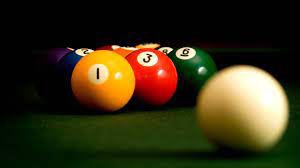
The thin man orders a Cognac and ambles over to the pool table where the nine ball is always on. Eyes sizes him up quick, guesses he can play a bit. A game is proposed, a game for two players.

But of course no game is really ever between two players alone. Baby’s watching—tough to tell her rooting interest. And, after Eyes breaks and a few balls fall, the bar as a whole starts tuning in to the frequencies of the game as the regulars make small talk and the travelers weak-tea passes at the local girls. Local girls are no push-over; sometimes folks get the wrong idea on that end. The thin man always did like the locals; heck, it’s part of the travelers’ creed. After all, everybody is a local somewhere. Certainly Eyes and Baby could take care of themselves.

Eyes missed and the thin man was able to sink a few easy balls before Eyes surged back, she’d been around more than she looked. She was an expert at drinking what the punter was drinking. That’s a key part of the art of the barmaid, an underrated profession at the best of times.

The game is nine ball, what else? Eight ball is for rookies, a southerners game. The thin man hails from the north; he knows a thing or two about sequencing. You see, the thin man had had a bit of a specialized role onboard the cruise ship where he had worked as a dealer in the casino. As a result, he also possesses some of the skills of a card shark, a mechanic. Sequencing goes with the territory of a mechanic, after all.

Mid-game and the thin man is beginning to fade a bit–the combination of Eyes’ eyes, and a cheeky Cognac or three is taking its toll. Eyes sinks the 8 and only the 9 ball is left. It’s a touch and go situation. The skeletons muse over the action with as much interest as they can muster from beyond the great blue veil. The couple on the rail stops sniffing whatever they are sniffing, and ask the thin man to join them for a round. No time for that. Cheeky Cognacs and beady cat eyes aside, a game is a game.

A couple of desultory shots bounce about as the players size each other up. Baby leans in; the skeletons whisper sweet somethings, even the bartender sneaks a peek. Everyone is getting paid, except the thin man. He is just there for the action.

Eyes edges the nine right up to the pocket, leaving the thin man a clean shot. He leans in from the left and drops it, silky smooth like. Baby claps and Eyes bats. Game over, though the thin man knows that Eyes could have had him the whole time. She was just being hospitable. A good host for a weary traveler.

The game over, the thin man’s thoughts turned to more practical considerations. He needs a place to stay, and though the nine ball had brought them all together, he didn’t think Eyes or Baby would necessarily take him in. He’d probably need to establish himself as a bit of a regular first before having a shot at any of that action. But the thin man is a gamer, constitutionally unable to categorize situations as problems. No problemo senor, no worries mate. He does, however, have a few issues, the first being he is unemployed and pretty much out of cash. So, he’s asked around, kept his ear to the wind. A fellow traveler there on the ship had turned him onto a broker of services of sorts, the kind of individual who specializes in assisting upstanding institutions with their shining mission statements and their CSR campaigns navigate the grey areas of competition and market position. He has the number for this broker in his pocket, and asks to use the bar phone to give him a call.

The broker picks up right away, saying “yeah, your buddy mentioned you might be looking for a little work. I think I can put something together.”

“That’s good,” says the thin man. “Any chance of a hotel for the night in the meantime?”

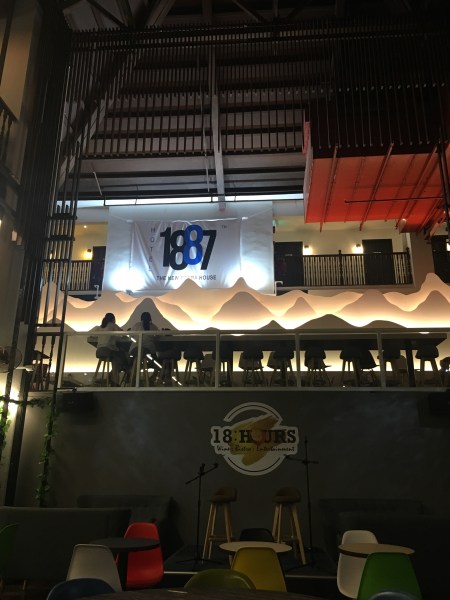
“Sure, said the broker. Head over to the 1887 in Chinatown. They’ll have a room in your name. What is it, by the way?”

“Let’s go with ‘Jack Bishop.'”

“That’ll work. I’ll meet you at breakfast at 8.”

The 1887 sounds incredible, thinks the thin man. Rock n’ roll.

to be continued…

Dedication: For Eyes. Long may you bat baby.

On Staying in Business Hotels (Featuring a Little 9-ball)

A hotel room: the same cell in a different city — clean towels, a window, and the sense of being contained but cared for

Mark Sandman, refracted

A haunted hotel room, unblessed, charged with static; objects shifting on their own.

The Church, refracted

New Note: On the kibbitzer (two b’s there Mr. Auto-Correct baby), I am re-printing certain select pieces for a little while while I work on another writing project. Today I am re-printing this piece on hotels. This piece has gone through several iterations over time, it is in fact probably my most heavily edited piece, and concerns the experience of staying at business hotels. In a way this is perhaps my very best piece in that it is one of only three that survive from my first blog Classical Sympathies, which I started in 2008, right around the time I began working to build the IB Course at our school. Of course given later (and earlier) events, this was no coincidence. Essentially, the blogs were, for lack of a better phrase “trauma blogs,” or, to put it more positively, recovery blogs. I like that–let’s stick with it. So this piece was about finding safety, physical and psychological, in a hotel room, while at the same time knowing, paradoxically, that hotels, especially fancy ones, are sometimes, or even often, the target of violence for various reasons.

Note: I have stayed in a number of such hotels over the years and engaged deeply with the room-space in each case. At this point, I am prepared to say that I am “good at” staying in hotels (an absurd claim that I advance nonetheless), and feel authorized to advance some notes toward a general hotel theory. Facility as a hotel guest though not exactly a marketable skill, has yielded some insights about the general, perhaps archetypal, nature of the modern hotel stay. Despite at this point considerable experience in the field, I continue to find the hotel experience at once comforting and bizarre, and hotel rooms, when properly apportioned, womb-like and exercising a specific and fascinating gravity. Also, the first draft of this piece was completed when Larry King was still alive.

This piece also mentions my “fugue state,” and it is true that as a PTSD response to childhood sexual abuse I would sometimes, more than once for sure, slip into a kind of state of taking automatic actions which I recall, but only somewhat. During these states I would arrange and re-arrange the room, the things in my bag, etc. in a way to place little reminders to myself in the future. It is a little hard to explain, however once again psychologically literate folks will follow along.

Finally, in my opinion, this is a pretty funny piece. Not as funny as Mason Anderson but still not bad. And it advances the absurd, yet still somehow defensible, position that I am “good at” staying in hotels. I hope you enjoy it.

Part I:

The TV was turned to CNN, which was focused on violence somewhere. I could not tell where. The experts in their suits and hairsprayed hair presented the conflict as if conflict was inevitable. They agreed it was happening now and could be prevented, but at the same time at the conclusion of the piece they smiled politely and signed off as if the violence was also occurring in a land so distant it might as well be the past.

Emily Maloney

I have stayed in quite a number of business hotels, in quite a number of countries. This piece provides, in essence, a sort of “psychograph” of the business hotel experience. Three features of business hotels that we may want to consider are: i) like airports, all business hotels share a single ethos, an un-pindownable character that feels, wherever one happens to be geographically speaking, of a piece; ii) the effect of the television offerings, in particular CNN International, on the business traveler, is one of overwhelming relaxation, bordering on complacency and even numbness; iii) as a corollary to i), it is far easier to enumerate how business hotels resemble one another than to lay out any salient differences.

Oddly, minor local variations only seem to further reinforce a central sameness. Checking into an 11th floor room at a classic example of the species, for instance the Numzau Tokyu Hotel, half an hour south of Tokyo, Japan, one is affected at once by that strangely pleasant fugue state, a state of mind almost exactly halfway between bliss and malaise, attendant on “business” hotels. Once inside a business hotel, especially those neither top-of-the-line nor quite down-and-out, one is confronted with a kind of disembodied space which seems at once connected to a global network of similar hotels (accomplished in part through the simultaneously soothing and hypnotizing effect of CNN International) and disconnected from the local environment. The traveler is sucked into global weirdness through a combination of the flat, post-political window of CNN, the persistent low hum of the air conditioner, and the anodyne staleness, almost spartan, quality of the decor.

Oddly, any “artwork” or decorative flourishes that a hotel room may possess only serves to further a sense of featurelessness; the art in question being almost exclusively of the most banal nature–bland seascapes, abstracts denuded of all edge or verve, and those odd non-paintings that, try as you might, you forget the second you exit your room. One has to remind oneself that a business trip means that there is work to be done–the TV, the slight high resulting from contact with the bowing attendants, the men in black, and the blushing young lady who carries your bag, the knowledge that your company is footing the bill–all this lulls you into a kind of sleep of the spirit.

Turning on the TV, you feel that you could spend years, lifetimes even, staring at CNN’s Larry King (the long-dessicated one), the post-racial female anchors who bring that special Code 46 feel of the non-overt future, or the exquisitely paralyzing “World Weather,” before awakening in another age, the Rip Van Winkle of the travel world. When CNN finally wears out its welcome, one’s choices of pay channels open up the fascinating worlds of…golf (the Golf Channel), silicone starlets (the Playboy Channel), intimate acts in close-up (the “adult channel”), and, most fittingly, drama set in outer space (the Battlstar Galatica channel). This profile of options, golf, softcore, hardcore, and outer space, the result, presumably, of reams of data on the tastes of business travelers like me, the mobile working male, I want to find depressing, but the menu has something beautifully efficient about it. Not wanting to get sucked into the anesthesizing vortex of any of these choices, I have to force myself to rise from the supine contemplation of the only-vaguely Chinese news anchor and move on with the day.

My senses are momentarily quickened by a report of an attack on a hotel in Pakistan: a horrific assault which has taken place at a Marriott in Islamabad. Oddly, the reality of this event quickly fades, and what Richard Todd calls the “non-ness” of the Marriott up the road strangely becomes the non-ness of violence–the attack in Islamabad conveys, through the lens of the CNN International, not exactly shock, but a continuing and deepening sense of global weirdness only slightly tinged by fear resting on the realization that as a business traveler in exactly this kind of hotel, I am the target. Oddly, this realization is not as disturbing as it ought to be: my fugue state is such that I am more in, more of, Islamabad than Numazu, but not wholly there either. Instead, I am poised somewhere between Islamabad and Battlestar Galactica, cavorting with post-racial android news anchors who bring me news of a planet this 11th floor, air-conditioned bubble of a non-space has left far behind.

Part II:

In part II of this essay will we delve a little deeper into the business hotel experience using as a lens “J.G. Ballard: Conversations.” Ballard probably needs no introduction, but for those who have yet to fall until his influence, he is the author of “Empire of the Sun” and “Crash” who wrote dozens of fantastic semi-Sci Fi short stories in the late 1950s and through the 1960s including “Prima Belladonna,” Thirteen to Centaurus,” and “The Terminal Beach.” Ballard novels, in my opinion, are not as uniformly satisfying as his short stories; at novel length his “obsessions,” beach resorts, empty swimming pools, gated communities, plastic surgery, car crashes, the interplay of sexuality and technology, tend to wear a little thin.

In “Conversations,” Ballard offers the following defense of his insularity and thematic repetition: “I think the values of bourgeois society by and large have triumphed. We’re living in a world where people at the age of 22 and 23 are thinking about their mortgages. It is a fact, and there’s nothing much on can do about it, except cultivate one’s obsessions and one’s own imagination” (144), but this approach works better in his short stories (which Ballard has not written for nearly two decades now), where his limited set of concerns are reflected and replayed through a panoply of settings and situations such that he resembles a virtuoso musician building off of certain stable base elements to create endless riffs and improvisations.

As a boy, Ballard was, famously, incarcerated in a Japanese prison camp in Shanghai, and this formative experience informs both his autobiographical “Empire of the Sun” and his short stories. But instead of literal prisons with externally imposed walls and limitations, Ballard’s characters seem over and over again to be immured within prisons of their own creation. Story after story features some variation on one of two related themes; scientists careening off on private quests that eventually destroy them or people seemingly sequestered or restrained who turn out to be acting in psychic complicity with their imprisonment. Ballard himself admits to the centrality of the prison experience in “Conversations” when Mark Pauline asks him “Writing Empire of the Sun hasn’t helped you forget those horrible years in the camp” and Ballard responds “But I’ve been writing about it all the time–I just wrote about it in disguise” (138).

“J.G. Ballard: Conversations” was overseen by one V. Vale, who, to all appearances, is a full-fledged Ballard maniac, and contains a number of Vale’s telephone conversations with Ballard and other Ballardians including the composer Graeme Revell and Ballard archivist, David Pringle. Ballard has a lot to say about that particular semi-reality fugue state described in my earlier post. As noted above, Ballard has a special fascination with self-imposed psychic incarceration: “I have a nightmare vision of a gated community of extremely expensive houses inside a larger gated community. It’s bizarre” (72). Ballard is also concerned with the dual themes of self-immurement and the mind-meld that occurs between the individual and their media systems. These two themes may not seem to be obviously related, but after reading 300 pages of Ballard on the telephone, all of his particular obsessions do seem intertwined, and connect with my experience of staying in business hotels. Take for example Ballard on why Surrealism no longer obtains:

“Classical surrealism, beginning after the First World War, made a very clear distinction between the outer world of reality {…} and the inner world of imagination {…} But after the Second World War, particularly as the media landscape developed enormously–thanks to television, mass advertising and the whole consumer goods landscape–the distinction between our reality and inner fantasy began to break down {…} This means that it’s very difficult to maintain the dichotomy, that contrast that the Surrealists required {…} As I’ve said before, in the last 20 years if you stop somebody in the street and ask the time, you might look at a watch with Mickey Mouse on the dial {…} It cuts the ground from under classical Surrealism” (166).

When viewing CNN International at a business hotel, I realize, pace Ballard, that the world as reflected does have aspects of the surreal, especially in the consummately inoffensive manner in which it presents horrific international incidents interlaced with “the exquisitely paralyzing World Weather” and 9-ball tournaments from Bangkok replayed several times a day. This approach effectively colonizes my own imagination by rendering the unthreatening creepy and and the unbearable passe.

The oddest thing about CNN International is that the news itself is actually not all that bad. Real news about real, important, global events, comes across the airwaves, but it gets somehow stripped on much of its impact through the presentation. Ballard in 1991: “We get the Newzak all the time. It’s been homogenized, trivialized, and there’s too much filler added to smooth it down so that it comes out like paste from a tube” (178). It’s not that the news isn’t there, it’s just that, pace Ballard, there is no room for either surrealism or real impact. Ballard explains that the Dali/ Bunuel films (Un chien andalou and L’ Âge d’or), so shocking at the time, would not work today: “The sight of people dragging dead donkeys through a dining room would {seem to be} some sort of advertising stunt–a beer commercial” (166). Here is David Pringle on why Ballard is not a Marxist:

“Ballard, being a good Freudian, is much more interested in the individual’s–yours and mine–collusion with what’s going on, our secret wishes, that in the idea of conspiracy–that there are conspiratorial entities out there trying to ‘get us’ {…} Ballard asks, ‘What are you out to do to yourself? What are you own darkest wishes? What are we all doing to ourselves collectively?'” (226).

Ballard also writes “I accept the Surrealist formula: the need to place the logic of the visible at the service of the invisible, to remake the world around us by the power of one’s imagination, which after all is all we’ve got. I mean, the central nervous system is faced with a world of Mariott hotels and ex-actors turned world leaders, dangerous medicines and you name it. The individual central nervous system can only attempt to make sense of this” (276).

Eventually, if she has even the slightest modicum of self-awareness, the business traveler comes face to face with Ballard’s question: “‘What are you out to do to yourself? What are you own darkest wishes? What are we all doing to ourselves collectively?’ This is because the enervating lassitudinal comfort of your standard Mariott is, in the worst possible sense, addictive. When you begin to run down the list of hotel features: airport pickup, bowing attendants, elevators, room service, air conditioning, permanently locked windows, security barrier, ubiquitous carpeting, fresh towels and soap, overpriced but almost appetizing meals, pool and hot tub, 9-ball on a loop, world weather, all these items add up to a simulacrum of a total existence that very quickly begins to edge out the rest of the world–there is no need to leave the compound and submission to the soft tyranny of over-priced conveniences sets in almost immediately.

At the same time, CNN International allows the illusion of connectedness while in fact only furthering one’s suspension in the high-rise ether of the business hotel complex. “One has the illusion you’ve seen a place in fact when you haven’t seen it at all. All you’ve seen are the airports and the hotels” (288). Ballard here hints at something I have long felt to be the case: all airports actually belong to a single country, and the vast majority of business hotels likewise sit uneasily within their supposed national confines; they are more like each other than they are like the buildings or community around them. The overpriced airport hotel in Tokyo resembles nothing so much as the overpriced airport hotel in Vancouver, which in turn is the kissing cousin of the airport hotel in Beijing, etc. Here again, local differences only seem to accentuate a basic central identicalness.

Ballard again: “People use mental formulas that they’ve learned from TV. Even in ordinary conversation, if you’re talking to the mechanic at the garage about whether you need new tires for your car, you and he probably talk in a way that his equivalent thirty years ago would never have done. You use–not catch phrases but verbal formulas. Suddenly you realize you’re hearing echoes of some public-information, accident-prevention commercial. It’s uncanny” (83).

(Ballard has the strange habit of ending thought after thought with “It’s bizarre;” “It’s strange;” “It’s uncanny”–this verbal tick serves as a running indicator of the way that Ballard sees the world and helps explain how, over the course of a novel, he can focus on a certain object, a tennis machine for example, or swimming pool, with such relentless obsessed focus that the formerly normal becomes invested with a kind of pathological creepiness that entirely transcends simplistic one-to-one correlative symbolism.)

Ballard’s central point here hints again at the colonizing power of certain ideas and turns of phrases which seep into our everyday speech, tempered only by feeble attempts to ironize. Thus, when in the course of normal conversation one refers to a storm as “an extreme climatological event,” to a sign as “singage,” or to a car crash as “a simultaenous intersection of vehicular components” the use of such terms, although masked with a patina of apparently self-knowing irony is still, in its own way, perfectly sincere. Here, submission to the linguistic idiocy of corporate non-speak marries submission to the blissful “non-ness” of the business hotel, a paradise of our own collective fantasy where the towels are always clean, the windows are always closed, and 9-ball is always on.

Dedication: For the APA chain. I know it’s kind of a cult, but man are they reasonable, conveniently located, and comfy.

Works Cited:

J.G. Ballard, J.G. Ballard: Conversations, ed. V. Vale (San Francisco: RE/Search Publications, 2005).

Emily Maloney, from an essay in an early-2000s political anthology (exact source lost to time)

Andrea’s Travels, Part II: The Street Guy

Never ever been a blue calm sea/ I have always been a storm

Stevie Nicks

Dateline Seoul: Saturday Afternoon

Andrea gets off the second leg of the flight to Seoul around 14:30. She has quasi-slept, faded somewhere into her subconscious anyway, for an hour and a bit. Andrea is not a heavy explorer of her subconscious, more like she knows where it is. On the flight, up there under an ocean of ozone, black window spiders jousted with a velvet gloved countess and bunches of green grapes for supremacy of the space. That was all fine, she was essentially sober, Mr. Brown had been rendered comatose by hour one, and as she rolls into customs she feels, if not exactly happy, at least ready. Ready for the industry conference and its banalities, ready for the Lotte Hotel downtown with its wall of kimchi options at breakfast, ready, even, for a puleun or two. Maybe. We’ll just have to see.

The conference “event” is set to kick off at 8 Wednesday morning, and Andrea has no intention of being on time. Events, by and large, are well planned and poorly designed. They are programmed to run and be completed, and the narrative arc conception is, well, often bad. The Seoul event would be no different. “An event should be eventful,” someone once told her, and Andrea has held on to that guy like a tailsman. Also, sometimes when an event lacks eventfulness, well, you gotta inject a little of that yourself. She giggles at the thought; the possibilities were many. She got game, our girl. Watch the fuck out boys.

Dateline Seoul: Saturday, 22:47

Andrea is on the STREET. Can’t learn it in the office, gotta learn it on the STREET. Monsieur Puleun 1 is strolling with a feathered friend on the boulavard. Site of a protest from earlier in the day that Andrea missed. Another peanut tantrum? Korean scandels are unrivaled in their bizarre and byzantine nature. And, the assassin chick of the brother of the NK head dude wore an LOL shirt. So 2017. Check the video. Check the record/ check the guy’s track record. (Le) homo sapien sapiens, them’s bizarre. Puleun 1 sees Andrea; she sees him. Opportunity presents itself–Andrea, she needs a token, a takeaway, a reminder that she was here at all.  At the “event” site no doubt volunteers are cross-stressing before cross-dressing. She couldn’t care less—that’s all paid for by the company. Event spaces are super permeable. So is the puleun. Andrea swings into action.

“My friend, do you know how to get to Sungnyemun?”

“Yes I do. Go with me?”

Andrea pondered. On the one hand, well, you know. Street guy? Seriously? And on the other, well, she is on vacation. A. B, she has her needs. Not what you are thinking brother. Andrea’s needs are a little more, well, esoteric.

“For a little while. Let’s walk.” Andrea slips her arm under his and feels him thrill to her touch. Hooking, hooking is easy. She’s a natural, it’s pretty clear.

Sungnyemun is a no. Sungnyemun can wait. Andrea steers P1 toward the Lotte, before having second thoughts. That’s not the move girl, too predictable. Someone is always watching Mr. Mulder. She needs to re-frame.

“Let’s get a room,” says Andrea. Yes, it’s a high-level cliche, up there with “what’s your number,” and “baby, what’s your sign.” Cliched, therefore effective. The effect on P1 is immediate. Where, he asks? Right here, she says, pointing to a boutique environ that looms over the couple. An art hotel. Sure.

P1 pays with a card as the desk clerk smirks. I didn’t have to come to Maui, but then neither did you. Fast feel, he feels her material. Matters progress, fast. Bloodrush, bloodbuzz, and she is not immune. And yet, Andrea is playing a deeper game, the most dangerous one perhaps. Room ingress and second base. Time for her to make a move.

“Baby, I have to use the bathroom. Freshen up.” The meta-historical language of the female has a beauty all its own. Le floraison is off for our young suitor. Sorry pal. Hit the bricks.

But it’s not that simple. Andrea’s needs have been stimulated, not met. She emerges from the bathroom, face washed, mask of determination.

“Baby,” she says, “I need to go to the shop.”

“Room service will provide.”

“Room service is asleep at the wheel; I’ll be right back.”

Famous last words. Andrea carries a a tote bag–the remainder of her belongings are back at the Lotte. In the bag rests a white robe from the art hotel as well as a sampler of cosmetics from the bathroom. Not because she needs any of these items, more like, well, she wants them. She blows P-san an air kiss, the least she could do, a good trade. P1 collapses on the bed with a sigh. You get what you get P1; we won’t be seeing you again. With her would-be down for the count, Andrea takes a final, critical, step. She pockets the key, an actual metal object (!?!), and slides out the door. Now, remember the room is in his name. The robe, the robe is gone. As is the key. These are with Andrea. And Andrea is back at the Lotte in her PJs. Someone’s always paying for that banter baby.

Dedication: For the Street Guy. Sorry about that buddy.

to be continued…

The Thin Man in Singapore Part V: Alice’s Birthday and a Guardian Angel

You clean yourself to meet/ a man who isn’t me/ you’re putting on a shirt/ a shirt I’ll never see/ ’cause you’re too smart to remember/ you’re too smart/ lucky you

The National

Dateline Singapore: November 3rd, 13:06

The phone rings, jarring the thin man out of sleep. “Where the/ what the/ who the…” Images in shards–his grandmother’s house and he is six, sun streaming through a late afternoon window. He rolls over. No by god, a bed, an adult body within. He picks up the phone. “Uh huh?”

“It’s Alejandro. Your passport will be ready tomorrow morning and you’re on an Emirates flight to Rome via Dubai tomorrow at 9 PM. In the meantime Alice is having a birthday party and you’re invited.”

“Alice?”

“Miller’s secretary. You might have heard the rumors, but she’s a cool cat and it’ll be fun. 17:00 at Chijmes. Be there.”

“Seriously? I don’t know Alice and, I’d rather just rest up you know.”

“Not an option. You’re not invited, more required. From Miller directly. Buck up man and see you at 5.”

Holy Jesus, another evening. The thin man rises, splashes cold water on his face and when this doesn’t do the trick, fills the sink with cold water and plunges his face into the water, eyes wide open. He exhales; water goes everywhere. He dabs at it with a hand towel. Breakfast is long over–lunch is a maybe. 20 minutes later he has showered and shaved and limps downstairs.

“Lunch is still open?”

The man’s smile masks a scowl. Rolling into a buffet that closes at 14:00 at 13:46 is no way to endear yourself to staff. He takes a seat by the window, wanders the buffet. Two bowls of mushroom soup, two watermelon juices, a roll with butter, salmon sashimi and an Americano. Vague feelings of humanity follow.

On his phone the thin man peruses “The Essentials of Casino Game Design” as he eats. This is more out of habit than interest–he has no desire to re-enter the gambling demi-monde. Reflex is a bitch though. The waiter circles, pressing his point from 5 feet away. “I got you babe,” thinks the thin man. He makes marginal eye contact, figures he has another 20 minutes give or take. He resolves to relax into the spacetime as fully as possible before the waiter pulls rank. He has no desire to make trouble but at the same time, a customer is a customer and soup is soup. A game for two players. Eventually, he makes his move before the waiter is forced to make his.

“On my room please, 727,” he says, with studied nonchalance. Everything takes all afternoon.

The thin man has a number of flaws but he does clean up well. That’s a skill, a blessing, a bonus. Re-showered, shaved, and an app-assisted breathing exercise later, he shows at Chijmes on time and on point. Miller himself greets him with a slap on the back.

“Mr. Bishop, your work is appreciated. Much appreciated. I heard that you will be staying with the firm. Rome is beautiful this time of year. You are a lucky man.”

“It is my pleasure to be of service.” The thin man is not serious, yet not unserious. The work is the work and he has no other. “Anyway, happy birthday to Alice hey?”

“Hehe, haha. Alice, yes,” salivates Miller.

Another day, another passport thinks the thin man. Several people he doesn’t know are there. The crew moves to an outdoor restaurant; the usual wrangling over orders ensues and Long Island Ice Teas appear. There is no drink more perfectly positioned to cause trouble than a Long Island Ice Tea. The thin man downs two before the Nachos arrive. A waitress circles. “White or red,” she asks. “Both please” replies the thin man. It’s early and he has no intention of sticking with this group after dinner. Why not make the most of the moment.

The food is a B at best, but the drinks are loaded. The sun shines in the late evening. The usual Singapore rain squall has not appeared today. 6 PM, the magical hour, and the thin man begins to fade into the perfect liminality that only occurs between drinks three and four.

Titters from Alice. Winks from Alejandro. Miller sits straight up, what a spine. The thin man is bored. Time passes; the sun sets.

“One more?” asks Miller.

“How about the hotel bar?”asks the thin man. The sooner near home the better. Miller covers the bill and tracks are made.

The thin man and crew enter the bar and the mood is boisterous. The thin man feels as thin as paper. He needs an ally. As his party makes its way to a table, he approaches the barmaid. Her tag identifies her as “May.” Always approach service workers with kindness and respect–they get so little of it so it goes a long way.

“Good evening May. My friends and I are looking to enjoy the bar tonight. Only, I have been on the road for weeks and I’m a little tired.” He slips her a $50 bill. “I know bars don’t love to serve water, but if you could keep an eye on me and refill my water glass I’d be in your debt.”

May looks him up and down.

“No problem. Rely on me.”

The thin man makes it to the booth where Company X holds court. Miller and Alice’s hands dance a protracted duet. Alejandro sits a foot away, just keeping an eye on things.

A round of drinks, another. May keeps her end of things and the thin man hydrates, for a while. A woman called Marta had introduced herself at dinner and slides into the booth next to the thin man.

“How do you know Alice?” she asks.

“I don’t.”

“Oh. I have a bet with Jeffrey over there. He thinks you are on his team.”

“On his team?”

“You know,” she drops into a stage whisper, “Jeffrey likes men.”

“I see. I don’t have a team,” replies the thin man. “I’m a free agent.”

“Not so fast,” interjects Alejandro, who seems to register everything that is said at the table. “You are on our team. You have a contract.”

“A contract? I haven’t seen anything like that. And besides I don’t see how that would be possible. Text is dead, or that’s what I’ve heard.”

“Don’t mind him,” says Alejandro, “he likes being heavily humorous.”

Marta doesn’t seem to mind. Somehow her arms and legs are entangled with the Thin Man’s. How does that even happen? he thinks. He’s lost the touch he never had, but matters seems to be progressing anyway. Amazing. He hears Jeffrey calling for champagne. Now, even from deep in a haze the thin man knows that ordering a bottle of champagne in a hotel bar is not exactly value for money. A commotion is taking place across the bar. Men from the Green Group are hassling the bar staff, something has gone wrong with an order they allege. The Thin Man swivels his head around to take a look and his mind recedes into fantasy:

Shut your traps and stop hassling the waiter! We’re trying to enjoy a birthday! And if I have to tell you again, we’re gonna take it outside and I’m gonna show you what it’s like! You understand me? Now, shut your mouths or I’ll shut’em for ya, and if you think I’m kidding, just try me. Try me. Because I would love it!

He glances at the bar, catches May’s eye. She shakes her head imperceptibly, reading his mind. Absurd ideas of accosting the group and defending her honor recede. He breathes a sigh of relief.

A second bottle of champagne arrives, a third. We are at the stage of the evening where petty arguments break out all of the sudden, and are as quickly forgotten. The thin man, Marta and the sofa seem to have merged into a single entity. This is pleasant.

He snaps back into consciousness. The party seems to have thinned out. Miller and Alice are gone. Alejandro gets up to leave and Jeffrey waives off his efforts to pay. It’s true Alejandro drank only club soda. A steady hand, this guy. He leans over to the thin man, lets him know his passport will arrive in the morning.

“We’ll be in touch.”

“Oh good.” It’s all he can think of to say. He sees 120 Singapore dollars on the table, begins to calculate. The bill will be a lot higher than that. What’s happened here is he has fallen prey to the cruel economics of party leaving whereby early leavers underestimate their impact on the total bill. Marta is warm but the future is cold. It’ll be him and Jeffrey splitting the bill.

“Maybe we should call it an evening,” he says. He draws himself to his feet, a mighty effort, and approaches May. “What do we owe?”

“It’s all taken care of,” she says.

“Miller paid on his way out?”

She shakes her head, whispers in his ear, “your bill was charged to the Green Group. They probably won’t know the difference and if they do, they check out the day after tomorrow so…” May places her index finger on thin man’s lips and presses gently. He goggles, is in love.

“You are an angel,” he says.

“Shhh, silly. You’ll get me in trouble.”

He circles back to the table. “The bill is paid,” he tells Marta and Jeffrey. “Leave the cash as a tip.” They don’t bat an eye–too far gone to care. “I told you he isn’t on your team,” says Marta. “I win the bet.”

“It’s too early to tell,” says Jeffrey.

The thin man gives Marta a kiss goodnight. “I’ve got to fly tomorrow.”

“I know.” Theirs was an encounter based in a specific locale, a specific moment. Some encounters are like that.

Dateline Singapore: November 4th, 10:00

Ah the Sabbath. The thin man had managed to set his alarm for 10:30 but it’s not needed. The phone rings at 10 AM, and the receptionist tells him he’s been cleared for a late check out of 17:00. How did that happen? She doesn’t know. “It says right here sir.” 11 hours before the flight. What would a human do with 11 hours, he thinks? He takes a swim, showers, eats mushroom soup and indulges in a few slices of roast beef this time. He remembers a much loved song:

I’m so sorry but the motorcade will have to go around me this time/ ’cause God is on my side

That’s attitude. He tries to summon 1/10th of that mood, says a little prayer to his angels. On the way back to room 727 a maid smiles at him. “You must be the British gentleman,” she says.

“Oh, why is that?”

“Because your room, it’s so neat and clean.”

British rooms are neat and clean? That’s news to the thin man. Am I British, he wonders? The reason his room is clean is because there’s next to nothing in it.

“Thank you. Have a wonderful day.”

“You too sir.” There is nothing that he has ever done in his life to deserve such respect, he feels. Life is good.

Under his door there is a manila envelope. Inside is a passport in the name of Jack Bishop and $3000. There is also an index card with a phone number. At the bottom of the card he reads “May.” Life is good? Hell, god is good man. The thin man smiles and packs his valise. 8 hours later he is airborne en route to Rome.

to be continued…

Dedication: For Mint.

The Thin Man in Singapore Part II: The Ask

Well apart from the things that I touched/ nothing got broke all that much/ and apart from the things that I took/ nothing got stolen babe, and look.

Matthew Houck

Dateline Singapore: October 30th, 8:02

The thin man woke at the 1887 happy to be alive and went on down to breakfast as instructed. He picked out his guy immediately. The broker was perfectly of his type, his suit barely disguising, indeed almost accentuating, the hustler inside. The thin man ordered orange juice and eggs, the broker drank coffee. He had probably already eaten.

The broker, like all of his kind, couldn’t give a shit who he was pimping as long as he got his 10% commission. He took the thin man’s data points and promised to turn them into a resume that would emphasize the high stakes, low reference point nature of his previous work. “I’ll get something going,” said the broker.

Dateline Singapore: November 1st, 11:43

The thin man stayed on at the 1887, hoping that the bill was paid for a few days at least. On Wednesday the phone rang, and the man on the other end introduced himself as Alejandro from Company X. The broker knew his lane, apparently.

“I have work for you,” Alejandro said.

“What sort of work?” asked the thin man.

“The best kind, the kind where you get in and out.” The thin man could hear Alejandro’s razor thin smile through the phone.

“I deal cards,” replied the thin man, “I’m not a safecracker.

“Of course not. We are a respectable company with a 400 year history. This work is simple. The company is in negotiations around a merger with Green Group Ltd. They are playing hardball and we need to know their real intentions.”

“Basically you want to know if they are bluffing?”

“Precisely. And who better than an operator such as yourself to find this out?”

“And what do I have to go on?”

“The Green Group will be having a party at the Swissotel downtown tomorrow night. There will be about 200 guests. You will infiltrate the party and get the lowdown. That is what you British say yes, “the lowdown.”

The thin man was not British but it didn’t matter. “Yes, that’s right. OK, book me a room on the club floor starting today. I’ll need a new suit, a haircut, and a cell phone. How’s $500 a day for expenses and $20,000 for the job?”

“What about the broker?”

“That’s your end,” said the thin man. My end is $20,000.”

“Deal. Don’t fuck up.”

“I don’t intend to.” And with that the conversation was over. The thin man had acquitted himself well, but only by the grace of god. Several things were running through his mind;

i) was $20,000 a lot or a little for a one-night stint of corporate espionage? Alejandro had bit right away so perhaps he was underselling his services. Or, Company X was desperate;

ii) 200 people at the party and the thin man knows not a one of them. He’ll have to research, chose a few likely targets, although after five weeks of carousing there wasn’t a lot of research energy left. He’ll need to make minimal and efficient moves;

iii) he has no bank account. His severance was paid in cash and he does not intend to stay in Singapore forever, however appealing the locale. He’ll need to get legal sooner rather than later.

Dateline Singapore: Around 17:07

The thin man is up for the job, however like we said he could use a little up-front information. So he checks out of the 1887, which is all paid up, and grabs a taxi to the Swissotel where he checks in, showers, and scopes out the premises. The Alligator Pear is the poolside bar at the Swissotel, fancy, and the thin man figures tomorrow’s party will be at held around the pool. Thus, this visit is classifiable as reconnaissance–this visit is billable, baby. A single couple lingers over a menu across the way.

“What’ll it be?” asks the bartender?

“Do you have any eggnog” asks the thin man, more out of habit than preference. The bartender gives him a sideways look, as if he is not sure who the joke is on.

“No sir, I am afraid we only serve eggnog during the Christmas week. How about one of our signature Manhattans?”

Manhattans, they taste like mouthwash.

“Sure a double Manhattan. And pop an egg in it would you?” This time the bartender doesn’t even blink.

“Of course, sir. One Manhattan with a raw egg.”

The drink is served and the thin man knocks it back straight. It is as disgusting as an adult beverage can be. “Perfection,” says the thin man. I’ll take a double martini with a sprig of Rosemary please.” As the barkeep makes his second drink the thin man turns to survey the space. Despite knowing no one and nothing about tomorrow evening’s party, he has a few advantages. First, event spaces are inherently permeable. More on this later. Second, he has nothing to lose. Nothing whatsoever. The $20,000 is what you call a titular payment. Hypothetical. His sainted mother has long passed; his widowed sister could be anywhere. The Costa Rican chick who claimed he’d knocked her up in ’04 was probably still out there, but he had no confidence in her presentation of events. He was only on shore for 48 hours and months on the water tends to take a few miles off a guy’s fastball. She was sweet, but it was probably a hustle. So like I say, nothing to lose, and therefore easy to underestimate. That’s what the thin man is counting on.

He’d better; the bastard’s precious little else.

The martini is served and the thin man takes a deep drink. Three men approach the bar, lanyards around their neck, ties beginning to come undone, voices high. The Green Group, thinks the thin man, excellent. He takes a deep breath and turns his head slightly to the right, cementing his presence in their field of vision without being in any way threatening or intrusive. “Can you fuckin’ believe Bill?” asks one of the men. Pulling up sick on a day like this, the company going to shit?” “I think he’s faking,” says the second man, a lifer in his early 50s. “He’s always been weak like that. Looking to cover his ass.” “Fucking wanker, if you ask me,” replies the first man. “Pussy.”

The thin man looks up at the men and smiles. He sympathises. He will be their good friend tonight. Corporate espionage, he decides, is like everything else. It’s just a matter of intention.

to be continued…

Dedication: For salarymen everywhere. I sympathise.