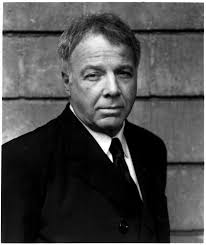
Note: This essay reflects on the artistic approach of Mayo Thompson and the work of Red Krayola, particularly the band’s deliberate challenge to conventional ideas of musical skill. The famous observation that Thompson plays the guitar “badly, on purpose,” often cited in critical discussions of the group’s work — including later reassessments of records such as Malefactor, Ade — captures something essential about that approach.
The phrase can sound dismissive at first, but it also points toward a deeper artistic intention. From the late-1960s underground scene through later recordings, Red Krayola consistently treated rock music less as a polished craft than as an open field for experimentation. Imperfection, disruption, and instability were not accidents but part of the aesthetic design.
Whatever one ultimately makes of the results, Thompson’s work continues to raise an interesting question: how much of what we call musical “skill” is simply a set of habits that artists occasionally need to break.
There are certain musicians whose reputations survive largely through footnotes. They appear in the histories. Critics cite them as influences. Other artists speak their names with reverence. Yet relatively few listeners spend their evenings actually playing the records.
Mayo Thompson, the guiding figure behind Red Krayola, occupies precisely that strange territory. His band is frequently described as “important,” “experimental,” or “avant-garde,” words that often function as polite signals that the music itself may not be especially enjoyable. Red Krayola records circulate through the culture like curious artifacts — admired, studied, but approached cautiously.
And the most famous criticism of Thompson’s musicianship captures the problem perfectly.
A critic once observed that Thompson plays the guitar “badly, on purpose.”
The line, often repeated in retrospective discussions of Red Krayola’s music, originally surfaced in commentary surrounding the band’s 1989 record Malefactor, Ade. Whether in a Pitchfork reassessment or earlier critical recollection, the phrase stuck because it seemed to summarize the entire aesthetic in five devastating words.
Badly. On purpose.
For many listeners the sentence reads like a dismissal. But read another way, it becomes the most accurate description of Thompson’s artistic method ever written.
Because the key word in that sentence is not badly.
It is purpose.
From the beginning, Red Krayola treated rock music not as a set of rules to master but as a field of possibilities to disrupt. When the band first appeared in the late 1960s, rock was rapidly developing its own conventions — tighter songwriting, increasingly polished production, guitar virtuosity becoming a badge of seriousness. Thompson responded by moving in the opposite direction.
Instead of improving technique, he destabilized it.
Instead of polishing songs, he dismantled them.
Instead of reassuring the audience, he occasionally seemed to provoke it.
To understand this impulse, it helps to remember the strange cultural environment out of which Red Krayola emerged. The late-1960s underground was full of what might loosely be called the freak scene — a loose constellation of psychedelic bands, communal happenings, and avant-leaning musicians who were less interested in building careers than in testing the boundaries of sound itself. In Texas, where Red Krayola formed, that scene intersected with the surreal humor and anarchic spirit of the local counterculture. Musicians were experimenting with noise, collective improvisation, and absurd theatrical gestures long before those practices acquired respectable academic labels.
Red Krayola fit naturally into that environment. Early performances sometimes resembled happenings more than concerts. Songs dissolved into noise. Improvised ensembles wandered across the stage. Audience expectations were occasionally disrupted on purpose. It was not chaos exactly — more like a deliberate challenge to the idea that a rock performance had to behave in a predictable way.
Thompson understood something fundamental about rock music that many technically superior players missed. The genre had always contained a certain productive roughness — a willingness to accept imperfection as part of its expressive vocabulary. Chuck Berry’s guitar was not elegant in the classical sense. Early garage bands could barely tune their instruments. Punk would later turn this roughness into a formal principle.
Red Krayola pushed that principle further than almost anyone else.
By “playing badly on purpose,” Thompson exposed the hidden assumptions behind musical skill. What does it actually mean to play well? To hit the expected notes? To follow the established structure of a genre? To demonstrate control over the instrument?
Or might it mean something else entirely: the ability to reshape the instrument so that it produces new kinds of thought?
Listen carefully to Red Krayola’s recordings and the supposed incompetence begins to look suspiciously intentional. The guitar lines wobble, fragment, and reassemble themselves in unexpected patterns. Rhythms appear and disappear. Melodies emerge briefly before dissolving into something stranger. The music behaves less like a traditional composition and more like an argument unfolding in real time.
The phrase “avant-rock” is often used to describe this territory, but the label can make the music sound colder than it actually is. Beneath the disruption lies a restless curiosity about what rock music could become if freed from its habits. Thompson’s playing does not reject the guitar so much as treat it like a tool for questioning the very idea of guitar playing.
Which brings us back to that famous line of criticism.
“Playing the guitar badly, on purpose.”
For some listeners the sentence still reads as an indictment. But for others it begins to sound like a manifesto. What if the deliberate abandonment of technical mastery allows a musician to explore new expressive territory? What if awkwardness becomes a form of freedom?
The history of experimental music is filled with similar gestures. Artists deliberately violate the rules of their medium in order to discover what lies beyond them. Painters distort perspective. Writers abandon traditional narrative structure. Filmmakers fracture chronology. Thompson simply applied the same logic to the electric guitar.
And the results, while sometimes difficult, have proven surprisingly durable. Decades after Red Krayola’s earliest recordings, the band’s influence can be heard echoing through the strange corners of indie rock, post-punk, and experimental pop. Musicians who grew up absorbing Thompson’s restless attitude toward form learned an important lesson: rock music does not have to choose between intellect and instinct. It can contain both.
Thompson himself has often downplayed his role in the process, describing music as merely a “means to an end.” That humility is part of the puzzle. The work was never about demonstrating personal virtuosity. It was about using the medium of rock music as a way of thinking — testing ideas about sound, structure, and audience expectation.
Which explains why Red Krayola’s catalog continues to feel oddly alive. The records are not polished monuments to technical achievement. They are documents of exploration, full of wrong turns, strange detours, and flashes of accidental beauty.
In a culture that often equates artistic success with increasing refinement, Mayo Thompson chose the opposite path. He embraced awkwardness, instability, and deliberate imperfection as creative tools.
And if that occasionally meant playing the guitar badly — well, that too was part of the design.
Badly, perhaps.
But never accidentally.

