CHAPTER IV — THE ANNEX
Scene One: The Office / The Invitation
The office was already in its late morning rhythm, which meant it had stopped pretending to be anything other than itself. Papers moved in shallow stacks. Ink dried on fingers that did not belong to the men using them. Conversations rose and fell without consequence, like breath in a cold room.
Niko sat at his desk with the quiet concentration of someone trying to stay slightly ahead of his own life. The work was not difficult. It was worse than that—it was repetitive in a way that made thought drift toward other, less supervised subjects.
The Southerner arrived without announcement, as he always did. He never seemed to enter a room so much as appear already inside it, as though the office had quietly agreed to produce him when needed.
He leaned on the edge of Niko’s desk.
“You are still here,” the Southerner said.
“I am paid to be,” Niko replied.
“That is not the same thing,” the Southerner said, smiling faintly. “Come along tonight. There is a place. A bathhouse annex. Dice. People worth meeting. You will find it useful.”
Niko looked up. “Is this work?”
“It is better than work,” the Southerner said. “It is instruction.”
Across the room, the Teutonic Knight cleared his throat with deliberate severity. He approached, holding a single sheet of paper as though it were evidence in a moral trial.
“This document,” the Knight said, “has migrated again.”
Niko glanced at it. “It appears to be in the correct file.”
“It was not there yesterday,” the Knight insisted.
“It is there today,” Niko said.
The Knight stared at him as though the universe had briefly failed to obey.
The Southerner sighed softly. “He is correct, you know. The paper is now where it should be.”
The Knight hesitated, recalibrated his indignation, and finally withdrew with a small, wounded dignity.
When he was gone, the Southerner tapped Niko’s desk twice.
“Seven,” he said. “Be there at seven.”
And then he left, as if the conversation had already been archived.
Scene Two: The Bathhouse Annex / Anya Appears
The bathhouse was warmer than the street in a way that felt almost indecent. Steam softened the edges of everything—voices, money, judgment, time. The annex behind it was not officially part of anything, which made it more important than anything that was.
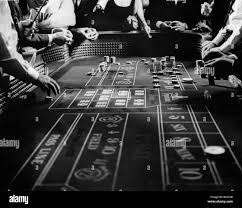
Dice moved across low tables. Drinks appeared and disappeared, something without accounting. Men spoke in half-sentences that assumed agreement. Somewhere, someone laughed too long at a joke that had already ended. The crowd was a mixture of civil servants, military men, commercial travelers, and the odd semi-criminal element that such places always attract.
The Southerner greeted people as he passed, each nod suggesting a prior history Niko had not yet been invited into.
“Here,” the Southerner said at last, guiding him toward a table where the air felt slightly denser. “Watch first. Then play.”
Niko did not ask questions. He rarely did.
He sat.
The dice were small and worn, softened by use. They looked less like objects than habits. The first roll came quickly. Loss. The second, neutral. The third, unexpectedly favorable.
He felt something loosen in him—not relief exactly, but attention.
That was when she appeared.
Not entering so much as arriving within his field of perception, as though she had been standing just outside his awareness and decided to step in.
Anya did not look at the dice at first. She looked at him. Then she smiled slightly, as if confirming something she had already guessed.
“Buy me a drink,” she said.
It was not a request that demanded urgency. It was a test that did not require refusal. Niko paused just long enough to register the tone, the cost, the structure of the moment.
Then he nodded. “Of course.”
She accepted this as expected behavior.
Later, much later, after the dice had lost their clarity and the room had begun to fold into itself, Niko walked back through the city alone.
His lodging was a narrow stairwell building where the air smelled faintly of coal dust and old wood. He climbed slowly, as if each step were part of a decision he had already made.
In his room, he did not undress properly. He sat on the edge of the bed with his shoes still on, then removed them with deliberate care. Anya remained in the corner of his thoughts, not as a person exactly, but as a continuity.
He imagined a version of the future where she was simply present in it without explanation. Where evenings were not entered alone. Where dice were occasional rather than defining. Where risk could be contained rather than pursued.
He turned onto his back. The ceiling was damp in one corner. He would have to get that looked at, that is if his landlord could ever be located.
He fell asleep thinking, not of winning, but of Anya.
Scene Three: Two Weeks Later / The Restaurant
The restaurant was modest in the way things become modest after expense has been calculated too carefully. The light was steady, neither flattering nor cruel. Anya arrived slightly late, which made her presence feel more intentional when she finally appeared.
Niko stood when she entered, then immediately felt slightly foolish for doing so.
“You didn’t have to wait,” she said.
“I did not wait,” he replied. “I arrived earlier.”
This was technically true and socially irrelevant. They ordered simply. Niko paid without hesitation, though the number at the bottom of the bill lingered in his mind afterward like a minor echo.
Anya watched him over the rim of her glass.
“You are not very careful with money,” she said.
“I am careful in other ways,” he said.
“That is what men always say,” she replied, not unkindly.
There was a pause between them that was not awkward, but not empty either. It held its own structure.
When they left, she took his arm briefly—not as possession, but as orientation. He did not misread it. It was one night.
That would matter later.
Scene Four: The Morning / Anya’s Apartment
Morning arrived without ceremony.
Niko woke to the sound of movement in another room, not hurried, not performative. The ceiling above him was plain. The air smelled faintly of tea and something warm that had been cooked without ambition.
He lay still for a moment, listening to the normality of it. Anya entered carrying a cup of tea. She set it on the table beside the bed without comment.
“You stayed,” she said.
“I did,” Niko replied.
“That is not always how it goes,” she said.
“No,” he said.
She sat at the edge of the bed briefly, as if confirming that the space between them still existed in a usable form. Outside, the city was already functioning. Inside, nothing required immediate adjustment.
Niko took the tea. It was slightly too hot. He did not complain.
Anya watched him drink it, then stood.
“You should go soon,” she said, not unkindly.
“I know,” he said.
He did not move immediately.
And for a short while longer, neither of them tried to name what had already begun to form between them.