The Days and Nights of My 50s III: Look, If I Want to Develop an Image I’ll Do It My Own Fucking Way.

STFU
—Everybody

Yo. Can you make that reverb pop a little bit for me?

Conor Obrest

Everyone’s a critic.
Slacker

I. Early Morning

Since my wife and I decided to get divorced about three months ago, I have noticed something curious. Almost everyone around me seems suddenly seems to have an opinion about how I should be conducting my life.

My family has opinions. My friends have opinions. Women I have dated have opinions. Women I have not yet dated have opinions. Complete strangers even seem to have opinions. Apparently becoming a fifty-two-year-old divorced man means acquiring an advisory board whether you requested one or not.

I am open to friendly advice from time to time. Good advice is one of life’s gifts. I have received plenty of it, and I have occasionally even followed some. But I am now fifty-two years old. I am newly divorced and dating for the first time in nearly thirty years. I am working hard to turn a thirty-year teaching career into a full-time writing career within the next ten months. I have finances to sort out, health problems to manage, a young adult son I love very much and need to keep showing up for, and a romantic life that presently resembles an international airport during a weather emergency.

I feel as though I have five full-time jobs. And everybody has a goddamn opinion.

My mother has opinions about my dating life despite not having dated since the Nixon administration. My on-again, off-again girlfriend Litz has various opinions about my daily habits. Men operating small medical clinics have opinions about where I should sit while smoking outside in the sun with my shirt off. Apps have opinions about which of my messages should be permitted to survive for more than twenty-four hours. Google Maps has various opinions, almost all of them wrong, about where I am, where I am going, how long it will take me to get there, and whether I should abandon the journey altogether.

Even the microwave in my hotel room had an opinion this morning. Its opinion was that it should be positioned ten feet from the nearest electrical outlet.

The day began around 3:30 AM after approximately four hours of sleep. This may not sound ideal. It was not unusual either. I have slept poorly since I was 14 years old, and I rarely get more than about 5 hours of sleep throughout the day.

I was staying at the Purple Eye hotel in Osaka, a wonderfully strange hotel with Art Deco ambitions that was once a love hotel, a large television, a karaoke microphone, a projector I had no intention of learning how to operate, and enough buttons beside the bed to launch a small spacecraft.

The room also has a flickering light behind my head that I cannot seem to turn off, and a water dispenser I can not operate without either burning my hand or extracting approximately a quarter-cup of cold water after several minutes of negotiation.

Both are out of control.

The phrase “out of control” has become increasingly important to me. Google Maps is out of control. Hotel appliances are out of control. Dating apps are out of control. My mother was especially out of control just this morning. Litz is often out of control, although in a different and generally more charming manner. I am frequently out of control myself, which is perhaps the point.

As the epigraph above says, everyone is a critic. Nobody perhaps is more committed to criticism than the man publicly documenting the behavior of everyone around him. I got dressed and walked to a nearby Lawson for a latte and some breakfast. I badly needed both.

The store was small and packed tightly enough to qualify as sushi-zume, a useful Japanese expression meaning crammed together like sushi in a box. The man behind the counter asked whether I wanted sugar in my latte, then prepared it himself behind the register. This felt like old Japan to me: the Japan of small courtesies, personal service, and coffee assembled by an actual human being rather than surrendered by a machine.

He mixed in the sugar. He handed me the cup. Perfect. Goldie Goldie baby.

Outside, the cicadas were screaming. Cicadas are called semi in Japanese, which I find funny because they are just about as loud as semi-trucks. They roared from every tree with the confidence of creatures who had waited underground for years and intended to make the most of their brief public career.

I sat on the stoop in front of what looked to be a deserted apartment block, right next to a small medical clinic. I drank my latte, smoked, and talked into my phone. A man arrived at the clinic pushing a woman in a wheelchair and asked me to move.

Technically, I was not on his property. It was none of his business. Spiritually, I was, apparently, obstructing the entire Japanese healthcare system. I ignored him and he went inside the clinic. This is the kind of thing that happens when everybody has an opinion. The opinion may be entirely reasonable. You may even comply with it. But you still resent its existence.

A few minutes later, another man approached me. He did not speak to me in either Japanese or English. He simply tapped me on the shoulder and crossed his forearms into a large X.

This was a far more efficient method of instruction. No explanation. No appeal. No philosophical argument. Just an X delivered by a masked man outside a clinic shortly after eight in the morning.

I put on my shirt, left it open, tucked a cigarette behind my ear, and returned to Lawson for two beers.

On the way back to the hotel, I considered the shape of the day. Pizza around eleven. A shower. Shisha at Shinsaibashi. Black wired headphones, because white Apple headphones look ridiculous and Bose headphones contain enough bass to flatten a small neighborhood. A haircut. Perhaps an early dinner. Perhaps a bar. Perhaps a date. Perhaps an escort. Perhaps not.

A great deal of my life presently exists in the word perhaps. The only definite plan was to call Litz.

The night before, she had told me that she wanted to marry me next year if I changed two habits. I was, let’s just say, quite surprised. This was a pretty big shift from her attitude just a day or two ago.

The first habit is my eating in bed.

This may sound more serious than it is. I do not generally eat full meals beneath the blankets. I am not lying there with a plate of Fettuccine Alfredo balanced on my chest. I eat crackers, Oreos, an occasional Snickers, perhaps a slice of pizza. Small foods. Bed-compatible foods. Foods requiring little more equipment than a hand and a functioning mouth.

Still, I could stop. I could eat at the kitchen counter. I could eat on the couch. I could even eat at the table like a civilized human. She eats in bed too, but whatever.

The second condition was that I listen to her more. This was also reasonable and yet considerably more difficult.

Everyone wants to be listened to. Litz wants me to listen to her. My mother wants me to listen to her. My friends want me to listen to them. I listen to my son. Even Google Maps wants me to listen, although Google Maps has forfeited that privilege through repeated incompetence.

I probably should listen more. I should also probably talk less. This became increasingly clear as I walked back to my room carrying two beers, breakfast, wine, Pocari Sweat, gum, cigarettes, and enough miscellaneous provisions to survive a modest siege.

Back in my room, I attempted to heat the breakfast wrap. The microwave would not start. I pushed buttons. I turned dials. I stared at Japanese instructions. I questioned the fundamental competence of the hotel in general.

Then I noticed that the microwave was not plugged in. The nearest outlet was, oddly, across the room. I had to lift the microwave from its shelf, carry it several feet, unplug something else, place the microwave on the floor, and stretch its cord across the carpet like a tripwire intended to kill me before lunch. The wrap heated beautifully. It was also hot enough to burn my mouth.

I thought back over the morning. Everybody seemed to have an opinion about what I should be doing this morning. My mother. Litz. The clinic men. The microwave. The cicadas. The apps. The hotel. The entire accumulated machinery of modern life.

And of course I had opinions about all of them. This is the complication.

I would like everyone else to shut the fuck up, but I am writing four thousand words about them and shipping the out on main for the whole world to read.

I may need to shut the fuck up most of all. Not yet, though. It is only nine in the morning.

II. Late Morning

Back in my room, I did what writers have always done after experiencing life for approximately six hours.

I immediately started writing it down.

The first draft is just to get things down. It exists in order to facilitate the second draft. Since today’s theme appeared to be criticism in all its various forms, I decided it would be hypocritical not to begin with my own.

“Conducting my life” was better than “living my life.”

“Nixon administration” was funnier than “Carter administration.”

Google Maps no longer merely had an opinion. It had forfeited its right to an opinion through repeated incompetence.

One sentence at a time, the morning crawled forward.

This is one of the stranger aspects of writing a journal. You do not simply remember your day. You improve your memory of it. You compress it. You rearrange it. You remove three dull conversations and keep the one line that somehow explained the entire day. The truth remains, and it becomes a better story.

As I edited, I put on Camper Van Beethoven. Their singer David Lowery has a way of making profound observations while sounding as though he is simply amused by the absurdity of being alive. That has always appealed to me.

Half the time I think life is a tragedy.

The other half I think it’s a government experiment, and we’re driving like hell.

=====

It was just about noon by this point.

Although I’d managed to check several small errands off my list the previous day—as described in A Day of Minor Annoyances—a few still remained. I needed a new SIM card, a pair of wired headphones, and a haircut. I also still wanted to smoke some shisha. I’d planned to do it the day before but never quite got around to it.

The afternoon, at least on paper, looked straightforward enough. I’d take the short train ride from Uehonmachi to Namba, wander through Shinsaibashi, pick up the things I needed, find somewhere for dinner, and take it from there.

As it turned out, almost none of this happened.

The one genuine success came when I stopped into a nearby SoftBank shop. The staff told me I could reserve a new SIM card and, even better, that it would be free. This was a bonus. With this small victory secured, I headed back toward the hotel to continue editing.

III. Afternoon

The afternoon was beginning to surrender to the evening. I began editing my morning’s work. The essay was already getting pretty long and.the spine was there. The Lee Marvin quote was there. The rest would come later. I wasn’t trying to finish it at this point. I was trying to make it better.

Editing has become one of my favorite parts of writing. Maybe even more than writing itself some days. A first draft is discovery. An edit is where you quietly remove everything that was standing in the way of the story all along.

Music took over after that.

Steve Earle first. I found myself arguing, as I always do, with my own rankings. The Week of Living Dangerously still sits at the top for me, though Guitar TownGoodbyeCopperhead Road and What’s a Simple Man to Do? all make convincing cases depending on the day. That’s the pleasure of living with music for decades. The rankings never stay still. The songs don’t change. You do.

Then came the band Happyness.

I put on my favorite song by them Montreal Rock Band Somewhere, and within seconds I remembered why it keeps finding its way into every conversation I have about favorite songs. Some records don’t ask for your attention. They simply drift into the room and improve the atmosphere. Happyness have always felt like that to me. Quiet confidence. Great guitars. No unnecessary drama. Just songs that seem happier to reveal themselves over the tenth listen than the first.

The playlist wandered the way my brain usually does: Whiskeytown, Pulp, Cracker, Sonic Youth, Mary Gauthier. I wasn’t looking for anything in particular. I was just following instinct. That’s still my favorite way to listen to music. One song reminds you of another, one artist opens a door to someone else, and before long you’ve traveled thirty years without ever leaving the bed.

By then I knew the afternoon was over. The shower could wait another few minutes. Osaka would still be there when I finally walked outside. One more song, I told myself. It’s a promise I’ve broken happily for most of my adult life.

IV. Dinner and Shisha at Shinsaibashi

Toward the end of my edit I dialed up Whiskeytown’s version Hey There Little Girl’s Don’t You Wanna Smoke Some Crack With Me, and for the hundredth time I found myself wondering whether a two-minute throwaway recorded at a concert nearly thirty years ago deserved a place among my twenty favorite songs of all time. The sensible answer is probably no. The honest answer is that it just might. Music has never cared much about running time or reputation. Every now and then a song simply grabs hold of you and refuses to let go. That one still does.

One of the pleasures of getting older is giving yourself permission to stop defending your taste. Twenty-five years ago I probably would have felt obligated to explain why a forgotten live recording deserved to stand alongside acknowledged classics. Now I don’t care. If a song moves me, it moves me. If it makes me want to walk a little slower through Osaka with a cigarette in one hand and nowhere in particular to be, that’s enough. Rankings are fun. I like them.

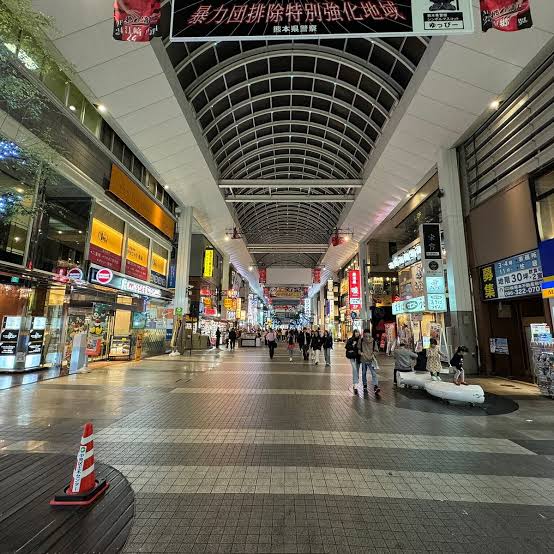
I headed north toward Shinsaibashi Station with no real plan beyond finding dinner and eventually making my way to Bar Nayuta. The streets were beginning to fill as the evening settled in. Restaurants were spilling light onto the pavement, smokers drifted in and out of doorways, security officers leaned on impossibly long wooden staffs as though they had all the time in the world, and every block offered another invitation to turn left instead of right. Osaka is one of those cities that rewards wandering. Even when you’re lost, you’re usually only a few minutes from somewhere worth finding.

V. Old Ghosts and Dinner

As often happens, I procrastinated leaving the hotel.

The afternoon disappeared into writing, music, a little wine, and the sort of gentle procrastination that always feels oddly productive when you’re a writer. Around six o’clock I finally got organized, walked over to Uehonmachi Station, boarded the short train to Namba, and wandered into Shinsaibashi looking for dinner.

On the way I noticed several policemen carrying long wooden batons tucked upright against their chests. They all carried radios clipped to their breastbone. They occasionally tapped the batons against the pavement as they walked.

Japan has remarkably little street crime. Shinsaibashi has even less. I still found myself instinctively straightening my posture and tensing up as I walked past them.

Some habits just persist that way.

Several years earlier I had a five month affair with a woman named Vicki. I met her at an upstairs open mic just a few minutes from Shinsaibashi Station. We spent five months together. I liked her very much. She eventually fell in love with me. Although I did like her, I was not in love with her, and in early 2019, as my life was becoming increasingly complicated, I ended the relationship.

I have not seen her since.

Recently I even looked into hiring a private investigator to try to find her again. The irony was that although I remembered her vividly, I somehow possessed remarkably little practical information that might actually help the PI locate her. The investigator’s fee wasn’t unreasonable, so the problem wasn’t the money. The problem was that memory doesn’t leave a forwarding address.

I still remembered where the old open mic was held, so I walked over and took the elevator upstairs, hoping against hope that she might be there. I glanced inside, saw there was nothing going on, and left. Some places deserve a brief visit simply because they remind you who you used to be.

I wandered around for a few more minutes looking for a restaurant I liked the look of. The streets were beginning to fill as the evening settled in. Restaurants were spilling light onto the pavement, smokers drifted in and out of doorways, security officers leaned on impossibly long wooden staffs as though they had all the time in the world, and every block offered another invitation to turn left instead of right. Osaka is one of those cities that rewards wandering. Even when you’re lost, you’re usually only a few minutes from somewhere worth finding.

Dinner itself was uncomplicated. I chose Café Bohemia because it is attached to what used to be the Hotel Unizo, where Vicki and I spent our second night together. The hotel has changed names since then, and is now a little more expensive than I care to pay, however Café Bohemia remains.

I ordered a Heartland beer, a plate of Bolognese, and some shisha. The pasta was smaller than expected but still excellent. The shisha was exactly as I remembered it—pleasant enough, but with an annoyingly weak draw that made every puff feel like work. After twenty minutes I’d had enough.

VI. Back At My Hotel

Walking back toward Namba Station, I found myself browsing escort websites again. I’d only been doing this for a little over a month, so I still knew very little about the industry. What fascinated me, oddly enough, wasn’t the women at first.

It was the pricing.

I have taught high school business for about 15 years, and I couldn’t stop wondering how the enormous price differences could possibly make economic sense. Some women charged modestly. Others charged sums that looked more like mortgage payments than hourly rates. All of them seemed equally attractive to me. For a while I found myself studying the market itself more carefully than the people in it.

Eventually I settled on a handful of women I was into it. By the time I reached the hotel, though, I had changed my mind.

There were essays waiting to be edited. Songs waiting to be ranked. A bottle of wine waiting for me. Suddenly, that sounded like the better evening.

From there the night settled into the familiar rhythm that has slowly become my profession: writing, rewriting, choosing photographs, adjusting SEO tags, publishing essays, and beginning the next one before the previous one had quite finished echoing.

The best nights rarely end with fireworks. They end with keys in the door, the familiar click of the lock, and the peculiar satisfaction of returning to a room that has slowly become your own. Home sweet home, even if home happens to be a small hotel room in Osaka. Two fresh packs of heaters hit the table beside a small mountain of convenience-store provisions: Pocari Sweat, a can of Ebisu beer, a bottle of wine, and a couple of small bottles of umeshu.

The room greeted me exactly as I had left it: clothes draped over chairs, chargers snaking across the floor, books stacked beside the bed, and the faint smell of tobacco that no amount of cracked windows can ever completely erase.

Before anything else came the little rituals. Plug in the phone. Hang the shirt that was almost dry and decide if my clothes from the day needed to be washed or not. Empty my pockets. Open the fridge. Take an inventory.

Somewhere in there I caught my reflection in the mirror and laughed. Another evening survived, another little expedition completed.

Outside, Osaka was still humming, but inside the room everything slowed to my preferred tempo. I checked the refrigerator. A Yona Yona Ale and some neglected soba that was quickly approaching its expiration date. I put the Pocari in to chill. I would drink the Ebisu first. Tomorrow’s problems could wait until tomorrow; tonight’s responsibilities extended no further than hydration, cigarettes, and deciding whether to eat the soba.

As the room settled into silence, music drifted from the laptop. A Michael… no, a Mark Kozelek song. His unmistakable voice. All of the sudden I found myself thinking about the movie Bound, still one of my favorite films from the Wachowskis. I have always preferred it to The Matrix. It’s tighter, stranger, funnier, and somehow more human. I especially love the line when the dude walks into a dark rom and says “It’s fucking dark in here” and then immediately gets capped. As I like to say, it’s funny to me. Great art has a way of sneaking back into your head when you’re doing the most ordinary things—sorting laundry, putting beers in the fridge, or brushing ash from the bedspread before company arrives.

By then the excitement of the night had largely given way to contentment. The room was as tidy as it was ever going to be. The bedspread had been rescued from a fresh snowfall of cigarette ash. My bladder, after several enthusiastic victories, had finally declared a ceasefire. The phone was charging. The drinks were cold. Whatever happened next would happen at its own pace.

It wasn’t one of those nights that changes your life. Most aren’t. It was simply another Osaka evening added to the ledger: a little wandering, a little music, a little planning, a little anticipation, and the quiet pleasure of returning to a place that, for now at least, felt enough like home.

VII. Late-Night Music Session

With what remained of my night, I meant to edit my most recent piece.

That was the whole plan. I drifted off to sleep for about half an hour around 3 AM, woke up, opened my draft, looked at it for all of thirty seconds, and then Conor Oberst showed up and threw a wrench in my plans.

It all started with his song Cape Canaveral. I had had it at number seven on my all time greatest song list for a while. I thought that this would still be about right, however when I played it again I suddenly realized that it was even better than I remembered. I played it two or three times, and came to the conclusion that it had, believe or not, jumped over Emmylou Harris’ Tulsa Queen, which has been my number song for the past decade. Just like that. After all these years, and all these arguments with myself, Cape Canaveral had somehow climbed to number one. I didn’t plan it. I didn’t force it. The song simply refused to lose,

I was listening to a version of the song on You Tube, and on this one Conor gives a short spoken introduction. He says:

“Yo… can you make that reverb pop a little bit more for me?”

It kills me every time. It’s such a small moment, a throwaway really, but somehow it makes the whole performance feel human. I laughed out loud every single time I rewound it. Little moments like these are why I love live recordings. They remind you there were actual people in the room making something instead of perfection arriving fully formed.

From there my night completely unraveled in the best possible way. Steve Earle. Ryan Adams. Sonic Youth, The Replacements. Moonface. Tindersticks. Lou Reed. The Church. Strand of Oaks. Craig Finn, naturally. Every time I thought I was done with my new ranking, another song would throw itself back into the fight. Easy Lucky Free jumped thirty places. Week of Living Dangerously reminded me just how much Steve Earle rules. Then Guitar Town barged back into the conversation like it had every right to be there. Which it does.

Somewhere in the middle of all this, I realized I hadn’t edited a single paragraph. I had taken a short nap, and taken care of another very ordinary biological need that I had passed in when I decided not to order the escort.. I drank another beer and stared out the hotel window into the night. I had spent nearly two hours arguing with myself over songs that have been following me around for half my life.

Honestly? Time well spent.

By six in the morning I made an executive decision. My days don’t end at midnight these days. They end when I finally decide to get some sleep. Six o’clock felt like a better border than midnight. So yesterday officially ended at 6:00 a.m. and Thursday began. I turned the music off, and made my way back to the Lawson for get some breakfast. The rankings, at least for now, were settled.

Conor was sitting at number one.

Tomorrow he’ll have to defend the title.

VIII. I Call My Mom

The last thing I had to do before breakfast was call my mother, Claudia, about a text I had sent her several hours earlier.

I stepped outside my hotel, sat down on the concrete stoop outside what appeared to be an empty apartment building, lit a cigarette, and dialed her number.

My mother and I have been engaged in a serious disagreement about my writing for over four years now.

She does not like that I sometimes use real names, real initials, and real events in my essays. I have tried to explain that many of the pieces she objects to recount events that took place thirty or even forty years ago. I have also pointed out that she and my father have long admired Gerald Durrell, whose autobiographical books affectionately—and yet often pointedly—make fun of his own family. I occasionally do the same. Every family piece I have ever written has been written with affection.

Until recently, our disagreements centered primarily around my essays about St. George’s School in Spokane, Washington, which I attended from first grade through graduation between 1980 and 1992.

From my perspective, this is all ancient history.

Most of the stories involve harmless episodes: a student pulling a fire alarm as a prank, a teacher dumping a garbage can over a student’s head, classmates getting into ridiculous situations that seemed important at the time and funny decades later. Many of the people involved probably do not even remember me, much less read my writing. A surprising number, however, do. I find this deeply gratifying.

I have been fortunate enough to accumulate many hundreds of readers for those essays, and several of my music and popular culture pieces have reached into the thousands. These are hardly world-beating numbers, however I enjoy checking my statistics almost every day to see how my pieces are doing.

Recently, however, our disagreement has taken a far more serious turn.

As mentioned earlier, my wife and I mutually decided to divorce a few months ago, and shortly afterward we filed our paperwork with Kyoto City Hall. We have agreed to divide our assets equally. She will return to her hometown of Kumamoto to help care for her aging parents. For the time being I will remain in Kyoto, continue teaching, and look for a modest apartment somewhere near downtown.

At the same time, I have become increasingly committed to making the transition from teacher to full-time writer as soon as possible, hopefully sometime next spring. I expect that transition to be challenging. Every day I find myself trying not only to become a better writer, but also to learn the countless small logistical tasks that accompany trying to make a living from writing.

My mother knows all of this.

Unfortunately, she does not seem to care.

Not long after the divorce, I joined several dating apps. Some have worked better than others. Some have proved to be too expensive. Most days these days I find myself talking to dozens of women online. Most of those conversations amount to little more than discussing our day, exchanging light flirtation, and making tentative plans that will probably never happen. A handful have developed into genuine friendships, and one has become a meaningful relationship, my on-again, off-again girlfriend, Litz.

Several hours before calling my mother, I had sent her another unusually direct text asking her, once again, to stop criticizing my writing, my dating life, and my romantic decisions.

When I called, it was around six o’clock in the morning in Japan and early afternoon on the American West Coast.

She told me she only had about ten minutes. That suited me fine.

I told her I wanted to say a few things, then I would gladly hear whatever she wanted to say in return. I explained that we had now been having exactly the same argument for four years.

I told her that my writing was none of her fucking business. If she disliked what I wrote, she did not have to read it.

Likewise, she was certainly entitled to whatever opinions she wished to hold about my dating life, my romantic life, or my sex life. What I was no longer willing to do was listen to those opinions every single time we spoke. Or at all.

For the past eight months I have been dealing with somewhat significant health problems. I have seen multiple doctors, am taking various medications, and have gradually begun improving. During that time I have often called my mother for ten or twenty minutes simply because I wanted a sympathetic ear.

Inevitably, those conversations have drifted toward my writing and personal life.

While she has been consistently compassionate about my health, she becomes intensely—and, from my perspective, relentlessly—critical the moment the subject changes.

I find this utterly exhausting.

I am generally a laid-back kind of guy. I dislike conflict. I dislike unnecessary stress about little things even more. Over and over again I had explained that these are my stories, my relationships, and my decisions. Over and over again she has repeated the same criticisms.

By this point, I am completely over it.

I told her she still treats me like an infant rather than a fifty-two-year-old man living three thousand miles away, trying to build a second life after the collapse of a nearly thirty-year marriage.

Eventually I lost my temper.

I had never spoken to my mother this way before.

I said, “Mom, I know you don’t like profanity, and I’m only going to say this once.

Shut the fuck up.

Butt the fuck out of my writing.

I don’t ever want to hear another opinion from you about my writing, my dating life, my romantic life, or my sex life. Ever.”

I reminded her that she would almost certainly never meet any of these women. On the unlikely chance that I eventually settled down with one of them, she might meet her at the wedding and perhaps once or twice afterward.

Beyond that, they simply were not part of her life and none of her business.

She met my dad in 1969. They built a stable marriage that has lasted more than half a century. Like every marriage, I’m sure it has had its ups and downs, but I have always admired—and, if I’m honest, occasionally envied—the stability they created together.

My own marriage had just ended. That meant I was trying to figure out what the second half of my life might look like.

Not hers.

Mine.

After I finished speaking, I told her I was ready to hear whatever she wanted to say.

She paused.

Finally she said there really wasn’t anything she could add. She would send me a short text later.

I told her I was absolutely serious. If she could not respect this boundary—if she could not stop treating my writing and my private life as subjects she was entitled to supervise—I would never talk to her again. No son or daughter ever wants to have to say this to a parent, and I certainly did not today. However, I felt like she had backed into a corner and I could see no other out of it.

I wished her a good day. Then I hung up.

As of this writing, it is about four hours after our call. It is the middle of the day West Coast Time, and she has not reopened. I guess she is considering her response, and I suppose I would the same in her situation. I am fine to wait, because as I her told on the phone, I will not her call her for a few weeks, or even a month. If she wants to talk to me, she can call me anytime, and I will pick up. This is where we currently stand.

VI. Final Reflection

Overall, today was a pretty good day. The conversation with my mother was tough, however I do feel better haven gotten things off of chest, and essentially issues her an ultimatum. How she choses to respond, I have no idea. I truly hope that she takes the all time she needs to think it over and lets me know that she is willing to meet me half way. If she does so, I will meet her halfway as well. If she does not, all bets are off. We shall see.

Looking back over the day, I realize that my long running argument with my mother isn’t really about my writing at all. Writing is simply the latest battlefield. The real disagreement is much older than that. It is about autonomy.

I am fifty-two years old. I am a grown man. I have lived in Japan for nearly three decades. In this time, I have juggled three careers, been married and divorced, raised a wonderful son, taught thousands of students, written hundreds of essays, and somehow we were still arguing over whether I am allowed to tell my own stories.

I am simply no longer prepared to continue this conversation at all.

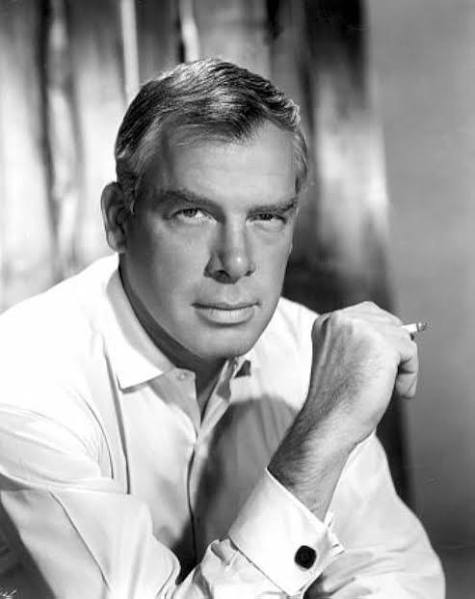
As I was starting this essay, I borrowed one of Lee Marvin’s great lines for the title. By the end of the day it no longer feels like a joke. In an interview with Roger Ebert from the early 1970’s, Marvin says:

“Look, if I want to develop an image, I’ll do it my own fucking way.”

I had spent much of the day getting lost, arguing with Google Maps, editing essays, thinking about old girlfriends, listening to Connor Oberst until dawn, eating convenience-store fried chicken, smoking and drinking wine, and having a very difficult conversation with my mother. And somehow all of it had become one story.

Nobody else could have written it exactly this way. That’s the point.

My mother doesn’t have to like what I write. Readers don’t have to like what I write. But the stories are mine, and so are the decisions about how to tell them.

Lee Marvin was right.

Nobody else gets to develop my image.

Nobody else gets to tell my stories.

That’s my job.

And, goddamn it—

I’ll do it my own fucking way.

Dedication:

For Lee. You sure make an image baby. You did your own fucking way, and you are my inspiration. You are my hero you glorious motherfucker.

On Why My Friend Litz and I Are No Longer Boyfriend and Girlfriend—for Now

Epigraph:

Some people claim there’s a woman to blame but I know it’s my own damn fault.
—Jimmy Buffett, “Margaritaville”

I. Meeting Litz Online

I met Litz on Tinder right around the end of April 2026, just about two and a half months ago today. Relationships often begin before either person realizes that anything has begun. Two strangers exchange a few messages, one of them sends a photograph or a joke, and suddenly an event that seemed inconsequential at the time becomes the first scene in a story.

Within a few days, Tinder suspended my account after yet another unsuccessful attempt to satisfy its increasingly byzantine photographic-identification system. I had failed this test many times before. The platform’s technology remained unable to determine that the large, slightly tired-looking man holding the phone was the same large, slightly tired-looking man depicted in the photographs directly beneath him. I found this highly frustrating, although by then it hardly mattered. Litz and I had already begun speaking elsewhere.

The first thing she sent me was a voice message. It lasted only a few seconds. I believe she simply introduced herself. What I remember best is her voice: low, warm, and unexpectedly musical. Litz had once been a professional singer. In her early twenties, she had received a recording contract in South Korea despite speaking little or no Korean at the time. I still do not entirely understand how that arrangement came about, but after hearing her speak I understood why someone might have wanted to record her.

Her voice reminded me slightly of Margo Timmins of Cowboy Junkies—not because they sounded identical, but because both possessed a quality that is difficult to manufacture: intimacy without effort and deeply sensual. To be frank, her voice turned me on immediately, and almost as quickly she did too. Litz could make a routine greeting sound private. Even when she was discussing work, groceries, family obligations, or the weather in Kochi City, I sometimes had the feeling that she was singing under her breath.

I told her how much I loved her voice. She later told me that she had fallen for me almost immediately. I cannot honestly say that I proceeded with greater caution.

Over the next six weeks, we talked almost every day, usually several times a day. Some calls lasted twenty minutes. Others lasted an hour, two hours, or longer. There were mornings when we spoke shortly after waking, afternoons when one of us called while walking somewhere, and nights when we continued talking long after both of us had run out of any practical reason to remain awake. By the time we met in person, we had accumulated hundreds of hours of conversation.

We discussed our families, our marriages, our children, our work, our financial worries, our health, our failures, and our hopes for whatever remained of the future. I have one adult son; she has two adult children. We spoke about the different paths that had carried us into our early fifties and about the lives we might still construct from there. We talked about music, food, travel, friendship, jealousy, loneliness, and sex. We also talked about nothing at all, which may be the greater test of intimacy. It is relatively easy to tell another person the dramatic events of one’s life. It is harder to remain interested while that person describes a difficult customer, a delayed train, an irritating piece of paperwork, or what she intends to eat for dinner.

With Litz, those ordinary conversations rarely felt ordinary.

At the time, I was emerging from a marriage that had lasted twenty-nine years. My wife and I had mutually decided to divorce earlier that spring, although the practical and emotional consequences of that decision were still unfolding. I had not lived as a single man since my early twenties. I had almost no recent experience of dating and even less understanding of how quickly two people could create a private world through their phones.

My mother and several other people cautioned me that Litz and I might be moving too fast. They were not hostile to her, nor were they trying to discourage me from beginning a new life. They had simply lived long enough to recognize acceleration when they saw it.

In retrospect, they were right.

At the time, however, the speed felt less like recklessness than recognition. After so many years inside one relationship, I mistook the intensity of discovery for certainty. Litz and I had not yet confronted the thousand small realities that distinguish knowing someone from imagining that one knows her. We knew one another’s histories, preferences, fears, and fantasies. We knew how to make each other laugh. We knew when the other person sounded tired or distracted. We knew which subjects produced excitement and which could quietly darken the mood.

That felt like knowledge. Some of it was. Some of it was projection. We also became virtually intimate before meeting in person. We had phone sex only twice, although the number is less important than what the experiences represented. Both of us had been lonely, and the intimacy provided a necessary outlet and a sense of closeness across a considerable distance.

At other times, when her work schedule or my obligations made a longer encounter impossible, we exchanged photographs or allowed each other brief intimate glimpses through the phone.

I do not include this information to be provocative. It matters because the relationship did not begin as a cautious friendship that slowly became romantic after a series of conventional dates. Emotionally and sexually, we had already moved far beyond introduction before we occupied the same room. By the time I traveled to Kochi, we had created expectations that neither of us fully understood.

For most of those six weeks, we had almost no disagreements. Litz sometimes expressed concern about whether I brushed my teeth frequently enough, an impressive question given that she was hundreds or thousands of kilometers away and had never stood close enough to inspect them. I assured her that I did. She remained unconvinced. This should perhaps have told us something.

Mostly, though, we were happy. We called each other baby. We spoke openly about becoming engaged and, eventually, getting married. We discussed travel plans and imagined a shared domestic future with the confidence available only to people who have not yet attempted to share a bathroom, a schedule, a kitchen, or a narrow futon.

I knew we were rushing. I rushed anyway.

I returned to Japan on June 12, two days before my fifty-second birthday. Almost immediately, I began arranging the trip to Kochi. Traveling there from Kyoto or Osaka is neither impossible nor particularly convenient. The round trip cost roughly ¥25,000, and the journey consumed much of a day. At fifty-two, a man should perhaps think carefully before spending that amount of time and money to meet someone he knows primarily as a voice emerging from a small electronic device. I went nonetheless.

By the time I reached Kochi Station, it was close to eleven at night. The late arrival eliminated any possibility of a proper birthday dinner. We bought snacks and wine instead and carried them back to a hotel near the station, where we did our best to turn convenience-store provisions into a meal.

There was an unavoidable strangeness in seeing her at full human scale. For six weeks she had existed inside photographs and rectangles, her face appearing or disappearing according to the strength of the connection. Now she was standing beside me, very small and entirely real. Litz is only four feet eleven inches tall. I am six feet three. The physical contrast between us was nearly comic, although neither of us seemed troubled by it.

We talked, drank wine, ate our improvised dinner, and gradually adjusted to the fact that the person we had imagined was now close enough to touch. The transition was easier than it might have been. Her voice was the same voice. Her humor survived the journey out of the phone. The affection between us did not vanish under the brighter and less forgiving light of an actual room.

We slept together that night and again the following morning. The sex was very good, but what mattered more was the sense of confirmation surrounding it. Whatever else we had misunderstood, the attraction was real. We were comfortable enough to laugh, to pause, and to begin again. Nothing felt forced. The night seemed to promise that the emotional and virtual intimacy of the previous six weeks could become an ordinary physical life.

Had the visit ended the following morning, I might have returned home convinced that we had been right about everything.

But eight hours together seemed inadequate after six weeks of anticipation and a ¥25,000 journey. Litz had an apartment in Kochi City, and I asked whether I might stay with her for a few days. She kindly agreed and began rearranging her work schedule so that we could spend more time together. I was, and remain, deeply grateful for that generosity. Inviting someone into a small home is an act of trust. Inviting a new boyfriend who is more than a foot taller than you and has arrived carrying the accumulated habits of twenty-nine years of marriage may be an act of courage.

I expected to remain for several days.

I stayed for ten.

For the first time, Litz and I would no longer be two people describing our daily lives from a distance. We would have a daily life together. We would wake in the same room, eat the same food, negotiate the same space, and discover whether the ease of our conversations could survive the pressures of proximity.

For the first few days, it did.

II. On Learning Someone in Person

By the end of my stay, I had remained in Kochi for about ten days.

Those ten days contained enough happiness to convince me that our relationship had real promise. They also contained enough friction to suggest that promise alone would not be enough.

Very quickly we settled into something resembling a small domestic partnership. Litz would go to work, though she had generously arranged her schedule so we could spend much more time together than originally planned. I cooked when I could, helped with the laundry, cleaned the apartment, ran errands, and generally tried to make myself useful. In the evenings we wandered around Kochi, stopped for drinks, browsed little shops, cooked simple meals together, and continued discovering one another in the quiet rhythm of ordinary life.

Those ordinary moments are, after all, where real relationships actually live. The first few days were wonderful. Then, almost imperceptibly, small tensions began to appear. The first involved something so minor that I still find it difficult to believe it became an issue at all.

I am a smoker. Rather than smoke inside Litz’s apartment, I stepped onto her small balcony several times a day. While smoking I would occasionally call my family or a close friend back in Kyoto. I was speaking quietly, during the daytime, on private property. To me it seemed entirely unremarkable.

Apparently one of Litz’s elderly neighbors felt otherwise.

The neighbor contacted the building management company and complained that the foreign guest next door was smoking and talking on the balcony. The management company called Litz and politely asked if her guest could simply take phone calls inside the apartment instead. That was all.

There was no threat of eviction. There was no confrontation. Nobody came to the apartment. No police appeared. No lease violations were mentioned. It was, from everything I could tell, a routine request that could have been solved in approximately thirty seconds.

I would gladly have stopped taking calls on the balcony. Instead, something else happened. Litz panicked.

When she told me about the call she was visibly shaken. She was close to tears. She repeatedly told me she might lose the apartment she had worked so hard to obtain. She imagined herself forced to leave. She imagined financial disaster. She imagined the worst possible outcome almost immediately.

I asked her a simple question.

“Baby, did the management company actually say you were going to be evicted?”

“No.”

“What did they say?”

“They asked that you talk on the phone inside.”

“I can absolutely do that.”

For me, the problem was already solved. For her, it had barely begun.

Looking back now, I understand that this was not really about balconies, cigarettes, or phone calls. It was anxiety. Real anxiety.Not theatrical anxiety. Not attention-seeking anxiety. Genuine anxiety that transformed relatively ordinary inconveniences into looming catastrophes.

I had not fully understood the depth of that tendency while we were talking online because online relationships naturally allow each person to present a calmer, more edited version of themselves. Daily life removes that luxury.

Unfortunately, her anxiety had an unfortunate side effect. It triggered my own. There are many unpleasant emotions in life, but few I dislike more than chronic stress. I can handle sadness. I can handle disappointment. I can even handle uncertainty reasonably well. Constant anxiety, however, is simply not good for me.

As Litz became more anxious, I found myself becoming more anxious in return. Neither of us wanted that. Neither of us knew quite what to do about it.

Other small disagreements gradually appeared. From my perspective they were simply the kinds of adjustments every new couple eventually faces. From her perspective they often carried greater emotional weight than I expected.

For example, she became increasingly interested in my daily routines.

How many times was I brushing my teeth? Why had I skipped shaving that morning? Was I taking proper care of myself?

These were perfectly reasonable questions in another context. Had we been married for twenty years, they might have seemed almost affectionate. But we were not married. We were not engaged. We had only recently met in person after knowing one another online.

I was fifty-two years old. She was in her fifties as well. I thought that certain decisions about my grooming, my appearance, and my daily habits still belonged primarily to me. I tried to explain this as gently as I could, just as she tried to explain why these matters genuinely concerned her.

Neither of us was entirely wrong. We were simply beginning to discover the practical differences between two people who had fallen in love through conversation and two people attempting to share everyday life. The gap continued to grow.

Reflecting on our first six weeks together, I am increasingly struck by something that I already knew to some extent. There is, in fact, a tremendous difference between getting to know somebody online and getting to know them in person. This may seem obvious. However, my time with Litz underscored that truth in ways I genuinely did not expect.

By the time I finally left Kochi, we were still together. We were still affectionate. We were still physically intimate. We still considered ourselves boyfriend and girlfriend. But beneath the surface, the first fault lines had begun to appear.


III. One Day at a Time

When people hear that a relationship has ended, they almost always want a simple explanation. Someone must have been the villain. Someone must have made the cheated. Someone must have loved less, cared less, tried less, or failed more spectacularly than the other. Real life rarely works that way in my experience.

Litz is one of the kindest people I have ever met. She is generous with her time, devoted to her children, remarkably hardworking, and capable of great tenderness. She also struggles with anxiety in ways that sometimes make ordinary life much harder than it needs to be. I, meanwhile, have my own collection of flaws. I rush into things. I value independence almost to a fault. I can be stubborn, dismissive of worries that seem obvious to others, and too quick to believe that every problem has a quick solution. These qualities have served me well in some areas of my life. In this relationship they sometimes made matters worse.

Neither of us was trying to hurt the other. We were simply carrying different histories into the same room. And perhaps that is what every relationship really is: two biographies attempting to occupy the same present tense. Sometimes they fit together naturally. Sometimes they require patience neither person yet possesses. Sometimes they arrive at exactly the wrong moment, even when the feelings themselves are genuine.

I do not regret meeting Litz. I do not regret falling in love with her. I certainly do not regret the laughter, the conversations that lasted until sunrise, the train rides, her little apartment in Kochi, or the quiet mornings when, for a little while at least, building a future together felt entirely possible. Those moments were real. They remain real.

Today, Litz and I are no longer boyfriend and girlfriend. We are, however, still good friends. We continue to care about one another and talk on the phone, and we both hope that time will provide perspective where emotion sometimes could not. We are discussing the possibility of traveling abroad together later this year. If this happens it happens and if it does not it does not. In either case, we will travel as friends, not as a couple.

The challenges in our relationship were the product of two imperfect people, each bringing old habits, old fears, old hopes, and old wounds into something new. That is not failure. It is simply the complicated business of being human.

So I will keep trying. To become a better man. A better friend. And, if circumstances ever allow, a better boyfriend. I hope Litz finds the same peace she has always wished for me.

Some people claim that there’s a woman to blame. But I know it’s my own damn fault. Perhaps.

Dedication:

For my friend Litz. Let’s just take things one day at a time, baby.

Note: Interested readers may also wish to read the love poem I wrote for Litz during the early part of our relationship. This poem is linked below.

On Meeting My Wife Sachie

Epigraph

Lisa says on a night like this it’d be so nice if you gave me a kiss.

—The Velvet Underground

Author’s Note: This essay is the first of several essays on the theme of my 27 year marriage to and recent divorce from my wife Sachie. As noted below, I met her in the summer of 1997 in Kumamoto Japan, her home town. I had just accepted a job with NOVA Corporation in that same city. This essay traces the first few months of our relationship.

The dates in this essay are reconstructed from memory nearly thirty years later. While I have tried to be as accurate as possible, the chronology is necessarily approximate.

Introduction:

In January of 1997, a few months before I departed for Japan, my grandfather Bill Kolb handed me an envelope.

Inside was $1,700 in cash.

Even now this sentence doesn’t sound quite real.

My mother still can’t believe it. Truth be told, neither can I. Bill wasn’t a wealthy man handing me money because he had too much of it. He simply believed in me. I don’t know exactly why. I was twenty-two years old, fresh out of college, without much of a plan beyond teaching English for a year somewhere on the other side of the world.

“Go with God,” he said. “Good luck in Japan.”

Nearly thirty years later, I still believe it was one of the greatest gifts anyone has ever given me.

Kumamoto and NOVA:

I left for Japan in April with two duffel bags, a stack of CDs, a handful of books, several pack of cigarettes, and the sort of confidence that belongs almost exclusively to young people. I wasn’t fearless. I was simply too young to appreciate all the things that could go wrong.

Before arriving in Kumamoto, NOVA sent me to Osaka for about a week of training. Most of the details have faded into that blur reserved for airports, orientation sessions, and hotel conference rooms, but I do remember how Japan felt.

Little things amazed. The stations. The food. The language. Even the convenience stores. I’d never been anywhere remotely like it.

Then I took the train south to Kumamoto.

People who have never been to Japan often imagine Tokyo whenever they hear the word “Japan.” Kumamoto is not Tokyo. It moves at its own pace. The downtown area is was built around a long covered shopping street—the Shotengai—that functioned as the city’s living room. People shopped there, met friends there, drank there, wandered there, and, if you stayed long enough, discovered that everybody seemed to know everybody else.

I arrived without knowing a soul. That didn’t last very long.

NOVA occupied a building at the north end of the Shotengai. At the time it was an enormous company, hiring English teachers from Britain, Australia, New Zealand, Canada and the United States. It has since gone downhill. The classrooms had glass walls. Lessons ran almost continuously. Teachers appeared, disappeared, smiled, taught, smiled again, and hurried off to the next class. It all worked surprisingly well.

It also felt a little like living inside an aquarium.

Things became even more interesting when I learned I’d be sharing an apartment with one of my supervisors.

Her name was Sam. She was from Wales, probably in her mid-thirties, and had an almost supernatural awareness of everybody else’s business. She wasn’t mean about it. She simply seemed constitutionally incapable of not knowing who was dating whom, who had called in sick, who had stayed out too late, and who might be about to break one of NOVA’s many unofficial rules.

My other roommate was a fellow teacher named Heather. The arrangement wasn’t terrible. It just wasn’t private.

Most afternoons I’d finish teaching, wander through the Shotengai interested me more and more with each passing day. I was also hoping to meet someone.

Not because I had arrived in Japan determined to find a wife. I had come looking for adventure, work, and maybe a little direction. If romance happened somewhere along the way, that would simply be a bonus.

Then one afternoon, sometime around late May, the classroom door opened and in walked Sachie Asahi.

The first thing I noticed was her haircut. It was incredibly short—shorter than mine—and on almost anyone else it probably wouldn’t have worked. On her it looked perfect.

The second thing I noticed was her T-shirt. Across the front was Andy Warhol’s Campbell’s Soup Can. Now at twenty-two I saw connections everywhere.

My first thought wasn’t, She’s wearing Warhol.

It was, She might actually know the Velvet Underground.

As soon as class ended, curiosity got the better of me.

“Miss Asahi,” I said, “can I ask you something?”

“Sure.”

“Do you know the Velvet Underground?”

She smiled.

“Yes I do. They are one of my favorite bands.”

Mine too.

That certainly got my attention. Looking back, that conversation probably lasted less than a minute. In memory it lasts forever.

Our First Two Dates:

A few days later I found myself lingering outside NOVA around lunchtime, pretending I wasn’t waiting for anyone in particular. I was waiting for her.

The door opened. Out walked Sachie.

“Are you heading home?” I asked.

“Yes.”

“Would you like to get some lunch?”

She thought about it briefly and said “I know a nice coffee shop.”

We walked over together. The owner was an older gentleman who made coffee the traditional Japanese way, pouring hot water slowly through paper filters with the concentration of a surgeon. We ordered sandwiches, lit cigarettes, and settled into conversation as though we’d been doing it for years.

At one point I looked at her cigarette and smiled.

“You know,” I said, “nurses probably shouldn’t smoke.”

Without missing a beat she smiled back.

“Teachers probably shouldn’t either.”

Touché.

It was such a small exchange. I’ve remembered it for twenty-nine years.

I wish I could tell you I played it cool after that first lunch. I did not.

Whenever our schedules lined up, I would find myself outside NOVA around lunchtime. Sometimes I really was heading out for lunch. Sometimes I was just hoping the door would open and Sachie would walk through it.

Sometimes it did.

As we were finishing our first lunch together I asked if I could call her. She said yes.

I called her the next morning around eleven, thinking this was an appropriate time. When she answered she laughed.

“Why didn’t you call earlier?”

“I didn’t want to seem too eager.”

“Eager would have been good.”

This was encouraging.

Our first proper date was a screening of Hal Hartley’s Amateur. I remember the movie mostly because I remember the evening. Hartley has always struck me as one of those directors I admire more than I love. I’m glad I’ve seen his films, but they never quite found a permanent place in my heart.

Near the end of the film she leaned toward me. Not to kiss me. Not yet.

She brought her lips close enough that I could feel her breath against my ear and whispered, in English,

“What is this music?”

I didn’t know but it didn’t matter. What mattered was that one moment of intimacy.

She was close enough that my entire body lit up. We didn’t kiss in the theatre. I think we held hands on the walk back to the car, but that’s about all. It was wonderfully innocent in the way that only the beginning of a relationship can be.

Kumamoto is not a very big city, and we quickly settled into a rhythm. We’d grab coffee, wander through the nearby Shotengai, or simply drive around with nowhere in particular to go. Looking back, it strikes me that we spent an awful lot of time in her little Mitsubishi. We couldn’t exactly go to my apartment—I lived with my boss, after all—and bringing a young American teacher home to meet your very traditional Japanese father wasn’t something either of us was ready for after a week or two.

So the car became our living room.

We’d park by the river or find a quiet place to talk, windows cracked just enough for the cigarette smoke to drift outside. We would make out in her parked car. I would finger her and she would return the favor. It never felt dramatic. It just felt…comfortable. We were both twenty-two, trying to figure each other out one car ride at a time.

I Join Washington Language School:

Around the same time another opportunity came along.

Washington English School offered better hours, more independence, and what sounded like a healthier working environment than NOVA. I handed in my month’s notice and, sometime around the middle of July, packed my two duffel bags yet again.

Leaving NOVA turned out to be one of the easiest decisions I’ve ever made. Fortunately, Washington was only a short distance away. The boss gave me the use of a cheap apartment, which was a bonus. For the first time since arriving in Japan I had a place of my own.

It wasn’t much. A small furnished apartment on the second floor of a walk-up, two tatami rooms, sliding doors, a tiny kitchen, an even tinier bathroom, a loft that was far too hot to sleep in during the summer, and just enough room for one young teacher who didn’t own very much.

I unpacked my books, stacked my CDs beside a little stereo, purchased groceries I barely knew how to cook, and slowly began settling into something that resembled ordinary life.

When I wasn’t teaching, I was usually doing one of two things. I was either with Sachie or working on a baseball simulation game.

That probably sounds stranger now than it did then. My uncle Steve had inspired me to try designing a tabletop baseball game based on real statistics, and I became completely absorbed by it. Most evenings found me surrounded by notebooks, pencils and baseball encyclopedias, trying to solve statistical puzzles. For weeks one pitcher, Lefty Grove, refused to cooperate. His adjusted ERA simply would not behave the way I wanted it to.

By August we were seeing each other almost every day.

One evening another young woman came on to me at a bar. I was briefly tempted. She was perfectly nice, and yet while talking with her I realized, almost in the middle of the conversation, that I didn’t want to be talking to anyone else except for Sachie.

The next day I told Sachie what had happened. She listened quietly and then she smiled. I said I would like to become exclusive. She agreed. Sometimes the most important decisions in life announce themselves quietly. This was one of those cases.

A few weeks later we decided to spend a weekend together in Tokyo.

Like so many romantic plans made by young people, ours was perfect in theory. Reality had other plans.

Our weekend in Tokyo was supposed to be the moment. We agreed we would have sex in our hotel room. By then we had been dating for a couple of months. We were crazy about each other, and it was time for the real intimacy to begin.

For dinner we had fish and soup and a few glasses of wine. Sachie was never much of a drinker, especially in those days. A few glasses of wine were enough to leave her happily, gloriously intoxicated. By the time we got back to the room she was laughing, stumbling a little, and having a wonderful time.

Then she collapsed across the bed. She was too drunk. Sex was off the table. We went to sleep

Somehow that failed evening made me like her even more. Real relationships, I was beginning to discover, aren’t built on perfect moments. They’re built on imperfect ones that two people survive together.

A week or two later back in Kumamoto life intervened in a somewhat dramatic way.

During the afternoon of August 31, 1997, I was walking home from work when someone stopped me on the street.

“Princess Diana died in a car accident.”

For a second I thought I’d misheard. I was shocked.

News traveled differently then. There were no smartphones and no social media. One stranger told another stranger, and for a few moments the whole world seemed strangely quiet. Such was the case here.

I walked the rest of the way home thinking about Diana, about Paris, about how somebody so famous could simply disappear in the middle of an ordinary night.

History has a curious habit of attaching itself to our private memories. I can’t think about Princess Diana without thinking about that afternoon.

Sachie came over later that afternoon. The mood was quieter than usual. We talked for a while, made coffee, listened to music, and eventually stopped talking altogether.

This time there was no hotel. No elaborate plans. No expectations. Just the two of us in my tiny apartment.

It happened naturally. We fell into bed together. We became lovers.

The sex was good; however I had nothing to compare it to. I was a virgin at 23. She had had some limited experience. I wore a condom for perhaps the first and last time. After that we weren’t trying to make a baby necessarily. If it happened it happened.

Outside, late-summer Kumamoto carried on exactly as it always had. Cars passed. Somebody’s television drifted through an open window. Somewhere in the distance a train moved through the evening.

The world hadn’t changed.

Mine had.

Looking back now, it’s tempting to search those first months for signs of what was coming.

Were there clues? Warnings? Promises?

Possibly.

There was simply a young American teacher who had wandered halfway around the world with two duffel bags, too many cigarettes, a head full of music, and absolutely no expectation of meeting the person he would build his adult life with.

And there was a young Japanese English student who happened to walk into one of his English classes wearing an Andy Warhol T-shirt.

The rest, as they say, is history.

Conclusion:

Sachie and I stayed together for twenty-nine years. We were married for twenty-seven of these.

Our marriage eventually came to an end just this spring, as many marriages do. Time changes people. Interests diverge. Careers pull in different directions. Habits change. Sex stops. Sometimes two people simply grow into different versions of themselves.

We tried our best. In the end our best was not good enough but we had fun along the way,

This essay belongs to two young people on the cusp of life. It belongs to coffee and cigarettes. To our long walks on the Shotengai. To Kumamoto. To our friends who were also young and looking to make a little life of their own.

To a little Mitsubishi with the windows cracked on warm evenings and making out passionately in the front seat.

To the Velvet Underground and an old man carefully pouring coffee.

To a whispered question in a dark movie theatre.

And to a grandfather who slipped an envelope into his grandson’s hand and said, “Go with God.”

Dedication:

For my wife, Sachie. And for my grandfather Bill Kolb, my hero. I love you Grandpa.

For Litzy Litz With an I My Babush Baby: A Love Poem 

“Isn’t she / pretty in pink.”
— Richard Butler

Baby, I love you so very much.
And darling, baby, I don’t mean just. 
I mean to ten thousand stars and back again,
And I’ll write this poem like a half-good man.

I’ve done this before and I’ll do it again,
But meeting you, baby, is the biggest win.
The greatest win of my whole strange life.
And someday soon you will be my wife.

Pause. Deep breath, dude. Don’t get all rude.
Spill the beans and spill the tea.
Don’t get all weak in the knees please. 
Baby Litzy, I love you clear to the moon,
And every time I see you, darling, I swoon.

I’ll fall to my knees and beg you please,
Say yes forever and stay with me.
For life, my darling. For all our days.
Forever and ever in every single way. 

And baby I’ll never, ever give you up,
For I am no chump, and I’ve taken my lumps. 

So Litzy, my Babush baby, pause.
Cause baby, just because because.
I’ve written poems since I was eight,
And some were good and some weren’t great.

And that’s the way these things can go.
Sometimes they shine, sometimes they blow.
I wrote for girls who said they were pearls,
Sweet little queens in shiny worlds.

But none were half as sweet as you.
And baby, yes, that much is true.
No candy shop or sugared peach
Could ever come within your reach.

Babush! Lol and OMG.
Baby, darling, can’t you see?
I love you like the bees love honey.
Like Wall Street loves money.

I love you like ships love the sea.
Like tall green forests love the trees.
And baby this may sound absurd,
But I mean every word.

I love you more than words can say,
More than the sunlight loves the day.
More than my father—and yes it’s true.
But more than anything: I love you.

Sweet baby babes, it’s been three weeks.
And still I cannot quit your cheeks.
Your apple cheeks are so soft and sweet.
They totally cannot be beat.

And if you’re sad or feeling blue,
I’ll always make some room for you.
Just rest your little head on me,
And baby all will gravy be.

Cause you’re four-eleven, cute and small,
And I’m six-three and standing tall.
Baby mine, I’m built like trees.
You rise up barely to my knees.

So I shall buy you some small place,
A little home with warmth and grace.
Or maybe some downtown apartment
Where all of our love can rest apace. 

And yes beneath the sheets we’ll creep—
OMG, baby, did I just say sheets?
But sheets, my darling, cannot lose.
They totally and fully rule.

I must have took some love-drunk pill,
And baby I am floating still.
Or maybe swallowed the whole jar.
I know that sounds a little bizarre.

But that’s just how I feel for you,

My Babush baby tried and true.
Don’t yawn, my pet, don’t drift away.
I need your sweetness every day.

I’m crazy for you. Wild it’s true.
And usually I’m mellow, 
But not around you. No no no.
Around you all my feelings do grow.

They rise and swell like ocean tides,
Like moonlit waves at eventide.
They crash and roar upon the shore
And then come rolling back for more.

The angels watch from high above.
The gods too, baby. That is love.
They watch you, me, and all mankind—
The short, the tall, the sweet, and the kind.

And sweetheart yes, you are my heart.
At least the biggest, finest part.
Though room remains there for my son.
And baby I have only one.

He means the whole wide world to me.
Just like you do, my honey bee.

Baby baby, my Litzy Litz honey.

I have some money. And you do too.
But our love runs deeper than money, honey,
And baby I know that much is true.

And maybe that sounds a little funny.
Laugh out loud. Let’s laugh awhile.
Cause baby we are the cool-kid crowd,
And darling we do it all with style.

And I shall buy you a shining ring.
Yes dear, the ring is the thing.
No wait—make that two instead.
One for your hand and one for my head.

Platinum maybe, or jeweled with light,
Like the crown you wear day and night.
Princess mine, yes the ring’s the best.
And baby your beauty outshines the rest.

And I shall worship down at your feet.
And honestly baby, ain’t that neat?
Then I shall stand and carry you slow
Back to our room where the soft lights glow.

And I just said bed—yes that’s true.
That is just what I said to you.
With giant pillows that puff and billow,
Soft as clouds or a little marshmallow.

Or maybe baby it’s a waterbed.
Wouldn’t that rule? Enough said.
We’ll sleep together like little mice,
Warm and tiny and cozy and nice.

And ain’t they cute? Well shoot, they are.
Baby you shine like a lucky star.
Our first date now is drawing near.
OMG baby, it’s almost here.

And we have spent long hours on phones,
So neither of us feels all alone.
Cause baby you always carry me,
As I carry you through stormy seas.

And I don’t know much, but this I know:
My love for you will just grow and grow. 
I’m fifty-two and you are fifty,
And honestly baby, ain’t that nifty?

I don’t want younger girls no more,
Even the pearl-like beauties ashore.
Cause baby I only and fully want you.
Forever and ever. Tried and true.

Bank it sweetheart. Trust what I say.
Everything’s gonna be fine someday.
Pause dude. Baby just chill.
Don’t go and spill your ink at will.

Don’t splash your words all over the page.
That is the path to readerly rage.
Keep it moving. Keep it light.
Keep the rhythm warm and bright.

Cause baby this poem must soon end,
But I shall always your heartstrings mend.
If sadness finds you, I’ll stay nearby.
I’ll hold your hand and I’ll never lie.

For I will never break with you.
My heart stays faithful, tried and true.
As faithful as wind over oceans blue,
And sweet as melons in morning dew.

And I shall take you to heaven and back,

With love and warmth and midnight snacks.
And heaven, darling, must surely be
Somewhere with you right next to me.

So come here close now, baby mine.
Your little hand fits well in mine.
And I shall kiss your mouth so sweet,
And places farther down beneath—

OMG baby, I just said south.
Quick, back again now to your mouth.
Your lips, your nose, your hips, your eyes,
The stars reflected in midnight skies.

And all of you shall belong with me,
As mine belongs completely to thee.
For sure, sweetheart. Forever true.
Litzy Litz baby—I love you.

Dedication:

For my darling Litz. I am so happy that you are in my life baby. I promise to love you forever and a day. I love you.

Don’t Pump Me Man!

Note: Spokane, early 1983: minor league baseball, cheap seats, and kids living in the gaps between innings. This piece recalls Spokane Indians games, chasing balls during batting practice, and a strange collision of childhood mischief and adult volatility at the edge of the outfield fence. Sandy Alomar Jr.—then a local catcher on his way to a long MLB career—signs a baseball in handwriting so precise it feels like a signature on a future already underway, while a moment of chaos involving thrown persimmons and a furious adult named Mike Trowbridge becomes the kind of story that sticks far longer than the season itself.


Epigraph:

Do you know who you’re fucking with?/ You’re fucking with a stallion mange.

Ween

It was 1983 in Spokane, the kind of summer that felt permanently suspended in late light and dry heat, where the air at night still carried the dust of the day like it had nowhere else to go. We played Little League baseball in uniforms that never quite fit right, and then on weekends we graduated to something bigger and looser and more important: Spokane Indians games at the old stadium, Single A ball, where the dreams were real and still close enough to touch.

The Spokane Indians were a kind of civic promise back then. It was a small town, and in the early 1980s there wasn’t always a lot going on. The Indians were not quite big league, but not quite nothing. Just enough baseball to make you believe that something important was always one bus ride away. The seats were cheap, the beer cheaper, and the fences closer than they should have been. The whole place had that slightly improvised feel—like the city had built it thinking, this will do for now.

We didn’t go to games like spectators. We went like we belonged.

Behind the outfield wall during batting practice, kids gathered like scavengers. We chased homers, argued over balls, sprinted through patches of grass worn down by repetition. Sometimes we were the only ones back there. Sometimes there were older kids, or dads, or random locals who knew the angles better than we did. It was a loose territory. Not quite policed. Not quite ours. Something in between.

That summer, the Indians had a catcher everyone knew. Local kid. Quiet confidence. Clean mechanics. The kind of player adults already talked about like he had a future attached to him.

Sandy Alomar Jr. was that guy even then—before the long MLB career, before the All-Star years, before anyone outside Spokane would know the name properly. He was already different. You could see it in the way he stood when he wasn’t moving, like he was always half a second ahead of the next pitch.

I got his autograph once. It wasn’t dramatic. Just a moment after BP, when he signed a ball for a cluster of kids leaning too far over a rail. His handwriting was unexpectedly beautiful—controlled, deliberate, almost elegant in a way that didn’t match the dirt and sweat of the field. I remember thinking even then: this is what someone looks like when they’re going somewhere.

I kept that ball for years.

Because baseball wasn’t just baseball. It was a hierarchy you could see. You had the guys who were going to make it, the guys who might make it, and the rest of us orbiting the idea that proximity alone might transfer something.

Most of them wouldn’t go anywhere. That was obvious even then, though nobody said it out loud. But that day, none of that mattered yet. What mattered was the fence.

Our party was up high in the stands on the first base side, just beyond where the stadium fence met a thin strip of wild space. A tree had grown there—some kind of fruit tree, nobody was ever fully sure what it was. Persimmons, maybe. Something orange-red and heavy-looking, the kind of fruit that doesn’t look like it should be thrown but absolutely is.

Some kids started throwing them. Just kids, just fucking around. But they didn’t know who they were fucking with. Fuck with me and I’ll fuck with you.

The fruit flew. Not carefully. Not aimlessly either. More like experimentation. Testing distance. Testing reactions. Some of them were aiming at fans, others just launching them over the fence because it felt like something you could do if no one stopped you.

It was mildly funny at first. Then mildly annoying. Then mildly dangerous in a way that nobody fully acknowledged.

Because persimmons, if that’s what they were, aren’t soft. They hit like small decisions.

I remember one bouncing near a row of seats and rolling under a foot. Someone laughed. Someone else shouted. But nobody moved with urgency yet. It was still in the category of “kids being kids.”

Until Mike Trowbridge noticed.

Mike T was there with his kids—David Trowbridge and his sister Dawn. David had been a teammate of mine in Little League, a few years younger, outfield guy, quiet in the way younger kids sometimes are when they’re still deciding how loud they’re allowed to be. Dawn was just there in the background of everything, observing.

Their dad, Mike, was not background.

He was one of those adults you noticed before you understood why. Volatile energy. Tight posture. Goatee, black tank top, gold chains around his neck. A bit of a greaser; drove a Harley. Always slightly too close to losing his temper. He wasn’t a bad guy exactly—he could laugh, he could talk—but you always felt like there was a second version of him sitting just under the surface.

He saw the fruit being thrown. And something in him snapped into motion. He walked straight to the fence line, fast enough that it changed the temperature of the moment.

“Knock that shit off right now,” he yelled.

The kids paused. Not because they were scared exactly, but because the voice had weight.

Then one of them—small kid, maybe ten, sunburned confidence, the kind of kid who doesn’t fully understand consequences yet—looked up and said:

“Don’t pump me, man.”

It was such a strange sentence. Too casual for the situation. Too confident for the speaker. Like he had borrowed it from somewhere older and wasn’t sure how it fit yet.

There was a beat of silence where the entire stadium noise seemed to pull back slightly.

Mike T looked at him.

“Don’t pump me?” he said.

Then his voice shifted.

“You want me to pump you? I’ll pump you.”

And in that moment—this is the part that still feels unreal even now—he climbed the fence. Not slowly. Not theatrically. Just decisively. Like the boundary wasn’t a boundary at all.

Everything changed at once.

Me, David, Dawn—everyone nearby—we all froze in that wide-eyed way kids do when they realize the rules might not hold. It wasn’t comedy anymore. It wasn’t baseball anymore.

It was just: Mikey baby don’t kill that kid.

That’s what it felt like in my head. Not words were spoken, just panic translated into something almost verbal.

The kids scattered instantly. Full sprint. No hesitation. The fruit stopped mid-air and dropped forgotten. The stadium behind us suddenly felt far away, like it belonged to a different scene entirely.

Mike T took a step forward, still inside the fenced edge of this improvised battlefield, breathing hard, still locked in that strange overlap between anger and disbelief.

And then—somehow—it was over. No actual violence. No contact. Just the threat of it, large enough to erase the mischief that had caused it.

The kids were gone. The fruit stopped flying. The tree stood there like nothing had happened. Afterwards, the stadium noise came back slowly, like a system rebooting.

My dad, Ross, had seen the whole thing. He was laughing, hard. Not the kind of polite laugh adults do when they think they’re supposed to. This was involuntary. Almost helpless. The kind of laugh that tries to stay respectful but can’t quite hold the line.

Because it was funny. In that terrible, chaotic way childhood sometimes is when it brushes up against adult intensity and survives without breaking.

Ross would tell that story for years after. The kid. The fence. The persimmons. The line: don’t pump me man. He never stopped laughing at that part.

Neither did I.

But at the time, I just stood there thinking about Sandy Alomar Jr. somewhere on that field, already on his way to something else entirely, signing baseballs in beautiful handwriting, while right behind the stadium wall the rest of us were learning the difference between games and consequences in real time.

Most of us wouldn’t make it to the Bigs. But for one afternoon in 1983, it all felt like it might matter just the same.was 1983 in Spokane, the kind of summer that felt permanently suspended in late light and dry heat, where the air at night still carried the dust of the day like it had nowhere else to go.

But for one afternoon in 1983, it all felt like it might matter just the same.

Dedication:

For Mike T. And for the kid. You got balls young man, I’ll say that.

My Time in Kumamoto Japan I: NOVA and Meeting Sachie

Note: This is the first entry in a new series about my time in Kumamoto, Japan between April of 1997 and December of 1998. What began as a recollection of a short, chaotic teaching stint but became an excavation of place, power, and early adult identity under surveillance. Set against the compressed social ecosystem of a small Japanese city in the late 1990s, the piece moves through NOVA’s glass-room culture, its porous rules, and the peculiar cast of lifers, bosses, and drifters who inhabited it. What emerges is not a complaint but a tonal study: of being watched, of improvising freedom within constraint, and of the quiet luck of finding something real—Sachie—amid a system that often felt artificial.

Epigraph:

Kim You Bore Me to Death

Grandaddy

I arrived in Kumamoto in April of 1997 to teach English at NOVA, which at the time felt like a pretty wild thing to be doing. Kumamoto is not Tokyo. It’s a smaller city, slower, and NOVA was right at the north end of the Shotengai, basically downtown. Everyone knew everyone, or at least knew of them, which I didn’t fully understand yet.

What I also didn’t fully understand was that I would be living with one of my bosses.

Her name was Sam. She was about 35, from Wales, and she had this story she loved to tell—more like boast—that Donovan had written a song for her mother. I never quite figured out which one. She was in the apartment with me and another teacher, Heather, and she was there all the time. Not just physically there, but present. Observing. Asking. Not in a relaxed roommate way, but in a way that felt like she was always slightly checking something.

NOVA had a loose rule about no fraternization between students and teachers. Loose being the key word. It happened all the time. Another teacher, Cameron, told me a lot of the young women came to find a boyfriend. Whether that was true or not, relationships were constant. There was this big izakaya on the Shotengai where everyone went, and it was basically understood that whatever the rule was, it wasn’t really enforced.

By early June I was seeing Sachie, who had been my student. She was my girlfriend then and is my wife now. I went to her house pretty early on. Her father, Tetsuyo, a gruff, older, very conservative Japanese dad, said he would meet me, but then he went to take a “bath” and didn’t. So I didn’t meet him for months. Her mother, Kazuko, was lovely then and is lovely now.

We couldn’t really spend time together at my place, obviously, so we’d drive around in her car. That was our space. We’d park wherever passed for lovers’ lane in Kumamoto, which, thankfully, was not the Zodiac. No Zodiac in Kyushu, thankfully. We’d sit there, windows cracked, the car quiet, the whole thing feeling both secret and completely ordinary at the same time. That was just how it worked.

At some point I told Joy, another teacher, that I was seeing Sachie, and I told her not to say anything because it was technically against the rules. She said of course. And then, of course, she immediately went and told John G., and from there it got around.

By that point it didn’t really matter. I had to leave, but I also wanted to leave. NOVA felt like a factory. The hours, the structure, the constant low-level supervision—it wasn’t for me. I gave my one month’s notice and in July of 1997 I moved to Washington. Better hours, easier gig, and a lot more freedom.


There were a couple of long-term guys at NOVA, both Brits, both lifers in a way I couldn’t really imagine.

Cameron was the more interesting of the two. We’d go to the big izakaya on the Shotengai—yakitori, big beers in frosty mugs, the usual—but his real place was Madam’s Bar, also on the Shotengai. Madam was the owner, a transvestite, and Cameron loved her. Absolutely loved her. He went there every night.

He took me a few times. It was small and dark, always smoky, with Queen playing on a loop. I drank White Russians and, for reasons that made sense at the time, felt like a bit of a stud. It had its own rules, though. You could feel that pretty quickly.

By Halloween of 1997 I was already at Washington, but I was still around Kumamoto a fair bit, still seeing people. The week before Halloween I went back to Madam’s with Cameron.

“Matty baby, T-shirt time,” Madam said. “You will buy the bar T-shirt. Halloween theme. ¥4000.”

¥4000 was a lot for me then.

“Madam baby, that’s a bit steep,” I said. “I’ve already got plenty of T-shirts. Maybe next year.”

She and Cameron had a quick whispered conversation off to the side. We finished our drinks and left. Outside, Cameron turned to me.

“Matty baby, there’s not going to be a next year. You’re banned. 86’d. Hit the bricks, pal. You’re out.”

“For not buying a T-shirt?”

“Oh yeah,” he said. “T-shirts are serious business.”

And that was it. Never went back.


Mark was the other lifer. Late thirties, married, one daughter. Solid guy. He loved his wife in a way that was both sincere and slightly odd in its phrasing.

“I can hack this job,” he’d say, “as long as I can go home each night to my little mouse’s ear.”

I never heard that expression before or since.

John E. was our boss, technically over Sam. He was always in and out—Osaka, Fukuoka, training sessions, that kind of thing. When he was around, though, he had a habit.

When we drank, he would smack Mark on the butt. All the time. Didn’t ask. Just did it. Mark would try to laugh it off.

“John E. baby, maybe not tonight,” he’d say.

Didn’t matter. It kept happening.

One night John E. turned to me. “Matty baby, can I smack your ass?”

“John E. baby, no way,” I said. “Thanks, but no thanks.”

At least he asked.


John G. was an anomaly. Everyone else was in their twenties or thirties; he was in his sixties. He said—said, mind you—that he had made and lost six fortunes, mostly in gold in South Africa. Maybe. By the time I met him he was broke as fuck.

He would fall asleep in class. Not subtly either. Full-on snoring, loud enough that you could hear it through the glass walls. And these were small classes, three or four students at most, everyone sitting there while he just drifted off. You could see it happen in real time.

John E. had a number of supervisory conversations with him. Nothing changed.


Then there was Paul, who wasn’t even at Kumamoto—he worked out of Osaka. I met him during training in late April of ’97, and he was a strange guy from the jump.

He told this whole story about growing up in Arkansas, parents who were abusive, into drugs, no money. Said he ran away at sixteen and found God on the road shortly after. Compared himself—without irony—to St. Paul on the road to Damascus. Claimed he made a living hustling poker, which might have been true, but there was something else in there too. Not exactly dishonest, but… flexible.

He wanted to convert me. That was clear immediately.

We walked all night. Ten hours, maybe more, all over Osaka. Through neighborhoods, through stations, at one point through a huge homeless encampment—post-bubble Japan, a lot of salarymen who had fallen hard. It stuck with me. Paul talked and listened in equal measure, which is its own kind of technique, but there was always one direction to it.

The goal was simple: Matty finds Jesus tonight, come hell or high water.

I didn’t.

A couple of months later he came down to visit Kumamoto. We went to the izakaya on the Shotengai, then another bar—not Madam’s. Different energy.

There was a girl there, Yoko, and she was very clearly interested in me. So she’s all over me and Young Mr. Johnson is getting, uh, perky. I’m kind of nuzzling her neck and all, and Sachie and I are barely dating, not exclusive yet. Cameron leans over.

“Uh, Matty baby, YMJ is looking a little perky there.”

“Ruh roh,” I said. “Gotta go.”

There were a few good reasons for that.

One, I wanted to date Sachie only. I wanted to be exclusive. I told her the next day what had happened and she was like, “Good. Let’s go exclusive then.” So that was that.

Two, Yoko was like nineteen and I was twenty-three, and she had tons and tons of pancake makeup, which just wasn’t my thing.

So I jetted. Walked fifteen minutes home.

On the way I passed Fumachi. Of course, “machi” means street in Japanese, so to me it read FU-machi, which I found hilarious. I tried to explain this to Sachie once and she was like, “Yeah, machi just means street.”

“Yeah, I know,” I said. “That’s why it’s funny.”

Didn’t really translate.

By the river, as always, hammered dudes were out there pissing into the water. Just part of the scenery.

I get home, it’s around eleven, I’m getting ready for bed, and a taxi pulls up.

Out step Paul and Yoko.

Ruh roh.

Paul’s staying over, sleeping on a futon in the living room, and I’m thinking, what’s the plan here—hook up with Yoko right there while me, Heather, and Sam are all in the apartment? Outta control. Maybe that’s just how he rolled.

Anyway, Yoko took one look at me and jets. She’s gone.

Paul shrugged it off.

“Easy come, easy go.”

We end up playing poker instead. For a little money. I’d played all through childhood, in college, figured I was about a B+.

He wiped the floor with me. Took all my lunch money and didn’t lose a hand.

That’s when I started to believe him.


Looking back, those first two months in Kumamoto feel both chaotic and oddly contained, like everything was happening all at once but also exactly as it was supposed to. NOVA was a factory, no doubt—bad bosses, strange rules, glass rooms, and the occasional existential crisis over whether a black turtleneck and a white short-sleeved shirt constituted a violation of “regs.” I smoked Mild Sevens like it was part of the job description, drifted between pool halls and izakayas, and tried to make sense of a place where everyone seemed to know more about what I was doing than I did. And in the middle of all that, somehow, I met Sachie. That part feels less like chance the older I get, more like the one thing that cut cleanly through all the noise.

It didn’t last long—April to July, just a couple of months—but it stuck. The people, the rhythms, the small absurdities, the feeling of being watched and not quite fitting and also not really caring. I left because I had to, and because I wanted to, and both things were true at the same time. Better hours, easier life, more freedom. But Kumamoto was the start of something, even if I didn’t know what at the time. I never did get that T-shirt.

Dedication:

For my wife Sachie. Glad I met ya baby.

Note: If you like this piece, you may like the pieces below, which take up my time just before moving from the US to Japan.

Scenes from St. George’s Part III: Mr. Dreyer, French Teacher Extraordinaire (with a cameo from Richard Marx)

When I was in middle school I took French from one Monsieur Dreyer. I had already been studying (the verb is used loosely) French for a couple of years, and had some of the basics. In Mr. Dreyer’s class I learned a little more, and could actually kind of hack it in French there for a bit. But any actual language learning that took place in Mr. Dreyer’s class was seriously secondary to the excellent action that took place around his class.

I wasn’t first introduced to Mr. Dreyer in middle school, however. In fact, I first met him when I was in elementary school around the time he began teaching at the school where my father taught, and I attended, in the early 1980s. I remember going to the apartment he shared with his wife, who is Japanese, when they had an exchange student called Atsushi from Japan staying with them. Atsushi was my age, and he showed us how to make onigiri (rice balls). Making rice balls is not all that tough, just rice, water, and salt. Still, I thought onigiri were pretty exotic and Atsushi pretty cool. Some time later Mr. Dreyer and his wife must have come up a bit short of ready cash, because they lived in a tent in my family’s front yard for a while. This seems a little strange looking back, but it wasn’t then. I have no idea what the bathroom or shower situation looked like, but something must have happened.

(My brother Mike also lived out in a tent in the front yard during the summer for a number of years. Maybe it was the same tent. Mike would run an extension cord out to the tent and play his boombox. This was a few years after the Dreyer clan was tenting it, and Mike was deep into the singer Richard Marx. I thought Richard Marx was alright, but he didn’t seem to have a lot of songs. This mattered not at all to Mike who played the same Richard Marx tunes over and over again.

Today Richard Marx is, strangely enough, bigger than ever. But not as a musician. He runs a popular Twitter account where he is a big liberal and also pretty funny. Marx is like Rex Chapman but less problematic. Rex Chapman is super-problematic. I’m not sure exactly how, I just know he is.)

Mr. Dreyer also played a little chess with my father, although my impression is that both of them were pretty bad. Certainly they were not pulling out a lot of “hard-to-find” moves. At that time, I knew Mr. Dreyer was a French teacher, but didn’t know if he was in fact French. Today I believe it to be the case that he is not French, is in fact from California, and just somehow became proficient in the language. Good for him.

Even before I took his class, I was aware that Mr. Dreyer was, let’s say, a different sort of fellow. He liked to tell a story about his brother who lived on a massive contour map of the San Francisco Bay area. The map was located in an enclosed structure that hung under a bridge in Oakland or something. And his brother just chilled there full time, so the story went. So Mr. Dreyer, apparently, was the normal one in his family.

(I remember Mr. Dreyer talking to me about John Lennon one day as well. This was maybe when I was taking his class, but I think it might have been before that. “John Lennon’s assassination was really sad,” he said, “he was just starting to put his life back together.” I had heard of John Lennon but at that time knew nothing of the circumstances of his death. And I certainly didn’t know about his ups and downs in the 1970s. Mr. Dreyer must have been a Lennon fan though, and wanted to tell me about it.)

In any case, when I got to middle school I was assigned Mr. Dreyer, as mentioned. Mr. Dreyer wore a mustache that looked pretty Frenchy to me—maybe that’s why I kind of thought he was a French native. There were also a number of the Tintin books in French on a shelf in the back of the room. I had read most of the Tintin books in English by then, so it was fun to browse the French versions and take in some of the action from a new lens.

In Mr. Dreyer’s class everyone got a “French name,” and I was called “Philippe.” I don’t really care for all these fake names in language class, although I recognize that some people do adopt them as a kind of alter ego. I mean, if a Japanese gal called “Sari” wants to go by “Sally” in English class that’s great. Makes sense. But my actual name sounds nothing like Philippe, so it just seemed kind of random. In any case, little Phillippe was not a bad French student, but he was a restless one. Mr. Dreyer’s classroom opened from the back door onto a kind of grassy area, and for reasons passing understating Philippe would leave class in the middle of the lesson and then try to crawl back in through the back door and up through the room, hoping to escape Mr. Dreyer’s attention. Mr. Dreyer did notice, of course, but he was pretty cool about it.

“What you doing there Philippe? Sneaking back into the room again? Welcome to French class si vous plait.” Something like that. I wasn’t trying to aggravate Mr. Dreyer or anything because I really liked him as a teacher, I was just doing what 12 year old boys do. However, Mr. Dreyer did not view every student as leniently as myself. One of my classmates was a guy we’ll call “E.P.” E.P. was a trouble-maker, and was known to pull the fire alarm in the middle school there on a regular basis. His parents were called, repeatedly, but he didn’t care. He loved pulling that fire alarm. E.P. would also prank call mothers of other students for whom he somehow had phone numbers from the school phone and talk dirty to them in a fake voice. So, yeah.

One week, E.P. and some other students had started throwing wadded up pieces of paper toward a metal garbage can located at the front right corner of Mr. Dreyer’s classroom. Mr. Dreyer let this roll for a few days, however one day before lunch he decided to crack down. “Mr. E.P.,” he said, “I’ll make you a deal.” “You can have one more throw of a paper at that trash can. If you make it, you can go to lunch. If you miss, you have lunch detention.”

Now this struck me as a pretty fair deal, because E.P. didn’t have to accept the challenge. He could have just passed and gone about his day. That, of course, is not what happened. Instead, E.P. wadded up yet another piece of paper and lobbed it at the trash can. He missed. This was the last straw for Mr. Dreyer who, instead of keeping him in detention as promised, took matters a step further. He grabbed the trash can (which was about three and a half feet high) and carried it over to where E.P. was sitting.

“You like garbage!” he shouted. “I’ll show you garbage.” And sure enough Mr. Dreyer, onigiri expert, former tent dweller, and French teacher extraordinaire, emptied the whole thing right on top of E.P.’s dome. Now you might think this was some bad action, and from today’s perspective sure, it probably was. But for us middle schoolers it was hysterical.

“Did you hear what Mr. Dreyer did?” we whispered for the rest of the week. “He dumped a full garbage can on E.P.’s head.” This was the biggest thing to happen all month, and we milked it, obviously. Again, if this happened today, Mr. Dreyer might have faced some kind of sanction, but the 1980’s were not like that. E.P. had been dumped on, and life moved on.

Mr. Dreyer eventually left that school and moved to Kyoto where he taught for a while at Kyoto International School before ultimately moving back to California where his brother lived on a map. Years later I reconnected with Mr. Dreyer on Facebook, where he regularly posts groaningly bad, yet still somehow funny, visual puns. “Cyrano wins by a nose” with a drawing of Cyrano crossing the finish line in a foot race, that sort of thing. Anyway, I wanted to get his perspective on the whole the garbage can situation so I sent him a message. What did he recall of the incident?

He didn’t remember it at first, but then he said “oh yes, that was with a student called “J.”

“No,” I replied, “it was with E.P.”

“No, no, no,” he replied, it was “J. JFK.”

Now I knew that Mr. Dreyer is prone to making some strange jokes, and at first I thought he was making some kind of oblique assassination reference. Was he suggesting that there must have been a second shooter?

“This was not JFK related,” I said. “It was some E.P. action. I‘m sure of it.”

Mr. Dreyer was not sold though, and it occurred to me that there may have been more than one dumping. This may, in fact, have been Dreyer’s go-to-move. After all, his treatment of E.P. was, in truth, pretty unfair—the deal was advertised as sink the shot or detention. Dumping was never mentioned. Was Dreyer moving about the globe and dumping full garbage cans on students left and right? It was a possibility. Maybe I was smart to stay low to the ground after all.

These days, Mr. Dreyer is living in California where he enjoys the warm climate. And he reads this blog. Hey there Mr. Dreyer baby, you’re a cool guy but that garbage can move could maybe use a little reflection. E.P. was a troublemaker, sure, but dumping just wasn’t part of the deal.

to be continued…

Scenes from St. George’s, Part I: Erosions, First Love, Headmasters

Sometimes you wanna put the past in the past/ but every generation gets bit in the ass

Portastatic

Note: This is a series of “scenes” from Saint George’s, the school in Spokane, Washington I attended back in the 1980s and early 1990s. Although this was all a while ago and I forget all kinds of stuff, I remember a few things. Saint George’s was a good school in many ways, but it was also a pretty loose environment. I’m sure it’s changed now, but back in the day a lot of pretty wild stuff happened. These pieces will collect a few incidents as I recall them; the scenes at best loosely connected; most are funny—a few are maybe a little serious. I plan do a few installments in this series, so if you like this one stay tuned.

Also I make no claim to my memories being authoritative in any sense. As with all memories, these have been colored, and eroded, by time. However, I will try to write only about things I witnessed first hand, or things that I have on what I believe to be pretty good authority.

My Brother Mike Looks for Erosions

When I was in the lower school (elementary school) at Saint George’s I had a teacher we will call L.K. In the lower school each grade had a main teacher, what you might call a homeroom teacher, and students also had classes with other specialist-type teacher such as Science or Music. L.K. was an OK homeroom teacher for me, not very memorable, but not terrible either. However a few years later when she was serving as the homeroom teacher for my brother Mike, things changed.

By the time Mike was in her class, L.K. was apparently in a little entanglement with the headmaster at the time called George Edwards, whom I believe was separated, or separating, from his wife. The headmaster of Saint George’s always lived on campus in a fancy house called The Davenport House, and I guess the action between himself and L.K.’s was pretty widely known. It must have been if even I, as like a fifth grader, was aware of it. I think this relationship, whatever it consisted of, must have been on the rocks though by this time, and there may have been some bad action. In any case, L.K. was totally checked out from her job. Now teachers sometimes totally check out, and this can go unnoticed for weeks or even months. Teaching is an important job, but it’s not like flying a plane or something; a checked out teacher generally doesn’t put students’ lives on the line.

Note: Since I published this piece, none other than the one and only George Oglethorpe Edwards, my former Principal, has responded at some length in a comment for this piece. He states that the rumored affair described above did not take place, and that L. was dismissed and subsequently sued the school. I have left the original text intact as a reflection of how events were understood at the time, but readers should be aware of his account.

Anyway, L.K. was way checked out. Saint George’s was, and presumably still is, situated on a very large piece of property down there by the Little Spokane river and was surrounded by wilds that were not Saint George’s property, but that students could explore. The lower school in particular was set up against a hill that went for a mile or so up above the school building. So there was a lot of space. However, there was also a basically bounded playground and lower school students would also play on the large lawn of the Davenport House, so there was no need for them to be foraging way up on the hill. Except in L.K.’s class though, because she developed a kind of genius strategy to do no teaching at all for my brother’s class. What she would do was, at the start her assigned homeroom teacher block, let’s say it was three periods in the morning, just tell her students to “go look for erosions.” The students must have learned about erosions in Science class or something, because Mike knew the word as like a second grader. The students would go up on the hill on their own and scout around for erosions, of which there were many, all morning and come back for lunch.

Now, a day of looking for erosions would have been one thing— a little erosion location could easily be justified as a Science class extension, ideally supervised—however L.K. didn’t just pull out this move once. In fact she pulled it out day after day for, I believe, a matter of weeks. Everyday Mike would come home and my mother would ask “what did you do today?” Mike would reply “went looking for erosions.” Like most parents, mine probably didn’t pay super careful attention to the ins and out of what was going on with our schooling, however after some weeks of this my mother started to find all this erosion action a bit strange.

“You went looking for erosions again?”

“Yup,” said my brother. “More erosions.” I think Mike was totally fine looking for erosions all day, as I would have been, however my mother had heard enough.

“That’s too much looking for erosions. It’s been weeks and you’re still looking for erosions. I’m going to talk to somebody.”

I believe my mother did talk to somebody, because L.K. changed up her all-erosion-all-the-time strategy. I think she was still checked out, but maybe made an effort to disguise it a little better. She left the school at the end of that year as I recall and I don’t know what happened to her after that.

That’s the funny thing about teachers—they are often remembered by students for the strangest thing they did. I don’t remember a single thing from L.K.’s class or anything else about her really, but I do remember that she loved her some erosions.

Drawing a Sun for N.C.

As I mentioned, Saint George’s had the Davenport House, which was right across from the lower school, and one of the rooms of the Davenport House was used as a classroom when I was there. We had Science class in this room for a while. One day, the teacher asked us to draw the solar system or something like that, and I started by drawing the sun. Now I had always seen the sun depicted with like pointy rays of light coming out of it—you know, the sun looks kind of angular most of the time. So that’s how I drew it.

There was a girl in my class we’ll call N.C. I don’t know if anyone else from Saint George’s back then remembers her because she wasn’t there for too long, but I do and I had a huge crush on her. In fact, I thought about her all the time. We would play tag games on the lawn on the Davenport House, “freeze tag,” and “television tag,” (I don’t remember the rules) and I would always try to tag N.C. just to be close to her. Anyway, N.C. was in Science class with me, and I showed her my sun, which I thought was pretty solid. Then, another classmate, a boy whose name I forget but who was a bad seed, interrupted my little chat with N.C.

“That’s not what the sun looks like. The sun doesn’t really have rays like that. It’s actually just round. Look at my paper, I have it the right way.”

Sure enough, this little brat had drawn the sun like a big red circle. Now I suspected at the time that on some level this guy was probably right, and that the sun as an actual mass or whatever didn’t have physical rays. But his sun looked super ugly, and also he was putting my drawing down in front of N.C. and just basically being terrible. So I turned to N.C.

“What do you think N.C. Which sun do you like better?”

And N.C. just smiled at me and said “I like your sun better.”

That was all I needed to hear. N.C. was on my team, and the little brat could stick his sun where…well you know. I was elated by N.C.’s appreciation; my sun had carried the day. I was totally in love with her, more than ever, after this sun incident.

A while back I tried looking N.C. up online, and although her name is not super common, I found four or five people who could have been her. I was hoping to send her the sun story and say thanks, but I didn’t want to just fire this anecdote over to a bunch of random N.C.’s, so I held back. If you do know who I’m talking about and you know where she’s at, let me know. Maybe she remembers my pretty solid sun.

More George Edwards Action (with a cameo from the Manimal, Kenneth Faried)

I mentioned above that when he was headmaster of Saint George’s George Edwards was entangled up with L.K. And this is true. He was headmaster for a while though, so he also did some other stuff.

All in all I would say George Edwards was a mediocre headmaster. He looked more or less the part, wore a mustache that was less Frenchy than my middle school French teacher Mr. Dreyer’s, and generally didn’t intervene too much in school matters, which was a positive. He was a decent public speaker, and put on a good showing at the annual auction and things of that nature. On the other hand, he was not especially inspiring, and as we’ve seen, had some stuff going on in his personal life which distracted him. He was from Texas originally and when he first came to the school his wife came with him, but I think this was just for show because she was out of there pretty soon after. Like I said, he was at the school for a while and I actually took a class from him in high school. More on that in a second.

I was at the school a lot because my father taught there and also coached basketball and stuff into the evenings, and myself and my friend J.T., whose father also taught at the school, kind of had the run of the place. J.T. somehow got copies of the master keys to the middle school and upper school made and gave me a set, and we would just open up the buildings whenever we wanted and go wherever. J.T. and I would sneak into the faculty lounge in the high school and pinch sugar cubes from the teacher’s coffee area, and later on we snuck into the science room to appropriate some ammonia packs from the first aid kits. I think someone eventually noticed that the first aid kits were always running out of ammonia. Yeah, that was us. George Edwards was gone a lot, and we would also go on into the Davenport House, which somehow was just open, and poke around. We probably even did this a few times when George Edwards was staying there, which is admittedly a little bizarre. The Davenport House had a kind of servants’ area as I recall, and a back set of stairs which was really cool.

Anyway, because I was always around, George Edwards asked me one time to babysit his daughter when he was off doing something. I was probably in middle school at this time, and his daughter was about 8 or 9. His daughter is probably a lovely person today, but at the time she was known to be a bit of a handful. In addition to the L.K. factor, George Edwards was, in my recollection perpetually, going through a divorce and things may have been a little tense on the Edwards family front. I didn’t know his daughter too well, but I said sure, I’ll babysit. Good he said, you can do whatever you want but just don’t let her dance on the roof.

This seemed like a very specific instruction, and I wondered what he meant. Was he just giving me a general example of a bad idea, or was she an inveterate roof dancer and I’d somehow have to try to control this tendency? It turned out to be the latter. The babysitting was going fine for a while, until she said:

“I’m going to go dance on the roof.”

“Uh, I’m not sure that’s a good idea. Your dad told me not to let you do that.”

“Yeah, I’m going to go dance on the roof. Are you coming?”

Now I was bigger than her, and a guy, but still it’s not exactly easy to corral an 8 year old girl hellbent on roof dancing, and I clearly wasn’t going to be able to talk her out of it. So, I thought, the best thing to do was to go with her and keep an eye on things. The “roof” was actually not the roof of the house exactly, more like an open patio area that a window on the second floor opened on to. It didn’t really have any railings or anything around it, and all in all it was not the safest spot for dancing. However, it was medium big and looked kind of OK. Also she was clearly a veteran roof dancer, so I figured she had it under control.

She danced for a while and I watched, and then we went back inside. I had a pretty nice day with her as she was actually pretty cool, and then George Edwards came home.

“How’d it go,” he asked. “She didn’t dance on the roof did she?”

“No sir, nothing like that at all. We just stayed inside mostly and read books and talked.”

“Good job. She does like to dance on that roof. I’m glad you handled her today.”

I told George Edwards a fib, it’s true, but I felt like I earned my money you know. Roof dancing had occurred, but it has also been contained. You’re welcome there George Edwards.

One day during the George Edwards era, when I was poking around the Davenport House for reasons passing understanding, I came across a soft-core videotape in the TV room on the second floor. There was a picture on the box of some frolicking beach babes and it had some kind of suggestive title. Interesting, I thought, George Edwards likes himself some beach babes. More interesting than that though was the fact that he just left this lying around. Maybe George Edwards needed a couple of lessons in headmaster trade craft. Or perhaps he didn’t expect that J.T. and I would just be cruising around his house uninvited. In any case, I would get a different kind of glimpse into the person behind the role via a story my classmates related to me which happened one day when I was staying home with my trick knee.

What is a trick knee? Well, the trick knee was the patented move of a Seattle Seahawks defensive lineman called Joe Nash back in the day. Basically Nash, and sometimes his teammates, would fake an injury (thus the “trick knee”) to stop the clock late in the game. In American Football it is super important to stop the clock in late game situations; this is why you always see players trying to get out of bounds in these spots. Joe Nash and the Seahawks found a loophole in the rules, which at the time didn’t prohibit the fake injury move. I believe the rules have now been adjusted.

I found an article from the South Florida Sun-Sentinel by one Sharon Robb from 1989 that talks about this. (The South Florida Sun-Sentinel has some super organized archives by the way.) Robb is talking about the 1988 AFC title game between the Seahawks and the Cincinnati Bengals. “Clarke” here is Ken Clarke, Nash’s fellow defensive lineman.

Seven times Nash (five) and Clarke (two) took turns faking injuries on third-down situations to enable the Seahawks’ nickel defense to get onto the field. After the third time Nash went down, the crowd of 58,560 caught on and started booing. Cincinnati coach Sam Wyche and his players were livid, complaining to whatever official was within earshot. The fourth time, Nash went down and feigned injury without ever getting hit, and walked off the field under his own power.

I remember watching this game and marveling at Nash’s trick knee move. To me this was an example of exactly the kind of player I liked. Nash was probably not the best lineman in the league, but he did what he had to to try and help the Seahawks win. I played basketball for a while at Saint George’s and later on as well. As a basketball player I had strengths and weaknesses, but was never going to be the go to scorer. So I developed other skills, especially offensive rebounding. This was my specialty, and my favorite NBA player of all time is the Manimal Kenneth Faried. Like me, Faried wasn’t a great scorer, but he made up for it with his dominating offensive rebounding. He stuck around the league for a while because of just this one skill.

When I was in graduate school in Arizona in my 20s I played a lot of pick-up at the gym there. Pick-up is interesting because players mostly don’t know each other and just have to kind of fit together on the fly. This process is pretty hit or miss; however I was a good pick-up teammate because I could score if need be, but was just as happy to try and dominate the glass on both ends, especially the offensive glass. Most pick-up players don’t rebound all that hard, so by just going all out in that aspect of the game I could pretty much control things a lot of the time. One day I was matched up against a slightly older guy and I was kicking his ass on the glass. I was pulling out all my moves, and he basically had no chance. He started getting mad and began pushing me in the small of the back when I was going for a rebound. In basketball a little pushing and elbowing is acceptable but pushing your opponent in the small of the back is bad form. I let him know his play was out of line and told him:

“Hey dude, you can push me all you want and I’m still going to eat your lunch on the boards.” This was the last straw and my guy said something I’ll never forget:

“You aren’t a real basketball player. You’re just a fucking garbage man.”

What he meant was I was just picking up all the rebounds and loose balls like a garbage man picks up trash. He intended it as an insult, but I took it as a huge compliment. I am absolutely a garbage man, me and the Manimal both.

Anyway, I loved Joe Nash so I copied his trick knee move. Not on the football field though, my trick knee would flare up on days when I didn’t feel like going to school. “My knee hurts,” I’d tell my mother, and she’d let me stay home. I didn’t pull this move out much because I basically liked going to school, but once and a while my chronic knee condition got the best of me. One day in what must have been 1990 (just a bit after Joe Nash’s epic playoff performance) I was trick-kneeing it and missed George Edward’s class, which I recall was some kind of government class or something. The fabulist and video game loser John Innes will remember.

The reason that I know this happened in 1990 is because this was when the First Gulf War was kicking off. It turned out that George Edwards had once upon a time been in the military, or more precisely I think he was at the time in the military reserves. The gulf action must have made him feel nostalgic or something, because the next day after my knee had healed I went back to school and my classmates told me something extraordinary had happened in government class. What was that? I asked. George Edwards had us go outside and march, they told me. March? What kind of marching? Military marching, they told me. He had us do military marches and gave this big talk about the military and he was actually crying.

Now this all sounded pretty odd, and I felt like my trick knee had worsened on just the right day because I sure wasn’t up for any marching.

“What was going on with him?” I asked.

“We don’t know. He was just getting super emotional and he made us march on the road all class.”

Although I was glad to have missed it, I found this story interesting. To be fair, this was not an L.K.-like move where George Edwards just didn’t feel like teaching that day. He was out leading the marching, apparently. He wasn’t a great government teacher, however after I heard about the marching I liked him better. This incident, I felt, provided a little window into the real guy, the Texas native who liked beach babes, didn’t want his daughter falling off the roof, and felt a deep connection to the military reserves.

One thing I wonder about is if any other teacher at the school was aware that all this marching was going on. I think they must have been because it apparently took place right on the road in front of the school. I wrote in my Mr. Dreyer piece about how back in the day teachers would just do questionable stuff and nothing happened. George Edwards was the principal, so he probably had carte blanche on the marching front in any case, but did no one ask him, “hey there George Edwards, everything OK out there today? Maybe we should chill a bit on all the marching” or anything? It can be really tough to tell principals what to do, although I’ve gotten pretty good it in my own career. Anyway, I wonder.

George Edwards moved to Seattle later on and got another head of school job. My brother Mike ran into him over there and says he’s a really good guy. As for his daughter, I hope she’s still out there, dancing her little heart out.

Dedication: For N.C., wherever you are.

to be continued…

My Brother Mike’s Bad Book

Subtitle: A Mariners game, a rowdy night, and the moment my brother defined himself with four perfect words

Several years ago I attended a Seattle Mariners baseball game with my bother Mike. The Mariners were playing the Toronto Blue Jays, and we went out for a few drinks before the game right next to the stadium. I was amazed by just how many Blue Jays fans there were in town for the game. They were all over the place.

Now, although I grew up in a baseball family, as I got older I kind of lost interest. The games are just too long and there are too many of them. However, going to a game in person is pretty cool. Mike is still a hardcore Mariner fan, which I respect. On this night the Mariner’s star pitcher Felix Hernandez was pitching, and the Mariners won the game. However, the result is far from the most memorable aspect of that night.

Our seats were pretty good, right next to, but not actually in, the “K Zone” where the Hernandez heads were. Over the course of the first few innings, Mike downed several more beers and he got a little rowdy, as he sometimes does. Mike, in Freudian terms, has more than a little “id” in him. As I mentioned, there were a lot of Blue Jays fans in town and Mike, as a good Seattleite, took this as a challenge. As the game went on he began calling out, loudly, various Canadian cities.

“Calgary suuuucks…Winnipeg suuuucks…Lethbridge suuuucks.” Like that.

I found this all pretty amusing, if a little unorthodox. It wasn’t how I would chose to enjoy the game, but this was Mike’s style. As the Mariners built a lead Mike’s chants started to escalate, and some Blue Jays fans began to take offense. Probably this was the point. These dudes were looking at Mike, pointing, saying things. There was no real risk of a fight; however Mike was mixing it up no doubt.

Around the 5th inning or so another dude in a Shawn Kemp jersey started making noise of his own. (Shawn Kemp was a star player for the Seattle SuperSonics back in the day before some asshole stole the franchise and moved them to Oklahoma City. Fuck that guy.) At first this was all fine, because anyone in a Sonics jersey was OK with Mike. However the Sonics fan started getting a little out of line and dropping the f***** slur.

“Look at this fucking f*****. Fuck this f*****,” stuff like that.

As far as I could tell there was no reason that this guy had to target an individual in this fashion. The difference, as I saw it, between his action and Mike’s was that Mike was basically operating in good humor and calling out all the Blue Jays fans present in the spirit of friendly competition, while the Sonics fan was picking on an individual, and using a slur. Although the exact nuances of the difference are perhaps debatable, the dude was definitely out of line.

Mike noticed this guy and didn’t like what he saw. He began saying so, and someone not in our group took notice. This other guy, in regards to the Sonics fan, said something to the effect of “he’s ok in my book.” Mike didn’t miss a beat at he uttered the classic line, one I will never forget.

“That’s a bad book,” he said.

That’s all he said; he didn’t challenge the guy to a fight or anything, didn’t even directly address him. The Sonics fan was getting so abusive that someone called security, and he was escorted out.

“That’s a bad book,” reminds me of my friend from high school Cameron Turner who liked to say of something he didn’t approve “that’s sick, and wrong.” Both of these are super memorable phrases, and highly redolent of the person behind them. Mike was a little lit. Mike was razzing Blue Jays fans as a collective. Mike was attracting attention. At the same time he felt that there was no need for gratuitous gay slurs. And he was right.

One of my favorite phrases in the world is “that’s some bad action.” Mike was speaking in the same vein with “that’s a bad book.” I’ve never been prouder of anyone in my life than when Mike called this guy out.

I fuckin’ love my brother Mike.

Postscript: Just a little while ago Mike and his fiancee had a baby, Felix. Named, of course, after the pitcher. So that’s pretty cool. I just hope he doesn’t grow up to be a Blue Jays fan.