Scenes from Hamilton College III: Sophomore Year I (with cameos from Sonic the Hedgehog, Ani DiFranco, and Candle Time)

Note: In Part I and Part II of this series I wrote about my freshman year at Hamilton. Part III will take up sophomore year where I lived down the hill in Bundy Dorm.

All you ladies and gentlemen
Who made this all so probable

Big Star

After freshman year I returned back to Washington State for the summer. I have written glancingly about this period, suffice it to say I was not up to much. Still broke, I did have a short lived girlfriend but she dumped me mid-summer. I spent a few days moping around playing nerf golf at my parents’ house, then got over it. I don’t remember much else from that summer except that I got back in good running shape, and when I got back to campus in the fall I turned out, once again, for the running team.

One thing I neglected to mention in my pieces on freshman year is that I actually competed on the JV running team at Hamilton for a time and ran a few races. I was not in great shape that year, and JV was not that exciting. As I have written, I had other pursuits. Sophomore year, however, I was in better shape and had a shot at making the top five. The only other runner I recall was called Harry. I thought Harry lived in Sig, but Jake tells me he was in a frat called THX, about which I remember nothing. In any case, Jake knew him. Harry was a hardcore runner and scolded me about my lifestyle, wanting me to devote myself to the team. I was not going to do this, but I was able to run with Harry and the first team for a number of practices. In the long run though it didn’t work out–they ran mornings and afternoons, and my summer shape wasn’t going to carry me through a hyper-competitive season. I was a good runner, but I just didn’t have the drive. Sooner or later I left the team, this time for good. I look back fondly on Harry however–he was right; I was lazy and needed a kick in the rear.

As a sophomore I roomed in a double with John Innes (there were two John’s in my friend group, John Innes and John Slack), in a dorm halfway down the hill to Clinton called Bundy. Marc Campbell was also on our floor. Ian was living in his frat, but spent a lot of time in Bundy as he was dating Ann, someone who I became close with over the year as well. Jake was over at Sig and I didn’t see much of him, mostly for geographic reasons.

Bundy was a way different story than North. First, I spent a lot more time in my dorm room with John Innes. Innes would watch the soap opera Days of Our Lives and insist I watched it too. I could have cared less, but watched it to be a good friend. We also played Sega, almost exclusively Sonic the Hedgehog and Sega Hockey, at which John usually beat me (however not in the biggest matches, as I’ll get to later). Innes liked rap music and had a pretty good collection. I could get into some of the rap; I liked Public Enemy, KRS One, De La Soul, and a minor band called Basehead which wasn’t really rap. However I was by then deep into what would today be described as alternative or indie music, so Innes’ taste and mine mostly diverged. We were both good about sharing airtime though, so he got to know my music and I his.

The record I listened to the most, by far, that year was Big Star Third: Sister Lovers from the then mostly forgotten American band Big Star. I loved this record (which was on Rykodisc), and played it endlessly while trying to advance in Sonic the Hedgehog. I stuck my mattress in the closet and hung a tapestry over the door area so I had a little cubby to sleep in. Overall, the whole scene was much more domestic than the pretty chaotic North.

Other than Marc and John Innes, I don’t remember exactly who the other guys who were on our floor, but I’ve been reminded that John Slack was one of them. Ian and Jake were living in frats, and over the year I got to know a new crew of people, including several girls. These included firstly Jenny and Jen, who lived in the female area on our same floor (maybe the second floor? Innes will remember). Innes and I became very close to Jenny and Jen, and spent almost every evening hanging out in their room doing something called “Candle Time.” Candle Time was pretty much exactly what it sounds like–we would turn down the lights, light candles (which was probably against school rules) and talk for hours. We would talk about our days, people and goings on in the dorm, and just life in general. It was really wholesome and again, a major change from North.

Candle Time lasted, in my recollection, for a number of months, but not all through the year. Despite spending so much time together, there was no romantic involvement, although I believe Innes and Jen did get together later, and briefly; I’m not really sure. I think it was supposed by some that I myself had a crush on Jen; however although I liked her a lot this was not the case. I did have a little bit of a crush on Jenny, but she had other people who were interested in her and we all hung out so nothing ever happened. That was fine–it was actually really nice to just have close female friends with no expectations.

Jenny and Jen were both from the upstate New York area, broader Rochester as I recall. My guess is they came from relatively less money than many of our classmates, who came from preppier areas, and schools. I actually visited Jenny’s house once or twice, and I think a bunch of us slept over once and watched the film Glengarry Glen Ross. These included Amy Holland, who was one of the coolest chicks around. She was called “Red,” on account of her red hair, and was totally my speed. Everyone else fell asleep during the movie except Amy and I and as I recall she loved what is, to be fair, a pretty stereotypically male film.

Jenny’s house was nice, but seemed pretty middle-class and maybe that’s part of why we all bonded–the richer kids, although I obviously hung around with them a lot, had their own life ways to some extent. I remember one evening Jenny and I went to see the band The New Dylans on campus. I thought they were a good band, and had found their cassette at the campus radio station where John Innes and I had a sports talk show. Their record has a song I liked called “The Prodigal Son Returns Today.” They sounded kind of like a minor league Big Head Todd and the Monsters or something, and are kind of dated today if I’m honest, but I was excited for the show. At first it was pretty full, but people left little by little and by the end it was just me and Jenny. The band played their hearts out for the two of us, including encores! After the show, I joined them for a cigarette outside and chatted. I told them that I really liked the show and they said thanks and all with no mention of the fact that the venue was totally empty. That’s professionalism, I thought, and I imagined that as a band trying to break through playing small colleges and sending cassettes to radio stations they’d had their share of ups and downs. I doubt they are still around, but if so I’m rooting for you guys!

A bigger star that played Hamilton was Ani DiFranco. I saw Ani several times, both on campus and off, as she was pretty huge in New York State at the time. She had not yet released Dilate,” which came in 1996 and was her mainstream breakthrough to the extent she ever had one, but she was a star on campus, mostly with the women but with a lot of the guys too. Ani put on a great show, and I totally got the appeal. She was kind of the Jeff Rosenstock of the day I suppose.

Shawn Colvin also came, and I knew some of the people who were assigned to take care of her backstage. They reported that she was a total asshole, asked for coke, and generally threw her weight around big time. Shawn Colvin was OK, but no so great that she could act like a diva I don’t think. Full on divas are acceptable-like Joni Mitchell might be a diva and what are you going to do–but minor league divas pretty much suck.

Anyway, like I say over the year although we still saw each other, I saw less of Jenny and Jen, and more of other people like Ann, Amy, and Matt Thornton. I’m not sure where Matt lived, maybe Bundy and maybe not, and I don’t recall either how or when I met him, but we soon became fast friends. Matt was full speed ahead, and argumentative, but I can handle my own in an argument, and I really liked him. Matt ran with an interesting group of friends, including several Asian-Americans who I believe lived on the Kirkland side of campus. Hamilton used to be a guys’ school and Kirkland was the attached girls’ school. Then at some point they merged, but the Kirkland side and the old Hamilton side always felt distinct to me and were separated by a bridge.

One time we were talking about going to New York and Matt told me about some clubs for Asians that he was interested in. Matt’s friends told him that he (or I) could not go to these clubs because we would get the shit kicked out of us. Had to be at least half-Asian apparently. But I think Matt went to these kinds of clubs anyway and did not get beat up, because he just sort of rolled that way.

Matt and I and Ian did go to New York eventually, and spent a few days uptown at some person’s apartment where I commandeered a prime sleeping space and we ordered pizza three times a day. I believe this was actually after graduation, as Matt transferred before graduating from Hamilton.

As I mentioned in an earlier piece, this was also the year Ian and I went to Boston to see music shows. We went with a fellow called Cale who was a freshman. Cale was cool, and also we liked him because of his name, reminiscent of John Cale, violist for the Velvet Underground who Ian and I were both fans of. With Ian and Cale I felt like I was in good company–we were all very simpatico.

My academic performance sophomore year was just OK. I took more English classes, and also started to take some History classes including some Asian History with Tom Wilson. Tom Wilson was a good professor, but I think he was one of those guys who really saw himself at U. Chicago or Yale or something. A lot of academics are like that. Nevertheless, Tom was good–tough but fair–and pushed me to really deepen my research abilities. Outside of Tom’s class, my effort was a little mixed, and during the dead of winter I skipped some morning classes because the climb up the hill was just too tough. The winters in upstate New York are pretty brutal, and I preferred to stay local down in Bundy a lot of the time.

One more thing I remember from this year is starting, and then dropping, photography class. I had an old camera that barely worked, and was interested in learning how to develop film in a darkroom. However, photography class was really expensive because we had to regularly buy these huge rolls of film which cost like $50 at the school store. A classmate I’ll call C. to protect his identity told me, “just tuck your pants into your socks and drop the film down your pants and walk out. That’s what I do.” But I wasn’t going to steal film all year and there was no way I could pay the outrageous costs. On top of that, I wasn’t all that good–certainly my classmates outclassed me, crappy camera or not. So I dropped it after six weeks or so; however now that I think about it I may well have met Matt Thornton in that exact class. It’s a possibility.

Note: That will do it for Part III. In Part IV I’ll write more about my friendship with Ann as well as the Sports Talk Show we did on the Hamilton radio station.

Dedication: For the whole Bundy dorm, actually. It was a pretty chill year.

to be continued…

On the Ump

Epigraph I:
It’s better to burn out than to fade away.
Neil Young
Epigraph II:

I’m seething in the feeling that I’m driving the dynamite truck

Seam (originally by Breaking Circus)

Epigraph III:

Anything can come

John O’Donohue

New Note: I first wrote and published this piece in September of 2018, after I left my job, temporarily, and was casting about in a somewhat indistinct way. It’s about 1200 words, and I wrote in about 12 minutes on my phone, which is not normal. What was happening of course was, I was recovering my childhood abuse through PTSD symptoms, and this led me, at least at this moment, to a kind of hyper-clarity. PTSD is really quite interesting, in that it can lead to hyper-clarity and the total opposite, sometimes within the course of a pretty short amount of time. Such it was with this time period.

This piece was about me trying to enlist my father, specifically, into understanding and taking some kind of action, on the abuse that I had suffered. This was not happening at the time, and I was a little frustrated by it, but then I hadn’t fully worked out all the pieces, so how could he have, I guess? Basically, I was saying “read what I have to say and you be the judge.” Instead, other things occurred, which I won’t get into at this time; I got over the immediate PTSD phase, and went to New York to see rock bands. 

I am still working on getting my father to come up to the plate on this whole issue, and I think he is getting there. The other night I discussed with him Oedipus at Colonus, the play by Sophocles, written between 406 and 405 BCE. That’s a while back. Here is the AI summary (yes I’m giving way to AI summaries):

Oedipus at Colonus is a Greek tragedy by Sophocles that follows the blind and exiled king Oedipus as he arrives in Colonus, near Athens. Accompanied by his devoted daughter Antigone, Oedipus learns that this sacred ground is prophesied to be the place of his death, and his burial there will bring blessings to Athens. The play chronicles his final days as he confronts his past, is threatened by his brother-in-law Creon, and is unlimitedly received by King Theseus of Athens, who helps him find a peaceful end.

That’s a pretty heavy plot; the ancients knew their business for sure. My own father is neither blind nor exiled, although he is a little deaf and tends to repeat himself from time to time, but I think he is still on top of things, or has the capacity to be. What I believe is, there is still time, because there is always time.
=====

Original Preface: This little piece alighted on the author a few weeks ago when he was undergoing a bit of a midlife re-orientation.  The piece is presented as it presented itself, with edits for cleanliness only. 

Karma is simply the field of what you put in place in your last lifetime.  As a person you arrange your life in such a way that it leaves clues as to the road you took.  When it’s time to switchback, all you have to do is have the courage to take the turn.  After the turn, it’s basically just a matter of reading the tree markers in the forest.  The challenge is, some of the tree makers have fallen in the leaves, been washed out by rain, or moved by the wind.  So you are in new territory.  The map, the degraded set of markers you left behind, is not the territory.  However the last path was so densely specific that we keep trying to use our old map on the new path.  We need that old map for a bit because those markers are the only ones we have.   However we need to find our footing pretty darn quick in order to learn to navigate the new territory.  Otherwise, we follow the markers and mistake them for fresh signs.  Very quickly, the old signals become noise. And then we are in a deep dark wood and are in danger of over-exposure, or, worse, pure confusion and terror about where the path may lie.

The individual is mortal, and beyond mortality is the mystery.  Tribes and societies are forms of collectives, and collectives form a spiral pattern that we call a system. Collectives, and spirals, are mortal as well, and when a spiral approaches its switch back point, the map begins to degrade and the particles of the spiral, the people in the current incarnation of the pattern, must attempt to discriminate the signal from the noise.  Of course this is a much more difficult task than it is for an individual because there are many more tree markers and the winds and rains are howling all about.  This is simply because the field is larger to accommodate so many souls.  So instead of just having to read a few old tree markers, folks must try to receive the field.

To receive the field you have to read the field, and the only way to read the field is to be looking right at it.  In baseball, there is only one position that can see the field and this is the catcher.  That’s why catchers are said to be good management material in general. Another way to say this is they have a wider view of the constraint set.  However, although the catcher can see the field and understand the constraint set in front of him, there is one variable he cannot control.  And this is, of course, the umpire.  The ump.

The ump calls the balls and strikes and the ump is a court of no appeal.  After all, he has the power to toss you from the ballgame altogether.  The only way to deal with this particular variable is to hone the craft of a catcher.  The first piece of craft is the act of framing a pitch.  Here the catcher subtly adjusts his glove in order to obstruct the ump’s view of the location of the pitch.  It is easy for the catcher to whip his glove on a ball in the dirt back to the strike zone, but the ump will spot that in a second.  So a catcher, if he wants to be any good, has to learn a little guile.

This guile can taken pretty far; and there are other ways to work an ump as well.  The classic, “ah come on ump,” is OK, but it’s the same as whipping the bill out of the dirt really.  A more effective trick is chatting the ump up.  Becoming his friend and letting him think you are actually on his side.  This is effective to a point as well, and extends the craft.   However here is where we need to remember our Dylan.  From “Just Like the Tom Thumb Blues,” we learn the following:

As Dylan once sang, you can start out soft and end up hitting the hard stuff — thinking people will stand behind you when things get rough, only to find out the bluff was your own. Sometimes you just want to go back to New York City and say you’ve had enough.
after Bob Dylan

Dylan is saying that though the use of guile helps you work the ump, you can start to mistake guile for the deeper craft.  You start to fall into your own trick.  You start to think you are the ump.  And these are deeper waters indeed.  In fact, this is the most dangerous game.  And in this zone, we need a secret weapon.

The idea of a secret weapon is apparently popular in many superhero movies these days, and we can read the field just a little to see why.  These so-called secret weapons may take the outward form of a literal weapon, one which defends against the apparent enemy and leaves death and destruction in its wake.  However when we use this kind of weapon, the forest we are in is in fact that of the irreal, where the furies shriek and howl.  However the superhero’s true secret weapon is something altogether different.  His true secret weapon is the light within, which can be transmuted into gold and used to navigate the irreal, and hunt the most dangerous game.  Where is that light within?  To find it, the catcher has to go pretty far back into things to find it.  In certain eras, folks may need to do something a little difficult to get there—as the Chinese say, may you live in interesting times.  The catcher, here, has to remember.

The first song I remember my own father singing, and one of the only ones I head from him, was from Bob Dylan.  I didn’t know who Dylan was, nor did I know the name of the song. The line my father sang was one of those old Dylan riddles — something about a pump that won’t work because someone stole the handles. I didn’t understand it then, but it landed in me like a talisman.
after Bob Dylan .

If the catcher is blessed to have such a talisman, he has a fighting chance.  The thing to do here is to keep your eyes and ears on the field and your gut and your body tuned into the ump.  Only this way can the little catcher tell when it’s time to play his card, which is of course the joker.  People have sought Dylan in all his guises to the ends of the earth and no one, to my knowledge, has caught onto his tricks.  I can’t say for sure that I’m onto all of them either, but I knew one thing.  When the vandals have those handles, the pump ain’t working. This is the moment the catcher makes his break with the ump. This is when he calls his bluff.

Dedication: For my Father, who caught me how to catch.

On Craig Finn’s “A Bathtub in the Kitchen”

I. Opening Notes

This is my third piece dealing with the songwriter Craig Finn. I wrote at length about his song “It’s Never Been a Fair Fight,” and a little more in my piece on Katie Park and The Bad Moves. Although my primary allegiance will always be to Dylan, if I am totally honest Finn is my favorite songwriter. Dylan is a transcendent force, world-historical, and therefore also sort of unapproachable. Finn is down-to-earth—I can imagine having a drink or three with Finn, whereas Dylan would probably have his hoodie up.

So, for the record: my favorite band is Luna, my favorite songwriter is Craig Finn, and the greatest is Dylan. My three favorite Finn songs are “It’s Never Been a Fair Fight,” “A Bathtub in the Kitchen,” and “Killer Parties.” This post takes a close look at “A Bathtub in the Kitchen,” with the aim of explicating both the song and Finn’s delivery.


II. Premise and Setup

“A Bathtub in the Kitchen” is track three on Craig Finn’s 2019 album I Need a New War, released by Partisan Records. For my money, it is not only the standout track on the record, but one of the three greatest songs of my all-time favorite songwriter. The song is ostensibly about an old friend of the narrator (I will refer to him as C.) called Francis, but it’s also about trying to make it in the big city, and about moving on from the past. Making it—or not making it—in the big city is a classic Finn theme.


III. Verse One — The Accident and the Past

The song opens with a report of an accident. The nature of the event is unspecified, but my best guess is an overdose.

The lightning clarity typical of Finn is all over these four lines. We learn that C. and Francis have a relationship shaded by deception, that they still move in overlapping circles, and that both originally came from somewhere else. The final line delivers one of those Finn-isms that cut both ways: city transplants trying to recreate a tiny town, while C. himself is still entangled in the very past he’s trying to escape.


IV. Verse Two — Money, Health, and Elegance

By the second part of the verse it seems Francis has recovered somewhat, and C. has met with him again.

Finn’s concision is astonishing. In eight lines we understand the dynamic completely: C. has money he could give, but knows it’s probably enabling; Francis is perhaps an addict, though neither man states it. We also glimpse Francis in better days—The Parkside, elegant companions, a life C. once aspired toward. And already C. is trying, gently, to pass responsibility to someone else.

This touches something universal: the friend who needs more than we can sustainably give. Or the times we’ve been that friend ourselves.


V. The Chorus — Youth, Longing, and New York

The chorus arrives, one of Finn’s most moving and beautiful. His voice rises on I was drinking, I was dancing, packed with emotion.

This is a flashback to young C. in New York—broke, naive, crashing on Francis’s couch. Finn underlines C.’s passivity three times: waiting, hoping, desperate for New York to ask me out. That phrasing is brilliant. It captures the essential vulnerability of arriving in New York with dreams, no plan, and a subway map.

The memory sends me to my own first visit to New York. Stepping out of the station at 42nd Street into the noise, I felt the shock of sensation—an energy I still feel every time I return. I’ve been to many great cities—Tokyo, London, Singapore, Amsterdam, Melbourne, Hong Kong, Kuala Lumpur—but there is nowhere like New York.

And in a city like that, it can be nearly impossible to get your footing. Everyone is already in motion. Finn evokes that perfectly.


VI. Verse Three — Present-Day Francis

Back to the present:

Francis has been in New York for twenty-three years, and C. nearly as long, since he knows the number by heart. The “bathtub in the kitchen” signals the classic New York starter apartment—a detail so iconic it becomes the song’s title. Francis still goes to the roof for better reception. Phones get disconnected. Life is fraying. C. registers all of this without overt judgment, but with distance. A sense of “there but for the grace of God go I.”


VII. Chorus Reprise — Guilt and Gratitude

The chorus returns with slight changes—“doing things I shouldn’t”—and doubled gratitude: Francis let me crash out on his couch. Repetition becomes confession.

My father read my “Fair Fight” draft and, not knowing anything about Craig Finn, immediately said he sensed a strong midwestern Catholic vibe. He was spot-on. Finn grew up Catholic in Minnesota; guilt, forgiveness, and redemption run through almost everything he writes.

There is also a phenomenal YouTube video of Finn performing this at the Murmrr Theatre, and during the post-chorus especially the performance takes on a spiritual intensity you can’t miss.


VIII. Post-Chorus — The Confession

The lines:

I can’t keep saying thank you, Francis…

These cut two ways. C. is saying:

  1. The couch surfing was long ago, and he has done what he can.
  2. And simultaneously: I’m not the person who can save you.

The confession is directed at Francis—but maybe just as much at himself.


IX. Verse Four — The Old Ropes and the New Distance

The final verse returns briefly to the past: Francis teaching C. how to navigate New York nightlife—befriend bartenders, tip big on the first round. These are the rules of the game. C. remembers them vividly.

Then we snap to the present: Francis’s job rumors, his terrible landlord, the $200 that will “help him breathe a bit easy.” And the repeated question: Francis, do you even have a plan? C. has given him money, but not much, and not with much faith. The trust between them has frayed into obligation.


X. Outro — The Spiritual Release

The outro repeats the confession. Again, it’s worth watching the Murmrr Theatre live version to feel how Finn leans into this. It becomes a kind of secular prayer, a release and a resignation all at once.


XI. Closing Thoughts

“A Bathtub in the Kitchen” is about youth and aging, about friendship and how it lasts and decays, about guilt and human selfishness in the face of real need. More than anything, it captures what it feels like to try to survive in New York.

I think this song, like “It’s Never Been a Fair Fight,” is more personal for Finn than some of his strictly narrative pieces. The narrator here has “made it.” Finn himself is an immigrant to New York, from Minnesota, and has sampled deeply from the nightlife he writes about. Few songwriters have chronicled nightlife with more range, consistency, or compassion.

Even if C. can’t keep saying thank you, I can. This song moves me in ways I’ve tried to describe here but still can’t fully encompass.

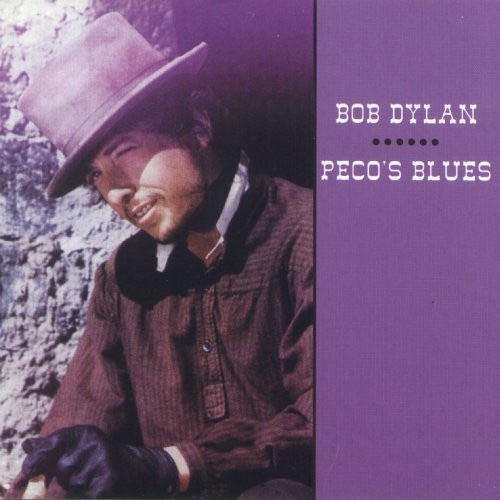
On the Between-Song Patter on the Bob Dylan Bootleg Record “Peco’s Blues”

Introduction

Behind any work of art, pretty much, there is some kind of “process.” The scope and complexity of this process differs across art forms, of course. The writer’s process is rather different than that of, let’s say, the magician David Copperfield. I find all artistic processes fascinating, and am drawn specifically to what happens “backstage.” Backstage is a world unto itself.

In the early 1970’s, the film director Sam Peckinpah was making a film called Pat Garrett and Billy the Kid, and he asked Bob Dylan to do the soundtrack. He also offered him a small role in the movie, a character called Alias. Dylan hadn’t really done a soundtrack before, nonetheless he headed down to Mexico to work on the film with Peckinpah. Pat Garrett and Billy the Kid the film is ok; it’s not my favorite Peckinpah by any means. (That is reserved for Bring Me the Head of Alfredo Garcia, with the one and only Warren Oates in the lead role. Oates around this time also starred in the film Cockfighter, which features the greatest rejected tagline of any film even “he came into town with his cock in his hands and what he did with it was illegal in 48 states.”) The Pat Garrett soundtrack in many ways transcends the film, mostly because this is where we are first introduced to “Knockin’ on Heaven’s Door,” which would go on to become one of Dylan’s best known songs, and is a really good soundtrack overall, however I am more interested in an extended set of outtakes from the sessions which are collected on a bootleg record called Peco’s Blues. Peco’s Blues features a number of alternate versions of the best known songs on the soundtrack, including Heaven’s Door and “Billy,” however the most interesting part of Peco’s Blues for me is the black and forth patter between Dylan, his sound engineer Chuck, and his band. This patter, I suggest, opens a fascinating and unique window into Dylan’s working methods and general approach to art. In what follows we will look at each incident of patter or conversation in the order they occur. All of the instances occur within the first 20 minutes of the nearly 70 minute recording as Dylan, his band, and the engineer endeavor to get on the same musical page.

Patter at the End of “Billy 2,” around the 7:34 Mark:

Dylan (D) wraps up a lengthy take of Billy 2 and asks his engineer Chuck (C):

D: Was that any good?

C: Pretty good Bob. What happened was was you hit the mic twice when you were moving around out there and we had a couple of clunks on it.

D: That’s too bad (…) Shit, I wish Sam was here. He’d know what to do.

C: That mic’s just a little more sensitive than the Sennheiser’s and I’m getting a little…

D: That’s too, uh…that’s…

C: And I’m getting a little puff of wind sometimes when you get real close to it when you sing.

D: That’s too sensitive.

C: Let me move it back a little for you Bob.

D: I think we must have got it though Chuck.

C: (with what sounds like a pencil in his mouth) Oh I recorded it, darn tootin’. I had a little puff from your voice once and you knocked the mic twice.

D: Well that might have been alls that we need.

C: You wanna, you wanna hear a playback on it?

D: Yeah, I would.

Comment:

We see right away here that Dylan is the boss and that the engineer is walking on eggshells a little bit. This is made clear by Dylan’s reference to “Sam,” who he obviously thinks is a better engineer than Chuck. We have more than a little sympathy for Chuck, as it wasn’t he that knocked the mic and he is trying his best to give Dylan the relevant information.

I love how Dylan here, while implicitly criticizing Chuck, also picks up on Chuck’s framing of the microphone situation and agrees that “that’s too sensitive.” However, the relative sensitivity of the mic is not Dylan’s main concern. Dylan, famously, likes to work fast. For some of his records that has been a positive, on these the sound and performances come across as organic and coordinated, like all of the players grasped their roles and just ran with them. On other records, Dylan’s preference for speed let’s him down, and songs, and especially the production, can feel rushed, even a little sloppy. Dylan famously warred with Uber-producer Daniel Lanois, who had produced U2 and Peter Gabriel among others before Dylan asked him to produce 1989’s Oh Mercy. Oh Mercy sounds great and was Dylan’s “comeback” album after a mixed, to say the least, mid 80’s period, however Lanois’ sonic fingerprints are all over it. Too much so for Dylan, who wanted a faster, looser approach. Lanois is no pushover, and held his own with Dylan. We get the sense that Chuck is no Lanois.

So, despite the knocks on the mic and the puff of wind, Dylan is going to be fine with using this version on the record. Chuck, of course, is going to want Dylan to play it again. Chuck, or someone, would win this one because the extended take of Billy 2 here is not the one used on the final album. The little tussle between Dylan and Chuck ends in a draw as they agree to listen to the playback.

Patter at the Beginning of “Turkey,” around the 8:40 Mark:

D: Hey Roger, when I stop, when I stop, you stop. I’ll do something else and you figure it out. So it might go like this (Dylan starts playing and the band fills in a little hesitantly behind him).

D: Say Chuck, Chuck?

C: Yeah

D: Let’s take this down and mark it under, uh, Turkey…We got a buzz in the amp.

C: I’m not picking it up.

D: OK come on now.

The band plays on the instrumental Turkey for about a minute before Dylan stops.

D: OK, this is under Turkey.

Dylan begins again, and this time the band fills in much better, the song sounding fuller and tighter in all ways.

Comment:

This is in my opinion the most illuminating of Dylan’s comments and gives us a window into his way of working throughout his career. As mentioned above, Dylan works fast and expects his musicians to do the same. Thus he instructs Roger that when he Dylan stops, Roger is to stop, Dylan will “do something else” and Roger needs to “figure it out.” Dylan’s instructions may not sound very fair to poor Roger, but I think they actually are. A musical team is in this case not unlike a sports team, say a basketball team, where even if an offense is running a designed play or “set,” players need to figure out what’s going on and adjust their own position and movements constantly and on the fly. There is no playbook, not set of absolute rules about how to accomplish this any more than there is a set of rules about how to follow Dylan musically. The musician, like the athlete, just has to work by feel, take in all the information around him or her, and figure it out. If they can, they will keep their job; if not, not.

Patter at the Beginning of “Billy Surrenders,” around the 18:10 Mark:

D: Let’s see now. You know, you know what we want when Billy starts (laughs) this guy Jerry Fielding’s gonna go nuts man when he hears this (laughs). You know what we want when like Pat Garrett comes down from the hills right, and all these guys come out like one by one. And Billy comes out, he’s almost standing in a circle you know, so like (indistinct) one by one and then there’s like a big pause and he stops and there’s silence. You know those big organ notes, those scary things (hums organ notes) (laughs). Can you get behind that? (Dylan and the band laughing.)

Comment:

The recording of the Pat Garrett soundtrack was pretty complicated, in large part because Jerry Fielding, Peckinpah’s usual composer, was relegated to a supporting role and apparently resented it. Accounts differ as to whether Fielding quit, walked off set (and maybe came back), actually did try to advise Dylan as requested, or some combination of the above, however the history of the film makes clear that there was friction. Dylan is clearly aware of the tension with Fielding, and makes a joke about it in a place where it doesn’t even seem relevant. Dylan seems to almost revel in the conflict, setting up Fielding to his band as a “suit” who is not in the field so to speak, and who Dylan enjoys winding up with his musical choices. Whatever the exact situation with Fielding was, the issue is clearly a live one at the time of recording.

My sense is that Dylan is mostly talking to his band here, as there are a number of people in the background laughing along with Dylan through this monologue. Despite his reputation for playing fast and loose most of the time, Dylan shows a pretty good grasp of particular scenes in the film and clearly knows what he wants. The “big organ notes” he mentions do indeed feature on the soundtrack, however maybe not to the extent Dylan wanted. I have to laugh at the very 1970’s question “can you get behind that?”

Conclusion

Overall, Peco’s Blues provides a fascinating window into Dylan’s working methods and expectations for his crew. Of course not every musician works this way; many will give much more precise instructions I am sure, and in the era of computer aided music Dylan’s approach on Pat Garrett is certainly a old-fashioned one. But I like it. It is absolutely worth listening to the entirety of Peco’s Blues to get a sense of Dylan’s working methods as well as how a band, here playing together live and recorded live, “figures itself out” and gets from sketch to finished product. I am myself not a musician but a writer, and the writing process, although never exactly easy, is perhaps a little less complex, mostly because most writers write by themselves, with an editor or editing team looking over the work at a later date. There is nothing in writing quite like “I’ll do something else and you figure it out,” and it is the shifting, quicksilver like nature of Dylan’s approach to music making here that continues to interest me and draw me in.