The Adventures of the Thin Man and Andrea II: The Thin Man’s Son. CHAPTER 3: The Thin Man in Costa Rica

Matt texts the Thin Man before he has even fully decided to.

There is a kind of threshold in sending a message like that, where intention arrives slightly after action. The screen shows the name and then the words appear as if they were always going to exist.

Found her.

There is no immediate reply.

Matt goes to the hotel rooftop pool instead, because the body refuses to remain still when the mind is doing work it cannot complete. The city below is a port city, functional rather than beautiful, ships moving like punctuation marks across water that does not care about narrative.

He swims slowly. Not exercise. Just repetition. Something to keep him inside himself.

The Thin Man arrives without announcement.

Matt sees him later in the lobby, as if he has always been there and only now decided to become visible. There is nothing theatrical about his movement. He is dressed simply, unremarkable in a way that only becomes noticeable after you have already started paying attention.

They do not greet each other like friends. They never have. They greet each other like continuity.

Matt watches him cross the space and feels, not for the first time, that proximity to him changes the temperature of events.

LUCÍANA

The café is near the port, where the air carries salt and fuel in equal measure. Luciana arrives slightly early, not because she is nervous, but because she is efficient. She chooses a table where she can see the entrance without appearing to be watching it.

When Niko arrives, she recognizes him immediately, though recognition does not translate into welcome. Time has done what time does, which is soften edges without removing structure. He is older now, but not unfamiliar in the way she expects him to be unfamiliar.

They sit.

For a long moment, neither of them performs memory. When they finally speak, it is careful, almost formal. He asks about her life. She answers without inviting him into it. There is warmth in her tone, but it is bounded. Controlled.

She tells him about their son. He listens without interrupting.

“He is in Dubai,” she says after a time. “He is working in media. Content. Travel. He is doing well for himself.”

Niko nods once. No visible reaction beyond that. But something in the air shifts slightly, as if a long thread has been acknowledged without being pulled.

Luciana continues. She has a daughter now. A marriage. A life that has moved forward without apology. When Niko asks nothing more, and she is briefly grateful. Then she tells him, clearly and without cruelty, that this is not something she wants reopened.

He understands. He does not argue. He never argues with time.

MATT THOMAS AT THE HOTEL

I am still at the hotel when he returns. He does not look like a man who has just been refused something. He looks like a man who has confirmed a hypothesis and chosen not to act on it. There is a difference, and I am beginning to understand it.

I ask him if he saw her. He says yes.

I ask what she said. He does not answer immediately. Then he tells me about Dubai, about the son, about the fact that life has continued in a direction that does not require his permission.

I wait for more. There is no more.

That is when I realize how little I actually know about him, even now. Later that night, I finally ask the question I have been circling since Tokyo.

“What is your real name?”

He does not look surprised.

He never looks surprised.

He says he is from Georgia. That his name is Niko. That he was born in 1977.

Nothing more.

And somehow that is enough to change the entire shape of what I thought I was holding.

CODA — MATT THOMAS IN KOYTO

I am back in Kyoto, but I am not fully back in anything that resembles ordinary life. The school still exists. I still teach. I still perform the version of myself that can explain narrative voice to students who are mostly thinking about lunch. I have had readings now—one in Kyoto, one in Tokyo—and people are starting to treat me as if I might become something recognizable.

It does not go to my head. But the Thin Man does. He’s always there.

We talk on Signal in fragments. Nothing structured. No schedule. Just interruptions in time that feel more real than the rest of the day. I sit in shisha places after work and try to write, but what I am actually doing is waiting for the next message.

Book II is already taking shape in my head.

I am just not sure yet whether I am writing it is writing me.

WAYFARER: A PLAY

Note: This piece is a five-act play based loosely on a week I spent in Oxford in 2018. Unlike my previous narrative essays on the same material, (here, here, and here), this is written as a staged work, with dialogue, silence, and structure doing the heavy lifting. At its core, the play explores the tension between experience and narration—what happens when a person tries to turn a living moment into a story too quickly, and what is gained (and lost) in that process. While grounded in real events, it is not strictly autobiographical; it is a shaped and curated version of those experiences. As with all my work, the hope is that it resonates beyond its immediate context. Thank you for reading.

A Five-Act Play


EPIGRAPH

I can’t believe all the good things that you do for me
Sat back in a chair
Like a princess from a faraway place
Nobody’s nice
When you’re older your heart turns to ice

Mark Kozelek Have You Forgotten

ACT I — THE WAYFARER


Scene 1 — Registration Desk (Threshold)

Lights: institutional white. Gradual warm shift beneath it, as if memory is already leaking into the space.

Sound: distant conference murmur. A faint, unresolved piano note.

A desk. A GATEKEEPER. A lanyard laid out like an object of passage.

MATT enters. Slightly lost. He has clearly been walking longer than intended.

GATEKEEPER
Name?

MATT hesitates. Reaches for something that is not yet ready.

MATT
Here. I think.

He presents credentials.

Stamp sound. Too loud for the space.

The badge is handed back.

CHORUS (from off, soft, not fully placed in space)
Arrival.
Conference.
Inn.
Story begins again.

NARRATOR-MATT (aside, not heard by others)
I thought I came to learn.

The badge feels heavier than it should.

Lights soften.


Scene 2 — Inn Common Room

Warm, slightly unreal hospitality lighting.

Tables. Cups. A space that feels both public and private but refuses to decide which.

ELODIE is present as if she has always been there.

MATT notices her immediately.

NARRATOR-MATT
Voltage.

ELODIE
Tea?

MATT
Yes. Thank you.

Beat. Nothing rushed.

CHORUS (slightly brighter, almost encouraging)
House lady.
Innkeeper.
Muse—

(a correction, quieter)
No. Person.

ELODIE does not acknowledge the Chorus.


Scene 3 — “Sing for Your Supper”

Sound: faint guitar motif. The room subtly shifts into performance space without fully becoming one.

CHORUS subtly rearranges space like memory editing.

MATT sings quietly:

MATT (singing fragment — The Clientele, “The Violet Hour”)
so that summer came and went
and I became cold
yeah I became cold

ELODIE listens. No visible transformation.

NARRATOR-MATT
Hospitality is not destiny.

The room remains unchanged.

Blackout.


ACT II — THE HOT ZONE


Scene 1 — The Casino

Green felt lighting. Rotating overhead spot.

CROUPIER replaces Gatekeeper.

CROUPIER
Place your bet.

MATT
Meaning.

CHORUS
Luck.
Chance.
Myth begins when odds are misread.

MATT places chip.

Sound: chip hits felt—final, sharp.


Scene 2 — Triptych (Three Trips)

Lighting pulses three times. Distinct beats.

MATT (low, repeating)
Three trips.
No more trips.

CHORUS fractures into three figures: GENIE / GHOST / MESSENGER.

NARRATOR-MATT
Inspiration gone.

GENIE (brief, playful)
First.

GHOST (slow, distant)
Memory.

MESSENGER (clear, neutral)
Transmission.

All fade.


Scene 3 — Jungle Confrontation

Green light. Reduced set. No realism.

MATT
Her.
Leave everything.
Frontman.
Practice.

ELODIE
No.

MATT
What is this?

ELODIE
Not your exorcism.

CHORUS
Brink.

Blackout.


ACT III — NAMING THE PATTERN


Scene 1 — Needy Boys

Two chairs. Neutral white light.

ELODIE
Don’t narrate me.

MATT pauses. This lands fully.

NARRATOR-MATT
I was writing her.

Silence.


Scene 2 — Chapel

Stillness. Breath-level sound only.

CHORUS (barely present)
Meaning.
Destiny.
Story.

NARRATOR-MATT
Room, not revelation.

Silence holds.


Scene 3 — Pattern Recognition

Lighting: subtle timeline shifts—memory flickers, not time travel.

NARRATOR-MATT
Senior year.
Again.

ELODIE
Your pattern is yours.

MATT
I see it.

CHORUS
First choice.

Blackout.


ACT IV — RELEASE


Scene 1 — The Offer

Dusk light.

MATT
Part-time.
Scout.
Not jungle.

ELODIE
Boundaries are kindness.


Scene 2 — The Pivot

Warm domestic light replaces earlier symbolic tones.

MATT
Family.
Music.
Life.

CHORUS
Myth.
Escape.
Hero.

MATT
No.

Silence holds. No response from Chorus.


Scene 3 — Chorus Dissolves

Lighting: references dim one by one.

CHORUS removes masks.

NARRATOR-MATT
The story stayed.
The spell lifted.

Blackout.


ACT V — OXFORD CODE


Scene 1 — Gesture

Morning Oxford grey. Minimal space.

ELODIE
Take care.

MATT
You too.

Beat.

No escalation. No closure ritual.


Scene 2 — Benediction (Chapel Revisited)

Same chapel. Quieter now.

Sound: Arvo Pärt piano. Sparse. Non-declarative.

NARRATOR-MATT
Gratitude.

Silence. Breath.

MATT listens without narrating.


Scene 3 — Train

Sound: distant platform announcement. Train readiness.

Gatekeeper becomes CONDUCTOR.

CONDUCTOR
All aboard.

CHORUS
Run back.
Declare.
Confess.

MATT
No.

MATT boards train.

NARRATOR-MATT
The jungle is real.
The girl is real.
The story remains.

Beat.

NARRATOR-MATT (softer)
You think you’ve finished it. Then it comes back different.

NARRATOR-MATT (aside)
She knew more than I could say.

Train departs.

Lights fade with motion, not blackout.


FIN

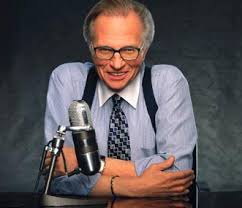
On Larry King, the Radio GOAT

Epigraph:

“I listened to the radio / I waited all night long…”
— Radio Radio, Elvis Costello

Note: This piece reflects my personal memories of listening to Larry King’s overnight radio show in the late 1980s and early 1990s, along with later impressions from television appearances, interviews, and conversations with people who knew him. It is written in the spirit of appreciation and nostalgia rather than media criticism, and emphasizes the uniquely loose, humane, and unpredictable quality of King’s radio work, which for me remains the defining core of his legacy.

I grew up listening to Larry King’s overnight radio show between roughly 1988 and 1992, and in my opinion — which happens to be correct — the radio show was much better than the television version that later made him famous. The TV show was good, even great at times, but radio was longer, looser, freer, and far more unpredictable. It had weird guests, weirder callers, and the feeling that anything might happen at two in the morning. That’s where Larry really lived.

I would listen in my bedroom at my parents’ house in Spokane, Washington, the volume turned low, the house quiet, insomnia hovering. The Spokane AM station — KGA 1510 — carried the show from around 9 PM Pacific time, and then, wonderfully, they would run it again. So I’d listen from nine to midnight, fade, wake at two or three, and hear the same segment again in a half-dream. The effect was surreal. Didn’t I just hear that caller? Didn’t Larry just say that? It created a strange loop of late-night déjà vu that only made the whole thing more atmospheric. The show felt less like programming and more like a continuous nocturnal conversation.

My friend Kelly Rudd loved Larry too. When we were in high school we were both big fans of the radio show, and we talked about it constantly. There were a couple of things that we especially liked. The first was that Larry famously did no preparation. He knew a huge amount about the world, of course, but he didn’t read guests’ books ahead of time. He wanted to come in cold. If his guest was a firefighter, he’d ask, “So what’s it like to be a firefighter?” It sounds lazy, but it was brilliant. By staying open and getting out of the way, he let the conversation go anywhere. This way the show became eventful.

Another thing we loved was what happened after the guest left. Larry would open the lines and take questions about absolutely anything. Most of the time he was generous and patient, but when callers went off the rails he had a signature phrase. He’d cut them off gently: “Cold compress, ma’am,” or “Cold compress, sir.” Basically: lie down, ice your head, regroup. It was hysterical, especially because he used it sparingly. When “cold compress” dropped, you knew things had gotten weird.

Anyway, Kelly and I loved Larry so much that when the station suddenly dropped the show, Kelly proposed we drive to the radio station and protest. So we skipped school, drove across town, and rang the intercom demanding to speak to someone about the cancellation. The station manager eventually came down and heard us out. We knew we weren’t changing anything, but it felt right to try. Larry never came back to Spokane radio, and the show faded not long after, but the whole episode captured what the show meant to us. It wasn’t just background noise. It felt alive.

Larry’s on-air style was the key. He was unbelievably relaxed. By the late ’80s you could tell he had done thousands of hours. Nothing fazed him. Weird guests, drunk callers, eccentrics — all the same to Larry. He absorbed everything. He had pet phrases — “cold compress” chief among them — and he deployed them like a veteran reliever, only when needed. He famously did no prep, and he leaned into naïve questions. He’d ask something simple and let the guest do the work. The effect was disarming. People opened up. He also had real humanity. He listened. He didn’t mock callers. He didn’t rush them. There was compassion there, and I think that’s what I loved most.

And the show could get wonderfully out of control. In one story Larry told from his old Miami days, an adult actress he was interviewing suggested they just have sex during the commercial break. Larry, amused, asked the producers to clear out — but there wasn’t enough time. That kind of anecdote captures the looseness of late-night radio. It wasn’t polished. It was alive.

Larry left the overnight Mutual Radio show in 1994 to focus on television. By then I had already drifted away, but I still caught Larry King Live on CNN over the years. I remember watching during the O. J. Simpson trial while at Otago University in New Zealand, when the show became part of the nightly noise. Later there were the Vladimir Putin interviews — classic Larry, conversational and oddly disarming. And of course there were the great comic moments, like the interview with Jerry Seinfeld where Larry suggested the show had been canceled and Seinfeld snapped back in disbelief, and the Norm Macdonald appearance where Norm kept repeating, “I’m a deeply closeted homosexual,” and Larry tried earnestly to parse it. “So that means you’re gay?” “No, Larry,” Norm replied, “it means I’m deeply closeted.” Pure Larry: sincere confusion meeting absurdist comedy.

Larry’s personal life was famously complicated. He married eight times, had several children — including sons Chance and Cannon later in life — and lived in a kind of perpetual romantic improvisation. The marriages came and went. The last ended painfully and publicly. He once joked he’d never leave his wife unless Angie Dickinson came along — and when she did, he married her. That was Larry: impulsive, affectionate, slightly chaotic. Despite decades of success, he didn’t leave the kind of massive fortune people assumed. The money came and went, as did the marriages. It was a life lived in motion.

My friend Sergio Mandiola actually knew Larry in his later years in Los Angeles. Sergio was running an independent studies program at Beverly Hills High School, and Larry’s sons Cannon and Chance, and he taught his sons for three years. Larry would come by for open nights or just to chat.

Sergio Mandiola: “Larry would come in from time to time and we would talk. He was lovely and open. He talked about his family and his career. One time he told me, ‘Sergio, you should totally have a radio show!’ I was flattered. One thing about Larry is his politics were more to the left than he let on on air. He had strong views and wasn’t afraid to share them in person. Larry was a true mensch and I’m glad I got to spend time with him. I miss him.”

In the end, I’ll say it plainly: for me, Larry King is the radio GOAT. There was no one like him, and there probably never will be. It wasn’t just longevity. It was the curiosity, the looseness, the humanity, the love of people, politics, baseball, and life. He trusted the conversation. He let the night unfold.

And then there was that absurd, wonderful USA Today column, which read like a diary gone completely outta control. Mets lose 6–4…Rain in Baltimore…Clinton flies to Ireland…You’d read it and think, Larry, baby, WTF is this? And also, Mr. USA Today, WTAF are you doing paying for this? But somehow it worked. It was pure Larry — fragmentary, observational, intimate.

And that’s how I remember him most clearly: late nights in high school, the radio turned low, insomnia hanging in the room, Spokane quiet outside.. Sometimes I’d listen from nine to midnight, fade, then wake again to the rerun, half-dreaming, half-aware, caught in that strange déjà vu — didn’t I just hear this? — while Larry kept talking, calm as ever, taking calls from truckers and insomniacs and eccentrics. My listening years were brief, but they stuck. And when I think of Larry now, that’s where I go back to: the low hum of AM radio, the half-fade, and the sweet sounds of his voice in my ear.

Dedication:

For the one and only GOAT, Larry Motherfucking King. RIP baby.