On the Theory of Condensation

Note: This story is drawn from memory and from an ongoing oral history conducted via group text with the surviving members of the expedition. As with many events that took place more than thirty years ago, certain details remain contested, most notably the identity of the fourth passenger and the exact geographic location of the cigar-ash pasta incident. Mason Anderson, when consulted, quickly clarified that he was not present, as he was living with an uncle in Key West that summer, thereby removing himself entirely from responsibility for the expedition.

Kelly, whose scientific theory regarding condensation remains central to the story, has not yet submitted his official rebuttal, though one is expected shortly. Should further testimony arrive—especially if it sheds light on the fate of the firearm hidden somewhere near the California border—I will append a brief postscript.

In the meantime, the above account represents the best reconstruction available.

Epigraph:

Bullshit baffles brains. 

We graduated from St. George’s in June of 1992 and, like many newly minted high-school graduates, we had what we considered a very solid plan. We were going to drive from Spokane into the Selkirk Mountains in Idaho and spend several days trekking around in the wilderness like the rugged outdoorsmen we assumed we were.

The crew consisted of myself, Kelly, and Richard Barkley, along with a fourth member whose identity I am currently attempting to reconstruct through the miracles of modern group text. Mason Anderson, when contacted for this oral history, quickly clarified that he had nothing to do with the expedition whatsoever, as he was living with an uncle in Key West that summer and therefore cannot be blamed for any of the events that followed.

I had just gotten my driver’s license—rather late by American teenage standards—and was eager to demonstrate that I was now a fully functioning member of the motoring public. Richard had the car, Kelly had the confidence, and somewhere along the way we acquired a gun which I believe belonged to Will Rafferty, a year behind us at school.

Right away you may notice that this was not shaping up to be the most carefully planned expedition in the annals of Pacific Northwest mountaineering.


The Tarp

One of the first disagreements arose over equipment. I had suggested, quite reasonably I thought, that we bring a tent. Kelly rejected this idea outright.

A tarp, he assured us, would suffice.

Now, the Selkirks are a beautiful range, but they are not known for their gentle weather. Sure enough, as soon as we reached the foothills it began to rain. Not a polite drizzle either, but the kind of steady mountain rain that makes you realize nature has the upper hand.

Nevertheless we pressed on and eventually found a place to bivouac for the night.

We rigged Kelly’s tarp as best we could, laid out the sleeping bags, and attempted to cook something on the camp stove while water ran in small rivers through the campsite. At a certain point, after watching the tarp sag ominously under the weight of the rain, I reached what seemed to me the obvious conclusion.

“Dudes,” I said, “I don’t know about you, but I’m sleeping in the car.”

Kelly immediately objected. What followed was one of the great scientific claims of our generation.

“That’s a bad idea,” he said. “You’ll get more wet in the car because of the condensation.”

Now I’m no meteorologist, but even at eighteen this struck me as extremely unlikely. Outside the rain was falling steadily. Inside the car was, well, a car.

Nevertheless Kelly was confident in his theory. I was confident in my skepticism. We agreed to disagree.

Kelly, Richard, and at least one other member of the expedition slept under the tarp. I reclined the passenger seat of the car and slept quite comfortably.

In the morning, everything under the tarp was soaked.

To this day Kelly maintains that the condensation principle was sound.


The Pasta

Having discovered that trekking in the Selkirks during a mountain downpour was not especially enjoyable, we decided to improvise. The road trip continued deeper into Idaho, or perhaps Montana, where we eventually stopped beside a river to camp for the night.

This time tents were involved, which was already a step forward.

Kelly assumed responsibility for dinner and set about cooking pasta on the camp stove. Things seemed to be going well until he produced a cigar, lit it, and began tapping the ash—quite generously, I might add—into the simmering red sauce.

I objected immediately.

“Knock it off,” I said.

Kelly waved away my concerns.

“No, no,” he said. “Italian guy Joe does this. He says it’s the secret to a great sauce.”

I have never met Italian guy Joe, but I remain confident that he does not exist.

Kelly continued tapping ash into the pot. At that point I made the executive decision not to eat the pasta.

Kelly and I, despite being great friends, were at philosophical loggerheads for the first two days of the trip.


The Gun

At some point we decided to drive into California. This raised a new issue, namely that we were traveling with a gun.

I had been against the gun from the start. Kelly, however, had insisted that it was necessary. Necessary for what exactly was never entirely clear, but the gun had come along anyway.

Approaching the California border, we held a brief council and concluded that crossing state lines with a borrowed firearm might not be the wisest course of action.

The solution we arrived at was simple.

We would hide the gun in some bushes and retrieve it on the way back.

I pointed out that once a gun was hidden in random roadside bushes somewhere near the California border, the odds of ever finding it again were approximately zero.

Kelly disagreed.

We hid the gun.

We crossed into California without incident.

Later, as it turned out, we headed east anyway and never went back for it. Somewhere in a patch of roadside shrubbery, the gun presumably remains to this day.


Wyoming

Eventually the road carried us into Wyoming. We drove up onto a plateau above a large spread owned by the Mann family, who were something like Spokane and St. George’s royalty. My family and the Innes family had visited the place in previous summers to fish and wander around.

We had no invitation.

For a moment there was some discussion of whether we might simply camp there anyway, but cooler heads prevailed. As we were debating the matter, a caretaker appeared and asked what we were doing.

We explained that we were friends of the Manns and asked if it would be alright if we camped for the night.

He was entirely copacetic.

“Sure,” he said. “No problem.”

And just like that, after tarp disasters, pasta controversies, and the abandonment of a firearm somewhere in California shrubbery, we finally spent a perfectly pleasant night camping.


The Drive Home

The next day we drove back to Spokane, which I remember as being about fourteen hours straight.

It was Richard’s car. He asked me at one point if I wanted to take the wheel for a while, but I had only recently gotten my license and didn’t feel especially confident about highway driving yet. I declined and slept in the back seat while Richard drove most of the way and Kelly took a few turns.

Eventually we rolled back into Spokane.

We had not trekked the Selkirk Mountains.

We had lost a gun somewhere near California.

And we had proven absolutely nothing about condensation.

But we did come home with stories for life

Dedication:

For legal professionals everywhere.

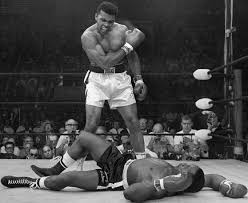
On Comebacks and Failed Comebacks IV: Muhammad Ali

Note: This essay is the third entry in the series “On Comebacks and Failed Comebacks.” The earlier pieces looked at very different kinds of returns: the moral vindication of Kofi Annan and the small, tactical in-game comebacks engineered by Joe Nash of the Seattle Seahawks.


The story of Muhammad Ali operates on a much larger stage. Ali’s exile from boxing after refusing the Vietnam draft and his eventual return to the championship ranks is one of the most famous comebacks in sports history. But the episode described here—the Los Angeles suicide rescue in 1981—is a smaller and stranger moment.


The event appears to have genuinely occurred, yet it also carries the faint aura of legend that often surrounds Ali’s public life. The champion arrives, speaks to a desperate man at a window, and the crisis resolves itself. It is almost too perfectly aligned with the myth of Muhammad Ali not to raise a few questions about performance, storytelling, and the way public figures sometimes inhabit the roles the world expects them to play.


In that sense the episode captures something essential about Ali’s comeback. By the time his boxing career entered its final chapters, he had become more than an athlete. He had become a figure whose life continually generated stories that felt larger than ordinary events.


Whether one treats the Los Angeles episode as simple heroism, public theater, or some mixture of the two, it remains a fascinating illustration of how Ali’s legend continued to grow long after the great fights were over.

Some comebacks are measured in championships.

Others are measured in stories.

The career of Muhammad Ali contains both. His return to boxing after the long exile of the late 1960s is one of the great sporting comebacks of the twentieth century. Stripped of his title for refusing induction into the Vietnam War, banned from the ring during what should have been his athletic prime, Ali eventually returned to reclaim the heavyweight championship and cement his place as the most famous boxer on earth.

But the Ali comeback is not just about boxing.

Long before the exile and the triumphant return, the story had already begun to take on mythic dimensions. In 1964 a young fighter from Louisville named Cassius Clay stunned the world by defeating Sonny Liston for the heavyweight title. Soon afterward he announced that Cassius Clay was a “slave name” and that he would henceforth be known as Muhammad Ali.

The change was shocking to much of the American public at the time. Ali aligned himself with the Nation of Islam, spoke openly about race and politics, and quickly became one of the most controversial athletes in the country.

Then came the draft.

In 1967 Ali refused induction into the U.S. Army during the Vietnam War. The consequences were immediate and severe. He was stripped of his heavyweight title, banned from boxing, and faced the possibility of prison. For several years the greatest fighter in the world was not allowed to step into the ring.

The exile transformed him.

When Ali eventually returned to boxing in the early 1970s, he was no longer merely a talented heavyweight with a flair for poetry and bravado. He had become something larger: a political figure, a symbol of resistance, a man whose name carried moral and cultural weight far beyond the sport.

The comeback fights that followed helped cement that transformation. In 1974 Ali traveled to Zaire to face George Foreman in the legendary The Rumble in the Jungle. Foreman was younger, stronger, and widely expected to win easily.

Instead Ali introduced the world to the “rope-a-dope,” leaning back against the ropes and absorbing Foreman’s punches until the younger champion exhausted himself. In the eighth round Ali knocked him out.

It was one of the great theatrical moments in sports history: the exiled champion returning to reclaim the crown.

But somewhere along the way Ali’s comeback had begun to operate on another level entirely.

He had become something more than a boxer. Part athlete, part moral figure, part living myth. And like all myths, the Ali story eventually began to generate episodes that feel almost too perfectly suited to the character.

One of the strangest of these occurred in Los Angeles in 1981.

A man was threatening to jump from the ledge of a ninth-floor building. Police had been negotiating for hours. Crowds gathered below, watching the terrible drama unfold at a distance.

Then Muhammad Ali arrived.

Accounts differ slightly in the details, but the basic outline is consistent. Ali spoke to the man from a nearby window, urging him not to jump. Eventually the man climbed back inside the building with Ali beside him. Photographs exist of the moment, and police officers later confirmed the story.

By all reasonable accounts, Ali helped save the man’s life.

And yet the story carries a faint aura of improbability.

Not because it didn’t happen—it clearly did—but because it feels so perfectly aligned with the Ali persona that one can’t help wondering about the role of performance in the moment.

Ali had always understood something most athletes do not: that being Muhammad Ali was itself a kind of public art.

From the beginning he blurred the line between competition and theater. The rhymes, the predictions, the playful insults directed at opponents—all of it was part of a larger performance. Ali didn’t simply fight boxers. He performed the role of the greatest boxer in the world.

By the early 1980s that role had evolved even further. Ali was no longer just the heavyweight champion. He had become a global cultural figure, a symbol of resilience after exile, a man whose public presence carried moral weight.

So when the story of the suicide rescue circulated, it seemed less like an unexpected episode and more like the natural continuation of the legend.

Of course Muhammad Ali would appear at the window.

Of course Muhammad Ali would talk the man down.

Of course the cameras would be there.

None of this means the moment was insincere. Ali may well have acted from genuine compassion. But it is also possible—one suspects just slightly—that he understood something about the scene as it unfolded: that the story would become another chapter in the larger narrative of Muhammad Ali.

If so, it was a brilliant instinct.

Because the image of the champion talking a desperate man back from the ledge captures something essential about the Ali comeback. After the long years of controversy and exile, Ali returned not merely as a boxer but as a figure people wanted to believe in.

The story may be small compared with the great fights—the Rumble in the Jungle, the Thrilla in Manila. Yet in its own strange way it may be just as revealing.

A champion reclaiming his title is impressive.

A champion stepping to a window and becoming, for a moment, exactly the hero the world expects him to be—that is something else entirely.

And Muhammad Ali, more than anyone, always understood the power of the moment.

My Brother Mike’s Bad Book

Subtitle: A Mariners game, a rowdy night, and the moment my brother defined himself with four perfect words

Several years ago I attended a Seattle Mariners baseball game with my bother Mike. The Mariners were playing the Toronto Blue Jays, and we went out for a few drinks before the game right next to the stadium. I was amazed by just how many Blue Jays fans there were in town for the game. They were all over the place.

Now, although I grew up in a baseball family, as I got older I kind of lost interest. The games are just too long and there are too many of them. However, going to a game in person is pretty cool. Mike is still a hardcore Mariner fan, which I respect. On this night the Mariner’s star pitcher Felix Hernandez was pitching, and the Mariners won the game. However, the result is far from the most memorable aspect of that night.

Our seats were pretty good, right next to, but not actually in, the “K Zone” where the Hernandez heads were. Over the course of the first few innings, Mike downed several more beers and he got a little rowdy, as he sometimes does. Mike, in Freudian terms, has more than a little “id” in him. As I mentioned, there were a lot of Blue Jays fans in town and Mike, as a good Seattleite, took this as a challenge. As the game went on he began calling out, loudly, various Canadian cities.

“Calgary suuuucks…Winnipeg suuuucks…Lethbridge suuuucks.” Like that.

I found this all pretty amusing, if a little unorthodox. It wasn’t how I would chose to enjoy the game, but this was Mike’s style. As the Mariners built a lead Mike’s chants started to escalate, and some Blue Jays fans began to take offense. Probably this was the point. These dudes were looking at Mike, pointing, saying things. There was no real risk of a fight; however Mike was mixing it up no doubt.

Around the 5th inning or so another dude in a Shawn Kemp jersey started making noise of his own. (Shawn Kemp was a star player for the Seattle SuperSonics back in the day before some asshole stole the franchise and moved them to Oklahoma City. Fuck that guy.) At first this was all fine, because anyone in a Sonics jersey was OK with Mike. However the Sonics fan started getting a little out of line and dropping the f***** slur.

“Look at this fucking f*****. Fuck this f*****,” stuff like that.

As far as I could tell there was no reason that this guy had to target an individual in this fashion. The difference, as I saw it, between his action and Mike’s was that Mike was basically operating in good humor and calling out all the Blue Jays fans present in the spirit of friendly competition, while the Sonics fan was picking on an individual, and using a slur. Although the exact nuances of the difference are perhaps debatable, the dude was definitely out of line.

Mike noticed this guy and didn’t like what he saw. He began saying so, and someone not in our group took notice. This other guy, in regards to the Sonics fan, said something to the effect of “he’s ok in my book.” Mike didn’t miss a beat at he uttered the classic line, one I will never forget.

“That’s a bad book,” he said.

That’s all he said; he didn’t challenge the guy to a fight or anything, didn’t even directly address him. The Sonics fan was getting so abusive that someone called security, and he was escorted out.

“That’s a bad book,” reminds me of my friend from high school Cameron Turner who liked to say of something he didn’t approve “that’s sick, and wrong.” Both of these are super memorable phrases, and highly redolent of the person behind them. Mike was a little lit. Mike was razzing Blue Jays fans as a collective. Mike was attracting attention. At the same time he felt that there was no need for gratuitous gay slurs. And he was right.

One of my favorite phrases in the world is “that’s some bad action.” Mike was speaking in the same vein with “that’s a bad book.” I’ve never been prouder of anyone in my life than when Mike called this guy out.

I fuckin’ love my brother Mike.

Postscript: Just a little while ago Mike and his fiancee had a baby, Felix. Named, of course, after the pitcher. So that’s pretty cool. I just hope he doesn’t grow up to be a Blue Jays fan.