Subtitle: And Saved My Life in the Process
So I called you a cab and they called you a hearse,
and I knew what they were talking about.
— The Mendoza Line, “It’s a Long Line (But It Moves Quickly)”
Note: This piece pairs naturally with my recent essay On the Safe Space (aka Corner Girl). Both pieces are about the small moments that hold us together when we are breaking apart. You can read that piece here.
By 2012 I finally understood what I had been circling back in 2008 without fully naming: the business hotel wasn’t just a neutral space — it was a controlled dissociation chamber. A place where my mind could flatten without collapsing. A room where the world muted itself into CNN-colored soft focus, where time thinned out, where nothing asked anything of me. I didn’t know it then, but all those mid-range rooms — the bland art, the sealed windows, the gentle hum of an air conditioner tuned to the exact frequency of psychic anesthesia — were teaching me a skill I would need later: how to disappear just long enough to come back intact.
So when the pressure finally broke, when I had been working thirty straight thirteen-hour days and felt myself sliding toward the edge of something unnamed, I took the Shinkansen to Tokyo, checked into a business hotel, turned my phone off, and told the world — or most of it — to fuck off for thirty-six hours. And the shocking thing wasn’t that it worked. The shocking thing was realizing I had been preparing for it years earlier, in those identical rooms where the towels were always clean, the windows always closed, and 9-ball was always on.
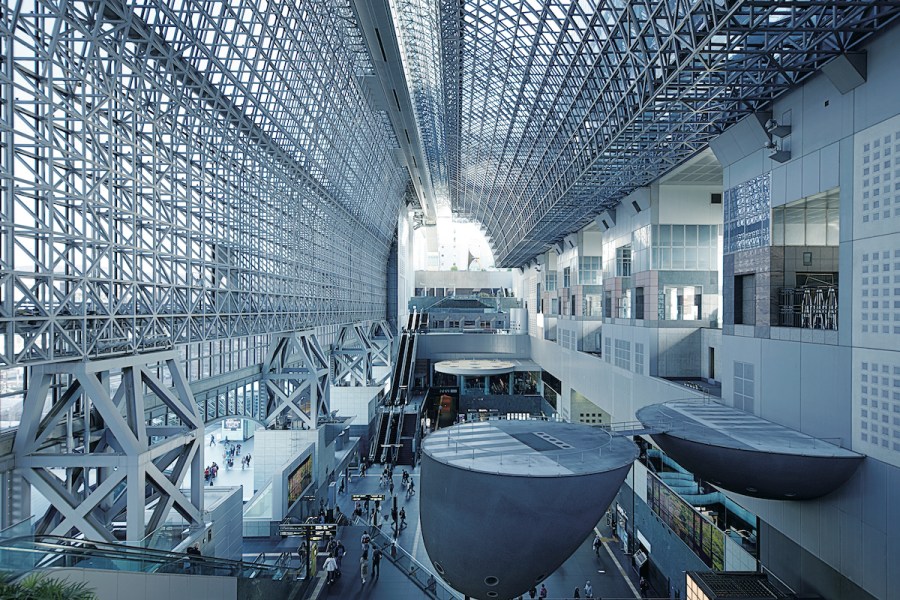
So I ducked into the nearest konbini and bought a latte from the machine — the one small ritual that still made sense. The warm cup in my hand steadied me just enough to get through the turnstiles. Kyoto Station felt too bright, too full of intersecting lives and needs, the air full of other people’s urgency. I didn’t have the bandwidth to absorb anyone else’s story; I barely had enough for my own. All I knew was that the next Shinkansen to Tokyo was leaving in eleven minutes, and if I didn’t get on it, something in me would snap in a way I wouldn’t be able to walk back. The latte was cooling fast, my hands were shaking, and every part of my body was saying the same thing: Go. Now. Before you say yes to one more thing you don’t have the energy to carry.
Once the room was arranged — bag on the stand, shoes lined up by the door, Pocari Sweat sweating slightly on the desk next to the bottle of red — my whole system downshifted into something like relief. Not joy. Not peace. Just the quiet recognition that, for the next thirty-six hours, my time belonged to me and no one else. I didn’t have to speak. I didn’t have to answer. I didn’t have to hold anything together. All I needed to do was sit on the bed, take a long drink of Pocari, a short drink of wine, and let my body loosen by degrees. It wasn’t dramatic. It wasn’t cinematic. It was just freedom in the smallest, most essential sense: I get to be here, in this room, alone, and the world can wait.
After the first wave of relief, the question always arrived: Do I go out?
Tokyo was right there.
Akasaka-Mitsuke humming five floors beneath me, restaurants lit up like little stages, the crossing full of men in suits walking fast enough to convince you they knew exactly where they were going. I never did. So I’d sit on the bed and pull up the map — not to plan, but to orient. Izakaya here, ramen there, a bar tucked down some side street with red lanterns and a name I couldn’t pronounce. Nothing fancy. Nothing difficult. Just food, warmth, and maybe one drink that wasn’t red wine from a convenience store. I wasn’t looking for a night out. I was looking for simple movement, the kind that doesn’t require performance or decision-making. A walk, a meal, a seat at a counter. A single beer poured by someone who didn’t know my name and didn’t need to.
That was the whole question every time: stay in the bubble, or slip into the Tokyo night just long enough to remember I was a person.
Stepping out into Akasaka-Mitsuke wasn’t lonely — it was liberating. The air felt different the second the sliding doors breathed me out into the crosswalk light. I wasn’t hiding from anyone. I wasn’t avoiding anything. I was simply off the clock in a way that almost never happened in my real life. No one knew where I was, and for the first time in weeks, that fact didn’t carry a threat or a stain of guilt. It felt clean. It felt earned. I wasn’t missing; I was saving my own damn life by giving it a night without responsibility. The freedom wasn’t dramatic. It was simply this: I could walk in any direction, and every direction was allowed.
Out in the Akasaka night, I felt like the version of myself that gets buried under work and obligation — the real me, the one who just wants to wander and see who’s out, what’s open, what energy the city is holding. I wasn’t searching for anything dramatic. I wasn’t looking for revelation or escape. I was just checking things out — the izakaya with the red lantern, the alley with the quiet bar, the group of people laughing too loud on the corner. Dabbling. Moving lightly. Letting Tokyo show me whatever it wanted to show, without needing to make a night out of it. It was the simplest, purest freedom: explore until something feels right, and stop when it doesn’t.
I walked the Akasaka backstreets the way I always do when I’m in this mode — cutting down alleys, taking long cuts and shortcuts that don’t make geographic sense but feel right in my body. Tokyo is a city you navigate by instinct, not logic. You follow energy. You drift. You take the turn that looks interesting, then the one that feels safe, then the one that’s pulsing with life. Sometimes I’d follow the Google map to the place I thought I wanted to eat, only to walk past it and keep going. Other times I’d catch a glimpse of something through a noren curtain — warm light, the sound of laughter, a chef moving with the right kind of ease — and that would be the signal. It was never about the spot itself. It was about finding the right spot, the one that matched the night’s frequency. And over the course of the evening, I usually did both: follow the algorithm, then abandon it; trust the map, then trust myself.
Eventually I found the place — an oyster bar tucked behind one of those half-lit alleys where Akasaka feels a little European and a little dreamlike. Warm light, wood counter, the soft clatter of shells, and a chef who moved with the kind of quiet competence that settles you the moment you sit down. This was exactly my jam: an oyster platter arranged like a small geography, cold and briny and perfect, a bowl of clam chowder steaming in front of me, and a carafe of white wine that I poured slowly, deliberately, one glass at a time. Spendy, sure — but in this mode spendy isn’t excess. Spendy is permission. Spendy is dignity. Spendy is saying to yourself: I get to take my time with this. I get to have a meal that cares for me back. And in that moment, slurping an oyster with the city humming outside, I could feel the night open around me in the cleanest way.
The white wine hit me in that way good pairings do — not as a buzz, but as a reminder of how people take care of themselves when they’re not drowning. White wine and oysters belong together; everyone knows that, and sitting there I felt myself re-enter that understanding. The pairing wasn’t fancy. It was human. It was the kind of small, civilized pleasure most people allow themselves without thinking, and I’d been so buried under work and obligation that I’d forgotten what that felt like. The red I’d had earlier had already warmed me, softened the hard edges, and now the white layered over it, sharpening the night just enough to make everything shimmer. I was slightly buzzed and buzzing — not out of control, not hiding, just finally aligned with myself again.
I left the oyster bar with that warm, gentle buzz humming through me — the kind that makes Tokyo feel lit from within — and walked until I found the sort of place I always look for on these nights. A spendy cocktail bar: dim lights, bottles arranged like small works of art, a bartender in a crisp vest moving with that Japanese mix of precision and grace that makes you feel taken care of without being noticed. I took a high seat at the counter and ordered something I never drink in real life — a proper cocktail, layered, balanced, spendy. Spendy was the point. Spendy meant: I am worth slowing down for. Spendy meant: no one is waiting, no one is watching, no one needs anything from me. I sipped slowly, letting the night stretch out in front of me like a long exhale, feeling myself settle into the version of me that only Tokyo brings out — curious, quiet, open, free.
The bar I ended up in wasn’t some sleek Tokyo cocktail temple — it was better. Two bartenders from Nepal were working the counter, the kind of guys who’ve lived ten different lives before landing in Japan, commuting in from way out because Akasaka rent is a joke. We talked the way travelers talk when no one is trying to impress anyone — about where they were from, how far they lived, what Kathmandu feels like in winter. I wasn’t performing, just listening, rapping with them in that easy drift that happens when you’re slightly buzzed and buzzing in a foreign city. I ordered red wine — not more cocktails — because that was the right shape for the night, and when I finished my glass one of them poured me another, full to the brim, “for the gentleman.” It wasn’t flirtation. It wasn’t special treatment. It was the small grace of the night saying: You came to the right place. You came at the right time. And you’re not carrying anyone else’s weight right now.
When I stepped back out into the night after the second glass of wine, the whole neighborhood felt like it belonged to me. Not in a macho way, not in a performative way — just in that rare, private way where the city’s pace matches your own and you fall into step with its pulse. Akasaka was quiet but lit, humming but not crowded, and for five or six blocks I felt like I owned a slice of it. My slice. The alleys, the crosswalk glow, the last trains whispering underneath the city — all of it moved around me without touching me. I wasn’t hiding. I wasn’t disappearing. I was just walking back to my faded little hotel in a state of clean, earned sovereignty, knowing the world wasn’t tracking me for once. And for those fifteen minutes, Tokyo wasn’t a megacity. It was mine — exactly the size of the person I was in that moment.
Back in the room — my little faded Akasaka hideout five or six blocks from the bar — I didn’t overthink a thing. I drank more red wine, chased it with Pocari, stripped down to my boxers, and let my body fall exactly where it wanted to fall. There was nothing left to hold, nothing left to manage, nothing left to translate. I slept like a baby — a full, unbroken twelve hours, eleven to eleven — the kind of sleep that only arrives when you’ve been carrying too much for too long and finally set it all down in a room no one else can enter. No dreams, no interruptions, no alarms. Just the deep, uncomplicated sleep of someone who gave himself thirty-six hours of mercy and actually took them.
When I woke up around eleven, I felt clear-eyed and ready for more of exactly what the night had been—a continuation of me time. No urgency, no guilt, no one waiting on anything. Just hunger in my stomach and calm in my body. I didn’t rush. I stayed in the room for hours, drifting between the bed and the window, drinking instant coffee, sipping a little more Pocari, scrolling nothing, letting the quiet stretch. I could go out or stay in—either was fine. The whole point was that the day was mine to waste or spend however I wanted. After twelve hours of baby-level sleep, I wasn’t reborn—I was simply functional again. Hungry, steady, grounded, and free.
The next day I was set to return to Kyoto. When it’s time to go, it’s time to go — and the Thin Man cleans up quick. I showered, shaved, packed my bag with the same neat ritual I’d used the night before, and stepped back out into Akasaka like someone who had never been tired in the first place. Before heading to the station I picked up omiyage — the small gesture that makes the return feel seamless — something for the office, something for home. It wasn’t guilt; it was continuity. A way of saying: I left for a day and a half, and now I’m back in the world with all the edges smoothed. By the time I boarded the Shinkansen back to Kyoto, I was already shifting into IB mode — the coordinator, the problem-solver, the guy who keeps the whole thing moving. But now the engine was clean again. The reset had worked. Thirty-six hours alone in a faded Tokyo hotel, oysters, wine, a long sleep, a morning that belonged only to me — and suddenly I could re-enter at full tilt. Not as a martyr. Not as a runaway. Just as myself, restored enough to carry everything again.
Dedication:
For Akasaka — whoever designed that little slice of urban order also re-ordered my mind in the best possible way. Thanks there, baby.

