On Good Talkers and Great Talkers (featuring my friends Kelly Rudd and Marc Campbell)

New Note: I am republishing this piece on the back of a recent exchange in our group chat with Kelly Rudd. As detailed below, Kelly is a great talker, and like many a great talkers he is also periodically full of it. We were reminiscing about a trip to the Selkirk Mountains in 1992 with Kelly, Mason Anderson, Richard Barkley, and myself. We were supposed to spend about a week up in the mountains, however a big storm came in. We had to shelter in place, and then left the next day. Kelly was responsible for the tent situation, and had only packed a tarp–no tent. So we struggled to put up the tarp in the rain and then I said I would sleep in the car rather than under the tarp. The whole area was already soaked, “pre-soaked” in Kelly’s questionable formulation, because at the end of the day, soaked is soaked.

In any case, after I said I would sleep in the car Kelly came up with the immortally absurd formulation: “Well you will actually get just as wet because of the condensation.” Uh huh. I slept in the car and was, predictably, bone dry and the boys were pre-soaked, regular soaked, and post-soaked. We drove on to Wyoming and had a great trip, but the condensation episode has stuck with me ever since.

This piece also features my friend from Hamilton College, Marc Campbell, as well as some fast talking by me. I hope you enjoy it.

I think I’m a pretty good talker. But I’m not a great talker. The reason I know this is because my friend Kelly is a great talker. And I can’t hold a candle to him.

In this piece I want to explore what makes a good talker good and a great talker great. Here, our conclusion can be partially stated upfront: a good talker will almost always also be a good BSer. Everyone knows what BS is, of course, and the term is usually used pejoratively, more or less, for example in phrases such as “oh that’s a bunch of BS,” or “come on dude, cut the BS.” However, BS is clearly also an essential element of the talker’s toolkit (from now on we will simply use the term “talker” unless specifically delineating between a good and a great talker). BS alone though does not a great talker make. There has to be something else involved. Let’s see if we can figure out what this might be.

We will start with an example from my professional life. I work in a high school in Japan, and it’s a fairly complex place. Although a Japanese school, it also features two different international courses and over time we have welcomed a wide variety of visitors from around the world for various reasons. A few years back, we hosted a group of educators from Abu Dhabi, including at least one representative of the Abu Dhabi Ministry of Education. My boss at the time was a Japanese gentlemen who spoke decent, but not phenomenal, English. He was set to give a welcome speech to this group, and my boss loved, absolutely loved, networking and hosting visitors at our school. It was his singular passion. The higher ranked or more “prestigious” they were the better. A visiting teacher from Elton College would be treated like the Pope, accorded all of the pomp and ceremony of a royal visit. Although an inveterate networker, my boss was not a natural public speaker, and he was uncomfortable making such an important speech in English, so he asked me to write something for him. Some people might have found this request to be annoying or even insulting, but I relished it. The role of the ghostwriter is one I greatly enjoy, because it gives me a chance to slip a few little things in there just for me. I have a bit of a weakness for inside jokes.

The Abu Dhabi visit was in early April, just in time for cherry blossom season in Japan. A few places around the world, including Washington D.C., celebrate cherry blossom season; however, in Japan it’s huge. People come from around the world to see the blossoms, and there’s even a special type of event called the hanami where folks from salarymen to universities students and everyone in between will set up tarps or blankets by the river or in a park under the cherry blossoms and get blasted. The Japanese refer to the cherry blossoms as sakura. So, I thought, what would be more natural than to open the speech with a reference to the sakura?

I don’t remember much about the speech, but I do remember the first few lines. They went like this:

It is my great pleasure to offer you a very warm welcome to Japan and (school name). We are deeply honored to receive such a prestigious group from the wonderful country of Abu Dhabi. And indeed, you have fortunately come at the perfect time to see the famous Japanese cherry blossoms, the sakura.

Now this might not sound too out of the ordinary, however for me the genius lay in the last comma. In my head I heard a deep and pregnant pause between “the famous Japanese cherry blossoms” and “the sakura.” As I like to say, it was funny to me. I sent the speech to my boss and we didn’t really have time to go over it, so I just hoped for the best. Now my boss wasn’t much of a writer, but he was, in his own way, a showman. He had clearly spent time practicing the speech, and when he spoke these first lines his delivery exceeded even my wildest expectations. Not only was the pregnant pause there, it was deeper and more profound than I had dreamed. He has perfectly grasped the import of the comma. This dude fucking nailed it.

What does this have to do with BS? Well, when I wrote the lines above, in my own way I was BSing. I knew my boss’s taste for VIPs ran deep and so made sure to lay it on pretty thick (“great pleasure,” “very warm welcome,” “wonderful country,” etc.). Also, the comma, in its own way, was total BS. And the fact that my boss killed his delivery meant that he not only understood BS on an elemental level, he relished it too.

Later on during that same meeting with the Abu Dhabi folks my boss presented about some English vocabulary system our school was using as part of the English curriculum. This was a software program designed by my boss’ buddy that the school had paid an absurd amount of money to lease. It was, predictably, a piece of trash. However, my boss built it up as the greatest piece of educational tech since whatever, and showed a little of it on an overhead screen. The visitors were no dummies though, and one of them asked a sensible question: “why did you decide to go with this essentially handmade program where there are a lot of well-known and tested commercial programs available?” My boss wasn’t going to touch that one, so he turned it over to me. Now, I knew this thing was complete garbage; however, I also recognized, in addition to the need to save face, the opportunity to lay on a little BS. So I said something like:

“Well, that’s a really good question (always start with this when BSing an answer because it gives you time to think)

we chose this program after looking carefully at the alternatives (not true—we had looked at no alternatives)

and we felt in the end that this program best met the very specific needs of Japanese learners (also total nonsense—there is nothing so specific about Japanese learners that a software program needs to be so tailored).

In all our experience working with Japanese students, we felt like we needed something bespoke and fit-for-purpose, and we are really happy with our choice… (when BSing it is advised to throw around words like “bespoke” and “fit-for-purpose” in the hopes of throwing your listener(s) off the scent).

I probably went on some more, but you get the idea. The questioner thanked me and we moved on, however I knew that I had not in fact thrown him off the scent. He knew that I was BSing; I knew that he knew that I was BSing; and I like to think that maybe he knew that I knew that he knew that I was BSing. If so, he played his part in our little production to a T as well.

How did I feel about packing so much BS into one afternoon? I felt great about it. In the long history of bullshit corporate communications, the exaggerations and white lies I told that day rank pretty low down the list in terms of negative externalities if you will, and our visitors went away feeling welcomed and catered to, BS vocabulary programs aside. I guess in this instance I was a “pretty good talker.” However a great talker needs to do more than smooth over an awkward question in an education meeting. A great talker needs to prove it when there is substantially more on the line. To explicate this point, let’s take a look at an incident where my friend Kelly talked some dude out of murdering us.

My friend Kelly is a great talker. Ever since I’ve known him, he’s been a serial exaggerator, however, far from being a limitation to his conversational ability, it’s a huge asset. This is because, unlike another type of exaggerator who exaggerates their own role or place in a story (let’s call this the “narcissistic exaggerator,”) Kelly instead downplays his own role while simultaneously boosting usually one other player into comic, even mythic heights (let’s call this the “comic exaggerator”). Kelly is a lawyer, and if he’s telling a story about a country lawyer he’s run across, for instance, this fellow gets built up and built up, his every mannerism and turn of phrase turned up to 11, until we have not just a comic figure, but a heroic one. As for Kelly’s own role in whatever drama he is recounting, that gets dismissed with an “aw shucks, I was just kind of there” wave of his metaphorical hand. Kelly has had this ability forever, and has honed it to an art form. I have good reason to think that his abilities as a talker are instinctual, rather than learned, however, because of an instance where he had to draw on skills far different than his normal style.

One time my friend Kelly and I decided (well he decided and I went along) to walk from suburban Spokane where he lived all the way up to a kind of resort/ lodge place high up on Mount Spokane. The walk was about 20 miles, and would take all day. Now, a 20 mile hike is one thing—that’s pretty long—however hikes can be quite pleasant for those so inclined. This was not a hike though, as the whole thing was on public roads, most of them out in the middle of nowhere. All in all, this was not the best plan Kelly ever came up with, however we set out and were about 10 or 12 miles into the trek, outside of town, when a reddish car came flying down the hill in front of us. The driver saw us and swerved right at us. This, unfortunately, is something that sometimes happens in the U.S. for reasons passing understanding. This dude though didn’t just swerve toward us a bit, he full on tried to take us out. So much so in fact that his car went perpendicular to the road and halfway into the ditch and got stuck.

This seemed bad, and my instinct was to run with Kelly into the nearby field. Kelly, however, had other ideas. The guy got out of the car and started yelling at us: “you fucking kids…, fuck you…, etc.” Not very creative, but still pretty worrying. Kelly though had the situation in hand from the get-go. He walked right over to the guy (who was at least 10 or 15 years older than us) and started talking to him:

Hey buddy, what’s going on? You having a bad day man? Anything I can do? Looks like your car get a bit stuck there—that’s OK, my friend and I will help dig you out.

Now I knew Kelly pretty well and knew he was a good talker from way back as mentioned. But this was another level. And the effect on the irate driver was incredible. In no time at all the guy was apologizing to Kelly, telling him his woes, and asking how we could get his car out together. Sure enough a few minutes later we were all three pushing and pulling his car out of the ditch and he went on his way.

What was going on here? Kelly must have realized somehow that the driver didn’t bear any specific ill-will toward us and was just engaging in a little road-rage because he was an angry about something or other. Also, the guy’s car was truly stuck, and neither Kelly nor I are small dudes, so he might not have liked his odds if it came to a fight. But there was just something about the way Kelly approached and disarmed him so quickly that I couldn’t really wrap my mind around. I realized then that my friend Kelly was not just a good talker, he was a great talker.

Although I’ve never seen anyone else pull off what Kelly did on that day, the general form of what he did I have seen before. In fact, a very similar, but slightly lower-stakes, incident happened when I was in university and attended a fraternity party. I was not in a fraternity and didn’t want to be. I did go to some fraternity parties just because that was what people did. Occasionally these parties could be creative, but mostly usually they were every bit as cliched as you might imagine—bros broing out and trying to get laid, women doing whatever the female equivalent of broing out might be, drunk billiards in the basement, people passing out on jungle juice, etc. Not only do these sound like terrible parties now, they were pretty terrible even back then. Nonetheless, I was at one, along with some friends from my dorm including Marc Campbell. Marc is maybe not the purest form of great talker that Kelly is, but he’s pretty darn good. While Kelly’s style is often oratorical (and BS laden—more on that in a moment), Marc’s style is smoother and has more of a cool jazz feel. Where Kelly goes for the comedically dramatic exaggeration, Marc stays more in the realm of gentle patter. Both talkers though achieve a sort of hypnotic effect through their respective styles, and Marc’s patter came in handy at this particular party.

We were a group of about five, and had barely entered the door when some guy I didn’t know came up and started getting in our face for no apparent reason. He was directing his attention to another member of our group—maybe they had run into each other before? It wasn’t clear, but what was clear is that this guy was itching for a fight right out of the gate. Now I have been in plenty of situations where I have had to try to defuse something or someone from kicking off, and have some skills in this arena. However, most people’s instincts, my own included, still tend to be a little defensive. Most people, even if committed to defusal, might say something like: “hey dude, settle down. There’s no need to be so aggro man. Just chill.” This kind of approach can work, however there is no guarantee that it will. Sometimes people who are looking to pick a fight will fall back on a kind of bizarre and unwarranted self-righteousness, coming back with something like “I’m not gonna fucking chill man—don’t tell me what to do. You wanna see aggro, I’ll give you aggro.” So the “dude settle down” approach is a bit hit or miss. Marc Campbell could do better.

Instead of telling the guy to chill, Marc Campbell pulled out a Kelly-like move. Although he was not the direct object of the guy’s ire, he went right over to the guy and stuck his hand out. “Hi I’m Marc,” he said “nice to meet you. What’s your name?” Just like that. Marc didn’t even reference the fact that this guy was acting like a total ass-clown for no reason at all—in fact he acted like he didn’t even notice it. The effect on this guy was exactly the same as with the angry driver. The guy calmed down immediately and he and Marc started rapping. In no time at all the situation was completely defused and everyone was friends.

Read more

On the Stage Banter of Matthew Houck and Dean Wareham

Introduction:

This post takes up the subject of stage banter with the hopes of gaining a window into what makes a great artist great. Before we get to stage banter, however, I want to look at Howe Gelb’s spoken introduction to Giant Sand’s cover of “The Pilgrim (Chapter 33).” Stage banter and spoken introductions are, clearly, related animals.

Gelb is the lead singer of the band Giant Sand, and the cover in question first appeared on Nothing Left to Lose, a Kris Kristofferson tribute album. The song was later collected on Giant Sand’s album Cover Magazine. You may know the song–it goes:

he’s a poet/ he’s a picker/ he’s a prophet/ he’s a pusher/ he’s a pilgrim and a preacher and a problem when he’s stoned/ he’s a walking contradiction/ partly fact and partly fiction/ taking every wrong direction on his lonely way back home.

It’s a good song, and Gelb turns in a sound version. But it’s his spoken introduction that really peaks my interest. On Kristofferson’s original he name-checks a number of folks who “had something to do with” the genesis of the song. Gelb repeats the original name-checks, slightly out of order, before listing a set of artists that he, Gelb, learned the song for:

Well, I guess when Kris wrote this song he wrote it for Chris Gantry-he started out doing it though by-ended up writing it for Dennis Hopper, Johnny Cash, Norman Norbert, Funky Donny Fritts, Billy Swan, Paul Seibel, Bobby Neuwirth, Jerry Jeff Walker. Ramblin’ Jack Eliot had a lot to do with it. Me I ended up learning this song for Vic Chesnutt, Jason Lytle, Evan Dando, Polly Jean, Paula Jean, Patsy Jean, Juliana, Victoria, Bobby Neuwirth, Bobby Plant. Curtis John Tucker had a lot to do with it.

The alliterative Bobbys and the matching of Ramblin’ Jack Eliot and Curtis John Tucker make this speech into a mini-poem of sorts, and we know many of the protagonists. Hopper and Cash of course; Jerry Jeff Walker and Ramblin’ Jack Eliot are folk singers, older than Kristofferson; Bobby Neuwirth is a folk singer, multimedia artist, and Dylan confidant in Don’t Look Back. Funky Donny Fritts is a session keyboardist, and I believe Norman Norbert and Billy Swan were session musicians as well. Paul Seibel was also a folksinger-I don’t know him; maybe you do. Kris’ meaning is pretty clear-a song like The Pilgrim doesn’t come from nowhere, and the folksingers he learned from are portals back in time to an earlier tradition to which he generously pays tribute.

Not being myself a 70’s session musician completist I did have to look up a few of the names. The Gelb names are more familiar, expect one. Vic Chesnutt, Jason Lytle and Victoria (Williams) are folk singers (or were, as sadly Chesnutt has passed). Evan Dando, Juliana Hatfield, and P.J. Harvey are/were alt-rock superstars. Bobby Plant would be Robert Plant of Led Zeppelin fame, Bobby Neuwirth is Bobby Neuwirth.

But here’s the point, after listening to Kristofferson and Gelb name-check Funky Donny and Curtis John, I feel an affinity for them-were I to bump into Funky Donny in an airport bar or lounge his presence would resonate with an essential familiarity. Even if I didn’t know precisely that it was he, I would recognize immediately that he was indeed funky, not to mention a serious problem when he’s stoned. And Curtis John Tucker, well, his role is still opaque to me, but he clearly had a lot to do with it.

What both singers hint at in their evocation of the circumstances surrounding the creation of a song is the presence of community behind the music. Behind or beside every Kristofferson is a Norman Norbert, behind every an a Bobby Neuwirth, every Gelb a Curtis John Tucker.

The humanity and camaraderie inherent in the spoken introductions to The Pilgrim remind us that artistic communities are vital in the creation of lasting artistic production–Neuwirth may not have been essential to Dylan’s art in the mid-60’s, but he was instrumental to its vitality; Kristofferson wrote “The Pilgrim” but it wouldn’t have been as good without Paul Seibel. And as for Curtis John Tucker, well he had a lot to do with it.

On the Spoken Introduction of the Band Members of Phosphorescent by Matthew Houck on Live at the Music Hall

On side two of Phosphorescent’s majestic 2015 live album Live from the Music Hall, the band plays a song from their 2005 album Aw Come Aw Wry, called “Joe Tex, These Taming Blues.” Houck’s early Phosphorescent albums are interesting–they are more ambient and keening than his mature work and some of the songs are really long.  Joe Tex is one of the better early songs, and Houck puts a little something special into the first couple lines on the live version: 

Is it ever gonna not be so hard to see you around/ or am I really really really really gonna have to really gonna have to really have to leave town

Houck is a master at harnessing the power of repetition—here each “really” takes on its own character and valance.  The band gives an excellent performance, which goes for about 4 minutes. It is apparently the second last song of the night, because at the end of the song Houck moves to introduce the band. Here he goes, as the band chugs on behind him:

Brooklyn, that’s Scott Stapleton playing that piano right there…

The first “Brooklyn” is loaded with import–Houck is going to drop some wisdom on the folks tonight. Stapleton plays a few understatedly beautiful lilting keys and…

Brooklyn, that’s David Torch playing that percussion right there…

Torch gives a little maracas shake, right on time, as Houck establishes the rhythm and flow of the introductions. The basic elements include a “Brooklyn,” which shifts in valance a little each time, and the band member playing “that (instrument),” “right there.”

Brooklyn, this is Rustin Bragaw playing that bass guitar right there…

A slight shift in the pattern–probably Rustin is standing next to Houck. Bragaw drops a couple of notes on his funky bass and on we go–naturally, the bassist gets the lowest key introduction.

Brooklyn, Christopher Showtime Marine playing those drums right there…

Houck reaches for a higher register here, both on the slightly more breathless and rushed “Brooklyn” and an uptone delivery of Marine’s nickname. Another shift in the pattern–Marine has a moniker. Showtime delivers a healthy drum piece and…

Brooklyn, the trigger finger Ricky…Ray…Jackson playing that guitar and that pedal steel right there, come on…

We’re getting there. The crowd is excited for this one; the pedal steel player is clearly a star. Houck pauses a beat on each name, “Ricky…Ray…Jackson, come on,” and the come on is both an entreaty to the crowd and also a general “come on can you believe this guy!” from the lead singer. Pedal steel is no joke. Also, Ricky Ray’s nickname comes before the name–he is in fact the trigger finger here tonight, his birth name is just data.

The trigger finger plays a couple of high notes and…

Brooklyn, last but certainly not least, the best looking one in the group, Joe Help, playing those keyboards right there, come on.

No fuss around the two-syllable “Joe Help,” which Houck delivers as if it was one word. Joe Help and Joe Tex, good looking guys that’s all.

I can’t tell you what a pleasure this has been y’all. Thank you for being here. Hope you come back again.  We’re going to play one more song; thank you guys so much again.  This is a song called Los Angeles; this is how it goes.

And the band plays a stunning closer.

Read more

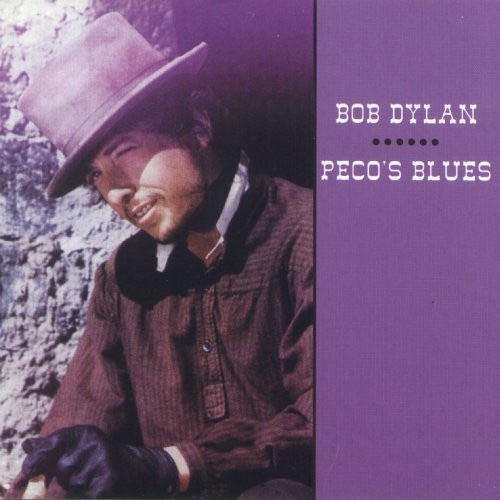
On the Between-Song Patter on the Bob Dylan Bootleg Record “Peco’s Blues”

Introduction

Behind any work of art, pretty much, there is some kind of “process.” The scope and complexity of this process differs across art forms, of course. The writer’s process is rather different than that of, let’s say, the magician David Copperfield. I find all artistic processes fascinating, and am drawn specifically to what happens “backstage.” Backstage is a world unto itself.

In the early 1970’s, the film director Sam Peckinpah was making a film called Pat Garrett and Billy the Kid, and he asked Bob Dylan to do the soundtrack. He also offered him a small role in the movie, a character called Alias. Dylan hadn’t really done a soundtrack before, nonetheless he headed down to Mexico to work on the film with Peckinpah. Pat Garrett and Billy the Kid the film is ok; it’s not my favorite Peckinpah by any means. (That is reserved for Bring Me the Head of Alfredo Garcia, with the one and only Warren Oates in the lead role. Oates around this time also starred in the film Cockfighter, which features the greatest rejected tagline of any film even “he came into town with his cock in his hands and what he did with it was illegal in 48 states.”) The Pat Garrett soundtrack in many ways transcends the film, mostly because this is where we are first introduced to “Knockin’ on Heaven’s Door,” which would go on to become one of Dylan’s best known songs, and is a really good soundtrack overall, however I am more interested in an extended set of outtakes from the sessions which are collected on a bootleg record called Peco’s Blues. Peco’s Blues features a number of alternate versions of the best known songs on the soundtrack, including Heaven’s Door and “Billy,” however the most interesting part of Peco’s Blues for me is the black and forth patter between Dylan, his sound engineer Chuck, and his band. This patter, I suggest, opens a fascinating and unique window into Dylan’s working methods and general approach to art. In what follows we will look at each incident of patter or conversation in the order they occur. All of the instances occur within the first 20 minutes of the nearly 70 minute recording as Dylan, his band, and the engineer endeavor to get on the same musical page.

Patter at the End of “Billy 2,” around the 7:34 Mark:

Dylan (D) wraps up a lengthy take of Billy 2 and asks his engineer Chuck (C):

D: Was that any good?

C: Pretty good Bob. What happened was was you hit the mic twice when you were moving around out there and we had a couple of clunks on it.

D: That’s too bad (…) Shit, I wish Sam was here. He’d know what to do.

C: That mic’s just a little more sensitive than the Sennheiser’s and I’m getting a little…

D: That’s too, uh…that’s…

C: And I’m getting a little puff of wind sometimes when you get real close to it when you sing.

D: That’s too sensitive.

C: Let me move it back a little for you Bob.

D: I think we must have got it though Chuck.

C: (with what sounds like a pencil in his mouth) Oh I recorded it, darn tootin’. I had a little puff from your voice once and you knocked the mic twice.

D: Well that might have been alls that we need.

C: You wanna, you wanna hear a playback on it?

D: Yeah, I would.

Comment:

We see right away here that Dylan is the boss and that the engineer is walking on eggshells a little bit. This is made clear by Dylan’s reference to “Sam,” who he obviously thinks is a better engineer than Chuck. We have more than a little sympathy for Chuck, as it wasn’t he that knocked the mic and he is trying his best to give Dylan the relevant information.

I love how Dylan here, while implicitly criticizing Chuck, also picks up on Chuck’s framing of the microphone situation and agrees that “that’s too sensitive.” However, the relative sensitivity of the mic is not Dylan’s main concern. Dylan, famously, likes to work fast. For some of his records that has been a positive, on these the sound and performances come across as organic and coordinated, like all of the players grasped their roles and just ran with them. On other records, Dylan’s preference for speed let’s him down, and songs, and especially the production, can feel rushed, even a little sloppy. Dylan famously warred with Uber-producer Daniel Lanois, who had produced U2 and Peter Gabriel among others before Dylan asked him to produce 1989’s Oh Mercy. Oh Mercy sounds great and was Dylan’s “comeback” album after a mixed, to say the least, mid 80’s period, however Lanois’ sonic fingerprints are all over it. Too much so for Dylan, who wanted a faster, looser approach. Lanois is no pushover, and held his own with Dylan. We get the sense that Chuck is no Lanois.

So, despite the knocks on the mic and the puff of wind, Dylan is going to be fine with using this version on the record. Chuck, of course, is going to want Dylan to play it again. Chuck, or someone, would win this one because the extended take of Billy 2 here is not the one used on the final album. The little tussle between Dylan and Chuck ends in a draw as they agree to listen to the playback.

Patter at the Beginning of “Turkey,” around the 8:40 Mark:

D: Hey Roger, when I stop, when I stop, you stop. I’ll do something else and you figure it out. So it might go like this (Dylan starts playing and the band fills in a little hesitantly behind him).

D: Say Chuck, Chuck?

C: Yeah

D: Let’s take this down and mark it under, uh, Turkey…We got a buzz in the amp.

C: I’m not picking it up.

D: OK come on now.

The band plays on the instrumental Turkey for about a minute before Dylan stops.

D: OK, this is under Turkey.

Dylan begins again, and this time the band fills in much better, the song sounding fuller and tighter in all ways.

Comment:

This is in my opinion the most illuminating of Dylan’s comments and gives us a window into his way of working throughout his career. As mentioned above, Dylan works fast and expects his musicians to do the same. Thus he instructs Roger that when he Dylan stops, Roger is to stop, Dylan will “do something else” and Roger needs to “figure it out.” Dylan’s instructions may not sound very fair to poor Roger, but I think they actually are. A musical team is in this case not unlike a sports team, say a basketball team, where even if an offense is running a designed play or “set,” players need to figure out what’s going on and adjust their own position and movements constantly and on the fly. There is no playbook, not set of absolute rules about how to accomplish this any more than there is a set of rules about how to follow Dylan musically. The musician, like the athlete, just has to work by feel, take in all the information around him or her, and figure it out. If they can, they will keep their job; if not, not.

Patter at the Beginning of “Billy Surrenders,” around the 18:10 Mark:

D: Let’s see now. You know, you know what we want when Billy starts (laughs) this guy Jerry Fielding’s gonna go nuts man when he hears this (laughs). You know what we want when like Pat Garrett comes down from the hills right, and all these guys come out like one by one. And Billy comes out, he’s almost standing in a circle you know, so like (indistinct) one by one and then there’s like a big pause and he stops and there’s silence. You know those big organ notes, those scary things (hums organ notes) (laughs). Can you get behind that? (Dylan and the band laughing.)

Comment:

The recording of the Pat Garrett soundtrack was pretty complicated, in large part because Jerry Fielding, Peckinpah’s usual composer, was relegated to a supporting role and apparently resented it. Accounts differ as to whether Fielding quit, walked off set (and maybe came back), actually did try to advise Dylan as requested, or some combination of the above, however the history of the film makes clear that there was friction. Dylan is clearly aware of the tension with Fielding, and makes a joke about it in a place where it doesn’t even seem relevant. Dylan seems to almost revel in the conflict, setting up Fielding to his band as a “suit” who is not in the field so to speak, and who Dylan enjoys winding up with his musical choices. Whatever the exact situation with Fielding was, the issue is clearly a live one at the time of recording.

My sense is that Dylan is mostly talking to his band here, as there are a number of people in the background laughing along with Dylan through this monologue. Despite his reputation for playing fast and loose most of the time, Dylan shows a pretty good grasp of particular scenes in the film and clearly knows what he wants. The “big organ notes” he mentions do indeed feature on the soundtrack, however maybe not to the extent Dylan wanted. I have to laugh at the very 1970’s question “can you get behind that?”

Conclusion

Overall, Peco’s Blues provides a fascinating window into Dylan’s working methods and expectations for his crew. Of course not every musician works this way; many will give much more precise instructions I am sure, and in the era of computer aided music Dylan’s approach on Pat Garrett is certainly a old-fashioned one. But I like it. It is absolutely worth listening to the entirety of Peco’s Blues to get a sense of Dylan’s working methods as well as how a band, here playing together live and recorded live, “figures itself out” and gets from sketch to finished product. I am myself not a musician but a writer, and the writing process, although never exactly easy, is perhaps a little less complex, mostly because most writers write by themselves, with an editor or editing team looking over the work at a later date. There is nothing in writing quite like “I’ll do something else and you figure it out,” and it is the shifting, quicksilver like nature of Dylan’s approach to music making here that continues to interest me and draw me in.

Scenes from St. George’s, Part IV: Mason Anderson’s Seven-Step Method for Picking Up Women

Note: This is installment four of our scenes from Saint George’s (SGS). Part I is here, Part II is here, and Part III is here.

Mason Anderson Fails to Pick Up Chicks

Classes at Saint George’s were not so large; I think our class graduated around 28 or so. The school is a private school, and relatively expensive for Eastern Washington, but I don’t believe it was that expensive, so I wonder what the school’s budget was like. I bet it was tight. There were a handful of students, including J.T., Kelly, our friend S.C., his younger brother Ben, L.W., and a few others, who were there from lower school all the way through high school. Others, tragically including N.C., left, while others still joined later on.

One student who joined I think in 9th grade was Mason Anderson. Mason’s had a younger brother named Mark whom Mason called “Marky J. Muffin” for some reason. Mason and Marky J.’s parents were divorced and they lived with their mother who Mason called Robbie A. (A for Anderson.) My sense is that Robbie A. was working pretty hard to keep everything organized on the financial front. Mason’s dad was a big churcher, and I don’t think Mason saw him all that much. Sometimes Mason would report that his dad had given him some money, but overall I think his dad was too busy churching to provide much oversight. As a result of all of this, Mason was pretty much left to his own devices most of the time. Also, whatever the family situation, Mason didn’t do much to keep things together because although he’s a great guy and totally hysterical, he was, and still is, chronically lazy.

Lazy as he may have been, Mason actually had a job at a sports cards shop called Chalmer’s. I guess Chalmer’s was owned by some guy called Chalmer, and this dude thought it would be a good move to just leave the shop in Mason’s hand for extended periods of time so he could enjoy the sweet life of a successful businessman. This, however, was not a good move at all, because Mason stole all his baseball cards and all his money and Chalmer’s had to go out of business. Mason never stole from his classmates as far as I know, but he felt Chalmer was fair game.

As I mentioned, our class was pretty small and John Innes, who joined in middle school, and I got to know Mason pretty quickly. High school life can be a little repetitive and it’s good to break things up with a little humor. Mason may have been a lazy thief (or perhaps more charitably an indolent appropriator) but in the humor department he was a solid addition to the school. Mason had a particular way of speaking where he would add emphasis to certain words to make them funny, and he also loved the words “total” and “totally.” My own speech and writing has been totally influenced by this habit of Mason, an influence apparent on this blog. Mason also liked to abbreviate noun phrases.

All these quirks came together in Mason’s favorite term, which was “total babe,” or more commonly, “TB.” He would use this appellation dozens of times a day to describe various girls in our class and the classes above and below us. Although SGS classes were small, there were definitely some TBs running around, and some regular old Bs as well. My own tastes in this area were less for the TBs and more for the SBs (“sneaky babes”). I like sneaky anything, sneaky babes, sneaky favorites, sneaky staircases, the whole deal. Probably my theory was that TBs were already out of my league, and SBs were just more on my level. Also, I just thought SBs were cuter than TBs. I still think I’m right about this, but Mason disagreed. He was into the TBs, the totaller the better. Now one thing about TBs, obviously, is they can be super selective. Craig Finn says “boys go for looks/ and girls go for status.” I’ve found this to be pretty true, and TBs also like money as well as, I think, funny guys (or gals depending on a given TB’s particular orientation). Although he played on the baseball team, Mason was not exactly “high status,” whatever that consisted of back then, and although he had the Chalmer’s money he certainly wasn’t loaded. He was very funny, and should have leaned into this with the TBs, but for some reason his method for TB intriguing didn’t quite see him leaning into his strengths.

Mason’s interest in TBs was not limited to mere expressions of appreciation; instead he would work out elaborate TB seduction campaigns in his head, which he would describe to John Innes and me at great length. Mason was, for some unknown reason, a huge fan of the professional hockey team the Philadelphia Flyers and their goalie Ron Hextall, and he had one, or maybe several, Philadelphia Flyers pins that he would wear on the outside of his jacket. His TB pick-up plans always revolved around the Flyers’ pin and associated Flyers paraphernalia. I am not going to be able to do justice to the complexity of Mason’ campaign plans, however they would have gone something like this (I don’t believe he has taken the time to patent this method so I think this is fair use):

Step 1: Select a TB to approach.

As mentioned, Mason would choose one of the biggest TBs, a girl who was obviously completely out of his league, and start putting together a sequence of moves.

Step 2: Name the campaign.

Mason’s campaigns would be named after the first initial of the TB’s first name; thus if the TB was called “B…” the B campaign would just be “Plan B.”

Step 3: Pick a location to approach the TB.

Mason would specify a certain spot where he planned to initiate his campaign, say at the TB’s locker, while waiting for the bus before a basketball game, or when she first came in the door of the school in the morning.

(As a side note, John Innes also employed the locker move when in 9th grade he offered me 10 dollars to switch lockers with him so he could have the locker next to a certain TB called S. I agreed, but John Innes didn’t really have any money because his father had spent it all on his political aspirations, and I don’t think he ever paid me. That was a bad deal on my part; I should have stuck with the locker.)

Step 4: Lead with the Flyers’ pin.

Mason would design the first actual contact with the TB to center on the Flyers’ pin, as noted above. In John Innes’ and my opinion, this is where the plan started to wobble. Mason would specify exactly what he would say to the TB as an opening salvo. This would be something like:

“Hey there B, I couldn’t help but see you hanging out by your locker here. I wonder if you’ve seen my new Philadelphia Flyers pin?“

Now I don’t know a huge amount about hitting on women, but I know a little bit, and I’m just not sure this is the right first move. Guys who are really good at picking up women (I’m not referring to the super sus subculture of PUAs, but to individual guys who just happen to have a lot of game) usually start with something a little more open-ended, and also maybe focussed on some aspect of the girl, not one of their own accessories. I mean I don’t know, maybe this can work—can you picture a guy at a bar approaching a woman and saying something like:

“Hey there, I don’t know you but I just wanted to let you know I bought this new scarf today. Isn’t it something?”

The more I look at it the more I lean no. The Flyers’ pin opener was not, however, the biggest issue with Mason’s approach. The biggest issue was that he expected the TB to come back with a very specific, indeed exact, reply.

Step 5: Elicit a specific TB response.

After Mason had asked the TB to check out his Flyers’ pin, she was supposed to come back with the right answer, which is this case would be something like:

“Wow there Mason Anderson. I didn’t know you had a new Flyers pin. That’s a pretty sexy pin you got there.”

Now I respect the effort that Mason put into his plans, but I’m sorry, this is just all wrong. First of all, this is a pretty unlikely answer for a TB. I mean, something like this is theoretically possible; however there are a lot of other possibilities that Mason was not accounting for. You see, he needed the TB to stick pretty much exactly to the script in order to get to his next move. But the problem was, the TB didn’t have the script in advance. I mean imagine you’re a TB and some medium dorky guy comes up to you and flashes his new Flyers’ pin. I think you might respond in one of the following ways, ranging from more to less promising:

i) “I haven’t seen your pin. Where did you get it?”

ii) “Who are the Philadelphia Flyers?”

iii) “Why are you showing me this?”

iv) “What are you talking about?”

v) “You’re weird. Go away.”

My theory is that Mason really needed to be prepared for all of these possible responses, and many others. He needed, in other words, to build a little flexibility into his plan. And John Innes and I would tell him this.

“I don’t know Mason, I mean the Flyers’ pin is great and all, but I don’t think you can count on her telling you it’s sexy. She might come back with something else you know.”

“No,” Mason would reply. “She’ll come back with what I have planned. It’ll work.”

But she wasn’t going to come back with what he had planned. She just wasn’t. John Innes and I knew this, but there was no talking Mason out of it. Plan B was full steam ahead.

Step 6: Get to the end game.

After the TB came back with the right Flyer’s pin response, the next two items in the plan would be designed to get Mason to the close. This would go like something like this:

Mason: This is a sexy pin. But it’s not as sexy as you are.

TB: Oh my god, you’re so charming and funny.

Now, the dialogue is approximate, however the idea remained the same—the conversation had to go exactly this way. In military circles there is a saying that goes something like “no battle plan survives the first shot fired” or whatever. The point being, once a campaign kicks off there is no telling what the actual sequence of events is going to be. A good plan, in war, with TBs, or just in life in general, needs to be adjustable. Or, in NLP terms, the planner needs to understand that the map is not the territory. Mason had the map, but his map was not going to get him safely though the territory.

In any case, by this point Plan B would be pretty far advanced. It was time to seal the deal.

Step 7: Close.

This stage, obviously, was where Mason would throw down his final zinger and the TB would be won. The last part of Plan B would have Mason saying something like:

“I know I’m charming and funny. I guess I just can’t help it. Hey I’ve got a great idea. Why don’t you and me get together and call ourselves an institute?”

And the TB would swoon into his arms.

=====

Now, we have already identified a number of holes in Mason Anderson’s Seven-Step Method for Picking Up Women. And these holes are significant. But the biggest hole in Plan B, or Plan C, and any of his other plans is that he never tried to implement any of them even once. All of this, the casual approach, the Flyers’ pin, the elaborate conversational sequencing, was entirely theoretical. Mason would talk about Plan B incessantly, workshop it with us, and generally refine and tinker with it, but he would never actually put in to the test. I don’t know why this was. Was it because Mason knew the TBs were out of his league and just enjoyed fantasizing about his campaigns? Or did he actually intend to put Plan B into practice sometime and just never had the nerve to try it? Or, perhaps, the plan was never totally good enough in his own eyes and just needed that last little tweak to get it perfect? I don’t know, but man were Plan B and Plan C entertaining.

Today Mason lives in the tri cities area of Washington State where he messes around with nuclear energy or something, believe it or not. In his free time he makes a lot of pizza and instagrams about it. I believe he has also had some success on the Tinder there—John Innes told me he was mixed up with at least one women of that ilk a few years back. I’ve never met any of Mason’s Tinder connections, and I don’t know if they are TBs or not, but I know one thing. Deep down Mason still wants to lead with that Flyer’s pin.

to be continued…

Dedication: For Mason, you totally rock baby.

Postscript: It turns out that Mason Anderson will be cooking pizza for my brother Mike’s wedding this coming summer. Weddings are a good place to score, so I do hope he is working on a plan. Pizza might just be a better hook than the Flyers…