Note: This is Part II of my series on my time at Northern Arizona University between 1999-2001. This post takes up the other graduate students in the History Department. Part I, Decision and Arrival, can be found here.
NAU — The Graduate Students
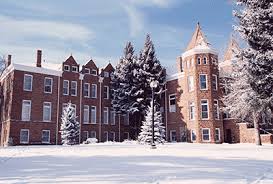
The History Building was located near the northeast of campus, and as I mentioned in Part I it was mere minutes for where I was staying in my first year of the program. There was one graduate office on the second floor — a narrow room with four aging computers, a stubborn printer, and more bodies than desks. Some students shared chairs. Some wrote standing up. You could hear arguments through the walls, even with the door closed. It wasn’t glamorous, but it was the whole ecosystem: every thesis, every grudge, every friendship, every theory, all pressed into what was a pretty small space.
Cindy
The center of the room was Cindy. Early thirties, beautiful, charming, half-brilliant and fully aware of her own gravity. She studied the Southwest like almost everyone else in the cohort, but she made scholarship look like a party you had to be invited to. Men tried. None succeeded. She never dated within the department, but she flirted like a form of cultural exchange — a compliment, a smirk, a dismissal, repeat.
A number of us would go bowling from time to time, and when I bowled a clean 200 one night (still my best score ever) she called me Zen — partly for Japan, partly for the way I moved through things without forcing them.
As mentioned, Cindy flirted lightly with all the single guys in the department, and she and Mandiola had a particular dynamic going on. More on that below.
Lance and Gretchen
Orbiting Cindy were Lance and Gretchen, a long-term unmarried couple renting a big place in the low hills behind campus. Lance was military reserve — rigid posture, some money behind him. Gretchen was smart and generous; they held Thanksgiving at their house and the whole department came. It was clear to me, however, that she lived in Cindy’s shadow a fair bit.
Their relationship read like a stable table with a crack underneath. They had been together for a while at that point, though I don’t believe it ultimately survived.
Dave Diamond, Patrick, and Gary
At the other end of the room sat three men who could fill a bar with argument, and did.
Dave Diamond — mid-fifties, blue-collar history etched into him. Fishing boats, oil platforms, mines. He smoked dope daily like other people drink coffee. His thesis was on one apple orchard. Not agriculture policy in general — one orchard. He traced labor, yield, frost, policy, immigration, machinery, exploitation and renewal through a single patch of earth. That was Diamond: narrow focus, infinite depth. He was grumpy in the best possible tradition, and as I’ll mention later hooked me up with a little green from time to time, and I liked him.
Patrick was about twenty-two, a conservative, and worshipped Ronald Reagan. He believed the free market solved more problems than it created. Diamond thought Reagan had gutted the working class and could give footnotes from memory. They shouted at each other constantly, sometimes in the office, more often over drinks— full volume, full conviction — then they would move on like nothing had happened. They weren’t enemies. They were the ongoing argument.
Gary stood between them philosophically but never took the middle. Libertarian, Western-minded, big on personal risk and responsibility. Motorcycle helmets should be optional, ICU bills be damned. A man should be free to crack his skull if he wants to. You couldn’t move him. His logic was dry and clean. I wrote about Gary and his helmet policy at length here, and here is an excerpt:
Later that year Gary’s brother, also a biker, died in a motorcycle accident on a New Mexico mountain. It was a sad day for the department and for Gary. His brother was a biker and a cop, and I happened to walk past the church where the funeral was being held. There were dudes in Hell’s Angels jackets and cops in dress uniform side by side. Gary came by the graduate student office a day or two later. Yeah, he said, a funeral like that is the only time you’ll see bikers and cops side by side. He talked about his brother and how much he loved his motorcycle. I offered my condolences, but then curiosity got the better of me, as per usual.
“Gary, I have to ask, was your brother wearing a helmet?”
“Of course not. He died like he lived, free.”
“Does the accident make you think any differently about helmet laws?”
“If anything, it makes me more opposed to them. The right to ride without a helmet is what makes a biker a biker. Without that, we have nothing. My brother would feel the same.”
The three of them — Diamond, Patrick, Gary — were a triangle of conflict that never quite resolved. I liked them all in different ways and they all added color to the department.
Scott Fritz
Then there was Scott Fritz — early thirties, soft-spoken, spaced-out, gentle. Loved Las Vegas with an almost devotional sincerity. Not for gambling. For cocktails at 3 a.m. in glass palaces of light. He was in line for a major scholarship until Mandiola took it out from under him. I’m not sure what Scott was studying, but probably the American Southwest as well.
Mandiola
Mandiola and I were the outsiders. Not Southwest scholars. He was studying semiotics. I was studying Asia, oral history, and collective memory.
He was born in Chile, raised in LA, carried two languages without ceremony. His mind was fast — too fast in many ways. He had been married, and at this time was seeing P., an English professor who was at NAU on sabbatical. I met her twice; once over pizza with other members of the department and once more. We didn’t like each other at all, which Mandiola found hysterical. That was him: always drawn to drama — either generating it or laughing at it.
He was the loudest voice in the room. His banter with Cindy dominated the grad office for weeks — compliments tangled with insults. It wasn’t romantic. It was force meeting force, and they both held their ground. I also wrote about becoming friends with Mandiola in my piece I Have a Crush on Katie Park of the Bad Moves; here is a little bit of that:
A good friendship, in my opinion, is one where no matter how long you and your friend have not hung out, if you see them it’s as if not a day has passed. With this sort of friend, I’ve found, there is between yourself and them something fundamental shared. It can be anything really. For example, I first met my good buddy when we were both in graduate school in Arizona, and at first I thought he was a total dick. He was loud, interrupted people constantly, and loved being the center of attention. One night we were drinking as a department and he started razzing me there on the street, just casually insulting me left and right. Suddenly I got where he was coming from. This was, in fact, his way of offering to be friends. Once I understood this, I began to give it right back to him. Called him every name in the book. And he ate it up. By the end of the night we were fast friends and have been ever since, because we share an understanding that our friendship is based, in part, on ripping on each other.
Me
I was twenty-four, newly returned from Japan, married but alone in Flagstaff. I ran most mornings, didn’t drink in my tiny freezing room, and wanted to get straight As. And I got them, with just one A- to keep me honest I guess.
Summary
- Cindy had presence.
- Lance and Gretchen had the house on the hill.
- Fritz had Vegas dreams.
- Patrick had Reagan.
- Gary had principles made of stone.
- Diamond had an orchard.
And Mandiola and I — for all our differences — were the sharpest minds in the room, and it is he that I would spend the most time with and remember the best.

