Border Dream

Note: From time to time, we shall intersperse our other work, with dream journaling.  There is no excuse for this exercise other than a simple attempt to register some of the content that comes from beyond and beneath in the course of one person’s ongoing encounter with the subconscious.  Are dreams mere kaleidoscope regurgitations of the mundane facets of everyday life, or do they partake of something deeper, something broader, something transpersonal?  We shall leave this judgment to the reader.

Dream: Series of loosely connected dream incidents, but in the dream itself they flowed seamlessly into one another. First, although of course something was happening before this as well, I am watching my son play in the PGA. He is on the 16th hole, and the only kid in the field. Later I learn that it is unusual for kids to play in the PGA championship, but at the time this does not seem odd. You do not have to qualify, only sign up. He is playing well for his age, but nowhere near winning. Suddenly, he slows up and shows signs of being tired. He walks off the course and his group moves on. The leader is in his group. I take him off the course and he says he wants to quit. I tell his that’s OK, but he only has two more holes. He jumps up and runs back to finish, but his group is already done (very fast) and the player from his group who was leading has won. He is accepting the trophy, and plays the two holes quickly. The course is mostly clear.

Jump cut to a field in what seems to be Venezuela, but is never absolutely demonstrated to be so. I am a soldier, probably an American, with a pack on my back. I am in a platoon and we are moving. The grass is pretty high and we are in a small valley, perhaps. There is a sense of tension, but not of great danger. We sit down and open our packs to eat. There is barely enough food to subsist, and I have a few dollars US and a few pieces of Venezuelan currency. Later, it will emerge that I have about 17 US and maybe 80 or so of the local currency. This does not seem sufficient, especially because I get the sense that this money will need to last for a while. Other soldiers have the same meager food rations, but appear to have more money.

Jump to a bar/ food area that same night. Still in the same country. I want to eat, and drink, so I circle the choices, but everything looks expensive. There are many people, some soldiers, some businessmen with women, maybe locals, and some random expat drunk types. The scene is not very dignified, but people appear to be having a good time. It is pretty loud. As far as food and drink go, there does not appear to be any other choice in the city. So, I order a red wine from a very nice woman at a bar. She says I can pay her a few dollars. I pull out my American money and the local currency, and she nods at the American.

I lay down three, and she shakes her head. I add another five, which I feel should be sufficient.  She shakes her head again and quotes me her retail price, which seems absurdly high. I pay her another five American which is nearly all I have. She is still not happy, but is placated, and I leave quickly. A few people are watching. I look at food stalls, especially one offering pastrami sandwiches. The price is quoted in the local currency, and I just afford one sandwich. Although I am very hungry, I do not purchase one. In fact, the whole night passes without my having anything to eat.

Sometime later, after more wandering and an interlude in another bar which is well lit (or is that later?) I find Kelly Rudd, one of my oldest friends. He is fully himself. We decide to go to an outdoor bar where there is a tent shelter structure, pretty large, which we sit in. I look at the menu and can afford just one drink. I tell Kelly this, and he halfway indicates that he will take care of the bill. I am unsure about this. I want to tell him about my life–maybe we haven’t seen each other for a while, but on the other hand maybe he is a soldier in my platoon.

I begin to tell him about a shotgun I have smuggled into the country. Although I am military, he reacts like this is a highly dangerous act. Thinking more about it, I probably didn’t smuggle a gun, because my luggage is not large enough. Aware that I am probably fibbing, I continue with the story. A waitress asks us through the tent wall what we want to order. Kelly orders red wine, after a lot of trouble getting her to hear us. I look around the edge of the tent, but somehow it is clear that we need to communicate through the tent wall. Looking around the corner I get the sense that she has been listening to our conversation for some time. Maybe not so long, but long enough to have heard about the gun. I am concerned that she will go to the police.

I tell Kelly about some of the things that are on my mind, and he seems only partially interested. He gives me little in return. We are drinking, and I am almost finished with my drink when I realize that it is a Corona, not red wine. I am mildly put out by this, but more puzzled by why I didn’t notice. All of the sudden we are no longer in a tent but on a blanket or ground sheet in roughly the same position. However, there is a large auditorium (whose shape I know from previous dreams, I think) behind us. I see the head of my high school, walking downhill toward us. I think that he is going to censure me about some various work issues, but instead he walks a short distance away behind some bushes and urinates. He is quite drunk.

Several more people from work stumble by, some of them urinate. Then, the blind teacher, who retired last year, comes down the hill with his cane. He is looking for a place to urinate. My mother’s aunt, indicates a spot just a few paces past our blanket. I tell them that it is too close, but it is too late. Somehow I am given to understand that I am supposed to be in the auditorium for some kind of speech or ceremony. I decide to avoid this if at all possible and stall by getting up and milling around.

Jump to the inside of a large gymnasium. This may or may not be the same building, possibly not. Instead of the ceremony, I am at basketball practice. There are a couple of coaches, and the head coach is in a white T-shirt. I am kind of involved with the play, kind of talking to the coaches. John Innes may or may not be a coach. Practice seems to go on for a long time. Not much happens. Then, on the far side of the floor I am talking to the coach and see a play developing. A strong point guard is driving the right side baseline and beats his defender for a lay up. Most of the players are female, and this point guard may have been a female at the start of the drive as well. The defense gives up, but I can tell he/ she will miss the layup. I circle in from the left and, taking the rebound, I dunk it without coming down. The dunk transpires in slow motion. I expect everyone in the gym to be amazed, but only a few people notice.

Practice is moving on, but I try to call it to a stop by explaining how the weakside defenders should have been blocking out and how when defenders don’t a player can get offensive rebounds. A few people start to listen, probably because I seem like a coach/ adult figure. Then, more people are listening, then they are sitting down, they they are all in the bleachers as I talk. I go through the matter in detail. My father becomes the coach. I can’t see his reaction to my speech, but at some point I realize that it is time to cut it off. Practice is over, and the players spill out of the gym. My father comes over and takes me by the arm. He tells me that some of the more intelligent players may have been able to follow what I said, but that most players are not intelligent enough to follow more than one idea at a time.

I don’t really know what he is talking about, because, although I spoke for a while, the ideas were pretty simple and obvious. I try to push back a little, but he becomes increasingly strident. Finally, we are outside and I see my mother. I tell my father that he is obviously uncomfortable with complex ideas, and shake free of his arm. My mother makes an inquisitive face, but I just shake my head. Out of the dream, a little timer beeps, and I wake up. It is just after 6 AM.

That’s the end of the dream proper, but either after this of before it, or running throughout, there is anxiety on my part about how I will get out of this country (all the basketball activity took place in the same country). I visualize the border crossing, which I seem to have been to before in a previous dream. There are logs across the border and soldiers. It is not terrifying, perhaps because I have been there before and crossed, but it does create anxiety. Again, it is not clear when this anxiety comes to me, if it is a postscript to the dream or sort of a running commentary.

First interpretations: This dream is about communication, specifically my poor communication skills. At different turns I am frustrated by my inability to communicate clearly and with my audience’s lack of interest and/ or capacity to understand. Whether negotiating the price of a drink (small matter) or talking about my life to an old friend or giving a speech to a large group, what I expect in terms of a reaction and what I actually get are at odds. It is not clear who is at fault in any of these incidents, and in fact in the dream I feel an alternating sense of frustration with others and frustration with self.

Especially with the bar woman, I am aware that I “do not speak the language” and should be more intuitive about what she means, but also in the basketball speech, even as I am speaking I know that I am going on too long, and insisting on the importance of what I am saying too much. This dream seems important in that it encompasses most of my life stations, parents, my own family, work, and friends. Interestingly, my communication with my son seems to be the most effective, and the golf is the only incident that does not seem to take place in Venezuela.

Impressions: At least two things in the dream reference other dreams–the auditorium and the border. Thinking about it while awake, I have memories of both of these dreams. Of course, not having kept a dream journal at the time, I am not absolutely clear whether these dreams really took place in previous months or if there were in fact part of last night’s dreams. I had a lot more dreams last night as I woke up from dreams several times, and this dream sequence here recorded was, I think, only the last tail end bit.

The drunk coworkers, one of them literally blind! are instructive. First reaction is perhaps overly positive–although I am poor at communicating, they are worse and require me to take control of communication. Finally, the long night trope is a staple of my dreams, especially those I remember well. This dream fits very well into the long night theme, although the basketball practice was in the late afternoon, and may have therefore been a flashback. Especially the drunken revelers, the various types of ladies of the night in the background, and the stumbling from place to place are characteristic of my “long night” dreams.

Note: If you enjoyed this piece, you may also enjoy “Everest Dream.” Available below.

Carl Jung’s Collected Works: I

Volume I of Jung’s Collected Works is titled Psychiatric Studies, and begins with his dissertation, “On the Psychology and Pathology of the So-Called Occult Phenomena.” The editor’s preface to Volume I characterizes the dissertation as reflecting “simple descriptive research,” while acknowledging that many of Jung’s later concerns are foreshadowed herein (vi). In our posts on Volume I we shall attempt to draw out some of these foreshadowings, while also taking seriously this most “scientific” of the phases of Jung’s career and work.

It is of course highly significant that occult phenomena signify in Jung’s first major published work, as Jung’s reputation, for better or worse, is to this day closely linked with the occult, mysticism, astrology, post-material synchronicity, and the unconscious archetype. That Jung refers to “the so-called occult phenomena” here is suggestive, on its face, of at least some measure of empirical leaning in the young Jung.

As we shall see in later posts, Jung waged a decades-long internal battle to preserve his belief in himself as a man of science, rather than an artist, and the question of whether he was primarily a scientist or an artist would play a significant role in his mid-life crisis which set in during the decade of the 1910s. It is interesting to note here that Freud also held fast to the label of “scientist,” even as critics such as Roger Brown have suggested that he surrendered all claims to the title as early as 1896 (Storr, 24).

It is well known that Jung’s early years were suffused with religion and spiritualism, with several members on both sides of his extended family being parsons (MDR 42). From his earliest writings, however much he clung to the idea of himself as an empiricist (understood in its more typically narrow sense), Jung’s interest in the faint intimations of the “other world,” in the liminal zone between normal experience and those experiences or states which stray over the borderline of normal consciousness and everyday apprehension and into the dark underbelly of the unconscious, betrays the awestruck and bemused metaphysical wanderer who at seven would sit on a stone and wonder, “Am I the one who is sitting on the stone, or am I the stone on which he is sitting?” (MDR, 20).

“Liminality” is defined nicely by Wikipedia as “a psychological, neurological, or metaphysical subjective state, conscious or unconscious, of being on the ‘threshold’ of or between two different existential planes” (Wikipedia, “Liminality,”) and from the first paragraph of “On the Psychology and Pathology of the So-Called Occult Phenomena,” we can see Jung’s interest in liminality at play:

In that wide domain of psychopathic inferiority from which science has marked off the clinical pictures of epilepsy, hysteria, and neurasthenia, we find scattered observations on certain rare states of consciousness as to whose meaning the authors are not yet agreed. These observations crop us sporadically in the literature on narcolepsy, lethargy, automatisme ambulatoire, periodic amnesia, double consciousness, somnambulism, pathological dreaminess, pathological lying, etc. (Collected Works Vol. I, 3).

The author makes no claims to being a psychologist or to having any detailed empirical knowledge of the difference between automatisme and somnambulism, but briefly, for the sake of clarity, epilepsy refers to an overly active electrical circuit in the brain which causes seizures; neurasthenia is an outdated term that referred to deep exhaustion; what Jung and Freud referred to as hysteria we would more probably call neurosis; narcolepsy is a threshold state between sleep and waking which may include hallucinations; automatisme ambulatoire and somnambulism, as far as I can make out, both refer to sleepwalking or other actions taken while one is technically asleep.

Pathological dreaminess appears to be a coinage of Jung’s own, and pathological lying is best understood to be a state where one lies repeatedly with no motive force, no hope for, or anticipation of, gain.

What all these mental states have in common is a significant lack of control which those so afflicted have over their symptoms. Indeed, in all of the above cases it can fruitfully be asked, “who or what is in control of our psychological processes?” This is precisely the question that certain childhood experiences forced Jung to ask himself.

As recounted in Memories, Dreams, Reflections, at a very early age Jung had experienced the force of unbidden subterranean psychic contents which pushed their way to the surface of his consciousness. At the age of three, Jung dreamed of an “ithyphallically enthroned” ritual phallus entombed underground behind a thick green curtain. The ritual phallus “was made of skin and naked flesh, and on top there was something like a rounded head with no face and no hair. On the very top of the head was a single eye, gazing motionlessly upward” (MDR, 11–12).

The young Jung equated this ritual phallus with “a subterranean God ‘not to be named'” as well as with the Jesuits, whom at that point he believed feasted on human flesh (MDR, 12). Looking back from late middle age, Jung writes that the symbolically freighted symbolism of such a dream is far beyond what any child’s psyche would be able to produce without some kind of blueprint. His conclusion was that someone or something was already speaking with or through his mind:

It {became} clear to me how exceedingly unchildlike, how sophisticated, and oversophisticated was the thought that had begun to break through into consciousness {…} Who was it speaking in me? Whose mind had devised them? What kind of superior intelligence was at work? {…} Who talked of problems far beyond my knowledge? Who brought the Above and Below together and laid the foundation for everything that was to fill the second half of my life with stormiest passion? Who but that great alien guest who came both from above and from below? (MDR, 14–15).

Although these ruminations are retrospective, it is fairly clear that the inner autobiographical events that Jung highlights in MDR lay the groundwork for the young scientist’s interest in psychic liminality in all its manifestations. While the early studies mostly center upon the symptomatology of young, hysterical women, Jung’s early efforts to exteriorize his investigations would eventually give way to a deeper probing of his own levels of consciousness.

Indeed, the bulk of Jung’s mature, original work draws directly from his own borderline experiences, half-induced and half-received, during and after the outbreak of the First World War.

Therefore, while the early writings of Jung may with some justice be described as “simple descriptive research,” his choice of subjects and range of interests immediately plunge us into deep metaphysical waters, as Jung wrestles with questions such as where conscious control over the psyche ends, what exists or pertains beyond this control, and who or what is exerting itself when the formerly and apparently autonomous psyche cracks and the great unknown — the serpent in the garden, the siren on the farther shore, the vast propulsive other, or the slime of the deep — makes manifest its eternal will to power.

On the Eventfulness of Pre-Eventified Incidents

Note: Today I’m revisiting a travel vignette about hierarchy, ritual, and the strange ways institutions manufacture “events.” It features a Big Man, a flawless flunky, Jung on surrealist art, and a ceremonial poster board signing that may or may not have meant anything at all. A quiet question lingered long after the ceremony ended. As always, judge for yourself.

If you enjoy this piece, you may enjoy my analysis of the underground rapper and crypto-hacker, Razzlekhan. You can find it here.

Yeah, I met Lou Reed and Patty Smith

It didn’t make me feel different

Conor Oberst

I visited China a number of years ago with a highly ranked member of my university structure and a flunky. My own participation was last-minute as I was filling in for someone else. I guess in a way I was a flunky too. Certainly it was the big man’s show from start to finish.

We visited a number of schools and also met with a business guy who was working very hard to transact with our group something so complex that I never even began to grasp the shape of it despite sitting in multiple meetings around the matter.

The trip was interesting for a number of reasons. The big man barely spoke to me for the first few days despite spending all day together. The schedule was brutal. I was reading Jung On Art on my phone as I was enrolled in on online course I never finished. Jung On Art is great and spends a lot of time on the surrealist painter Yves Tanguy. Finally the big man took a long look at me and said (in Japanese) “you read a lot, don’t you?” I confirmed this, and after that he spoke to me a little more.

The flunky was an archetype of the species. He handled the schedule, made the trains run on time. He did nothing else and deferred to the big man on absolutely every non-schedule related matter. My own strongest contribution to the proceedings was occupying the attention of a friend of the business man during an excruciatingly protracted whisky drinking session so that the business guy and the big man could talk turkey. I am not a great whisky drinker for some reason and making sensible small talk for three or four hours over whisky took a truly heroic effort.

The business guy had a kind of a house in a kind of a hotel, it was hard to say. A full staff was on hand to serve us a full course Chinese meal with white and red wine. This was before the whisky. It was a scene, all the way.

Anyway, all of that is context. I want to write about a specific incident that occurred when we visited one school. The principal who received us knew the big man and we were received by a group of about eight people. We got the school tour. Now, school tours are an occupational hazard in my line of work, and I have trained myself to be a durable recipient. But I don’t really like them. We went through the formalities, which predictably took forever. I daydreamed about Yves Tanguy and bed.

Toward the end of the tour we reached a wall with the school name or emblem on it. Here, the principal paused and asked the big man to write some Chinese characters on some poster board. This was to mark his visit, to consecrate it in a sense. The whole group fanned out into a kind of semi-circle and the big man went through a series of highly performative grimaces to index his deep thought. Or maybe he just didn’t know what to write. I certainly wouldn’t have. Finally he took the pen and with the pomposity of a South American dictator wrote a few characters. The message, to my recollection, was underwhelmingly anodyne. Basic. Or maybe it was gnomic and brilliant. In either case the audience made appropriately awed sounds. I murmured my own supposed appreciation–the role of the acolyte was there to be filled after all. The poster board was then displayed with a flourish on the wall.

At first blush I found the entire episode both deeply interesting and deeply narcissistic. However, the big man was invited to contribute some characters and he did so, so in that sense fair enough. Let’s zoom out a little before rushing to judgment.

You know how some restaurants and bars will have signed pictures of famous people that visited on their walls? Mickey Mantle, Bob Hope, Stallone, whatever. In these cases the visit of the celebrity was an event in the life of the establishment. It merited consecration across time. I understand this. But the big man was not a celebrity in any real sense. He was a university bureaucrat with a taste for acting like a big shot.

But maybe I’m seeing this all wrong. Because there was actually a hint of the classical in the occasion. A host had received an honored guest. The honored guest was asked to bestow words of wisdom and afforded space to do so. The whole performance was approached with apparent complete sincerity by all involved. I was probably the only one not acting in good faith. My feelings at the time were the same as they are now; on the one hand the whole thing was super pompous, on the other hand it had an old-world ceremony that I am not exactly against. An event should be eventful–my little motto–may at times create an unrealistically high bar for situations to rise to. Still, I have a nagging feeling that this visit was not of a sufficiently high caliber or general import to require consecration in kanji.

You know how in the old days a person would take a letter of introduction with them when visiting a new country and would receive an audience on the basis of this kind of letter? That’s probably an almost entirely lost art. When you presented someone with a letter of introduction, as I imagine it, you were then received. Your visit was authorized and elevated into a thing, an event. The eventification of aspects of life is important, even vital, however maybe we are going about the equation backwards. I go to see a lot of live music and at the end of the show the band will often gather at a table to sign merchandise and such. The opportunity to meet the band, if offered, is cool–I’m all behind it. However I myself often skip these lines, even if I love the band. This is because the chance to meet the band and have an experience of doing so is a built-in aspect of the entire evening and therefore pre-eventified so to speak. It’s still cool, but I’m not sure pre-eventified events are best positioned to be eventful. The true event takes place without being pre-planned. The true event emerges and cannot be structured. Most of the time when I see a supposed event transpire, an opening ceremony of some event for example that has been obviously rehearsed, I can barely suppress a yawn. In the immortal words of The Replacements, “color me impressed.”

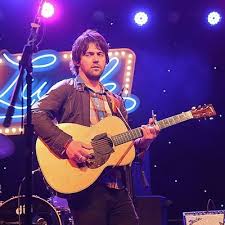
The epigraph for this piece is from Conor Obrest’s 2016 song “Next of Kin.” It’s a jaded coda to a meeting that we might have supposed would have been eventful, and also a wry recognition that whatever happens to us we are always left with ourselves again. I saw a man sign a poster board. It didn’t make me feel different.

Note: If you enjoyed this piece, you may also enjoy “On the Centrality of the No Helmet Law.” Available below.

On the Centrality of the No Helmet Law

The Thin Man in Singapore Part I: Washing Ashore

Note: This is the first chapter of my upcoming novel, The Adventures of the Thin Man and Andrea. You can read a later chapter about the Thin Man’s romance with Vivian in Rome here:

The Thin Man in Rome, Part IV: Departing the Group, Vivian, Sex in the Shower

It’s predicted to rain on landing/ I predict we’ll have a drink

Paul Westerberg

Dateline Singapore: Late October

This little country, such an unlikely success story, such a strange winding of forces. The thin man has been on land for five weeks after his latest gig on the cruise ship, and though his stomach is still in limbo his sea legs have mostly subsided.

Now there is nothing more that the thin man wanted after washing up here earlier in the season then a long weekend. Say, five years. Five years in the hammock, five years frolicing with the lovely ladies at the bar. The occasional speedboat ride, a flyer or two over in Macau. Five years out of the swim of modern capitalism, if you can even call it that. Five years clean. That was the dream. Five weeks on land though and the thin man is looking for work, the money gone in a haze of long days and longer nights. Wine, women, song, and a speedboat ride or two will add up quick. C’est la vie partner. That’s what comes from burning holes up to heaven.

Still, the thin man has a few dollars in his pocket as he walks into a bar just outside of Chinatown. Halloween is approaching, and the proverbial Spooky Lady’s Sideshow is in full effect. The barmaids are Eyes and Baby, or is she Baby Blue? In any case, the thin man and Eyes make eyes, in an innocent way, so the story is told.

The thin man orders a Cognac and ambles over to the pool table where the nine ball is always on. Eyes sizes him up quick, guesses he can play a bit. A game is proposed, a game for two players.

But of course no game is really ever between two players alone. Baby’s watching—tough to tell her rooting interest. And, after Eyes breaks and a few balls fall, the bar as a whole starts tuning in to the frequencies of the game as the regulars make small talk and the travelers weak-tea passes at the local girls. Local girls are no push-over; sometimes folks get the wrong idea on that end. The thin man always did like the locals; heck, it’s part of the travelers’ creed. After all, everybody is a local somewhere. Certainly Eyes and Baby could take care of themselves.

Eyes missed and the thin man was able to sink a few easy balls before Eyes surged back, she’d been around more than she looked. She was an expert at drinking what the punter was drinking. That’s a key part of the art of the barmaid, an underrated profession at the best of times.

The game is nine ball, what else? Eight ball is for rookies, a southerners game. The thin man hails from the north; he knows a thing or two about sequencing. You see, the thin man had had a bit of a specialized role onboard the cruise ship where he had worked as a dealer in the casino. As a result, he also possesses some of the skills of a card shark, a mechanic. Sequencing goes with the territory of a mechanic, after all.

Mid-game and the thin man is beginning to fade a bit–the combination of Eyes’ eyes, and a cheeky Cognac or three is taking its toll. Eyes sinks the 8 and only the 9 ball is left. It’s a touch and go situation. The skeletons muse over the action with as much interest as they can muster from beyond the great blue veil. The couple on the rail stops sniffing whatever they are sniffing, and ask the thin man to join them for a round. No time for that. Cheeky Cognacs and beady cat eyes aside, a game is a game.

A couple of desultory shots bounce about as the players size each other up. Baby leans in; the skeletons whisper sweet somethings, even the bartender sneaks a peek. Everyone is getting paid, except the thin man. He is just there for the action.

Eyes edges the nine right up to the pocket, leaving the thin man a clean shot. He leans in from the left and drops it, silky smooth like. Baby claps and Eyes bats. Game over, though the thin man knows that Eyes could have had him the whole time. She was just being hospitable. A good host for a weary traveler.

The game over, the thin man’s thoughts turned to more practical considerations. He needs a place to stay, and though the nine ball had brought them all together, he didn’t think Eyes or Baby would necessarily take him in. He’d probably need to establish himself as a bit of a regular first before having a shot at any of that action. But the thin man is a gamer, constitutionally unable to categorize situations as problems. No problemo senor, no worries mate. He does, however, have a few issues, the first being he is unemployed and pretty much out of cash. So, he’s asked around, kept his ear to the wind. A fellow traveler there on the ship had turned him onto a broker of services of sorts, the kind of individual who specializes in assisting upstanding institutions with their shining mission statements and their CSR campaigns navigate the grey areas of competition and market position. He has the number for this broker in his pocket, and asks to use the bar phone to give him a call.

The broker picks up right away, saying “yeah, your buddy mentioned you might be looking for a little work. I think I can put something together.”

“That’s good,” says the thin man. “Any chance of a hotel for the night in the meantime?”

“Sure, said the broker. Head over to the 1887 in Chinatown. They’ll have a room in your name. What is it, by the way?”

“Let’s go with ‘Jack Bishop.'”

“That’ll work. I’ll meet you at breakfast at 8.”

The 1887 sounds incredible, thinks the thin man. Rock n’ roll.

to be continued…

Dedication: For Eyes. Long may you bat baby.

Jungian Intimations II

Note: This is the second piece from my old blog “Jungian Intimations.” The first piece is here.

One who has no god, as he walks along the street,

Headache envelops him like a garment.

(Cuneiform tablet, late 2nd millennium B.C.  Cited in Jaynes, 225)

An idea is something you have.  An ideology is something that has you.

Morris Breman

It is well known that older people tend toward one of two poles in their attitude toward certainty, and that the degree of apparent confidence with which those in the second half of life hold forth on subjects to which they claim authority or expertise is directly related to the degree to which they suffer from an inflated, runaway, usurping ego.  On the one hand the dogmatists, those in whom opinion has ossified into ideology, whose “conversation” is always monologue ascendant.  On the other hand, those at least somewhat mellowed by time, those who have come face to face with their own limitations, whose ego has been able to absorb the blows apportioned by father time, and to grin in the face of impotence (cf Slater, 115).

There are certain professions, however, where egocentricity in the form of professed certainty is positively rewarded, where the fawning of acolytes, the plaudits of the mass media, and the material rewards issued forth from committees and councils depend in large part on stating and holding a single position, and defending such position against all comers.  The expert industry is ever at work, animated by the simple fact that very few people actually have any real idea of what they should be doing, of what the “truth” is in a given situation, or, least of all, on what basis to make a decision.  When Julian Jaynes theorizes that for most of human history the right brain hallucinated the voices of gods which were then interpreted as commands in moments of stress and decision, and that when the right brain began to cease its projections societies then turned to augury in all its various manifestations in order to simply decide, we are given a hint as to the centrality of authorized claims of certainty in the workings of human organizations (cf Jaynes, 321).

The early history of modern psychology is dominated, to this day, by two great figures, Freud and Jung.  Freud was Jung’s elder, and looked to Jung to carry on his work, to take up the mantle of his successor.  Jung, for reasons which we will explore at a later date, was unable in good conscience to do so, essentially because Freud insisted that his theory be treated as dogma, as unassailable fact.  As Jung recounts in the section on Freud in Memories, Dreams and Reflections,

I can still vividly recall how Freud said to me, ‘My dear Jung, promise me never to abandon the sexual theory.  That is the most essential thing of all.  You see, we must make a dogma of it, an unshakable bulwark.’ (…) In some astonishment I asked him, ‘A bulwark against what?’  To which he replied, ‘Against the black tide of mud’–and here he hesitated for a moment, then added–‘of occultism.’  First of all, it was the words ‘bulwark’ and ‘dogma’ that alarmed me, for a dogma (…) is set up only when the aim is to suppress doubts once and for all.  But that no longer has anything to do with scientific judgment; only with a personal power drive (MDR, 150).

The relationship between the two men never recovered, and Jung would from this point go his own way, even as he was subsequently slandered by Freud and his followers with charges of anti-Semitism, heresy, and, indeed, occultism.  Essentially, then, Freud, once he had hit upon an animating set of ideas, saw it as his job to defend said ideas against doubt, both that of others and that of himself.  Thus, Freud, for all his genius, in later life fell into defensiveness, and defensiveness, when extended over a period of years, leads only to desiccation.  The works that he did produce toward the end of his life which attempted to address issues of myth and meaning raised by Jung are generally considered to be unconvincing, even slapdash, and perhaps even a little desperate (cf Storr, 106-110).

Jung’s life and work stands in stark contrast to Freud’s, and indeed to the common prevalence of ideology in the later stages of human life, primarily in its radical openness, in his willingness to confess that he knows nothing.  This position is stated in language so moving, so forthright, and so laden with an appreciation of the numinosity and mystery attendant on the encounter of the human intellect with the broader cosmos which it inhabits, and perhaps informs, that the reader can scarcely believe that the aging scientist could summon the humility to exit the stage with a confession so radically uncertain, and yet so full of faith.  The last two pages of his life, then, read thusly:

I am astonished, disappointed, pleased with myself.  I am distressed, depressed, rapturous.  I am all these things at once, and cannot add up the sum.  I am incapable of determining ultimate worth or worthlessness; I have no judgment about myself and my life.  There is nothing I am quite sure about.  I have no definite convictions–not about anything, really.  I know only that I was born and exist, and it seems to me that I have been carried along.  I exist on the foundations of something I do not know.  In spite of all uncertainties, I feel a solidity underlying all existence and a continuity in my mode of being.

The world into which we are born is brutal and cruel, and at the same time of divine beauty.  Which element we think outweighs the other, whether meaninglessness or meaning, is a matter of temperament.  If meaninglessness were absolutely preponderant, the meaningfulness of life would vanish to an increasing degree with each step in our development.  But that is–or seems to me–not the case.  Life is–of has–meaning and meaninglessness.  I cherish the anxious hope that meaning will preponderate and win the battle (MDR, 358-359).

For Jung, the founder of analytic philosophy, one time disciple of Freud, and originator of a whole host of terms and concepts in common usage, to close the last chapter of his life by writing “there is nothing I am quite sure about.  I have no definite convictions–not about anything, really,” is, I suggest, startling.  Coming on the heels, as it does, of twenty volumes of his Collected Works, of millions and millions of words committed to print, and a life which animated both friend and foe alike to believe that he was, or should have been, in the business of prophecy and the establishment of his own religion, this statement, this closing on the simple, moving, “anxious hope” for meaning, bears closer scrutiny.  It is the intention of Jungian Intimations to retrace the steps which led to Jung, in his late 80’s, confessing to such a curious blend of doubt and faith, and to give some suggestions for what this blend may mean for those of us who stagger on, searching for the blurry outlines of his footfalls, at once craving and fearing the appearance of the voice of the gods in our ear.

On My Interlude Between Hamilton College and Japan, 1996 and early 1997.

Summer–Fall 1996: Holding Pattern

I graduated from Hamilton College in June ’96 and with it the clean identity of being a student and living on campus. I went back to Spokane right after and my plan was to join the Peace Corps which seemed cool, but I’d missed the application window and wasn’t prepared to wait a year.

By August of that year I was coaching cross‑country at Saint George’s School in Spokane, taking over for my father while my parents and younger brother were on sabbatical in Scotland. My middle brother Mike was away at St. Michael’s College in Vermont. I stayed alone in my parents’ house—rural, exposed, already marked by a break‑in a few years earlier and the occasional drunk driver knocking to use the phone. Nights mattered. Sounds carried. I was alert, but not dramatic about it.

I started coaching started as soon as it was allowed, about three weeks before the season. I coached both girls and boys and ran with the team; except for a brief varsity stint sophomore year at Hamilton, I was in the best shape of my life. The teams were legitimately good. The girls made state—no podium finish, but it mattered. One runner, Ben Robinson, stands out. I drove him home after practice and we talked. It was quiet mentorship without ceremony.

The coaching paid about $2,500 for the season and ran only in the afternoons, so I needed another job. I found work at a downtown photo studio that processed school yearbook photos. I parked up on the South Hill to save money and walked fifteen minutes into town. One morning around 7:15 I walked by a police sting at a house—a. drug bust, by the look of it. An officer asked if I was with the house; I said no, just heading to work, and he told me to move along.

My first assignment was the big printer. An older full‑time guy—let’s call him Mark—trained me. You had to load the machine in the dark. I took a coffee break at 10:30 when he said I could, and when I came back Mark told me I’d messed up the setup. Paper was all over the place, and he laughed and told me to be more careful. Mark liked Americana music; I played CDs on the boombox. Later I was moved to developing—another machine, pitch black, learned entirely by feel. I didn’t think I could do it, but the learning curve clicked the way WHCL the radio station had at Hamilton. Sometimes I worked again with Mark; it was the better gig.

My routine was simple and tiring. Up around six, nearly an hour’s drive across town, work until early afternoon, then straight back to Saint George’s to coach from about 3:45 to six. I’d drive Ben home, go back to the house, have one or two beers and some food, and sleep by eight. I wasn’t smoking and only once I got a little weed and smoked behind the house. It felt weird and lonely. I was lonely in general, but the long days made it manageable.

Weekends softened rather than broke the pattern. I drove to coffee shops, bookstores, and CD stores—Annie’s Bookstore downtown, new and used. I read, though not as much as a few years earlier: mostly Anthony Powell and Le Carré—nothing academic at this point.

By November both jobs had end dates, and I knew this wasn’t a life—just a holding pattern.

Late Fall 1996: Before Boston

Japan entered through practicality rather than some kind of master plan. My mom had been talking with the mother of a younger Saint George’s student and she had been teaching English conversation at a company called NOVA in Japan. At the time NOVA was enormous and hired broadly. The interview would be in Boston. I called Ian, who was living with his parents, and asked if I could crash. He said yes, so I took my little money and left Spokane mid‑November, just after state cross‑country.

Before Boston I went to Pullman to see Mason Anderson, who was still at Washington State University. I picked him up and we drove to Seattle to see a concert. We got stoned in the car and I drove stoned through rush‑hour Seattle traffic—bad judgment that somehow didn’t end badly. We made the show and the hotel. It was a good time.

From there it was time for Boston.

Late Fall 1996: Boston and New York City


I arrived in Boston knowing the NOVA interview was still weeks away. I stayed at Ian’s parents’ house. Baran Tekkora from Hamilton was also there for part of the time, and Elena—Ian’s on‑and‑off girlfriend and my crush from Hamilton—was around for about a week or ten days, but not the whole stretch. In total I stayed roughly three weeks, with the interview at the end.


Ian’s dad was kind and mostly kept to his study, which was filled with classical music—his obsession. I asked him if he knew Arvo Pärt, whom I liked, and he did; he put something on for me and that was enough for mutual understanding.


My daily routine was simple. I’d get up, eat English muffins, drink coffee, and then head out alone to explore Boston by bus, train, and on foot. I walked the parks, wandered neighborhoods, and spent a lot of time in record stores—especially Newbury Comics. I spent what little money I had on CDs and experience without much restraint.
I was deep into Ron Sexsmith’s first record then. I carried a Discman and listened to it constantly while moving through the city, sometimes to the point of tears. I also bought a record connected somehow to This Mortal Coil—female‑voiced, adjacent rather than the band itself—but the exact artist has slipped away. At the time I was excited, wide open to it.


At night I mostly stayed in. Ian and I watched TV and talked. He was dealing with some personal issues at the time, but we had a chance to go to Newbury Comics together a few times and I recall we went out drinking once. One glorious evening we went to see the band The Red House Painters play at Mama Kin downtown. They played a nine minute version of “The Little Drummer Boy” and I melted into the furniture. It was transcendent.


During the wait I realized I liked Boston enough to consider staying. I thought about looking for a job and even called a Zen center to ask about renting a room for a month or two. But the man I spoke to on the phone was super rude and unfriendly. Even though he eventually said I could stay, I didn’t want to deal with him if he was a central figure there, so I dropped the idea. I had no job lined up anyway so it was probably a good call.


By Thanksgiving Baran and Elena were gone. I went to New York City to visit Miche—the Swiss‑Cambodian friend who is featured in my Hamilton series—and his mother at her apartment. I stayed the night and we had a nice Thanksgiving. Afterward I returned to Boston.


The NOVA interview itself was anticlimactic. It was a group interview—about six of us—with a recruiter who had previously taught for NOVA in Japan. He was heavyset and talked about how great Japan was because of the free food samples at department stores and supermarkets. I wore my only suit and showed up early, but it was clear that didn’t matter much. I had a degree. I was in.


I left Boston around the first week of December.

Winter 1996–Spring 1997: Warehouse, Money, Departure

When I got back to Spokane my parents and younger brother were home from Scotland, and the house filled back up. I had the NOVA job, but it didn’t start until April, so I needed work to bridge the gap.

I went back to Gonzaga University and checked the job board. I found a job at a food bank warehouse on the eastern outskirts of downtown. I drove out there every day and worked for about two and a half months, stocking shelves and moving food around on small motorized carts.

The warehouse ran on strict time. Breaks were enforced: two fifteen-minute breaks and a one-hour lunch. No lateness. The clock mattered.

The people were the education.

The first person I remember was a high school student there on a court-ordered work study after bringing a knife to school. He talked about it openly, even boasted, and said once, “I’m a Jewish Santa Claus; I don’t exist.” He was only there a week or so and then disappeared.

There were full-time workers and temps like me. One full-time guy had once been a top counselor in Spokane, burned out completely, and now worked in the freezer. He seemed genuinely happy there. Several others were former truck drivers who talked casually about carrying guns while driving.

I became friends with a fellow temp named Jeff. He was in AA, NA, and Sex Addicts Anonymous and showed off the bracelets he’d earned for staying clean. He was a chain smoker. His sponsor had told him that if you’re trying to quit booze, coke, and women all at once, the last thing you should do is quit smoking. We drove around after work and talked and talked. He was in his early to mid-thirties, a sweet guy, and I related to him—maybe because of, not despite, his problems. I saw him a few times after I quit and later wrote him a letter from Japan that spring, but we eventually lost touch.

Some of the temps desperately wanted full-time jobs. One woman—Clara—was in her forties and needed it badly. When a position opened up, it went instead to Sharlene, the eighteen-year-old daughter of one of the office managers. As a temp, Sharlene had been pleasant; once she became full-time she turned abruptly bossy. Clara didn’t get the job.

That period taught me what real poverty looked like. Clara and her friend were adults with no cushion at all. Lunch was strategy: a four-dollar buffet. Once I took them to a deli where lunch cost about seven dollars, and they thought I was being luxurious. My parents had always lived paycheck to paycheck too, but they had two full-time salaries, a house, and some nice things. This was different. I learned a lot from Jeff, Clara, and her friend about how the world actually worked.

There was also an African American guy who took the bus to work because he didn’t have a car. He lived near the Shadle area by the large public school there. He told me that every male he knew had been in prison or was in prison—except him. I started driving him home. He was deeply thankful and surprised that I would drive into his neighborhood. Another education.

I was able to save about twelve hundred dollars from the food bank gig. About six weeks before leaving for Japan I’d had enough and quit one day. Jeff later told me that all the temps were fired the very next day. Sharlene’s mother thanked me profusely and wished me well, and then they were all let go.

As I was getting ready to leave, my maternal grandparents visited. My grandfather Bill Kolb was still healthy then, about six years before his death. He gave me seventeen hundred dollars in cash. That brought my total to nearly three thousand. My mother didn’t know about the gift at the time and is still surprised he gave me so much, especially since my grandparents were always financially strapped themselves.

On my last night in Spokane I chose a Mediterranean restaurant and we went as a family. NOVA had asked whether I wanted a big city or a smaller one. I said smaller. I was initially assigned to Osaka, which is a major metropolitan area. Then, one day just before flying, I got an email saying a spot had opened up in Kumamoto on the southern island and asking if I wanted it. I said yes.

I flew out in April 1997. The plane still had a smoking section. By the time the money ran out, I had my first NOVA paycheck.

The rest follows from there.

Mariko

NOTE: This is the second short story in my upcoming collection. The first is here. This is a work of fiction.

I met Mariko on a cold January night in Tokyo. I had subscribed to Meetup.com, though I wasn’t using it much at the time. That night I did. A local band was playing — popular in their own right, and they sang in English. That detail mattered. It meant the room would be mixed: expats, bilingual Japanese, wanderers, people hovering between worlds.

I went to the bar, hung up my coat, and grabbed a vodka. The crowd was mingling before the show. I learned more about the band. They had hardcore followers — the kind who know every lyric, who close their eyes during certain songs, who treat a small venue like a cathedral.

Then there was Mariko.

I met her on the dance floor and we hit it off immediately. She was 32, lived in Tokyo, and worked in a corporate job she didn’t like. She spoke pretty good English, so we communicated in that language. It was easy. It felt as if I’d known her forever. I was into her. More than that, I wanted her.

Shortly after we started talking, another guy tried to make a move on her. I guess I really liked her because I was not going to let some blasted interloper come between me and her. I said, “Thank you, dude, but we’re talking,” and that was that. He buzzed off. She was essentially my date for the evening.

The band played and they were good. Mariko and I danced — close but not too close — and talked more during the breaks. There was another girl there, Saki, and a young American guy who had been talking with her a bit. We all decided to go to a second bar. It was still earlyish.

We found a wine bar nearby, but the young people thought it was too expensive. I offered to pay, feeling like it couldn’t be that much. We ordered a bottle and shared it. The bottle came to ¥12,000.

We talked and all got along well. Saki was younger, graceful and attractive, just starting her career. The young man was clearly into Saki, and Mariko and I were into each other, so it worked well. Mariko and I talked deep and soulfully, staring into one another’s eyes. We stayed about an hour and a half on the one bottle.

When we left, Mariko and I were on the same train — me back to my hotel, her back home. We talked and exchanged Line. As her stop approached, I said, “I’ll see you again,” and gave her a little kiss on the top of the head. It was a good night.

A few weeks later I was back in Tokyo. I was somewhat at a loose end in my job at the time and had a lot of spare time. I texted Mariko and we agreed to meet at a craft beer bar near my hotel in Shibuya.

We met, drank beer, and I ate tacos from the taco truck outside. That same feeling of familiarity was there right away. After that, we moved to a small, quaint wine bar. The woman running it asked for our music suggestions.

I chose Nina Simone’s “Black Gold.”

Mariko chose “Who Knows Where the Time Goes,” and then “To Be Young, Gifted, and Black.”

There was only one question between us: would we sleep together?

We did not sleep together that night, or any other night.

We wrapped up at the wine bar and headed to Shibuya Station. She said, “kairitakunai,” which means “I don’t want to go home.” That’s about as green a light as a guy is going to get.

I read her as meaning she wanted to go home with me.

But life is timing, as they say. Maybe I was faded. Maybe I had something else on my mind. The spotlight came on and I was backstage getting ready. Instead of inviting her back to my hotel — the objectively right move — I gave her a little kiss on the lips and said good night.

That was that for that evening.

Two weeks later I was back in Tokyo again and I met her again. We drank and had a good time, but something was not quite the same. We had had our window, and in that micro-moment I had blown my lines.

We parted at the train station again. This time I didn’t kiss her.

A little while later my phone died, and for various reasons I didn’t get a new one right away. When I did get a new phone, Line — the app we had been using to communicate — ate her contact along with a bunch of others. She was gone. I could not have reached her if I wanted to.

In a way, it was a clean break. No drama. No mess. Just a corporation fucking with the program. Life moved on and I didn’t think much about Mariko.

A year or two later I went back through all my Line chats just hoping, but no dice.

We ended as we began — strangers in the night.

Simona

NOTE: This is the first short story in my upcoming collection. The second is here. This is a work of fiction.

I met Simona in the smoking room of Osaka’s Kansai International Airport (KIX) in very late November. She was 42, Lithuanian, and drop dead gorgeous. I was on my way to New York to see bands and she was going back to Philly where she was living. We smoked a few last cigarettes and boarded the plane.

On the plane I was seated in the first ten rows of coach and she was seated in the back. She asked my neighbor in the middle seat (I had the aisle) to switch and the woman agreed. Simona was next to me.

She immediately ordered two white wines for her and two for me. The stewardess said, well, it’s one at a time, but since this is an international flight… The flight crew would alter its point of view of the two of us in due course.

We talked, and soon we were flirting. Full on. She got up to use the bathroom and left the seat rest up. I took this as a sign. Within ninety seconds of her being back in her seat we were petting, pecking, and then fully making out. It was electric. Automatic.

Soon a man from a few rows up began complaining that we were “making noise.” We weren’t saying a word; our lips were locked. But he said so, and the stewardess came back and said we were cut off. Simona asked for one more, and got it.

Then, in short order, a man—maybe the chief guy—came back. “The pilot is prepared to kick you off the flight if you don’t cool it.” This was Air Canada, and he delivered the bad news in the most Canadian way possible. Polite, a little snooty, and totally assured. I stood up and, somewhat absurdly, tried to shake his hand. “We’ll settle down,” I promised.

Simona, on the other hand, was distraught. “It’s because I’m a second language learner. That’s why. It’s discrimination.”

We survived the flight and landed in Toronto, where we went for a coffee and cake. We started making out like teenagers again in front of the staff, who laughed. We drank our coffee. I had to connect to JFK and she was going to Philly. We exchanged Facebook, and she patted me on the ass as I left.

“My future ex-husband,” she said.

I was staying at an Airbnb somewhere in deep Brooklyn and I couldn’t hack it. The first few nights were OK because the shows I was seeing were in Brooklyn, but the later shows were in the Lower East Side. I had to move to Manhattan, so I took a room at the Roxy downtown. From there I texted Simona.

I told her I was coming to Philly and would be staying at a nice hotel right off Rittenhouse Square. Would she join me? She messaged back that she would like to, but her aunt kept a close eye on her comings and goings and she was living in her house. Simona worked in a bank. Then I said, you are 42 years old. And she said, yeah, OK, I’ll meet you.

Simona drove down to my hotel and picked me up. We drove around and went to the Rocky statue and she took me by the place where they keep the Liberty Bell. I had wanted to go see Jay Som, an up-and-coming musician, but she wanted to see a comedy show. She asked me who should get the tickets. I said I didn’t know the show, and she said, figure it out, you’re the man.

We went to a fish restaurant for dinner and she ordered a bottle of white. Then another half. We drank deeply and ate. When the bill came she offered to split it. I was prepared to pay for the whole night, but she somehow worked out that I had no money. She was smart like that.

We moved to the comedy show. She drank more wine and we left early. We went back to the hotel where I had prepared wine and chocolate. We drank a little and she undressed.

We kissed and I went down on her. I had a condom and put it on, but after the act it had disappeared. I went to shower. When I came out she told me the condom was gone.

“It’s OK. If I get pregnant I will keep the child. You don’t need to worry.”

Uh, OK.

I didn’t want to have a child with Simona; after all, we had just met five days ago. But there it was.

We slept naked and woke the next morning. I entered her from behind and she said, “don’t come in me.” I didn’t. We both showered and went down for breakfast.

After avocado toast and coffee we went to get her car. It was taking forever, so I got a cab as I had to get back to the train station and back to New York. She kissed me goodbye at the door of the cab.

That was the last time I ever saw her.

Jungian Intimations: I

Note: Back in 2012 I started a project devoted to the Collected Works of Carl Jung. I didn’t get very far, and I started with his later life reflection on creative people which appears in his memoir, “Memories, Dreams, Reflections.” I will follow this post up with additional Jung pieces.

Toward the end of his life on earth, Carl Jung worked with Aniela Jaffe on a semi-autobiography titled, in English, “Memories, Dreams, Reflections” (MDR).  While the exact nature of the origins of the text continues to be a matter of controversy (Shamdasani, 22-38), this work is, by any standard, one of the most remarkable works of self-reflection on record.  As Jung’s work has seduced me, once more, into an extended contemplation of telos as a universal governing principle, and forced me to ask hitherto avoided questions about the nature and possibility of free will, it is only appropriate that we begin with the end, namely the second to last page of MDR, written when Jung was in his mid-80’s.

Looking back over the course of his life, Jung writes/ dictates as follows:

“A creative person has little power over his own life.  He is not free.  He is captive and driven by his own daimon.  ‘Shamefully, a power wrests away the heart from us,/ For the Heavenly Ones each demand sacrifice;/ But if it should be withheld/ Never has that led to good,’ says Holderlin.  This lack of freedom has been a great sorrow to me.  Often I felt as if I were on a battlefield, saying, ‘Now you have fallen, my good comrade, but I must go on.’  For ‘shamefully a power wrests the heart from us.’  I am fond of you, indeed I love you, but I cannot stay.  There is something heart-rending about that.  And I myself am the victim; I cannot stay.  But the daimon manages things so that one comes through, and blessed inconsistency sees to it that in flagrant contrast to my ‘disloyalty’ I can keep faith in unsuspected measure” (MDR, 357).

Here, Jung’s daimon is also his muse, a fickle yet demanding goddess, possessed of little mercy.  Here too we see Jung playing with telos, and also recognizing that creative work never comes without a price.  And yet, Jung is not railing against his fate–while apparent disloyalty, inconstancy, faithlessness, restlessness, and driven arrogance may have plagued his personal relationships, Jung hove true to his inner compass in a manner and to a degree which would have permanently flung most mortals far the other side of sanity, fellowship, and comprehensibility.  When Jung writes that “I can keep faith in unsuspected measure” he is referencing the overarching centrality of intuition as a guide to his life’s work, and building on forty years of reflection on the central orienting elements of personality.  The relentlessness and courage of his six decades of work, even as he came increasingly to fear for the reception of his ideas (pace Answer to Job), attests to his faith, and to his  larger constancy, even as from a smaller bore perspective his alleged lack of intellectual coherence and questionable allegiance to science as commonly understood has led lesser minds to accuse Jung of prophecy, shamanism, and outright oddness (cf Shamdasani, 83).  In order to counteract such limited understandings of Jung, understandings based almost certainly on shallow or incomplete readings of the Collected Works, it behooves us to take an extended look at the textual evidence.  This textual evidence, as we shall see, while voluminous, circular, and even repetitive, signifies in the final judgment nothing short of the most remarkable, daring, and far-reaching bodies of work to issue forth from a single human intelligence since Augustine.  It is our pleasure to place ourselves in the service of this intelligence, to reflect, if even in the smallest way, a sliver of the numinous with which Jung wrestled throughout his life, as Job wrestled with his angel.

Note: If you linked this piece, you may also like On Transference in Artistic Collaboration.