New Note: It’s been a while since I last posted this piece, and I’m glad to bring it back here as a republication. “Hamilton I” remains one of my favorite entries on the Kyoto Kibbitzer—an early chapter built around friendship, music, and the strange, formative textures of freshman year, especially the central presence of my good friends Ian and Jake, who shaped so much of that time. It’s also one of the more widely read pieces on the site, which I appreciate. Re-reading it now, I’m struck by how much of what came later was already there in embryo: the scenes, the sounds, the late nights, and the people who mattered. As always, thanks for reading.
And I recall the moment More distant than it seems When five green queens On a black bin bag Meant all the world to me
The Pogues
I attended Hamilton College, and managed to graduate–possibly in linen. At Hamilton I was an English major, and intended to be from when I enrolled. This was a decent choice; however both Hamilton and English were kind of my father’s choices. I also managed to cobble together an Asian Studies minor through the good auspices of my advisor who checked out my credits and told me I could put that together. This was a good call on his part, and even though I kind of stumbled into it, The Asian Studies minor was my choice.
I was pretty unprepared for college. Before going I was asked to fill out a kind of questionnaire to help the college place me with roommates. One of the questions was, are you clean, messy, or in the middle. I chose in the middle, which was sort of a mistake because it turns out men are pigs, and I was cleaner than most. At the same time though it wasn’t a mistake because if I had selected clean I may not have met Ian and Jake. Jake was my roommate, and we lived in a quad. The other two roommates were Brian and Geoff, and although I had a relationship of a sort with both of them freshman year, we were not really on the same page. Jake and I were. Ian was our next door neighbor, and he roomed with Marc Campbell, and two other people. Ian, Jake, and Marc are still in my life.
My parents came with me to upstate New York, and before I moved into the dorm we stayed for a few days in a hotel near campus. I was kind of apprehensive, and spent the days listening to The Pogues and quietly stressing. But when I moved into the quad things were fine. This was mostly because of Jake.
Jake was a bit of a wild character. He was from either New York or Connecticut as I recall, and I think he came from decent money. When I visited his house later that year it was very patrician, for lack of a better word. His father seemed like a super old-school WASP patriarch, and his mother didn’t work I don’t believe. His younger brother held right-wing political views at the time, while Jake was a lefty. This was a point of serious disagreement between the brothers, but other than that the family seemed pretty solid. I believe that his brother has since switched his political views.
I didn’t meet Jake’s family until Thanksgiving however, and got to know him first in the context of the quad. We lived in a dorm called North, on the first floor right by the door. (My buddy John Innes, who joined me at Hamilton from our high school lived in the neighboring dorm Kirkland, and next to that was South.) The door to North would be locked at night, and other dorm folks would regularly misplace their key and crawl through our always open window. Jake and I rarely slept, and I got in the habit of staying up until about five AM. After that I would get a little sleep before first period English class. Then I would attend Geology class, which satisfied some kind of Science graduation credit. For English class I was alert and on top of it, although I was still hand-writing my papers, which changed once I got in the habit of using the computers in the library. English class was small, maybe 12-15 people, whereas Geology was huge and held in a lecture hall. I would go lay down in the back in the aisle and try and sleep. I ended up getting As in almost all my English classes, and a C- in Geology, which was deserved to an extent because of the sleeping. However, the main question on the final was brutal and pretty unfair, which was to draw a seismograph. Literally, draw one, which we had never studied and I did cram for the final. Brutal action. Somehow I still made the honor roll that year, and every year, because of my performance in the humanities.
Jake was an English major as well as far as I recall, I kind of forget, but he knew a lot of the teachers I knew. In any case, we did not bond primarily in the classroom, but in the dorm and then at “Sig,” the frat he was associated with and later pledged. Sig was the alternative frat. I hung out there a bit, but when pledge season started they kind of cracked down on non-pledges attending parties. For Halloween, Jake snuck me in early, and although that night I got a few looks I was good with Jake’s blessing. That night I wore all black with a turtleneck and a paper sign on my back saying “No future for you.” As in the Sex Pistols. I was talking with an older guy, an alum (there were always some alums that hung at the frat parties at Sig) at the party and he said something to the effect of “I like you, but I don’t like your shirt.” OK dude.
That was the same night I believe that inspired the following little ditty I later shared with Jake:
I pissed in the toilet
He pissed in the sink
He said I haven’t got a god above
I haven’t got a drink
Jake later took umbrage with the lines, not the sink part, which was and remains credible, but the god part. I think he is, or was, a believer. In any case, he’s my friend and won’t sue.
I appreciated Jake showing me the ropes at Sig and elsewhere. In the dorm we would play his music–he was into the classics, Beatles and Stones, Kinks, Bowie. We would sing “The Ballad of John and Yoko,” and “Come Together,” mostly the former over and over, no doubt to the annoyance of our roommates. Jake also liked The Pogues, and this made me think even more highly of him.
Jake smoked, Marlboro Reds, and I soon started smoking too, the same brand. This was not out of a desire to be a smoker, but rather as a way to keep my hands occupied and look busy at parties, where I had some difficulty mixing. I picked up, or invented, a little trick where I would fold up the flaps of a cigarette pack so they looked like a paper airplane, and then lob the cigs around the room, usually to any girl that wanted one. This got me some attention and some affection, and I kind of became known for the move. It didn’t get me laid, but at least it was something. Jake and I were fast friends, and hung out a lot in the early part of the year, before he began to branch out. Once he started pledging Sig though I saw less of him, naturally enough I guess.
By the time Jake started pledging, and even before, I was spending more time with Ian. Ian was from Boston and his father was a medical doctor. He lived in a nice house in the suburbs–both Jake and Ian had quite a bit more money than I, a common feature at Hamilton where pretty much everyone had money expect me. I was on a pretty decent scholarship, despite my not so impressive high school record, and could not have afforded the school without the scholarship. I visited Ian once or twice I believe in college, and then stayed with his family for a few months in the fall after college, but that’s a story for a future post.
Ian had a massive record collection in his quad, next door to mine as I have said. I liked Jake’s music, especially “Rebel Rebel,” “Come Dancing,” and The Stones, however his selection was somewhat limited. Ian’s was capacious. He was into bands like The Stone Roses, The Charlatans, Ride, and a bunch of other British bands I didn’t know at the time. But he was really into everything. I spent hours in Ian’s room soaking up his music, and my association with him kind of took over where Dyche Alsaker’s left off. I think it was Ian who also introduced me to Luna, who was coming up at the time and is still one of my favorite bands to this day. Later, in senior year I think, Ian and I had a radio show together and one night we got to play records all night long when a few other people canceled suddenly. I would play The Replacements and the Pogues, and Ian would play his music, but I was also getting deep into the 4AD label and bands like Big Star,This Mortal Coil, and a little known band called The Binsey Poplars (who I’m not sure were even on 4AD), named after a Hopkins poem. But my favorite around that time was Nick Drake, who was on Rykodisc.
Drake is now pretty well known, mostly on the back of his song “Pink Moon,” which was featured on a Volkswagen commercial, but back then he was not well known outside serious music circles. I loved his song “Rider on the Wheel,” and was an evangelist for him, telling all and sundry to listen. Most people didn’t, of course, but the whole move was just odd enough to get a little attention, which I was definitely seeking. (Another friend from that time John mentioned to me a few years ago that I would sit on the front steps of his frat in my trench coat and read a book. I don’t really remember this, but if it’s true it was for sure for attention.) I remember one evening Ian had a kind of band that was playing and I “opened” for them. My act was simply talking about Nick Drake, painting him as a forgotten genius, which he was, and pleading with the crowd to listen. It went over pretty well, like I said probably just because it was different.
Later on, mostly the next year I think, Ian and I went to a few shows in Boston, including The Red House Painters, The Fall, and Love Spit Love. Ian would drive, and blast The Pogues with the window down to stay awake on the way home. Before one of these shows we managed to source a little green, which was enjoyable. We would park, illegally, in some lot Ian knew. In the lot, there were rats.
Jake and I were sort of on the same level–both semi-degenerate English majors–but Ian I looked up to. He was definitely the leader in the friendship, although he must have seen something in me because we hung out a fair bit. Ian was also friends with Marc, but he was perhaps closer to another group of guys who lived in two adjacent quads on the third floor. This included John and a guy called Will. I would go up there too, and Will would ask “what Dead do you want to listen to?” I always went with Reckoning because I liked the country-folk sound and the song “It Must Have Been the Roses.” I liked the third floor guys too, especially John.
Next door to Jake and my quad was Adam and Basmo. Adam and Basmo (a nickname) were seniors who for some reason decided to stay in what was basically a freshman dorm. Adam was cool, but pretty grown up. Basmo was still a kid, and loved to get high. Loved to get high. Early on in the year he would come over and ask “anyone want to get stoned and session?” A session, it turned out, was you would smoke, put on The Beatles, and watch Bugs Bunny or something with the sound down. The idea was the music would synch up with the cartoon and it would be hysterical. It totally worked, although I just liked to listen to music and bullshit rather than session. Real heads will remember the session. (Jake told me that sadly Basmo later took his own life as a result of the worsening effects of ef. That was really too bad because Basmo was just a pure open-hearted soul.) So basically we would get stoned when we could, smoke Reds, and stay up all night and listen to music, which was a pretty decent life all in all. Jake and Ian took me in, and made the first part of freshman year so much better in all ways than it would have been if I hadn’t known them.
Dedication: For Ian and Jake, for seeing something in me, and helping make me a little somebody.
Note: Some stories get better in the telling. This one doesn’t need to. It arrives fully formed—one line, perfectly placed—and has stayed that way ever since. I’ve told it for years and it still lands exactly the same. No embellishment required.
It’s September, 1989.
Two new teachers had just arrived at St. George’s School in Spokane, WA. These are Paul Hogan and Pete Aiken. Paul would go on to have a long and distinguished career, eventually becoming Principal of Jesuit High School in Portland—a major job, the kind that makes a life. I have no idea where Pete is today.
That night, my dad Ross invited them over to the house for dinner. It was one of those late-summer evenings that still carried a little warmth but hinted at the coming turn. Ross was out back at the grill, working over the barbecue with a beer in hand. The adults clustered nearby, talking, drinking, getting to know the new arrivals. There was that particular tone of adult conversation—half-professional, half-social, everyone just slightly aware of roles and impressions.
Out in the yard, it was just the three of us: Pat, Mike, and me. We were playing catch with a tennis ball. Nothing serious. Just throwing it around, loose, casual, the way kids do when the game isn’t really the point. At some point, either Mike or I made a bad throw. It sailed wide of Pat—too far, too high—and rolled past him.
A completely ordinary moment. The kind of thing that happens a hundred times in a backyard, in a summer, in a childhood.
Pat was six. He didn’t chase the ball. He didn’t complain. He didn’t turn to us. Instead, he turned—calmly, deliberately—and looked over at Pete Aiken, one of the brand-new teachers, a guest in our home, a man he had just met. And in a tone of quiet assurance, as if assigning responsibility in a meeting, he just said:
“On it, Pete.”
That was it. No smile. No wink. No awareness of what had just happened. The ball was recovered. The game went on. The adults kept talking. The evening continued. But something had shifted, just slightly, just enough.
Because in that moment, a six-year-old child had somehow crossed the boundary between worlds—between kids and adults, between play and work—and issued a line that did not belong to him, but fit him perfectly.
I don’t remember what happened next. I only remember that line. And I remember that we have been laughing about it ever since.
The On It Pete Blues (Pete’s POV)
I was new to the city, new shirt, new street,
Standing in a backyard trying hard to be discreet,
Ross on the grill and the talk running deep,
Just another first night—then I heard, “On it, Pete.”
I hadn’t been briefed, hadn’t learned the terrain,
Didn’t know the house or the shape of the game,
Just a beer in my hand, trying not to overreach,
Then a six-year-old turned and delegated to Pete.
Now I’ve worked in schools, I’ve handled my share,
Rooms full of noise, moments needing repair,
But nothing quite like that clean little feat—
Being calmly assigned by a kid in bare feet.
No panic, no pause, no doubt in his beat,
Just a glance and a nod—“On it, Pete.”
And the ball got found, and the night rolled on,
But I knew right then something strange had gone on—
In a yard full of voices, one line cut through the heat:
I wasn’t just visiting.
I was on it.
Pete.
Dedication:
For my brother Pat. And for Pete. Just get on it already baby.
Note: If you liked this story you may also like the stories below, which also cover my time at St. George’s High School.
Note: This piece belongs to a loose series of reflections on my years working with the International Baccalaureate at Ritsumeikan Uji.
Over the years I have written about various moments and characters from that period — the improbable dinner conversations, the bureaucratic skirmishes, the strange coalition of personalities that somehow managed to build something durable inside a large Japanese school system. Pieces such as On the Eventification of Pre-Identified Incidents, Dr. Fox, and On Good and Great Talkers circle around that same institutional landscape from different angles.
This essay goes further back than those. It describes the early years when the program existed mostly on paper, when the staff could still fit around a single table, and when the whole project balanced uneasily between optimism and administrative chaos.
Looking back now, what strikes me most is not the difficulty of the work itself but the sheer improbability of the outcome. Programs like this often fail quietly long before authorization. The fact that ours did not is largely due to a small group of people who were willing, for a time, to push far harder than their job descriptions required.
This piece is my attempt to record that moment before memory smooths it into something simpler than it really was.
Epigraph
It’s like a visit to the moon
or to that other star
I guess you’ll go for nothing
if you really want to go that far.
— Leonard Cohen, Death of a Ladies’ Man
I. The Call-Up
In February 2008 I was called down to the principal’s office at Ritsumeikan Uji.
At that point I had been at the school for several years already. I had started part-time in 2002–03, moved to full-time shortly after, and by 2007 had landed on what I later called “the man under the bridge contract.” The bridge in question was a middleman arrangement run through a broker named Masaki Yasumoto, a classic education-world intermediary. These figures flourish in private school systems: part fixer, part recruiter, part relationship broker.
Masaki was a funny guy. We were friendly in those days. He invited me to his Christmas parties—cheap hotel buffet affairs—and occasionally took me out for yakiniku. I later fell out with him, but that belongs to another story. At the time we were on good terms.
Through Masaki’s bridge contract the school kept me on staff while avoiding a full tenured appointment.
So in February 2008 I was teaching SEL under Mary Walters and a handful of social studies classes. Business Management was still in my future. That morning Principal Kitamura and Vice-Principal Terada called me in. We sat on the little sofa chairs in the office. They pitched me the role of IB Diploma Programme Coordinator. At the time I knew almost nothing about the International Baccalaureate.
My entire knowledge base consisted of one fact: a school called Katoh Gakuen near Numazu had introduced IB in 1999. That information had come secondhand from Mr. Ogawa, our Head of High School. That was it. No workshops. No training. No background. Just the idea.
When they asked if I would take the job, I said yes—on one condition. I needed a sennin appointment when the bridge contract ended. Kitamura said we could revisit the matter in a year. Good enough. I went home and discussed it with my wife. The next day I accepted. I was 34 years old and this felt like my big break.
I was determined to make the most of it.
II. The Principals
When I first arrived at Ritsumeikan Uji in 2002 the principal was Kawasaki. I barely knew him.
He made speeches at opening ceremonies and graduations but I never interacted with him personally. The gossip around the school was that he was a major power broker in the wider Ritsumeikan system. The other rumor—less flattering—was that he hired office staff based largely on the attractiveness of their legs. Whether true or not, the administrative office at the time did indeed contain several strikingly good-looking employees.
In 2008 Kawasaki left the school and moved to a senior role at Ritsumeikan Suzaku. Later he attempted to become Chancellor of the entire university system. That campaign became a minor drama inside the organization. My immediate boss at the time, Dr. Fox, supported him, as did another senior administrator, Higashitani.
At one point Kawasaki’s campaign team came to Uji to gather support. In the meeting room one of the Suzaku representatives looked at me—sitting there in a suit—and said:“Dr. Fox, we are so happy to have your support.” Fox was about 65 years old at the time. I was 39. But apparently one foreigner looked like another. It was harmless and genuinely funny.
Kawasaki ultimately lost the election by a handful of votes and eventually left the Ritsumeikan system.
III. The Placeholder
Kawasaki’s successor at Uji was Kitamura. This appointment shocked everyone. Kitamura had been Head of the Junior High School and had relatively little senior administrative experience. Overnight he jumped several levels and became principal.
Only later did I learn the reason. Kitamura was essentially a placeholder. The real plan was for Shiozaki, a senior administrator who had been on extended medical leave, to return once his health recovered. Shiozaki was nearing retirement age and the system wanted him back in charge before he finished his career. Kitamura’s job was simply to keep the seat warm. It was brutal, but that’s the old Keichimeikan way. And to his credit, he did exactly that. He also gave me my big break.
Years later I saw him again at the Kyoto girls’ Ekiden race on Christmas Eve. He was wearing a worn sweater and looked slightly down on his luck. I didn’t exactly admire him as a leader. But I always felt compassion for him.
After all, he took the bullet for the squad.
IV. Hashizume
Another key figure in the early IB story was Hashizume. Hashizume occupied a strange position. Officially he was an office administrator. In practice he was the number two power in the building. All major financial decisions flowed through him. Every yen connected to the IB project passed through his hands.
His real passion, however, was American football. He coached the boys’ football team and took the job extremely seriously. Years later he left Uji entirely after being recruited by a major university program in Tokyo.
Dr. Higashitani, who despised him, called the hiring university “idiots and imbeciles” when he heard the news.
Hashizume was also a prodigious drinker. We went out drinking together exactly once. It started at ING, the little rock bar in Kiyamachi. Then we moved to several other bars. Then it was 3 AM. Then Hashizume started calling friends who owned additional bars and asking them to stay open. They agreed. By the time I finally staggered home it was about 4:30 in the morning.
The next day I was violently hungover. Pocari Sweat. Miso soup. Saltines. Nothing stayed down. By noon I was in the hospital on an IV. Hashizume, meanwhile, seemed perfectly fine.
V. VP Terada
The most important administrator in the entire early IB story was Vice-Principal Terada. Terada had spent fifteen years in the school as a homeroom teacher and grade leader before moving into administration. When the IB project began he became my direct ally.
Every Tuesday afternoon the school held the Steering Committee meeting. This was the arena where every IB proposal had to be approved.
My memos would go to Terada first. He rewrote them in polished Ritsumeikan bureaucratic Japanese and presented them to the committee. I usually stayed silent while Terada handled the negotiations.
One day I noticed something interesting. Whenever someone opposed one of our proposals—especially Ms. Ono, my great nemesis—Terada would cover his mouth with his hand and say something like: “That is a very good point. We will have to think about that.”
At first I believed him. Then one day after a meeting I confronted him in a small side room. He laughed. “No,” he said. “We are not thinking about it at all.”
He was simply letting the opposition save face. That was when I realized I could trust him completely.
VI. Pre-Authorization
Our pre-authorization visit came in May 2009. The visiting team included Steve Keegan from the IB regional office and Peter MacKenzie, principal of Hiroshima International School.
At that point we barely had a staff. It was essentially just me and Tim Chanecka, who was helping temporarily until we could hire more teachers. I had written almost all of the program policies myself—language policy, assessment policy, academic honesty—working largely alone.
The visit went reasonably well. At one point Keegan left the room and accidentally left his notebook open. I glanced down. The only thing written on the page was: “Stress in the school.”
Fair enough.
We passed pre-authorization.
VII. The Staff
By the time the authorization visit in May 2010 arrived we had assembled an actual team.
The core group looked like this:
Me — DPC, CAS, TOK, Business Management, and History
Scott Sim — English A and future homeroom teacher
Mike Gurnick— Mathematics, assessment, and scheduling
Tomoko Wano — Japanese A and translation powerhouse
Nick Sutton — Physics (part-time)
Oliver Manlick — Chemistry curriculum design
Ayako Kurokawa — Visual Arts
Ms. Wano in particular was indispensable. She attended every senior meeting, translated every document, and essentially kept the program alive during its early phase.
Without her we would not have survived.
VIII. The Dinners
During the authorization visit we hosted the visiting team for two dinners. The first night I chose a small izakaya near Kyoto Station. Mary Walters had warned me that it was “kind of a greasy spoon.” But when we arrived Peter MacKenzie looked around happily and said: “This is great. People usually take us to the fanciest restaurant in town to try and impress us.”
Score one for the hokke and the frosty mugs of beer.
The second dinner took place at Suzaku. Five of us attended: Shiozaki, Keegan, MacKenzie, a sharply dressed Suzaku administrator with a goatee, and me. At one point MacKenzie’s wine glass ran empty. There was no waiter nearby. So I stood up, walked around the table, and refilled his glass. When I sat down the Suzaku administrator gave me a small approving nod.
Another quiet point scored.
IX. The August Scare
The visit ended. Then we waited. Weeks passed. By mid-August there was still no decision. At the time I was in Oregon, visiting my family with Sachie and Hugh. Instead of relaxing I spent the vacation checking email obsessively.
Finally I contacted Keegan. A few days later he replied. There was a problem. Several of our teachers—including me—did not possess formal teaching licenses in our home countries.
I reminded him that we had discussed this already during the visit. The Kyoto Board of Education did not require Western-style teaching licenses. They evaluated subject knowledge based on transcripts and TESL credentials.
Keegan agreed. But Peter MacKenzie was raising objections.
So I pushed back. Politely—but firmly. The IB operates in over 120 countries. Mandatory teaching licenses are not a universal requirement.
Then I gathered examples from elite IB schools in the United States whose hiring requirements explicitly did not require teaching licenses. After that the objection disappeared.
Two weeks later the decision arrived. Ritsumeikan Uji was officially granted IB World School status. The certificate—signed by IB Director General Jeffrey Beard—was hung in the principal’s office.
After months of uncertainty, we finally exhaled.
X. Exhaustion
In truth, by that point I was completely spent.
That summer I had also attended the OACAC conference at Babson College as the school’s overseas college counselor. I had traveled, networked, presented, and worked almost nonstop. By the time authorization finally arrived I felt less triumphant than drained.
Not depressed. Just cooked.
The exhaustion lasted until about November 2010. After that I rallied. Because the next great milestone was coming. In April 2011 we would begin our first actual IB teaching.
But that is another story.
Dedication
For the whole team that carried our little IB program through authorization.
A million thank-yous.
And especially for Vice-Principal Terada. You’re the motherfucking GOAT baby!
Note: If you liked this piece you may like the pieces below which also discuss my time with the IB.
Note: This essay forms part of a longer series recounting my professional life in and around the International Baccalaureate program at Ritsumeikan Uji. It follows earlier pieces concerning the Dr. Fox years and the gradual evolution of the IB program there, and covers the period roughly from late 2018 through the early months of 2022.
The years described here coincided with the global COVID-19 pandemic, which disrupted institutions and routines in ways both large and small. The narrative therefore moves between several overlapping threads: my temporary assignment at the Suzaku campus, a prolonged period of leave and personal drift, the strange half-life of Kyoto’s bar culture during the pandemic years, and finally my gradual return to teaching and the IB program at Uji.
As with other pieces in this series, some names and identifying details have been adjusted or omitted where appropriate. The goal of the essay is not to settle institutional scores but to record the texture of a particular stretch of life—its confusions, absurdities, and small recoveries of purpose.
Readers encountering this piece independently may wish to consult earlier essays in the series, including those on the Dr. Fox period and related institutional episodes, for additional context.
Epigraph
“If you wanna take the long cut / we’ll get there eventually.” — Uncle Tupelo
I. Return
On December 20, 2018, I landed at Kansai International Airport after a twenty-two-day music trip along the American East Coast. I had seen bands in New York, Boston, and Philadelphia, spent too much money, and generally had the time of my life. That journey has been written about elsewhere, so I won’t linger on it here. What matters for this story is simply that I came back to Japan exhilarated and somewhat unmoored.
The first thing I did upon landing was send an email to Dr. Fox. I told him that although I still carried some anger about how things had ended at Ritsumeikan Uji, I appreciated his help securing a temporary role for me at Suzaku beginning in March. Both statements were true. What I did not yet know was how miserable that position would become.
I had two months before the job began. They were among the freest weeks I had experienced in years.
I wrote constantly. I worked on the early sections of Thin Man: Singapore and drafted essays that would later become Eventification, Helmet Laws, and On Zone Defense. I was about to begin the St. George’s School series. Periscope had faded from my life, partly because the platform had run its course and partly because a particular person who had made it interesting to me was no longer there.
I spent some time with Philip, though he was busy with his own life and his relationship with his wife seemed temporarily on the mend. Mostly I wandered between Tokyo and Kyoto, writing and drinking coffee and enjoying the strange luxury of being at loose ends.
In the third week of January I attended a Drunk Poets open mic in a small bar near Shibuya. I arrived absurdly early because I didn’t know the neighborhood. While waiting in the stairwell I met a woman who introduced herself using her poetry name. We talked for nearly an hour before the reading began. She was a veteran of the open-mic circuit and showed me how the evening worked. I read first after the break; she followed me.
It was a pleasant night. I had no idea at the time that the conversation we began that evening would extend, mostly by phone, for more than two years.
II. Suzaku
My assignment at Suzaku began on March 1, 2019.
There were no students.
Technically the building housed graduate programs, but they lived on lower floors and we might as well have been ships passing in the night. My office was on the fifth floor, a large open room filled with perhaps forty people: a mix of temporary teachers like myself and permanent administrative staff.
It was, in a word, dreary.
I commuted each morning to Karasuma Oike, walked down to the Suzaku campus, sat at my desk, and tried to look busy until five o’clock. Sometimes a consultant whose job seemed to consist mainly of visiting other campuses would take me on excursions to places like OIC or the original Ritsumeikan High School. These trips were well-intentioned but clarified nothing. No one quite knew why I was there, least of all me.
Within days I began to feel something I had never really experienced before: the creeping onset of depression. The problem was not that the work was difficult. It was that there was no work at all.
By April I had started leaving the office early. By May I was appearing only sporadically. The remarkable thing was that no one seemed to notice.
III. Drift
If I was not at Suzaku, where was I?
Mostly at home.
During the day I played chess online, usually on Chess.com or Lichess. I climbed to around 1250 on the former and somewhat higher on the latter, though the Lichess ratings were clearly inflated. My openings were solid, my middlegame acceptable, and my endgame play atrocious. I squandered many promising positions by failing to convert them.
I watched instructional streams from Levy Rozman and occasionally from Hikaru Nakamura, though Levy was the better teacher. His explanations were clear and energetic, and I learned a great deal.
When I wasn’t playing chess I listened to podcasts. The rotation included nearly every program produced by Bill Simmons and the broader Ringer network, followed by an increasingly large catalog of true-crime shows. What fascinated me most were disappearance cases—stories in which someone simply vanished and left investigators grasping for explanations.
Meanwhile the phone conversations that had begun in the stairwell in Shibuya continued. They were long conversations—sometimes five hours a day—covering everything from literature to relationships to increasingly elaborate stories about future plans and imagined fortunes. At first the exchanges were exciting; over time they became exhausting, though we kept talking.
In the evenings I left the apartment and walked to the bars near Karasuma Oike. Takumiya and its sister bar Takanoya became regular stops. Eventually I found myself most often at a tiny machiya bar called Before 9.
IV. Before 9
Before 9 was small even by Kyoto standards. Downstairs there was room for perhaps five or six people around the bar; upstairs another half dozen could sit beneath the original wooden beams of the converted house. Jazz or ambient music played quietly while large black-and-white films—Seven Samurai, Casablanca—were projected silently on the wall.
The bartender most nights was Miyuki.
Philip and I nicknamed her “the Ice Queen,” though not to her face. She could be sharp-tongued and intimidating, yet occasionally revealed flashes of warmth that suggested a softer personality underneath. Regulars were greeted with a curt “What do you want?” delivered with theatrical indifference.
She wore black almost exclusively and carried herself with the confidence of someone who knew exactly how striking she looked. I developed a mild crush on her, though it was clear from the beginning that the feeling would remain entirely one-sided.
During the pandemic the bar officially closed at eight in the evening, though the rule was treated with some creativity. One night two inspectors arrived precisely at closing time. Miyuki announced “last call” in an exaggerated voice, served them a beer they never drank, watched them leave, pulled down the shutters, and then reopened the bar for the regulars.
That was the culture for several years.
V. Leave
In October 2019 the situation at Suzaku was finally addressed. A supervisor called me in and gently suggested that it might be best if I took leave. I agreed immediately. Beginning in November I was officially on leave—a status that would last until October 2021.
Oddly, I felt relieved.
VI. The World Changes
Early in 2020 I read a brief news report about a virus outbreak in Wuhan. At first the story seemed distant and provisional. Within weeks it dominated every headline in the world.
The pandemic years blurred together. Bars closed early, then reopened, then closed again. Conversations moved onto phones and screens. Life contracted into smaller and smaller spaces.
Yet the routines I had developed continued: chess, podcasts, the evening walk to Oike, the occasional drink with Philip or Mackenzie.
VII. Return
In October 2021 an unexpected opportunity appeared.
Andy Meichtry needed to take extended leave after a family emergency. His timetable included several sections of a class called Academic Research in the International Program. VP Nishikawa, who had always been supportive of my return to IB, suggested that I fill the gap.
So I put the uniform back on and returned to Ritsumeikan Uji.
The first challenge was that no one could tell me what the Academic Research course actually entailed. The teacher who normally handled it was on extended medical leave, and the only materials available were a handful of PowerPoint slides sent without explanation.
In the spirit of William Ian Miller, I decided to fake it until I made it.
The students—seniors working on research projects related to the Sustainable Development Goals—were relaxed, good-natured, and only months from graduation. We muddled through together, and somehow two months passed quickly.
VIII. Administrative Comedy
During this period a new principal, Dr. Joseph Hicks, made an impression.
The IB morning briefing was designed to last three minutes and cover the day’s essential information. Dr. Hicks instead preferred to open with extended digressions on topics such as the reproductive habits of moles. After a week I suggested that perhaps the zoology lectures could be postponed. To his credit, he stopped immediately.
Later, during my annual teacher meeting—normally a brief conversation about contracts and responsibilities—he spent most of the time explaining the virtues of traditional Polish music.
I left better informed about Eastern European folk traditions but none the wiser about my job.
IX. Reinstatement
Administrative reshuffling followed later that year, and by January 2022 I was formally reinstated in the International Baccalaureate program.
My roles included IB1 head, CAS coordinator, and student council advisor, along with a single section of Higher Level Business Management.
After the drifting years, stepping back into a classroom felt like a jolt of electricity.
The students were lively and engaged, but one in particular stood out: Karin Sayama, whose enthusiasm for the course reminded me why I had chosen this profession in the first place. Watching her and her classmates rediscover the subject gave me a renewed sense of purpose.
For the first time in years I felt genuinely happy to be at work.
“…yeah I got out, but it’s still a cage.” —after Ryan Adams, “Still a Cage”
I. — Launch vs. Escape
I didn’t understand Spokane’s sexual landscape until years after I left it, and by then it was already too late to pretend it had ever been the clean, conservative city adults insisted it was. The truth was simpler and messier: it was secretly wild and not so secretly wild, a place where desire slipped between the cracks of churches, cul-de-sacs, river pullouts, and private-school parking lots, and everyone knew more than they admitted. St. George’s launched me academically, but it did nothing to contain the currents running just outside its gates—the coded parties, the silent scandals, the hookups that lived like rumors, the older stories whispered by kids who shouldn’t have known them. What I didn’t realize then was that I wasn’t leaving Spokane away from anything. I was leaving toward other things—Japan, NAU, a life that moved. Only later did I understand I wasn’t going back.
II. — The Erotic City
What I didn’t see as a kid—but can’t unsee now—is that Spokane’s real wildness wasn’t teenage at all. It was adult. It was erotic energy humming under a conservative façade, the kind that starts as a pulse under the collar and ends in the kind of self-destruction people call “mistakes” years later. The city pretended to be a grid of churches, schools, tidy neighborhoods, and Rotary breakfasts, but the truth lived in back booths, river pullouts, dim bars off Division, and the long shadows of marriages that weren’t working. People were hungry. Not for sin—Spokane isn’t interesting enough for that—but for escape, for intensity, for feeling anything sharper than the soft monotony the town served as a diet. And because the city couldn’t admit that hunger, it acted it out sideways: affairs disguised as mentorships, private shame masked as judgment, the moral guardians always the ones who ran the hottest at night. And threaded through that landscape was Brookie, the wild boundary cat who drifted into our yard for weeks and then vanished for weeks, living with the kind of unashamed freedom the rest of Spokane pretended not to want. As a kid I only caught the edges of it, like smoke under a door. As an adult investigator returning later, it became obvious: the cage wasn’t made of rules, it was made of denial. And denial is the most erotic fuel a city can generate.
III. — SGS (Light Touch) and the Return
St. George’s sat just outside all that, or at least it pretended to. The river, the quiet paths, the small classes—SGS was the aesthetic of order laid gently over a city that hummed with contradiction. It launched me because it was designed to: college essays, seminar rooms, teachers who pushed hard without ever naming the ecosystem we were all standing in. It was a runway, not a refuge. I didn’t learn about Spokane from St. George’s; I learned about leaving from St. George’s. The city taught the rest. And when I go back now—if I do—it isn’t to recover anything. It’s as an investigator walking his old beat. I drive past the river, the schools, the neighborhoods that used to feel like separate worlds, and I can see the seams of the place with adult clarity: who lived double lives, who never left, who couldn’t leave, who escaped and reinvented themselves entirely. The old stories fall apart under scrutiny, but the architecture remains. The church parking lots. The dim bars. The hills where people walked off their secrets. Spokane didn’t change so much as reveal itself the moment I had enough distance to investigate it. And once you see the truth of a place, you can’t unsee the way it shaped you—even after you’ve run as far as you can from the cage you didn’t know you were inside.
IV. — Palo Alto
When I think of California, it’s never the big, cinematic pieces people imagine. It’s the little house we lived in in Palo Alto and the Whole Foods with the organic cookies — the kind of small domestic details that register as safety when you’re young and don’t yet have a name for that feeling. California wasn’t a fantasy; it was texture. Light off the sidewalk. Air that felt like it was already holding you up. And those drives with my dad to Foothills — Foothills Nature Preserve now, but back then it was still just Foothill Park — the private reserve only Palo Alto residents could enter. That’s the part that gets me now: how effortlessly belonging felt there. You didn’t have to explain yourself, or hide anything, or decode a system of silences. You just drove up into the hills and the world opened without consequence. Spokane had its wildness, but California had a kind of spaciousness that felt like permission. Even now, I miss it with an ache that catches me off guard. It’s not that I necessarily want to move back — it’s that a part of me never really left. California became the template for what openness feels like, the first geography that suggested freedom wasn’t an escape but a way of being.
V. — Cameo (Ian)
Sometimes, when I need a reminder of who I was before I understood any of this, I think of a photo from just after college — me and Ian and Matt Thornton in New York, staying way uptown in a borrowed flat, ordering pizza three times a day, probably getting high, taking the train like we were immortal. I grabbed the prime sleeping spot and held onto it, a small personal victory in an era when I rarely asserted myself. In the picture, Ian’s in front, already carrying that air of someone who had strong, fully-formed opinions about every band on earth. I’m behind him in my dark brown leather cap, looking like someone still half-becoming himself. That version of me had no understanding of cages. He just assumed the world was big.
VI. — Still a Cage
Maybe that’s why the Ryan Adams line hits the way it does. “Yeah, I got out, but it’s still a cage.” I didn’t hear it as confession the first time — I heard it as geography. That’s Spokane for me: a place I ran from without realizing I was running, a system I slipped out of long before I understood the bars. It wasn’t trauma; it wasn’t exile. It was something quieter and stranger — a recognition that the place that formed me was also the place I could never fully inhabit. California taught me what openness felt like. Japan gave me the life I wanted. But Spokane shaped the part of me that investigates, the part that reads cities like case files, the part that knows desire and denial can live under the same roof for decades without ever breaking stride. When I hear “Still a Cage,” it’s not about being trapped. It’s about understanding, finally, the architecture of the place you outgrew — and how long it takes to see it clearly. You can leave early, leave clean, leave without resentment. But the line only lands when you come back years later, driving those old streets like an investigator, realizing the cage was never the city itself. It was the silence. And the moment you see the silence for what it was, the lock falls open, and you know for sure you’re never going back.
Epigraph
“…yeah I got out, but it’s still a cage.” —after Ryan Adams, Still a Cage
I.
I didn’t understand Spokane’s emotional landscape until years after I left it, and by then it was already too late to pretend it had ever been the clean, conservative city adults insisted it was. The truth was simpler and messier: it was a place where desire moved quietly through the cracks of churches, cul-de-sacs, river pullouts, and private-school parking lots, and where people knew more than they said aloud.
St. George’s launched me academically, but it did nothing to contain the currents running just outside its gates—the coded parties, the silent scandals, the hookups that lived like rumors, the older stories whispered by kids who shouldn’t have known them. What I didn’t realize then was that I wasn’t leaving Spokane away from anything. I was leaving towardother things—Japan, NAU, a life that moved. Only later did I understand I wasn’t going back.
II. — The Erotic City
What I didn’t see as a kid—but can’t unsee now—is that Spokane’s wildness wasn’t teenage at all. It was adult. Not theatrical or decadent, but quiet and unresolved, an erotic energy humming beneath a conservative façade. The city presented itself as orderly: churches, schools, tidy neighborhoods, Rotary breakfasts. But the real emotional life lived in the margins—in dim bars off Division, in river pullouts, in the long shadows of marriages that had settled into routine.
People weren’t hungry for scandal. Spokane isn’t interesting enough for that. They were hungry for intensity, for escape, for moments that felt sharper than the soft monotony the town served as a daily diet. And because that hunger couldn’t be named directly, it surfaced sideways: affairs disguised as mentorships, judgment masking private confusion, moral certainty coexisting with private longing.
Threaded through that landscape was Brookie, the wild boundary cat who drifted into our yard for weeks and vanished for weeks, living with a freedom the rest of Spokane pretended not to want. As a kid I caught only the edges of it, like smoke under a door. As an adult returning later, the pattern became clearer: the cage wasn’t made of rules. It was made of denial. And denial, more than rebellion, is what gives a place its quiet erotic charge.
III. — SGS (Light Touch) and the Return
St. George’s sat just outside all that, or at least it seemed to. The river, the quiet paths, the small classes—SGS was the aesthetic of order laid gently over a city that hummed with contradiction. It launched me because it was designed to: college essays, seminar rooms, teachers who pushed hard without ever naming the broader ecosystem we were all standing in. It was a runway, not a refuge.
I didn’t learn Spokane from St. George’s; I learned leaving from St. George’s. The school offered direction without interpretation, preparation without excavation. The city supplied the rest.
And when I go back now—if I do—it isn’t to recover anything. It’s as an investigator walking his old beat. I drive past the river, the schools, the neighborhoods that once felt like separate worlds, and the seams of the place become visible with adult clarity: who lived double lives, who never left, who couldn’t leave, who escaped and reinvented themselves entirely. The stories shift, but the architecture remains. Spokane didn’t change so much as reveal itself the moment I had enough distance to see it.
IV. — Palo Alto
When I think of California, it’s never the cinematic version people imagine. It’s the small house we lived in in Palo Alto and the Whole Foods with the organic cookies—the quiet domestic textures that register as safety when you’re young and don’t yet have a name for that feeling. California wasn’t fantasy; it was atmosphere. Light off the sidewalk. Air that felt like it was already holding you up.
And those drives with my dad to Foothills—Foothills Nature Preserve now, but back then simply Foothill Park—the private reserve only Palo Alto residents could enter. That detail lands differently now: belonging there felt effortless. You didn’t have to decode silences or manage contradictions. You simply moved through the hills and the world opened without consequence.
Spokane had its wildness, but California offered spaciousness, a geography that suggested freedom didn’t need to be disguised. Even now, I miss it with an ache that catches me off guard. Not because I want to return permanently, but because a part of me never fully left. California became the first place that suggested openness wasn’t escape but orientation.
V. — Cameo (Ian)
Sometimes, when I need a reminder of who I was before I understood any of this, I think of a photo from just after college—me and Ian and Matt Thornton in New York, staying way uptown in a borrowed flat, ordering pizza three times a day, probably getting high, riding the train like we were immortal. I grabbed the prime sleeping spot and held onto it, a small personal victory in an era when I rarely asserted myself.
In the picture, Ian stands in front, already carrying that air of someone with strong, fully formed opinions about every band on earth. I’m behind him in my dark brown leather cap, looking like someone still half becoming himself. That version of me had no concept of cages. He simply assumed the world was big.
VI. — Still a Cage
Maybe that’s why the Ryan Adams line lands the way it does. “Yeah, I got out, but it’s still a cage.” I didn’t hear it as confession the first time. I heard it as geography.
That’s Spokane for me: a place I left without fully understanding why, a system I slipped out of long before I could see its contours. It wasn’t trauma or exile. It was something quieter—the recognition that the place that formed me was also the place I could never fully inhabit.
California taught me openness. Japan gave me the life I wanted. Spokane shaped the investigator—the part of me that reads cities like case files, that sees how desire and denial can coexist for decades without ever openly colliding.
When I hear “Still a Cage,” it isn’t about entrapment. It’s about understanding the architecture of a place you outgrew and how long it takes to see it clearly. You can leave early, leave clean, leave without resentment. But clarity arrives only later, when distance converts memory into interpretation.
The cage was never the city itself. It was the silence. And the moment you recognize the silence for what it was, the lock falls open. Not with anger or triumph, but with quiet certainty. You understand that leaving was less an escape than a translation—and that some places shape you most profoundly precisely because you cannot return to them.
Our former principal Shiozaki sensei retired at the end of the 2011–2012 school year. He left on time, at sixty, having overseen just one International School Festival (ISF), in February 2012, and then stepping away. His departure was orderly, expected, and clean.
Not long after, my colleague Tomoko Wano and I were called into the small room next to the IB office by Mr. Higashitani, who was my direct supervisor at the time. I was still DPC then, not yet formally on the administration, though much of my work already extended beyond that role.
Higashitani told us the next principal would be Charles Fox, a literature professor from Ritsumeikan University. Then, almost casually, he added that Fox would be taking the first two weeks of the April term off to travel to the Ogasawara Islands to help his son with a documentary film.
Higashitani paused. “Is this going to work with this guy?” he asked.
It was not really a question. The decision had already been made. Fox was close to the Chancellor, and with the IB programme growing, it had been decided that it was time for a foreign principal. The appointment carried symbolic weight.
Fox arrived in April 2012.
That first year, I saw him several times a week. I went to his office regularly with issues, proposals, and requests. He came less often to the IB office, but he was visible, present, and accessible. Compared to later years, he felt engaged.
We were still very much in a building phase. Questions were fundamental rather than cosmetic: whether to bring Economics online as an IB subject, how to structure growth, how to manage staffing, how to align IB operations with a larger Japanese institution that had not fully internalized what the IB actually demanded.
Fox was generally supportive. When I raised ideas, he rarely opposed them outright. But he almost always deferred decisions upward. In practice, that meant deferring to Higashitani occasionally, but increasingly to Vice Principal Nishikawa, who was locked in a long, escalating struggle with Higashitani for control of the soul of the school. That battle would define the institution for years.
Two small things I noticed early on.
The first was small but persistent. When Fox felt pressed, uncertain, or cornered, he would drop into a performative Texas drawl: “I’m just a good old boy…I don’t know…I’m new here…” Week one, maybe. Month one, even. But it went on for months. It began to feel less like humility and more like evasion.
The second was subtler. When Fox gave speeches—opening ceremonies, graduations, addresses to the IB community—he often began by explaining that he would speak in both English and Japanese, and why. “Today I will speak in both English and Japanese. There is a reason for that. The reason is that we are a bilingual school.” He would frame bilingualism as a principle rather than simply inhabiting it.
This bothered me in a way I couldn’t quite fully articulate. Later, I would understand it clearly: real bi-cultural schools don’t justify bilingualism. They operationalize it. They have bilingual admissions, bilingual HR support, bilingual communications, bilingual crisis protocols. We had none of those things. Bilingualism existed largely at the level of speech, not structure.
The first real test came with the February 2012 ISF.
Shiozaki had spearheaded the 2011 ISF, and it had been a success. Fox was enthusiastic about repeating it, but he largely stepped back and allowed me and my team to run it. The school green-lit the budget again, and I decided to push hard—to expand, improve, and professionalize the event.
We housed everyone at Ritsumeikan BKC: our students, overseas students, overseas chaperones, Tomoko, Hashizume from our office, and myself—around 150 people in total. Some seniors had smaller rooms, but most students were housed in large shared dorm rooms: one for boys, one for girls.
It was a mistake. An obvious one, in retrospect.
Alcohol made its way in. Boundaries failed. Tomoko and I were housed in another wing entirely, and we had effectively left the students unchaperoned overnight.
The next morning, seniors came to us immediately with a full report. We called Scott, the seniors’ homeroom teacher, at six in the morning. He drove to BKC right away.
We triaged. Scott and Tomoko lectured the seniors while I ran the open mic. We separated students where we had to, called the relevant parents. Tomoko warned me that if the school heard too much too fast, they might shut the entire event down. That felt impossible to me, so we managed carefully. We called Higashitani and Fox at school around nine. Higashitani came immediately. Fox did not. He came only for the opening and closing ceremonies.
The incident was handled. There was a discipline process. Several students were suspended at the very end of term. Fox signed off on the outcome.
But I was underwhelmed. The failure had been predictable, and leadership was thin where it mattered.
By the end of 2012, the IB programme moved from an effectively open budget to a fixed annual one. I was writing policy constantly, with Tomoko translating. Documents were often finalized hours before steering meetings. Higashitani scrambled to understand them and asked for revisions between noon and four every week.
It was exhausting for everyone.
In 2013, mostly to help Higashitani, I was promoted to shukan, the junior most position on the senior administration. That year, I had two dreams—one about a train line I couldn’t quite navigate, another about being pinned inside a roller coaster that led not to thrill but to scrutiny. At the time, I read them as anxiety dreams. Later, I would recognize them as early diagnostics.
II. Competence Without Authority (2014–2015)
2014
By 2014, the rhythms of my work were established.
OD was fully in place as DPC. I traveled extensively for IBEN and with Higashitani and Fox. We were deep in negotiations with KIS over a range of matters that required patience, translation, and careful calibration. Much of the work took place in airports, hotel lobbies, and conference rooms where decisions were floated, withdrawn, and reshaped.
The pace was familiar now. Demanding, but no longer novel.
That year, Fox, Tim Chanecka, and I traveled together to OACAC in Tampa. It was a routine professional trip in the way such things often are: panels, receptions, conversations that blurred together by the second evening. The work itself wasn’t remarkable. What stayed with me happened in transit.
On the flight from Tampa to Washington, D.C., a situation developed that required de-escalation. A man—angry, agitated, and self-certain—was fixated on another passenger he described as a “long-haired liberal.” The grievance was incoherent but intense. It carried the unmistakable energy of someone looking for permission to act.
I intervened.
Not dramatically. Not heroically. I spoke to him, listened long enough to drain the pressure, redirected the conversation, and kept things moving. The moment passed. The flight landed. Nothing happened.
I’ve written about that encounter elsewhere, in Good and Great Talkers, because it captures something I’ve learned over time: that institutions, like planes, often rely on informal actors to maintain order when formal authority is either absent or ill-suited to the moment.
That was 2014.
The work continued. The travel continued. The system functioned. And once again, responsibility lived in the spaces between roles, titles, and official scripts.
2015
From the outside, 2015 looked like continuity.
OD announced in July that he would be leaving, though his departure would stretch on quietly into the following year. In the meantime, the work continued much as before. I remained shukan. Meetings accumulated. Travel continued. IBEN assignments filled gaps in the calendar. We were still deep in negotiations with KIS and other external partners. Nothing felt broken.
At the same time, a new part-time role was added to support a sensitive function. The intent was reasonable. The arrangement informal. Oversight was assumed rather than specified. No one believed this was risky. There was no sense of urgency around it, no raised voices, no formal concern. It entered the system quietly and was treated as such.
That year, David Stubbs was promoted internally to DPC. At the time, it seemed like a good move. I supported it and gave my blessing. Continuity mattered, and internal promotions suggested stability. OD’s long exit thinned leadership gradually rather than dramatically, but again, nothing yet appeared out of order.
The IBEN work continued to provide a counterpoint. Most engagements went as expected. One did not.
It was a pre-authorization engagement with Eton House in China—one of those schools grafted onto an English name without a substantive institutional connection to it. From the beginning, the situation was fragile. The designated DPC, Georgina, was out of her depth. She tried, but early Skype calls revealed fundamental gaps in understanding. The Principal micro-managed aggressively while showing little grasp of IB philosophy or process. A capable Vice Principal carried most of the operational load.
On one scheduled Skype call, I arrived ten minutes late. It was my fault. By the time I logged on, they had already left. A complaint followed. I apologized.
Shortly afterward, Georgina took the unusual step of traveling to Kyoto to seek my guidance in person. We met at a restaurant. She explained that her situation was impossible. Money was tight. Every expenditure required approval from a board chair who was rarely present. I sympathized. I gave her everything I could—practical advice, institutional context, and clarity.
The process continued. I raised concerns about funding and received pushback, but the school agreed to give Georgina limited autonomy over small expenditures. Then a more serious issue surfaced: there was no class schedule. The school had an idea of offerings but no timetable. I told them plainly that this would result in a Matter to Be Addressed—the strongest possible language in a pre-authorization report.
The Principal and Georgina said producing a schedule was impossible. The Vice Principal stopped the conversation and said he could do it overnight. He did.
With a schedule in place, the authorization eventually went through. Georgina left, likely before teaching began. Later, the school complained about me to the IB. I heard about it unofficially and acknowledged that it had been a difficult assignment. The system absorbed the friction. Life moved on.
That summer, my psyche was working as hard as I was.
On August 15, 2015, I had a dream:
I am in college (probably) or at least in a position to have a dorm room. This room is shared and I have a second room which is mine alone and in another building. Whether or not I really should have the second room is not clear, and perhaps because of this I cherish the private room. I have had this kind of set up in dreams before. The private room is well apportioned and clean. I go in and out a few times, and then one time I enter the room next door by accident. My key opens the door and immediately I realize this is not my room. The room is sparse. I leave and enter my room.
There is a new bed in the room and some of my things have been moved around. There are at first two people, an African guy maybe in his early twenties and another guy. The second guy explains that the African has been assigned to this room and that he is a refugee from the genocide in Ghana. There doesn’t seem to be a lot I can say to this so I suggest some changes to the room layout that they had set up and we make the changes. I am not happy about having a roommate however realize that this feeling is selfish in the situation and resolve to make the best of it and welcome the newcomer.
However, when I turn around deeper in the room there are two more people, Americans, a guy and a girl, on the floor eating. They are beginning to generate some garbage which they are throwing on the floor. I bend down to pick up the garbage, smiling an apology that I like to keep things neat. I do not want them to be there and don’t know where they came from.
Back toward the door the African is sitting next to a man from Albania who is shooting heroin. He may be a Roma, which for some reason I know will make stopping him more difficult. Over and over, slowly and competently. This is not good and I start strategizing how to move him out of my room. He is talking and is charismatic, however I am anxious about what will happen if he keeps taking the drug and also anxious that my African roommate will become influenced by him and start using. The whole situation seems to be verging out of my control. I consider the alternative of just ditching the room.
I didn’t analyze the dream at the time. I didn’t need to. I kept working.
Nothing yet appeared out of order.
III. Peak Without Leadership (2016–Mid-2017)
2016
In 2016, the school appeared to be thriving.
The part-time counselor was fully embedded and doing the job as defined. There were no formal complaints, no escalations, no indications that anything was wrong. Looking back, there were clues—but they were faint, contextual, and easily explained away at the time. Nothing rose to the level of alarm.
For me, the year was defined by expansion elsewhere.
My IBEN work intensified significantly. By this point I was working closely with Gill Pressland, who had become the IBEN manager for Asia-Pacific and had effectively taken over my portfolio from Avi Nanda. Avi worked in a different section of the IB organization; Gill was IBEN proper. Around this time, the IB underwent a global restructuring, and IBEN—by extension Gill—emerged with considerably more influence.
Gill was a force. Decisive, demanding, and deeply competent.
Within three years of joining IBEN, I was promoted to Lead Educator for the International Baccalaureate, one of only a handful in the region. I worked frequently with Duan Yorke, and together we handled a large volume of Diploma Programme assignments. Through this work I came to know—directly or indirectly—hundreds of IB educators. My professional network widened rapidly, and my authority in those spaces was clear and functional.
The contrast with home was increasingly stark.
Back at Ritsumeikan Uji, the long-running struggle between Nishikawa and Higashitani finally resolved. Nishikawa won. Power consolidated decisively. From that point on, the school ran flat out, with virtually every decision flowing through him.
Nishikawa was a strong leader. He worked relentlessly. He also had too much to do, and some decisions became personalized by necessity rather than design. The system no longer absorbed pressure; it transmitted it downward.
By then, Fox had become largely ceremonial. Even his speeches were written elsewhere. He attended functions, delivered remarks, and fulfilled representational duties, but operational authority no longer resided with him in any meaningful way. He felt, increasingly, like an afterthought.
We held our final International School Festival in February 2016, closing out the prior academic cycle. After that, there was no budget for me to develop or run future iterations. The festival ended not with conflict, but with quiet disappearance.
Outside the school, my life continued to widen.
I was active in the global Enneagram community and attended at least one conference that year. I was also involved with the International Mental Health Professionals of Japan, and despite not being a trained counselor, I became vice-president of the organization—another example of being entrusted with responsibility in spaces where clarity and judgment mattered more than formal credentialing.
That year, my son entered Ritsumeikan Uji as a seventh grader.
This changed my vantage point. I became more attuned to the junior high school and the International Preparatory Stream. My son did well academically, but his cohort experienced social and behavioral turbulence. I stayed lightly involved, careful to avoid even the appearance of a conflict of interest. I watched more than I intervened.
The year ended smoothly. We graduated one of our largest IB cohorts to date. The programme was booming. Outcomes were strong. On paper, the institution was succeeding.
And yet, by the end of 2016, something essential had shifted.
2017 (Before the Break)
From the outside, 2017 looked like a peak year.
The programme was doing exceptionally well. Both the high school and junior high school streams were booming. Applications outpaced available spaces. We had decisively outperformed our nearest competitor, DISK — not marginally, but structurally — in outcomes, coherence, and momentum. Internally, this was understood. I had written about it. The data supported it.
There was no sense of institutional fragility. If anything, the opposite.
By this point, Fox had receded almost entirely into the background. He continued to fulfill ceremonial duties — speeches, appearances, the visible rhythms of a principal — and he looked the part. But operationally, he was absent. He took long lunches with the other vice principal (not Nishikawa), read the paper, and watched Texas Rangers games at work. From my vantage point, he had checked out.
What struck me was not his disengagement, but its invisibility. No one else seemed to register it. The institution continued to function smoothly enough that absence did not yet register as absence.
In practice, Nishikawa ran the school outright. Every meaningful decision flowed through him. This had been the case for some time, and by 2017 I had fully adapted to it. I took issues to him directly. He decided. The system was centralized, efficient, and under constant load.
I continued to travel extensively for the IB, working closely with Gill Pressland and handling a heavy slate of IBEN assignments. It would not have been inaccurate to say that I was holding two full-time roles simultaneously: one inside the school, one across the region. Both demanded attention. Both relied on judgment rather than formal authority.
And still, nothing appeared wrong.
The counselor role functioned as designed. There were no complaints, no escalations, no formal concerns. In hindsight, there were clues — small irregularities, moments that now read differently — but at the time they did not cohere. They were explainable. They were ignorable. They did not trigger alarms.
The system was succeeding. Leadership was diffuse but intact. Results were strong.
Which is precisely why what came next was so destabilizing.
IV. Rupture, Silence, Exit (Late 2017–2018)
The break arrived as confusion first.
Late one night in October 2017, I received a panicked call that made no sense. The next days revealed something far worse than anything we had imagined. Documentation removed ambiguity. The counselor was dismissed immediately and barred from further contact.
I issued the announcement myself—an error I recognize now.
In December, I learned she was still contacting students. Fox had promised to intervene directly if that happened. He did not. Partial measures followed.
January–April 2018 (V)
By January, our options were limited.
We hired a new university counselor, Nina, who had been working at an IB school in Nagoya. She eased into the role gradually. Tomoko and I did what we could to mentor her. She managed the relational aspects of the job reasonably well, but struggled with formal written communication in both English and Japanese. As a result, I remained deeply involved in university counseling.
The work continued.
When the new school year began in April, the pressure shifted.
A group of parents complained — not about outcomes, but about process. They argued that we had failed to protect the former counselor from what they described as an unreasonable parent, and questioned what was being done about university counseling more broadly.
I told Fox that we had already held a comprehensive meeting in January. All deadlines and procedures had been reviewed. There was no scheduled group meeting for April because nothing new needed to be communicated.
Fox said the parents needed reassurance and asked that we meet them anyway.
We did.
Fox and I drafted a set of twenty talking points together. They reiterated what had already been said in January. They clarified that families were free to work with external counselors, with one explicit exception. They also stated that the former counselor had agreed, as a condition of her departure, not to meet with students.
I read the talking points word for word.
The parents recorded the meeting. The recording was sent to the compliance department of the Ritsumeikan Trust, along with a request that Tomoko and I be dismissed.
At that point, the asymmetry was complete. I was constrained by institutional responsibility and confidentiality. The former counselor was not. Her version of events circulated freely. Mine could not.
I was formally notified of the complaint by Fox.
I was upset — not by the existence of a complaint, which I understood as an occupational risk — but by what it represented. I told him plainly that we had drafted the talking points together, that I had followed them exactly, and that I had repeatedly been placed on the front line at his request while he remained absent.
I told him that it was time for him to speak up for me.
He said there was nothing he could do. That the matter was now in the hands of compliance. That we would have to wait and see what happened.
That was the moment our relationship ended.
Not because of disagreement, but because of abdication.
What remained after that was procedural. Whatever trust had existed between us did not recover.
In late July, I served as lead trainer at a major IBEN engagement in Bali. It went extremely well. Whatever insecurity I had had about the IBEN role dissolved.
In August I went to John Innes’ wedding in the United States and after that I went to the Faculty of Astrological Studies (FAS) Summer School at Exeter College in Oxford. While there I met Isobel and everything just cracked open. Everything I had been carrying surfaced at once.
I returned to Japan and submitted a resignation letter to Fox stating plainly that I could not work under leadership that did not prioritize child safety. He buried it.
I stepped down in practice. I moved my desk. I stopped attending meetings. I began writing. This blog was born.
In October, early decision chaos erupted again. Fox ordered another teacher to verify deadlines already confirmed. I lost my temper—twice. It was the lowest point of my professional life.
After early admissions, I stopped counseling. In November, I stopped teaching. In December, I traveled to the U.S. and breathed again.
In February, I accepted a position at Ritsumeikan Suzaku. It wasn’t a teaching position, and I was not happy there, a story I’ll tell later.
The Fox era, for me, was over.
Coda and Reflection
Here’s the thing. I wanted to respect Dr. Fox. I really did.
He was my senpai—the one who came before. Like me, he arrived in Japan young and built a life here. I don’t know his full context. What was possible? What was unsayable? Those questions remain.
I don’t doubt that he cared or worked hard at times. But by 2016 at the latest, he was a man out of time. His mental map no longer matched the territory, and he did not do the work to update it.
Schools are living systems. Leadership requires vigilance, reflection, and relentless self-critique. Willingness is not readiness.
My hope—my prayer—is that when my own time comes, I do better than my senpai. That I reflect. That I adjust. That I remember the map is not the territory. And if I can’t, that I step aside.
That is the standard I now hold myself to.
Dedication: For all those who came before.
Note: If you enjoyed this piece you may also enjoy my piece on my former Principal, Dr. Fox. It touches on some of the same themes of institutional malpractice. You can read it here.
“All we need is just a little patience.” — Guns N’ Roses
I. Leaving Anyway
The wedding was in June, which was just a little inconvenient for me. School was still in session, and I had to miss work to go. I remember wishing that it had been in August. But once I decided I was going, the resistance fell away. I locked it in, and then I was genuinely excited—mostly to see family.
I hadn’t seen my mom, Mike, or Pat since January 2018, before COVID. I hadn’t seen my dad since October of that year. That mattered more to me than the logistics or the calendar. So my wife Sachie and I flew from Japan to Seattle, and my son Hugh flew in separately from New Zealand, via Auckland and Los Angeles.
We landed at Sea-Tac and cleared international arrivals quickly. We had a few hours before my parents arrived to pick us up. They had rented a van, partly because it was a three-day event and partly because they were making breakfast on the last morning, which required equipment. While we waited, Sachie and I sat in the only open area we could find outside arrivals. We both needed a cigarette, so we took turns—one of us watching the bags while the other smoked. We bought two Starbucks coffees, which cost sixteen dollars. I ordered an extra shot in each, not realizing the Americanos already contained doubles.
While we were there, a man nearby was clearly overdosing—probably fentanyl, maybe heroin. He was nodding, drooling. The police came first, then EMTs. They all knew him by name. Sylvester. After about an hour, they took him away on a stretcher. No one around reacted much. It felt routine. I was just sad, thinking about how much damage fentanyl has done in the U.S.
I texted my mom. They were running late. Hugh arrived through domestic customs and joined us. When my parents finally came, they looked good—just older, of course. We hugged and walked back through the airport to the van. My dad had forgotten where he’d parked it, so that took a while too.
Once we got moving, things settled. Sachie, Hugh, and I loaded into the van and drove north to Anacortes, about two and a half hours. It was mid-afternoon. Hugh slept most of the way. Conversation came easily. It felt natural, like time hadn’t broken anything, just stretched it.
We had an early dinner at a restaurant on the water in Anacortes. Pat and Sarah drove up from Portland with their three girls and joined us. John Innes and Kristi had been invited but were tired from the drive and didn’t come. I had raw oysters, another seafood dish, and a margarita. My dad ordered one beer and then told the server, “Please bring another one in exactly twelve minutes.” He always does this. He usually has two beers this way; that day he had a third later. I find the whole thing funny.
I ordered a second drink—a Negroni, which wasn’t on the menu. The waitress said she thought the bartender could figure it out. It arrived with no ice. I considered sending it back but she was busy, so I let it go.
It was sunny. I sat in the sun so Sachie could have the shade. After dinner, Pat, Hugh, the two older girls, and I walked down over some stones to the water for a while. Then we went to a supermarket for beer, wine, and light provisions. I wasn’t sure how I’d sleep—I don’t always sleep well when traveling—so I bought a bottle of wine just in case.
We drove to the lodge where we were staying. It was really nice. Sachie, Hugh, and I had our own apartment. I took a walk behind the lodge to sneak a cigarette. Sachie probably found somewhere to smoke too, but I’m not sure.
Later that evening, we went down to Pat’s room for beers. The girls played on the lawn outside, and Pat chased them around until they were breathless and laughing. Watching him with them, I was struck again by what a great dad he is. I drank wine instead of beer—I was still dealing with a lingering COVID hangover and a newer gluten intolerance—and eventually drifted off and fell asleep on the couch.
That was the first night.
II. Crossing Over
In the morning, I woke first. No one else was up yet. Eventually my mom got up too, and we drove back to the supermarket for coffee. She bought me a pair of sunglasses—nothing fancy, just functional—and it was good to have time with her, talking at length. The coffee place sold Turkish coffee and tried to upsell me on baklava, which I regretted again not being able to eat because of gluten.
We all had breakfast later. It was underwhelming. I had yogurt. Around eleven, we drove out to the ferry terminal and got into a long line of cars. Sarah handed me one of those popular sparkling drinks in the U.S.—sweet, artificial—and I couldn’t finish it. The wrong kind of sweet.
On the ferry, I fell asleep. People were working on puzzles at tables. My parents stood outside because my mom has vertigo and gets dizzy. When we arrived at Friday Harbor, we went straight to the supermarket. There was no food at the camp except the rehearsal dinner and the wedding dinner, so I stocked up: hummus, corn chips—my mom handed me a huge bag of them—cheese, olives. I also had some soup at the market, which was excellent. I tried to get as much as I could because I knew options would be limited. I also bought wine.
The drive to the camp was supposed to be ten minutes, but the sign was tiny and we missed it. We overshot the turn and had to double back using Google Maps. We arrived mid-afternoon.
The camp was down a dirt road off the highway and much larger than I expected. There was a main lodge, a big lawn, a collection of cabins in different shapes and sizes, a barn where the wedding would be held, and a garden set up for the rehearsal dinner. We used metal push carts to haul our things from the parking lot to the cabins.
My parents were staying in the main lodge. Our cabin was about 150 meters away, next to Pat’s family. It was clean but very small: a tiny kitchen, a bedroom, a cramped closet you could barely move around in, a loft for Hugh, and a bathroom awkwardly placed between the kitchen and the bedroom. Kelly, his wife Courtney, and their kids Jacob and Ang were in another cabin. John and Kristi were nearby as well. Mason was staying in some kind of shared space. Between our cabin and Pat’s was a fire pit, and Sarah had already hung laundry over the chairs.
Smoking was allowed, but only at a few designated ashtrays—those tall black plastic ones on poles. The signs said that if you littered, the fine was one thousand dollars per cigarette butt.
I was a little concerned about whether the food I’d bought would last. I ate chips and hummus. Sachie went into the woods to smoke and put her cigarette butts on top of our garbage can. I told her about the rule and asked her to use the ashtray instead. She did.
Later, we gathered at the lodge. I brought wine. One of the camp staff asked if we wanted to hear the house rules. Mike said, “Lay them on us.” The rule was one open drink at a time in the lodge. It closed at ten, but we could use the nearby fire pits and deck afterward. I put my bottle of wine out of sight. Mike responded to the rule with a polite “Uh-huh, sure,” and I got the impression he had no intention of following it.
My dad, Hugh, and I drove back into town to pick up pizza for dinner. I ordered a cauliflower-crust pizza because of my gluten intolerance. We ordered too much—one pizza each plus one for my mom and Sachie—but that was fine. We ate, talked, and I drank wine. Mike, Colleen, and Felix were there. Colleen took Felix to bed. Later, Sachie asked me to go back to the cabin to get a bottle of white wine. I did, and we drank it. The rule wasn’t enforced. It was a relaxed evening.
That was also when I saw Eric Hillyard for the first time.
III. The FIRST NIGHT AND NEXT MORNING
Eric Hillyard is a character and a half. He’s one of Mike’s good friends from high school at Saint George’s, and one of only two people from that era who were there. The other was Dan Clarke—known as Jerry—who was officiating the wedding. Eric didn’t have a formal role. He didn’t need one.
I gave Eric a big hug when I saw him. I hadn’t seen him since high school. He razzes Mike like nobody else, but he was polite and warm with me and bowed to Sachie. He was drinking quite a bit. After ten, my parents went to bed, and Eric, Mike, and I gathered around the fire pit between the cabins.
Eric smoked a cigarette. I smoked two. We tossed them into the fire pit. Later, back at the cabin, it occurred to me that the cigarettes probably wouldn’t burn up completely. I was pretty cooked, but I walked back in the dark with my phone light, dug around in the ashes, found all three cigarette butts, and put them in the ashtray. I figured I’d just saved Mike and Colleen three thousand dollars.
Eric had told a joke that landed too close to home with Mike. Mike said it went too far. I got the impression this wasn’t the first time. It didn’t blow up, but it didn’t land well either.
I went to bed. Sachie and Hugh were already asleep. I slept fine.
The next morning I woke up first again. I ate more hummus and corn chips and went down to the lodge for coffee to see who was around. Free coffee was available. It was rehearsal day.
I don’t remember much of the day before the rehearsal itself. Earlier, when Hugh and I had gone into town on the pizza run, we’d stopped at a hardware store and bought a frisbee. Hugh played with the little kids—Colleen’s brother’s kids and others—on the lawn. I mostly hung around. Food was running low, and I was looking forward to dinner, which was scheduled for around five.
Before dinner there were family pictures, but before that something happened that I didn’t witness directly. Mike told me about it afterward.
They had hired a photographer, a makeup artist, and a band. All freelancers. The food was provided by the camp staff. Colleen was getting her makeup done and had asked for it to be light. Apparently it wasn’t. Mike saw it and said, “Babe, she pancaked you.” Colleen initially wanted to let it go, but they talked and then fired the makeup artist on the spot. Mike told me about it calmly and said that decision was kind of on him.
I didn’t judge it. What I found myself wondering was how much of her fee she got paid. I didn’t ask. I assumed she was paid for the day. The photographer had traveled a long way. I didn’t know whether the makeup artist was local. I hoped she was.
That evening, people gathered in the garden. Both sides of my family were there, along with Eric, Jerry, Mason, Kelly, John Innes, and others, as well as Colleen’s friends and family. The mood was good. But John was in bad shape.
By his own admission, John was pretty depressed. Both his parents had died, and something unresolved involving his father had happened before his death. He hadn’t been able to say goodbye properly. He’d had to have a few just to get ready to come to dinner and face people.
John and Kristi left early and Mason and I walked to the parking lot for a cigarette. There were ashtrays there, and I didn’t want to risk a fine. Colleen’s friends were smoking weed cigarettes back in the garden. Mason told me about a recent breakup that had been serious. He said he’d been immature for a long time and that the relationship and life had forced him to grow up. From his demeanor, it was clear that was true.
That night I also saw my Uncle Jeff’s third wife for the first time—she is from Mexico. Hugh talked with Jeff about his soccer influencer work. Jeff was impressed and invited Hugh to stay at his place in California anytime, for any length of time. Hugh was flattered and grateful.
Things wrapped up early. There was no repeat of the fire pit scene from the night before. I talked a lot with Amy, but mostly I was with Mason. Then we went back to the cabin and went to bed.
IV. DAN CLARKE/ BILL CLARKE DREAM
Wedding day morning felt like more of the same. I was low on cigarettes. I ate more corn chips and hummus from the seemingly endless bag and got coffee in the lodge and waited. Jerry was around. We talked. He’s had an interesting life—some wildness there—and I could see why Mike likes him so much.
Dan Clarke’s father is Bill Clarke, brother of Janet Mann and brother-in-law of Paul Mann. All Saint George’s power brokers. My dad and Bill Clarke were friendly once, but it went sideways. After that, my dad would complain about him endlessly in the car to my mom. Typical Ross behavior at the time, although I never understood the core issue
At some point that morning I thought about a dream I had years earlier, one that has stuck with me. I’m including it here as I wrote it at the time.
2/27/18:
Two intersecting and yet separate dreams about Bill Clark. These will take some unpacking.
I. I am with my father and someone else in a car on a rainy day. We are parked and Bill Clark is there. He looks like the real Bill Clark as I remember him, overweight and not too smooth. Bill Clark was an intermittent arch-enemy and then sometimes ally of my father at Saint George’s in the 90s. The encounter in the car is the culmination of several encounters with Bill in the dream and some of these have been just he and I. Bill is telling me through these encounters how much he admires our IB program and what I am doing with it. He stresses how important it is that I keep going. At the car, he does this again and looks a little desperate. Because he is so clearly sincere even my father who was his enemy gives him the space to say his piece. For my part, I am grateful for his kind words however the car kind of needs to get moving. I thank him from the window. I think he is about to get wet from the rain.
II. I am meeting with Bill Clark again, however a very different looking Bill Clark. Here he is trim with a wire grey beard cut short and a nice suit. He looks very distinguished and a little intimidating. This Bill Clark is also supportive however is much more firm with me. He tells me that I need to get on my hands and knees and beg and plead for resources. Somehow I get the image of a turtle on its back, open to the sky. This is the posture I need to adopt according to Bill. Nothing can be taken for granted and I have to beg. He is quite clear and I understand the wisdom in what he says.
Comment: This is a super interesting dream that bears unpacking. The two Bill Clarks are polar opposites and the second one is more regal and correct in every way. Why the former enemy of my father? This dream is so packed with symbolism.
Not long after that, it was time to shift gears and get ready for the ceremony.
V. The Ceremony
Before the ceremony began, I practiced rope-tying with Colleen’s brother and Pat. I hadn’t mentioned it earlier, but I had been enlisted to help tie Mike and Colleen’s hands together at the end of the ceremony. I was nervous. I had to go first, and as with the e. e. cummings poem years earlier at Mike’s first weeding, I had limited information. Mike told me it would be fine. Colleen’s brother Kevin and I made a joke of it together. Don’t fuck the whole wedding, bro. We got on well.
The rope was thin. There were several strands, intertwined.
Around four, people gathered again at the lodge. Only certain people had drinks. The rehearsal had gone smoothly. We had a clear walk-out order. My family walked out right after Mike and Colleen so I could be in the front row and step forward when it was my turn.
Everyone took their places. Jerry gave a classic, funny speech about being unprepared. Mike’s vows were sincere. Colleen received a huge round of applause when she walked out.
The ceremony was short. The moment came quickly. I stepped forward and did the tying. The ropes were longer than I expected and hung down toward the ground. I stumbled and nearly tripped over them, but I didn’t fall. Thank God.
The ceremony ended, and we moved directly into the barn for dinner.
VI. The WEDDING DINNER
Dinner started with oysters and a watermelon margarita, which I passed on. I drank red wine and hit it pretty hard. Dinner proper was pasta with sauce made by Colleen’s dad. I couldn’t eat it. I was hungry and ate oysters until there were literally none left. I got the last ones.
I spent some time standing outside with Kelly and his kids, Jacob and Ang. We talked. Inside, I sat with family. Hugh had the pasta and then went over to Colleen’s father to thank him for the sauce, which was a classy move.
After dinner, Kelly, Mason, Sachie, and I went out back for a cigarette. I was out and bummed one from Sachie, and it was the first time I’d ever seen Kelly smoke. I got to know Jacob, who was almost done with high school, and Ang, who was a couple of years younger.
I was wiped and left early. Sachie and Hugh came back later. Colleen’s dad gave a speech. My dad didn’t. Katie—my cousin through Amy—gave a great speech. Katie has Down syndrome, and everyone applauded.
That was the night.
VII. Dispersal
The next morning my parents were making breakfast, and the relatives who had stayed in town came back for it. My mom was prepping food. Amy brought gluten-free bagels. I had half a bagel, some fruit, and coffee and talked with people as they moved in and out. Breakfast was a performance, and it justified the van rental entirely.
We packed up and said goodbye to Mike, Colleen, and Felix. They were heading to a nearby island for a short honeymoon. From there, we drove first to the rental house where Pam and Steve were staying. I did laundry while everyone else went whale watching. I was keyed up about it—laundry had accumulated, and I don’t like traveling with dirty clothes. The door was left open, so I walked to the market for more soup and found my way back.
That evening we went back to the same pizza place. I had another cauliflower-crust pizza, a gluten-free beer that was just okay, and a glass of wine. I sat with Amy, her husband David, Sachie, Hugh, and Katie. I paid attention to Katie—she’s been developing early-onset dementia and I wanted to see how she was doing. My mom paid for dinner, which I appreciated.
We stayed at a hotel five minutes away that my parents had pre-booked. It was a large suite. Sachie and I took one room, my parents took the other, and Hugh slept on a cot in the living room. Hugh, my dad, and I played shuffleboard downstairs. I won. It was very relaxed. I had what was left of a small bottle of vodka, drank some, and poured the rest out.
The next morning we went to the ferry terminal. We ran into Jeff’s family again. My parents talked with them while Sachie, Hugh, and I got coffee and bought chocolates as omiyage. On the ferry back, a young naturalist gave a talk about whales. I listened and didn’t fall asleep this time.
Once we reached Anacortes, we drove the wrong way for about half an hour before my dad realized it. We turned around and headed toward Sea-Tac, staying near the airport. I was starving. We said goodbye to my parents. I cried a little. My mom did too.
At three in the afternoon we went straight to a steakhouse. I had steak, fries, and a Negroni. Hugh and Sachie ate as well. We sat in the regular dining section, not the bar, because Hugh was still twenty. We slept early.
The next morning we took a bus to the airport. Hugh left earlier, and Sachie went with him while I tried to sleep. At the airport, Sachie wanted to buy a specific bottle of whisky as a gift. The plane was already boarding. She ran off and made it back just in time. I was anxious, but she made it.
We flew back to Japan. I went back to work the next day and thanked everyone for covering for me while I was gone.
So I called you a cab and they called you a hearse, and I knew what they were talking about. — The Mendoza Line, “It’s a Long Line (But It Moves Quickly)”
Note: This piece pairs naturally with my recent essay On the Safe Space (aka Corner Girl). Both pieces are about the small moments that hold us together when we are breaking apart. You can read that piece here.
By 2012 I finally understood what I had been circling back in 2008 without fully naming: the business hotel wasn’t just a neutral space — it was a controlled dissociation chamber. A place where my mind could flatten without collapsing. A room where the world muted itself into CNN-colored soft focus, where time thinned out, where nothing asked anything of me. I didn’t know it then, but all those mid-range rooms — the bland art, the sealed windows, the gentle hum of an air conditioner tuned to the exact frequency of psychic anesthesia — were teaching me a skill I would need later: how to disappear just long enough to come back intact.
So when the pressure finally broke, when I had been working thirty straight thirteen-hour days and felt myself sliding toward the edge of something unnamed, I took the Shinkansen to Tokyo, checked into a business hotel, turned my phone off, and told the world — or most of it — to fuck off for thirty-six hours. And the shocking thing wasn’t that it worked. The shocking thing was realizing I had been preparing for it years earlier, in those identical rooms where the towels were always clean, the windows always closed, and 9-ball was always on.
So I ducked into the nearest konbini and bought a latte from the machine — the one small ritual that still made sense. The warm cup in my hand steadied me just enough to get through the turnstiles. Kyoto Station felt too bright, too full of intersecting lives and needs, the air full of other people’s urgency. I didn’t have the bandwidth to absorb anyone else’s story; I barely had enough for my own. All I knew was that the next Shinkansen to Tokyo was leaving in eleven minutes, and if I didn’t get on it, something in me would snap in a way I wouldn’t be able to walk back. The latte was cooling fast, my hands were shaking, and every part of my body was saying the same thing: Go. Now. Before you say yes to one more thing you don’t have the energy to carry.
Once the room was arranged — bag on the stand, shoes lined up by the door, Pocari Sweat sweating slightly on the desk next to the bottle of red — my whole system downshifted into something like relief. Not joy. Not peace. Just the quiet recognition that, for the next thirty-six hours, my time belonged to me and no one else. I didn’t have to speak. I didn’t have to answer. I didn’t have to hold anything together. All I needed to do was sit on the bed, take a long drink of Pocari, a short drink of wine, and let my body loosen by degrees. It wasn’t dramatic. It wasn’t cinematic. It was just freedom in the smallest, most essential sense: I get to be here, in this room, alone, and the world can wait.
After the first wave of relief, the question always arrived: Do I go out?
Tokyo was right there.
Akasaka-Mitsuke humming five floors beneath me, restaurants lit up like little stages, the crossing full of men in suits walking fast enough to convince you they knew exactly where they were going. I never did. So I’d sit on the bed and pull up the map — not to plan, but to orient. Izakaya here, ramen there, a bar tucked down some side street with red lanterns and a name I couldn’t pronounce. Nothing fancy. Nothing difficult. Just food, warmth, and maybe one drink that wasn’t red wine from a convenience store. I wasn’t looking for a night out. I was looking for simple movement, the kind that doesn’t require performance or decision-making. A walk, a meal, a seat at a counter. A single beer poured by someone who didn’t know my name and didn’t need to. That was the whole question every time: stay in the bubble, or slip into the Tokyo night just long enough to remember I was a person.
Stepping out into Akasaka-Mitsuke wasn’t lonely — it was liberating. The air felt different the second the sliding doors breathed me out into the crosswalk light. I wasn’t hiding from anyone. I wasn’t avoiding anything. I was simply off the clock in a way that almost never happened in my real life. No one knew where I was, and for the first time in weeks, that fact didn’t carry a threat or a stain of guilt. It felt clean. It felt earned. I wasn’t missing; I was saving my own damn life by giving it a night without responsibility. The freedom wasn’t dramatic. It was simply this: I could walk in any direction, and every direction was allowed.
Out in the Akasaka night, I felt like the version of myself that gets buried under work and obligation — the real me, the one who just wants to wander and see who’s out, what’s open, what energy the city is holding. I wasn’t searching for anything dramatic. I wasn’t looking for revelation or escape. I was just checking things out — the izakaya with the red lantern, the alley with the quiet bar, the group of people laughing too loud on the corner. Dabbling. Moving lightly. Letting Tokyo show me whatever it wanted to show, without needing to make a night out of it. It was the simplest, purest freedom: explore until something feels right, and stop when it doesn’t.
I walked the Akasaka backstreets the way I always do when I’m in this mode — cutting down alleys, taking long cuts and shortcuts that don’t make geographic sense but feel right in my body. Tokyo is a city you navigate by instinct, not logic. You follow energy. You drift. You take the turn that looks interesting, then the one that feels safe, then the one that’s pulsing with life. Sometimes I’d follow the Google map to the place I thought I wanted to eat, only to walk past it and keep going. Other times I’d catch a glimpse of something through a noren curtain — warm light, the sound of laughter, a chef moving with the right kind of ease — and that would be the signal. It was never about the spot itself. It was about finding the right spot, the one that matched the night’s frequency. And over the course of the evening, I usually did both: follow the algorithm, then abandon it; trust the map, then trust myself.
Eventually I found the place — an oyster bar tucked behind one of those half-lit alleys where Akasaka feels a little European and a little dreamlike. Warm light, wood counter, the soft clatter of shells, and a chef who moved with the kind of quiet competence that settles you the moment you sit down. This was exactly my jam: an oyster platter arranged like a small geography, cold and briny and perfect, a bowl of clam chowder steaming in front of me, and a carafe of white wine that I poured slowly, deliberately, one glass at a time. Spendy, sure — but in this mode spendy isn’t excess. Spendy is permission. Spendy is dignity. Spendy is saying to yourself: I get to take my time with this. I get to have a meal that cares for me back. And in that moment, slurping an oyster with the city humming outside, I could feel the night open around me in the cleanest way.
The white wine hit me in that way good pairings do — not as a buzz, but as a reminder of how people take care of themselves when they’re not drowning. White wine and oysters belong together; everyone knows that, and sitting there I felt myself re-enter that understanding. The pairing wasn’t fancy. It was human. It was the kind of small, civilized pleasure most people allow themselves without thinking, and I’d been so buried under work and obligation that I’d forgotten what that felt like. The red I’d had earlier had already warmed me, softened the hard edges, and now the white layered over it, sharpening the night just enough to make everything shimmer. I was slightly buzzed and buzzing — not out of control, not hiding, just finally aligned with myself again.
I left the oyster bar with that warm, gentle buzz humming through me — the kind that makes Tokyo feel lit from within — and walked until I found the sort of place I always look for on these nights. A spendy cocktail bar: dim lights, bottles arranged like small works of art, a bartender in a crisp vest moving with that Japanese mix of precision and grace that makes you feel taken care of without being noticed. I took a high seat at the counter and ordered something I never drink in real life — a proper cocktail, layered, balanced, spendy. Spendy was the point. Spendy meant: I am worth slowing down for. Spendy meant: no one is waiting, no one is watching, no one needs anything from me. I sipped slowly, letting the night stretch out in front of me like a long exhale, feeling myself settle into the version of me that only Tokyo brings out — curious, quiet, open, free.
The bar I ended up in wasn’t some sleek Tokyo cocktail temple — it was better. Two bartenders from Nepal were working the counter, the kind of guys who’ve lived ten different lives before landing in Japan, commuting in from way out because Akasaka rent is a joke. We talked the way travelers talk when no one is trying to impress anyone — about where they were from, how far they lived, what Kathmandu feels like in winter. I wasn’t performing, just listening, rapping with them in that easy drift that happens when you’re slightly buzzed and buzzing in a foreign city. I ordered red wine — not more cocktails — because that was the right shape for the night, and when I finished my glass one of them poured me another, full to the brim, “for the gentleman.” It wasn’t flirtation. It wasn’t special treatment. It was the small grace of the night saying: You came to the right place. You came at the right time. And you’re not carrying anyone else’s weight right now.
When I stepped back out into the night after the second glass of wine, the whole neighborhood felt like it belonged to me. Not in a macho way, not in a performative way — just in that rare, private way where the city’s pace matches your own and you fall into step with its pulse. Akasaka was quiet but lit, humming but not crowded, and for five or six blocks I felt like I owned a slice of it. My slice. The alleys, the crosswalk glow, the last trains whispering underneath the city — all of it moved around me without touching me. I wasn’t hiding. I wasn’t disappearing. I was just walking back to my faded little hotel in a state of clean, earned sovereignty, knowing the world wasn’t tracking me for once. And for those fifteen minutes, Tokyo wasn’t a megacity. It was mine — exactly the size of the person I was in that moment.
Back in the room — my little faded Akasaka hideout five or six blocks from the bar — I didn’t overthink a thing. I drank more red wine, chased it with Pocari, stripped down to my boxers, and let my body fall exactly where it wanted to fall. There was nothing left to hold, nothing left to manage, nothing left to translate. I slept like a baby — a full, unbroken twelve hours, eleven to eleven — the kind of sleep that only arrives when you’ve been carrying too much for too long and finally set it all down in a room no one else can enter. No dreams, no interruptions, no alarms. Just the deep, uncomplicated sleep of someone who gave himself thirty-six hours of mercy and actually took them.
When I woke up around eleven, I felt clear-eyed and ready for more of exactly what the night had been—a continuation of me time. No urgency, no guilt, no one waiting on anything. Just hunger in my stomach and calm in my body. I didn’t rush. I stayed in the room for hours, drifting between the bed and the window, drinking instant coffee, sipping a little more Pocari, scrolling nothing, letting the quiet stretch. I could go out or stay in—either was fine. The whole point was that the day was mine to waste or spend however I wanted. After twelve hours of baby-level sleep, I wasn’t reborn—I was simply functional again. Hungry, steady, grounded, and free.
The next day I was set to return to Kyoto. When it’s time to go, it’s time to go — and the Thin Man cleans up quick. I showered, shaved, packed my bag with the same neat ritual I’d used the night before, and stepped back out into Akasaka like someone who had never been tired in the first place. Before heading to the station I picked up omiyage — the small gesture that makes the return feel seamless — something for the office, something for home. It wasn’t guilt; it was continuity. A way of saying: I left for a day and a half, and now I’m back in the world with all the edges smoothed. By the time I boarded the Shinkansen back to Kyoto, I was already shifting into IB mode — the coordinator, the problem-solver, the guy who keeps the whole thing moving. But now the engine was clean again. The reset had worked. Thirty-six hours alone in a faded Tokyo hotel, oysters, wine, a long sleep, a morning that belonged only to me — and suddenly I could re-enter at full tilt. Not as a martyr. Not as a runaway. Just as myself, restored enough to carry everything again.
Dedication:
For Akasaka — whoever designed that little slice of urban order also re-ordered my mind in the best possible way. Thanks there, baby.
Never said a word, I never had to/ it was my attitude/ that you thought was rude
The Replacements
Long may you run
Neil Young
Note: This is the last in our series about Saint George’s, the school I attended from Grade 1 through Grade 12. You can find the other parts here: Part I,Part II,Part III, Part IV,Part V, Part VI. Thank you to everyone who read this series.
Senior Year II, and After:
It’s time to wrap up the Scenes from St. George’s series, as I’ve said most of what I want to say about that time and place. Before I finish, I want to write a bit about the very end of senior year and the summer after graduation as well as the first winter vacation back from college, and add a short coda.
After a number of us seniors got busted for drinking on our senior trip, things were pretty much winding down. Because we were a smallish class, everyone pretty much got along and there weren’t many cliques, however it is true that the two or three-season athletes, myself included, lived in a slightly different world than those students who mostly didn’t play sports. After baseball season of senior year whatever remaining barriers between classmates crumbled, and sometime around here I finally got a driver’s license. As a result, I spent a bit of time out at Dyche Alsaker’s house. Dyche and I were not all that close, but I liked him for a couple of reasons. One was, although his family certainly had more money than mine, and a bigger house, he never acted like some kind of alpha, which was cool. He just seemed happy to have people over (his parents never seemed to be home) and to go with the flow. I was as well. Dyche’s house was in “the valley” (do all towns have a valley?), which was really just the open space between Eastern Washington and Western Idaho. Most of the real rich folks at St. George’s lived on the South Hill, so maybe there was something about the Valley that was a little more “beta” than the South Hill. At that point in time, as now, I was more than happy to hang with some beta-males, or at least in a circumstance where such ridiculous distinctions no longer obtained.
Dyche loved the band the Replacements and their lead singer Paul Westerberg, and I caught onto his passion for this band. Actually, I may have discovered them on my own first, as their single “Merry Go Round” played a lot on VH1 and at that time I was a regular viewer of their music video program. “Merry Go Round” is the lead off track on the band’s final record All Shook Down, which was released in 1990 and is still by far my favorite “Mats” album. I bought the record and played it over and over in my room as “rock music” was kind of verboten in the main part of the house for reasons passing understanding. I remember one specific day where we drove out to a lake, probably in Idaho, and Dyche boated us around while drinking and listening to Westerberg’s first solo record 14 Songs. 14 Songs is pretty good and has a catchy single “Knocking’ on Mine,” but it’s no All Shook Down. As for drunk boating, while not advisable, it is somewhat preferable to drunk driving because there is simply more space, and Westerberg made the perfect companion for such an outing.
Although I was already into a lot of music at the time, including Dylan, R.E.M., Fine Young Cannibals, and Dire Straits (this list holds up pretty well actually), I was impressed with Dyche’s deeper level of fandom and aspired to know more about my favorite bands. By the time I got to university I had a better idea of what it meant to be a music fan, and this was in no small part because of Dyche. Out at Dyche’s house, there was a predictable amount of drinking and hooking up; the first interested me a little, the second more, although I was still having a bit of a tough time getting anything going in that area. Drinking was easier. One night I drank most of a bottle of whiskey in the hot tub there, and people came to think I had a high tolerance, which wasn’t really true. I also remember commandeering a bed at his house one night when a classmate came in with a girl I did not know. Can we have the bed, they asked–we are stuck on the trampoline. This was not my problem I felt, however they persisted and I gave way. I suppose they needed it more than I did.
As I mentioned, there didn’t seem to be much parental presence at Dyche’s house, which was a positive, but things never got too crazy. People came over, enjoyed the trampoline and the hot tub, and stayed the night instead of driving impaired. It was, all in all, a reasonably healthy developmental zone. This action lasted for a few weeks after graduation, and then kicked off again during the first winter after we went off to college. During that break there was a party at another classmate’s house–similar vibe, no parents, booze, and hooking up. I attended, and the next morning found myself with a girlfriend of sorts. This was a positive. What I recall about that night was, I watched the film The Graduate, walked away with a girlfriend, and smoked a cigar. Decent action, good action, bad action. Two out of three ain’t bad, baby.
Like all scenes of this sort, it didn’t last, nor did my girlfriend. I didn’t really know how to have a girlfriend, so to speak, and although we wrote letters from our respective colleges that spring the relationship had faded by summer. Nonetheless, the whole period, bisected by a few semesters of college, stands out as a crucial, if brief, interlude between high school and “real life.”
Coda:
Disclaimer: This section is pieced together from things I know and things I think probably happened. This is not meant to serve as a strict historical record of events that, for whatever reason, my parents have barely shared with me–and even if they had, this would only be one side of the story. Thus, in historical terms, this is kind of a reconstruction, so take it for what it’s worth.
St. George’s at this point should have been in the rear view mirror, and it mostly was. I came back as an alum, hung around a little, and moved on to the next thing, which turned out to be Japan. However, it was not entirely behind me because my parents still worked there, and my father, after I left, got sucked deeper and deeper into school politics. I wish to tread lightly here because there is so much about this murky period that I still don’t totally understand, however the basic facts as I know them are as follows:
i) After George Swope, who had a cameo in Part VI of this series, St. George’s had a new principal called Jonathan Slater. My father had wanted the job, and didn’t get it.
ii) At first, my father and Slater were fast friends, but I think this was a mutually cynical political relationship in a sense. My father was the head teacher and a power in the school, and Slater would have come in knowing this. They bonded under the auspices that Slater would give way at some point to my father, but this was never going to happen. I knew this, even if my parents did not. At first Slater would invite my family to Thanksgiving and such, and my father praised him to the skies. That changed however, and the two men became bitter enemies. This enmity led eventually to my father leaving the school.
Now St. George’s was an interesting place, and it was pretty much run by the rich folks that sent their kids there. There was some kind of board that pushed the principals around, and this was mostly made up of folks from the South Hill, who tended to be a little on the stuck up side–not terribly in most instances, but somewhat for sure. Also, by the time in question here Dyche’s father was on it, as I understand. I guess Dyche’s dad was the token Vallyer on the basically South Hill board, but then the school got a big donation from the Gates Foundation and I think Bill Gates’ sister came onto the board, or at least into the zone. In essence this was Western Washington doing a little light colonization of Eastern Washington, the red-headed stepchild of that state. Eastern and Western Washington are divided by the Cascades mountains, where Twin Peaks is set. Twin Peaks is in this piece.
Now I don’t know much about Bill Gates, but I suspect he’s not a great guy. In fact, I think he’s pedophile-adjacent. But I know that Bill Gates is not a force for good in the world for a different reason, which has to do with my struggles with my Skype password a few years back. Back before Zoom came along and ate Skype’s lunch six ways to Sunday, I used the service and had a password for it which worked fine. Then Microsoft took it over or something and all the sudden I had to provide a Microsoft password to “get through” to Skype for some reason. This was terrible, because I try to avoid Microsoft at all costs and I didn’t even know if I had a Microsoft password. Certainly I didn’t want one.
But for weeks I could not get anywhere near Skype because of this password issue, and it was driving me nuts. I needed Skype for work and it just wasn’t coming through. In marketing terms, this is a “process” issue. Process is one of the 7 Ps of the marketing mix in business, and basically it refers to how easy, or hard, it is for the customer to access your good or service. Amazon’s one-click check-out is an example of good process. Microsoft’s multi-step, super frustrating, password labyrinth is the opposite. I got so fed up with this whole situation, and by extension Gates, that I even ranted about it and him on the short lived, but awesome, Periscope platform–which Twitter later bought and then killed.
So like I say, Microsoft sucks, Periscope rocks, Skype sucks and deserves its fate, and Bill Gates, in my opinion, also sucks. I don’t know anything about his sister, but her arrival was, I think, the catalyst for my father’s removal.
(By the way, the Skype password issue reminds me of the soft-water issue. When I was a teenager I would frequently see soft-water trucks driving around, and I wondered what in the world soft-water was. I am basically a huge fan of the prefix “soft” and wrote about it here. The only soft-prefixed phrase I don’t like is soft-water. That’s because, trucks and aggressive marketing aside, soft-water is terrible. It’s marketed as some kind of improvement over “hard-water,” which I guess is supposed to be full of minerals or something. However, soft-water is completely terrible. The absence of minerals means that it is totally ineffective at getting soap off your skin, so after a soft-water shower you walk around all day with a patina of soap residue stuck to you. Soft-water is awful and a total scam, just like orthodontists. There is no real connection between Microsoft passwords and soft-water, except both totally suck. I bet you Bill Gates is a big soft-water guy–he does look a little soapy.)
In any case, my father was friendly with the rich folks on the South Hill, and as a result we spent a lot of time at their various big houses. I was less enamored with the South Hill crowd as a whole, as I have made clear, although I did have friends who lived there, however my father was political so he kind of had to suck up a bit. But I don’t think he really loved this sort of hobnobbing–he never seemed really at home in these settings. My overall sense is that at St. George’s my father was mostly on the right side of history, but his shortcomings as a politician were his Achilles Heel.
So, the relationship with Slater was going south for a while, and then the principal’s little predilections started to become basically public knowledge. I don’t know if Slater is still alive–if he is he’d be pretty old, but I think it is a matter of record that if George Edwards liked him some beach babes, Jonathan Slater there was more interested in babes in the cradle, so to speak. Again, just something I’ve heard, but I’ve been hearing it more and more these days. The rumor was that Slater would spend time in, I guess they were, basically sex clubs in downtown Spokane, and his tastes ran as young as possible, staying, perhaps, just this side of legal. Spokane is not that big of a city, and with something of that nature, well word does get around.
So let’s use a little Occam’s Razor on this situation. Just looking at it, here’s what I guess happened. This dude Jonathan Slater was principal for a while and was good at raising money. He was also, like Bill Gates, pedophile-adjacent and Spokane is a small town. While his money raising skills gave him space to engage in some borderline bad action there in downtown Spokane and to cover for a few bad actor friends of his on campus for a while, over time tongues talked and whispers became louder and Slater had to go. My father (who is named Ross) ran point on this effort from within in terms of rallying the teachers to oppose Slater, and at the same time Ross was perhaps positioning himself to get nominated as principal, but I’m not really sure. However, the board didn’t want Ross to be principal because they recognized that he would be a “teacher’s principal” (like a player’s coach in a sense). Board opposition to Ross probably had a few aspects, some more flattering to the board, some less.
One aspect was probably that the board as a whole (I don’t mean any one board member individually, but as a collective over time) had covered for Slater a bit even when his little peccadillos were, or should have been, becoming apparent, and when they came to the conclusion finally that he had to go they wanted to do it quietly. Ross’ involvement was making that difficult. This aspect of the situation is not in the board’s favor. A second aspect is perhaps that the board realized that not only did Slater have to go but the school as a whole, the teaching staff and the administration, needed more accountability and standards, and having a teacher’s principal in place would, in their view, not advance this goal. This is more in the board’s favor.
I am not suggesting that Ross was anti-standards, quite the opposite in many respects, however it is true, in my view, that he was very much driven by personal relationships and by who was on his team. In this sense he approached school administration like he did coaching. And while there are positive aspects to this approach to administration, there are also drawbacks, which the board must have been aware of. Another factor here is that for someone who had serious political aspirations within education for several decades, Ross was in many ways still a limited politician. Although he associated with the wealthy class that ran the school, attended their parties, ate their food, and, at times, flattered them, he was, as I mentioned, at heart not comfortable in these spaces and indexed this in multiple ways. His other weakness, in my opinion, was a tendency to vilification, which as I say started with Slater a while before all the action came to a head. In this case though, I think the vilification was justified. All in all, in the immortal words of The Mendoza Line, mistakes were made.
Somehow the Gates sister got deep in the mix, and the board summarily fired Ross’ best-friend and right hand man. Ostensibly this was, I believe, for not updating his teaching credential, and/or for being habitually late for work (which he was), but in actuality this was a shot at Ross, whom they felt they could not fire. Ross did not take the firing well, and started to raise holy hell, using the Slater business as leverage. There was some kind of teacher revolt that was shut down, and then Ross was pushed out–fired, or left, I’m still not quite sure. Then, Ross sued the school (again, I heard this but my parents never really told me about any of it, but I believe they did eventually get some money), and the Slater business may have made the papers. The Spokane papers don’t have great archives (unlike the South Florida Sun-Sentinel), so I don’t know this for sure, but the basic narrative is along these lines, I believe.
With Slater and Ross both gone, the school moved on and probably the Gates sister installed her own puppet, and that was that for my family’s association with the school. Ross’ relationship with the South Hillers was pretty much shattered, and for some reason he took special issue with the role of Dyche’s dad (who he never had had a relationship with). I didn’t really know Dyche’s dad much, and when I did meet him he seemed pretty chill, so I’m guessing there might have been a bit of projection there. In any case, all those doors closed.
Years later however, one of the rich families who Ross used to be close with must have thought that having Ross back in the fold would be a good idea, and they decided to use me in a roundabout way to try and re-open the door. I was already pretty well along in my IB career here in Asia, and St. George’s was in the process of, or had become, an IB school as well. I got a message asking me if I wanted to come and consult with the school, and although I could totally handle a little consulting, this was a bit odd because I was based in Asia and surely they could get someone more local to give advice. I got the feeling that what was really going on though was the consulting gig was being dangled as a way get to Ross, but maybe it was in good faith, in which case cool. I told my parents about the offer and my mother was horrified that I would even consider it. That’s how bad matters were left with the school. But consider it I did, because if someone wants to fly me somewhere and pay me for my time, I’m probably gonna take it.
The offer fell through though, I’m guessing because the powers-that-were figured out that whatever they were angling for Ross to do wasn’t going to happen and they never really wanted me to consult anyway. I felt a little used, but not really–it was just politics.
Ross moved on to become principal of a Catholic school in Oregon, and was able to implement his team-based approach there and I think he did a great job. He is, I believe, a retired principal in good standing there, and he was widely liked, except by those that he let go. My father is a good man, and a moral one, but he was also a little tough and if he didn’t like the way things were going with a staff member he’d cut the cord. I understand this, and sometimes you gotta do it, but myself take a little longer term view of trying to get people to pull their weight. People are different.
The epigraph for this piece is from the Replacements, of course, from the song “Attitude” off All Shook Down. My two favorite songs on the record are “Someone Take the Wheel” (“I see we’re fighting again/ in some fucking land/ aw throw in another tape man,”) and “Attitude.” All in all I think I’m an alright fellow much of the time, but some people have said I have a little attitude myself. Well, if so I probably picked it up from the Mats.
And Mr. St. George’s, if your IB program is dragging a little or if you are looking for a little consultation in pretty much any area, hit me up. I’ll be there and it won’t even cost you that much. After all, I’ve always been a cheap date.
Dedication: For Dyche. Getting to know you was way more interesting than any subsequent politics. Thanks for the Mats. And for my father. Long may you run.
Note: This is Part VI of Scenes From St. George’s. You can find the earlier parts here: Part I,Part II,Part III, Part IV,Part V. I want to make just a few comments here about the direction of this series.I had originally planned to do only five of these pieces, and this is already number six. This is mostly because of the positive reception the pieces have gotten, which has been great, and I have been prompted by the many pieces of feedback I have gotten from readers to expand the scope of the series slightly. Nonetheless, the narrative arc of this series is nearing a close, and I don’t expect to write more than one or two more of these.
High School Chinese History Class, High School Computer Class
In this series I have already talked a bit about teacher quality at St. George’s, as well as suggesting that student quality, for lack of a better term, is also related to the perception of teacher effectiveness. For example, I wrote that E.T. was a “mediocre” science teacher, however he was in fact a good science teacher for students who wanted to learn Physics. He just wasn’t the best at controlling a large science lab where only 20% or so of the class had an interest in learning on a given day. In contrast, I wrote that C.F. was a good teacher for 5th graders despite being somewhat lazy. I’m not sure the lazy part of this is fair or not actually–all in all he managed to control what I’m sure was a pretty unruly classroom and left me with some memorable learning points, so maybe he was actually a good teacher until he peaced out. In any case, teacher quality is often pretty subjective. However I think I can state unequivocally that Betty Barber was a good teacher, and that this guy called J.G. was a bad one. Both Betty and J.G. taught me in high school; Betty taught Chinese History as a senior elective and J.G. taught English mainly I think, but I had him for computer class. Overall, Betty’s Chinese History class was the most important I ever took and was central to establishing my life course, and J.G.’s computer class was an unmitigated disaster.
Let’s start with the bad. J.G. was a pretty young guy, bearded, who had a serious hippie vibe. He came to school as part of a “teaching couple” with a woman called V., however I don’t believe that arrangement lasted very long. A lot of schools like to hire teaching couples; my own experience leads me to suggest giving them a miss, by and large. J.G. told us he had walked through Japan on foot with next to no money staying with people he met all along the way, and overall he seemed like an alright dude. However, his computer class was terrible.
What I recall was, we had basically one assignment all term which was to make a white ball that was sitting at the bottom of the screen move and bounce off the other sides of the screen. It was like we were re-making the game Pong or something. In order to make the ball move, we were supposed to do some coding, I guess. And this might have been possible, however J.G. gave us no instructions, no hints, no information or data of any kind about how to move the freaking ball. This was around 1990, so it wasn’t like we could cruise over to You Tube and figure it out. So we would ask J.G. “hey there J.G. dude, could you give us some pointers on where to start with this here ball movement?” And J.G. would answer “no. That’s the whole idea of learning something. You have to figure it out for yourself.”
Now I don’t know a lot about learning theory, but I know a little bit, and I don’t think this is really right. The learning theory that makes the most general sense to me is called “The Zone of Proximal Development.” If you are in education, or even if you are not, you might be familiar with the Zone of Proximal Development, or ZPD for short. In this theory, there is stuff the learner can already do, stuff they can do with help (that’s the zone of proximal development itself), and stuff they currently are not going to be able to do (stuff that is developmentally non-proximal so to speak). So in computer class in 1990 stuff we students could already do might include: turn on the computer and open an application, or whatever passed for an application in 1990; play a video game; and probably compose an essay or report on a writing program. For me, in any case, stuff I could handle most certainly did not include coding a white ball to bounce around. I had literally no idea where to start, not even the hint of a “coding language” or anything from J.G. there.
So, if a student such as myself is bouncing-white-ball-challenged, ZPD theory says they need to be shown the way toward acquiring the new skill through scaffolding. Scaffolding is just what it sounds like; it is giving the student sufficient steps to be able to get to a point where they can expand their ZPD like a balloon and incorporate the new skill in their repertoire. For the bouncing white ball, in my estimation, this would at an absolute minimum have required showing us how to access the coding section of the computer or program or whatever we were supposed to be doing, giving us some information about what kind of code we needed to write, and giving us some of the elements of the coding language. At a minimum. I mean as a freshman in university I took Latin, and my first semester Latin teacher had us reading Cicero by October, which was ambitious, but at least he gave us six weeks of verbs first. I can’t speak for others, but I needed six weeks, or at least six days, of coding language to begin to move the ball. But we didn’t get it, so after about 30 minutes of messing around with the computer the boys started to do other things such as compose dirty limericks and make jokes about other people’s mothers. The girls, I am sure, were more productive. I mean, what else were we supposed to do in the face of such incompetent instruction? Here is one little ditty I composed at the time–I apologize in advance, but it does contain some American History knowledge:
A pious reformer named Mather
Was frequently known to blather
About the great judgement hour
But the word from the shower
Was that Mather knew his way around lather
This should not be in print. In any case, eventually, some student figured out how to move the ball and told everyone else, and J.G. just sat there and watched, and we all passed the assignment. Was this the point? Was this all some elaborate exercise in collaboration? Here are the possibilities as I see them, from most generous to least generous to J.G.:
i) J.G. was giving us a lesson in working together when faced with a hard problem and the class went just like he intended.
ii) J.G. actually gave us a little more information than I am recalling, and it was enough for the better computer students to work things out and we all learned by osmosis. Sort of a ib) actually.
iii) J.G. believed in the learning method he stated–namely that the point of learning is to do everything yourself. Although I believe this to be an ineffective learning theory most of the time, it is at least a theory.
iv) J.G. had no idea how to code the ball to move either and was just hoping a student could solve it. In the meantime, he knew the challenge would take a while, and was killing class time so he didn’t have to teach any more computer.
v) J.G. resented having to teach computer class, which, as a penniless hippie, he knew nothing about, and intentionally sabotaged the class.
All and all I’m guessing a combination of iii) and iv) that was in play here, with maybe just a bit of ii). But I legit do not remember him teaching us a single thing or me learning a single thing in a whole term of class. So I’d have to say, he was a pretty bad teacher.
Betty Barber, on the other hand, was a great Chinese History teacher. Prior to taking this as a senior elective as I mentioned, I had taken World History from Betty as a sophomore or junior. I did pretty well in this class, but my maturity level was still only slightly higher than that of Mason Anderson, so Mason and I would take turns trying to steal each other’s wallets from the pocket of our letter jackets for much of the class. Pick-pocketing, I am sure, is one of the world’s oldest professions, and I’m sure my skills in this arena exceeded my computer skills, but still I didn’t exactly distinguish myself. In Chinese History, things were different. Betty had taken student groups to China in the very early 1980’s, just after the country opened up for tourists after the death of Mao and the Gang of Four era, and had a deep knowledge of the topic. Most of our high school teachers, I would say, were competent enough in their subject, with the notable exception of J.G., however Betty was really an expert in Chinese History, and I don’t use that term lightly.
Part of what made her a good Chinese History teacher for me and the class a good class was undoubtedly that it was an elective. In other words, I was there by choice. The second thing was, she knew the subject in great detail and relished sharing it with us. And third, as I mentioned above, she had been to China at an absolutely critical time in history in the early Deng Xiaoping era and had a view of events informed by real life knowledge and experience. She told us that she expected us to take the class seriously. We read a range of challenging texts, delved deeply into pre and post-WWII Chinese politics, and I personally was finally mature enough by this time to grasp and respect the depth of Betty’s knowledge and passion. As a result, and for the first time in my life, I worked my ass off. I wrote a super long, properly researched, if rose-colored glasses influenced, paper on The Long March, and developed a desire to visit China and Tibet (I eventually made it to China, though have yet to get to Tibet, which is just a little more challenging even though I have ample Yeti theory all ready to go). When it came time to chose classes at university, although I was an English Literature major, I gravitated to classes in Asian Art, Asian History, and Asian Politics, and ended up with the much coveted (or at least somewhat unusual) Asian Studies minor. And within ten months of graduating university I was living in Asia. There is no way any of this would have happened if it hadn’t been for senior year Chinese History.
So Betty was a good teacher because she just was, but also because I was a good student. Was J.G. a good teacher to someone who just happened to crush the Pong reboot? If you dear reader are that student, please do get in touch. But I seriously doubt it. I think J.G. sucked. (Don’t get sued Matty baby.) One way to look at the matter is, how would the respective teaching strategies hold up today? Well, the white ball issue would be solved in 10 minutes on someone’s phone, while Betty could teach the exact same class and it would still be excellent.
I could say a lot more about teachers, good bad and in-between, however I have probably commented more than enough on the professional skills, or lack thereof, of people who may be in my extended Facebook audience, so I will desist. And Betty if you happen to see this, thank you dude. You rock.
The School Credit System and My Senior Year Part I:
One odd feature of SGS in the early 90’s was its very generous credit system. Private schools generally have less oversight on their credit system, less oversight in general much of the time, and either no administrator there chose to focus on the credit system or something had just slipped through the cracks, because my senior year classes, in their totality, included: English Class, Chinese History, Knowledge Bowl. That was it. I also took statistics at night a few times a week with K.R. and J.S. at a local college for college credit.
(K.R. and J.S. and I had been in the advanced Math class since 7th grade with one other student, and we had had John Nord as our teacher from 8th grade through junior year of high school. How I was placed into advanced math, I have no idea because although I could hack the algebra alright, I was a poor geometry student and an even worse calculus student. I passed junior year calculus only because K.R. gave me her, beautiful, notes (thanks K.R.), and I just faked it on the basis of these notes. Anyway, I got a 1 on the Calculus A.P.–the worst score–yet this was still good enough for Mr. Nord to vote for me for student of the year, based on the fact that I read Catch 22 in my spare time. As much as I appreciated the confidence, Joseph Heller didn’t help me a whit with derivatives.)
The odd thing is, I think my senior year class load was only slightly lighter than my classmates, as some of them still had in-school math to complete. As a result, we had tons of time to mess around, play street hockey, skip school because of trick knees, regional basketball games, or any other excuse, etc. The credit system was really bizarre, and I wonder why.
I’ll tell one story here that probably happened senior year because my friends all had drivers’ licenses already, and which I incorporated in my essay on good and great talkers. When I was in high school my friend Kelly Rudd and I were both big fans of Larry King’s radio show. For those who don’t remember, King had a late night radio show for years before, and briefly concurrent with, his TV show on CNN. I liked Larry’s CNN show, however the radio show was way better. There were a couple of features of the show that I especially liked. The first was that King famously did no preparation for his guests. He knew a huge amount about the world of course, however he never read the guests’ book ahead of time or anything like that.
Now, this might sound lazy, but King explained that it was because he wanted to come in totally open. He’d say “if my guest is a firefighter, my first question will be ‘so what’s it like to be a firefighter?’” This was his style—open-ended and non-directive. King was perhaps a “lazy” interviewer, but in the best possible sense. By making the guest do almost all the work, King got himself out of the way, and as a result guests might go in any direction and the show became “eventful.” Another thing I loved was, after the main guest left King would take questions on absolutely anything. Most of the time he would give full, generous answers to his listeners, however sometimes a caller would be really weird or inappropriate. In these cases, King would fall back on a singular phrase. He’d cut off the conversation by saying “cold compress ma’am” or “cold compress sir.” Basically, he was telling them to lie down and ice their head. Which is hysterical.
Anyway, Kelly and I loved Larry, and Kelly even lent me Larry’s books, which were, predictably, about talking. King’s show was broadcast in Spokane from around 9 PM Pacific time and then re-run immediately after, and I would listen to him before falling asleep only to wake up in the middle of the night with the re-run playing. (Like many male teenagers, I had trouble sleeping, and still do). And then, all of the sudden, King’s show was dropped from the AM radio station in town. Now, you might think this was something we had no ability to do anything about, however Kelly didn’t see it that way. He proposed we drive down to the radio station and stage a protest. This seemed to me just bizarre enough to be exciting, so I said sure, let’s go. So Kelly and me and another friend piled into Kelly’s car, skipping out of school mid-morning, and drove the 45 minutes or so to the station. We had no appointment, and were just three high school kids with no leverage of any kind. When we got to the front door it was locked and there was a kind of intercom. Kelly, naturally, nominated himself to do the talking, and started to explain over the intercom why we had come.
“Do you have an appointment?” they asked?
“No.”
“Who are you?”
“We are high school students and we are Larry King fans. We think it’s outrageous that your station recently cancelled his show and we want to talk to someone about it.”
Kelly’s approach was pretty brazen, and at first it didn’t get the job done. We remained shut out of the station. However he kept going, and going, and sooner or later the person on the other end caved. “OK,” she said, “we’ll send someone down.” Sure enough, the station manager himself came down and let us into the hallway. Kelly pleaded his case, and I backed him up to the best of my ability. The station manager, to his great credit, heard us out. “I understand you guys were big fans, and I’m sorry about the cancellation. We love Larry too, and we’d like to bring him back.” And so on. The station manager was BSing us, of course, and we knew it, however it was nice to get a hearing. We left after a while, knowing we hadn’t changed policy but that we had, at least, given it our best shot. Then we drove back to school.
By the time we got back to school it was after lunch and we were late for English class. The teacher eyed us as we walked and said something like “there’d better be a story.” And Kelly said, “why yes there is,” and proceeded to recount the whole incident in his patented comic manner. This was obviously more than enough for the teacher who laughed and folded us into the class. King never came back on the Spokane airwaves, and his radio show gave way to TV pretty soon after in any case, however I learned from Kelly that day. What I learned was, social “rules” are often pretty fungible with the right amount of conversational lubricant. As I understood it, Kelly was essentially creating his own reality by “re-framing” the Larry King situation. We kids had no standing to protest the show’s cancellation, however his insistence that we were passionate fans and therefore deserved a hearing carried the day. Likewise, although we were late for class, Kelly delivered a funny story that won over the teacher and gave us a little grace.
The Larry King incident was just one in a senior year full of off-the-clock shenanigans and foolishness. I would drive out with friends to the dog tracks in Idaho, possibly during school time, with the idea that I could use my hard-won statistics knowledge to “beat the track.” Yeah right. Dog track odds are stacked against you, just in case you hadn’t guessed. But I never would have figured that out if the school hadn’t given me so much time to undertake an independent study in dog racing, so I guess I owe SGS a thank you there. Thanks dude. You rock. Ish.
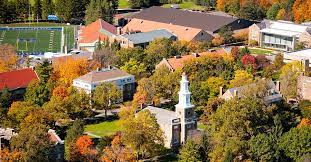








 The Kyoto Kibbitzer