On Some Meetings and Close Encounters with Musicians II

Note: This is the second piece in our series “On Some Meetings and Close Encounters with Musicians.” You can find the first installment here.

The encounters described here span more than thirty years and several cities — from a first arena concert in Pullman, Washington in 1991 to small club shows in Cambridge, Osaka, and Kyoto over the decades that followed. As with many memories of live music, the exact setlists and dates blur, but the rooms themselves — the sounds, the atmosphere, the strange and fleeting meetings between artists and audiences — remain vivid. These sketches attempt to capture a few of those moments as they were experienced at the time.

Epigraph

No fears alone at night she’s sailing through the crowd

In her ears the phones are tight and the music’s playing loud

— Dire Straits, “Skateaway”

Live music produces strange meetings. Sometimes you meet the musicians themselves. More often you meet a moment — a room, a sound, a feeling that sticks with you for decades while entire years of ordinary life quietly disappear.

Here are a few such encounters.


I. Initiation

My first real concert was the On Every Street tour in 1991.

The band was Dire Straits, the venue was Pullman, Washington, and the company was the usual Spokane crew: Seth, Innes, Kelly.

I was the biggest fan in the car by far. The others liked the band well enough but I was the one who had studied the records, who knew the guitar parts, who was ready for the moment when the lights dropped and the first notes hit the arena. This was the On Every Street tour, which turned out to be their final record.

They played everything: Money for Nothing, Walk of Life, Sultans of Swing. It was a great show, and one of their last before retirement, though at the time I had no real way to judge such things. It was simply enormous — lights, volume, spectacle. I bought the black and blue tour shirt and wore it for five years.

At the time I thought concerts were supposed to be like that: huge, polished, and far away.

I would later learn otherwise.


II. Revelation

Several years later, during the Hamilton years, I saw Red House Painters at the Middle East in Cambridge.

I went with Ian. The room was small, maybe a few hundred people at most. Nothing about it resembled the arena in Pullman. And then, near the end of the set, Mark Kozelek began playing “Little Drummer Boy.” It lasted nine minutes. You could hear a pin drop in the room.

No spectacle. No lights. Just absolute concentration from everyone present. When the final notes faded the silence lingered for a moment before the applause came.

Afterward Ian and I drove back toward New York through the cold night with the windows cracked open, heaters flying out into the darkness, and Hell’s Ditch blasting through the car stereo to keep us awake.

That was the night I realized concerts could be something else entirely.


III. Chaos

Not every show produces reverence.

I once saw The Fall with Ian as well. The band’s leader, Mark E. Smith, seemed to be operating in his traditional mode of total hostility. The set was short — twenty-eight minutes by my estimate. Ian later checked the official record and insisted it was forty-three. Either way it felt brief and volatile. Smith barked into the microphone, glared at the band, and treated the entire enterprise with the air of someone barely tolerating the existence of the audience.

Which, to be fair, was exactly what many people had come to see.


IV. Theatre

The strangest performance I ever witnessed may have been Cat Power at Club Quattro in Osaka.

The evening began badly. An opening act — a woman in what appeared to be a fairy costume — sat at the piano and played for what felt like an eternity. Forty-five minutes at least. Perhaps longer. By the end of it the audience was openly confused.

Then Cat Power appeared.

Or rather she refused to appear in the conventional sense. Instead of remaining on the stage she wandered through the venue with a handheld microphone, singing and rapping while walking amongst the crowd, occasionally placing an arm around a patron or leaning against the bar.

At one point she came right up to where I was standing near the back rail and sang a line or two before drifting off again into the room.

The entire show felt less like a concert than a piece of improvised theatre.


V. Ritual

A few years later I saw Damo Suzuki at Club Metro in Kyoto. Damo had once fronted the legendary German band CAN, but this night bore no resemblance to those recordings. Nothing recognizable from the catalog appeared. And here he stood, just a few feet away from the audience with long black-and-grey hair flowing, bellowing and chanting over a constantly shifting improvisational band.

It was less a performance than a ritual.

Damo passed away not long ago. RIP and prayers up. I’m grateful I saw him when I did.


VI. Canada Night

Not all memorable shows are mystical.

Sometimes they’re simply loud.

One such evening occurred at Club Quattro in Osaka when Broken Social Scene and Death From Above 1979 came through town.

The Canadian ambassador was present and delivered a brief speech before the set explaining that Death From Above 1979 represented a fine example of Canadian enterprise because they were “only two men making so much noise.”

The room was packed with Canadian expats and the atmosphere was celebratory chaos. The ambassador was probably correct.


VII. Breakdown

Not every concert goes well.

I once saw Bonnie ‘Prince’ Billy at the small Kyoto venue Taku Taku. Something had clearly gone wrong with the lineup. The guitarist appeared to be brand new and could barely navigate the chords.

Will Oldham tried to push through but quickly grew frustrated and began openly calling the guitarist out from the stage. It was uncomfortable for everyone involved.

The show never recovered.


VIII. Redemption

Fortunately the story has a better ending.

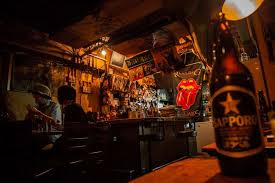
Some years later I saw Bonnie “Prince” Billy again, this time at the beautiful Kyoto venue Urbanguild and everything worked great. Low benches and tables filled the room, Heartland beer bottles glowed green under the lights, and the band played a relaxed, confident set drawn mostly from the Bonnie “Prince” Billy catalog with a few Palace songs mixed in.

Opening the evening was an instrumental group called Bitchin Bajas whose sound reminded me faintly of early Phosphorescent if Phosphorescent had chosen to make instrumental records. After the show I found myself talking with three members of the band while they drank beer and ate fries. They were humble, friendly, and slightly surprised that anyone in Kyoto knew who they were. We talked for a while about touring and the constant challenge of trying to make a living as working musicians. Eventually the conversation drifted off and the room began to empty.

The music was over. The musicians were just people again, finishing their drinks and preparing to move on to the next city. And that, in the end, may be the most interesting encounter of all

Dedication

For live music fans everywhere. My true people. I love you baby.


Note: If you enjoyed this essay, you may also enjoy the essay below on the four time I met Yo La Tengo. Happy reading!

On Coming Through

New Note: This essay sits roughly in the middle of my writing life online. By the time it was written I had already spent several years experimenting with ideas and forms in earlier blogs—first Classical Sympathies, which was more academic and literary in tone, and later Jungian Intimations, which tried to bring Jungian psychology, symbolism, and dream material into a more personal register. Both projects were attempts to understand the terrain of the mind and the pressures placed on a thinking person trying to live inside modern institutions.

“On Coming Through” belongs to that same line of inquiry, but it also marks a turning point. At the time I felt strongly that one phase of life—what might loosely be called early adulthood—was coming to a close. The essay reflects an effort to make sense of that closing: the roles I had played, the ambitions that had driven me, and the ways in which those ambitions both clarified and constrained the direction of my life.

The language of Jung, Hollis, and Rudhyar appears throughout the piece because those writers were the tools I was using at the time to think about cycles of development, identity, and what Jung famously called individuation. Looking back now, some of the terminology feels a little grand, but the underlying questions remain ones I still care about: how a person develops a provisional identity in youth, how that identity eventually exhausts itself, and how one finds the courage to begin again.

In hindsight this essay also foreshadows something that had not yet fully taken shape for me: the idea that writing itself might become the primary vehicle through which I would explore those questions. The project I mention near the end—“Where I’m Coming From: A Straight Answer to the Smart Kids”—was never completed in the form imagined here. But in another sense it never really went away either. Many of the later essays I would write over the following decade, including those that eventually appeared on The Kyoto Kibbitzer, are variations on that same impulse: to record honestly what it feels like to move through the world as a reflective person trying to make sense of culture, relationships, and the shifting terrain of the self.

For that reason I have left the essay largely as it was originally written. It captures a particular moment in the middle of the journey—after the early experiments of Classical Sympathies and Jungian Intimations, but before the more narrative, outward-facing voice that would later emerge. Seen from that vantage point, it reads less like a conclusion and more like a bridge between phases of thought and writing.

Original Note: This little piece is a lightly structured meditation on aspects of the past and clarification of intentions concerning the future.  It appends my previous statement of intent from four years ago (posted below).  Although there is some continuity of concern, specifically around the nature of the demands that playing a role or roles in society places on the individual actor, and some continuity of theory through the continued influence of Peter Berger and Thomas Luckmann, hopefully there is some new material and new thinking as well.  I should acknowledge a debt to several writers whom I have read intensively over the past four years: most especially this piece bears the fingerprints of Carl Jung, James Hollis, and Dane Rudhyar, and many of the ideas here would not exist, or at least not be as fully articulated, without their assistance.  I should also acknowledge that I have been experimenting with different means of writing, different approaches to producing a text, and to the extent that anything herein bears traces of the spirit I can claim no credit.

Epigraph:

“I wanna dedicate this to someone out there watching tonight, I know she knows who she is.”

Bob Dylan, spoken introduction to “Oh Sister.”  From the bootleg record “Songs for Patty Valentine.”

Today I feel as if I stand at the edge of a new world.  The journey through early adulthood has drawn itself to a close, in stages, over the past several years, and I am alive to the fact that a new journey must now be set out upon.  In order to face any new journey properly, with intelligence and intention, we are called upon first to recognize the altered nature of the landscape we will make our way across in the new phase.

The longer I live, the more I understand the words of Ecclesiastes, “to every thing there is a season, and a time to every purpose under the heavens.”  Each era of our lives, each season, sometime even each week or set of weeks, seems to take on a certain coloring and certain characteristics that differentiate it from what came before, just as each zone of time seems to require different things of us.  The strength of our intention and will, as well as the quality and effectiveness of our reactions and decision making, are forever put to the test in small ways, and large ones, and we are forced to define, if only to ourselves, the nature of our relationship to our surroundings, our community, our dharma, our fate.

When we are young, time seems to stretch on almost indefinitely.  The summer of my eighth year, for example, was experienced as a vast expanse of almost undifferentiated time; two or three weeks would pass in a barely conscious haze of biking around my parent’s property, hiking and collecting stones from quarries in the area, or sitting on the roof in the sun, a child in the flow of nature, without “problems” of his own.  Looking back on such a period today, it indeed has a coloring of a kind, and this coloring is so loaded with low-grade nostalgia and barely remembered circumstances that my memories exist not so much in the form of events, rather in the form of a “feel.”  I have a sense of what it felt like to be eight, a sense of the patterns into which life energy fell or was collected, pooled, also a sense of my budding interests, which would in time round into what we are pleased to call “personality.”  There was nothing specific that I was “up to,” and I never had the need to think more than a day or so in advance.  The expression of my energy was essentially aligned with the desires of my heart as much as at that age we can know these at all–or perhaps that is just the point, in a state of primitive unknowingness we are naturally and effortlessly aligned with the desires of our heart, and only when we begin to have to analyze or ask after these do we begin to lose connection with them.

As we grow, the process of socialization begins to crowd in on us, and no person, no personality, is wholly free from the pressures of socialization, of collective expectation, of the reactive categorizations and projections of the always slightly behind-the-curve zeitgeist.  Depending on our own type and manner of apprehending the world as it appears to us, we react and position ourselves in some relation to, at some angle toward, the categories and projections that surround us.  Indeed, both the conformist and the rebel define themselves in relation to and reaction to “the system,” and in many ways their respective positioning is far more similar than otherwise.  Dane Rudyhar makes this point clearly, as do, in more elliptical and elaborated terms, Berger and Luckmann.  Even those (myself for example) who purport or imagine to be able to live outside of collective expectations, to create their own life and write their own script, yet define themselves primarily through the categories that the zeitgeist makes available–it takes work, huge, lasting work, to even begin to transcend one’s era and circumstance in even the smallest part.

The first part of life is necessarily a struggle to find one’s footing in the swim of society, to demonstrate value, usefulness, and the ability to check whichever boxes one is asked to check.  Occasionally, we meet someone who in significant ways seems to have wrenched herself free of some of this static at an earlier age, but even such persons habitually define themselves in terms of existing categories and remain to some extent still a prisoner of them.  For most of us, the child turned young adult, buffeted by external events and demands, adjusts herself over a period of years by applying her core characteristics, tendencies, and abilities to the game as it seems to present itself, and in the process slowly relinquishes immediate touch with that inner voice that provided direction to the child of nature who knew instinctively what was and wasn’t good for her, what was and wasn’t desirable.

At the same time, the goals that one identifies for oneself in youth are not to be lightly dismissed.  They do often provide a symbol sufficient, to borrow Jung’s phrase, to drive libido up a gradient steeper than nature; one learns to accomplish “work,” and to appreciate both the material and ego-related satisfactions that comes from this accomplishment.  Jung says as much when he tells us that it is essentially heathy and necessary when a young person becomes “entangled with fate” which “(involves) him in life’s necessities and the consequent sacrifices and efforts through which his character is developed and his experience matured.”  This dance with fate leads us into a variety of positions and stances, some of which we may carry out with grace and ease, others of which require contortions which we preform without a clear sense of the relationship between the presented or required form and our ability to functionally engage with that form.

Under the pressure to make something of ourselves, to build a career, a business, an image, a body of work, to make more of time by trying to subdue it, we may come to feel that we have found the game, we are on the fast track, we are properly situated under the stage lights, playing the part as it is supposed to be played.  A little light, a little attention, these things classically and nearly inevitably lead to a degree of what Jung calls “inflation,” the expansion of ego-consciousness and the over-identification with the product of one’s work in the world as the summum bonum.  The small still voice of the spirit recedes, or expresses itself through fantasy and other forms of idle ideational free association–fantasies of setting out to sea, of starting over with a new name in an unknown land, of being orphaned and having to fend for oneself, intriguing as these dreams may be they most often serve to cement through counterpoint the existence we actually live out and the style, or lack thereof, in which we do so.

My favorite singer, Matthew Houck from Phosphorescent has a song called Los Angeles where he describes the deeply ambivalent relationship one can have toward one’s accomplishments in the world.  He sings:

The road is alive/ And everybody’s all here/ I’m closing my eyes/ Till the colours appear/ Oh me oh my/ Ain’t it funny up here/ To stand in the light/ Said I ain’t come to Los Angeles just to die

They told me my eyes/ Would never be clearer/ To hold on to mine/ Make good money out here/ They told me those lies/ Just a grinning from ear to ear/ They said ‘here is our offer, ain’t it fine’

Are you getting a lot of attention now/ Are you bleeding in every direction now/ Are they covering you up with affection now/ Are they giving you a lot of attention now…Said I ain’t came here to Los Angeles, baby, just to die

I know, in exquisite and painful detail, exactly what Houck means (or I know exactly what he means to me, which is all the audience can ever really claim to know).  He means that when you bring your interior goods, your art, your vision, your beauty and light, out into the public eye and when some part of that is seen as having value or serving the purposes of established interests, an offer is made whereby your specific value, your original genius and spark, is rewarded at the same time as it is strangled, rewarded through exposure and compensation, and strangled as established interests nearly always (but perhaps not absolutely always) want and need to tie you to a set of projections and definitions that have already taken external form and are recognized as valid, and therefore commodifiable, categories.

At the same time, the singer in this equation is not without culpability in the narrowing of his own genius.  He knows that the kind of attention he is getting is dangerous for him, that it threatens to bring out his worst tendencies, his tendency toward excess, and to distance him from the source of his own art, but he is getting a little addicted to the attention, to the light.  The paradox, or trap, turns out to be that it is very, very difficult for a younger person in the first flush of ego-development to stand in the stage lights for too long without beginning to mistake this external light for the light inside.  Although the singer is trapped, he recognizes the trap, recognizes that he is dying out there, and the song remains hopeful, hopeful that the singer will be able to relocate the reasons for coming to Los Angeles in the first place.  After all, if he didn’t come all the way to Los Angles just to die, he came for some other purpose.

However, what the singer maybe does not recognize is that sometimes a death is necessary in order for life to begin anew.  Most ancient cultures, perhaps all, practiced sacrifice, and the idea at the heart of sacrifice is precisely this–new life follows inexorably from the exhaustion of the old.  The ancients, being literal minded and without the ability to metaphorize as fully as humanity has since learned to, could only see this sacrifice as taking physical form–thus human and animal sacrifice entailed actual bloodletting.  The story of Issac in the Bible, as well as the story of Job, are in fact kind of metaphors for a psychological hinge point in the development of consciousness among the people of the ancient Eastern Mediterranean, a development which eventually led, among other things, to the dwindling of the use of such literal forms of religious sacrifice, but the core idea remains in our present culture in all sorts of places.  (Indeed, much of the Old Testament deals with the development of what we call “consciousness” and the alterations in the character of the Old Testament god mirror alterations in the fundamental psychological character and mentality of the swim of generations over a period of several hundred or a thousand years leading up to to the birth of Christ.)  That is kind of another story, so let us just say that all nature seems to be structured around cyclicality, not so much linearity.  From the ashes of the old comes the living spark of the new.  

The above outline of the first flush of adulthood and its inevitable compromises is not original to me, and those who have looked honestly and hard at the development of the human life have set out this process much more precisely.  James Hollis puts it this way: “What I have called the middle passage arises from the collision of the provisional personality–that group of behaviors, attitudes toward self and other, and reflexive responses which the child is obliged to assemble and manage its relationship with an all powerful environment–with the insurgency of the natural, instinctual Self (…) The passage is experienced as an enervation of the former way of seeing oneself or of one’s functioning in the world (…) The exhaustion of the old is the occasion for the advent of the new, though we are seldom pleased to suffer that death which is necessary for older values to be supplanted.  In fact, one may wander, alone and afraid, for a very long time in the great In-Between before a new psychic image will arise to direct libido into the required development channel.”  Enervation means weakening, loss of vigor, and what Hollis points to in his description of mid-life is a kind of inflection point that I think actually occurs periodically through life, a juncture where one is obliged to examine that agglomeration of the “provisional personality” and the diminishing returns it may be receiving.  Once again, constructing an effective set of behaviors and approaches to the work of life turns out not to be a fully linear process, rather it seems to be cyclical and to necessitate periods of emptiness and exhaustion as well as periods of zenith and culmination.

The last three years of my own life have been but stages toward the exhaustion of this provisional personality.  A character from the television show “The Wire,” explaining to another character that when he says he is ready he means it, says something to the effect of: “you have no idea what I had to do to get to where I am today.”  To the extent that I have embodied and carried out my statement of intent from 2010, I can with some justification say the same.  Being in a position to say this is not necessarily the most pleasant place to be, and I cannot really recommend my process and progress through the proverbial belly of the whale to anyone, certainly not to anyone with a faint heart.  However, along the way I have been blessed, there is no better word, to have met extraordinary people who have given me essential clues as to from where and in which direction my second journey would launch.  I have also been fortunate beyond all measure and worthiness to have received several “big dreams,” and if this indeed characteristic of the stellium in my astrological ninth house (Rudhyar writes that a ninth house person will be drawn to “whatever expands a person’s field of activity or the scope of his mind–long journeys, close contacts with other cultures and with foreigners in general, and (…) ‘great dreams'”) I will take it.  Finally, through periods of intense work and strain which have combined, sometimes combustibly and unpredictably with both great people and great dreams, my consciousness has pulsed or rippled open a fraction, in the process integrating to some extent my inferior functions, first feeling, and then, more challengingly, sensing.

Coming to terms with one’s inferior functions is an essential part of coming to terms with one’s limitations, as these are much the same thing.  However, in some mysterious way that I can barely begin to name, I feel as if I am carrying, and trying to pay off, a larger karmic debt of some kind.  To be honest, I don’t even know how to begin to write about this.  Two years ago, in the autumn, I consulted a humanistic astrologer based in the United Kingdom.  Very well known in her field, she turned out, over Skype, to be deeply learned as well as deeply open and generous.  Her reading was strong, interesting in every respect, but still it was a reading–she has a professional method which she applied with ease and confidence.  Except in one respect–twice during the reading she stumbled, paused, lot her train of thought and said that she couldn’t put her finger on something.  The first time was when she said that I was on the verge of leaving behind an ancestral inheritance 500 years in the making.  She didn’t know what this was, but said it was in my bloodline.  Thirty minutes later or so she cycled back to it, saying she couldn’t make it out but that I was poised to see something or break out of a way of reacting or thinking that had held back my ancestors for generations.  Her reading took place a few months after my inheritance dream, which occurred in the summer of 2011.  Here is the dream:

My father is due to receive an inheritance, and his acceptance of it somehow enables others (his extended family) to also share in the inheritance.  My mother is telling me this in a darkened bedroom with my father outside the door.  She doesn’t want him to hear that she is telling me this, and keeps lowering her voice.  I get the impression that my father’s portion of the inheritance is relatively small, but somehow his taking of it is key to everyone’s access.  While at first I think that it is only a medium sized inheritance, suddenly the television comes on and begins to give more backstory.  It turns out, according to the program, that my father is attached, in a roundabout way, to one of the largest fortunes in the world, and one that is intimately connected to shadowy political power in some unnamed European countries (perhaps Germany, Austria, but spilling westward as well).  The program is a fairly typical expose of networks and hidden hands behind the throne, but nonetheless absolutely riveting.  There is a single male figure at the center of this network, shown briefly in the dream standing behind a spokesman who is speaking into a microphone.  This takes place on a lawn in front of a large and well-to-do house, but both the male figure and the house appear relatively normal and not obviously terrifying or malevolent.  My father’s reluctance to take up his inheritance thus represents a reluctance to involve himself in the political power networks, but the program makes clear through implication that failure to take up the inheritance poses a danger both to himself, and perhaps to my mother and myself.  Much or all of the action in the dream takes place indirectly–through implication or (literally) through a screen.

Humankind being a pattern seeking animal, of course I immediately connected the two data points with a third, the moment in which Ruth Van Reken, the author of “Third Culture Kids” and basically co-founder of this field of study, told me in a hotel lounge in Singapore in March of that same year that god had a mission for me, and a fourth, a quiet but persistent inner voice telling me I had a gift that was not being fully given to others, a gift I was holding inside, that I had another gear, that perhaps I hadn’t come to Los Angeles just to die.

What, in hindsight, I was dealing with and trying to make sense of was in fact Hollis’ insurgent self, a self which was seeking a new psychic image, a new core myth around which a fresh tapestry of charged energy could be woven.  I was living Jung’s individuation, or it was living through me.  This quest was apparent as the subtext to the inheritance dream, and many others of that period.  After writing down the inheritance dream I commented as follows:

There is a lot of context for the dream, best summarized as a fluid and somewhat wild/ chaotic/ noisy social night scene.  This kind of backdrop is quite common in my dreams, so much so I am inclined to refer to my ‘long night dreams’.  These usually take place over several ‘hours’ and spill late into the night or early morning.  They generally build through escalating events/ imagery and crystalize in a single memorable and stirring image.  The dream about an inheritance is in this larger category, but the specific incident in question feels broken out of its immediate context and stands alone in the dreamspace.

Another memorable long night dream from a slightly earlier period culminated in a scene where I came upon a group of revelers around a bonfire, deep in the forest, swinging in hammocks or dancing unrestrainedly some hours after midnight–maybe two in the morning.  Although I was not, knew I was not, of them, I longed to join in their joyous communal frenzy.  This image of a revelry around a bonfire possessed an energetic charge that animated all that came into contact with it, in other words this image, the image of the inheritance, and other images buried late in these long night dreams, were presenting themselves as possible material for my personal myth.  I can imagine a life founded on the idea of an enormous inheritance or a communal dance just as the grail image has, as Robert Johnson convincingly argues, served as the founding myth for western masculinity for a thousand years.

Standing back a little, and thinking about how it is that I have the courage to face a new journey, certain steps, some fairly conventional, others rather more esoteric and specific, have been necessary for me to face the future with confidence and with nerve, to lay the past to rest, to open a new channel to life.  Life, sounds, smells, textures, colors, spill into me and swirl around as never before, and a multi-year process has certainly reached exhaustion, and cleared the way for a realized rebirth.  Rudhyar writes revealingly about the ending of a cycle: “Any person who has had to improvise a speech after a dinner party knows how difficult it is to bring his talk to a convincing and significant end.  When coming to the close of their speech many speakers fumble, repeat themselves, go from climax to anticlimax, and perhaps let their words die out wearily and inconclusively (…) The composer of music, the dramatist, and the novelist often find the same difficulty when confronted with the obvious necessity of bringing their works to a conclusion.”  He goes on: “the natural end of everything is exhaustion–one gets exhausted and so do the people around you.  The speech or the individual himself, dies rather meaninglessly of old age.  Unless the self, the spiritual being, takes control and, binding up all the loose strings of the great lifelong effort, gathers the most essential elements into an impressive and revealing conclusion, there is danger that the great moment will become obscured by the settling dust of the struggle.”

Here, Rudhyar seems to be talking about the end of life, but a little later it becomes clear that he is actually talking about all acts, all events: “The art of bringing every experience to a creative end is the greatest of all arts (…) What this art demands first of all is the courage to repudiate the ‘ghosts’ of the past.  It is this repudiation that is also called severance (…) One must have the courage to dismiss the things unsaid, the gestures unloved, the love unexperienced, and to make a compelling end on the basis of what has been done.”  In other words, a graceful ending acknowledges that there is a great deal more that could have been done, and nonetheless strives to encapsulate and put into perspective that which was done.

With exhaustion of the old comes, as we have seen, the first breath of the new.  In what areas, to what purpose, and up which gradient ought I to apply my newfound energies and intent?  I suspect that the paying off of whatever karmic debt I am holding is a necessary feature of taking up whatever inheritance is to be assumed.  Once again, Rudhyar gives us a hint when he writes of crossing the threshold of rebirth: if the individual “has absorbed and assimilated the darkness represented by the ‘Guardian of the Threshold’–the memories and complexes of the personal and collective Unconscious–then the Tone of the new cycle can ring out clearly.  The individual, conscious of his true Identity, is able to use for his purpose of destiny whatever conditions have been inherited from his past and the past of his race, from his parents and from humanity” (italics in the original).

I love this phrase, “the Tone of the new cycle,” capitalized Tone, (by which we could also understand to mean “style”).  If indeed I am saddled with some sort of baggage from centuries past, an idea which I do not advance lightly in the least, then clearly it is my duty as a future directed individual who simultaneously “believes” in cyclicality as a basic principle of human and natural operations, to transform the elements of this baggage, this ragged tune, into a new tone which can ring clear to anyone who might benefit in some way from hearing it.  My listeners, my audience, are those smart kids who, blessed and cursed with preciosity, struggle to make sense of the terrain of their own mind which, in the immortal words of Gerard Manly Hopkins has mountains, O the mind, mind has mountains.

In order to reach authentically another I need then to perform in my own style.  Arriving at an original style is the first great challenge for any artist; in the arts formally this generally entails assimilating the style of others with one’s own insurgent urge toward expression such that the resulting product is recognizably your own and resonates with your inner sense of what you are about.  The effort to live one’s life with style, to make of one’s life a work of art, is harder still, for instead of working toward a finished product, a song, a novel, poem, or canvas, we are instead seeking to infuse each moment, each encounter, each event pocket, with creative intent and energy.  This effort requires attention as well as imagination, and here attention and imagination exist in a delicate and precise balance. Without attention the mind quickly loses itself in projection, in maya, the mist of illusion and fantasy.  However, without imagination attention may be overly focussed in the immediately apparent and explicable.  Hollis quotes Gaston Bachelard: “Psychically, we are created by our reverie–created and limited by our reverie–for it is the reverie which delineates the furthest limits of our mind.”  The courage to imagine, to wander, and to bring back to and integrate into diurnal consciousness the imprints and impressions of our furthest wanderings, this is the courage we may need in order to live at the highest levels of creativity.

This essay is beginning to feel the pressure to make a compelling end.  The other evening, I ran into an acquaintance from an earlier incarnation and we started talking event theory.  He summarized his own view of events in five words: “an event should be eventful.”  The eventfulness of an event depends on both the arrangement and combination of space, time and energy to create an event arc with pockets of luminosity and on the willingness of the participant to experience eventfulness, to happen.  Oddly, happenings are neither entirely willed and created nor entirely received.  Instead, happenings and events transpire in the liminal band between will and fate, writer and muse, figure and ground.  Phosphorescent again: “See I was the wounded master/ oh then I was the slave/ my hands and my mouth, aw honey/ they would not behave/ See, I was the holy writer/ then I was the page/ I was the bleeding actor/ then I was the stage.”  Who are we in our journey through life, around, and back again?  Are we the maker, or the made?  The master, or the slave?  The writer, or the page?  The actor, or the stage?  The happening, or the happened to?  Are we in charge of our own destiny or awash and afloat in a current so much stronger than we are?  Are we all of these things simultaneously?  What is my mission on this new journey I am called to alight upon?  What is the mission of my young friends, a generation younger than I, who face the difficult transition to adulthood in the keening wind of the 21st century?

My deepest wish is simply this, that today’s smart kids may navigate the delicate relationship between their mind and their life during the first half of life in a more graceful and integrated manner than have I, that they receive, if only from a handful of people, compassionate help and understanding to this end, and that the experiences visited upon me may in some small way assist this integration, if necessary as a sort of sacrifice.  Perhaps in the end this makes me too an “established interest.”  However, I hope I have no specific requirements any more than I have specific requirements for myself, no program, no method, no dogma other than the welling hope that when they reach their own Los Angeles they are able to negotiate their own terms upon being asked to stand for a while in the light.

On the last page of Italo Calvino’s masterpiece Invisible Cities, the Great Khan and Marco Polo are concluding their conversation about Polo’s travels across the globe.

Already the Great Khan was leafing through his atlas, over the maps of the cities that menace in nightmares and maledictions: Enoch, Babylon, Yahooland, Butua, Brave New World.

He said: “It is all useless, if the last landing place can only be the infernal city, and it is there that, in ever-narrowing circles, the current is drawing us.”

And Polo said: “The inferno of the living is not something that will be; if there is one, it is what is already here, the inferno where we live every day, that we form by being together.  There are two ways to escape suffering it.  The first is easy for many: accept the inferno and become such a part of it that you can no longer see it.  The second is risky and demands constant vigilance and apprehension: seek and learn to recognize who and what, in the midst of the inferno, are not inferno, then make them endure, give them space.”

The philosopher Ludwig Wittgenstein, who worked at Cambridge, once advised a colleague to leave the university as there was “no oxygen” for him there.  Upon being asked why then he, Wittgenstein, stayed, the philosopher is said to have replied: “It doesn’t matter…I manufacture my own oxygen.”  While I am deeply grateful to those handful of people who have gone out of their way to give me space, in some ways I feel as if I have to too great a degree, had to manufacture my own oxygen.  Perhaps the atmosphere of the coming journey will consist of some other arrangement of elements such that oxygen, or whatever allows one to breath there, is made more freely available.  In the meantime, I intend to give the only gift that I have to whichever smart kids might take something away from it.  This gift is simply the truthful and open record of what it has been like for one relatively smart kid to navigate life, relationships, and his own psychology and mentality–a primer on the basic aspects of living the first half of life as a semi-ambitious introverted intuitive living between centuries and shuttling between east and west.

Before any new journey can be set out upon, passage must be secured–I know this because I have dreamt it.  Possessing no riches of my own, the price of the new journey will have to be paid by the brokering of an inscription, a text, of the old one.  This text will necessarily be partial, incomplete, subject to criticism for what it redacts, a map that barely begins to reflect the territory as was the dream text itself, as are all dream texts.  This has to be accepted at the outset; after all even the holy writer is perpetually bound by the constraints of form.  And even as we are writing the record of our coming through that earlier landscape, the greater work of embodying the living word such that the opulent and decorative higher floors of our co-constructed mansion are made manifest through our participation in reverie and revelry, of ascending the far-flung mountains of a new Aeon, will already have begun.

Dedication:

For all the smart kids.

Works Cited/ Referenced:

Peter Berger and Thomas Luckmann, The Social Construction of Reality.

Italo Calvino, Invisible Cities.

Ecclesiastes.

Gerard Manly Hopkins, “Mind Has Mountains (No Worst, There is None).”

James Hollis, Creating a Life: Finding Your Individual Path.

Julian Jaynes, The Origins of Consciousness in the Bicameral Mind.

Robert Johnson, He.

Carl Jung, On the Nature of the Psyche.

Van Morrison, “No Guru No Method, No Teacher.”

Phosphorescent, “Los Angeles,” from Here’s to Taking it Easy.

Phosphorescent, “Terror in the Canyons,” from Muchacho.

Dane Rudhyar, The Astrological Houses.

Andrei Tarkovsky, Stalker.

Some Everyday Catalyzed Emergencies

Note: The examples in this piece are drawn from moments in my own life where the structure I call a catalyzed emergency appeared in miniature.

What these moments share is not their subject matter but their pattern. A system—whether emotional, institutional, or social—exists in a temporary equilibrium. Then a relatively small catalyst activates tensions that were already present beneath the surface. Once activated, the situation accelerates and decisions that previously seemed distant are suddenly made in real time.

In each case, the catalytic moment itself was small: a candid remark during a conference break, a humorous but revealing line in a professional meeting, or a single sentence spoken in a social situation. Yet in each instance the effect was immediate. The atmosphere shifted, ambiguity collapsed, and the underlying structure of the situation suddenly became visible.

The personal examples described here are therefore not offered as dramatic events in themselves. Their significance lies in the way they illustrate, at the scale of everyday life, the same structural pattern that appears in larger historical crises.

Catalyzed emergencies, it turns out, are not rare occurrences reserved for moments of world history. They happen quietly and frequently in ordinary human experience.

Once you begin thinking about catalyzed emergencies, it becomes difficult not to see them everywhere.

Most of life proceeds in a kind of provisional calm. Conversations unfold along familiar paths. Institutions conduct their meetings, relationships drift through their usual rhythms, and the tensions that exist beneath the surface remain politely contained. Decisions are postponed. Conflicts are softened by habit. The system holds together because nothing has yet forced it to reveal its deeper structure.

Then something small happens.

A sentence is spoken a little too plainly.
A truth appears unexpectedly in the middle of a casual conversation.
Someone says something in a meeting that suddenly exposes the machinery of the institution.

The catalyst itself is often tiny compared to the shift that follows. Yet once it occurs, the atmosphere changes almost immediately. Decisions that once felt distant suddenly move into the present. The underlying structure—emotional, institutional, or relational—becomes visible.

Once you start noticing these moments, you realize they are everywhere.

I remember one such moment during a conference break with the young woman I call Isobel. We were talking in that loose, slightly intimate way people sometimes do between sessions, when the formal structure of the day has momentarily dissolved. The conversation drifted into unexpectedly personal territory, and at one point she mentioned something about her private life that was startlingly candid.

The remark itself was quiet and almost offhand. Nothing in the hallway changed. People were still pouring coffee, drifting between rooms, checking their schedules. The conference continued exactly as it had a few minutes before.

Yet internally something shifted very quickly.

A boundary that had previously existed only as an assumption was suddenly visible. The emotional geometry of the situation rearranged itself in an instant. It was one of those moments when the surface calm of an interaction suddenly reveals the deeper structure beneath it.

Looking back, it was a perfect example of a small catalyzed emergency. The remark itself did not create the tension that followed. It simply activated something that had already been present but unspoken.

Institutional life produces similar moments, though usually in a different register.

Years ago I attended a meeting where Steve Keegan, then responsible for development at the International Baccalaureate, delivered one of the most unintentionally perfect lines I have ever heard in a professional setting. Attempting to strike a tone of humility, he reassured the room that the organization should not think too highly of itself.

“We are not special,” he said.

Then, after a brief pause that only improved the effect, he added:

“Of course we are unique and special in many ways.”

The room erupted in laughter, not because anyone intended to mock him but because the remark revealed something everyone recognized instantly. Institutions often survive on carefully balanced narratives about themselves—humble yet exceptional, ordinary yet distinctive. When those narratives momentarily contradict themselves in public, the entire room suddenly becomes aware of the structure holding the organization together.

Again, the catalyst was small: a single sentence.

But in that moment the underlying psychology of the institution briefly revealed itself. Everyone in the room could see the gears turning.

The same pattern appears in more personal moments as well, sometimes with surprisingly decisive consequences.

I remember a night when a man was attempting to pick up Mariko. It was the sort of situation that unfolds quietly in bars and restaurants all over the world—nothing dramatic, just two people talking while someone else tries to determine what role they themselves are supposed to play in the unfolding scene.

For a while the equilibrium held. The conversation drifted, the man continued his efforts, and I watched the situation with the vague uncertainty that sometimes accompanies these moments. Was I a bystander? A friend? Something else?

Eventually I said something very simple.

“We’re together.”

That was it. A single sentence. A declaration that had not existed in explicit form until the moment it was spoken.

But the effect was immediate.

The conversation stopped. The geometry of the room rearranged itself instantly. What had previously been ambiguous became clear. The situation resolved itself within seconds.

Looking back, it was another catalyzed emergency. The sentence itself did not create the underlying possibility. That possibility had already been present in the emotional structure of the evening. What the sentence did was activate it, collapsing uncertainty into decision.

The remarkable thing about these moments is how small they often appear at the time. They do not arrive with the dramatic clarity of historical turning points. They slip quietly into the flow of ordinary life—a conversation during a break, a remark in a meeting, a sentence spoken in a bar.

Only later does the pattern become visible.

Most of life feels gradual while we are living it. Days follow one another in a steady rhythm. Institutions maintain their procedures. Relationships drift along familiar channels. The tensions that shape events accumulate quietly beneath the surface, rarely forcing themselves into view.

Then something small happens.

A remark.
A confession.
A declaration.

And suddenly the structure reveals itself.

The catalyst may be nothing more than a sentence spoken at exactly the right moment. But once the reaction begins, the system rarely returns to its previous state unchanged.

Note: This is Part III is our series on the concept of the “Catalyzed Emergency.” You can read the other two essays below.

In Defense of Mayo Thompson

Note: This essay reflects on the artistic approach of Mayo Thompson and the work of Red Krayola, particularly the band’s deliberate challenge to conventional ideas of musical skill. The famous observation that Thompson plays the guitar “badly, on purpose,” often cited in critical discussions of the group’s work — including later reassessments of records such as Malefactor, Ade — captures something essential about that approach.

The phrase can sound dismissive at first, but it also points toward a deeper artistic intention. From the late-1960s underground scene through later recordings, Red Krayola consistently treated rock music less as a polished craft than as an open field for experimentation. Imperfection, disruption, and instability were not accidents but part of the aesthetic design.

Whatever one ultimately makes of the results, Thompson’s work continues to raise an interesting question: how much of what we call musical “skill” is simply a set of habits that artists occasionally need to break.

There are certain musicians whose reputations survive largely through footnotes. They appear in the histories. Critics cite them as influences. Other artists speak their names with reverence. Yet relatively few listeners spend their evenings actually playing the records.

Mayo Thompson, the guiding figure behind Red Krayola, occupies precisely that strange territory. His band is frequently described as “important,” “experimental,” or “avant-garde,” words that often function as polite signals that the music itself may not be especially enjoyable. Red Krayola records circulate through the culture like curious artifacts — admired, studied, but approached cautiously.

And the most famous criticism of Thompson’s musicianship captures the problem perfectly.

A critic once observed that Thompson plays the guitar “badly, on purpose.”

The line, often repeated in retrospective discussions of Red Krayola’s music, originally surfaced in commentary surrounding the band’s 1989 record Malefactor, Ade. Whether in a Pitchfork reassessment or earlier critical recollection, the phrase stuck because it seemed to summarize the entire aesthetic in five devastating words.

Badly. On purpose.

For many listeners the sentence reads like a dismissal. But read another way, it becomes the most accurate description of Thompson’s artistic method ever written.

Because the key word in that sentence is not badly.

It is purpose.

From the beginning, Red Krayola treated rock music not as a set of rules to master but as a field of possibilities to disrupt. When the band first appeared in the late 1960s, rock was rapidly developing its own conventions — tighter songwriting, increasingly polished production, guitar virtuosity becoming a badge of seriousness. Thompson responded by moving in the opposite direction.

Instead of improving technique, he destabilized it.

Instead of polishing songs, he dismantled them.

Instead of reassuring the audience, he occasionally seemed to provoke it.

To understand this impulse, it helps to remember the strange cultural environment out of which Red Krayola emerged. The late-1960s underground was full of what might loosely be called the freak scene — a loose constellation of psychedelic bands, communal happenings, and avant-leaning musicians who were less interested in building careers than in testing the boundaries of sound itself. In Texas, where Red Krayola formed, that scene intersected with the surreal humor and anarchic spirit of the local counterculture. Musicians were experimenting with noise, collective improvisation, and absurd theatrical gestures long before those practices acquired respectable academic labels.

Red Krayola fit naturally into that environment. Early performances sometimes resembled happenings more than concerts. Songs dissolved into noise. Improvised ensembles wandered across the stage. Audience expectations were occasionally disrupted on purpose. It was not chaos exactly — more like a deliberate challenge to the idea that a rock performance had to behave in a predictable way.

Thompson understood something fundamental about rock music that many technically superior players missed. The genre had always contained a certain productive roughness — a willingness to accept imperfection as part of its expressive vocabulary. Chuck Berry’s guitar was not elegant in the classical sense. Early garage bands could barely tune their instruments. Punk would later turn this roughness into a formal principle.

Red Krayola pushed that principle further than almost anyone else.

By “playing badly on purpose,” Thompson exposed the hidden assumptions behind musical skill. What does it actually mean to play well? To hit the expected notes? To follow the established structure of a genre? To demonstrate control over the instrument?

Or might it mean something else entirely: the ability to reshape the instrument so that it produces new kinds of thought?

Listen carefully to Red Krayola’s recordings and the supposed incompetence begins to look suspiciously intentional. The guitar lines wobble, fragment, and reassemble themselves in unexpected patterns. Rhythms appear and disappear. Melodies emerge briefly before dissolving into something stranger. The music behaves less like a traditional composition and more like an argument unfolding in real time.

The phrase “avant-rock” is often used to describe this territory, but the label can make the music sound colder than it actually is. Beneath the disruption lies a restless curiosity about what rock music could become if freed from its habits. Thompson’s playing does not reject the guitar so much as treat it like a tool for questioning the very idea of guitar playing.

Which brings us back to that famous line of criticism.

“Playing the guitar badly, on purpose.”

For some listeners the sentence still reads as an indictment. But for others it begins to sound like a manifesto. What if the deliberate abandonment of technical mastery allows a musician to explore new expressive territory? What if awkwardness becomes a form of freedom?

The history of experimental music is filled with similar gestures. Artists deliberately violate the rules of their medium in order to discover what lies beyond them. Painters distort perspective. Writers abandon traditional narrative structure. Filmmakers fracture chronology. Thompson simply applied the same logic to the electric guitar.

And the results, while sometimes difficult, have proven surprisingly durable. Decades after Red Krayola’s earliest recordings, the band’s influence can be heard echoing through the strange corners of indie rock, post-punk, and experimental pop. Musicians who grew up absorbing Thompson’s restless attitude toward form learned an important lesson: rock music does not have to choose between intellect and instinct. It can contain both.

Thompson himself has often downplayed his role in the process, describing music as merely a “means to an end.” That humility is part of the puzzle. The work was never about demonstrating personal virtuosity. It was about using the medium of rock music as a way of thinking — testing ideas about sound, structure, and audience expectation.

Which explains why Red Krayola’s catalog continues to feel oddly alive. The records are not polished monuments to technical achievement. They are documents of exploration, full of wrong turns, strange detours, and flashes of accidental beauty.

In a culture that often equates artistic success with increasing refinement, Mayo Thompson chose the opposite path. He embraced awkwardness, instability, and deliberate imperfection as creative tools.

And if that occasionally meant playing the guitar badly — well, that too was part of the design.

Badly, perhaps.

But never accidentally.

In Defense of Ryan Adams

Note: This essay is not an attempt to defend Ryan Adams the person. It’s an attempt to defend the continued seriousness of the music. The distinction matters, even if our cultural conversations sometimes pretend it doesn’t. Also, I fucking love Ryan Adams. He is the motherfucking man.

Epigraph:

“When the stars go blue.”
— Ryan Adams

For several years now it has been socially safer to treat Ryan Adams as a closed case: talented songwriter, personal flaws, cultural exile. The outline is familiar enough that most people no longer bother to revisit the work itself. But the strange thing about Adams is that the songs refuse to cooperate with the narrative. They remain stubbornly alive — hundreds of them scattered across albums, demos, and late-night recordings — carrying the same bruised intelligence that first made people pay attention twenty-five years ago. At some point the question stops being whether Ryan Adams is an admirable person. The real question becomes harder and less comfortable: what do we do with an artist whose flaws are obvious but whose music continues to tell the truth in ways very few writers can manage?

Part of the problem is that Ryan Adams belongs to an older model of songwriting — the kind where the emotional life of the artist is inseparable from the work. The songs are confessional without being literal, personal without being autobiographical in any simple way. From the early Whiskeytown albums, to his solo debut Heartbreaker, on to today, Adams has always written like someone sitting in the wreckage of his own choices and trying to understand what just happened. That voice — raw, impulsive, often heartbroken, sometimes self-pitying, often painfully perceptive — was never tidy. It wasn’t supposed to be. The appeal of Adams at his best has always been that the songs arrive before the moral cleanup crew.

When the accusations against him surfaced in 2019, the cultural machinery moved quickly. Adams’s shows were cancelled for a while, he was dropped from projects, and reclassified overnight as an artist whose work had become morally contaminated. Some listeners stopped listening immediately. Others quietly kept listening but stopped talking about it in public. The silence that followed was oddly complete. In a culture that usually thrives on argument, the Ryan Adams conversation simply evaporated.

That disappearance is revealing. It suggests that many people were less interested in wrestling with the complexity of the situation than in resolving it as quickly as possible. Once the story had a clear villain, the cultural instinct was to move on.

But the songs remain.

Listen again to Come Pick Me Up, and you hear a man cataloguing his own emotional incompetence with surgical clarity. Oh My Sweet Carolina still carries that strange mixture of homesickness and resignation that only a handful of songwriters ever capture. Later work — Ashes & FirePrisoner, Chris, the better moments of the sprawling archive that followed — continues the same project: the slow documentation of a person trying, often unsuccessfully, to live with himself.

None of this absolves Adams of anything. It doesn’t erase the accounts of people who describe him as manipulative, volatile, or worse. If anything, the songs themselves suggest that those accounts are not entirely surprising. Adams has been writing about his own volatility for decades. The records are full of it — jealousy, insecurity, emotional chaos, the constant sense of someone struggling to regulate the intensity of his own personality.

What the songs also reveal, though, is a rare level of self-awareness about his own condition. Adams’ best work doesn’t present him as a romantic hero. It presents him as part of the problem.

And that distinction matters.

One of the stranger habits of contemporary cultural criticism is the belief that the value of a work of art should track the moral cleanliness of the person who made it. This is a comforting idea, but it collapses under the slightest historical pressure. Much of the art people still revere emerged from personalities that were messy, selfish, unstable, or worse. Songwriters, perhaps more than most artists, tend to write directly from the fault lines of their own lives.

If we demanded perfect character from every songwriter whose music we admire, the history of popular music would shrink dramatically.

The more interesting question is not whether Ryan Adams deserves redemption. That is not something critics or listeners are qualified to grant. The question is whether the songs themselves still carry meaning once the mythology surrounding the artist has been stripped away.

In Adams’ case, the answer seems to be yes.

The songs are still precise. The emotional details still land. Lines that once felt like romantic exaggeration now sound more like documentation — the sound of a man who understands, perhaps too late, the patterns that keep repeating in his life.

There is something oddly honest about that.

The best Ryan Adams songs have always sounded like dispatches from someone who knows he is partly responsible for the wreckage he is describing. They are not pleas for sympathy so much as attempts at recognition — moments where the singer steps outside himself long enough to see the pattern clearly.

That is why the music persists even when the cultural narrative surrounding it has hardened.

The songs were never about innocence. They were about self-knowledge.

And self-knowledge, even when it comes from flawed people, is still one of the things art is uniquely good at revealing.


Dedication

For Ryan, one of the five greatest songwriters ever and the motherfucking man. I love you baby.

Note: If you like this essay, you may like these others in the same “In Defense Of” series.

On the Song “Encounter at 3 AM”

Note: This piece sits at the intersection of music, memory, and atmosphere rather than narrative disclosure. It reflects on a late-night encounter whose emotional resonance exceeded its visible duration, while respecting the privacy of the people involved and the ambiguity that gives such moments their meaning.

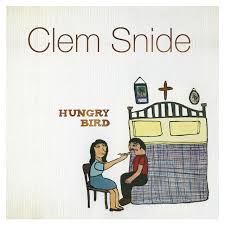
The essay is less about what happened than about how certain hours alter perception — the thin, liminal spaces where experience feels lightly refracted and ordinary interaction carries unexpected depth. References to artists like Franz Wright, Clem Snide, and Steve Earle, function as interpretive companions rather than explanatory frameworks, illustrating how art often provides language for encounters that resist direct narration.

If the piece feels intentionally incomplete, that is by design. Some experiences are best preserved as atmospheres rather than stories — moments acknowledged without being fully claimed, interpreted without being resolved.

In that sense, this essay is not an account but a calibration: a quiet recognition that certain hours open briefly, rearrange something internal, and then close without explanation.

And that noticing, in itself, is enough.

A brief reflection on songs, hauntings, and the thin hour of the night

Epigraph
“All I wanted was a little money / All I needed was a week or two…”
— Steve Earle, What’s a Simple Man to Do? (2002)

I first learned the shape of this feeling not through Steve Earle, but through Clem Snide’s cover of Franz Wright — an artistic relay in which one voice carries another’s encounter across distance and time, transforming the original into something that feels simultaneously intimate and secondhand. That is often how hauntings arrive for me: sidelong, refracted, mediated by art before experience recognizes itself inside the echo.

A borrowed door into an original room.

And that is where the hour begins.

There exists a space late at night — or early in the morning, depending on temperament and life stage — when cognition thins and the world grows slightly porous. The clock reads 3 AM, but the number matters less than the condition: the hour when ordinary structures loosen their grip, when language quiets, when identity becomes less declarative and more receptive.

At that hour, the city changes character.

Sound carries differently.
Light softens into suggestion.
Distance feels compressed.
Time feels elastic.

Even familiar rooms acquire the faint strangeness of places visited in dreams. Furniture appears slightly displaced from its daytime certainty. Street sounds arrive as fragments rather than narratives. The mind, deprived of external reinforcement, becomes a receptive surface for impressions that would dissolve immediately under daylight scrutiny.

It is not mystical.
Not dangerous.
Not even especially dramatic.

Just thin.

I have had moments there — most of us have — when the boundary between witnessing and participating becomes ambiguous. One moment in particular remains lodged in memory like a quiet shoulder tap. There were real people involved, real conversation, real movement through space. And yet layered within the literal event was something harder to categorize: a presence that did not claim metaphysical authority but nonetheless altered the emotional pressure of the moment.

I cannot narrate specifics. Confidentiality holds the center, and the encounter was not fully mine to claim. But proximity alone can leave residue. Sometimes you do not own the story, yet the story alters you.

Earle’s character inhabits a world of visible stakes — border desperation, economic precarity, the sudden rearrangement of circumstance that forces moral improvisation. His question, What’s a simple man to do?, is less rhetorical than existential. It captures the sound of a human recognizing that the script he believed himself to be following has dissolved without warning.

Franz Wright’s terrain is quieter but no less destabilizing. His encounters are interior, structured around visitations that resist empirical verification yet exert undeniable psychological gravity. Wright’s presence is not law enforcement but the invisible: the sudden sense that one’s life has drifted subtly from its intended trajectory, that something unsummoned has stepped forward and is waiting for acknowledgment.

My hour lived somewhere between those poles.

Not danger.
Not mysticism.
A pressure change.

A moment when the ordinary surface of experience felt slightly displaced by depth — as if an unseen observer had entered the room and paused long enough for recognition without introduction. The encounter unfolded within the grammar of everyday interaction, yet its emotional register belonged to a different frequency.

Here is the calibration, because honesty matters more than narrative ownership:

I turned.

And what I saw was both literal and not literal at all. A person whose presence carried echoes beyond biography. A crossing of emotional currents that felt disproportionate to duration. A moment whose significance resided less in content than in atmosphere.

These encounters are rarely sustained. They appear, register, and dissolve before interpretation can fully assemble. But dissolution does not negate impact. Some experiences operate as quiet rearrangements — subtle shifts in perception that reveal themselves only through later reflection.

You do not leave with answers.
You leave with altered attention.

Music offers a framework for understanding this phenomenon. Covers, reinterpretations, and artistic relays mirror the structure of thin-hour encounters: one experience passing through another consciousness, reshaped without losing origin. Clem Snide’s refracted Wright, Wright’s visitation, Earle’s desperation — each functions as a mediated echo, a reminder that human experience rarely arrives unfiltered.

The encounter at 3 AM belongs to this lineage of mediation. It was not an event demanding explanation but an atmosphere demanding acknowledgment.

Afterward, the memory settles differently from ordinary recollection. It does not assert itself loudly or demand retelling. Instead, it persists as a quiet calibration tool — a reference point that subtly informs later perception. You find yourself recognizing similar atmospheric shifts more quickly, attuned to moments when reality thins and emotional depth approaches the surface.

Such experiences resist mythologizing not because they lack significance but because their significance depends on restraint. To narrate them too fully would distort their nature. They exist precisely in the space between explanation and silence.

You live with them quietly.

Without overclaiming.
Without dramatizing.
Without converting them into personal mythology.
Without pretending you earned, summoned, or deserved their arrival.

They came because certain hours open.

Most do not.

You do not chase these moments. Pursuit transforms them into performance. Instead, you cultivate a form of attention that allows recognition without grasping. When the next thin hour arrives — and it will, though unpredictably — the task is simply to remain receptive enough to notice.

The encounter does not require interpretation.
It requires witness.

And perhaps that is the deeper resonance linking Earle, Wright, and the thin-hour experience itself: each represents a moment when life’s ordinary narrative pauses just long enough to reveal underlying possibility. A reminder that identity is less fixed than assumed, that meaning often arrives indirectly, and that some of the most consequential experiences unfold without external spectacle.

They do not change your life in visible ways.
They change the way your life feels from within.

You return to ordinary routines — morning coffee, daylight conversations, the practicalities of schedule and obligation — carrying an unspoken awareness that certain hours remain portals rather than merely timestamps. The world resumes its solidity, but the memory of porosity lingers.

And so the encounter remains:

not a story,
not a revelation,
not a lesson,
but a quiet rearrangement.

A reminder that sometimes the world steps slightly closer without explanation, offering a glimpse of emotional depth that cannot be captured but can be carried.

You do not chase it.
You do not interpret it.
You do not claim it.

You simply remain awake enough to notice when the hour opens again.


Dedication
For the hour that opened.

On the Periscope Platform and Annie Hardy’s “Band Car”

“Wake me up before California
Darling boy I’ve never known ya”

— Annie Hardy


1. Periscope (2018): Ambient Human Contact

In the fall of 2018, before TikTok Live and before Instagram learned how to professionalize everything, there was Periscope.

It was a live-video app owned by Twitter, but it never really felt like social media. It felt more like radio—with pictures. You could open it and see who was live anywhere in the world, zoom in on a city, drop into a stream, leave, move on. The scale was small enough that you could more or less take in the entire active population at any given moment. There was no sense of infinite scroll. The world was navigable.

It was also completely unpoliced. People streamed whole songs, movie clips, televisions playing in the background, themselves half-asleep or wandering around or doing nothing at all. No one cared. There were no warnings, no copyright bots, no friction. It was a free-for-all in the literal sense: free time, free speech, free form.

What Periscope allowed—what it uniquely allowed—was time. Long stretches of it. Silence. Repetition. Boredom. People would just sit there and talk, or not talk, or smoke on their porch and complain about their day. That kind of stream simply does not exist on Instagram Live. Instagram demands a reason. Periscope didn’t.

I loved it because it matched my temperament. I wasn’t looking to build anything. I wasn’t trying to grow an audience or perform a version of myself. I liked cursing around on the app, listening, occasionally speaking back. It was ambient human contact: voices moving through time, present but not demanding anything in return.

Most people didn’t want that. Periscope never offered a ladder—no clear path to recognition, no reliable virality, no payoff for effort. It didn’t protect users from themselves, and it didn’t compress experience into highlights. For most people, that felt pointless. For a few of us, it felt like oxygen.

I didn’t think of it as important while it was happening. It was just there, like a short-lived commons where people killed time together. Looking back, I’m amazed it existed at all.


2. Time, Leave, and the Split Feed

From September 2018 through February 2019, I was on leave from my school. The reasons sit elsewhere and don’t need explaining here. What mattered was that, for once, I had time—real time, not time carved out between obligations. I was based in Kyoto, and in October and November I spent long stretches staying in a hotel in Akasaka, moving back and forth between the two cities.

At the same moment Periscope entered my life, I started a new blog, The Kyoto Kibbitzer. The original idea was simple: walk around, notice things, write about bars, art, neighborhoods. Periscope became a sister project—not an escape from writing, but a parallel way of paying attention. One was private and slow; the other was live and provisional. They fed each other.

I quickly settled into two distinct kinds of streams.

During the day, I walked. Downtown Kyoto, north Kyoto, sometimes Tokyo. I talked, observed, played music, responded to comments. I never put my face on camera—not once. The camera always faced outward, toward streets, storefronts, light, movement. I got a simple phone holder so I could film without fuss. The stream wasn’t about me; it was about what I was seeing.

At night, I streamed from my desk in the upstairs room of my house. I usually stood, like a DJ or a lecturer, sitting only when I was reading something. The night streams were almost entirely art: music, films, writing. I’d play songs and talk about them, read long passages from essays or movie reviews, sometimes even play sections of films on my laptop and film the screen. It was all technically a grey area, but Periscope didn’t care, and neither did anyone watching.

Once I read an entire Roger Ebert essay on air—an interview he’d done with Lee Marvin—and laughed out loud the whole way through. “If I want to be an icon I’ll do it my own way, baby,” Marvin said. Mostly, that was the night feed: attention without urgency, commentary without stakes. Occasionally I’d take it back outside to a bar, or, early on, stay up all night wandering and streaming, the phone dying fast enough that I had to carry two battery packs. But those were exceptions. The form settled quickly.

The split mattered. Day feeds faced the world. Night feeds faced ideas. Both were ways of being present without self-display. Together, they created a rhythm that made Periscope feel less like a platform and more like a place of its own.


3. A Small World with Names

The audience was small, but it existed.

A few people watched consistently. My friend Andrew, who lives in Japan but not Kyoto, would sometimes tune in live or catch the replay later. John Innes watched as much as he could, and sometimes his wife, Kristi, would drop in too. When John commented, I’d usually stop whatever I was doing and talk with him at length. Conversation mattered because it was rare.

There were others who hovered at the edges. A French guitarist would sometimes watch silently for long stretches. Later, Mela would too, though I watched her far more than she watched me—mostly because she streamed for even longer than I did. And then there were the Periscope regulars: people who drifted in and out, stayed for a few minutes, disappeared, reappeared weeks later. That was the rhythm.

Periscope allowed replays, which changed the feel of everything. Not all attention was synchronous. A stream could be watched hours later, like a letter someone opened when they had time. It softened the sense of performance. You weren’t always talking to people; sometimes you were just sending something out into the day.

What mattered wasn’t numbers. Most streams—mine included—had only a handful of viewers at any given time. Even the people who seemed central to the platform often streamed to three or four names. The world was small enough that you could recognize it. You learned who was usually awake when you were. You noticed when someone stopped streaming altogether.

Because of that scale, recognition carried weight. When someone you knew appeared in the comments, it felt like a real arrival. The back-and-forth could stretch without interruption. There was no pressure to keep things moving, no sense that you were losing an audience if you paused to respond.

It didn’t feel lonely in the usual way. It felt communal in miniature. A village square that never got crowded enough to become anonymous.


4. Killing Time Together

I was somewhat lonely during that period, and looking for human companionship. Not intensity, not rescue—just being awake with other people. Periscope worked because it was like radio, only you could talk back. You could toggle around the world and find whatever level of interaction you wanted, then move on without consequence.

Some streams were playful and I would play along. There was a beautiful Russian woman who spoke mostly in Russian and replied to my comments in halting English. She’d do things like eat honey off a spoon, theatrically, and I’d type something juvenile and she’d play along too. It sounds silly, and it was, but it was also light. Once we talked longer and she told me she wanted to go to medical school but couldn’t afford it. I’d guess she was in her mid-to-late twenties. After that, I drifted away. The language barrier was real; the connection couldn’t sustain itself. That was normal.

There was a French guitarist I watched early on. He was very good—technically accomplished, friendly—and he seemed to have infinite time. He’d sit in my stream silently for long stretches, just there. Periscope people had time; that was one of the defining traits. After a few weeks I stopped watching him. Not because anything was wrong, but because it was all one thing. Skill without movement. No arc. Attention drifted, and that was allowed.

Other streams were even more minimal. I remember a woman in Oklahoma who would sit on her porch, rip bongs, and talk about her day. That was it. No premise, no performance. Just presence. That kind of stream doesn’t exist on Instagram Live. Periscope tolerated people doing nothing in public.

There was also Max, a trans woman from eastern Canada. She complained about her mother, about being broke. She usually had no viewers. Every time I came into her stream she lit up. Once I sent her fifty dollars for an art commission, and she reacted like she’d won the lottery. It wasn’t about the money. It was about being seen. On Periscope, small gestures carried disproportionate weight because the economy of attention was so thin.

People weren’t looking for transformation. They were killing time. Talking. Waiting. Passing hours together across time zones. The platform allowed that without apology. It was so free-form that it’s hard to explain now without it sounding unreal.

But that was the baseline. That was what “normal” looked like.


5. Mela: Process Recognizes Process

I didn’t find Mela right away. It wasn’t until mid-October that her stream appeared on my map. By then I already knew how Periscope worked—what it rewarded, what it ignored, what kinds of attention lasted.

The first stream I remember, she was just walking around New York City. Not driving. Walking. Taking stairs. Cutting through neighborhoods. Letting the city decide the route. Almost immediately I felt a shock of recognition: she’s me. Not biographically, not emotionally—procedurally. We were using the same method.

She would ask, “left or right?” I’d type “left,” and she’d take a left. That was it. No drama. No explanation. A shared orientation, moment to moment. I’d stay with her for hours, wandering the city together at walking speed.

People who showed up looking for something else—someone conventionally attractive to perform, flirt, deliver a payoff—would drift off. The stream filtered itself. What remained was patient, non-demanding attention. Process over outcome.

She was in her mid-to-late thirties and had worked in film props on sets around New York. At the time she was on sick leave after a back injury, which explained the free time. She streamed from her apartment, sometimes from a friend’s place she was house-sitting, and often from the streets and trains. The life context was legible. Nothing felt invented for the stream.

Eventually we connected on Instagram, but that’s not the story here. What mattered was simpler: real, undemanding, non-sexual attention feels good. In a micro-attention economy, it feels enormous.

Mela mattered because she showed that Periscope could sustain healthy, lateral connection—companionship without escalation, presence without claim. That mattered later, because it proved the platform itself wasn’t the problem. It was capable of holding something gentle and durable.

That made what came next easier to recognize as different.


6. Giant Drag (Came Late, Stayed Forever)

I came to Giant Drag late.

I first heard them sometime around 2015, years after their debut. The song was “Kevin Is Gay,” and I heard it on All Things Considered on NPR. I remember stopping short. It sounded like shoegaze, but with attitude—guitars that rang and crunched at the same time, a voice that was sharp, funny, unsentimental. I thought: who on earth is this woman?

I bought the CD immediately. The record was Hearts and Unicorns. There was “This Isn’t It,” “Slayer,” and a sense that this wasn’t a novelty discovery. It didn’t feel like a phase. It felt like something I’d been missing and had finally caught up to. Ten years later, the music is still with me.

Learning afterward that the album came out in 2005 only clarified things. I hadn’t encountered Giant Drag as part of a moment or a scene. There was no social reinforcement, no sense of being early or late. The music arrived on its own terms and stayed because it deserved to. It became part of my listening life in a quiet, durable way.

That matters here, because when Annie Hardy later appeared on Periscope, she didn’t arrive as a stranger or as “a streamer.” Her voice was already familiar to me. Not biographically, not personally—but aesthetically. I knew the intelligence. I knew the precision. I knew the attitude. What I didn’t expect was where or how I’d encounter it again.

At the time, none of this felt connected. It only looks that way in retrospect. Back then, Giant Drag was just music I loved, and Periscope was just a place people killed time together. I had no reason to think those two tracks would ever overlap.

Then they did.


7. Band Car → Band House

Because the number of active streams was limited, as I have said, I spent a lot of time just cruising around the map. One night in September 2018, I landed on Annie Hardy without looking for her. The stream was called Band Car, which turned out to be exactly what it sounded like.

She was driving. Talking. Rapping. Singing into some kind of vocoder or effects chain. Swearing at other drivers. There was no Giant Drag material, no backstory, no explanation. She’d say, “Give me three words,” and then build a rap off whatever came in. I gave her words. Over and over. It never went stale. The language was filthy—relentlessly so—but also precise. The filth wasn’t sloppy; it landed because it was aimed.

I watched every day. She streamed every day. She had no job and very little money, and she drove for hours, talking, rapping, improvising, stopping occasionally to run into Home Depot or some other errand. I’d wait. Dead air didn’t bother me. This was how Periscope worked.

Sometimes she used gay slurs, and I balked internally. That wasn’t my thing at all. But the space itself was unfiltered by design, and she used every word under the sun. I didn’t intervene or moralize. I noted it and stayed. Admiration and discomfort existed side by side.

I talked about her on my own stream. I told people she was the best thing on Periscope. I couldn’t believe I had such unfettered, generous access to a high-level artist just living inside her process. There were others watching too, but not many. I was probably her biggest fan, or one of a few. In a micro-attention economy, that mattered.

One night, very late in Los Angeles, I’d been with her for hours. The audience thinned until it was just me. She parked the car, got out, and said, almost casually, “Do you want to do band house?” It was a first. I said of course.

She went into her garage, then into a music room. There was a piano. She asked, “What do you want to hear?” I said how about After the Gold Rush. She sat down without ceremony and played the entire song. No sheet music. No warm-up. She hit the high parts cleanly. Musicians have an astonishing memory for songs, and she had it in full.

It was the greatest musical moment of my life, bar none. The only thing that comes close is hearing Spencer Krug play “Julia with Blue Jeans On” at Urbanguild in Kyoto. This was different. This was private, unadvertised, unrepeatable. When she finished, she said, “Okay, that’s band house,” and wrapped it up.

No encore. No processing. Just the sound, then silence.

That was the miracle. And it was already complete.


8. Running Its Course

In December, I used Periscope again in New York and Boston, mostly with Mela. The rhythm was familiar by then—long stretches of time, nothing urgent, companionship without demands. One night in a Boston hotel room, where I was staying to see Phosphorescent and Jay Som, I streamed the entire film Michael Clayton from my laptop. It was a grey area, as everything on Periscope was. She watched the whole thing with me, commenting occasionally—“bad guy, ooh”—the way someone does when they’re present but not trying to perform being present. It was fun. That was enough.

After that, things ended. Not abruptly. Not painfully. Periscope had simply ran its course.

Mela moved to Oklahoma and stopped streaming. I stopped too. The app thinned out. People disappeared. The small world became smaller and then, effectively, gone. There was no sense of loss that needed narrating, no aftermath to dramatize. The conditions that made Periscope feel possible—time, openness, a tolerance for doing nothing in public—shifted. Life resumed its usual density.

Looking back, what remains isn’t a lesson or a warning. It’s a memory of a brief commons where attention wasn’t monetized and presence didn’t have to justify itself. A place where someone could play a song once, perfectly, for one person, and then stop. And that could be enough.

That was Periscope. And then it wasn’t.


Dedication

For the micro-attention economy.
I had a total blast.

The Splinter Fraction: On the Joys of Karaoke, Communal Song as Social Solvent

Note: This is the third and for now final position of the Trans-Pacific Political Partnership known as The Splinter Fraction. Our first position is about the Age of Consent in the U.S. Our second position is about privileged access for Medecins Sans Frontieres to all war zones and protection from the powers that be for their operations. Our final position is to spread karaoke as widely as possible. We are entirely serious.

We affirm karaoke as one of the last remaining civic rituals in which strangers meet without preconditions and leave with fewer barriers than they arrived with. A microphone passed between an office worker, an American traveler, an Indian engineer, an older Japanese gentleman, a young woman finding her voice again — this is not entertainment alone. It is a brief suspension of hierarchy, suspicion, and self-protection. In these small rooms people remember how easy it is to be together.

Karaoke is not mandatory, nor do we idealize it. We simply encourage every citizen — once in a while, or for the first time — to step into a space where age, gender, profession, and political commitments dissolve for the length of a verse. It is a civic practice hiding in plain sight: a low-cost, low-risk release valve healthier than most vices and far more generous in its returns.

Society is fraying at the edges. But give people one Tom Petty track, one “What’s Up” howl, one chance to sing badly but sincerely, and cohesion begins again — not through policy, but through the ordinary bravery of shared song. The Splinter Fraction supports public encouragement and, where possible, public subsidy of these communal singing rooms, as engines of ease and democratic belonging.

Karaoke will not fix the world. But it will bring us back into easy congress with one another, which is more than most programs can claim.

On Craig Finn’s “A Bathtub in the Kitchen”

I. Opening Notes

This is my third piece dealing with the songwriter Craig Finn. I wrote at length about his song “It’s Never Been a Fair Fight,” and a little more in my piece on Katie Park and The Bad Moves. Although my primary allegiance will always be to Dylan, if I am totally honest Finn is my favorite songwriter. Dylan is a transcendent force, world-historical, and therefore also sort of unapproachable. Finn is down-to-earth—I can imagine having a drink or three with Finn, whereas Dylan would probably have his hoodie up.

So, for the record: my favorite band is Luna, my favorite songwriter is Craig Finn, and the greatest is Dylan. My three favorite Finn songs are “It’s Never Been a Fair Fight,” “A Bathtub in the Kitchen,” and “Killer Parties.” This post takes a close look at “A Bathtub in the Kitchen,” with the aim of explicating both the song and Finn’s delivery.


II. Premise and Setup

“A Bathtub in the Kitchen” is track three on Craig Finn’s 2019 album I Need a New War, released by Partisan Records. For my money, it is not only the standout track on the record, but one of the three greatest songs of my all-time favorite songwriter. The song is ostensibly about an old friend of the narrator (I will refer to him as C.) called Francis, but it’s also about trying to make it in the big city, and about moving on from the past. Making it—or not making it—in the big city is a classic Finn theme.


III. Verse One — The Accident and the Past

The song opens with a report of an accident. The nature of the event is unspecified, but my best guess is an overdose.

The lightning clarity typical of Finn is all over these four lines. We learn that C. and Francis have a relationship shaded by deception, that they still move in overlapping circles, and that both originally came from somewhere else. The final line delivers one of those Finn-isms that cut both ways: city transplants trying to recreate a tiny town, while C. himself is still entangled in the very past he’s trying to escape.


IV. Verse Two — Money, Health, and Elegance

By the second part of the verse it seems Francis has recovered somewhat, and C. has met with him again.

Finn’s concision is astonishing. In eight lines we understand the dynamic completely: C. has money he could give, but knows it’s probably enabling; Francis is perhaps an addict, though neither man states it. We also glimpse Francis in better days—The Parkside, elegant companions, a life C. once aspired toward. And already C. is trying, gently, to pass responsibility to someone else.

This touches something universal: the friend who needs more than we can sustainably give. Or the times we’ve been that friend ourselves.


V. The Chorus — Youth, Longing, and New York

The chorus arrives, one of Finn’s most moving and beautiful. His voice rises on I was drinking, I was dancing, packed with emotion.

This is a flashback to young C. in New York—broke, naive, crashing on Francis’s couch. Finn underlines C.’s passivity three times: waiting, hoping, desperate for New York to ask me out. That phrasing is brilliant. It captures the essential vulnerability of arriving in New York with dreams, no plan, and a subway map.

The memory sends me to my own first visit to New York. Stepping out of the station at 42nd Street into the noise, I felt the shock of sensation—an energy I still feel every time I return. I’ve been to many great cities—Tokyo, London, Singapore, Amsterdam, Melbourne, Hong Kong, Kuala Lumpur—but there is nowhere like New York.

And in a city like that, it can be nearly impossible to get your footing. Everyone is already in motion. Finn evokes that perfectly.


VI. Verse Three — Present-Day Francis

Back to the present:

Francis has been in New York for twenty-three years, and C. nearly as long, since he knows the number by heart. The “bathtub in the kitchen” signals the classic New York starter apartment—a detail so iconic it becomes the song’s title. Francis still goes to the roof for better reception. Phones get disconnected. Life is fraying. C. registers all of this without overt judgment, but with distance. A sense of “there but for the grace of God go I.”


VII. Chorus Reprise — Guilt and Gratitude

The chorus returns with slight changes—“doing things I shouldn’t”—and doubled gratitude: Francis let me crash out on his couch. Repetition becomes confession.

My father read my “Fair Fight” draft and, not knowing anything about Craig Finn, immediately said he sensed a strong midwestern Catholic vibe. He was spot-on. Finn grew up Catholic in Minnesota; guilt, forgiveness, and redemption run through almost everything he writes.

There is also a phenomenal YouTube video of Finn performing this at the Murmrr Theatre, and during the post-chorus especially the performance takes on a spiritual intensity you can’t miss.


VIII. Post-Chorus — The Confession

The lines:

I can’t keep saying thank you, Francis…

These cut two ways. C. is saying:

  1. The couch surfing was long ago, and he has done what he can.
  2. And simultaneously: I’m not the person who can save you.

The confession is directed at Francis—but maybe just as much at himself.


IX. Verse Four — The Old Ropes and the New Distance

The final verse returns briefly to the past: Francis teaching C. how to navigate New York nightlife—befriend bartenders, tip big on the first round. These are the rules of the game. C. remembers them vividly.

Then we snap to the present: Francis’s job rumors, his terrible landlord, the $200 that will “help him breathe a bit easy.” And the repeated question: Francis, do you even have a plan? C. has given him money, but not much, and not with much faith. The trust between them has frayed into obligation.


X. Outro — The Spiritual Release

The outro repeats the confession. Again, it’s worth watching the Murmrr Theatre live version to feel how Finn leans into this. It becomes a kind of secular prayer, a release and a resignation all at once.


XI. Closing Thoughts

“A Bathtub in the Kitchen” is about youth and aging, about friendship and how it lasts and decays, about guilt and human selfishness in the face of real need. More than anything, it captures what it feels like to try to survive in New York.

I think this song, like “It’s Never Been a Fair Fight,” is more personal for Finn than some of his strictly narrative pieces. The narrator here has “made it.” Finn himself is an immigrant to New York, from Minnesota, and has sampled deeply from the nightlife he writes about. Few songwriters have chronicled nightlife with more range, consistency, or compassion.

Even if C. can’t keep saying thank you, I can. This song moves me in ways I’ve tried to describe here but still can’t fully encompass.