Scenes from Hamilton College II: Freshman Year Continued (with cameos from Honey, the Print Shop, and Billy Bragg)

Note: In Part I of this series I wrote about my freshman year at Hamilton, focusing on two friends, Ian and Jake. Part II will branch out and cover a fairly wide, and somewhat random, set of memories.

Epigraph:

I had an uncle who once played for Red Star Belgrade
He said some things are really best left unspoken
But I prefer it all to be out in the open

Billy Bragg

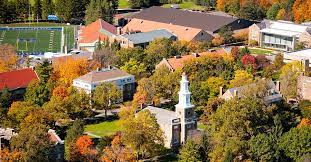
I have already written quite a bit about the characters who lived in the North Dorm freshman year at Hamilton, however there are a few more to cover. First were the first floor stoners. Basmo was a stoner, and he lived on my side of the dorm, but on the other side of the first floor lived the hardcore stoners. This consisted of a quad of guys whose names I don’t totally recall, but one was Peter Kimber, and who got baked at all waking hours and played Roger Waters’ Amused to Death solo on repeat. Next to them, in a double I believe, lived Keys. Keys’ actual name was Caleb, but everyone called him Keys because of the six to eight keys he had dangling from around his neck at all times. What on earth did he need all those keys for? One for the dorm, maybe one for a car (although he should not have been driving at all because he was the single biggest stoner in the dorm and perhaps on campus), what else? I can’t imagine.

Keys and I were not that close, but I did see a lot of him because we had the same job, which was in the school print shop. I don’t know if print shops still exist in the same form in this digital age, but back then the print shop was busy as. We held the campus down. There were two slightly older women who worked at the print shop full-time and three of us students helping out. The full-timers were Sally and Deb. Deb was the boss, and she was kind of motherly and kind to the students. Sally was nice too, but she could be tough. She would bark at us when we made mistakes, which was often because we were running large machines that would glitch pretty frequently. Sally was both the little sister to Deb and also the enforcer. I liked them both, even though Deb ended up firing me, which I’ll get to later.

So Keys would come in lit every day and sort of fumble through his work, which consisted mostly of stapling and collating. I was trusted more than Keys, with good reason, so I ran the machines, but I also did stapling and collating. We printed things for professors, menus for the dining halls, the school newsletter, and a bunch of other stuff. The third student was a girl whose name I don’t recall, and she was a super-hardcore feminist. Everything in the world that was wrong was men’s fault, and it was her only topic. She didn’t seem to dislike me so much as just want to lecture Keys and I all through work, which usually lasted two to three hours in the afternoon, about the ills of men. I was, and am, up for a little feminist theory but Keys was no help and I don’t even think he noticed her, so it was kind of just me and her. Serious feminism and collating are, perhaps, not best paired.

I didn’t originally want the print shop job. I needed work, and there was kind of an intake for all working students where you put your first choice. I put library, but didn’t get the gig. John Innes put audio/video and he got it, which meant he often had to get up early to set up videos for professor’s classes. I would not have been good at that. The print shop was more my speed, but eventually it got really repetitive and I started skipping work more and more. I would go walk in the woods behind campus, or just drink coffee with about a half cup of honey and hang around after class. I also improved as a student through the year, and took my English classes pretty seriously so I was spending more time in the library, although still not sleeping much.

My money situation was tight, although not as bad as it would later be during my junior year abroad in New Zealand where it was super tight. I had a little income from the print shop and my parents sent a small allowance once in a while, but I usually didn’t have more than about 15 bucks in my pocket at any one time. What money I did have went mostly to CDs, as many as I could afford. I had a dining hall pass, but the dining hall food was not really my style so I mostly lived on toast and coffee with honey. Then at night people would order pizza from a local shop, but that was too expensive for me so I would get “friend dough.” Fried dough is just what it sounds like–deep friend pizza dough with powdered sugar, and it cost about $1.50 for a big box. Not the best diet, but it was what I could afford.

One time the father of one of my classmates from high school visited for some reason; he must have been in the area. We met for lunch, and when he left he handed me $100 bucks. This was a serious windfall, and I immediately blew it on CDs, perhaps Neil Young’s Harvest Moon and others. My CD collection, although no rival to Ian’s was slowly increasing and I liked it.

Back in the dorm, in addition to the guys I have discussed, there were also girls, who lived on the second and fourth floor. I got to know the girls directly above us on the second floor pretty well, although not many of the others in the dorm. Among these was Rochelle, who was the girl I was closest to. Rochelle was, I think, from New York, and when she arrived on campus she made a big deal about having a boyfriend. This didn’t last long however, and although I didn’t want her to be my girlfriend I did like hanging out with her. She kind of mothered me a bit though, which I wasn’t so into, because I was going to do what I was going to do. I still have her contact, and I believe she might even read this piece! I think I also met Marie Bishko freshman year, and Marie is someone I thought was really cool.

I don’t really remember any us North guys hooking up with the second floor girls, but it must of happened. Another incident which occurred around this time had to do with my roommate B. and his girlfriend from high school. Like Rochelle, and even more so, he made a big deal of his girlfriend and told us all kind of semi-salacious details. Then one day he told us she was coming to visit and he wanted the three of us in the quad to go to a hotel for a night. I told him sure, if you pay, but he said no. He was dead serious but we told him to forget it, so sure enough she arrived and they hooked up while we all pretended to sleep. That only happened once, thankfully, and it still strikes me as pretty odd. He later broke up with her and fell in love with a Jewish girl, but that didn’t last either because he wasn’t Jewish.

I mentioned in Part I that Jake pledged the fraternity Sig. Ian and John Slack also pledged, Chi Psi (I had to Google the spelling). I spent some time at Chi Psi as well as, where I was alleged to sit on the steps in my trench coat, but I preferred Sig. There was another frat called Deke, and that was where the wildest, and the worst parties were. At Deke there was copious amounts of Milwaukee’s Best (the fabled Beast) and jungle juice. The parties were terrible, but there was a pool table which was a bonus. I didn’t drink much at college, mostly because I had no money, but I did drink some at Deke, with exactly the results you would imagine. I believe it was at Deke where Marc Campbell pulled off his famous pacification move. I didn’t pledge a frat, and I was and remain glad I didn’t. Greek life wasn’t for me.

One guy who I believe lived in North was called Gabe. Gabe was super popular at first in freshman year, and he played guitar on the grass outside the dorm. He was pretty good and he would play “Sexuality” by Billy Bragg which was surprisingly popular in 1992. People, including girls, would flock around him, but over time something seemed to happen to Gabe. He ran for class president and lost to a guy called Kerry who was African American. Kerry lived down the hill in a different part of campus, and he ran really hard for the job. I think Gabe’s ran mostly on a music ticket, and although he got a lot of votes I think he came in second. He may have taken this hard, because he kind of faded into the background, or maybe he just changed up his action. I think I voted, but may have voted for Kerry.

As I mentioned, Jake and I saw less of one another once he started pledging, however we still saw each other in English class and in the English building. We overlapped professors, although he knew some I did not. The two best professors in the English department were George Balkhe and Fred Wagner. Balkhe was still in his prime, maybe late 50’s, whereas Wagner was older and I believe in a semi-emeritus role. I wasn’t even sure I ever took a class from Wagner, but it’s been confirmed that I did, Modern British and American Drama, which makes sense. I didn’t much like 20th century American plays, as plays are mostly blueprints anyway. In any case, Mr. Wagner knew me early in the year because Balkhe praised my reading knowledge to him. Jake and I would go to Wagner’s house, also down the hill toward the town of Clinton (the closest town to Hamilton, about a 15 minute walk), and I recall once we played him the song “Marlene Dietrich’s Favorite Poem” by Peter Murphy, formerly of Bauhaus, with Peter Murphy murmuring “sad-eyed pearl and drop lips…”

Peter Murphy is super underrated by the way, and Wagner liked the song, which just showed how cool he was.

I took a few classes with Balkhe, and we studied poems, and novels–typical choices mostly. I enjoyed these and read most of them, even Faulkner who is really dense. For the ones I didn’t I just faked it. Like I said, Balkhe thought I was amazing because on the first day of class he asked for a list of books we had read and I listed like 200. These were mostly Agatha Christie and John LeCarre and such, but I guess it was good enough. Balhke liked the singer Donovan and the song “Mellow Yellow.”

Electrical banana
Is gonna be a sudden craze

(I later saw Donovan at a new age convention in Boston when I was visiting Ian after college, which I will recount later).

Wagner and Balkhe are both passed away now, so rest in peace to two great English teachers and mentors.

That’s about all I have on freshman year. The last thing is about the featured image for this post, which is the album cover for Bob Dylan’s Oh Mercy. I have written about The Pogues quite a bit, but the album I listened to most freshman year was Oh Mercy. After geology class had a break before lunch and would go back and semi-sleep to Oh Mercy. The quad was always empty at that time of day, and this was the best rest I would get. The album still makes me sleepy to this day, and features excellent production from the famed producer Daniel Lanois. So thank you Bob and Daniel.

Dedication: For Fred. And for George–I hope you are enjoying a little electrical banana up there in heaven.
to be continued…

Scenes from Hamilton College I: Meeting Ian and Jake

New Note: It’s been a while since I last posted this piece, and I’m glad to bring it back here as a republication. “Hamilton I” remains one of my favorite entries on the Kyoto Kibbitzer—an early chapter built around friendship, music, and the strange, formative textures of freshman year, especially the central presence of my good friends Ian and Jake, who shaped so much of that time. It’s also one of the more widely read pieces on the site, which I appreciate. Re-reading it now, I’m struck by how much of what came later was already there in embryo: the scenes, the sounds, the late nights, and the people who mattered. As always, thanks for reading.

And I recall the moment
More distant than it seems
When five green queens
On a black bin bag
Meant all the world to me

The Pogues

I attended Hamilton College, and managed to graduate–possibly in linen. At Hamilton I was an English major, and intended to be from when I enrolled. This was a decent choice; however both Hamilton and English were kind of my father’s choices. I also managed to cobble together an Asian Studies minor through the good auspices of my advisor who checked out my credits and told me I could put that together. This was a good call on his part, and even though I kind of stumbled into it, The Asian Studies minor was my choice.

I was pretty unprepared for college. Before going I was asked to fill out a kind of questionnaire to help the college place me with roommates. One of the questions was, are you clean, messy, or in the middle. I chose in the middle, which was sort of a mistake because it turns out men are pigs, and I was cleaner than most. At the same time though it wasn’t a mistake because if I had selected clean I may not have met Ian and Jake. Jake was my roommate, and we lived in a quad. The other two roommates were Brian and Geoff, and although I had a relationship of a sort with both of them freshman year, we were not really on the same page. Jake and I were. Ian was our next door neighbor, and he roomed with Marc Campbell, and two other people. Ian, Jake, and Marc are still in my life.

My parents came with me to upstate New York, and before I moved into the dorm we stayed for a few days in a hotel near campus. I was kind of apprehensive, and spent the days listening to The Pogues and quietly stressing. But when I moved into the quad things were fine. This was mostly because of Jake.

Jake was a bit of a wild character. He was from either New York or Connecticut as I recall, and I think he came from decent money. When I visited his house later that year it was very patrician, for lack of a better word. His father seemed like a super old-school WASP patriarch, and his mother didn’t work I don’t believe. His younger brother held right-wing political views at the time, while Jake was a lefty. This was a point of serious disagreement between the brothers, but other than that the family seemed pretty solid. I believe that his brother has since switched his political views.

I didn’t meet Jake’s family until Thanksgiving however, and got to know him first in the context of the quad. We lived in a dorm called North, on the first floor right by the door. (My buddy John Innes, who joined me at Hamilton from our high school lived in the neighboring dorm Kirkland, and next to that was South.) The door to North would be locked at night, and other dorm folks would regularly misplace their key and crawl through our always open window. Jake and I rarely slept, and I got in the habit of staying up until about five AM. After that I would get a little sleep before first period English class. Then I would attend Geology class, which satisfied some kind of Science graduation credit. For English class I was alert and on top of it, although I was still hand-writing my papers, which changed once I got in the habit of using the computers in the library. English class was small, maybe 12-15 people, whereas Geology was huge and held in a lecture hall. I would go lay down in the back in the aisle and try and sleep. I ended up getting As in almost all my English classes, and a C- in Geology, which was deserved to an extent because of the sleeping. However, the main question on the final was brutal and pretty unfair, which was to draw a seismograph. Literally, draw one, which we had never studied and I did cram for the final. Brutal action. Somehow I still made the honor roll that year, and every year, because of my performance in the humanities.

Jake was an English major as well as far as I recall, I kind of forget, but he knew a lot of the teachers I knew. In any case, we did not bond primarily in the classroom, but in the dorm and then at “Sig,” the frat he was associated with and later pledged. Sig was the alternative frat. I hung out there a bit, but when pledge season started they kind of cracked down on non-pledges attending parties. For Halloween, Jake snuck me in early, and although that night I got a few looks I was good with Jake’s blessing. That night I wore all black with a turtleneck and a paper sign on my back saying “No future for you.” As in the Sex Pistols. I was talking with an older guy, an alum (there were always some alums that hung at the frat parties at Sig) at the party and he said something to the effect of “I like you, but I don’t like your shirt.” OK dude.

That was the same night I believe that inspired the following little ditty I later shared with Jake:

I pissed in the toilet

He pissed in the sink

He said I haven’t got a god above

I haven’t got a drink

Jake later took umbrage with the lines, not the sink part, which was and remains credible, but the god part. I think he is, or was, a believer. In any case, he’s my friend and won’t sue.

I appreciated Jake showing me the ropes at Sig and elsewhere. In the dorm we would play his music–he was into the classics, Beatles and Stones, Kinks, Bowie. We would sing “The Ballad of John and Yoko,” and “Come Together,” mostly the former over and over, no doubt to the annoyance of our roommates. Jake also liked The Pogues, and this made me think even more highly of him.

Jake smoked, Marlboro Reds, and I soon started smoking too, the same brand. This was not out of a desire to be a smoker, but rather as a way to keep my hands occupied and look busy at parties, where I had some difficulty mixing. I picked up, or invented, a little trick where I would fold up the flaps of a cigarette pack so they looked like a paper airplane, and then lob the cigs around the room, usually to any girl that wanted one. This got me some attention and some affection, and I kind of became known for the move. It didn’t get me laid, but at least it was something. Jake and I were fast friends, and hung out a lot in the early part of the year, before he began to branch out. Once he started pledging Sig though I saw less of him, naturally enough I guess.

By the time Jake started pledging, and even before, I was spending more time with Ian. Ian was from Boston and his father was a medical doctor. He lived in a nice house in the suburbs–both Jake and Ian had quite a bit more money than I, a common feature at Hamilton where pretty much everyone had money expect me. I was on a pretty decent scholarship, despite my not so impressive high school record, and could not have afforded the school without the scholarship. I visited Ian once or twice I believe in college, and then stayed with his family for a few months in the fall after college, but that’s a story for a future post.

Ian had a massive record collection in his quad, next door to mine as I have said. I liked Jake’s music, especially “Rebel Rebel,” “Come Dancing,” and The Stones, however his selection was somewhat limited. Ian’s was capacious. He was into bands like The Stone Roses, The Charlatans, Ride, and a bunch of other British bands I didn’t know at the time. But he was really into everything. I spent hours in Ian’s room soaking up his music, and my association with him kind of took over where Dyche Alsaker’s left off. I think it was Ian who also introduced me to Luna, who was coming up at the time and is still one of my favorite bands to this day. Later, in senior year I think, Ian and I had a radio show together and one night we got to play records all night long when a few other people canceled suddenly. I would play The Replacements and the Pogues, and Ian would play his music, but I was also getting deep into the 4AD label and bands like Big Star, This Mortal Coil, and a little known band called The Binsey Poplars (who I’m not sure were even on 4AD), named after a Hopkins poem. But my favorite around that time was Nick Drake, who was on Rykodisc.

Drake is now pretty well known, mostly on the back of his song “Pink Moon,” which was featured on a Volkswagen commercial, but back then he was not well known outside serious music circles. I loved his song “Rider on the Wheel,” and was an evangelist for him, telling all and sundry to listen. Most people didn’t, of course, but the whole move was just odd enough to get a little attention, which I was definitely seeking. (Another friend from that time John mentioned to me a few years ago that I would sit on the front steps of his frat in my trench coat and read a book. I don’t really remember this, but if it’s true it was for sure for attention.) I remember one evening Ian had a kind of band that was playing and I “opened” for them. My act was simply talking about Nick Drake, painting him as a forgotten genius, which he was, and pleading with the crowd to listen. It went over pretty well, like I said probably just because it was different.

Later on, mostly the next year I think, Ian and I went to a few shows in Boston, including The Red House Painters, The Fall, and Love Spit Love. Ian would drive, and blast The Pogues with the window down to stay awake on the way home. Before one of these shows we managed to source a little green, which was enjoyable. We would park, illegally, in some lot Ian knew. In the lot, there were rats.

Jake and I were sort of on the same level–both semi-degenerate English majors–but Ian I looked up to. He was definitely the leader in the friendship, although he must have seen something in me because we hung out a fair bit. Ian was also friends with Marc, but he was perhaps closer to another group of guys who lived in two adjacent quads on the third floor. This included John and a guy called Will. I would go up there too, and Will would ask “what Dead do you want to listen to?” I always went with Reckoning because I liked the country-folk sound and the song “It Must Have Been the Roses.” I liked the third floor guys too, especially John.

Next door to Jake and my quad was Adam and Basmo. Adam and Basmo (a nickname) were seniors who for some reason decided to stay in what was basically a freshman dorm. Adam was cool, but pretty grown up. Basmo was still a kid, and loved to get high. Loved to get high. Early on in the year he would come over and ask “anyone want to get stoned and session?” A session, it turned out, was you would smoke, put on The Beatles, and watch Bugs Bunny or something with the sound down. The idea was the music would synch up with the cartoon and it would be hysterical. It totally worked, although I just liked to listen to music and bullshit rather than session. Real heads will remember the session. (Jake told me that sadly Basmo later took his own life as a result of the worsening effects of ef. That was really too bad because Basmo was just a pure open-hearted soul.) So basically we would get stoned when we could, smoke Reds, and stay up all night and listen to music, which was a pretty decent life all in all. Jake and Ian took me in, and made the first part of freshman year so much better in all ways than it would have been if I hadn’t known them.

Dedication: For Ian and Jake, for seeing something in me, and helping make me a little somebody.

to be continued…

Note: If you liked this piece, you may other like the other pieces below in the Hamilton series.

On My Dad’s Ridiculous Climbing Strategies

Note: This is a new piece about my dad, Ross Thomas (RO), and his truly unbelievable climbing strategies. The central episode took place in Stehekin, Washington, many years ago, when RO led my brothers and me on an attempt to reach Castle Rock that quickly devolved into heat, dense forest, no water, and general mayhem. There is also a later coda involving a climbing gym in Portland that is, in its own way, even more outta control. This piece is comic in nature, but also affectionate. My dad is a great man, a brave man, and a very game climber. He is just not, in this one specific domain, a planner.

Send lawyers, guns and money — the shit has hit the fan
— Warren Zevon, refracted

RO, is a great man and a terrible climbing strategist. He is brave, energetic, physically game, and in most areas of life basically well organized. He was a good high school English teacher, a very good administrator, and for many years an excellent and meticulous girls’ basketball coach. He is not, in other words, some kind of general life-space incompetent. Quite the opposite. Which is what makes his climbing strategies so difficult to understand.

They are ridiculous. They are unbelievable. They are officially, historically, and totally outta control.

I say this with love.

The central case study here took place in the mid-2000s, let’s say 2005, when our family was staying in Stehekin, Washington, out on Lake Chelan. If you have never been to Stehekin, it is a beautiful and slightly improbable place, the kind of place that already feels like the beginning of a story. Lake Chelan is huge, and you get out there by ferry, which means from the jump there is a sense that you are committing to something. People camp there or stay in cabins. We were in a cabin. My mom Claudia (CL), stayed behind. RO, meanwhile, had a plan.

The plan was that RO and his sons — Mike (MI), Pat (PA), and me — would hike up toward Castle Rock.

Now, one thing about family expeditions is that “the plan” is often not really a collective possession. It belongs to one person. The rest of the group is more or less there to follow along. In this case, the plan belonged entirely to RO. MI and PA and I were, broadly speaking, along for the ride.

As I remember it, we started from Stehekin and walked about three miles just to get to the trailhead, then hiked a few more hours uptrail to where we stopped and camped the first night. It was already a decent undertaking just to get there, but this was, in a sense, merely the prelude. The true RO strategy had not yet fully revealed itself.

At around dusk, after we got to camp and set up the tent and got ourselves sorted for dinner, RO decided he was going to scout the route for the next day. This seemed reasonable enough. It is in fact the sort of thing a prudent leader might do. Only instead of scouting further up the trail, or perhaps generally uphill toward the place we were trying to go, RO for some reason headed downriver.

Why did he do this? We did not know. It was back downhill. It seemed unrelated to the objective. Even at the time it had the feel of one of those decisions that makes perfect sense only to the person making it.

Ross Thomas: The trail kind of petered out eventually and didn’t really lead to Castle Rock anyway.

Fair enough. I want RO’s side of the record included here. But even granting this, and I do grant it, going downriver in the late evening did not strike the rest of us as a strong opening move.

Sure enough, RO fell in the river and got completely soaked.

This was the first of many mistakes he would make on the trip.

He came back to camp late and dripping wet, having apparently developed an immediate a bizarre attachment to that river. The water was cold. The evening was cool. He changed clothes, we had dinner, and we went to bed. At this point, there was still some chance that the next day might somehow become normal.

It did not.

The next morning we got up early, had breakfast, and prepared to head out. My assumption — based on reason, precedent, and the literal existence of trails — was that we would continue on the trail. Instead, RO decided that we were going to bushwhack straight uphill through an extremely dense forest in the blazing heat.

This struck me as a bad plan.

It was a bad plan.

The forest was thick enough that you could not really move with any rhythm. We were not hiking so much as negotiating, arguing, and physically contesting with the landscape. Every movement took extra energy. Progress was incredibly slow. The heat was serious. And the main problem, which quickly became the only problem, was that there was no water. Not a stream. Not a trickle. Not a suspicious puddle. Nothing.

Now, RO for reasons that remain mysterious to me is not a big water drinker. He prefers beer and tea. Under ordinary conditions this is merely a personality trait. On a hot uphill bushwhack through dense forest it becomes a strategic liability.

Naturally, we asked where the water was.

Ross Thomas: I had read in a Fred Beckey book that there was a way to get up to Castle Rock, although I think Beckey had only heard about it and never actually done it himself.

This is, in its way, a perfect Ross Thomas detail. Fred Beckey, the legendary climber, had perhaps heard there was some route, though he had not personally taken it. This was enough for RO. A rumor in a book by a famous climber became an operating plan.

As for the water situation, RO told us — and I remember this vividly — that there might be some in about five miles.

Five miles!!!

We were already fighting for our lives up there, and this crazy man was calmly informing us that in only another five miles there might, possibly, perhaps, be water.

He’s totally outta control.

At some point, after what I recall as roughly three miles of this lunacy, we basically mutinied. Or perhaps mutiny is too strong; let’s call it collective realism. We told RO the obvious, which was that this was not going to work. The route was no good. The heat was too much. There was no water. We had to turn back.

And so we did.

Now the descent was interesting because it brought out our distinct styles. RO, MI, and PA were making their way down carefully, gingerly, responsibly. I, on the other hand, was absolutely flying. Swinging from tree to tree like some kind of deranged monkey, just ripping downhill through the forest. This part RO loves to tell to this day, and I admit it was one of my better athletic showings. I was not going to die of thirst in that forest and I was not going to descend politely either.

Eventually we made it back to camp. Or rather, most of us made it back to camp together. RO, in one of those small but meaningful complications that tend to gather around him in climbing situations, got separated from us and somehow ended up down by the river again.

And yes, he fell in again.

He really must have loved that river.

So now here he comes back to camp once more, drenched, and by this point we are all in total agreement that the trip is over. We are done. It is time to 86 the hell out of there.

So we break camp and head down toward the lake shore. But this presents a new problem. We still have a significant walk to get home — something like another two miles down to the shore and then, as I remember it, another three miles around the lake. And by now it is dusk. So this is not really viable either. We are hot, tired, and in no mood for an elegant final act.

At this point RO does what he often does in these situations, which is simply assume that reality will provide.

He found a guy with a motorboat and asked if he would take us back to Stehekin.

The guy said sure. Fifty bucks.

RO then informed him that he did not actually have fifty dollars on him, but could get it from his wife once we got back to the cabin.

Somehow, by what can only be described as grace, audacity, or a temporary breakdown in the boatman’s judgment, this worked. We got in the boat, got home safely, and made it back in time for dinner.

That was Stehekin.

CODA

You might think the lesson here would have been: bring water, stick to trails, do not base wilderness plans on rumor, avoid rivers if possible, and maybe do not lead your sons into dense forests in the hot sun in search of a semi-mythical route described secondhand by Fred Beckey.

You would be mistaken.

Many years later, when RO was Principal of Valley Catholic High School, he got really into climbing at a gym in Portland. It is a cool place, run by a father and son, and it has beginner, intermediate, and advanced climbs. He took me and MI and PA there, and later my son Hugh as well. Hugh loved it. He scampered up the walls like he had been waiting for exactly this sort of thing his whole life. I like climbing too, though my arms get tired pretty quickly and I tend to fade. MI and PA are both good climbers. RO, to his credit, also has strong stamina.

So one day my wife and Hugh and I were there with him. We’d been climbing for a few hours. I was on the mats, faded, taking a break. Hugh was still going. RO was showing him some moves. Then RO started up one of the big walls — one of the long climbs, the kind where you need the harness.

Only he had forgotten to put the harness on.

Hugh saw this before anyone else did and yelled out:

RO, get down now!

And RO did.

For the next year, RO loved telling the story of how Hugh had saved his life. Quite right too. It is a great story. My son saved my dad from one of my dad’s own ridiculous climbing strategies. The circle was complete.

But then, about a year later, shortly before RO retired from the principal job in 2018, he was back at the gym by himself. This time the only other people there were the owner and his son. And somehow — incredibly, impossibly, yet also in a way entirely consistently with the established Ross Thomas climbing tradition — he forgot the harness again, started up the big wall, and fell.

He crashed all the way down onto the mat.

The mat saved his life, no question. But his feet and knees and legs got absolutely busted up. He was in a wheelchair for months. It was so bad that he had to move temporarily out of the country house in the woods where he lives with CL and into a little bungalow on the Valley Catholic campus owned by the nuns that founded and still run the school. He could barely work. To this day his feet remain a total mess. He has trouble driving and has to drive with his shoes off and wearing some sort of thick sock or something.

At one point we wondered whether he might sue the gym owner for negligence. But RO wanted no part of that. He said it was his own fault, not the owner’s.

Fair enough.

And then, after many months, he mostly recovered. Which means this story has, if not exactly a happy ending, at least a decent one. Better still, as soon as he was recovered he went right back to the gym and started climbing again!

This is what I mean.

His climbing strategies are ridiculous. They are unbelievable. They are officially, historically, and totally outta control. He does not plan for basic things such as the route, the water, or how exactly one might avoid miles of dense forest. He does not always remember the harness. He seems, in climbing situations, to operate according to a distinct internal logic unavailable to the rest of us.

And yet outside of climbing, this makes almost no sense. He is, as I said, a basically well-organized guy. He planned lessons. He coached meticulously. He ran a school. In most areas of life he is not slapdash at all. Which makes the climbing thing not just reckless but anomalous. It is a localized mystery. A glitch in an otherwise coherent system. I do not understand it and at this point I do not expect to.

What I do know is this: to this day I avoid climbing with him because in this one particular area I do not trust his judgment at all.

I love the man. But when it comes to climbing, he is not to be trusted.

Dedication:

For my dad. I love you baby but you are totally outta control.

On the Pre-Game (aka A Response to Neil Strauss’ The Game)

Note: This piece overlaps my three essays on my week with Isobel series (I–III), though it approaches that week from a different direction. Where those pieces follow the arc, this one lingers on the moment before it resolves—the pre-game, as I’ve come to understand it. It is also a direct response to the book The Game, by Neil Strauss. In what follows I don’t intend to rebut Strauss so much as correct what I see as a fundamental weakness in the subculture he dissects. The reader will judge whether I succeed.

Epigraph

“No one else could play that tune, you know it was up to me.”

— Bob Dylan, Up to Me


Part I: Ippei

I’m at Zaza, the club on Kiyamachi in Kyoto. It’s around 11 PM and just getting going. Zaza is a late night place. It doesn’t peak until well past midnight, and at this hour it’s still stretching, still finding its rhythm.

I’m there by myself, drinking a White Russian.

A Japanese guy comes up to me. He’s about fifty-five. No preamble, no easing into it. He introduces himself—let’s call him Ippei—and within seconds it’s on.

“See those two ladies over by the window,” he says. “Wanna help me pick them up?”

I’m intrigued. Not because I’m especially interested in the outcome, but because I’m a curious guy and I want to see what he’s doing.

“Ok,” I say. “What’s the play?”

He doesn’t hesitate.

“You’re my old friend from California. I haven’t seen you in twenty years. I just ran into you by chance here. Take it from there.”

That’s it. That’s the entire setup. Handed to me fully formed.

I ask him, just to check, “Is this going to work?”

He smiles, completely unbothered.

“Yeah,” he says. “I do this every night. Had a threesome last night.”

Well alright then.

We walk over. He starts talking immediately, in Japanese, smooth, fast, confident. “This is Matt, my best friend from California. Would you believe I just found him here?”

I met him five minutes ago.

It doesn’t matter.

In no time the two women are completely engaged. Smiling, leaning in, laughing. The story has landed. The reality has been accepted. They’re not being approached. They’ve been included.

And I’m there, but I’m not really there. I’m not trying to win anything. I’m not trying to escalate. I’m watching. Taking it in. The nightlife anthropologist, just observing the field.

After a while I step out to the balcony to smoke.

Twenty minutes pass.

When I come back down, he’s still there. Still going strong. Still inside the same story.

That’s when it clicks.

He didn’t need me.

He needed the role I filled.

He needed a premise.


Part II: Neil Strauss

Neil Strauss’ The game

That night at Zaza stuck with me, not because of what happened, but because of what it revealed.

There is a whole body of writing—call it a subculture, call it a system—that attempts to explain and formalize moments like that. The most famous version of it is The Game, by Neil Strauss, which I’ve read twice.

I want to be clear about something before I go any further.

I’m not anti–Neil Strauss. In fact, I respect him. He’s an elite investigator of subcultures, and I love subcultures. He embedded himself in a world, learned its language, mapped its hierarchies, and reported it out with real precision. That’s not easy to do. It’s a serious piece of work.

What follows is not a dismissal of Strauss.

It’s a response to what the game represents.

Because once you move from observing a system to adopting it, something changes.

At its core, the game assumes that attraction can be engineered. That with the right language, the right sequence, the right calibrated signals, you can break down a woman’s resistance and get to the desired outcome, which is of course bed.

It’s a kind of a linguistic technology and NLP at its worst. A system designed to move someone from one state to another.

And for me, that’s where I part ways.

For me The Game is a massive turnoff, because it flattens everything and kills any chance at romance.

It scripts what should be alive. It reduces seduction to a manual and turns something unpredictable into something repeatable. And in doing so, it drains it of the very thing that makes it worth pursuing in the first place.

There’s no space for real connection. No space for the unexpected. No space for the moment where something happens that neither person could have predicted. No space for the kind of encounter that might actually change your life.

And beyond that, it produces a life that I don’t want.

The guys in The Game end up living together in this kind of shared house—Mystery, Strauss, Courtney Love—surrounded by other guys, talking about women, thinking about women, analyzing women. It’s a sausage fest. And it’s not cool.

The Gamers think they’re players. I prefer to think of them as incel-adjacent. They’ve optimized the system, but they’ve lost the thing itself. They’ve mastered the game and stepped outside of life.


Part III: On Action

I’ve had a handful of sexual partners that I’ve gone all the way with. The precise number is under an NDA. I’ve made out with more. But I haven’t been especially active, at least not in the way the game would define it.

What I have done is, flirt with, connect with, and have crushes on dozens of women.

And the truth is, I enjoy it.

I actively enjoy the pre-game.

I enjoy getting close. The moment before something becomes something else. The tension. The ambiguity. The recognition that something might be there, and neither of you has named it yet.

The thrill of newness and the possibility of a spark. If it burns, great. If it flickers, that’s also good. For most men, the pre-game is a means to an end. For me, it’s the end.

And that’s the difference.


This doesn’t mean I’m not interested in action. I am. Very much so. In fact, I’m something of an action junkie. But I’m a highly specific kind of action junkie. Like Wittgenstein, who was said to have manufactured his own oxygen, I manufacture my own action.

I don’t chase it blindly. I don’t optimize for it. I don’t try to force it into existence through systems or scripts. I generate it. Selectively. Intentionally. And in moments where it actually means something.


Part III: Luna

I’m at Umineko with a friend—call him Mr. Editor. It’s early, maybe six in the evening. We’re mid-bar, having a beer, when I notice a woman sitting off to the side.

She’s stunning. And I HAVE to go talk to her. Not because I expect anything to happen. Not because I’ve calculated the odds. But because the moment demands it.

I tell Mr. Editor what I’m about to do. He nods. “Go for it,” he says. “I’ll watch.” I walk over and ask her name. She smiles. “Call me Luna.”

We speak in Japanese. The conversation flows. I bring everything I have to the moment—attention, presence, curiosity—and it lands. There’s a spark. Not forced. Not engineered. Just there.

We talk for a while. Long enough for the room to shift slightly around us. Eventually I ask for her Instagram. She gives it to me. I walk back to the bar and sit down next to Mr. Editor. I’m on Cloud 9. The next day, in the late afternoon, carefully timed, I send her a message but she doesn’t reply.

Failure? Not for the pre-gamer. Because the pre-gamer already got what he came for. The moment. The spark. The approach. The brief, electric possibility that something might happen. That was the action. That was the point. For the Strauss guys, the night ends when the text goes unanswered. For me, the night ended at the bar.


Up to this point, the pre-game is contained. Safe, even. A space where things can happen or not happen without consequence.

But sometimes it doesn’t stay that way.


Isobel Revisited:

I have written about my week with Isobel extensively elsewhere, however part of that story is relevant to what we are discussing here. I met her at the Faculty of Astrological Studies, held at Exter College, Oxford, in late August 2018. We spent the week together and I fell in love. But I didn’t sleep with her. My choice. What follows is a light re-write from my essay “On My Week with Isobel: Part II”:

Wednesday.

I wake up early and we have breakfast together in the dining hall. By this point, people are noticing us. Comments here and there, snickers, sideways smiles.

Morning and lunch blur into one long conversation—the garden, the bench, a little grass, nothing hidden. We’re finishing each other’s thoughts. I’m in deeper than I’ve ever been.

We don’t attend much of anything.

In the afternoon break she goes to change. I go back to my room and put on The Mendoza Line with the full weight of obsession. She comes back after and tells me, without shame, that she had pleasured herself during the break. Just fucking states it.

This is a complication.

That night she changes again. A red dress. Short, but not careless. Stunning. We sit at dinner whispering, touching lightly, laughing against each other. Everyone knows by now.

After dinner there’s wine again, talking with the tutors, the long courtyard. I meet Darby Costello in person for the first time. She’s fully alive, drinking wine, holding the room effortlessly. I’m so happy she’s my astrologer. But I’m elsewhere.

We stay late. Clear the courtyard. Around two in the morning we part. Cheeks touched. No bedroom. No act. No close. Back in my room, lights low, Mendoza Line still in my ears, I lie on the narrow bed and I know exactly where I am standing.

I will keep going. I will see where this leads. But I will not sleep with her. I can’t.

It’s not that I don’t want to. I do. Totally and much more. But I can see it. The complications. For her, for me. The chain of events that would follow. I’m old enough to see it coming. And I know, standing there in the courtyard, with the last of the wine and a cigarette burning down, that it’s on me.

I have to be the one to say no. That’s the shape. That’s the decision.

=====

Up to this point, the pre-game has been something I could enter and exit at will. A space I could step into, generate action, feel the spark, and leave intact.

With Ippei, the action was scripted. With Strauss, it was systematized. With Luna, it was self-contained.

But there’s another version of the pre-game, and it’s the one that matters most. The one where the moment doesn’t stay light. The one where it deepens. Where the spark doesn’t just flicker—it starts to take shape. And at that point, something shifts. Because now it’s not just about whether something will happen. It’s about whether it should.

This is where the line from Dylan starts to carry real weight. No one else could play that tune. There’s no system here. No script. No borrowed language. No Ippei handing you a premise. There is only the moment as it actually exists, and your ability to see it clearly.

And then the second part. It was up to me. Not to escalate. Not to optimize. But to decide. The game ends when something happens. The pre-game ends when you decide it should.

Dedication

For pre-gamers everywhere. May you get a little action tonight baby.

Note: If you liked this piece, you may also like the following pieces that also take up the themes of romance and seduction.

On Why I Told the World to Fuck Off for 36 Hours

Subtitle: And Saved My Life in the Process

So I called you a cab and they called you a hearse,
and I knew what they were talking about.

— The Mendoza Line, “It’s a Long Line (But It Moves Quickly)”

Note: This piece pairs naturally with my recent essay On the Safe Space (aka Corner Girl). Both pieces are about the small moments that hold us together when we are breaking apart. You can read that piece here.

By 2012 I finally understood what I had been circling back in 2008 without fully naming: the business hotel wasn’t just a neutral space — it was a controlled dissociation chamber. A place where my mind could flatten without collapsing. A room where the world muted itself into CNN-colored soft focus, where time thinned out, where nothing asked anything of me. I didn’t know it then, but all those mid-range rooms — the bland art, the sealed windows, the gentle hum of an air conditioner tuned to the exact frequency of psychic anesthesia — were teaching me a skill I would need later: how to disappear just long enough to come back intact.

So when the pressure finally broke, when I had been working thirty straight thirteen-hour days and felt myself sliding toward the edge of something unnamed, I took the Shinkansen to Tokyo, checked into a business hotel, turned my phone off, and told the world — or most of it — to fuck off for thirty-six hours. And the shocking thing wasn’t that it worked. The shocking thing was realizing I had been preparing for it years earlier, in those identical rooms where the towels were always clean, the windows always closed, and 9-ball was always on.

So I ducked into the nearest konbini and bought a latte from the machine — the one small ritual that still made sense. The warm cup in my hand steadied me just enough to get through the turnstiles. Kyoto Station felt too bright, too full of intersecting lives and needs, the air full of other people’s urgency. I didn’t have the bandwidth to absorb anyone else’s story; I barely had enough for my own. All I knew was that the next Shinkansen to Tokyo was leaving in eleven minutes, and if I didn’t get on it, something in me would snap in a way I wouldn’t be able to walk back. The latte was cooling fast, my hands were shaking, and every part of my body was saying the same thing: Go. Now. Before you say yes to one more thing you don’t have the energy to carry.

Once the room was arranged — bag on the stand, shoes lined up by the door, Pocari Sweat sweating slightly on the desk next to the bottle of red — my whole system downshifted into something like relief. Not joy. Not peace. Just the quiet recognition that, for the next thirty-six hours, my time belonged to me and no one else. I didn’t have to speak. I didn’t have to answer. I didn’t have to hold anything together. All I needed to do was sit on the bed, take a long drink of Pocari, a short drink of wine, and let my body loosen by degrees. It wasn’t dramatic. It wasn’t cinematic. It was just freedom in the smallest, most essential sense: I get to be here, in this room, alone, and the world can wait.

After the first wave of relief, the question always arrived: Do I go out?

Tokyo was right there.

Akasaka-Mitsuke humming five floors beneath me, restaurants lit up like little stages, the crossing full of men in suits walking fast enough to convince you they knew exactly where they were going. I never did. So I’d sit on the bed and pull up the map — not to plan, but to orient. Izakaya here, ramen there, a bar tucked down some side street with red lanterns and a name I couldn’t pronounce. Nothing fancy. Nothing difficult. Just food, warmth, and maybe one drink that wasn’t red wine from a convenience store. I wasn’t looking for a night out. I was looking for simple movement, the kind that doesn’t require performance or decision-making. A walk, a meal, a seat at a counter. A single beer poured by someone who didn’t know my name and didn’t need to.
That was the whole question every time: stay in the bubble, or slip into the Tokyo night just long enough to remember I was a person.

Stepping out into Akasaka-Mitsuke wasn’t lonely — it was liberating. The air felt different the second the sliding doors breathed me out into the crosswalk light. I wasn’t hiding from anyone. I wasn’t avoiding anything. I was simply off the clock in a way that almost never happened in my real life. No one knew where I was, and for the first time in weeks, that fact didn’t carry a threat or a stain of guilt. It felt clean. It felt earned. I wasn’t missing; I was saving my own damn life by giving it a night without responsibility. The freedom wasn’t dramatic. It was simply this: I could walk in any direction, and every direction was allowed.

Out in the Akasaka night, I felt like the version of myself that gets buried under work and obligation — the real me, the one who just wants to wander and see who’s out, what’s open, what energy the city is holding. I wasn’t searching for anything dramatic. I wasn’t looking for revelation or escape. I was just checking things out — the izakaya with the red lantern, the alley with the quiet bar, the group of people laughing too loud on the corner. Dabbling. Moving lightly. Letting Tokyo show me whatever it wanted to show, without needing to make a night out of it. It was the simplest, purest freedom: explore until something feels right, and stop when it doesn’t.

I walked the Akasaka backstreets the way I always do when I’m in this mode — cutting down alleys, taking long cuts and shortcuts that don’t make geographic sense but feel right in my body. Tokyo is a city you navigate by instinct, not logic. You follow energy. You drift. You take the turn that looks interesting, then the one that feels safe, then the one that’s pulsing with life. Sometimes I’d follow the Google map to the place I thought I wanted to eat, only to walk past it and keep going. Other times I’d catch a glimpse of something through a noren curtain — warm light, the sound of laughter, a chef moving with the right kind of ease — and that would be the signal. It was never about the spot itself. It was about finding the right spot, the one that matched the night’s frequency. And over the course of the evening, I usually did both: follow the algorithm, then abandon it; trust the map, then trust myself.

Eventually I found the place — an oyster bar tucked behind one of those half-lit alleys where Akasaka feels a little European and a little dreamlike. Warm light, wood counter, the soft clatter of shells, and a chef who moved with the kind of quiet competence that settles you the moment you sit down. This was exactly my jam: an oyster platter arranged like a small geography, cold and briny and perfect, a bowl of clam chowder steaming in front of me, and a carafe of white wine that I poured slowly, deliberately, one glass at a time. Spendy, sure — but in this mode spendy isn’t excess. Spendy is permission. Spendy is dignity. Spendy is saying to yourself: I get to take my time with this. I get to have a meal that cares for me back. And in that moment, slurping an oyster with the city humming outside, I could feel the night open around me in the cleanest way.

The white wine hit me in that way good pairings do — not as a buzz, but as a reminder of how people take care of themselves when they’re not drowning. White wine and oysters belong together; everyone knows that, and sitting there I felt myself re-enter that understanding. The pairing wasn’t fancy. It was human. It was the kind of small, civilized pleasure most people allow themselves without thinking, and I’d been so buried under work and obligation that I’d forgotten what that felt like. The red I’d had earlier had already warmed me, softened the hard edges, and now the white layered over it, sharpening the night just enough to make everything shimmer. I was slightly buzzed and buzzing — not out of control, not hiding, just finally aligned with myself again.

I left the oyster bar with that warm, gentle buzz humming through me — the kind that makes Tokyo feel lit from within — and walked until I found the sort of place I always look for on these nights. A spendy cocktail bar: dim lights, bottles arranged like small works of art, a bartender in a crisp vest moving with that Japanese mix of precision and grace that makes you feel taken care of without being noticed. I took a high seat at the counter and ordered something I never drink in real life — a proper cocktail, layered, balanced, spendy. Spendy was the point. Spendy meant: I am worth slowing down for. Spendy meant: no one is waiting, no one is watching, no one needs anything from me. I sipped slowly, letting the night stretch out in front of me like a long exhale, feeling myself settle into the version of me that only Tokyo brings out — curious, quiet, open, free.

The bar I ended up in wasn’t some sleek Tokyo cocktail temple — it was better. Two bartenders from Nepal were working the counter, the kind of guys who’ve lived ten different lives before landing in Japan, commuting in from way out because Akasaka rent is a joke. We talked the way travelers talk when no one is trying to impress anyone — about where they were from, how far they lived, what Kathmandu feels like in winter. I wasn’t performing, just listening, rapping with them in that easy drift that happens when you’re slightly buzzed and buzzing in a foreign city. I ordered red wine — not more cocktails — because that was the right shape for the night, and when I finished my glass one of them poured me another, full to the brim, “for the gentleman.” It wasn’t flirtation. It wasn’t special treatment. It was the small grace of the night saying: You came to the right place. You came at the right time. And you’re not carrying anyone else’s weight right now.

When I stepped back out into the night after the second glass of wine, the whole neighborhood felt like it belonged to me. Not in a macho way, not in a performative way — just in that rare, private way where the city’s pace matches your own and you fall into step with its pulse. Akasaka was quiet but lit, humming but not crowded, and for five or six blocks I felt like I owned a slice of it. My slice. The alleys, the crosswalk glow, the last trains whispering underneath the city — all of it moved around me without touching me. I wasn’t hiding. I wasn’t disappearing. I was just walking back to my faded little hotel in a state of clean, earned sovereignty, knowing the world wasn’t tracking me for once. And for those fifteen minutes, Tokyo wasn’t a megacity. It was mine — exactly the size of the person I was in that moment.

Back in the room — my little faded Akasaka hideout five or six blocks from the bar — I didn’t overthink a thing. I drank more red wine, chased it with Pocari, stripped down to my boxers, and let my body fall exactly where it wanted to fall. There was nothing left to hold, nothing left to manage, nothing left to translate. I slept like a baby — a full, unbroken twelve hours, eleven to eleven — the kind of sleep that only arrives when you’ve been carrying too much for too long and finally set it all down in a room no one else can enter. No dreams, no interruptions, no alarms. Just the deep, uncomplicated sleep of someone who gave himself thirty-six hours of mercy and actually took them.

When I woke up around eleven, I felt clear-eyed and ready for more of exactly what the night had been—a continuation of me time. No urgency, no guilt, no one waiting on anything. Just hunger in my stomach and calm in my body. I didn’t rush. I stayed in the room for hours, drifting between the bed and the window, drinking instant coffee, sipping a little more Pocari, scrolling nothing, letting the quiet stretch. I could go out or stay in—either was fine. The whole point was that the day was mine to waste or spend however I wanted. After twelve hours of baby-level sleep, I wasn’t reborn—I was simply functional again. Hungry, steady, grounded, and free.

The next day I was set to return to Kyoto. When it’s time to go, it’s time to go — and the Thin Man cleans up quick. I showered, shaved, packed my bag with the same neat ritual I’d used the night before, and stepped back out into Akasaka like someone who had never been tired in the first place. Before heading to the station I picked up omiyage — the small gesture that makes the return feel seamless — something for the office, something for home. It wasn’t guilt; it was continuity. A way of saying: I left for a day and a half, and now I’m back in the world with all the edges smoothed. By the time I boarded the Shinkansen back to Kyoto, I was already shifting into IB mode — the coordinator, the problem-solver, the guy who keeps the whole thing moving. But now the engine was clean again. The reset had worked. Thirty-six hours alone in a faded Tokyo hotel, oysters, wine, a long sleep, a morning that belonged only to me — and suddenly I could re-enter at full tilt. Not as a martyr. Not as a runaway. Just as myself, restored enough to carry everything again.

Dedication:

For Akasaka — whoever designed that little slice of urban order also re-ordered my mind in the best possible way. Thanks there, baby.

Why It Is So Hard to Get Breakfast in Japan (with a dream cameo from the Gemini Donald Trump)

New Note (2025): Since this piece was first published, Japanese Breakfast the band has gotten even bigger, Michelle Zauner wrote another book, and the cultural universe has shifted enough times that some aspects of this essay may be outdated. I’ve kept the original text intact because the dream-logic and breakfast-logic still stand.

I live in Kyoto, Japan, and after many years here I’ve traveled pretty widely—especially in the greater Tokyo area. Traveling in Japan is pretty easy as long as you can manage a little spoken Japanese and read a train map. The trains are famously efficient and connect most of the country, including every major city.

I haven’t driven a car here in more than fifteen years and don’t miss it at all. Trains and taxis get the job done just fine. Overall, I love traveling in Japan and I love exploring Tokyo, a city that contains worlds within worlds. I have almost no complaints about Japanese travel.

Except for one.

It is nearly impossible to get a good breakfast—or really any breakfast—when you’re on the road.

Now, it’s not that Japanese people don’t eat breakfast. They do. The archetypal morning meal—rice, miso soup, maybe a little fish—is as recognizable in its way as the “full English” of sausages and beans. But the Japanese breakfast is overwhelmingly a home operation. Once you’re traveling, the options narrow to two—two and a half, if we’re being generous.

I. The Hotel Breakfast

Mid-price and nicer hotels usually offer a breakfast buffet with “Japanese” (rice, miso, maybe grilled fish) and “Western” (toast, jam, and some ambivalent eggs) selections. Except at the truly top-tier hotels, these buffets manage to be both overpriced and bad. A traveler is lucky to escape for ¥1,500–¥1,800 (about fifteen dollars before the yen weakened), and more commonly pays north of ¥2,000 for a pretty uninspired spread.

Budget hotels often don’t offer breakfast at all.

In my experience, Japanese hotel breakfasts are among the weakest anywhere in the world. I take this as symptomatic of a broader truth: Japanese people simply don’t care about breakfast when they’re on the road—and maybe not all that much at home either.

II. The Convenience Store (“Combini”) Breakfast

When I have raised the issue of the lack of decent breakfast in Japan, Japanese people usually point me to the convenience store. And it’s true: you can purchase food and coffee at any of the ubiquitous combinis—Family Mart, 7/11, Daily, Lawson, and the rest. They’re open 24 hours, and they stock a range of items that theoretically qualify as breakfast. Hard-boiled eggs, yogurt, rice balls, steamed buns, fried chicken, sometimes bananas, and of course hot and cold coffee.

I’ve certainly been in situations where I had no choice but to fall back on the combini for breakfast while traveling. And this is…fine, to an extent. But most combinis have nowhere to actually sit and eat, and in any case you can’t really call a combini breakfast nice.

Most Japanese folks seem to regard a combini breakfast as perfectly acceptable—desirable even. And while one can admire the low expectations, or the cultural pragmatism behind them, it’s possible to admire those qualities and still wish for more.

III. Starbucks or a Local Coffee Shop

Starbucks are fairly common in major cities and usually open at 7 a.m. (if you’re lucky) or, more commonly, 8 a.m. They should really open at 6. The food offerings are overpriced, and Starbucks has never truly figured out its food—which remains baffling. Still, one can grab a few combini items and smuggle them in, or settle for a four-dollar fragment of quiche with your Americano. I would not classify Starbucks as having breakfast, per se, but they are pleasant enough to sit in, and one can create a simulacrum of breakfast there.

Then there are the local coffee shops. These, fortunately, often open at 7 a.m. or even earlier, and serve strong coffee—often brewed by hand at the counter with a drip filter—and a breakfast that nearly always consists of a single piece of white toast and an egg. White toast, egg, and handmade coffee with old guys reading the paper around you is, I admit, at least an approximation of breakfast, and I have certainly relied on this setup while on the road.

But it’s still not quite what we are looking for if we want a hearty, balanced breakfast. There is no French toast, no fruit bowl, no omelette, and only very occasionally a strip of bacon. None of the staples one might reasonably expect from a decent, full breakfast.

And that’s more or less the list. You can also find 24-hour beef-bowl restaurants, but they are cheap as and not exactly the sort of thing you look forward to when greeting the day. Beyond that, most restaurants simply don’t open until 11:00 or 11:30 for lunch. The concept of brunch—dicey even under ideal circumstances—barely exists outside the swankiest of upmarket hotels.

It is, put bluntly, really hard to find a proper breakfast in Japan unless you make it yourself. And that fact continues to puzzle me. I understand that most people here eat rice and miso at home, or grab something at the convenience store. Fine. But metropolitan Tokyo has roughly 30 million people. None of these 30 million want a real breakfast at 7:00 or 7:30 a.m.? Not even a few hundred thousand?

It seems incomprehensible. And yet, incomprehensible or not, this is simply the reality. There is no broad Japanese market for breakfast. I mean, I’m in the market—but apparently one man does not a demographic make.

Go figure.

Now, I’ve covered the issue of Japanese breakfast—its scarcity, its odd cultural positioning—to the best of my ability. But before we move on, I want to add a few details that may seem unrelated. Let’s see if we can get them to connect.

Because the truth is, I dream about getting breakfast in Japan. And in a surprising number of these dreams, the Trumpster shows up.

More precisely: the dreams focus on the fact that the Trumpster and I share a birthday (June 14th), which makes us both late Geminis. Late Geminis, I have good reason to believe, are uniquely dangerous and slippery. But in my dreams the Trumpster isn’t dangerous at all. He shows up as basically an empty suit.

Trump/ Breakfast Dream I:

I am at a breakfast buffet in Japan. This is at a hotel that I am not staying at, and I may indeed be attempting to crash the buffet while masquerading as a hotel guest. Trump is there with an entourage, and he sees me staking out the buffet. I make a comment to him that we are both late Gemini, and he nods, curtly but with some minimal consideration. He sees me trying to steal the breakfast, does not care, and would probably provide cover if it came to that. He and I are not aligned, but nor are we enemies.

Trump/ Breakfast Dream II:

I am outside in the morning, standing on a dock or something of that nature. I am looking for breakfast, and not finding it. There is a commotion above me to the east, and I realize that Trump is being rolled out, literally on like coaster wheels, for a speech. He is on some kind of sliding seat and when this seat hits the balcony he stands up and postures about like Mussolini. I am watching and he sees me watching, but continues with his Mussolini act. I realize quickly that this is a total act and that he doesn’t even want to be there. He is not dangerous in this moment or in this speech, just faintly ridiculous. Still, no breakfast.

=====

What do Trump and breakfast have to do with one another? I’m not sure yet. But I do know that Trump, although maligned by nearly everyone I know (I know a bunch of liberals), and apart from being an egotistical, mafia-adjacent, easily flattered, shape-shifting sociopath, is also pretty funny. Before I lose half of my readership, I’ll just nod to the comedian Shane Gillis, who made this point several months after Trump left office.

Has enough time passed that we can admit Trump was funny? Can we finally admit that he was funny? (…) He was funny (…) I saw it. I’d show my friends I’d say look at that. They’d be like “what?”

“It’s funny.”

“There’s nothing funny about Donald Trump.”

I don’t know, during Hurricane Dorian he was like “maybe we should nuke it” (…) Like that was a real suggestion from the President (…) “Hey we got a big storm coming, you want me to blow it up?”

They were like “no, what the fuck are you talking about?”

“I don’t know, I fuck around dude. It’s what I do.”

“I fuck around, it’s what I do,” is a great summary of Trump’s whole approach to governing. Now, is there anything funny about his terrible immigration policies, his attempted pressure of the Georgia secretary of state to “find” 1800 votes, his total disregard of democratic norms? No, not really. But is there anything funny about his speculation that maybe a little light and a little bleach could cure COVID? Why yes, there is. Is there anything funny about his noting that Frederick Douglas is getting bigger and bigger these days? Yes indeed. Is the way he pronounces “huge” funny? It’s funny to me anyway. And in my dreams, the two above being part of a series of about four or five total Trump breakfast dreams, he always shows up as semi-defanged, basically neutered, and non-dangerous. I think this is because, as a fellow late Gemini, I kind of have Trump’s number. It takes a late Gemini to know one, and I know this guy. In fact, I see right through him, to the extent that I know he’s not even there.

One other salient piece of data, there is an indie rock band called Japanese Breakfast that is getting bigger and bigger these days (they tell me “sir, this Japanese Breakfast is getting bigger and bigger these days, and I say look at that, wow, this Japanese Breakfast is really getting huge”). I don’t know them that well, but they sound like the kind of band I would like. I do wonder though if their name is not an ironic nod to the fact that Japanese breakfast is not a thing. Is the band name self-effacing, or even self-erasing? Does Japanese Breakfast the band exist at all? Does Trump? There is a way in which the Trump presidential term has come to feel like a fever dream or collective delusion, a set of events that cannot really have occurred as we recall them. In this sense, the Trump presidency may in the future be subject to Phantom Time Hypothesis speculation. And he and his handlers have already played right into this speculation what with their first lady doubles, the totally unhinged press conferences with the ubiquitous helicopter waiting in the wings, and the classic Trumpism, “we’ll see what happens.”

Here is what I think. Japanese Breakfast as a band exists. The Trumpster exists, but his wife spent most of her time in the White House being doubled. Trump and I are dream doubles, and I have his number. Japanese people don’t care about breakfast. And I am always starving at around 9 AM when on the road in Japan. Someone should look into the matter. I hear the Trumpster is free these days, maybe he’s the guy for the job.

Note: If you enjoyed this piece, you may also like the pieces below which also deal with American politics, albeit from a slightly different angle.

https://thekyotokibbitzer.wordpress.com/2025/11/25/on-the-federal-age-of-consent-a-reply-to-alan-dershowitz/