On My Dad’s Ridiculous Climbing Strategies

Note: This is a new piece about my dad, Ross Thomas (RO), and his truly unbelievable climbing strategies. The central episode took place in Stehekin, Washington, many years ago, when RO led my brothers and me on an attempt to reach Castle Rock that quickly devolved into heat, dense forest, no water, and general mayhem. There is also a later coda involving a climbing gym in Portland that is, in its own way, even more outta control. This piece is comic in nature, but also affectionate. My dad is a great man, a brave man, and a very game climber. He is just not, in this one specific domain, a planner.

Send lawyers, guns and money — the shit has hit the fan
— Warren Zevon, refracted

RO, is a great man and a terrible climbing strategist. He is brave, energetic, physically game, and in most areas of life basically well organized. He was a good high school English teacher, a very good administrator, and for many years an excellent and meticulous girls’ basketball coach. He is not, in other words, some kind of general life-space incompetent. Quite the opposite. Which is what makes his climbing strategies so difficult to understand.

They are ridiculous. They are unbelievable. They are officially, historically, and totally outta control.

I say this with love.

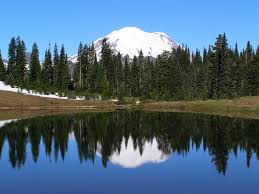
The central case study here took place in the mid-2000s, let’s say 2005, when our family was staying in Stehekin, Washington, out on Lake Chelan. If you have never been to Stehekin, it is a beautiful and slightly improbable place, the kind of place that already feels like the beginning of a story. Lake Chelan is huge, and you get out there by ferry, which means from the jump there is a sense that you are committing to something. People camp there or stay in cabins. We were in a cabin. My mom Claudia (CL), stayed behind. RO, meanwhile, had a plan.

The plan was that RO and his sons — Mike (MI), Pat (PA), and me — would hike up toward Castle Rock.

Now, one thing about family expeditions is that “the plan” is often not really a collective possession. It belongs to one person. The rest of the group is more or less there to follow along. In this case, the plan belonged entirely to RO. MI and PA and I were, broadly speaking, along for the ride.

As I remember it, we started from Stehekin and walked about three miles just to get to the trailhead, then hiked a few more hours uptrail to where we stopped and camped the first night. It was already a decent undertaking just to get there, but this was, in a sense, merely the prelude. The true RO strategy had not yet fully revealed itself.

At around dusk, after we got to camp and set up the tent and got ourselves sorted for dinner, RO decided he was going to scout the route for the next day. This seemed reasonable enough. It is in fact the sort of thing a prudent leader might do. Only instead of scouting further up the trail, or perhaps generally uphill toward the place we were trying to go, RO for some reason headed downriver.

Why did he do this? We did not know. It was back downhill. It seemed unrelated to the objective. Even at the time it had the feel of one of those decisions that makes perfect sense only to the person making it.

Ross Thomas: The trail kind of petered out eventually and didn’t really lead to Castle Rock anyway.

Fair enough. I want RO’s side of the record included here. But even granting this, and I do grant it, going downriver in the late evening did not strike the rest of us as a strong opening move.

Sure enough, RO fell in the river and got completely soaked.

This was the first of many mistakes he would make on the trip.

He came back to camp late and dripping wet, having apparently developed an immediate a bizarre attachment to that river. The water was cold. The evening was cool. He changed clothes, we had dinner, and we went to bed. At this point, there was still some chance that the next day might somehow become normal.

It did not.

The next morning we got up early, had breakfast, and prepared to head out. My assumption — based on reason, precedent, and the literal existence of trails — was that we would continue on the trail. Instead, RO decided that we were going to bushwhack straight uphill through an extremely dense forest in the blazing heat.

This struck me as a bad plan.

It was a bad plan.

The forest was thick enough that you could not really move with any rhythm. We were not hiking so much as negotiating, arguing, and physically contesting with the landscape. Every movement took extra energy. Progress was incredibly slow. The heat was serious. And the main problem, which quickly became the only problem, was that there was no water. Not a stream. Not a trickle. Not a suspicious puddle. Nothing.

Now, RO for reasons that remain mysterious to me is not a big water drinker. He prefers beer and tea. Under ordinary conditions this is merely a personality trait. On a hot uphill bushwhack through dense forest it becomes a strategic liability.

Naturally, we asked where the water was.

Ross Thomas: I had read in a Fred Beckey book that there was a way to get up to Castle Rock, although I think Beckey had only heard about it and never actually done it himself.

This is, in its way, a perfect Ross Thomas detail. Fred Beckey, the legendary climber, had perhaps heard there was some route, though he had not personally taken it. This was enough for RO. A rumor in a book by a famous climber became an operating plan.

As for the water situation, RO told us — and I remember this vividly — that there might be some in about five miles.

Five miles!!!

We were already fighting for our lives up there, and this crazy man was calmly informing us that in only another five miles there might, possibly, perhaps, be water.

He’s totally outta control.

At some point, after what I recall as roughly three miles of this lunacy, we basically mutinied. Or perhaps mutiny is too strong; let’s call it collective realism. We told RO the obvious, which was that this was not going to work. The route was no good. The heat was too much. There was no water. We had to turn back.

And so we did.

Now the descent was interesting because it brought out our distinct styles. RO, MI, and PA were making their way down carefully, gingerly, responsibly. I, on the other hand, was absolutely flying. Swinging from tree to tree like some kind of deranged monkey, just ripping downhill through the forest. This part RO loves to tell to this day, and I admit it was one of my better athletic showings. I was not going to die of thirst in that forest and I was not going to descend politely either.

Eventually we made it back to camp. Or rather, most of us made it back to camp together. RO, in one of those small but meaningful complications that tend to gather around him in climbing situations, got separated from us and somehow ended up down by the river again.

And yes, he fell in again.

He really must have loved that river.

So now here he comes back to camp once more, drenched, and by this point we are all in total agreement that the trip is over. We are done. It is time to 86 the hell out of there.

So we break camp and head down toward the lake shore. But this presents a new problem. We still have a significant walk to get home — something like another two miles down to the shore and then, as I remember it, another three miles around the lake. And by now it is dusk. So this is not really viable either. We are hot, tired, and in no mood for an elegant final act.

At this point RO does what he often does in these situations, which is simply assume that reality will provide.

He found a guy with a motorboat and asked if he would take us back to Stehekin.

The guy said sure. Fifty bucks.

RO then informed him that he did not actually have fifty dollars on him, but could get it from his wife once we got back to the cabin.

Somehow, by what can only be described as grace, audacity, or a temporary breakdown in the boatman’s judgment, this worked. We got in the boat, got home safely, and made it back in time for dinner.

That was Stehekin.

CODA

You might think the lesson here would have been: bring water, stick to trails, do not base wilderness plans on rumor, avoid rivers if possible, and maybe do not lead your sons into dense forests in the hot sun in search of a semi-mythical route described secondhand by Fred Beckey.

You would be mistaken.

Many years later, when RO was Principal of Valley Catholic High School, he got really into climbing at a gym in Portland. It is a cool place, run by a father and son, and it has beginner, intermediate, and advanced climbs. He took me and MI and PA there, and later my son Hugh as well. Hugh loved it. He scampered up the walls like he had been waiting for exactly this sort of thing his whole life. I like climbing too, though my arms get tired pretty quickly and I tend to fade. MI and PA are both good climbers. RO, to his credit, also has strong stamina.

So one day my wife and Hugh and I were there with him. We’d been climbing for a few hours. I was on the mats, faded, taking a break. Hugh was still going. RO was showing him some moves. Then RO started up one of the big walls — one of the long climbs, the kind where you need the harness.

Only he had forgotten to put the harness on.

Hugh saw this before anyone else did and yelled out:

RO, get down now!

And RO did.

For the next year, RO loved telling the story of how Hugh had saved his life. Quite right too. It is a great story. My son saved my dad from one of my dad’s own ridiculous climbing strategies. The circle was complete.

But then, about a year later, shortly before RO retired from the principal job in 2018, he was back at the gym by himself. This time the only other people there were the owner and his son. And somehow — incredibly, impossibly, yet also in a way entirely consistently with the established Ross Thomas climbing tradition — he forgot the harness again, started up the big wall, and fell.

He crashed all the way down onto the mat.

The mat saved his life, no question. But his feet and knees and legs got absolutely busted up. He was in a wheelchair for months. It was so bad that he had to move temporarily out of the country house in the woods where he lives with CL and into a little bungalow on the Valley Catholic campus owned by the nuns that founded and still run the school. He could barely work. To this day his feet remain a total mess. He has trouble driving and has to drive with his shoes off and wearing some sort of thick sock or something.

At one point we wondered whether he might sue the gym owner for negligence. But RO wanted no part of that. He said it was his own fault, not the owner’s.

Fair enough.

And then, after many months, he mostly recovered. Which means this story has, if not exactly a happy ending, at least a decent one. Better still, as soon as he was recovered he went right back to the gym and started climbing again!

This is what I mean.

His climbing strategies are ridiculous. They are unbelievable. They are officially, historically, and totally outta control. He does not plan for basic things such as the route, the water, or how exactly one might avoid miles of dense forest. He does not always remember the harness. He seems, in climbing situations, to operate according to a distinct internal logic unavailable to the rest of us.

And yet outside of climbing, this makes almost no sense. He is, as I said, a basically well-organized guy. He planned lessons. He coached meticulously. He ran a school. In most areas of life he is not slapdash at all. Which makes the climbing thing not just reckless but anomalous. It is a localized mystery. A glitch in an otherwise coherent system. I do not understand it and at this point I do not expect to.

What I do know is this: to this day I avoid climbing with him because in this one particular area I do not trust his judgment at all.

I love the man. But when it comes to climbing, he is not to be trusted.

Dedication:

For my dad. I love you baby but you are totally outta control.

On it, Pete

Note: Some stories get better in the telling. This one doesn’t need to. It arrives fully formed—one line, perfectly placed—and has stayed that way ever since. I’ve told it for years and it still lands exactly the same. No embellishment required.

It’s September, 1989.

Two new teachers had just arrived at St. George’s School in Spokane, WA. These are Paul Hogan and Pete Aiken. Paul would go on to have a long and distinguished career, eventually becoming Principal of Jesuit High School in Portland—a major job, the kind that makes a life. I have no idea where Pete is today.

That night, my dad Ross invited them over to the house for dinner. It was one of those late-summer evenings that still carried a little warmth but hinted at the coming turn. Ross was out back at the grill, working over the barbecue with a beer in hand. The adults clustered nearby, talking, drinking, getting to know the new arrivals. There was that particular tone of adult conversation—half-professional, half-social, everyone just slightly aware of roles and impressions.

Out in the yard, it was just the three of us: Pat, Mike, and me. We were playing catch with a tennis ball. Nothing serious. Just throwing it around, loose, casual, the way kids do when the game isn’t really the point. At some point, either Mike or I made a bad throw. It sailed wide of Pat—too far, too high—and rolled past him.

A completely ordinary moment. The kind of thing that happens a hundred times in a backyard, in a summer, in a childhood.

Pat was six. He didn’t chase the ball. He didn’t complain. He didn’t turn to us. Instead, he turned—calmly, deliberately—and looked over at Pete Aiken, one of the brand-new teachers, a guest in our home, a man he had just met. And in a tone of quiet assurance, as if assigning responsibility in a meeting, he just said:

“On it, Pete.”

That was it. No smile. No wink. No awareness of what had just happened. The ball was recovered. The game went on. The adults kept talking. The evening continued. But something had shifted, just slightly, just enough.

Because in that moment, a six-year-old child had somehow crossed the boundary between worlds—between kids and adults, between play and work—and issued a line that did not belong to him, but fit him perfectly.

I don’t remember what happened next. I only remember that line. And I remember that we have been laughing about it ever since.


The On It Pete Blues (Pete’s POV)

I was new to the city, new shirt, new street,

Standing in a backyard trying hard to be discreet,

Ross on the grill and the talk running deep,

Just another first night—then I heard, “On it, Pete.”

I hadn’t been briefed, hadn’t learned the terrain,

Didn’t know the house or the shape of the game,

Just a beer in my hand, trying not to overreach,

Then a six-year-old turned and delegated to Pete.

Now I’ve worked in schools, I’ve handled my share,

Rooms full of noise, moments needing repair,

But nothing quite like that clean little feat—

Being calmly assigned by a kid in bare feet.

No panic, no pause, no doubt in his beat,

Just a glance and a nod—“On it, Pete.”

And the ball got found, and the night rolled on,

But I knew right then something strange had gone on—

In a yard full of voices, one line cut through the heat:

I wasn’t just visiting.

I was on it.

Pete.

Dedication:

For my brother Pat. And for Pete. Just get on it already baby.

Note: If you liked this story you may also like the stories below, which also cover my time at St. George’s High School.

On the Long Cut: The COVID Years (2019–2022)

Note: This essay forms part of a longer series recounting my professional life in and around the International Baccalaureate program at Ritsumeikan Uji. It follows earlier pieces concerning the Dr. Fox years and the gradual evolution of the IB program there, and covers the period roughly from late 2018 through the early months of 2022.

The years described here coincided with the global COVID-19 pandemic, which disrupted institutions and routines in ways both large and small. The narrative therefore moves between several overlapping threads: my temporary assignment at the Suzaku campus, a prolonged period of leave and personal drift, the strange half-life of Kyoto’s bar culture during the pandemic years, and finally my gradual return to teaching and the IB program at Uji.

As with other pieces in this series, some names and identifying details have been adjusted or omitted where appropriate. The goal of the essay is not to settle institutional scores but to record the texture of a particular stretch of life—its confusions, absurdities, and small recoveries of purpose.

Readers encountering this piece independently may wish to consult earlier essays in the series, including those on the Dr. Fox period and related institutional episodes, for additional context.

Epigraph

“If you wanna take the long cut / we’ll get there eventually.”
— Uncle Tupelo


I. Return

On December 20, 2018, I landed at Kansai International Airport after a twenty-two-day music trip along the American East Coast. I had seen bands in New York, Boston, and Philadelphia, spent too much money, and generally had the time of my life. That journey has been written about elsewhere, so I won’t linger on it here. What matters for this story is simply that I came back to Japan exhilarated and somewhat unmoored.

The first thing I did upon landing was send an email to Dr. Fox. I told him that although I still carried some anger about how things had ended at Ritsumeikan Uji, I appreciated his help securing a temporary role for me at Suzaku beginning in March. Both statements were true. What I did not yet know was how miserable that position would become.

I had two months before the job began. They were among the freest weeks I had experienced in years.

I wrote constantly. I worked on the early sections of Thin Man: Singapore and drafted essays that would later become EventificationHelmet Laws, and On Zone Defense. I was about to begin the St. George’s School series. Periscope had faded from my life, partly because the platform had run its course and partly because a particular person who had made it interesting to me was no longer there.

I spent some time with Philip, though he was busy with his own life and his relationship with his wife seemed temporarily on the mend. Mostly I wandered between Tokyo and Kyoto, writing and drinking coffee and enjoying the strange luxury of being at loose ends.

In the third week of January I attended a Drunk Poets open mic in a small bar near Shibuya. I arrived absurdly early because I didn’t know the neighborhood. While waiting in the stairwell I met a woman who introduced herself using her poetry name. We talked for nearly an hour before the reading began. She was a veteran of the open-mic circuit and showed me how the evening worked. I read first after the break; she followed me.

It was a pleasant night. I had no idea at the time that the conversation we began that evening would extend, mostly by phone, for more than two years.


II. Suzaku

My assignment at Suzaku began on March 1, 2019.

There were no students.

Technically the building housed graduate programs, but they lived on lower floors and we might as well have been ships passing in the night. My office was on the fifth floor, a large open room filled with perhaps forty people: a mix of temporary teachers like myself and permanent administrative staff.

It was, in a word, dreary.

I commuted each morning to Karasuma Oike, walked down to the Suzaku campus, sat at my desk, and tried to look busy until five o’clock. Sometimes a consultant whose job seemed to consist mainly of visiting other campuses would take me on excursions to places like OIC or the original Ritsumeikan High School. These trips were well-intentioned but clarified nothing. No one quite knew why I was there, least of all me.

Within days I began to feel something I had never really experienced before: the creeping onset of depression. The problem was not that the work was difficult. It was that there was no work at all.

By April I had started leaving the office early. By May I was appearing only sporadically. The remarkable thing was that no one seemed to notice.


III. Drift

If I was not at Suzaku, where was I?

Mostly at home.

During the day I played chess online, usually on Chess.com or Lichess. I climbed to around 1250 on the former and somewhat higher on the latter, though the Lichess ratings were clearly inflated. My openings were solid, my middlegame acceptable, and my endgame play atrocious. I squandered many promising positions by failing to convert them.

I watched instructional streams from Levy Rozman and occasionally from Hikaru Nakamura, though Levy was the better teacher. His explanations were clear and energetic, and I learned a great deal.

When I wasn’t playing chess I listened to podcasts. The rotation included nearly every program produced by Bill Simmons and the broader Ringer network, followed by an increasingly large catalog of true-crime shows. What fascinated me most were disappearance cases—stories in which someone simply vanished and left investigators grasping for explanations.

Meanwhile the phone conversations that had begun in the stairwell in Shibuya continued. They were long conversations—sometimes five hours a day—covering everything from literature to relationships to increasingly elaborate stories about future plans and imagined fortunes. At first the exchanges were exciting; over time they became exhausting, though we kept talking.

In the evenings I left the apartment and walked to the bars near Karasuma Oike. Takumiya and its sister bar Takanoya became regular stops. Eventually I found myself most often at a tiny machiya bar called Before 9.


IV. Before 9

Before 9 was small even by Kyoto standards. Downstairs there was room for perhaps five or six people around the bar; upstairs another half dozen could sit beneath the original wooden beams of the converted house. Jazz or ambient music played quietly while large black-and-white films—Seven SamuraiCasablanca—were projected silently on the wall.

The bartender most nights was Miyuki.

Philip and I nicknamed her “the Ice Queen,” though not to her face. She could be sharp-tongued and intimidating, yet occasionally revealed flashes of warmth that suggested a softer personality underneath. Regulars were greeted with a curt “What do you want?” delivered with theatrical indifference.

She wore black almost exclusively and carried herself with the confidence of someone who knew exactly how striking she looked. I developed a mild crush on her, though it was clear from the beginning that the feeling would remain entirely one-sided.

During the pandemic the bar officially closed at eight in the evening, though the rule was treated with some creativity. One night two inspectors arrived precisely at closing time. Miyuki announced “last call” in an exaggerated voice, served them a beer they never drank, watched them leave, pulled down the shutters, and then reopened the bar for the regulars.

That was the culture for several years.


V. Leave

In October 2019 the situation at Suzaku was finally addressed. A supervisor called me in and gently suggested that it might be best if I took leave. I agreed immediately. Beginning in November I was officially on leave—a status that would last until October 2021.

Oddly, I felt relieved.


VI. The World Changes

Early in 2020 I read a brief news report about a virus outbreak in Wuhan. At first the story seemed distant and provisional. Within weeks it dominated every headline in the world.

The pandemic years blurred together. Bars closed early, then reopened, then closed again. Conversations moved onto phones and screens. Life contracted into smaller and smaller spaces.

Yet the routines I had developed continued: chess, podcasts, the evening walk to Oike, the occasional drink with Philip or Mackenzie.


VII. Return

In October 2021 an unexpected opportunity appeared.

Andy Meichtry needed to take extended leave after a family emergency. His timetable included several sections of a class called Academic Research in the International Program. VP Nishikawa, who had always been supportive of my return to IB, suggested that I fill the gap.

So I put the uniform back on and returned to Ritsumeikan Uji.

The first challenge was that no one could tell me what the Academic Research course actually entailed. The teacher who normally handled it was on extended medical leave, and the only materials available were a handful of PowerPoint slides sent without explanation.

In the spirit of William Ian Miller, I decided to fake it until I made it.

The students—seniors working on research projects related to the Sustainable Development Goals—were relaxed, good-natured, and only months from graduation. We muddled through together, and somehow two months passed quickly.


VIII. Administrative Comedy

During this period a new principal, Dr. Joseph Hicks, made an impression.

The IB morning briefing was designed to last three minutes and cover the day’s essential information. Dr. Hicks instead preferred to open with extended digressions on topics such as the reproductive habits of moles. After a week I suggested that perhaps the zoology lectures could be postponed. To his credit, he stopped immediately.

Later, during my annual teacher meeting—normally a brief conversation about contracts and responsibilities—he spent most of the time explaining the virtues of traditional Polish music.

I left better informed about Eastern European folk traditions but none the wiser about my job.


IX. Reinstatement

Administrative reshuffling followed later that year, and by January 2022 I was formally reinstated in the International Baccalaureate program.

My roles included IB1 head, CAS coordinator, and student council advisor, along with a single section of Higher Level Business Management.

After the drifting years, stepping back into a classroom felt like a jolt of electricity.

The students were lively and engaged, but one in particular stood out: Karin Sayama, whose enthusiasm for the course reminded me why I had chosen this profession in the first place. Watching her and her classmates rediscover the subject gave me a renewed sense of purpose.

For the first time in years I felt genuinely happy to be at work.

The long cut had taken its time.

But eventually it brought me home.


Dedication

For Karin.
With deep appreciation.

Note:

On One Evening in Adelaide

Note: This recollection dates to June 2010, when I traveled to Adelaide, Australia for my first IB Theory of Knowledge workshop. At the time our school’s governing body, officially Ritsumeikan, but semi-affectionately known around town as “Keichimeikan,” (the cheap school) had begun investing heavily in International Baccalaureate training, and for a brief but memorable stretch I found myself traveling widely across the Asia-Pacific region attending workshops and conferences. Adelaide happened to be the first stop on that circuit.

The encounter described here took place midway through that week. Like many moments that occur while traveling, it was both ordinary and oddly memorable — a short conversation, a near-comic personal embarrassment narrowly avoided, and then a small gap in memory that I still cannot fully explain.

For privacy I refer to the person involved simply as “M.”, and a few identifying details have been softened. The strange behavior of my phone afterward — messages arriving out of sequence and the device occasionally insisting it was in Adelaide or Nagoya — was quite real, though I have never had a satisfying explanation for it.

In Japanese there is a phrase that captures the mood of such moments perfectly: cho fushigi — very mysterious.

Epigraph

Half hours on earth

What are they worth?

I don’t know.

David Berman


I. Adelaide

I was in Adelaide for my first IB Theory of Knowledge workshop, sometime around June of 2010. In those years our principal had suddenly decided that IB travel was a worthwhile investment, and so for a brief and glorious period I was dispatched all over the Asia-Pacific region like a slightly rumpled educational attaché. Workshops in Singapore, Hong Kong, Kuala Lumpur, and, in this case, Adelaide.

The school hosting the workshop was one of those extremely well-appointed Australian private schools — immaculate rugby grounds, manicured lawns, a cafeteria that would have put many universities to shame. The workshop itself was perfectly pleasant. TOK people tend to be reflective types and reasonably good company, though after two days of epistemology everyone is usually ready for a drink.

Which is how, on the second evening, a small group of us ended up at a bar a few minutes from the hotel.


II. M.

At some point the table thinned out until it was just the two of us talking. She was from San Francisco. Let’s call her M.

We were sitting close, leaning in the way people do in bars when the music is slightly too loud and the conversation slightly too interesting to abandon. I told her about my small blog, Classical Sympathies, which at the time was still young and full of ambition. She told me she wrote long travel essays and posted them on Facebook where, she said with a shrug, they had gathered a modest but loyal readership.

Like a complete peon, I offered to host them on my site.

She smiled politely and said she’d probably keep them where they were for now.

Which was entirely reasonable.

The conversation moved on. We started talking about family — fathers, specifically — and the strange emotional weather that tends to gather around that subject. It was one of those unexpectedly intimate bar conversations that sometimes appear between near-strangers and then vanish again.


III. A Minor Emergency

There was, however, a complication.

Let us say that during the course of this conversation Young Mr. Johnson began to make his presence known.

Nothing dramatic. But enough that standing up suddenly would have created a situation. So I employed the classic defensive maneuver familiar to men everywhere: crossed legs, careful posture, strategic angles.

A small but significant crisis was unfolding beneath the table.

Eventually the situation resolved itself through patience and good fortune. When the moment seemed safe, I made my exit with what I hoped was dignity intact. We exchanged Facebook information, said our goodbyes, and I stepped out into the alley behind the bar on the way back to the hotel.

At that moment I felt something close to relief.

By the grace of God, I had narrowly avoided making a spectacular fool of myself.


IV. The Missing Ten Minutes

And then something strange happened.

I remember stepping into the alley.

The next thing I remember is being back in my hotel room.

Fully clothed. Completely sober. The evening still early — maybe ten-thirty, eleven at the latest.

What I did not remember was the ten minutes in between.

No walk back to the hotel. No elevator ride. No keycard in the door.

Just a small, clean gap in the record.


V. The Phone

The truly odd part came later.

For the next year and a half my phone behaved as though it had lost its grip on reality.

Texts appeared months after they had supposedly been sent. Messages from April surfaced in October. Time stamps were wrong. Location data wandered.

Sometimes the phone seemed to believe it was still in Adelaide.

More often it insisted it was in Nagoya, a city I had visited only once for a consulting visit to a school in the hills.

It was never anything dramatic — just enough small glitches to make me raise an eyebrow every now and then.


VI. Cho Fushigi

I never saw M. again.

We remained distant Facebook acquaintances for a while. She became, I believe, an English teacher back in San Francisco. Her essays continued to appear occasionally in the feed, and then eventually they stopped.

The phone eventually sorted itself out as well.

Technology, like memory, tends to repair its own small fractures over time.

Still, every once in a while I think about that short walk down the Adelaide alley and the ten missing minutes afterward.

And the only phrase that really fits is the one the Japanese use for such things.

Cho fushigi.

Very mysterious

Dedication:

For Molly. Thanks for the half hour baby.

Note: If you enjoyed this essay, you may enjoy the two essays linked below, both of which take up similar themes or charged, fleeting, and romantic encounters.

When the Taxi Driver Loses the Plot: A Poem

Note: This poem is a reconstruction. The original version appeared briefly on my first blog, Classical Sympathies, sometime around 2010, and like many things from that early site it was eventually lost in the digital shuffle. What remains here is an attempt to recreate the spirit of the piece from memory.

The poem itself is a mash-up of two real taxi rides that somehow fused together in recollection. One took place in Adelaide, Australia, during a ride from a hotel to the airport where the driver became thoroughly disoriented and began looping through unfamiliar streets. The other occurred years later in Kyoto, somewhere north of Sanjo, when a similarly confused driver managed to transform a short ride into a wandering tour of the nighttime grid.

Over time the two rides merged in memory into a single universal experience: the moment when a passenger realizes that the person holding the wheel may no longer fully know where he is going.

The result is presented here, perhaps a little mythologized, as a small recovered relic from the early days of the archive — a lost classic of the wandering taxi ride.

The haunted sweating taxi driver
took another right,
the meter ticking bravely
in the middle of the night.

The city slid past sideways
in a crooked grid of light,
and every turn he promised
somehow made the journey slight.

The haunted sweating taxi driver
muttered to the wheel,
as if the streets were hiding
some essential missing deal.

A restaurant we’d passed before
returned into my sight,
which meant the haunted driver
had again chosen wrong from right.

The haunted sweating taxi driver
took another right,
and wiped his brow dramatically
beneath the yellow light.

Now when your taxi driver loses the plot
this could go on all night,
because the man who holds the wheel
is captain of your flight.

You sit behind his kingdom
like a mildly troubled guest,
while every wrong decision
slowly multiplies the rest.

The haunted sweating taxi driver
leans forward in his seat,
as though the road might whisper
some confession through the street.

The meter ticks its steady hymn
to time and mortal plight,
while hostage to the haunted man
who’s searching for the right.

The haunted sweating taxi driver
takes yet another right,
and somewhere in the city
dawn prepares its quiet light.

But we remain in orbit
of his navigational blight—

for when your taxi driver loses the plot
this could go on all night.

Note: If you like this poem, you may also like the poems linked below. Happy reading!

On Four Adventures of Tintin

Note: This essay takes up my personal four favorite books from the marvelous Adventures of Tintin series. I make no claim for these to be the best, and the list omits the very popular Moon books, however this is the list as it stands. I hope you enjoy Tintin as much as I do, and as always, thank you for reading.

Epigraph:

First Encounter

I first encountered Tintin in Grade 5, checking two slim volumes out of my elementary school library: The Blue Lotus and Tintin in America. I remember the physicality of them—the glossy covers, the bright blocks of color, the uncanny clarity of the drawings. They felt different from the other books on the shelf. Most children’s adventure stories required you to imagine the action. Tintin showed it to you panel by panel, with a confidence that made the whole world feel precise and alive.

Even before I fully understood the stories, I had the sense that I had stumbled onto something like treasure. The pages moved quickly. Cars skidded across city streets, gangsters hid in back rooms, deserts stretched into the distance. Tintin himself was fearless and tireless, a boy reporter who seemed capable of appearing anywhere in the world with little more than a notebook, a trench coat, and his small white dog.

But even at ten years old it was clear that the two books belonged to the same universe but not quite the same stage of its development. Tintin in America was energetic and funny but also loose and episodic, closer to a cartoon chase story than a carefully constructed narrative. The Blue Lotus, by contrast, felt deeper. The stakes seemed real. The world seemed larger and more dangerous. The book hinted at forces—politics, empire, war—that I could not yet name but could somehow feel moving behind the story.

Before going further, it’s worth acknowledging briefly the long-running controversy surrounding the politics of Tintin’s creator, Hergé. Some of the early Tintin stories reflect the colonial assumptions and stereotypes common in Europe during the interwar period, and Hergé himself worked for a newspaper in German-occupied Belgium during World War II. These facts have generated decades of debate. They are real and worth knowing. But they are also only one part of a much larger story. Over time Hergé’s work grew more humane, more attentive to other cultures, and more morally complex. For the purposes of this essay, it is enough to acknowledge the controversy and then move on to the books themselves, which remain among the most remarkable achievements in modern popular storytelling.


Mr Dreyer’s Class, 7th Grade:

Even before I took his class, I was aware that Mr. Dreyer was, let’s say, a different sort of fellow. He liked to tell a story about his brother who lived on a massive contour map of the San Francisco Bay area. The map was located in an enclosed structure that hung under a bridge in Oakland or something. And his brother just chilled there full time, so the story went. So Mr. Dreyer, apparently, was the normal one in his family.

(I remember Mr. Dreyer talking to me about John Lennon one day as well. This was maybe when I was taking his class, but I think it might have been before that. “John Lennon’s assassination was really sad,” he said, “he was just starting to put his life back together.” I had heard of John Lennon but at that time knew nothing of the circumstances of his death. And I certainly didn’t know about his ups and downs in the 1970s. Mr. Dreyer must have been a Lennon fan though, and wanted to tell me about it.)

In any case, when I got to middle school I was assigned Mr. Dreyer, as mentioned. Mr. Dreyer wore a mustache that looked pretty Frenchy to me—maybe that’s why I kind of thought he was a French native. There were also a number of the Tintin books in French on a shelf in the back of the room. I had read most of the Tintin books in English by then, so it was fun to browse the French versions and take in some of the action from a new lens.


The Blue Lotus

If the early Tintin books were clever adventure cartoons, The Blue Lotus was the moment the series entered history.

The story takes place in Shanghai during the turbulent 1930s, amid Japanese expansion and international intrigue. What distinguishes the book is not simply the exotic setting but the sudden moral seriousness that runs through it. Tintin is no longer merely chasing criminals. He is navigating a world shaped by imperial ambition, propaganda, and cultural misunderstanding.

Central to this shift is the introduction of Chang Chong-Chen. Chang’s friendship with Tintin humanizes the story in a way earlier books never attempted. Through Chang, the reader glimpses the everyday life of Chinese citizens caught between foreign powers and internal turmoil. The relationship is warm, sincere, and quietly revolutionary for its time.

One sequence has stayed with me since childhood: Tintin being smuggled into an opium den hidden inside barrels. As a child I read the scene simply as a thrilling act of infiltration. As an adult it evokes something darker—the lingering shadow of the opium trade and the colonial exploitation that shaped China’s nineteenth and early twentieth centuries. Even if young readers do not consciously grasp the historical weight behind it, they feel that something serious is at stake.

With The Blue Lotus, Tintin steps out of the cartoon world of early adventure stories and into a recognizably historical landscape. The hero is still brave and resourceful, but the world around him has grown more complicated.


The Crab with the Golden Claws

If The Blue Lotus deepened Tintin’s world morally, The Crab with the Golden Claws transformed it emotionally. The reason can be summed up in a single name: Captain Haddock.

Before Haddock appears, Tintin himself is almost too perfect. He is brave, clever, and incorruptible. Admirable, yes—but also somewhat distant. Haddock brings chaos into this orderly universe. When we first meet him he is a drunken wreck aboard a cargo ship, bullied by the crew and prone to bursts of confused outrage. In his introduction scene he is literally knocked around by events, bonked on the head and stumbling through the narrative like a man who has wandered into the wrong story.

Yet Haddock quickly becomes indispensable. His flaws—his temper, his drinking, his explosive vocabulary—make him recognizably human. Over the course of the series he evolves into the lord of Marlinspike Hall, a man readers root for not because he is flawless but because he struggles, blunders, and ultimately proves loyal beyond measure.

The mystery at the heart of the story—those curious tins of crab that conceal a narcotics smuggling ring—is classic Hergé plotting. An ordinary object becomes the gateway to a hidden criminal network. But what readers remember most is Haddock: the lovable rogue who changes the emotional chemistry of Tintin forever.


Land of the Black Gold

Land of Black Gold is one of the most unusual Tintin stories, blending geopolitical intrigue with comic delirium.

The plot centers on sabotage of the world’s gasoline supply, drawing Tintin into a web of international conspiracies in the Middle East. Yet what makes the book memorable is its sense of narrative labyrinth. The trader and raconteur Oliveira da Figueira talks endlessly, spinning stories within stories, improvising explanations that seem to circle back on themselves. His rambling style mirrors the complicated, byzantine nature of the intrigue unfolding around Tintin.

At the same time, chaos erupts in the form of the child Abdullah, whose relentless practical jokes push everyone toward exasperation.

And then there is the unforgettable desert sequence in which Thomson and Thompson pursue mirages while unknowingly driving in circles along their own tire tracks. The scene borders on hallucination. Heat, confusion, and comic misunderstanding combine to create one of the series’ most surreal episodes.

Where The Blue Lotus introduced moral depth and Crab introduced emotional warmth, Black Gold revels in controlled absurdity—the sense that the modern world is a maze of conspiracies, misunderstandings, and comic misadventures.


The Calculus Affair

By the time we reach The Calculus Affair, Tintin has entered an entirely new landscape: the Cold War.

The story begins with the kidnapping of Professor Calculus, whose research has attracted the interest of rival governments. Tintin and Haddock pursue him across borders, into secret fortresses and heavily guarded territories.

What makes this adventure distinctive is the absence of a clear moral center. Earlier Tintin stories often feature obvious villains. Here the lines blur. Rival states compete for technological advantage, intelligence services manipulate events, and even the heroes seem slightly overwhelmed by the scale of the intrigue surrounding them.

Tintin and Haddock are no longer simply solving a mystery. They are wandering into the murky machinery of international espionage.

Yet Hergé never abandons humor. The action sequences—helicopter pursuits, roadblocks, sticky-tape tricks, and frantic car chases—are thrilling while remaining faintly absurd. The tension builds like a spy thriller, but the comic timing prevents the story from becoming grim.

The result is perhaps the most sophisticated Tintin adventure: a tale in which suspense, humor, and geopolitical intrigue coexist in perfect balance.


Why Tintin Endures

Across these four books we can see the remarkable evolution of Tintin.

The Blue Lotus brings the series into history.
The Crab with the Golden Claws introduces human imperfection through Haddock.
Land of the Black Gold revels in the comic chaos of modern intrigue.
The Calculus Affair confronts the morally ambiguous world of Cold War espionage.

Through it all, Hergé’s storytelling remains astonishingly clear. Each panel advances the narrative. Each scene unfolds with the precision of a well-designed machine.

Tintin may begin as a boy adventurer, but over time he becomes something else: a traveler moving through the complicated landscape of the twentieth century. History deepens, friendships form, conspiracies multiply, and the world grows ever more ambiguous.

Yet the clarity of the storytelling never falters. That combination—simplicity of form paired with depth of experience—is the secret of Tintin’s endurance.

For many readers, the journey begins exactly as it did for me: a small book taken from a library shelf, opened with curiosity, and discovered to contain an entire world.

Dedication:

For Grade School libraries everywhere.

Why It Is So Hard to Get Breakfast in Japan (with a dream cameo from the Gemini Donald Trump)

New Note (2025): Since this piece was first published, Japanese Breakfast the band has gotten even bigger, Michelle Zauner wrote another book, and the cultural universe has shifted enough times that some aspects of this essay may be outdated. I’ve kept the original text intact because the dream-logic and breakfast-logic still stand.

I live in Kyoto, Japan, and after many years here I’ve traveled pretty widely—especially in the greater Tokyo area. Traveling in Japan is pretty easy as long as you can manage a little spoken Japanese and read a train map. The trains are famously efficient and connect most of the country, including every major city.

I haven’t driven a car here in more than fifteen years and don’t miss it at all. Trains and taxis get the job done just fine. Overall, I love traveling in Japan and I love exploring Tokyo, a city that contains worlds within worlds. I have almost no complaints about Japanese travel.

Except for one.

It is nearly impossible to get a good breakfast—or really any breakfast—when you’re on the road.

Now, it’s not that Japanese people don’t eat breakfast. They do. The archetypal morning meal—rice, miso soup, maybe a little fish—is as recognizable in its way as the “full English” of sausages and beans. But the Japanese breakfast is overwhelmingly a home operation. Once you’re traveling, the options narrow to two—two and a half, if we’re being generous.

I. The Hotel Breakfast

Mid-price and nicer hotels usually offer a breakfast buffet with “Japanese” (rice, miso, maybe grilled fish) and “Western” (toast, jam, and some ambivalent eggs) selections. Except at the truly top-tier hotels, these buffets manage to be both overpriced and bad. A traveler is lucky to escape for ¥1,500–¥1,800 (about fifteen dollars before the yen weakened), and more commonly pays north of ¥2,000 for a pretty uninspired spread.

Budget hotels often don’t offer breakfast at all.

In my experience, Japanese hotel breakfasts are among the weakest anywhere in the world. I take this as symptomatic of a broader truth: Japanese people simply don’t care about breakfast when they’re on the road—and maybe not all that much at home either.

II. The Convenience Store (“Combini”) Breakfast

When I have raised the issue of the lack of decent breakfast in Japan, Japanese people usually point me to the convenience store. And it’s true: you can purchase food and coffee at any of the ubiquitous combinis—Family Mart, 7/11, Daily, Lawson, and the rest. They’re open 24 hours, and they stock a range of items that theoretically qualify as breakfast. Hard-boiled eggs, yogurt, rice balls, steamed buns, fried chicken, sometimes bananas, and of course hot and cold coffee.

I’ve certainly been in situations where I had no choice but to fall back on the combini for breakfast while traveling. And this is…fine, to an extent. But most combinis have nowhere to actually sit and eat, and in any case you can’t really call a combini breakfast nice.

Most Japanese folks seem to regard a combini breakfast as perfectly acceptable—desirable even. And while one can admire the low expectations, or the cultural pragmatism behind them, it’s possible to admire those qualities and still wish for more.

III. Starbucks or a Local Coffee Shop

Starbucks are fairly common in major cities and usually open at 7 a.m. (if you’re lucky) or, more commonly, 8 a.m. They should really open at 6. The food offerings are overpriced, and Starbucks has never truly figured out its food—which remains baffling. Still, one can grab a few combini items and smuggle them in, or settle for a four-dollar fragment of quiche with your Americano. I would not classify Starbucks as having breakfast, per se, but they are pleasant enough to sit in, and one can create a simulacrum of breakfast there.

Then there are the local coffee shops. These, fortunately, often open at 7 a.m. or even earlier, and serve strong coffee—often brewed by hand at the counter with a drip filter—and a breakfast that nearly always consists of a single piece of white toast and an egg. White toast, egg, and handmade coffee with old guys reading the paper around you is, I admit, at least an approximation of breakfast, and I have certainly relied on this setup while on the road.

But it’s still not quite what we are looking for if we want a hearty, balanced breakfast. There is no French toast, no fruit bowl, no omelette, and only very occasionally a strip of bacon. None of the staples one might reasonably expect from a decent, full breakfast.

And that’s more or less the list. You can also find 24-hour beef-bowl restaurants, but they are cheap as and not exactly the sort of thing you look forward to when greeting the day. Beyond that, most restaurants simply don’t open until 11:00 or 11:30 for lunch. The concept of brunch—dicey even under ideal circumstances—barely exists outside the swankiest of upmarket hotels.

It is, put bluntly, really hard to find a proper breakfast in Japan unless you make it yourself. And that fact continues to puzzle me. I understand that most people here eat rice and miso at home, or grab something at the convenience store. Fine. But metropolitan Tokyo has roughly 30 million people. None of these 30 million want a real breakfast at 7:00 or 7:30 a.m.? Not even a few hundred thousand?

It seems incomprehensible. And yet, incomprehensible or not, this is simply the reality. There is no broad Japanese market for breakfast. I mean, I’m in the market—but apparently one man does not a demographic make.

Go figure.

Now, I’ve covered the issue of Japanese breakfast—its scarcity, its odd cultural positioning—to the best of my ability. But before we move on, I want to add a few details that may seem unrelated. Let’s see if we can get them to connect.

Because the truth is, I dream about getting breakfast in Japan. And in a surprising number of these dreams, the Trumpster shows up.

More precisely: the dreams focus on the fact that the Trumpster and I share a birthday (June 14th), which makes us both late Geminis. Late Geminis, I have good reason to believe, are uniquely dangerous and slippery. But in my dreams the Trumpster isn’t dangerous at all. He shows up as basically an empty suit.

Trump/ Breakfast Dream I:

I am at a breakfast buffet in Japan. This is at a hotel that I am not staying at, and I may indeed be attempting to crash the buffet while masquerading as a hotel guest. Trump is there with an entourage, and he sees me staking out the buffet. I make a comment to him that we are both late Gemini, and he nods, curtly but with some minimal consideration. He sees me trying to steal the breakfast, does not care, and would probably provide cover if it came to that. He and I are not aligned, but nor are we enemies.

Trump/ Breakfast Dream II:

I am outside in the morning, standing on a dock or something of that nature. I am looking for breakfast, and not finding it. There is a commotion above me to the east, and I realize that Trump is being rolled out, literally on like coaster wheels, for a speech. He is on some kind of sliding seat and when this seat hits the balcony he stands up and postures about like Mussolini. I am watching and he sees me watching, but continues with his Mussolini act. I realize quickly that this is a total act and that he doesn’t even want to be there. He is not dangerous in this moment or in this speech, just faintly ridiculous. Still, no breakfast.

=====

What do Trump and breakfast have to do with one another? I’m not sure yet. But I do know that Trump, although maligned by nearly everyone I know (I know a bunch of liberals), and apart from being an egotistical, mafia-adjacent, easily flattered, shape-shifting sociopath, is also pretty funny. Before I lose half of my readership, I’ll just nod to the comedian Shane Gillis, who made this point several months after Trump left office.

Has enough time passed that we can admit Trump was funny? Can we finally admit that he was funny? (…) He was funny (…) I saw it. I’d show my friends I’d say look at that. They’d be like “what?”

“It’s funny.”

“There’s nothing funny about Donald Trump.”

I don’t know, during Hurricane Dorian he was like “maybe we should nuke it” (…) Like that was a real suggestion from the President (…) “Hey we got a big storm coming, you want me to blow it up?”

They were like “no, what the fuck are you talking about?”

“I don’t know, I fuck around dude. It’s what I do.”

“I fuck around, it’s what I do,” is a great summary of Trump’s whole approach to governing. Now, is there anything funny about his terrible immigration policies, his attempted pressure of the Georgia secretary of state to “find” 1800 votes, his total disregard of democratic norms? No, not really. But is there anything funny about his speculation that maybe a little light and a little bleach could cure COVID? Why yes, there is. Is there anything funny about his noting that Frederick Douglas is getting bigger and bigger these days? Yes indeed. Is the way he pronounces “huge” funny? It’s funny to me anyway. And in my dreams, the two above being part of a series of about four or five total Trump breakfast dreams, he always shows up as semi-defanged, basically neutered, and non-dangerous. I think this is because, as a fellow late Gemini, I kind of have Trump’s number. It takes a late Gemini to know one, and I know this guy. In fact, I see right through him, to the extent that I know he’s not even there.

One other salient piece of data, there is an indie rock band called Japanese Breakfast that is getting bigger and bigger these days (they tell me “sir, this Japanese Breakfast is getting bigger and bigger these days, and I say look at that, wow, this Japanese Breakfast is really getting huge”). I don’t know them that well, but they sound like the kind of band I would like. I do wonder though if their name is not an ironic nod to the fact that Japanese breakfast is not a thing. Is the band name self-effacing, or even self-erasing? Does Japanese Breakfast the band exist at all? Does Trump? There is a way in which the Trump presidential term has come to feel like a fever dream or collective delusion, a set of events that cannot really have occurred as we recall them. In this sense, the Trump presidency may in the future be subject to Phantom Time Hypothesis speculation. And he and his handlers have already played right into this speculation what with their first lady doubles, the totally unhinged press conferences with the ubiquitous helicopter waiting in the wings, and the classic Trumpism, “we’ll see what happens.”

Here is what I think. Japanese Breakfast as a band exists. The Trumpster exists, but his wife spent most of her time in the White House being doubled. Trump and I are dream doubles, and I have his number. Japanese people don’t care about breakfast. And I am always starving at around 9 AM when on the road in Japan. Someone should look into the matter. I hear the Trumpster is free these days, maybe he’s the guy for the job.

Note: If you enjoyed this piece, you may also like the pieces below which also deal with American politics, albeit from a slightly different angle.

https://thekyotokibbitzer.wordpress.com/2025/11/25/on-the-federal-age-of-consent-a-reply-to-alan-dershowitz/