In Defense of Mark Kozelek

Note: This essay addresses the artistic approach of Mark Kozelek as a songwriter. It does not attempt to evaluate or adjudicate the various personal controversies that have circulated around him in recent years, many of which remain publicly disputed and complex.

The focus here is narrower: how Kozelek’s long-form, diaristic songwriting works as a musical method — particularly in songs like “Ali/Spinks II,” where ordinary details accumulate into something emotionally larger. Whatever one thinks of the artist as a person, the question of how the music itself functions remains worth examining on its own terms.

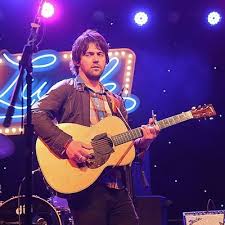
For several years now it has been fashionable to treat Mark Kozelek as something like an exhausted case: a brilliant songwriter who wandered too far into self-absorption, whose songs became too long, too diaristic, too willing to linger on the small debris of daily life. Even some longtime listeners have adopted the shorthand. Early records were masterpieces; later ones were indulgent. The verdict sounds tidy. But like most tidy verdicts in music, it collapses as soon as you start listening again.

The basic complaint about Kozelek’s later work is well known. The songs stretch past ten minutes. The lyrics catalog ordinary events: hotel rooms, meals, airports, old friends, television shows, half-remembered conversations. The narrator seems to be narrating his own day in real time, occasionally pausing to note a basketball score or a passing cloud of melancholy. To critics raised on the discipline of verse-chorus songwriting, this can sound like navel-gazing elevated to an art form.

But the strange thing about Kozelek’s music is that the minutiae are not actually the point. They are the atmosphere. His songs work less like traditional compositions and more like extended walks through consciousness. The grocery lists, the memories of old bands, the stray anecdotes about touring musicians — all of it forms the texture through which something else slowly emerges. A mood. A sense of time passing. The feeling of being a person moving through an ordinary day while carrying decades of memory.

The best way to understand this approach is to listen carefully to “Ali/Spinks II,” one of the central tracks from Benji. The song begins almost casually, recounting the death of Kozelek’s cousin and drifting through fragments of memory connected to that loss. There is no obvious structure, no chorus that arrives to organize the material. Instead the narrative moves the way memory moves: sideways, unpredictably, circling back on itself. The details accumulate slowly until the emotional core of the story becomes unavoidable. What begins as a series of seemingly unrelated observations eventually reveals itself as a meditation on grief, family history, and the strange ways tragedy ripples through ordinary life. The song is long, messy, and digressive — and it works precisely because of those qualities. “Ali/Spinks II” is not merely an example of Kozelek’s method; it is the test case. If the listener accepts the logic of that song, the entire later catalog suddenly makes sense.

This approach did not come out of nowhere. Kozelek has always been a writer drawn to the long arc of a song. Even in the early days of Red House Painters, the music moved at a patient pace, letting chords hang in the air while the lyrics circled around regret, nostalgia, and quiet observation. What changed later was not the impulse but the level of exposure. The lens moved closer. The songs stopped pretending to be about characters and admitted they were about the singer himself.

For some listeners that shift felt like a loss of mystery. But there is another way to hear it. Kozelek’s later records are essentially field recordings of a mind at work. They capture the strange mixture of memory, boredom, humor, irritation, and melancholy that makes up ordinary consciousness. Most songwriters edit this material down to the highlights. Kozelek leaves it mostly intact. The result is less like reading a poem and more like sitting beside someone during a long drive while they talk about whatever crosses their mind.

The famous outbursts that circulate online tend to obscure this. Kozelek has never been particularly careful about public performance of personality, and that roughness often dominates the narrative around him. When he released the song “War on Drugs: Suck My Dick,” a public feud with The War on Drugs instantly became the headline. The track was petty, funny, abrasive, and entirely unnecessary — which is to say it was perfectly consistent with the same impulsive candor that fuels his songwriting. Kozelek has never seemed particularly interested in polishing the public version of himself.

But the deeper argument about his music usually centers on the accusation of self-indulgence. Why should listeners care about the details of a songwriter’s daily routine? Why should a song wander through anecdotes about hotels, meals, or aging friends? Why should anyone sit through ten or twelve minutes of conversational narrative when a tight three-minute composition could deliver the emotional payload more efficiently?

Kozelek himself once answered that question in a line that perfectly captures his stubborn philosophy: he said he liked playing shows for “dudes in tennis shoes.” The phrase sounds casual, almost dismissive, but it carries a small manifesto inside it. He is not writing for critics parsing lyrical elegance or for industry tastemakers deciding what counts as proper songcraft. He is writing for ordinary listeners who recognize the shape of everyday life — the boredom, the odd digressions, the strange humor that creeps into conversation when people talk long enough.

In that sense Kozelek’s songs resemble a certain kind of late-night storytelling more than traditional music. Imagine someone sitting across the table recounting a memory that begins in one place, wanders through several unrelated details, circles back to a childhood story, and eventually lands somewhere unexpectedly moving. The emotional impact arrives not through compression but through accumulation. You spend time inside the story until its meaning quietly surfaces.

The length of the songs, which so many critics treat as evidence of indulgence, is actually central to the effect. Time itself becomes part of the composition. The listener settles into the rhythm of the narration. Small details begin to gather weight simply because they have been allowed to exist long enough. By the time the song ends, the ordinary events that seemed trivial at the beginning have become part of a larger emotional landscape.

This is not the only way to write songs, and it is certainly not the most efficient one. But efficiency has never been Kozelek’s artistic goal. His music belongs to a tradition of artists who treat the everyday as worthy of sustained attention. The diary becomes the canvas. The passing moment becomes the subject. Instead of distilling experience into a polished metaphor, the songwriter simply records the experience itself and trusts that meaning will accumulate over time.

If that approach sometimes borders on excess, it also produces moments that feel uncannily real. A stray observation about a friend can suddenly open into a meditation on aging. A casual mention of a hotel room can turn into a reflection on the strange loneliness of touring musicians. The emotional truth arrives sideways, hidden among the details of ordinary life.

Which brings us back to the central criticism: that the songs are too long, too detailed, too inward. All of that is true. But it may also be precisely why they matter. Kozelek’s music asks listeners to do something that modern culture rarely encourages anymore — to slow down, to sit with the flow of another person’s thoughts, to accept that meaning often appears gradually rather than in a neatly packaged chorus.

Not every listener will have patience for that. But for those willing to spend time inside the songs, the reward is a strangely intimate experience: the feeling of inhabiting someone else’s memory stream for a while. The tennis shoes crowd, in other words, may understand something that critics occasionally miss. Sometimes the most honest art does not arrive in the form of a perfectly shaped statement. Sometimes it arrives as a long conversation that refuses to end too quickly.

In Defense of Ryan Adams

Note: This essay is not an attempt to defend Ryan Adams the person. It’s an attempt to defend the continued seriousness of the music. The distinction matters, even if our cultural conversations sometimes pretend it doesn’t. Also, I fucking love Ryan Adams. He is the motherfucking man.

Epigraph:

“When the stars go blue.”
— Ryan Adams

For several years now it has been socially safer to treat Ryan Adams as a closed case: talented songwriter, personal flaws, cultural exile. The outline is familiar enough that most people no longer bother to revisit the work itself. But the strange thing about Adams is that the songs refuse to cooperate with the narrative. They remain stubbornly alive — hundreds of them scattered across albums, demos, and late-night recordings — carrying the same bruised intelligence that first made people pay attention twenty-five years ago. At some point the question stops being whether Ryan Adams is an admirable person. The real question becomes harder and less comfortable: what do we do with an artist whose flaws are obvious but whose music continues to tell the truth in ways very few writers can manage?

Part of the problem is that Ryan Adams belongs to an older model of songwriting — the kind where the emotional life of the artist is inseparable from the work. The songs are confessional without being literal, personal without being autobiographical in any simple way. From the early Whiskeytown albums, to his solo debut Heartbreaker, on to today, Adams has always written like someone sitting in the wreckage of his own choices and trying to understand what just happened. That voice — raw, impulsive, often heartbroken, sometimes self-pitying, often painfully perceptive — was never tidy. It wasn’t supposed to be. The appeal of Adams at his best has always been that the songs arrive before the moral cleanup crew.

When the accusations against him surfaced in 2019, the cultural machinery moved quickly. Adams’s shows were cancelled for a while, he was dropped from projects, and reclassified overnight as an artist whose work had become morally contaminated. Some listeners stopped listening immediately. Others quietly kept listening but stopped talking about it in public. The silence that followed was oddly complete. In a culture that usually thrives on argument, the Ryan Adams conversation simply evaporated.

That disappearance is revealing. It suggests that many people were less interested in wrestling with the complexity of the situation than in resolving it as quickly as possible. Once the story had a clear villain, the cultural instinct was to move on.

But the songs remain.

Listen again to Come Pick Me Up, and you hear a man cataloguing his own emotional incompetence with surgical clarity. Oh My Sweet Carolina still carries that strange mixture of homesickness and resignation that only a handful of songwriters ever capture. Later work — Ashes & FirePrisoner, Chris, the better moments of the sprawling archive that followed — continues the same project: the slow documentation of a person trying, often unsuccessfully, to live with himself.

None of this absolves Adams of anything. It doesn’t erase the accounts of people who describe him as manipulative, volatile, or worse. If anything, the songs themselves suggest that those accounts are not entirely surprising. Adams has been writing about his own volatility for decades. The records are full of it — jealousy, insecurity, emotional chaos, the constant sense of someone struggling to regulate the intensity of his own personality.

What the songs also reveal, though, is a rare level of self-awareness about his own condition. Adams’ best work doesn’t present him as a romantic hero. It presents him as part of the problem.

And that distinction matters.

One of the stranger habits of contemporary cultural criticism is the belief that the value of a work of art should track the moral cleanliness of the person who made it. This is a comforting idea, but it collapses under the slightest historical pressure. Much of the art people still revere emerged from personalities that were messy, selfish, unstable, or worse. Songwriters, perhaps more than most artists, tend to write directly from the fault lines of their own lives.

If we demanded perfect character from every songwriter whose music we admire, the history of popular music would shrink dramatically.

The more interesting question is not whether Ryan Adams deserves redemption. That is not something critics or listeners are qualified to grant. The question is whether the songs themselves still carry meaning once the mythology surrounding the artist has been stripped away.

In Adams’ case, the answer seems to be yes.

The songs are still precise. The emotional details still land. Lines that once felt like romantic exaggeration now sound more like documentation — the sound of a man who understands, perhaps too late, the patterns that keep repeating in his life.

There is something oddly honest about that.

The best Ryan Adams songs have always sounded like dispatches from someone who knows he is partly responsible for the wreckage he is describing. They are not pleas for sympathy so much as attempts at recognition — moments where the singer steps outside himself long enough to see the pattern clearly.

That is why the music persists even when the cultural narrative surrounding it has hardened.

The songs were never about innocence. They were about self-knowledge.

And self-knowledge, even when it comes from flawed people, is still one of the things art is uniquely good at revealing.


Dedication

For Ryan, one of the five greatest songwriters ever and the motherfucking man. I love you baby.

Note: If you like this essay, you may like these others in the same “In Defense Of” series.

On the Song “Encounter at 3 AM”

Note: This piece sits at the intersection of music, memory, and atmosphere rather than narrative disclosure. It reflects on a late-night encounter whose emotional resonance exceeded its visible duration, while respecting the privacy of the people involved and the ambiguity that gives such moments their meaning.

The essay is less about what happened than about how certain hours alter perception — the thin, liminal spaces where experience feels lightly refracted and ordinary interaction carries unexpected depth. References to artists like Franz Wright, Clem Snide, and Steve Earle, function as interpretive companions rather than explanatory frameworks, illustrating how art often provides language for encounters that resist direct narration.

If the piece feels intentionally incomplete, that is by design. Some experiences are best preserved as atmospheres rather than stories — moments acknowledged without being fully claimed, interpreted without being resolved.

In that sense, this essay is not an account but a calibration: a quiet recognition that certain hours open briefly, rearrange something internal, and then close without explanation.

And that noticing, in itself, is enough.

A brief reflection on songs, hauntings, and the thin hour of the night

Epigraph
“All I wanted was a little money / All I needed was a week or two…”
— Steve Earle, What’s a Simple Man to Do? (2002)

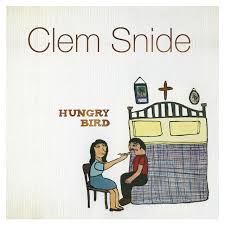
I first learned the shape of this feeling not through Steve Earle, but through Clem Snide’s cover of Franz Wright — an artistic relay in which one voice carries another’s encounter across distance and time, transforming the original into something that feels simultaneously intimate and secondhand. That is often how hauntings arrive for me: sidelong, refracted, mediated by art before experience recognizes itself inside the echo.

A borrowed door into an original room.

And that is where the hour begins.

There exists a space late at night — or early in the morning, depending on temperament and life stage — when cognition thins and the world grows slightly porous. The clock reads 3 AM, but the number matters less than the condition: the hour when ordinary structures loosen their grip, when language quiets, when identity becomes less declarative and more receptive.

At that hour, the city changes character.

Sound carries differently.
Light softens into suggestion.
Distance feels compressed.
Time feels elastic.

Even familiar rooms acquire the faint strangeness of places visited in dreams. Furniture appears slightly displaced from its daytime certainty. Street sounds arrive as fragments rather than narratives. The mind, deprived of external reinforcement, becomes a receptive surface for impressions that would dissolve immediately under daylight scrutiny.

It is not mystical.
Not dangerous.
Not even especially dramatic.

Just thin.

I have had moments there — most of us have — when the boundary between witnessing and participating becomes ambiguous. One moment in particular remains lodged in memory like a quiet shoulder tap. There were real people involved, real conversation, real movement through space. And yet layered within the literal event was something harder to categorize: a presence that did not claim metaphysical authority but nonetheless altered the emotional pressure of the moment.

I cannot narrate specifics. Confidentiality holds the center, and the encounter was not fully mine to claim. But proximity alone can leave residue. Sometimes you do not own the story, yet the story alters you.

Earle’s character inhabits a world of visible stakes — border desperation, economic precarity, the sudden rearrangement of circumstance that forces moral improvisation. His question, What’s a simple man to do?, is less rhetorical than existential. It captures the sound of a human recognizing that the script he believed himself to be following has dissolved without warning.

Franz Wright’s terrain is quieter but no less destabilizing. His encounters are interior, structured around visitations that resist empirical verification yet exert undeniable psychological gravity. Wright’s presence is not law enforcement but the invisible: the sudden sense that one’s life has drifted subtly from its intended trajectory, that something unsummoned has stepped forward and is waiting for acknowledgment.

My hour lived somewhere between those poles.

Not danger.
Not mysticism.
A pressure change.

A moment when the ordinary surface of experience felt slightly displaced by depth — as if an unseen observer had entered the room and paused long enough for recognition without introduction. The encounter unfolded within the grammar of everyday interaction, yet its emotional register belonged to a different frequency.

Here is the calibration, because honesty matters more than narrative ownership:

I turned.

And what I saw was both literal and not literal at all. A person whose presence carried echoes beyond biography. A crossing of emotional currents that felt disproportionate to duration. A moment whose significance resided less in content than in atmosphere.

These encounters are rarely sustained. They appear, register, and dissolve before interpretation can fully assemble. But dissolution does not negate impact. Some experiences operate as quiet rearrangements — subtle shifts in perception that reveal themselves only through later reflection.

You do not leave with answers.
You leave with altered attention.

Music offers a framework for understanding this phenomenon. Covers, reinterpretations, and artistic relays mirror the structure of thin-hour encounters: one experience passing through another consciousness, reshaped without losing origin. Clem Snide’s refracted Wright, Wright’s visitation, Earle’s desperation — each functions as a mediated echo, a reminder that human experience rarely arrives unfiltered.

The encounter at 3 AM belongs to this lineage of mediation. It was not an event demanding explanation but an atmosphere demanding acknowledgment.

Afterward, the memory settles differently from ordinary recollection. It does not assert itself loudly or demand retelling. Instead, it persists as a quiet calibration tool — a reference point that subtly informs later perception. You find yourself recognizing similar atmospheric shifts more quickly, attuned to moments when reality thins and emotional depth approaches the surface.

Such experiences resist mythologizing not because they lack significance but because their significance depends on restraint. To narrate them too fully would distort their nature. They exist precisely in the space between explanation and silence.

You live with them quietly.

Without overclaiming.
Without dramatizing.
Without converting them into personal mythology.
Without pretending you earned, summoned, or deserved their arrival.

They came because certain hours open.

Most do not.

You do not chase these moments. Pursuit transforms them into performance. Instead, you cultivate a form of attention that allows recognition without grasping. When the next thin hour arrives — and it will, though unpredictably — the task is simply to remain receptive enough to notice.

The encounter does not require interpretation.
It requires witness.

And perhaps that is the deeper resonance linking Earle, Wright, and the thin-hour experience itself: each represents a moment when life’s ordinary narrative pauses just long enough to reveal underlying possibility. A reminder that identity is less fixed than assumed, that meaning often arrives indirectly, and that some of the most consequential experiences unfold without external spectacle.

They do not change your life in visible ways.
They change the way your life feels from within.

You return to ordinary routines — morning coffee, daylight conversations, the practicalities of schedule and obligation — carrying an unspoken awareness that certain hours remain portals rather than merely timestamps. The world resumes its solidity, but the memory of porosity lingers.

And so the encounter remains:

not a story,
not a revelation,
not a lesson,
but a quiet rearrangement.

A reminder that sometimes the world steps slightly closer without explanation, offering a glimpse of emotional depth that cannot be captured but can be carried.

You do not chase it.
You do not interpret it.
You do not claim it.

You simply remain awake enough to notice when the hour opens again.


Dedication
For the hour that opened.

On David Bazan’s Crisis of Faith, and Mine

Note: This essay makes several references to my time as a teacher, coordinator, and administrator at Ritsumeikan Uji in Kyoto, Japan. I have written about my time at Ritsumeikan prior in my piece about good and great talkers, and in my piece about hiding in a hotel room for 36 hours after being seriously overworked for months in 2012.

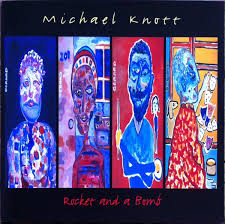
In case parts of the timeline referred to above are not clear, I began working at Rits Uji in 2002, started with the IB program at Rits in 2008, left my job temporarily in 2018, and rejoined after COVID was settling down in 2021. Also, if you like this essay you will like my longform analysis of the great Michael Knott’s album “A Rocket and a Bomb.”

Epigraph:
“There’s real people in them big, big trucks…” 

David Bazan

I’ve always experienced David Bazan (the Christian-adjacent singer songwriter with Pedro the Lion and later solo) not as a songwriter but as a kind of emotional barometer for whatever stage of adulthood I’m in. Every few years I realize he’s already written the song I need, long before I know I need it. He’s not confessional; he’s just brutally, unfussily truthful in a way that feels like being read by somebody who doesn’t care whether you agree with him.


This is a field report on five Bazan songs—what they meant, what they revealed, and how they secretly mapped the last twenty plus years of my interior life.

1. BIG TRUCKS

I first heard “Big Trucks” in my early Ritsumeikan Uji years—2003 or 2004 when I was digging deeply on the site eMusic. The song was first released in 1998 on Pedro the Lion’s It’s Hard to Find a Friend on Made in Mexico records, and is track 3 of 12. There is also a single version which is track 6 on the 1999 EP The Only Reason I Feel Secure. I was into Pedro the Lion back when the air was still clean and my responsibilities hadn’t yet calcified into the adult structures that would come later. I was living in a rental apartment, and still had that sense that life was flexible: the rhythms of teaching, the long days, the long nights, all of it felt new and fresh.

The thing about “Big Trucks” is that it’s so effortlessly literal you almost miss the emotional charge. A child asking his father why he doesn’t respond when another driver flips him off. A parent trying to explain something unexplainable with reference to the humanity of truck drivers. The gap between innocence and knowledge opening in real time.

When I was 28, the resonance was simple: the world is bigger and harder than we think, and adulthood arrives the moment you realize you don’t get to choose the scale of the forces that hit you.

Even then, before IB coordination, before butting heads with my principal, before everything that happened in 2018 which led to me leaving my job, the line felt like a premonition. The big trucks are always coming after all.

2. BANDS WITH MANAGERS
Bands with Managers is the lead off track on Pedro the Lion’s 2004 record Achilles Heel. I was already into the band as mentioned above by this time, and Achilles Heel would prove critical listening in the years that followed. By 2007 the IB tidal wave was approaching, and my days were already starting to feel compressed. I was “going places,” as Bazan mocks himself for saying, which is exactly the problem: I actually was going places. I was acquiring managers, and then heavier managers, and then the structural expectations that come with being the adult in the room.

That’s why I love this song so much—because it’s funny, cutting, self-aware, and self-disparaging all at once:

“Bands with managers are going places.”

He’s laughing at the absurdity of ambition, the ridiculousness of believing your ascent is meaningful, and at the same time he’s wincing, because he knows he’s been swept up in the same machinery.

By 2007, I felt that too. The joke was aimed at me, but gently.

The line I lived was this:

“I’m going places, apparently — and it’s funny, and it’s ridiculous, and I think I’m about to be crushed.”

Ambition and pressure make strange bedfellows. Bazan gets that. He names what most adults won’t: that sometimes “success” feels like being hauled upward by a crane you didn’t ask for.

3. FOREGONE CONCLUSIONS
Foregone Conclusions is track two on Achilles Heel. This is one of his most devastating songs because of its simplicity. The line that gets me every time:

“I don’t wanna believe that all of the above is true.”

This is Bazan calling out doctrinaire Christianity and he’s not subtle about it. It’s almost embarrassingly plain. But middle-aged truth is often embarrassingly plain. For me the line hits in two places: first, in that long stretch where adulthood felt like a narrowing of options; and second, in the recognition of how many “beliefs” I’d inherited and carried long after they’d stopped serving me.


One idea that slowly died in me—over years, not months—was the belief that I could be happy in some uncomplicated, stable way. I don’t mean not depressed. I mean the fantasy that happiness arrives and then stays. By my early forties I knew better.


Happiness is local, flickering. It’s take what you can get. What lasts, perhaps, is meaning, purpose. Bazan already understood that twenty years ago. It took me a little longer.

4. YELLOW BIKE
Yellow Bike is track 2 on Pedro the Lion’s 2019 record Phoenix. If there’s a perfect adult loneliness song, this is it.

“My kingdom for someone to ride with me.”

This line is not necessarily about wanting a partner or romantic longing, although it could be. It’s about pace—finding someone who can move at the same internal speed as you without distorting your life. After 2018, I didn’t trust the world to ride with me in a clean way. Not institutions. Not leadership structures. Not women. The only sane posture was self-containment.


And then came Mela. Mela was first my Periscope friend (Twitter’s discontinued video live-streaming platform), and then my text buddy and then phone buddy in late fall and early winter, 2018. This was not a romance, nothing really other than hours on the phone, day after day. Neither of us were working, and we covered every subject under the sun, including prominently the boys she was with, the boys she was chasing, and the boys that were chasing here.

Mela was the first person after 2018 who matched my internal rhythm without triggering anything. She didn’t need anything from me; she didn’t misread me; she didn’t overstep. She just rode beside me lightly for a window of about six weeks.

That’s what Bazan means by “someone to ride with me.” Not permanence—just pacing. Not dependence—just parallel motion. A few blocks of shared speed. Enough to remember you’re not built for solitude.

5. LITTLE HELP
Little Help is track 3 on Pedro the Lion’s 2024 album Santa Cruz. This is the one that lands hardest in midlife.


“All I needed was a godsend/ All I needed was a little help from a friend.”

For me, that friend was Tommy. During COVID I was on sick leave, drifting, half-collapsed inside myself. Wine in bed, online chess all day, the sense of dissolving in slow motion. It wasn’t dramatic, but it was real. I wasn’t moving toward anything; I was sinking.

And it was Tommy who refused to let me disappear. Not gently. Not metaphorically. Literally. Texting. Calling. Telling me he’d drag me out of my house if he had to. Making me come out with him twice a week in Kyoto, even when I barely had a pulse.


One night we were in a tiny reggae club, drinking Red Stripe, and at around 10:30 p.m., in the restroom of all places, I felt happy for two seconds. Not enlightened. Not healed. Just briefly, unmistakably alive.

That moment didn’t save me. Tommy didn’t “fix” anything. But he interrupted the slide. He held me upright until I could stand on my own again. In the end, that’s what Bazan means. Not salvation. Not heroism. Just stubborn companionship. That moment when someone refuses to let you lose it. And that’s when the line stops being metaphor and becomes plain fact: All I needed was a little help from a friend.

6. CONCLUSION
Overall, I really like Pedro the Lion/ David Bazan. Even more so than Michael Knott, he is a kind of black sheep of the Christian rock movement, and he may even be cancelled by some, I’m not sure, but I think other people, even some of faith, appreciate his relentless questioning, his searing honesty. I don’t know what the state of his faith is today, but it’s been a fascinating and fruitful experience following along the twists and turns of his art and career.

Dedication:
For Tommy — I’ll knock down your door anytime.

On Michael Knott’s Record “A Rocket and a Bomb”: A Full Analysis

“Mr. God, is there a Mrs. God?

Michael Knott


Origin Story

I found Rocket and a Bomb the way you sometimes meet the most important things in your life: by accident, with no money, in a used bin on Division in Spokane, during a summer when nothing was happening and I had no idea who I was supposed to become.

It was 1994, the summer before junior year. I wasn’t working — not out of rebellion or laziness, but because I somehow never got pushed into getting a job. My parents were juggling one car between them, sometimes borrowing a second from St. George’s, and when that second car was free, I took it and drifted through Spokane.

I had a circuit — three places I visited almost every day, like a loop I barely knew I was running.

1. A random coffee shop off Division
They knew me as the quiet kid who ordered the same thing, sat alone, and had a half-crush on the barista for reasons I couldn’t articulate even then. I wasn’t flirting. I was just alive in her direction. It gave the day a shape.

2. A used bookstore in North Spokane
Le Carré, Christie, metaphysics, philosophy, sci-fi, old paperbacks with cracked spines. Books were two to five dollars, and the older woman behind the counter would chat with me as if I were a real adult. I was still in my 150-books-a-year phase. It felt like productivity disguised as escape — or maybe escape disguised as productivity.

3. A used CD store up Division
All used, because I was broke. Rows of mid-’90s detritus: dozens of copies of August and Everything After, inexplicable imports, promo discs dumped by radio stations. I’d flip through crates like a prospector searching for gold in a river everyone else had given up on.

And one day I found something.

I pulled a CD I’d never heard of: Rocket and a Bomb by Michael Knott. The cover art — drawn by Knott — was strange and specific. The title was perfect. And for reasons I couldn’t explain, the whole thing felt special. Buried treasure. A private signal.

It was used. It was cheap. It felt like it had been waiting for me. I took it home, slid it into my boombox, and played it straight through. And something opened. Not revelation. Not identity. Not insight. Pure recognition.

The recognition that someone, somewhere, had lived inside a hallway-world that felt eerily close to my own. That someone understood the drift, the observation, the stasis, the human weirdness. This essay is about that record.


Jan the Weatherman

“Jan the Weatherman” was the first sign that Rocket and a Bomb wasn’t just another used-bin curiosity. The song opens with a portrait so sharp it bypasses metaphor entirely:

“Jan, Jan the weatherman
Lives across the hall in an old beer can.”

It’s not symbolic. It’s not poetic. It’s literal. It’s Knott standing in a hallway in Hollywood, looking across at a neighbor, and writing down exactly what he sees. No interpretation. No commentary.

Then the details:

— A stick and a pan.
— Sandwiches from questionable sources.
— A kid sister who could use a tan.
— Jan wanting to “join the band.”

Absurd and intimate at the same time.

I played the whole record constantly that Spokane summer. One afternoon, I was in the kitchen with my younger brother Pat, listening to “Jan the Weatherman” on the boombox. Pat — not a music obsessive — liked it immediately. At the same time, I was trying to get him to read Paul Auster’s New York Trilogy. In the first story, characters are named by colors: Mr. White, Mr. Black, Mrs. Blue.

While we were talking about that, the rotary phone rang.

One of us answered.

A man on the other end asked:

“May I speak to Mr. White?”

Pat froze, then fell backward onto the couch like he had been shot. It was uncanny. A Knott moment invading our Spokane kitchen. A micro-portrait becoming real.


John Barrymore Jr.

If Jan is the doorway, “John Barrymore Jr.” is the moment you step inside the building and realize what kind of place you’re in.

The title alone shocks you:
Yes, it is that Barrymore — the son of the actor, the father of Drew, apparently. A man who once lived inside Hollywood mythology now wanders Knott’s hallway wearing golf shoes with the spikes still inside.

Knott gives the greatest couplet in the neighbor cosmos:

“John Barrymore, Jr.
A weird guy
Wearing golf shoes down the hall
With the spikes still inside.”

It’s funny, and not funny at all. Funny because the image is ridiculous. Not funny because this is what happens when a life collapses out of frame. Knott doesn’t say “tragic,” or “fallen,” or “addict.” He doesn’t inflate or sanitize him.

Just:

“A weird guy.”

That’s compassion. That’s honesty. That’s Knott’s entire ethic. Barrymore isn’t elevated. He isn’t judged. He isn’t explained. He’s just a neighbor — one of the many ghosts drifting through the building.


Bubbles

“Bubbles” is where the neighbor songs turn dangerous.

Bubbles is a junkie. A rich man takes him into the hills in a limo. Bubbles gets beaten. He sleeps in the park. Knott reports the whole incident without emotion, elevation, or commentary. There is no moral, no sermon, no interpretation.

And the crucial detail — one of the most important on the album: Knott does not take Bubbles in.

No savior complex.
No rescue fantasy.
No sentimental lie.

His compassion is observational, not interventionist. He sees clearly, cares sincerely, and knows the limits of his own ability.

And then — astonishingly — the song becomes a banger. The ending is practically joyous. The dissonance is intentional.

Bubbles is still sleeping in the park. And the world keeps going. This is Knott’s ethics:
attention without illusion.


Kitty

“Kitty” is the rumor song — the sharpest, most volatile one in the neighbor sequence. And it gives you almost nothing:

A pot. A missing husband. A whisper that Kitty cooked him.

That’s it.

Knott doesn’t shape the rumor. He doesn’t validate it. He doesn’t sanitize it. He doesn’t enlarge it. He repeats what people say in buildings like these when they shouldn’t be saying anything.

It’s uncomfortable because it’s overt. A little too cooked, literally and figuratively. But it belongs. Because every hallway has a rumor threshold.


Skinny Skins

“Skinny Skins” has always been my favorite neighbor portrait — the one that shows Knott’s true position in the ecosystem.

The sketch begins with flat humor:

“When he turns sideways, he disappears.”

A man thin enough to be mistaken for absence. The kind of description you only make about someone you see daily, someone who exists in your peripheral vision.

Then:

“When he beats that drum, it hurts my ears.”

It’s affectionate exasperation — the exhaustion of living near someone inconsistent but familiar.

Then the key line:

“A fifth of gin will let him win.”

Meaning: the only way he can function is by numbing himself.

And then the reveal:

“I owe him money.”

This is the moment the whole neighbor cosmos locks into place. Knott is not an observer. He is inside the system. He owes. He receives. He participates.

The cello underneath everything — bowed, heavy, grounding — prevents the song from tipping into caricature. It gives the portrait gravity. It insists this man is real.

Then the hammer:

“If that’s him knocking, don’t let him in.
Let him in.”

That contradiction is the most human thing on the album.

You don’t want him in. You let him in. Because that’s what life is like in buildings full of people who can’t quite get it together but are still yours.

Skinny Skins is the final neighbor not because he is the strangest, but because he is the closest. He is the person Knott cannot shut out.


Jail

“Jail” is the first moment Knott points the camera inward. The entire song revolves around one line:

“I’m gonna meet the judge —
She don’t care.”

That’s the whole spiritual and emotional architecture of the album in eight words. The world is indifferent. You are accountable anyway.

He follows it with:

“What am I supposed to learn?
I haven’t learned it yet.”

Not rebellion. Not enlightenment.

Just the recognition that nothing about this system — legal, moral, spiritual — is designed to teach you anything.

And then there’s the public defender scratching a hundred-dollar bill with his ear — a line so strange and specific it has to be real. “Jail” is where the hallway turns into a mirror.


Serious

“Serious” used to be one of my favorites on the record, and it still holds a crucial position. It’s the first time Knott lets the internal crisis show without metaphor or disguise.

The plea:

“Someone get me a gun,
someone get me a shotgun.”

Delivered not theatrically, but flatly — almost bored. Like someone reporting the content of a mind in disrepair.

But the real center is:

“I wanna end it if I can’t learn to supply.”

Not love. Not hope. Not purpose. Supply.

He’s afraid he cannot be counted on. That he cannot provide what others need. That he cannot hold up his end of any relational economy. This isn’t melodrama. It’s inadequacy.

“Serious” is the sound of someone realizing he may not be equipped for the life he’s in.


Make Me Feel Good

“Make Me Feel Good” is the quietest of the confession tracks, but one of the most psychologically precise.

“When you’re down
No one wants you around.”

Not bitter. Not angry. Just a flat report of how people behave around the depressed or unstable. And then the devastating line:

“When you scream
It’s easier to be seen
But it’s harder to be missed.”

You get attention — but not presence. Visibility without care. Recognition without support. It’s the social physics of emotional collapse. This song is the exhale before the real reckoning.


Train

“Train” is the confession song that belonged to me long before I understood why.

Two lines define it:

“Maybe I won’t be on the list.”
“Maybe I’ll just drink like a sieve.”

Separate, they’re sharp. Together, they’re devastating.

“Maybe I won’t be on the list” isn’t a theological fear — it’s existential. It’s the fear of irrelevance, of invisibility, of not being counted. It’s the Spokane summer feeling I lived inside:

Not a crisis. Not ambition. Just suspension.

And “Maybe I’ll just drink like a sieve” is the fallback — the low door one walks through when the higher door doesn’t feel real.

That was the emotional geometry of that Spokane summer:

No job. No movement. Late-night Law & Order. Random drives. A sense of being off any meaningful list. The quiet pull toward dissolution, but not enough recklessness to act on it.

“Train” didn’t teach me anything. It acknowledged something inside me long before I could name it.


The Summer in Spokane

It wasn’t a crisis summer. It was a suspended summer.

Days drifting through bookstores and CD crates. Nights washed in the glow of crime procedurals. A sense of time passing without accumulating.

My father shoved me once — the only time — out of frustration that I was doing nothing, going nowhere, stuck in an unlit room with reruns. It wasn’t symbolic. It wasn’t trauma. It was pressure hitting stasis.

I told him never again. He never did, and we never talked about it.

Rocket and a Bomb became the shape of that summer. Not just a soundtrack.
A mirror.


Rocket and a Bomb

Then comes the title track — the cathedral of the album. The central contradiction:

“A good job and some bus fare
And a rocket and a bomb.”

He wants nothing. He wants everything. He wants stability. He wants detonation. This is one of the most honest lines in American songwriting.

And then the pivot that makes Knott impossible to classify:

“Mr. God, is there a Mrs. God?
Could she help me find a job…?”

It’s not blasphemy. It’s not a joke. It’s bleak sincerity.

Knott said in an interview he “knows Jesus,” and that doesn’t make him good, bad, saved, or functional. It just means he recognizes the presence. It doesn’t help.

This is not Christian rock. This is hallway theology — the kind where god is less a deity than a neighbor, and maybe his wife is the one responsible for the job-search department.

Knott kept re-recording this song because it wasn’t a hit. It was his self-portrait. And for a drifting kid in Spokane, it was the first real articulation of the contradiction I didn’t know had a name:

I want a simple life. And I want to blow it up.


Closing: Buried Treasure

I found Rocket and a Bomb for five dollars in a used bin. I didn’t know the name. I didn’t know the scene. I didn’t know the man. But I knew the feeling before I knew the language.

What stayed with me all these years wasn’t the stories, or the craft, or the persona. It was the attention without illusion. The way Knott saw people in hallways — and the way I felt like I was in one myself.

This album didn’t guide me. It didn’t rescue me. It didn’t fix me. It recognized me.

It saw the drift, the fear, the contradiction, the waiting. It saw the life before the life. It saw the hallway I didn’t yet have a vocabulary for.

It was buried treasure — not because it was rare, but because I was.


Dedication

To Michael Knott, Libra sun —
whose songs moved with the restless, twin-voiced brilliance of a Gemini mind, and whose hallway portraits taught me how to see without illusion.

From a Libra rising who recognized the air in your work — the balance forever chased, the contradiction forever held, the drift that becomes a doorway.


On Kris Kristofferson’s “To Beat the Devil”

This piece takes a look at Kris Kristofferson’s “To Beat the Devil.” The song appears on Kristofferson’s self-titled debut album from 1970 on Monument, which is, by any standard, an astonishingly good record. The album features “Me and Bobby McGee,” “Sunday Morning Coming Down,” and “Just the Other Side of Nowhere,” along with the ol’ Devil. That’s four absolute classics right there for ya.

Sunday Morning features an opening quatrain that most other songwriters would trade their career for:

Well I woke up Sunday morning/ with no way to hold my head that didn’t hurt/ and the beer I had for breakfast wasn’t bad/ so I had one more for dessert

(I could play this game all day—Jason Isbell’s Southeastern features another couple life-work worthy couplets:

The first two lines of “Super 8”:

Don’t wanna die in a super 8 motel/ just because somebody’s evening didn’t go so well

And from “Different Days”:

Time went by and I left and I left again/ Jesus loves a sinner but the highway loves a sin.

If I’d written lines that great I’d call it a career and sip martinis on the house for the duration.)

Sunday Morning and Bobby are probably objectively better songs than To Beat the Devil, yet what I like about this one is that Kristofferson states very clearly a kind of founding intention for his life in song and art, right out of the gate. The only parallel I can think of is Craig Finn’s The Hold Steady, whose first album Almost Killed Me kicks off with “A Positive Jam.”

(Here’s Finn telling it like it is:

I got bored when I didn’t have a band/ so I started a band/ we’re gonna start it with a positive jam/ hold steady.

Rock on Craig baby.)

Anyway, let’s get to the focus of this piece. Kristofferson opens with a spoken intro.:

A couple of years back I come across a great and wasted friend of mine in the hallway of a recording studio. And while he was reciting some poetry to me that he had written, I saw that he was about a step away from dying, and I couldn’t help but wonder why. And the lines of this song occurred to me.

Here the singer is looking up at his idol who is both “great and wasted.” I wasn’t around quite yet in 1970, yet I can easily imagine Ginsberg’s “best minds” line hanging over talented folks across a lot of zones. Klosterman wasn’t quite there either (June 5, 1972–a mid Gemini of course), but he was close, and to indulge not for the last time in a little Klostermania, the zeitgeist seemed to be making people thirsty.

The singer receives some scraps of poetry, shards of shattered inspiration, and a song “occurs” to him. He doesn’t state it directly, however we imagine the song arrives fully formed, like “Pancho and Lefty,” or “Kubla Khan.” Thus, To Beat the Devil is also both an answer and an offer of redemption to his idol, who here is John(ny) Cash.

I’m happy to say he’s no longer wasted, and he’s got him a good woman. And I’d like to dedicate this to John and June, who helped showed me how to beat the devil.

The singer takes up the mantle of the master, and in so doing opens a possibility window onto redemption for his senior. This is no exaggeration—Cash also recorded To Beat the Devil in 1970 and we are basically stipulating that Kristofferson’s genius, descended from Cash while also original to himself, helped rescue Cash from addiction and the whole deal there. We won’t be deep diving into the archive on this one—as we said we’re just keeping it local and breaking it down, so you’ll have to take my word on it or search it up your own self.

Here’s the first verse; the words speak for themselves:

It was wintertime in Nashville/ down on Music City Row/ and I was looking for a place/ and to get myself out of the cold/ to warm the frozen feeling that was eating at my soul/ keep the chilly wind off my guitar

A classic down and out in the big city piece of scene-setting. The singer is physiologically and psychologically frozen, a cold wind gusts across his art. The man needs a break.

My thirsty wanted whiskey/ my hungry needed beans/ but it had been a month of paydays/ since I’d heard that eagle scream/ so with a stomach full of empty/ and a pocket full of dreams/ I left my pride and stepped inside a bar

You might think that the operative nouns here would be “thirst” and “hunger,” but no. This is not a man with a thirst; this is a thirsty man. We also hear an echo of a now-ancient American past where a man with an empty stomach would go in search of, of all things, “beans.”

Anyway, he’s got no money, can’t really bring himself to care. So, a singer walks into a bar.

Actually I’d guess you’d call it a tavern/ cigarette smoke to the ceiling
and sawdust on the floor/ friendly shadows/ I saw that there was just one old man sitting at the bar/ and in the mirror I could see him checking me and my guitar/ and he turned and said/ come up here, boy, and show us what you are/ I said I’m dry, and he bought me a beer

The man in the mirror, the devil himself. The singer comes face to face with the man who checks him out and summons him over. Kristofferson then enters into a bargain–offers up the terms of an encounter: a beer on the old man’s tab. Score one for the thirsty man. The singer faces the old man; it’s to be a showdown. He doesn’t have much, but he’s got some “friendly shadows,” traces of an older map perhaps, an older memory.

I can’t help here but engage in a bit of presumption. When I play the song in my head, I want to hear “in the mirror I saw him casing me and my guitar,” (listen to the way he pronounces “guitar” on the track. Kristofferson was born in Brownsville, Texas in ‘36 and behind the laid back folksinger you can here some roots here baby).

If I could make one edit to the song, it would be to replace “checking me,” with “casing me.” What a great verb “to case” is.

Lexical Interlude: “To case the joint”

1. slang To observe a place in order to familiarize oneself with its workings in preparation for some criminal activity (often robbery). Judging from the security footage, those men cased the joint hours before robbing it.

2. slang By extension, to thoroughly examine a place. In this usage, no devious motive is implied. As soon as my kids walking into the hotel room, they started casing the joint, exclaiming about everything from the TV to the mini-fridge.

The seminal use of this verb phrase comes from Bill Callahan, formerly of Smog. Callahan is an odd duck—he is so artificial, so obviously self-created as an entertainer, that he has become almost post-authentic.  Callahan contains multitudes.

My favorite Smog album, well in the top two, is Red Apple Falls, which features “Ex-Con,” on which Callahan sings: 

Jean jacket and tie/ feel like such a lie/ when I go to your house/ I feel like I’m/ casing the joint

Devious motive implied.

=====

He nodded at my guitar and said/ it’s a tough life, ain’t it?/ I just looked at him/ he said “you ain’t making any money, are you?/ I said, you been reading my mail/ he just smiled and said, let me see that guitar/ I got something you ought to hear/ and then he laid it on me

The devil has a bead on the singer, and he’s not far off.  Yes he’s broke.  Yes he’s down and out.  Whaddaya want?

=====

Filmic Interlude I: The Long Goodbye

In Robert Altman The Long Goodbye, written by Leigh Brackett, the main character Philip Marlowe gets out of jail somewhere in the first act and heads to a all-purpose pit stop restaurant who’s owner apparently collects Marlowe’s mail. The dialogue is exquisite.

Marlowe: You got any messages for me?

Owner: Believe we’ve got a few over there. As a matter of fact, you’ll find my phone bill in there too.

Marlowe: I wouldn’t worry about that.

When you ain’t got nothing you got nothing to lose. Kristofferson’s got nothing to hide in his mail. Those bills go straight to the wastebasket.

=====

If you waste your time a talkin’ / to the people who don’t listen/ to the things that you are saying/ who do you thinks gonna hear?/ and if you should die explaining how/ the things that they complain about/ are things they could be changing/ who do you thinks gonna care?

there were other lonely singers/ in a world turned deaf and blind/ who were crucified for what they tried to show/ and their voices have been scattered by the swirling winds of time/ ‘cause the truth remains that no one wants to know

The devil’s words speak for themselves. The path of the troubadour is a dead end. The world has not ears to hear nor eyes to see. Truth tellers meet a bad end. Whiners gonna whine. It’s a strong opening bet, made, we presume, with his red right hand.

Well the old man was a stranger/ but I’d heard his song before/ back when failure had me locked out/ on the wrong side of the door/ when no one stood behind me/ but my shadow on the floor/ and lonesome was more than a state of mind

The singer is on familiar territory; he’s has been tempted by this cynical incantation, he’s not immune to tuning out his calling when out in the cold. Who is?

You see, the devil haunts a hungry man/ if you don’t want to join him/ you gotta beat him/ I ain’t saying I beat the devil/ but I drank his beer for nothing/ then I stole his song

This is the key verse in our little tale. You see, when we tango with the devil the devil usually gets to lead. That’s just the way it goes. But the thing about the devil is, his game is a bit of a bluff. A couple of low pairs, maybe. You just gotta call.

and you still can hear me singing/ to the people who don’t listen/ to the things that I am saying/ praying someone’s gonna hear/ and I guess I’ll die explaining how/ the things that they complain about/ are things they could be changing/ hoping someone’s gonna care

I was born a lonely singer/ and I’m bound to die the same/ but I’ve gotta feed the hunger in my soul/ and if I never have a nickel/ I won’t ever die ashamed/ ‘cause I don’t believe that no one wants to know

Kristoffeson flips it right around. The devil’s got a point; the singer may die dead broke, that’s fine. Songs are borne on the wind in any case. The thing is to have faith in your audience. To believe someone is out there, heart in their hands and ear to the wind. And to hold this faith as a mantra. That’ll keep ‘em guessing, cause then you’re not playing their game, you’re playing your own.

Overall, To Beat the Devil is a young man’s song. It’s got a confidence, a swagger, even a hubris. So, after drafting most of this piece I wanted to find a recent live version, see how it’s aged. I stumbled on a version from a live set with Lou Reed released in 2017. The set is part of The Bottom Line Archive, and it finds Kristofferson in a Waitsian stage of life. The voice is richer than ever, but he’s not exactly singing. Then again, that’s what they said about Dylan and it’s B.S. The voice is the voice; singing is just a category.

The set is interspersed with short interviews of the two songwriters. Here is Kristofferson’s spoken introduction that precedes To Beat the Devil. It is instructive.

Interviewer: The devil figures in some of your songs, you know there’s that silver tongued devil and he pops up from time to time. Who’s the devil? What’s the devil for you? What are your demons?

K.K.: Well, I, I’ll do that song then. Ahhh…

Interviewer: Is that a metaphor or is that something real for you?

K.K.: Well here’s a song called To Beat the Devil. Maybe it’ll explain it. I can’t.

Introducing The Kyoto Kibbitzer

“Half hours on earth/ What are they worth/ I don’t know

In 27 years/ I’ve drunk fifty thousand beers/ And they just wash against me/like the sea into a pier…”

David Berman (Silver Jews), from Trains Across the Sea.

Welcome to thekyotokibbitzer.com. On this site you will experience posts uploaded whenever I write one. I write mostly about people, music, language, things that happened to me, and things I have observed. I also write some fiction.

Basically, I like to “check things out,” so some of the posts will just be sort of check-ins–that is briefish looks at a topic. Other pieces will be a little fuller, a little more polished.

The kibbitzer, classically, seeks neither fame nor fortune and is seen only by those in the audience, if at all.  If you feel like an audience member, drop a line or leave a polite and interesting comment. Also, if you’d like to write for the site send me a guest post and I’ll see if it’s a good fit.

Peace out.