
On My Week with Isobel (aka London Girl) Part II

Oh sister when I come to lie in your arms

Please don’t treat me like a stranger

Boy Dylan

Note: This is Part II of the series on my week with Isobel. Part I is here, and left off with my decision not to sleep with her, come what may.

PART II — Thursday → Saturday, Early Morning

Thursday

I woke up Thursday a little shook to be honest. Things had progressed so far, so fast, and although my feet seemed under me, it was hard to be sure. The fact that she had made a hard pass at me the day before was on my mind. In any case, we met by appointment in the morning . It went the same as before; we walked over to Pret again, but this time she ordered lightly and barely ate. As it turned out this was a sign of things to come. I finished my sandwich and coffee, and we walked back to campus, side by side, talking easily but underneath it something had shifted. We were no longer orbiting — we were a dyad, openly.

Back in the garden, same bench, same proximity. We weren’t spying on sessions anymore. We weren’t even pretending to. We talked all morning like our lives depended on it. And in a way, they did. We covered the history of thought, we recovered our careers, and I told her all about the various ups and downs I had had over the last several years at my school. We talked about astrology and she voiced some of her doubts. I told her I wasn’t a “believer” per se, but that the study fascinated me. We left it open.

After the morning break, we reconvened at a bench in the courtyard, this time in public. I was in a bit of a dilemma, you see my wife was scheduled to come to town that very night, and she would attend the dinner gala, the final dinner for the week. Somehow, I had to get ahead of this situation; I had to lower the temperature. So, I did what I often do in a difficult situation, I leaned on Dylan, specifically the quote from “Oh Sister” off of the album Desire.

I told her, “I feel like we should be like brother and sister.” Containment disguised as poetry. It was the best I could do. This took her aback a bit, and then I explained that my wife would be arriving, in a matter of six or seven hours. She didn’t say much, just took it in. She already knew I was married. She didn’t know my wife would be in Oxford. Whole different deal.

This revelation changed something in her body, and something in mine. We went to lunch — Indian again. Normally I ate fully, and she usually ate less, but that day we both pushed food around the plates. She couldn’t eat a bite; her appetite had totally shut down. Mine was not much better, and I picked at the curry to try to make it look decent. We paid and left. The epiphany of Tuesday had tipped into cognitive and bodily overload by Thursday.

During the afternoon, we talked as before but because the sessions were winding down I think we actually went to a session. I also browsed the bookstore, which was really cool. It was a big table in the common area and it was run by a bookseller who had his own astrology bookshop somewhere in the south. I had switched from the Mendoza Line to Dylan and was playing “Red River Shore” and “Mississippi” in addition to Oh Sister.

Evening arrived. My wife arrived at the hostel two minutes from campus. I went to meet her and walked her back to FAS. She met Isobel and Maddy before dinner — brief, surface-level. My wife complimented Isobel’s shoes. I could barely hold in a laugh for some reason. After all, she couldn’t have known what she was stepping into.

We ate in the dining hall — I sat with my wife and the one Japanese woman there, switching English and Japanese. Isobel sat elsewhere with Mystery and her daughter. There was a collection for the tutors — I took the box table to table, people applauding, giving money. My wife later said I was performing. Maybe I was. I was also alive.

After dinner my wife was tired from travel and wanted to sleep. I walked her to the hostel, kissed goodnight, then went back to the courtyard. Wine, tutors, Maddy, Isobel. A lighter night between us — more social, less fused — but the thread held. We probably stayed until one.

I slept well.
The finish line was visible.


Friday

We met again in the morning — Pret. This time she made a scene of helping me pick breakfast. My appetite returned. She still didn’t eat. We walked fifteen minutes to a large park, quiet, green, open.

She was struggling — not with me, but with everything. Engagement, career, identity, meaning. We sat on a bench. “Don’t sit too close to me,” she said.

“OK, how close is good?”

“Right here,” she said, indicating a space about one inch to her right. We talked about our situation–there was nothing else to talk about. We named it outright.

Then she got up and walked to a small arched bridge over a narrow river and said, She stood there for a bit, and then said in a loud declarative voice:“This is my bridge.”

I said, your bridge absolutely.

She stayed there a long time, twenty minutes maybe. I sat on a bench farther back. Eventually she came back to sit beside me — to my left again, shoulders touching. Then, she began to collapse onto me. Shoulders low, breath shallow. I half carried her back to campus. Ambulances and sirens on the street — not symbolic, actual. The world felt like an emergency. We moved slowly. It took almost 40 minutes.

At this same time, I was thinking, obviously. I came up with a name for what Isobel and I were experiencing. I called it the “catalyzed emergency,” just instinctively. I knew at once what I meant, and I also knew one day I would write this story.

We got back to campus and she went to look for Claire Martin, the tutor from day one. She ended up finding Claire, who was free, and Claire held space for her for ninety minutes. No charge. A private grace from a wonderful soul.

I went to the bookshop again. I talked to another Dylan fan and we had such a good chat that I pulled up Dylan’s Red River Shore and played it to him on my phone. He didn’t know it, but loved it. He did a moment chart on his phone and we talked about Dylan’s chart.

At the bookstore I met Melanie Reinhart, for the first time in person. Melanie was the first astrologer I reached out to in 2012 when I was first getting deep into the subject, and it was she who referred me to Darby Costello. So this was a fortunate meeting indeed.

We talked for nearly an hour about her childhood in Africa and her longing to return. I bought Sue Tompkins — Aspects in Astrology because Melanie said another author, who had a book on the charts of musicians, wasn’t a real astrologer. I couldn’t lose face in front of Melanie so I chose Tompkins, but although it’s a great book, I suspect the other one was more my speed.

Melanie asked me up to her room to help carry her bags down the three flights of strips. When we got to the room, she finished packing, and I carried her bags down from her third-floor suite and said goodbye at the gate.

Afterward I found Isobel again, near the entrance. She was steadier, post-Claire. We pushed through the crowd in the quad and slipped to the chapel to say goodbye privately. We spoke plainly — never forget, life-changing, go back to our lives. I told her I wanted to know her as an old woman. She agreed. We exchanged WhatsApp.

She left campus.

I said goodbye to Maddy later in the quad. I said goodbye to Jim, the dream tutor whose session Isobel and I attended and I left out of this story. “You’re a funny guy,” I said. “Takes one to know one,” he answered. The Exeter gate closed behind me, and I walked to the hotel my wife and I were to stay at alone.

My wife was in London at the Sherlock Holmes Museum. I wandered Exeter, then went to the Tolkien exhibition — letters to his children, original sketches, it was a really moving experience. Afterward a stationery shop — a single Tintin postcard. Dinner at the hotel restaurant — bouillabaisse and red wine. Then I texted Isobel. One message became a hundred.

I sent her “Leave the City” by Jason Molina and Red River Shore. She listened and cried. She said she wouldn’t go home to her fiancé that night — too flooded — she would stay at a hotel instead. We planned how we would keep in touch.

I slept next to my wife in a new bed, and in a new world.


Saturday, Early Morning

My wife had returned somewhat late from London and she was tired and slept early. She had an early flight, and a bus pickup 5:15 AM.

When the morning came I walked her to the stop. Street quiet, air washed and pale.

We hugged, kissed briefly, light and familiar, and she boarded the bus.

I stood there watching it pull away.
Not knowing yet what I had broken open.
Not knowing yet what I had kept intact.
On the Ump

The old line about how it’s “better to burn bright than slowly fade” still haunts me.
after Neil Young

That old feeling — being strapped to the dynamite truck of your own luck — still rings true.
after Breaking Circus

Anything can come

John O’Donohue

New Note: I first wrote and published this piece in September of 2018, after I left my job, temporarily, and was casting about in a somewhat indistinct way. It’s about 1200 words, and I wrote in about 12 minutes on my phone, which is not normal. What was happening of course was, I was recovering my childhood abuse through PTSD symptoms, and this led me, at least at this moment, to a kind of hyper-clarity. PTSD is really quite interesting, in that it can lead to hyper-clarity and the total opposite, sometimes within the course of a pretty short amount of time. Such it was with this time period.

This piece was about me trying to enlist my father, specifically, into understanding and taking some kind of action, on the abuse that I had suffered. This was not happening at the time, and I was a little frustrated by it, but then I hadn’t fully worked out all the pieces, so how could he have, I guess? Basically, I was saying “read what I have to say and you be the judge.” Instead, other things occurred, which I won’t get into at this time; I got over the immediate PTSD phase, and went to New York to see rock bands. 

I am still working on getting my father to come up to the plate on this whole issue, and I think he is getting there. The other night I discussed with him Oedipus at Colonus, the play by Sophocles, written between 406 and 405 BCE. That’s a while back. Here is the AI summary (yes I’m giving way to AI summaries):

Oedipus at Colonus is a Greek tragedy by Sophocles that follows the blind and exiled king Oedipus as he arrives in Colonus, near Athens. Accompanied by his devoted daughter Antigone, Oedipus learns that this sacred ground is prophesied to be the place of his death, and his burial there will bring blessings to Athens. The play chronicles his final days as he confronts his past, is threatened by his brother-in-law Creon, and is unlimitedly received by King Theseus of Athens, who helps him find a peaceful end.

That’s a pretty heavy plot; the ancients knew their business for sure. My own father is neither blind nor exiled, although he is a little deaf and tends to repeat himself from time to time, but I think he is still on top of things, or has the capacity to be. What I believe is, there is still time, because there is always time.
=====

Original Preface: This little piece alighted on the author a few weeks ago when he was undergoing a bit of a midlife re-orientation.  The piece is presented as it presented itself, with edits for cleanliness only. 

Karma is simply the field of what you put in place in your last lifetime.  As a person you arrange your life in such a way that it leaves clues as to the road you took.  When it’s time to switchback, all you have to do is have the courage to take the turn.  After the turn, it’s basically just a matter of reading the tree markers in the forest.  The challenge is, some of the tree makers have fallen in the leaves, been washed out by rain, or moved by the wind.  So you are in new territory.  The map, the degraded set of markers you left behind, is not the territory.  However the last path was so densely specific that we keep trying to use our old map on the new path.  We need that old map for a bit because those markers are the only ones we have.   However we need to find our footing pretty darn quick in order to learn to navigate the new territory.  Otherwise, we follow the markers and mistake them for fresh signs.  Very quickly, the old signals become noise. And then we are in a deep dark wood and are in danger of over-exposure, or, worse, pure confusion and terror about where the path may lie.

The individual is mortal, and beyond mortality is the mystery.  Tribes and societies are forms of collectives, and collectives form a spiral pattern that we call a system. Collectives, and spirals, are mortal as well, and when a spiral approaches its switch back point, the map begins to degrade and the particles of the spiral, the people in the current incarnation of the pattern, must attempt to discriminate the signal from the noise.  Of course this is a much more difficult task than it is for an individual because there are many more tree markers and the winds and rains are howling all about.  This is simply because the field is larger to accommodate so many souls.  So instead of just having to read a few old tree markers, folks must try to receive the field.

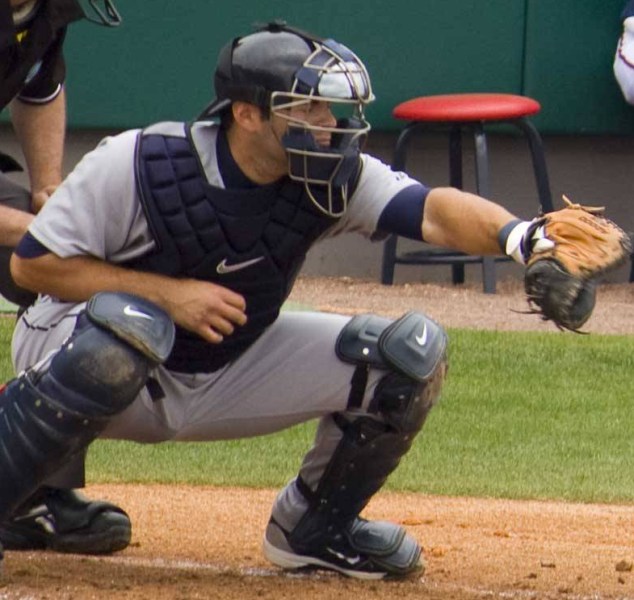
To receive the field you have to read the field, and the only way to read the field is to be looking right at it.  In baseball, there is only one position that can see the field and this is the catcher.  That’s why catchers are said to be good management material in general. Another way to say this is they have a wider view of the constraint set.  However, although the catcher can see the field and understand the constraint set in front of him, there is one variable he cannot control.  And this is, of course, the umpire.  The ump.

The ump calls the balls and strikes and the ump is a court of no appeal.  After all, he has the power to toss you from the ballgame altogether.  The only way to deal with this particular variable is to hone the craft of a catcher.  The first piece of craft is the act of framing a pitch.  Here the catcher subtly adjusts his glove in order to obstruct the ump’s view of the location of the pitch.  It is easy for the catcher to whip his glove on a ball in the dirt back to the strike zone, but the ump will spot that in a second.  So a catcher, if he wants to be any good, has to learn a little guile.

This guile can taken pretty far; and there are other ways to work an ump as well.  The classic, “ah come on ump,” is OK, but it’s the same as whipping the bill out of the dirt really.  A more effective trick is chatting the ump up.  Becoming his friend and letting him think you are actually on his side.  This is effective to a point as well, and extends the craft.   However here is where we need to remember our Dylan.  From “Just Like the Tom Thumb Blues,” we learn the following:

As Dylan once sang, you can start out soft and end up hitting the hard stuff — thinking people will stand behind you when things get rough, only to find out the bluff was your own. Sometimes you just want to go back to New York City and say you’ve had enough.
after Bob Dylan

Dylan is saying that though the use of guile helps you work the ump, you can start to mistake guile for the deeper craft.  You start to fall into your own trick.  You start to think you are the ump.  And these are deeper waters indeed.  In fact, this is the most dangerous game.  And in this zone, we need a secret weapon.

The idea of a secret weapon is apparently popular in many superhero movies these days, and we can read the field just a little to see why.  These so-called secret weapons may take the outward form of a literal weapon, one which defends against the apparent enemy and leaves death and destruction in its wake.  However when we use this kind of weapon, the forest we are in is in fact that of the irreal, where the furies shriek and howl.  However the superhero’s true secret weapon is something altogether different.  His true secret weapon is the light within, which can be transmuted into gold and used to navigate the irreal, and hunt the most dangerous game.  Where is that light within?  To find it, the catcher has to go pretty far back into things to find it.  In certain eras, folks may need to do something a little difficult to get there—as the Chinese say, may you live in interesting times.  The catcher, here, has to remember.

The first song I remember my own father singing, and one of the only ones I head from him, was from Bob Dylan.  I didn’t know who Dylan was, nor did I know the name of the song. The line my father sang was one of those old Dylan riddles — something about a pump that won’t work because someone stole the handles. I didn’t understand it then, but it landed in me like a talisman.
after Bob Dylan .

If the catcher is blessed to have such a talisman, he has a fighting chance.  The thing to do here is to keep your eyes and ears on the field and your gut and your body tuned into the ump.  Only this way can the little catcher tell when it’s time to play his card, which is of course the joker.  People have sought Dylan in all his guises to the ends of the earth and no one, to my knowledge, has caught onto his tricks.  I can’t say for sure that I’m onto all of them either, but I knew one thing.  When the vandals have those handles, the pump ain’t working. This is the moment the catcher makes his break with the ump. This is when he calls his bluff.

Dedication: For my Father, who caught me how to catch.

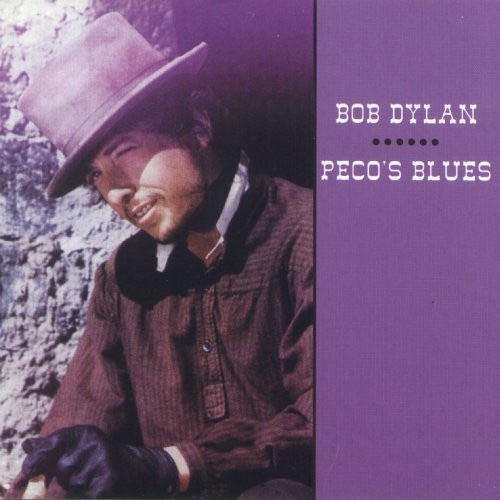
On the Between-Song Patter on the Bob Dylan Bootleg Record “Peco’s Blues”

Introduction

Behind any work of art, pretty much, there is some kind of “process.” The scope and complexity of this process differs across art forms, of course. The writer’s process is rather different than that of, let’s say, the magician David Copperfield. I find all artistic processes fascinating, and am drawn specifically to what happens “backstage.” Backstage is a world unto itself.

In the early 1970’s, the film director Sam Peckinpah was making a film called Pat Garrett and Billy the Kid, and he asked Bob Dylan to do the soundtrack. He also offered him a small role in the movie, a character called Alias. Dylan hadn’t really done a soundtrack before, nonetheless he headed down to Mexico to work on the film with Peckinpah. Pat Garrett and Billy the Kid the film is ok; it’s not my favorite Peckinpah by any means. (That is reserved for Bring Me the Head of Alfredo Garcia, with the one and only Warren Oates in the lead role. Oates around this time also starred in the film Cockfighter, which features the greatest rejected tagline of any film even “he came into town with his cock in his hands and what he did with it was illegal in 48 states.”) The Pat Garrett soundtrack in many ways transcends the film, mostly because this is where we are first introduced to “Knockin’ on Heaven’s Door,” which would go on to become one of Dylan’s best known songs, and is a really good soundtrack overall, however I am more interested in an extended set of outtakes from the sessions which are collected on a bootleg record called Peco’s Blues. Peco’s Blues features a number of alternate versions of the best known songs on the soundtrack, including Heaven’s Door and “Billy,” however the most interesting part of Peco’s Blues for me is the black and forth patter between Dylan, his sound engineer Chuck, and his band. This patter, I suggest, opens a fascinating and unique window into Dylan’s working methods and general approach to art. In what follows we will look at each incident of patter or conversation in the order they occur. All of the instances occur within the first 20 minutes of the nearly 70 minute recording as Dylan, his band, and the engineer endeavor to get on the same musical page.

Patter at the End of “Billy 2,” around the 7:34 Mark:

Dylan (D) wraps up a lengthy take of Billy 2 and asks his engineer Chuck (C):

D: Was that any good?

C: Pretty good Bob. What happened was was you hit the mic twice when you were moving around out there and we had a couple of clunks on it.

D: That’s too bad (…) Shit, I wish Sam was here. He’d know what to do.

C: That mic’s just a little more sensitive than the Sennheiser’s and I’m getting a little…

D: That’s too, uh…that’s…

C: And I’m getting a little puff of wind sometimes when you get real close to it when you sing.

D: That’s too sensitive.

C: Let me move it back a little for you Bob.

D: I think we must have got it though Chuck.

C: (with what sounds like a pencil in his mouth) Oh I recorded it, darn tootin’. I had a little puff from your voice once and you knocked the mic twice.

D: Well that might have been alls that we need.

C: You wanna, you wanna hear a playback on it?

D: Yeah, I would.

Comment:

We see right away here that Dylan is the boss and that the engineer is walking on eggshells a little bit. This is made clear by Dylan’s reference to “Sam,” who he obviously thinks is a better engineer than Chuck. We have more than a little sympathy for Chuck, as it wasn’t he that knocked the mic and he is trying his best to give Dylan the relevant information.

I love how Dylan here, while implicitly criticizing Chuck, also picks up on Chuck’s framing of the microphone situation and agrees that “that’s too sensitive.” However, the relative sensitivity of the mic is not Dylan’s main concern. Dylan, famously, likes to work fast. For some of his records that has been a positive, on these the sound and performances come across as organic and coordinated, like all of the players grasped their roles and just ran with them. On other records, Dylan’s preference for speed let’s him down, and songs, and especially the production, can feel rushed, even a little sloppy. Dylan famously warred with Uber-producer Daniel Lanois, who had produced U2 and Peter Gabriel among others before Dylan asked him to produce 1989’s Oh Mercy. Oh Mercy sounds great and was Dylan’s “comeback” album after a mixed, to say the least, mid 80’s period, however Lanois’ sonic fingerprints are all over it. Too much so for Dylan, who wanted a faster, looser approach. Lanois is no pushover, and held his own with Dylan. We get the sense that Chuck is no Lanois.

So, despite the knocks on the mic and the puff of wind, Dylan is going to be fine with using this version on the record. Chuck, of course, is going to want Dylan to play it again. Chuck, or someone, would win this one because the extended take of Billy 2 here is not the one used on the final album. The little tussle between Dylan and Chuck ends in a draw as they agree to listen to the playback.

Patter at the Beginning of “Turkey,” around the 8:40 Mark:

D: Hey Roger, when I stop, when I stop, you stop. I’ll do something else and you figure it out. So it might go like this (Dylan starts playing and the band fills in a little hesitantly behind him).

D: Say Chuck, Chuck?

C: Yeah

D: Let’s take this down and mark it under, uh, Turkey…We got a buzz in the amp.

C: I’m not picking it up.

D: OK come on now.

The band plays on the instrumental Turkey for about a minute before Dylan stops.

D: OK, this is under Turkey.

Dylan begins again, and this time the band fills in much better, the song sounding fuller and tighter in all ways.

Comment:

This is in my opinion the most illuminating of Dylan’s comments and gives us a window into his way of working throughout his career. As mentioned above, Dylan works fast and expects his musicians to do the same. Thus he instructs Roger that when he Dylan stops, Roger is to stop, Dylan will “do something else” and Roger needs to “figure it out.” Dylan’s instructions may not sound very fair to poor Roger, but I think they actually are. A musical team is in this case not unlike a sports team, say a basketball team, where even if an offense is running a designed play or “set,” players need to figure out what’s going on and adjust their own position and movements constantly and on the fly. There is no playbook, not set of absolute rules about how to accomplish this any more than there is a set of rules about how to follow Dylan musically. The musician, like the athlete, just has to work by feel, take in all the information around him or her, and figure it out. If they can, they will keep their job; if not, not.

Patter at the Beginning of “Billy Surrenders,” around the 18:10 Mark:

D: Let’s see now. You know, you know what we want when Billy starts (laughs) this guy Jerry Fielding’s gonna go nuts man when he hears this (laughs). You know what we want when like Pat Garrett comes down from the hills right, and all these guys come out like one by one. And Billy comes out, he’s almost standing in a circle you know, so like (indistinct) one by one and then there’s like a big pause and he stops and there’s silence. You know those big organ notes, those scary things (hums organ notes) (laughs). Can you get behind that? (Dylan and the band laughing.)

Comment:

The recording of the Pat Garrett soundtrack was pretty complicated, in large part because Jerry Fielding, Peckinpah’s usual composer, was relegated to a supporting role and apparently resented it. Accounts differ as to whether Fielding quit, walked off set (and maybe came back), actually did try to advise Dylan as requested, or some combination of the above, however the history of the film makes clear that there was friction. Dylan is clearly aware of the tension with Fielding, and makes a joke about it in a place where it doesn’t even seem relevant. Dylan seems to almost revel in the conflict, setting up Fielding to his band as a “suit” who is not in the field so to speak, and who Dylan enjoys winding up with his musical choices. Whatever the exact situation with Fielding was, the issue is clearly a live one at the time of recording.

My sense is that Dylan is mostly talking to his band here, as there are a number of people in the background laughing along with Dylan through this monologue. Despite his reputation for playing fast and loose most of the time, Dylan shows a pretty good grasp of particular scenes in the film and clearly knows what he wants. The “big organ notes” he mentions do indeed feature on the soundtrack, however maybe not to the extent Dylan wanted. I have to laugh at the very 1970’s question “can you get behind that?”

Conclusion

Overall, Peco’s Blues provides a fascinating window into Dylan’s working methods and expectations for his crew. Of course not every musician works this way; many will give much more precise instructions I am sure, and in the era of computer aided music Dylan’s approach on Pat Garrett is certainly a old-fashioned one. But I like it. It is absolutely worth listening to the entirety of Peco’s Blues to get a sense of Dylan’s working methods as well as how a band, here playing together live and recorded live, “figures itself out” and gets from sketch to finished product. I am myself not a musician but a writer, and the writing process, although never exactly easy, is perhaps a little less complex, mostly because most writers write by themselves, with an editor or editing team looking over the work at a later date. There is nothing in writing quite like “I’ll do something else and you figure it out,” and it is the shifting, quicksilver like nature of Dylan’s approach to music making here that continues to interest me and draw me in.

Five Great Jason Isbell Songs

Welcome to a blog post about Jason Isbell.  This will be kinda short and it will kick off with some “stipulations.”

Stipulation I: Luna is the best “active” band, and “Malibu Love Nest” is their best song.

Stipulation II: Craig Finn is the the best active rock star, and the live version of “Killer Parties” on A Positive Rage best exemplifies this.

Stipulation III: Jason Isbell is the best active songwriter, and “Different Days” is his best song.

Suggestion I: I don’t know who the greatest band of all time is.  There are a lot of options.  The Beatles is not the right answer.

Suggestion II: Mick Jagger is the greatest frontman of all time, although Chuck Berry is still the purest rock star that will probably ever be (man I would love to play the keyboard like the dude in this video!)

Suggestion III: Townes Van Zandt is the greatest songwriter of all time, although Dylan’s high points are higher.

We shall explore all the above stipulations at some later date.  Today we are looking at Isbell.  Today on the Periscope there we said we might do a post here about “Different Days.”  Well, that’s going to be a little too much work for today.  So instead we’ll do a little top five.  These are not necessarily my favorite 5 songs from Jason, but pretty much.  So, “in no particular order”:

I. “Danko/ Manuel,” from The Dirty South.  2003.  On the Periscope I was a little inaccurate–Isbell was 24-25 when he wrote this one.  It’s about the band The Band, and about emulating one’s heroes and the pros and cons of that action.

First they make you out to be/ the only pirate on the sea/ they say Danko would have sounded just like me/ “Is that the man you want to be?”

https://www.youtube.com/watch?v=zaWkvqah9W8

II. “Goddam Lonely Love” also from The Dirty South.  2003.

So I’ll take two of what you’re having and I’ll take all of what you got/
to kill this goddamn lonely, goddamn lonely love

Stop me if you’ve heard this one before/ a man walks into a bar and leaves before his ashes hit the floor/ stop me if I ever get that far/ the sun’s a desperate star that burns like every single one before

Dude was 25 years old.

Read more

The Ump

well it’s always been my nature
to take chances
my right hand drawing back

while my left hand advances

Bob Dylan, Angelina.  Circa 1981, A.D.

Preface: This little piece alighted on the author a few weeks ago when he was undergoing a bit of a midlife re-orientation.  The piece is presented as it presented itself, with edits for cleanliness only. 

Karma is simply the field of what you put in place in your last lifetime.  As a person you arrange your life in such a way that it leaves clues as to the road you took.  When it’s time to switchback, all you have to do is have the courage to take the turn.  After the turn, it’s basically just a matter of reading the tree markers in the forest.  The challenge is, some of the tree makers have fallen in the leaves, been washed out by rain, or moved by the wind.  So you are in new territory.  The map, the degraded set of markers you left behind, is not the territory.  However the last path was so densely specific that we keep trying to use our old map on the new path.  We need that old map for a bit because those markers are the only ones we have.   However we need to find our footing pretty darn quick in order to learn to navigate the new territory.  Otherwise, we follow the markers and mistake them for fresh signs.  Very quickly, the old signals become noise. And then we are in a deep dark wood and are in danger of over-exposure, or, worse, pure confusion and terror about where the path may lie.

The individual is mortal, and beyond mortality is the mystery.  Tribes and societies are forms of collectives, and collectives form a spiral pattern that we call a system. Collectives, and spirals, are mortal as well, and when a spiral approaches its switch back point, the map begins to degrade and the particles of the spiral, the people in the current incarnation of the pattern, must attempt to discriminate the signal from the noise.  Of course this is a much more difficult task than it is for an individual because there are many more tree markers and the winds and rains are howling all about.  This is simply because the field is larger to accommodate so many souls.  So instead of just having to read a few old tree markers, folks must try to receive the field.

To receive the field you have to read the field, and the only way to read the field is to be looking right at it.  In baseball, there is only one position that can see the field and this is the catcher.  That’s why catchers are said to be good management material in general. Another way to say this is they have a wider view of the constraint set.  However, although the catcher can see the field and understand the constraint set in front of him, there is one variable he cannot control.  And this is, of course, the umpire.  The ump.

The ump calls the balls and strikes and the ump is a court of no appeal.  After all, he has the power to toss you from the ballgame altogether.  The only way to deal with this particular variable is to hone the craft of a catcher.  The first piece of craft is the act of framing a pitch.  Here the catcher subtly adjusts his glove in order to obstruct the ump’s view of the location of the pitch.  It is easy for the catcher to whip his glove on a ball in the dirt back to the strike zone, but the ump will spot that in a second.  So a catcher, if he wants to be any good, has to learn a little guile.

This guile can taken pretty far; and there are other ways to work an ump as well.  The classic, “ah come on ump,” is OK, but it’s the same as whipping the bill out of the dirt really.  A more effective trick is chatting the ump up.  Becoming his friend and letting him think you are actually on his side.  This is effective to a point as well, and extends the craft.   However here is where we need to remember our Dylan.  From “Just Like the Tom Thumb Blues,” we learn the following:

I started out on burgundy, but soon hit the harder stuff/ everybody said they’d stand behind me, when the game got rough/ but the joke was on me, there was nobody even there to bluff/ I’m going back to New York City, I do believe I’ve had enough.

Dylan is saying that though the use of guile helps you work the ump, you can start to mistake guile for the deeper craft.  You start to fall into your own trick.  You start to think you are the ump.  And these are deeper waters indeed.  In fact, this is the most dangerous game.  And in this zone, we need a secret weapon.

Read more