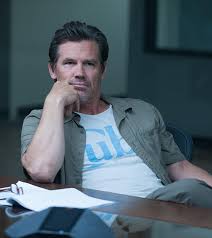
In Defense of Conor Oberst

Note: This essay focuses on the songwriting of Conor Oberst and the broader arc of his work as a writer and performer. It does not attempt to settle every critical debate about his career or evaluate the many shifting narratives that have surrounded him over the years.

Instead, the argument here is simpler: when listeners return to the songs themselves — especially pieces like “Cape Canaveral,” “Easy/Lucky/Free,” and “I Didn’t Know What I Was In For” — the caricature of Oberst as merely an overwrought diarist becomes difficult to sustain. Whatever one thinks of the mythology around him, the writing continues to reward careful listening.

For more than twenty years now it has been fashionable to treat Conor Oberst as a kind of permanent adolescent: the patron saint of overwrought confession, the boy genius who mistook emotional intensity for wisdom and simply never grew out of it. Even listeners who admired the early records sometimes adopt a gentle condescension when talking about him now. Those songs were powerful, they say, but they belonged to a particular moment — a moment of youthful melodrama that serious listeners eventually leave behind.

The outline is familiar. Too many feelings. Too many words. Too much trembling urgency in the voice. Somewhere along the way Oberst became shorthand for the idea that emotional sincerity, taken too far, turns embarrassing.

But like many tidy cultural narratives, this one collapses as soon as you start listening carefully again.

The first thing worth remembering is that Oberst began writing and recording music at an age when most people are still learning how to articulate their own thoughts. The early Bright Eyes records captured something very specific: the internal weather of late adolescence and early adulthood. The confusion, the moral absolutism, the sudden swings between despair and hope. Critics often call this melodrama, but melodrama is sometimes just another word for emotional honesty before the world teaches you to disguise it.

What Oberst did during those years was document the process of becoming a person. The songs are full of doubt, self-contradiction, and grand declarations that may not survive contact with reality. But that is exactly how young consciousness works. It moves through extremes. It searches for certainty and then dismantles it. Listening to those records now is less like hearing a performance than like reading a diary written in real time while the author tries to understand himself.

The voice, which so many critics found grating, was central to that effect. Oberst sang as if the words were arriving at the exact moment he needed them. The wavering pitch, the occasional cracks, the sense of someone pushing language slightly faster than it could comfortably travel — all of that created the feeling of urgency. It sounded like a mind thinking out loud.

The strange thing about Oberst’s career is that this intensity became the very thing people later held against him. Emotional transparency, once celebrated as authenticity, gradually hardened into caricature. Listeners who had grown older began to treat the songs as artifacts from a younger self they preferred not to revisit. Oberst did not change enough for some critics, while for others he changed too much.

But the best way to understand his writing is to look closely at several songs that capture the full range of what he does. “Cape Canaveral,” from his 2008 solo record, is often cited by fans as one of his finest achievements, and for good reason. The song moves with a calm, reflective confidence, drifting through memory, regret, and travel before arriving at a quietly devastating insight: “Every time I try to pick up the pieces / Something shatters.” The writing has none of the frantic urgency critics associate with Oberst. Instead it feels mature, patient, almost philosophical — proof that his gift for emotional clarity did not disappear when he left his early twenties.

Another example arrives with “Easy/Lucky/Free,” one of the defining songs from Digital Ash in a Digital Urn. The track looks outward rather than inward, sketching a world where technology and surveillance gradually erode the illusion of personal freedom. The chorus lands with a mixture of dread and irony that feels more prophetic with every passing year. What might once have sounded like youthful paranoia now reads as a remarkably prescient meditation on the digital age.

And then there is “I Didn’t Know What I Was In For,” perhaps the most quietly devastating song of Oberst’s middle period. The track unfolds with almost conversational simplicity, recounting memories of youth, friendship, and the slow arrival of adult responsibility. By the time the final lines arrive — “You said that you hate my suffering / And you understood / And I said that I love you too” — the song has achieved something rare: a portrait of adulthood that feels honest without becoming cynical.

Taken together, these songs reveal the real architecture of Oberst’s songwriting. Beneath the reputation for emotional excess lies a writer deeply concerned with memory, time, and the fragile ways people try to make sense of their lives. His best work captures the moment when experience shifts from confusion into recognition — when a half-formed feeling finally finds the right words.

Another reason Oberst’s work continues to resonate is that he writes from inside experience rather than from a critical distance. Many songwriters polish their observations until the emotional edges disappear. Oberst tends to leave the edges intact. His songs preserve the awkwardness, the uncertainty, the half-formed thoughts that accompany real moments of reflection. The result is sometimes messy, occasionally excessive, but often uncannily recognizable.

This quality also explains why Oberst has remained so influential among younger songwriters. He helped create a space in indie music where vulnerability could coexist with literary ambition. The songs suggested that personal confession and careful craft were not mutually exclusive. For a generation of listeners trying to articulate their own emotional lives, that permission mattered.

None of this means that every Oberst record works equally well, or that every lyric survives scrutiny. A career built on openness will inevitably produce uneven moments. But the larger body of work tells a more interesting story than the caricature of a permanently anguished songwriter. It shows an artist who has spent decades documenting the slow evolution of a restless mind.

And perhaps that is the real reason Oberst continues to provoke such divided reactions. His songs refuse to adopt the protective distance that many listeners eventually develop toward their own past selves. Instead they remain exposed — still searching, still uncertain, still willing to ask questions that adulthood often teaches us to bury under routine.

In that sense the emotional intensity people once dismissed as youthful melodrama begins to look different. It becomes a record of someone refusing to abandon the difficult work of feeling deeply about the world. For listeners willing to meet him there, the songs offer something rare in modern music: the sound of a consciousness continuing to unfold, one uneasy thought at a time.

Note: This is the third piece in our series “In Defense Of.” Iy you enjoyed this essay, you may also enjoy the one on Mark Kozelek. You can access it below.

On the Cultural Field Around St.Georges School and Spokane, WA


Epigraph:

“…yeah I got out,
but it’s still a cage.”
—after Ryan Adams, “Still a Cage”


I. — Launch vs. Escape

I didn’t understand Spokane’s sexual landscape until years after I left it, and by then it was already too late to pretend it had ever been the clean, conservative city adults insisted it was. The truth was simpler and messier: it was secretly wild and not so secretly wild, a place where desire slipped between the cracks of churches, cul-de-sacs, river pullouts, and private-school parking lots, and everyone knew more than they admitted. St. George’s launched me academically, but it did nothing to contain the currents running just outside its gates—the coded parties, the silent scandals, the hookups that lived like rumors, the older stories whispered by kids who shouldn’t have known them. What I didn’t realize then was that I wasn’t leaving Spokane away from anything. I was leaving toward other things—Japan, NAU, a life that moved. Only later did I understand I wasn’t going back.


II. — The Erotic City

What I didn’t see as a kid—but can’t unsee now—is that Spokane’s real wildness wasn’t teenage at all. It was adult. It was erotic energy humming under a conservative façade, the kind that starts as a pulse under the collar and ends in the kind of self-destruction people call “mistakes” years later. The city pretended to be a grid of churches, schools, tidy neighborhoods, and Rotary breakfasts, but the truth lived in back booths, river pullouts, dim bars off Division, and the long shadows of marriages that weren’t working. People were hungry. Not for sin—Spokane isn’t interesting enough for that—but for escape, for intensity, for feeling anything sharper than the soft monotony the town served as a diet. And because the city couldn’t admit that hunger, it acted it out sideways: affairs disguised as mentorships, private shame masked as judgment, the moral guardians always the ones who ran the hottest at night. And threaded through that landscape was Brookie, the wild boundary cat who drifted into our yard for weeks and then vanished for weeks, living with the kind of unashamed freedom the rest of Spokane pretended not to want. As a kid I only caught the edges of it, like smoke under a door. As an adult investigator returning later, it became obvious: the cage wasn’t made of rules, it was made of denial. And denial is the most erotic fuel a city can generate.


III. — SGS (Light Touch) and the Return

St. George’s sat just outside all that, or at least it pretended to. The river, the quiet paths, the small classes—SGS was the aesthetic of order laid gently over a city that hummed with contradiction. It launched me because it was designed to: college essays, seminar rooms, teachers who pushed hard without ever naming the ecosystem we were all standing in. It was a runway, not a refuge. I didn’t learn about Spokane from St. George’s; I learned about leaving from St. George’s. The city taught the rest. And when I go back now—if I do—it isn’t to recover anything. It’s as an investigator walking his old beat. I drive past the river, the schools, the neighborhoods that used to feel like separate worlds, and I can see the seams of the place with adult clarity: who lived double lives, who never left, who couldn’t leave, who escaped and reinvented themselves entirely. The old stories fall apart under scrutiny, but the architecture remains. The church parking lots. The dim bars. The hills where people walked off their secrets. Spokane didn’t change so much as reveal itself the moment I had enough distance to investigate it. And once you see the truth of a place, you can’t unsee the way it shaped you—even after you’ve run as far as you can from the cage you didn’t know you were inside.


IV. — Palo Alto

When I think of California, it’s never the big, cinematic pieces people imagine. It’s the little house we lived in in Palo Alto and the Whole Foods with the organic cookies — the kind of small domestic details that register as safety when you’re young and don’t yet have a name for that feeling. California wasn’t a fantasy; it was texture. Light off the sidewalk. Air that felt like it was already holding you up. And those drives with my dad to Foothills — Foothills Nature Preserve now, but back then it was still just Foothill Park — the private reserve only Palo Alto residents could enter. That’s the part that gets me now: how effortlessly belonging felt there. You didn’t have to explain yourself, or hide anything, or decode a system of silences. You just drove up into the hills and the world opened without consequence. Spokane had its wildness, but California had a kind of spaciousness that felt like permission. Even now, I miss it with an ache that catches me off guard. It’s not that I necessarily want to move back — it’s that a part of me never really left. California became the template for what openness feels like, the first geography that suggested freedom wasn’t an escape but a way of being.


V. — Cameo (Ian)

Sometimes, when I need a reminder of who I was before I understood any of this, I think of a photo from just after college — me and Ian and Matt Thornton in New York, staying way uptown in a borrowed flat, ordering pizza three times a day, probably getting high, taking the train like we were immortal. I grabbed the prime sleeping spot and held onto it, a small personal victory in an era when I rarely asserted myself. In the picture, Ian’s in front, already carrying that air of someone who had strong, fully-formed opinions about every band on earth. I’m behind him in my dark brown leather cap, looking like someone still half-becoming himself. That version of me had no understanding of cages. He just assumed the world was big.


VI. — Still a Cage

Maybe that’s why the Ryan Adams line hits the way it does. “Yeah, I got out, but it’s still a cage.” I didn’t hear it as confession the first time — I heard it as geography. That’s Spokane for me: a place I ran from without realizing I was running, a system I slipped out of long before I understood the bars. It wasn’t trauma; it wasn’t exile. It was something quieter and stranger — a recognition that the place that formed me was also the place I could never fully inhabit. California taught me what openness felt like. Japan gave me the life I wanted. But Spokane shaped the part of me that investigates, the part that reads cities like case files, the part that knows desire and denial can live under the same roof for decades without ever breaking stride. When I hear “Still a Cage,” it’s not about being trapped. It’s about understanding, finally, the architecture of the place you outgrew — and how long it takes to see it clearly. You can leave early, leave clean, leave without resentment. But the line only lands when you come back years later, driving those old streets like an investigator, realizing the cage was never the city itself. It was the silence. And the moment you see the silence for what it was, the lock falls open, and you know for sure you’re never going back.

Epigraph

“…yeah I got out,
but it’s still a cage.”
—after Ryan Adams, Still a Cage


I.

I didn’t understand Spokane’s emotional landscape until years after I left it, and by then it was already too late to pretend it had ever been the clean, conservative city adults insisted it was. The truth was simpler and messier: it was a place where desire moved quietly through the cracks of churches, cul-de-sacs, river pullouts, and private-school parking lots, and where people knew more than they said aloud.

St. George’s launched me academically, but it did nothing to contain the currents running just outside its gates—the coded parties, the silent scandals, the hookups that lived like rumors, the older stories whispered by kids who shouldn’t have known them. What I didn’t realize then was that I wasn’t leaving Spokane away from anything. I was leaving towardother things—Japan, NAU, a life that moved. Only later did I understand I wasn’t going back.


II. — The Erotic City

What I didn’t see as a kid—but can’t unsee now—is that Spokane’s wildness wasn’t teenage at all. It was adult. Not theatrical or decadent, but quiet and unresolved, an erotic energy humming beneath a conservative façade. The city presented itself as orderly: churches, schools, tidy neighborhoods, Rotary breakfasts. But the real emotional life lived in the margins—in dim bars off Division, in river pullouts, in the long shadows of marriages that had settled into routine.

People weren’t hungry for scandal. Spokane isn’t interesting enough for that. They were hungry for intensity, for escape, for moments that felt sharper than the soft monotony the town served as a daily diet. And because that hunger couldn’t be named directly, it surfaced sideways: affairs disguised as mentorships, judgment masking private confusion, moral certainty coexisting with private longing.

Threaded through that landscape was Brookie, the wild boundary cat who drifted into our yard for weeks and vanished for weeks, living with a freedom the rest of Spokane pretended not to want. As a kid I caught only the edges of it, like smoke under a door. As an adult returning later, the pattern became clearer: the cage wasn’t made of rules. It was made of denial. And denial, more than rebellion, is what gives a place its quiet erotic charge.


III. — SGS (Light Touch) and the Return

St. George’s sat just outside all that, or at least it seemed to. The river, the quiet paths, the small classes—SGS was the aesthetic of order laid gently over a city that hummed with contradiction. It launched me because it was designed to: college essays, seminar rooms, teachers who pushed hard without ever naming the broader ecosystem we were all standing in. It was a runway, not a refuge.

I didn’t learn Spokane from St. George’s; I learned leaving from St. George’s. The school offered direction without interpretation, preparation without excavation. The city supplied the rest.

And when I go back now—if I do—it isn’t to recover anything. It’s as an investigator walking his old beat. I drive past the river, the schools, the neighborhoods that once felt like separate worlds, and the seams of the place become visible with adult clarity: who lived double lives, who never left, who couldn’t leave, who escaped and reinvented themselves entirely. The stories shift, but the architecture remains. Spokane didn’t change so much as reveal itself the moment I had enough distance to see it.


IV. — Palo Alto

When I think of California, it’s never the cinematic version people imagine. It’s the small house we lived in in Palo Alto and the Whole Foods with the organic cookies—the quiet domestic textures that register as safety when you’re young and don’t yet have a name for that feeling. California wasn’t fantasy; it was atmosphere. Light off the sidewalk. Air that felt like it was already holding you up.

And those drives with my dad to Foothills—Foothills Nature Preserve now, but back then simply Foothill Park—the private reserve only Palo Alto residents could enter. That detail lands differently now: belonging there felt effortless. You didn’t have to decode silences or manage contradictions. You simply moved through the hills and the world opened without consequence.

Spokane had its wildness, but California offered spaciousness, a geography that suggested freedom didn’t need to be disguised. Even now, I miss it with an ache that catches me off guard. Not because I want to return permanently, but because a part of me never fully left. California became the first place that suggested openness wasn’t escape but orientation.


V. — Cameo (Ian)

Sometimes, when I need a reminder of who I was before I understood any of this, I think of a photo from just after college—me and Ian and Matt Thornton in New York, staying way uptown in a borrowed flat, ordering pizza three times a day, probably getting high, riding the train like we were immortal. I grabbed the prime sleeping spot and held onto it, a small personal victory in an era when I rarely asserted myself.

In the picture, Ian stands in front, already carrying that air of someone with strong, fully formed opinions about every band on earth. I’m behind him in my dark brown leather cap, looking like someone still half becoming himself. That version of me had no concept of cages. He simply assumed the world was big.


VI. — Still a Cage

Maybe that’s why the Ryan Adams line lands the way it does. “Yeah, I got out, but it’s still a cage.” I didn’t hear it as confession the first time. I heard it as geography.

That’s Spokane for me: a place I left without fully understanding why, a system I slipped out of long before I could see its contours. It wasn’t trauma or exile. It was something quieter—the recognition that the place that formed me was also the place I could never fully inhabit.

California taught me openness. Japan gave me the life I wanted. Spokane shaped the investigator—the part of me that reads cities like case files, that sees how desire and denial can coexist for decades without ever openly colliding.

When I hear “Still a Cage,” it isn’t about entrapment. It’s about understanding the architecture of a place you outgrew and how long it takes to see it clearly. You can leave early, leave clean, leave without resentment. But clarity arrives only later, when distance converts memory into interpretation.

The cage was never the city itself. It was the silence. And the moment you recognize the silence for what it was, the lock falls open. Not with anger or triumph, but with quiet certainty. You understand that leaving was less an escape than a translation—and that some places shape you most profoundly precisely because you cannot return to them.


Dedication

For Brookie

On Touts and Micro-Touts: Japan Observations

Note: This piece collects observations gathered across decades of nights out in Japan — moments that, taken individually, felt minor but over time revealed a coherent social pattern. The essay is not intended as a warning against nightlife, nor as an indictment of any particular place or person. Rather, it is an attempt to understand the subtle choreography that unfolds in urban night economies, where invitation, performance, and commerce intersect in ways that are rarely dramatic but often instructive.

The distinction between macro-touts and micro-touts emerged gradually. It reflects less a rigid taxonomy than a traveler’s growing sensitivity to atmosphere, tone, and the shifting boundaries between hospitality and transaction. Most encounters described here were neither dangerous nor traumatic; they were moments of mild disorientation that ultimately sharpened perception and deepened appreciation for the social intelligence required to navigate unfamiliar environments.

Japan remains one of the safest and most generous countries in the world to explore at night. The experiences recounted here are offered not as cautionary tales but as small pieces of ethnography — reminders that every city contains micro-economies of possibility, and that learning to read their signals is part of the quiet education that travel provides.

If there is a broader lesson, it is simply this: nightlife is built on invitations, and the skill of the traveler lies not in accepting or rejecting them categorically, but in recognizing the scripts they carry and choosing, with awareness, when to participate.

Part I — Kumamoto, Japan, Summer 1997

「どこの社長ですか?」

I was twenty-three and new to Japan — not just geographically new, but existentially new, the kind of new that leaves you unable to distinguish between hospitality and performance, sincerity and choreography. At that age you carry a quiet belief that experience will organize itself around you, that invitations are destiny, and that uncertainty is merely the prelude to belonging.

Kumamoto summer did nothing to challenge this illusion. The humidity hung in the air like a second shirt, streets shimmering with heat that seemed less meteorological than emotional. I met a couple of guys at a bar — friendly in that easy, late-night way where language fragments are enough and tone carries meaning. Half English, half Japanese, and entirely good-natured, they asked if I wanted to join their baseball team. I said yes immediately, not because I had any intention of playing, but because at twenty-three you rarely decline the promise of future identity.

The baseball team never materialized. But the invitation served its purpose. It opened the bridge.

They told me they wanted to show me real Japan. A phrase that should always raise questions but rarely does when you’re young and curious. “We know a place,” they said, the universal preface to experiences that exist somewhere between revelation and mild financial education.

That is how I entered my first hostess club.

It was not the neon spectacle I might have imagined. No polished decadence, no velvet rope theatrics. Instead: low lighting, carpet that seemed older than the Heisei era, and furniture whose best days had passed quietly without ceremony. Yet the room possessed its own gravitational pull, created not by décor but by orbit — women rotating from table to table with practiced ease, their presence transforming a modest environment into something that felt improbably expensive.

Mama-san presided with the quiet authority of someone who understood both mathematics and psychology. Her hair lacquered into permanence, her gaze sharp as accounting software, she functioned as conductor of a carefully orchestrated social economy. The women, each moving with subtle intentionality, carried scripts composed of compliments, curiosity, and gentle physical proximity.

Whisky mizuwari arrived with ritual precision, poured slowly as if time itself were being measured in diluted amber. The drink tasted ordinary. The price did not.

I was not uncomfortable — only aware of my own lack of schema. A foreigner equipped with politeness but not context, seated inside a room where intimacy operated as currency and identity functioned as flexible fiction. The women laughed easily, touched my arm, leaned close enough to suggest familiarity without commitment.

I did not interpret this as romance. I interpreted it as welcome.

Then came the line — delivered with effortless certainty and a smile that contained neither irony nor doubt:

「どこの社長ですか?」
Which company are you president of?

Not if.
Which.

Because the hostess club does not deal in biography. It deals in possibility. Within its walls, the boundaries of self dissolve gently. You arrive as yourself but are encouraged to inhabit a more generous narrative: company president, successful entrepreneur, patron of refined pleasures, bearer of an inexhaustible wallet. Identity becomes costume, worn lightly for the duration of the evening.

I understood that markup existed. What I did not yet understand was the degree to which markup could inhabit fantasy.

The bill arrived — perhaps thirty thousand yen. Not ruinous, not outrageous, but enough to sting the uninitiated and sharpen awareness. Before embarrassment could surface or negotiation begin, the friends who had invited me paid without ceremony. A wink, a casual next time, and the implicit understanding that this particular version of me — baseball player, future regular, provisional shachō — would remain confined to that evening.

I left lighter, though not poorer.

Not scammed.
Initiated.

The lesson did not arrive as resentment but as clarity:

Flattery has a price.
Fantasy carries a tab.
Sometimes you do not pay it directly — but you still learn the cost.


Part II — Kyoto: Rub-a-Dub and Bar Colors

Rub-a-Dub felt like oxygen.

A basement reggae bar where the air seemed shared rather than owned, bodies pressed into temporary community, music operating less as entertainment than as connective tissue. Tommy, as always, orbiting the jukebox with missionary zeal, attempting to convert the room to his playlist while flirting with the bar girl in ways that were equal parts hopeful and theatrical.

I stood with a Red Stripe, jacket discarded somewhere behind me, already drifting toward the kind of night where White Russians become plausible and conversation loosens into anecdote. Sweat, laughter, strangers whose names evaporate but whose presence remains — the familiar ingredients of third-place belonging.

Two men approached. One Jamaican, ponytail, voice thick with authority that seemed rooted in lived reggae culture rather than performance. The other younger, bilingual, improvising rap verses that moved seamlessly between Japanese and English with real talent. Not novelty talent — actual fluency. Conversation flowed easily. Fifteen, twenty minutes of exchange that lowered the drawbridge of suspicion.

Then the invitation:

“Let’s go to Bar Colors.”

I had seen the sign before. A reggae logo, unobtrusive, upstairs somewhere near Kiyamachi. Nothing alarming, nothing clandestine. Just another bar in a district defined by possibility.

We followed.

Three floors up — a vertical ascent that subtly altered the power geometry. Rub-a-Dub’s crowded warmth replaced by a smaller room with thinner oxygen. No dance floor, just music and seating. I chose the seat nearest the door, an instinctive habit that rarely announces itself consciously but persists nonetheless. Tommy relaxed into the environment with characteristic ease, while the rapper transitioned seamlessly into microphone performance, his skill functioning as social anesthesia.

We ordered beers — two each. Six hundred yen apiece. Simple arithmetic, comforting in its predictability. Safety often disguises itself as math.

Then came the disruption.

The Jamaican leaned in, tone shifting just enough to register as discordant:

“Who will pay the bill?”

The question felt misplaced. The wrong person asking, the wrong moment, the wrong authority. I responded with obvious clarity: we would pay for our drinks. He shook his head dramatically and launched into a loud, performative argument with the bartender — defending us against an unseen injustice, positioning himself as ally.

The performance was transparent once recognized. Theater designed to manufacture gratitude. Gratitude designed to justify inflated cost.

This is how micro-predation operates in Kyoto: not through threat but choreography.

When the bill arrived, it totaled five thousand yen. Double expectation. Not devastating, merely disorienting. Enough to create tension between principle and convenience.

I stood — full height, voice calm:

“I know what you’re doing. It’s bullshit. We came here in good faith.”

No escalation. No anger. Just refusal to participate in the narrative assigned.

We paid — not capitulation but calculation. Peace sometimes costs less than confrontation. Exit achieved without drama, wallets lighter but awareness sharpened.

Not victims.
Not victors.
Just awake.

The deeper lesson was not financial but perceptual: danger rarely announces itself loudly in Kyoto. It appears as suggestion, invitation, relational choreography. You do not need to be taken to understand the mechanics of being taken.

Rub-a-Dub had offered warmth.
Bar Colors offered clarity.

Some nights you dance.
Some nights you pay to leave.


Part III — The Kiyamachi Ecology of Micro-Touts

If Kumamoto introduced fantasy and Bar Colors revealed choreography, Kiyamachi provided taxonomy.

Kyoto’s nightlife economy operates differently from more overt red-light districts. There is little aggressive solicitation, no carnival barking, no theatrical insistence. Instead, micro-signals populate liminal spaces: a man standing slightly too still near a stairwell, a laminated menu with vague promises, a bilingual conversation that begins casually and ends directionally.

The micro-tout does not sell forcefully. He offers possibility.

And possibility is harder to refuse.

Micro-touting thrives in moments of uncertainty — the pause between bars, the lull between conversations, the question of where the night continues. The invitation arrives not as proposition but as continuity.

“Just one drink.”
“I know a place.”
“Special price.”
“Members bar but I can get you in.”

The language is intentionally thin. Curiosity performs the heavy lifting.

Unlike macro-touting, where spectacle clarifies the transaction, micro-touting relies on relational ambiguity. Trust precedes the offer. Conversation establishes provisional safety. Only then does the invitation appear.

You are not pressured.
You are positioned.

And positioning is the mechanism.


Part IV — Macro-Touts and Micro-Touts: A Taxonomy

Macro-touts belong to visible red-light economies. Their pitches are explicit, directional, and theatrical. Customers understand the transactional nature immediately. Kabukicho hosts calling from sidewalks, Osaka promoters guiding tourists toward neon staircases — these figures operate through spectacle.

Micro-touts function differently.

They blend into ordinary social environments: musicians, patrons, casual acquaintances, language exchange partners. Their authority derives from relational proximity rather than territorial control. They do not sell a product but offer narrative continuation.

Macro-touting relies on volume.
Micro-touting relies on timing.

Macro-touting demands attention.
Micro-touting waits for uncertainty.

Japan’s cultural emphasis on politeness and conflict avoidance creates fertile ground for micro-touting. The customer hesitates to confront, the operator anticipates this, and civility becomes economic leverage.

The genius of micro-touting lies in its invisibility. It rarely crosses legal boundaries and seldom escalates into overt harm. Instead, it extracts modest margins through social choreography.

Not robbery.
Repositioning.


Part V — The Ethics of Almost

What remains from these encounters is not resentment but recognition.

Both Kumamoto and Kyoto experiences share structural similarities: voluntary participation in constructed realities. The hostess club invites fantasy; the micro-tout offers narrative continuation. In each case, the individual is not coerced but positioned within an unfolding script.

The moment of realization rarely arrives as crisis. It appears as subtle awareness — a bill exceeding expectation, a tonal shift, a fragment of choreography revealing itself as performance.

Travel rarely educates through catastrophe. More often, it educates through near-misses — the ethics of almost.

You almost believed.
You almost overpaid.
You almost escalated.
You almost became the character the room was preparing.

Micro-touts teach attention rather than fear.


Part VI — Return to the Street

Kiyamachi after midnight remains a pedestrian theater of extraordinary subtlety. Music spills from doorways, cigarettes glow like punctuation, laughter dissolves into river air. Within this ordinary magic, micro-touts continue their quiet labor — neither villains nor heroes, simply participants in the nocturnal economy of possibility.

Nightlife is built on invitations.

Some lead to connection.
Some to illusion.
Some to modest financial education.

But all reveal the architecture of the city that issues them.

Kumamoto taught me fantasy has a tab.
Kyoto taught me ambiguity has a margin.

Neither felt like loss.
Both felt like tuition.

Because travel, like nightlife, is rarely about destinations. It is about learning to read the scripts unfolding around you — and recognizing that sometimes the most instructive figures in any city are the ones whose invitations you decline with gratitude.

Part I — Kumamoto, Japan, Summer 1997

「どこの社長ですか?」

I was twenty-three and new to Japan — not just geographically new, but existentially new, the kind of new that leaves you unable to distinguish between hospitality and performance, sincerity and choreography. At that age you carry a quiet belief that experience will organize itself around you, that invitations are destiny, and that uncertainty is merely the prelude to belonging.

Kumamoto summer did nothing to challenge this illusion. The humidity hung in the air like a second shirt, streets shimmering with heat that seemed less meteorological than emotional. I met a couple of guys at a bar — friendly in that easy, late-night way where language fragments are enough and tone carries meaning. Half English, half Japanese, and entirely good-natured, they asked if I wanted to join their baseball team. I said yes immediately, not because I had any intention of playing, but because at twenty-three you rarely decline the promise of future identity.

The baseball team never materialized. But the invitation served its purpose. It opened the bridge.

They told me they wanted to show me real Japan. A phrase that should always raise questions but rarely does when you’re young and curious. “We know a place,” they said, the universal preface to experiences that exist somewhere between revelation and mild financial education.

That is how I entered my first hostess club.

It was not the neon spectacle I might have imagined. No polished decadence, no velvet rope theatrics. Instead: low lighting, carpet that seemed older than the Heisei era, and furniture whose best days had passed quietly without ceremony. Yet the room possessed its own gravitational pull, created not by décor but by orbit — women rotating from table to table with practiced ease, their presence transforming a modest environment into something that felt improbably expensive.

Mama-san presided with the quiet authority of someone who understood both mathematics and psychology. Her hair lacquered into permanence, her gaze sharp as accounting software, she functioned as conductor of a carefully orchestrated social economy. The women, each moving with subtle intentionality, carried scripts composed of compliments, curiosity, and gentle physical proximity.

Whisky mizuwari arrived with ritual precision, poured slowly as if time itself were being measured in diluted amber. The drink tasted ordinary. The price did not.

I was not uncomfortable — only aware of my own lack of schema. A foreigner equipped with politeness but not context, seated inside a room where intimacy operated as currency and identity functioned as flexible fiction. The women laughed easily, touched my arm, leaned close enough to suggest familiarity without commitment.

I did not interpret this as romance. I interpreted it as welcome.

Then came the line — delivered with effortless certainty and a smile that contained neither irony nor doubt:

「どこの社長ですか?」
Which company are you president of?

Not if.
Which.

Because the hostess club does not deal in biography. It deals in possibility. Within its walls, the boundaries of self dissolve gently. You arrive as yourself but are encouraged to inhabit a more generous narrative: company president, successful entrepreneur, patron of refined pleasures, bearer of an inexhaustible wallet. Identity becomes costume, worn lightly for the duration of the evening.

I understood that markup existed. What I did not yet understand was the degree to which markup could inhabit fantasy.

The bill arrived — perhaps thirty thousand yen. Not ruinous, not outrageous, but enough to sting the uninitiated and sharpen awareness. Before embarrassment could surface or negotiation begin, the friends who had invited me paid without ceremony. A wink, a casual next time, and the implicit understanding that this particular version of me — baseball player, future regular, provisional shachō — would remain confined to that evening.

I left lighter, though not poorer.

Not scammed.
Initiated.

The lesson did not arrive as resentment but as clarity:

Flattery has a price.
Fantasy carries a tab.
Sometimes you do not pay it directly — but you still learn the cost.


Part II — Kyoto: Rub-a-Dub and Bar Colors

Rub-a-Dub felt like oxygen.

A basement reggae bar where the air seemed shared rather than owned, bodies pressed into temporary community, music operating less as entertainment than as connective tissue. Tommy, as always, orbiting the jukebox with missionary zeal, attempting to convert the room to his playlist while flirting with the bar girl in ways that were equal parts hopeful and theatrical.

I stood with a Red Stripe, jacket discarded somewhere behind me, already drifting toward the kind of night where White Russians become plausible and conversation loosens into anecdote. Sweat, laughter, strangers whose names evaporate but whose presence remains — the familiar ingredients of third-place belonging.

Two men approached. One Jamaican, ponytail, voice thick with authority that seemed rooted in lived reggae culture rather than performance. The other younger, bilingual, improvising rap verses that moved seamlessly between Japanese and English with real talent. Not novelty talent — actual fluency. Conversation flowed easily. Fifteen, twenty minutes of exchange that lowered the drawbridge of suspicion.

Then the invitation:

“Let’s go to Bar Colors.”

I had seen the sign before. A reggae logo, unobtrusive, upstairs somewhere near Kiyamachi. Nothing alarming, nothing clandestine. Just another bar in a district defined by possibility.

We followed.

Three floors up — a vertical ascent that subtly altered the power geometry. Rub-a-Dub’s crowded warmth replaced by a smaller room with thinner oxygen. No dance floor, just music and seating. I chose the seat nearest the door, an instinctive habit that rarely announces itself consciously but persists nonetheless. Tommy relaxed into the environment with characteristic ease, while the rapper transitioned seamlessly into microphone performance, his skill functioning as social anesthesia.

We ordered beers — two each. Six hundred yen apiece. Simple arithmetic, comforting in its predictability. Safety often disguises itself as math.

Then came the disruption.

The Jamaican leaned in, tone shifting just enough to register as discordant:

“Who will pay the bill?”

The question felt misplaced. The wrong person asking, the wrong moment, the wrong authority. I responded with obvious clarity: we would pay for our drinks. He shook his head dramatically and launched into a loud, performative argument with the bartender — defending us against an unseen injustice, positioning himself as ally.

The performance was transparent once recognized. Theater designed to manufacture gratitude. Gratitude designed to justify inflated cost.

This is how micro-predation operates in Kyoto: not through threat but choreography.

When the bill arrived, it totaled five thousand yen. Double expectation. Not devastating, merely disorienting. Enough to create tension between principle and convenience.

I stood — full height, voice calm:

“I know what you’re doing. It’s bullshit. We came here in good faith.”

No escalation. No anger. Just refusal to participate in the narrative assigned.

We paid — not capitulation but calculation. Peace sometimes costs less than confrontation. Exit achieved without drama, wallets lighter but awareness sharpened.

Not victims.
Not victors.
Just awake.

The deeper lesson was not financial but perceptual: danger rarely announces itself loudly in Kyoto. It appears as suggestion, invitation, relational choreography. You do not need to be taken to understand the mechanics of being taken.

Rub-a-Dub had offered warmth.
Bar Colors offered clarity.

Some nights you dance.
Some nights you pay to leave.


Part III — The Kiyamachi Ecology of Micro-Touts

If Kumamoto introduced fantasy and Bar Colors revealed choreography, Kiyamachi provided taxonomy.

Kyoto’s nightlife economy operates differently from more overt red-light districts. There is little aggressive solicitation, no carnival barking, no theatrical insistence. Instead, micro-signals populate liminal spaces: a man standing slightly too still near a stairwell, a laminated menu with vague promises, a bilingual conversation that begins casually and ends directionally.

The micro-tout does not sell forcefully. He offers possibility.

And possibility is harder to refuse.

Micro-touting thrives in moments of uncertainty — the pause between bars, the lull between conversations, the question of where the night continues. The invitation arrives not as proposition but as continuity.

“Just one drink.”
“I know a place.”
“Special price.”
“Members bar but I can get you in.”

The language is intentionally thin. Curiosity performs the heavy lifting.

Unlike macro-touting, where spectacle clarifies the transaction, micro-touting relies on relational ambiguity. Trust precedes the offer. Conversation establishes provisional safety. Only then does the invitation appear.

You are not pressured.
You are positioned.

And positioning is the mechanism.


Part IV — Macro-Touts and Micro-Touts: A Taxonomy

Macro-touts belong to visible red-light economies. Their pitches are explicit, directional, and theatrical. Customers understand the transactional nature immediately. Kabukicho hosts calling from sidewalks, Osaka promoters guiding tourists toward neon staircases — these figures operate through spectacle.

Micro-touts function differently.

They blend into ordinary social environments: musicians, patrons, casual acquaintances, language exchange partners. Their authority derives from relational proximity rather than territorial control. They do not sell a product but offer narrative continuation.

Macro-touting relies on volume.
Micro-touting relies on timing.

Macro-touting demands attention.
Micro-touting waits for uncertainty.

Japan’s cultural emphasis on politeness and conflict avoidance creates fertile ground for micro-touting. The customer hesitates to confront, the operator anticipates this, and civility becomes economic leverage.

The genius of micro-touting lies in its invisibility. It rarely crosses legal boundaries and seldom escalates into overt harm. Instead, it extracts modest margins through social choreography.

Not robbery.
Repositioning.


Part V — The Ethics of Almost

What remains from these encounters is not resentment but recognition.

Both Kumamoto and Kyoto experiences share structural similarities: voluntary participation in constructed realities. The hostess club invites fantasy; the micro-tout offers narrative continuation. In each case, the individual is not coerced but positioned within an unfolding script.

The moment of realization rarely arrives as crisis. It appears as subtle awareness — a bill exceeding expectation, a tonal shift, a fragment of choreography revealing itself as performance.

Travel rarely educates through catastrophe. More often, it educates through near-misses — the ethics of almost.

You almost believed.
You almost overpaid.
You almost escalated.
You almost became the character the room was preparing.

Micro-touts teach attention rather than fear.


Part VI — Return to the Street

Kiyamachi after midnight remains a pedestrian theater of extraordinary subtlety. Music spills from doorways, cigarettes glow like punctuation, laughter dissolves into river air. Within this ordinary magic, micro-touts continue their quiet labor — neither villains nor heroes, simply participants in the nocturnal economy of possibility.

Nightlife is built on invitations.

Some lead to connection.
Some to illusion.
Some to modest financial education.

But all reveal the architecture of the city that issues them.

Kumamoto taught me fantasy has a tab.
Kyoto taught me ambiguity has a margin.

Neither felt like loss.
Both felt like tuition.

Because travel, like nightlife, is rarely about destinations. It is about learning to read the scripts unfolding around you — and recognizing that sometimes the most instructive figures in any city are the ones whose invitations you decline with gratitude.

Note: If you like this essay, you may like “Tuesday Kyoto Bar Crawl.” You can find it here.

Tuesday Kyoto Bar Crawl

Note: A Tuesday crawl in Kyoto carries a different texture from the weekend version: looser expectations, smaller crowds, conversations that wander rather than perform. The city feels slightly off-schedule, which is exactly what makes it fertile ground for observation, connection, and the quiet serendipity that defines third-place culture.

These midweek circuits are less about excess and more about continuity — checking in with familiar rooms, familiar faces, and the evolving micro-narratives that accumulate across bars, balconies, and late-night sidewalks. The crawl becomes a moving vantage point on the city’s emotional topography: moments of laughter, fragments of confession, the soft choreography of strangers becoming temporary companions.

In that sense, the Tuesday crawl isn’t a deviation from routine but a ritual of perspective. It reminds the wanderer that urban nightlife is not only spectacle but ecology — a network of spaces where stories intersect briefly before dissolving back into the Kyoto night.

For the crawler, the goal is simple: move lightly, notice everything, and leave each room exactly as it was found, carrying only the residue of atmosphere and the promise of return.

Epigraph
“Is there room enough for two / if I don’t have a point of view?”
— Tommy Stinson

Dedication
For the people who made a night by simply being themselves.


I. Umineko

Early evening began without urgency, the way a proper crawl should. Umineko held the kind of atmosphere that makes arrival feel less like an event and more like a gradual settling — low light, gentle conversation, bodies occupying space without demanding attention. Nothing theatrical, nothing curated for spectacle. Just people existing alongside one another, sharing a small pocket of warmth before the night found its pace.

I took a seat and allowed the room to reveal itself slowly. Watching first, speaking later. Listening without the pressure to respond. The posture was closer to observation than participation, not out of distance but out of respect for rhythm. A crawl does not begin with energy; it begins with calibration. I was not collecting stories yet, not assigning meaning or searching for narrative threads. I was tuning my frequency, aligning with the environment until the subtle shift in atmosphere signaled readiness.

When the bar moved from fullness toward thinning, the message was clear without needing articulation. Crawls are not forced forward by intention; they move according to instinct and current. I stepped back into the night air, carrying nothing but presence, following momentum without destination.


II. ING

ING felt like stepping into a room anchored by a still point. Haku stood behind the bar wearing a Rolling Stones shirt, perfectly unconcerned with audience or approval. His presence created an equilibrium that defined the space more than any décor or playlist could. I took the center seat — ideal angle, clear sound, good conversational acoustics — and ordered a Negroni, marking the transition from arrival into engagement.

A White Russian followed, not out of necessity but out of curiosity. Choice itself becomes part of the method on nights like these. Drinks are less about intoxication and more about pacing, punctuation marks in a narrative unfolding in real time.

Haku mentioned, almost casually, that Jimmy Cliff was not Rasta. The comment carried no agenda, only observation. I responded in kind. He played Cliff anyway, and the neutrality of the exchange underscored something important: truth in these spaces does not require resolution. Dead or alive, category or contradiction, the music persists independent of classification.

Later, Haku slipped into what could only be described as algorithm mode. The Grateful Dead followed Joy Division, which then dissolved into Blink-182. The sequence was unpredictable yet internally coherent, a playlist guided by instinct rather than performance. Bars like ING do not curate for approval; they curate for honesty. The expectation is not participation but presence.

Some bars ask for energy.
ING asks only that one remain authentic within its walls.

After a time, movement arrived not through boredom but through instinct. I finished my drink, nodded to Haku, and stepped back into the night once more.


III. Mafia Bar

The entrance to Mafia Bar announced itself through indifference: narrow doorway, plastic sheeting, a quiet DGAF energy that discouraged pretense. Inside, the dynamic was already established — Master, sub-bartender, and Satsuki forming a triangle of familiarity that neither required nor excluded me.

I ordered a gin and tonic, lit a clove cigarette, and allowed proximity to substitute for conversation. Master smoked and drank with the ease of long habit, while Satsuki vaped and scrolled through photos on his phone, their heads occasionally leaning close in shared amusement. The intimacy belonged to them; my role was to witness without intrusion.

A brief choreography unfolded when the sub-bartender excused himself for the bathroom. Another stepped in seamlessly, maintaining rhythm until the first returned moments later, laughing about his inability to hold it and wiping his hand absentmindedly on Satsuki’s jacket. Her gentle scolding carried affection rather than irritation. The moment passed as ordinary within their ecosystem, a reminder that interpretation is often unnecessary.

Three London men arrived — Dan, Joe, and another Joe — consultants and a commercial artist navigating unfamiliar territory. I recommended Concrete, a suggestion offered lightly but accepted gratefully. Participation, not intervention. Guidance without ownership.

I remained roughly thirty-five minutes, absorbing both atmosphere and lore. The story circulated quietly: the owner had once taken the fall for a crime he did not commit, serving twenty years in silence before emerging to receive this bar as recompense from the underworld that owed him. Whether factual or mythic mattered little. Stories gain legitimacy through repetition, and truth is often secondary to resonance.

I left on foot, crossing the river with the sense that each stop was less a destination than a waypoint.


IV. Stinboat

Arrival at 9:02 p.m., two minutes after opening, placed me inside a room still forming its identity for the night. Rickey stood behind the bar alongside the evening’s performer, both moving through preparatory gestures that transform an empty space into a living environment.

I asked about glasses I had left behind on Saturday. Rickey produced a pair, though not mine. The exchange felt inconsequential yet oddly grounding, a reminder that memory and objects rarely align perfectly.

A Negroni in hand, I settled into observation as the room awakened. A visitor from Kuwait approached with curiosity, asking whether a bunny show would occur. He mistook me for staff, and I redirected him gently toward Rickey. Ambiguity satisfied him enough to remain.

At 9:20, the room shifted from potential to presence. Nine guests entered — among them an older man with a younger girlfriend and a cluster of Japanese patrons whose arrival created density without chaos. I took the microphone early, choosing Common People as an opening statement. The performance landed not as a home run but as a solid triple, establishing footing without overreach. I became part of the environment rather than an observer at its edge.

The performer navigated the bar through a series of micro-interactions, brief pockets of attention resembling miniature dates, popcorn intimacy distributed evenly across the room. I followed with Honky Tonk Women, drawing visible delight from the older man and his partner.

Preparation for Tiny Dancer involved a brief retreat with headphones — aligning tempo, breath, and emotional landing. As I sang, activity continued around me, including a staged whipping performance in the back that unfolded without disrupting the song’s internal narrative. Presence required maintaining focus amid spectacle, allowing parallel realities to coexist without competition.

The evening progressed through pole performance, enthusiastic audience participation, and ritualized tipping. I followed established protocol, understanding that the moment belonged to the performer’s choreography rather than personal interpretation.

Later, I Fought the Law brought collaborative energy: the older man on drums, eye contact establishing tempo and trust, his girlfriend filming with increasing engagement. Rickey eventually joined on drums, a younger guitarist delivered a brief but intense solo, and a spontaneous vocalist in his mid-fifties erupted into a single song before departing. Applause and hoots carried communal warmth rather than performance judgment.

As the crowd thinned, what remained was intimacy without spectacle: Rickey, the performer, the older man and girlfriend, Sari, a couple, and myself. Fairytale of New York unfolded with Sari joining briefly before drifting into her own narrative with the older man. I continued singing, neutral observer and participant simultaneously.

The set concluded with Miley Cyrus, We Will Rock You, and finally Take It Easy — a closing song chosen less for nostalgia than for resolution. Afterward, physical exhaustion arrived cleanly, the kind that follows completion rather than depletion. Brief hugs, a playful belly rub offered as pure joy, and a ¥4500 bill that felt symbolically insufficient to measure the night’s experiential value.

Stinboat held the evening’s center of gravity, and I left without loose emotional threads.


V. Concrete Bar

The walk back across the river lasted roughly eight minutes, a transitional corridor between intensity and closure. Concrete greeted me with understated calm, a space designed less for spectacle and more for lingering conversation.

Leon from Wales occupied a stool, unfamiliar with the phrase “detox and retox.” I bought him a Cocalero anyway, and we spoke in the gentle cadence of end-of-night strangers — exchanging warmth rather than biography, presence rather than personal history. These conversations carry their own authenticity precisely because they resist permanence.

I sensed no need for additional experiences. The crawl had delivered what it intended.


VI. Taxi → Home

At 1:30 a.m., a taxi waited at the stand as if anticipating completion. There was no negotiation, no wandering, no hesitation. Just entry, transit, and the quiet satisfaction of closure.

Back home, I read half of Zach’s new piece in bed and texted immediate feedback. He prefers responses unfiltered and alive, preserving the energy of first impression before reflection cools interpretation.

Sleep followed naturally.

A crawl complete — not dramatic, not moralized, not engineered for narrative payoff. Simply observed, recorded, and experienced through presence. I did not judge the night, and the night did not demand judgment. I entered it, and in its quiet generosity, it allowed me to belong within it for a few hours before releasing me back into ordinary time.

Note: If you like this essay, you may also like “On Touts and Micro-Touts: Japan Observations.” You can find it here.

On Transference in Artistic Collaboration

I will lay laid open…
I do it ’cause I’m a family man…
With the beat in now…
And your chest came out
’Cause you weren’t too scared.

Big Red Machine — “Deep Green / Deep Dream”

There is transference.
There just is.

Matthew Thomas

I. — The Pull That Isn’t Personal

It’s real because it’s grounded.
It’s real because the adult self is the one in the room.

That sentence might sound simple, but it marks a fault line between two entirely different ways of collaborating. The younger version of me would have blurred this difference almost immediately — not out of desire in any straightforward sense, but out of hunger. Out of the impulse to turn recognition into destiny, resonance into narrative inevitability, voltage into myth.

In earlier years, artistic encounters carried an undertow of idealization. When someone appeared whose sensibility aligned, whose aesthetic instincts felt familiar yet surprising, whose presence produced that unmistakable flicker of creative electricity, the experience was difficult to contain inside ordinary frames. Recognition felt like revelation. Shared language felt like intimacy. Creative energy felt like evidence of something larger than collaboration — something fated, symbolic, charged with meaning beyond the work itself.

But time has taught me that this interpretive inflation is not depth. It is transference — not as pathology, but as architecture. A current running through collaboration that invites projection, narrative layering, and emotional over-interpretation. A dynamic that can produce beautiful work, but also confusion, distortion, and boundary collapse when left unexamined.

What has changed is not the presence of that current but my relationship to it.

The boundary is no longer defensive; it is intelligent.
It is not erected to keep the other person out but to keep the work alive.
It is the condition that allows collaboration to breathe without suffocating inside symbolic noise.

And the boundary itself is deceptively simple:

We stand side by side, not on top of each other’s meaning.

We remain in our own psyches.
We allow resonance without fusion.
We allow voltage without blur.
We allow openness without myth-making.

This distinction may appear subtle, but it carries enormous implications. It is the difference between collaboration as encounter and collaboration as reenactment. The difference between creative exchange and symbolic entanglement. The difference between working together and unconsciously attempting to resolve unfinished narratives through one another.

In this sense, transference is neither villain nor obstacle. It is part of the terrain — inevitable wherever humans meet in creative space. The danger lies not in its presence but in its invisibility.

History offers cautionary examples. Jung’s relationship with Sabina Spielrein, initially framed as therapeutic, evolved into a complex emotional and intellectual entanglement in which transference blurred professional boundaries and personal identities. Toni Wolff later entered Jung’s life as collaborator and intellectual partner, yet the triangular dynamic that formed illustrates how symbolic roles can quickly overtake relational clarity. None of these figures lacked insight or integrity; what they lacked was a boundary capable of containing the symbolic intensity generated by their shared work.

That boundary — the one Jung struggled to hold, the one Sabina never had the power to define, the one Toni inhabited with both strength and vulnerability — is precisely the boundary that matters in artistic collaboration. Not a line of separation but a line of differentiation, one that preserves psychological sovereignty while allowing creative permeability.

The collaboration that underlies this piece has tested that boundary in productive ways. The work carries voltage. The exchange of ideas, images, and aesthetic intuition generates moments of recognition that could easily be misinterpreted as evidence of deeper narrative convergence. The temptation toward symbolic overreach is real, as it always is when creative chemistry emerges unexpectedly.

But the boundary holds.

Not through suppression or distance, but through integration. Through the adult self’s capacity to remain present without narrativizing the encounter into something it is not. Through a commitment to form — not as rigidity, but as container. Through an understanding that artistic collaboration thrives when the symbolic field remains clear enough for the work to speak in its own voice.

Openness with form.
Exposure with spine.
Laid open, but not laid bare.

This is not restraint for its own sake. It is creative hygiene. It is the discipline that keeps collaboration from dissolving into projection, keeps admiration from mutating into idealization, keeps creative voltage from being mistaken for emotional destiny.

The boundary is not what limits the collaboration; it is what makes it possible.

And in that sense, the boundary is not a line between collaborators at all. It is a line that keeps the field clear so the work can keep happening.

This is how adults collaborate: with clarity, with shape, with mutual sovereignty intact, with symbolic noise turned down, with the quiet confidence that resonance need not imply fusion. The trio remains intact — internal voices aligned rather than fragmented — allowing openness without collapse and connection without reenactment.

Music has offered a parallel language for this dynamic. The Big Red Machine ethos — stepping forward without fear while remaining rooted in personal identity — models a form of creative openness that resists mythic inflation. The lines echo not as romantic declaration but as psychological instruction:

I will lay laid open…
I do it ’cause I’m a family man…
And your chest came out ’cause you weren’t too scared…

Openness is not the danger.
Losing oneself inside openness is.

This brings the piece to its quieter question, one that underlies all collaboration, all transference, all creative exchange:

Can I remain open without giving myself away?
Can I step into voltage without mistaking it for destiny?
Can I meet clarity without dissolving into it?
Can I collaborate without collapsing?
Can I inhabit a resonant field and still leave it as myself?

The answer, tentatively but firmly, is yes.

Not because discipline has replaced feeling, not because detachment has replaced intimacy, not because protection has replaced vulnerability, but because integration has replaced fragmentation. Because the internal architecture is stable enough to allow openness without fear. Because the dream that once blurred boundaries now functions as threshold rather than invitation. Because the symbolic layer — what I sometimes describe as the Draco grounding — operates not as mystical escape but as orientation, a reminder that identity persists across shifting relational fields.

Transference remains part of the architecture. It always will. A subtle undercurrent running beneath creative interaction, capable of enriching perception when acknowledged and distorting reality when ignored. The adult task is not to eliminate it but to refuse its authority as narrative director.

The adult self leads.
The trio leads.
The work leads.

And so the closing question emerges, less dramatic than the fears that once accompanied it, but more meaningful:

What does it mean to stay laid open and still stay mine?

That is the adult version of transference — not avoidance, not collapse, but clarity held with a steady hand.


Dedication

For the collaborators:
the drifters,
the drop-ins,
the ones who catch the tune mid-air and don’t flinch.

You keep the corners loose
and the truth a little crooked.
My kind of people.

Note: If you like this piece, you may also like “Elodie and Matt: A Modern Fairy Tale.” You can read it below.

On the Sarah Lawrence Kids: My Take

Contextual Note

This reflection is inspired by reporting on the case of Lawrence “Larry” Ray, whose actions at Sarah Lawrence College became the subject of extensive journalism and later criminal prosecution. Ray, the father of a student, embedded himself within a group of students and, over a period of years, exerted psychological and material control that culminated in multiple federal charges. In 2022, he was convicted in U.S. federal court on counts including racketeering conspiracy, extortion, forced labor, and sex trafficking, following testimony detailing patterns of manipulation, coercion, and abuse.

The essay above is not intended as investigative reporting or a comprehensive account of the case. Rather, it uses widely documented elements of the Sarah Lawrence story as a lens for examining broader dynamics of influence, consent, authority, and psychological boundary erosion. Readers interested in detailed factual accounts are encouraged to consult court records and major journalistic coverage of the case.

Epigraph
“I can’t force myself to say something
More than I can think of a thing to do
Any more than you can pull yourself out of nothing
When there is nothing forcing you to.”

— Bedhead, Extramundane

This isn’t really a story about sex, crime, or even a “cult” in the way headlines tend to frame it. It’s a story about how consent can be quietly eroded — not through force or spectacle, but through a gradual shift in tempo. An adult inserts himself into a group of bright, searching young people and begins, almost imperceptibly, to reorganize how they interpret their own experience. Nothing dramatic happens at first. There is conversation, attention, fluency in the language of care. The early moves feel supportive, even mentorship-like. And that is precisely why they work. By the time anything overtly troubling emerges, the conditions for real choice have already thinned out. The ground tilts before anyone recognizes that it’s moving.

The students drawn in aren’t naïve caricatures or damaged stereotypes. They’re thoughtful, introspective, and accustomed to treating their interior lives as material for reflection. That habit, usually a strength, becomes a vulnerability in the presence of someone adept at narrating other people’s feelings back to them. The dynamic isn’t driven primarily by charisma or intellectual brilliance. It’s driven by tempo. Boundaries aren’t crossed so much as softened. A late-night conversation becomes a pattern. A pattern becomes a shared framework. A framework becomes dependency. And when harm finally appears, it doesn’t feel like a clear rupture between “yes” and “no.” It feels like a choice being made inside a structure already built.

There is often a moment when the room shifts, but it rarely looks like a turning point. Someone says they’re exhausted, and exhaustion is reframed as a signal with hidden meaning. Confusion becomes resistance. Ordinary hesitation becomes evidence of deeper moral or psychological blockage. Each reframing lands with the texture of insight rather than coercion. Over time, reactions are no longer treated as self-authorizing; they become data awaiting interpretation by the person occupying the role of guide. The students aren’t agreeing with an authority figure so much as agreeing with a version of themselves that figure has begun to narrate. When narrative voice drifts outward like that, autonomy doesn’t vanish dramatically. It diffuses.

The difficulty in describing situations like this lies in the absence of clear theatrical markers. There is no singular moment of surrender, no obvious villain/victim tableau. The participants often experience themselves not as surrendering but as collaborating. They believe they are doing the work, gaining insight, moving toward growth. Particularly for intellectually curious students, the promise of self-understanding is compelling. When directives are framed as pathways to clarity, resistance can feel like failure rather than protection. The structure tightens without ever announcing itself as such.

What emerges from observing cases like this is less outrage than a kind of double vision. On one level, the mechanics appear familiar: authority built through interpretive fluency, dependence fostered through narrative control, legitimacy derived from proximity to vulnerability. On another level, the situation remains unsettling precisely because the openings are so ordinary. The dynamic does not depend on extraordinary charisma or theatrical manipulation. It depends on recognizable human needs: attention, guidance, belonging, the desire to make sense of one’s own experience. Intelligence does not necessarily protect against these forces; in certain contexts, it can deepen engagement with them.

That recognition invites a measure of humility. The distance between observer and participant is not always as large as hindsight suggests. What protects one person in a given moment may be temperament, timing, or simple circumstance rather than superior discernment. The impulse to locate safety in personal invulnerability can obscure the broader lesson: susceptibility is situational, and the pathways into these dynamics are rarely marked by obvious warning signs. Often they look like ordinary conversations extended just a little too far.

If the Bedhead lyric offers a frame, it is through its quiet attention to inertia. The line does not describe dramatic coercion but a subtler erosion of agency — the sensation of trying to act from a place that has already been partially displaced. “You can’t pull yourself out of nothing when there is nothing forcing you to” captures the paradox at the center of this story: the absence of overt pressure can itself become constraining. Consent may appear intact even as its underlying architecture shifts. The drift is gradual, almost ambient, and therefore difficult to name in real time.

Perhaps the most unsettling aspect is the ordinariness of the openings. The story is not about an extraordinary manipulator but about how easily authority can be constructed within familiar relational spaces, and how collaboration can feel indistinguishable from growth until perspective changes. The lesson, if there is one, is less about condemnation than awareness — a recognition of how narrative authority operates, how tempo shapes consent, and how autonomy can narrow without any single decisive moment marking its loss.

Dedication
For those who walked.
And for those who couldn’t.

Note: If you enjoyed this piece, you may also enjoy my other piece on educational institutions. You can read it here.

On the Periscope Platform and Annie Hardy’s “Band Car”

“Wake me up before California
Darling boy I’ve never known ya”

— Annie Hardy


1. Periscope (2018): Ambient Human Contact

In the fall of 2018, before TikTok Live and before Instagram learned how to professionalize everything, there was Periscope.

It was a live-video app owned by Twitter, but it never really felt like social media. It felt more like radio—with pictures. You could open it and see who was live anywhere in the world, zoom in on a city, drop into a stream, leave, move on. The scale was small enough that you could more or less take in the entire active population at any given moment. There was no sense of infinite scroll. The world was navigable.

It was also completely unpoliced. People streamed whole songs, movie clips, televisions playing in the background, themselves half-asleep or wandering around or doing nothing at all. No one cared. There were no warnings, no copyright bots, no friction. It was a free-for-all in the literal sense: free time, free speech, free form.

What Periscope allowed—what it uniquely allowed—was time. Long stretches of it. Silence. Repetition. Boredom. People would just sit there and talk, or not talk, or smoke on their porch and complain about their day. That kind of stream simply does not exist on Instagram Live. Instagram demands a reason. Periscope didn’t.

I loved it because it matched my temperament. I wasn’t looking to build anything. I wasn’t trying to grow an audience or perform a version of myself. I liked cursing around on the app, listening, occasionally speaking back. It was ambient human contact: voices moving through time, present but not demanding anything in return.

Most people didn’t want that. Periscope never offered a ladder—no clear path to recognition, no reliable virality, no payoff for effort. It didn’t protect users from themselves, and it didn’t compress experience into highlights. For most people, that felt pointless. For a few of us, it felt like oxygen.

I didn’t think of it as important while it was happening. It was just there, like a short-lived commons where people killed time together. Looking back, I’m amazed it existed at all.


2. Time, Leave, and the Split Feed

From September 2018 through February 2019, I was on leave from my school. The reasons sit elsewhere and don’t need explaining here. What mattered was that, for once, I had time—real time, not time carved out between obligations. I was based in Kyoto, and in October and November I spent long stretches staying in a hotel in Akasaka, moving back and forth between the two cities.

At the same moment Periscope entered my life, I started a new blog, The Kyoto Kibbitzer. The original idea was simple: walk around, notice things, write about bars, art, neighborhoods. Periscope became a sister project—not an escape from writing, but a parallel way of paying attention. One was private and slow; the other was live and provisional. They fed each other.

I quickly settled into two distinct kinds of streams.

During the day, I walked. Downtown Kyoto, north Kyoto, sometimes Tokyo. I talked, observed, played music, responded to comments. I never put my face on camera—not once. The camera always faced outward, toward streets, storefronts, light, movement. I got a simple phone holder so I could film without fuss. The stream wasn’t about me; it was about what I was seeing.

At night, I streamed from my desk in the upstairs room of my house. I usually stood, like a DJ or a lecturer, sitting only when I was reading something. The night streams were almost entirely art: music, films, writing. I’d play songs and talk about them, read long passages from essays or movie reviews, sometimes even play sections of films on my laptop and film the screen. It was all technically a grey area, but Periscope didn’t care, and neither did anyone watching.

Once I read an entire Roger Ebert essay on air—an interview he’d done with Lee Marvin—and laughed out loud the whole way through. “If I want to be an icon I’ll do it my own way, baby,” Marvin said. Mostly, that was the night feed: attention without urgency, commentary without stakes. Occasionally I’d take it back outside to a bar, or, early on, stay up all night wandering and streaming, the phone dying fast enough that I had to carry two battery packs. But those were exceptions. The form settled quickly.

The split mattered. Day feeds faced the world. Night feeds faced ideas. Both were ways of being present without self-display. Together, they created a rhythm that made Periscope feel less like a platform and more like a place of its own.


3. A Small World with Names

The audience was small, but it existed.

A few people watched consistently. My friend Andrew, who lives in Japan but not Kyoto, would sometimes tune in live or catch the replay later. John Innes watched as much as he could, and sometimes his wife, Kristi, would drop in too. When John commented, I’d usually stop whatever I was doing and talk with him at length. Conversation mattered because it was rare.

There were others who hovered at the edges. A French guitarist would sometimes watch silently for long stretches. Later, Mela would too, though I watched her far more than she watched me—mostly because she streamed for even longer than I did. And then there were the Periscope regulars: people who drifted in and out, stayed for a few minutes, disappeared, reappeared weeks later. That was the rhythm.

Periscope allowed replays, which changed the feel of everything. Not all attention was synchronous. A stream could be watched hours later, like a letter someone opened when they had time. It softened the sense of performance. You weren’t always talking to people; sometimes you were just sending something out into the day.

What mattered wasn’t numbers. Most streams—mine included—had only a handful of viewers at any given time. Even the people who seemed central to the platform often streamed to three or four names. The world was small enough that you could recognize it. You learned who was usually awake when you were. You noticed when someone stopped streaming altogether.

Because of that scale, recognition carried weight. When someone you knew appeared in the comments, it felt like a real arrival. The back-and-forth could stretch without interruption. There was no pressure to keep things moving, no sense that you were losing an audience if you paused to respond.

It didn’t feel lonely in the usual way. It felt communal in miniature. A village square that never got crowded enough to become anonymous.


4. Killing Time Together

I was somewhat lonely during that period, and looking for human companionship. Not intensity, not rescue—just being awake with other people. Periscope worked because it was like radio, only you could talk back. You could toggle around the world and find whatever level of interaction you wanted, then move on without consequence.

Some streams were playful and I would play along. There was a beautiful Russian woman who spoke mostly in Russian and replied to my comments in halting English. She’d do things like eat honey off a spoon, theatrically, and I’d type something juvenile and she’d play along too. It sounds silly, and it was, but it was also light. Once we talked longer and she told me she wanted to go to medical school but couldn’t afford it. I’d guess she was in her mid-to-late twenties. After that, I drifted away. The language barrier was real; the connection couldn’t sustain itself. That was normal.

There was a French guitarist I watched early on. He was very good—technically accomplished, friendly—and he seemed to have infinite time. He’d sit in my stream silently for long stretches, just there. Periscope people had time; that was one of the defining traits. After a few weeks I stopped watching him. Not because anything was wrong, but because it was all one thing. Skill without movement. No arc. Attention drifted, and that was allowed.

Other streams were even more minimal. I remember a woman in Oklahoma who would sit on her porch, rip bongs, and talk about her day. That was it. No premise, no performance. Just presence. That kind of stream doesn’t exist on Instagram Live. Periscope tolerated people doing nothing in public.

There was also Max, a trans woman from eastern Canada. She complained about her mother, about being broke. She usually had no viewers. Every time I came into her stream she lit up. Once I sent her fifty dollars for an art commission, and she reacted like she’d won the lottery. It wasn’t about the money. It was about being seen. On Periscope, small gestures carried disproportionate weight because the economy of attention was so thin.

People weren’t looking for transformation. They were killing time. Talking. Waiting. Passing hours together across time zones. The platform allowed that without apology. It was so free-form that it’s hard to explain now without it sounding unreal.

But that was the baseline. That was what “normal” looked like.


5. Mela: Process Recognizes Process

I didn’t find Mela right away. It wasn’t until mid-October that her stream appeared on my map. By then I already knew how Periscope worked—what it rewarded, what it ignored, what kinds of attention lasted.

The first stream I remember, she was just walking around New York City. Not driving. Walking. Taking stairs. Cutting through neighborhoods. Letting the city decide the route. Almost immediately I felt a shock of recognition: she’s me. Not biographically, not emotionally—procedurally. We were using the same method.

She would ask, “left or right?” I’d type “left,” and she’d take a left. That was it. No drama. No explanation. A shared orientation, moment to moment. I’d stay with her for hours, wandering the city together at walking speed.

People who showed up looking for something else—someone conventionally attractive to perform, flirt, deliver a payoff—would drift off. The stream filtered itself. What remained was patient, non-demanding attention. Process over outcome.

She was in her mid-to-late thirties and had worked in film props on sets around New York. At the time she was on sick leave after a back injury, which explained the free time. She streamed from her apartment, sometimes from a friend’s place she was house-sitting, and often from the streets and trains. The life context was legible. Nothing felt invented for the stream.

Eventually we connected on Instagram, but that’s not the story here. What mattered was simpler: real, undemanding, non-sexual attention feels good. In a micro-attention economy, it feels enormous.

Mela mattered because she showed that Periscope could sustain healthy, lateral connection—companionship without escalation, presence without claim. That mattered later, because it proved the platform itself wasn’t the problem. It was capable of holding something gentle and durable.

That made what came next easier to recognize as different.


6. Giant Drag (Came Late, Stayed Forever)

I came to Giant Drag late.

I first heard them sometime around 2015, years after their debut. The song was “Kevin Is Gay,” and I heard it on All Things Considered on NPR. I remember stopping short. It sounded like shoegaze, but with attitude—guitars that rang and crunched at the same time, a voice that was sharp, funny, unsentimental. I thought: who on earth is this woman?

I bought the CD immediately. The record was Hearts and Unicorns. There was “This Isn’t It,” “Slayer,” and a sense that this wasn’t a novelty discovery. It didn’t feel like a phase. It felt like something I’d been missing and had finally caught up to. Ten years later, the music is still with me.

Learning afterward that the album came out in 2005 only clarified things. I hadn’t encountered Giant Drag as part of a moment or a scene. There was no social reinforcement, no sense of being early or late. The music arrived on its own terms and stayed because it deserved to. It became part of my listening life in a quiet, durable way.

That matters here, because when Annie Hardy later appeared on Periscope, she didn’t arrive as a stranger or as “a streamer.” Her voice was already familiar to me. Not biographically, not personally—but aesthetically. I knew the intelligence. I knew the precision. I knew the attitude. What I didn’t expect was where or how I’d encounter it again.

At the time, none of this felt connected. It only looks that way in retrospect. Back then, Giant Drag was just music I loved, and Periscope was just a place people killed time together. I had no reason to think those two tracks would ever overlap.

Then they did.


7. Band Car → Band House

Because the number of active streams was limited, as I have said, I spent a lot of time just cruising around the map. One night in September 2018, I landed on Annie Hardy without looking for her. The stream was called Band Car, which turned out to be exactly what it sounded like.

She was driving. Talking. Rapping. Singing into some kind of vocoder or effects chain. Swearing at other drivers. There was no Giant Drag material, no backstory, no explanation. She’d say, “Give me three words,” and then build a rap off whatever came in. I gave her words. Over and over. It never went stale. The language was filthy—relentlessly so—but also precise. The filth wasn’t sloppy; it landed because it was aimed.

I watched every day. She streamed every day. She had no job and very little money, and she drove for hours, talking, rapping, improvising, stopping occasionally to run into Home Depot or some other errand. I’d wait. Dead air didn’t bother me. This was how Periscope worked.

Sometimes she used gay slurs, and I balked internally. That wasn’t my thing at all. But the space itself was unfiltered by design, and she used every word under the sun. I didn’t intervene or moralize. I noted it and stayed. Admiration and discomfort existed side by side.

I talked about her on my own stream. I told people she was the best thing on Periscope. I couldn’t believe I had such unfettered, generous access to a high-level artist just living inside her process. There were others watching too, but not many. I was probably her biggest fan, or one of a few. In a micro-attention economy, that mattered.

One night, very late in Los Angeles, I’d been with her for hours. The audience thinned until it was just me. She parked the car, got out, and said, almost casually, “Do you want to do band house?” It was a first. I said of course.

She went into her garage, then into a music room. There was a piano. She asked, “What do you want to hear?” I said how about After the Gold Rush. She sat down without ceremony and played the entire song. No sheet music. No warm-up. She hit the high parts cleanly. Musicians have an astonishing memory for songs, and she had it in full.

It was the greatest musical moment of my life, bar none. The only thing that comes close is hearing Spencer Krug play “Julia with Blue Jeans On” at Urbanguild in Kyoto. This was different. This was private, unadvertised, unrepeatable. When she finished, she said, “Okay, that’s band house,” and wrapped it up.

No encore. No processing. Just the sound, then silence.

That was the miracle. And it was already complete.


8. Running Its Course

In December, I used Periscope again in New York and Boston, mostly with Mela. The rhythm was familiar by then—long stretches of time, nothing urgent, companionship without demands. One night in a Boston hotel room, where I was staying to see Phosphorescent and Jay Som, I streamed the entire film Michael Clayton from my laptop. It was a grey area, as everything on Periscope was. She watched the whole thing with me, commenting occasionally—“bad guy, ooh”—the way someone does when they’re present but not trying to perform being present. It was fun. That was enough.

After that, things ended. Not abruptly. Not painfully. Periscope had simply ran its course.

Mela moved to Oklahoma and stopped streaming. I stopped too. The app thinned out. People disappeared. The small world became smaller and then, effectively, gone. There was no sense of loss that needed narrating, no aftermath to dramatize. The conditions that made Periscope feel possible—time, openness, a tolerance for doing nothing in public—shifted. Life resumed its usual density.

Looking back, what remains isn’t a lesson or a warning. It’s a memory of a brief commons where attention wasn’t monetized and presence didn’t have to justify itself. A place where someone could play a song once, perfectly, for one person, and then stop. And that could be enough.

That was Periscope. And then it wasn’t.


Dedication

For the micro-attention economy.
I had a total blast.

On the Federal Age of Consent: A Reply to Alan Dershowitz

Sometimes an argument tells you more about the man making it than the subject he claims to be discussing.

“The greatest burden a child must bear is the unlived life of its parents.”
— Carl Jung


“Chronologically I know you’re young,
but when you kissed me in the club you bit my tongue.”

— Loudon Wainwright III, “Motel Blues”

Note: In On the Safe Space (aka Corner Girl), I wrote about the interior rooms we protect — the places where selfhood gets built without interruption or performance. This piece is about the larger boundary: the one society owes to the developing self.

Opening
Alan Dershowitz has a way of wandering into arguments that look like legal questions but are really psychological ones. Back in 1997, he argued that statutory-rape laws were “an outdated concept,” a position he has never meaningfully walked back. It wasn’t a constitutional insight then, and it isn’t one now — it’s an ethical fog of his own making, clever on the surface, a little out of control underneath, and surprisingly indifferent to the actual developmental reality of adolescence. I’m not a lawmaker, and I’m not pretending to be one. I’m simply an adult who has spent decades in and around schools all over the world, watching young people grow into themselves — slowly, unevenly, beautifully. And from where I stand, there’s nothing arbitrary about protecting the forming self from the fantasies of adults who should know better.

Thesis
Bodily autonomy begins with the smallest choices — what you eat, what you refuse, what you allow into your system. Anyone who has ever fought for control over diet, appetite, or health knows that dignity is never abstract. It lives in the body first. Food, sleep, sex, presence, touch — these aren’t lifestyle accessories. They are the basic architecture of selfhood.

And that’s why autonomy matters.
Not as a slogan.
Not as a political hashtag.
But as the ground of being human.

People like Dershowitz talk about age-of-consent laws as if they’re philosophical puzzles, as if desire and authority rise from the same level floor. But bodily autonomy doesn’t work that way. It has requirements. Preconditions. A forming self needs time, scaffolding, protection — the freedom to grow into decisions that will define a lifetime.
Bodily autonomy is the core of human dignity.
And dignity requires a federal age of consent set at 18 — with room for close-in-age relationships, but no room for adult fantasies about adolescent equality.


Ethical Architecture


Autonomy isn’t a mood or a vibe. It’s a developmental achievement — the slow process of learning to inhabit your own body without needing permission, without coercion, without fear. Emotional regulation, impulse control, identity formation, consequence mapping — none of that arrives early.

I learned that early with food. When I was fourteen, I wanted to become a vegetarian. My mother didn’t approve, and at one point tried to enlist a doctor to shut it down. Decades later, it’s still not funny to me. It was my first glimpse of how threatened adults can feel by a young person’s bodily autonomy — even when the stakes are seemingly mild.

If this is true about diet, something reversible and lower-stakes, it is infinitely truer about sex, where the stakes shape a lifetime. This is why age-of-consent laws exist: not to police sexuality, but to protect the dignity of someone whose selfhood is still under construction.

Psychological Layer

Adults love to project adulthood backward — to imagine that adolescents are simply smaller, louder grown-ups. But when an adult looks at a teenager and sees “maturity,” they are seeing their own desire reflected back at them. It’s projection disguised as equality.
And that’s the shadow: the part of the adult that refuses responsibility.
When an adult insists “adolescents know what they want,” what they’re really saying is:
“I want them to know what I want.”
Desire is real.
But consent requires architecture.
Adolescents feel everything — intensity, longing, hunger, embarrassment — but they don’t yet have the scaffolding that turns feelings into sustainable decisions. They’re still learning how to hold their boundary, which means adults must hold it for them.
Layer on top of that the baked-in authority of adults — teachers, coaches, mentors, older partners — and it becomes obvious that any adolescent “yes” is distorted by fear, approval-seeking, and conditioning. That’s not consent. It’s compliance.
The danger is never the adolescent’s feelings.
The danger is the adult’s refusal to be an adult.

Policy Layer
I’m not talking about university students and professors. That’s not my area. I work in a high school; I work with adolescents. My authority such as it is is rooted in those spaces.

And there are practical reasons for setting the line at 18 that have nothing to do with purity politics. Eighteen is already the age of legal majority — the moment a person can sign contracts, make medical decisions, join the military, lease an apartment, and carry full responsibility for their choices. Consent belongs in the same category: it requires structural independence, not just emotion.

Before 18, almost every part of life is mediated by adult authority; after 18, the power balance shifts. A federal standard removes the patchwork of loopholes and state-by-state inconsistencies that predators rely on. And for the record, I support lowering the federal drinking age to 18. I’m not arguing for innocence. I’m arguing for dignity — and dignity requires autonomy, not surveillance, and certainly not adult desire dressed up as philosophy.

Close-in-age exceptions protect real relationships. They do not protect adults who want to pretend a teenager is their peer.

Why It Matters Now

Silence used to feel like neutrality. It doesn’t anymore. I’ve been in and out of high schools around the world — Tokyo, Kyoto, Singapore, China, Southeast Asia, North America — and I’ve seen enough to know that adolescents today are more exposed than ever. More pressure, more surveillance, more chaos, more online distortion.

Adults can either disappear into clever hypotheticals, or they can show up. The world is louder now than it was in 1997. More invasive. More demanding. Adolescents have less room to breathe, to fail safely, to grow without an adult’s shadow pressing against their outline.

That’s why I’m saying this aloud.
Not because I enjoy the argument.
Because silence, at this point, feels like complicity.

Closing

At some point adulthood has to mean something. Not moralism — responsibility. Adults hold the boundary. We don’t collapse it when it’s inconvenient or reinterpret it because we prefer a clever argument. Adulthood is the willingness to carry the weight of our power without pretending it isn’t there.

Which is why Dershowitz’s old argument still bothers me. It treats adolescents like abstractions in a constitutional seminar instead of actual forming selves. And you don’t need to mention Epstein or anything else to see the flaw — you only have to hear the tone. A man brilliant enough to win a debate in his sleep, is nonetheless a little off-the-hook. Dershowitz is strangely pre-occupied with farmer’s market battles, and often more enchanted by the elegance of the puzzle than the dignity of the child.

But here’s the thing:
I’m not coming for art.
I like Loudon Wainwright. I love “White Winos.” I like “Motel Blues,” even with its sideways energy. Songs are allowed to be messy. Human desire is allowed to be messy. And if the girl in the song is legal and in the club, then that’s that. Adults can make mistakes, write about them, sing about them, and turn them into something worth listening to. That’s art’s job.
But real life is different.
Real life has a boundary.
The line between adolescence and adulthood isn’t drawn to stifle desire.
It’s drawn to protect dignity — the child’s dignity, yes, but also the adult’s. A clean boundary keeps everyone honest. It keeps projection from rewriting the story. It keeps the shadow in check. It keeps the music in the music, not in the courtroom.
A federal age of consent at 18 is not about purity or panic.
It’s about clarity.
And clarity is what lets adulthood do its actual work.
Because the truth is simple:
I can enjoy Loudon’s songs, raise an eyebrow at his more questionable moments, and still believe absolutely in a boundary that protects adolescents until they’re ready to stand on the same ground as the adults around them.
Art can be blurry.
Ethics can’t.
And adulthood — the real kind — knows the difference.

Dedication
For the forming selves,
and for the adults who finally decided to act like adults.

On Why I Told the World to Fuck Off for 36 Hours

Subtitle: And Saved My Life in the Process

So I called you a cab and they called you a hearse,
and I knew what they were talking about.

— The Mendoza Line, “It’s a Long Line (But It Moves Quickly)”

Note: This piece pairs naturally with my recent essay On the Safe Space (aka Corner Girl). Both pieces are about the small moments that hold us together when we are breaking apart. You can read that piece here.

By 2012 I finally understood what I had been circling back in 2008 without fully naming: the business hotel wasn’t just a neutral space — it was a controlled dissociation chamber. A place where my mind could flatten without collapsing. A room where the world muted itself into CNN-colored soft focus, where time thinned out, where nothing asked anything of me. I didn’t know it then, but all those mid-range rooms — the bland art, the sealed windows, the gentle hum of an air conditioner tuned to the exact frequency of psychic anesthesia — were teaching me a skill I would need later: how to disappear just long enough to come back intact.

So when the pressure finally broke, when I had been working thirty straight thirteen-hour days and felt myself sliding toward the edge of something unnamed, I took the Shinkansen to Tokyo, checked into a business hotel, turned my phone off, and told the world — or most of it — to fuck off for thirty-six hours. And the shocking thing wasn’t that it worked. The shocking thing was realizing I had been preparing for it years earlier, in those identical rooms where the towels were always clean, the windows always closed, and 9-ball was always on.

So I ducked into the nearest konbini and bought a latte from the machine — the one small ritual that still made sense. The warm cup in my hand steadied me just enough to get through the turnstiles. Kyoto Station felt too bright, too full of intersecting lives and needs, the air full of other people’s urgency. I didn’t have the bandwidth to absorb anyone else’s story; I barely had enough for my own. All I knew was that the next Shinkansen to Tokyo was leaving in eleven minutes, and if I didn’t get on it, something in me would snap in a way I wouldn’t be able to walk back. The latte was cooling fast, my hands were shaking, and every part of my body was saying the same thing: Go. Now. Before you say yes to one more thing you don’t have the energy to carry.

Once the room was arranged — bag on the stand, shoes lined up by the door, Pocari Sweat sweating slightly on the desk next to the bottle of red — my whole system downshifted into something like relief. Not joy. Not peace. Just the quiet recognition that, for the next thirty-six hours, my time belonged to me and no one else. I didn’t have to speak. I didn’t have to answer. I didn’t have to hold anything together. All I needed to do was sit on the bed, take a long drink of Pocari, a short drink of wine, and let my body loosen by degrees. It wasn’t dramatic. It wasn’t cinematic. It was just freedom in the smallest, most essential sense: I get to be here, in this room, alone, and the world can wait.

After the first wave of relief, the question always arrived: Do I go out?

Tokyo was right there.

Akasaka-Mitsuke humming five floors beneath me, restaurants lit up like little stages, the crossing full of men in suits walking fast enough to convince you they knew exactly where they were going. I never did. So I’d sit on the bed and pull up the map — not to plan, but to orient. Izakaya here, ramen there, a bar tucked down some side street with red lanterns and a name I couldn’t pronounce. Nothing fancy. Nothing difficult. Just food, warmth, and maybe one drink that wasn’t red wine from a convenience store. I wasn’t looking for a night out. I was looking for simple movement, the kind that doesn’t require performance or decision-making. A walk, a meal, a seat at a counter. A single beer poured by someone who didn’t know my name and didn’t need to.
That was the whole question every time: stay in the bubble, or slip into the Tokyo night just long enough to remember I was a person.

Stepping out into Akasaka-Mitsuke wasn’t lonely — it was liberating. The air felt different the second the sliding doors breathed me out into the crosswalk light. I wasn’t hiding from anyone. I wasn’t avoiding anything. I was simply off the clock in a way that almost never happened in my real life. No one knew where I was, and for the first time in weeks, that fact didn’t carry a threat or a stain of guilt. It felt clean. It felt earned. I wasn’t missing; I was saving my own damn life by giving it a night without responsibility. The freedom wasn’t dramatic. It was simply this: I could walk in any direction, and every direction was allowed.

Out in the Akasaka night, I felt like the version of myself that gets buried under work and obligation — the real me, the one who just wants to wander and see who’s out, what’s open, what energy the city is holding. I wasn’t searching for anything dramatic. I wasn’t looking for revelation or escape. I was just checking things out — the izakaya with the red lantern, the alley with the quiet bar, the group of people laughing too loud on the corner. Dabbling. Moving lightly. Letting Tokyo show me whatever it wanted to show, without needing to make a night out of it. It was the simplest, purest freedom: explore until something feels right, and stop when it doesn’t.

I walked the Akasaka backstreets the way I always do when I’m in this mode — cutting down alleys, taking long cuts and shortcuts that don’t make geographic sense but feel right in my body. Tokyo is a city you navigate by instinct, not logic. You follow energy. You drift. You take the turn that looks interesting, then the one that feels safe, then the one that’s pulsing with life. Sometimes I’d follow the Google map to the place I thought I wanted to eat, only to walk past it and keep going. Other times I’d catch a glimpse of something through a noren curtain — warm light, the sound of laughter, a chef moving with the right kind of ease — and that would be the signal. It was never about the spot itself. It was about finding the right spot, the one that matched the night’s frequency. And over the course of the evening, I usually did both: follow the algorithm, then abandon it; trust the map, then trust myself.

Eventually I found the place — an oyster bar tucked behind one of those half-lit alleys where Akasaka feels a little European and a little dreamlike. Warm light, wood counter, the soft clatter of shells, and a chef who moved with the kind of quiet competence that settles you the moment you sit down. This was exactly my jam: an oyster platter arranged like a small geography, cold and briny and perfect, a bowl of clam chowder steaming in front of me, and a carafe of white wine that I poured slowly, deliberately, one glass at a time. Spendy, sure — but in this mode spendy isn’t excess. Spendy is permission. Spendy is dignity. Spendy is saying to yourself: I get to take my time with this. I get to have a meal that cares for me back. And in that moment, slurping an oyster with the city humming outside, I could feel the night open around me in the cleanest way.

The white wine hit me in that way good pairings do — not as a buzz, but as a reminder of how people take care of themselves when they’re not drowning. White wine and oysters belong together; everyone knows that, and sitting there I felt myself re-enter that understanding. The pairing wasn’t fancy. It was human. It was the kind of small, civilized pleasure most people allow themselves without thinking, and I’d been so buried under work and obligation that I’d forgotten what that felt like. The red I’d had earlier had already warmed me, softened the hard edges, and now the white layered over it, sharpening the night just enough to make everything shimmer. I was slightly buzzed and buzzing — not out of control, not hiding, just finally aligned with myself again.

I left the oyster bar with that warm, gentle buzz humming through me — the kind that makes Tokyo feel lit from within — and walked until I found the sort of place I always look for on these nights. A spendy cocktail bar: dim lights, bottles arranged like small works of art, a bartender in a crisp vest moving with that Japanese mix of precision and grace that makes you feel taken care of without being noticed. I took a high seat at the counter and ordered something I never drink in real life — a proper cocktail, layered, balanced, spendy. Spendy was the point. Spendy meant: I am worth slowing down for. Spendy meant: no one is waiting, no one is watching, no one needs anything from me. I sipped slowly, letting the night stretch out in front of me like a long exhale, feeling myself settle into the version of me that only Tokyo brings out — curious, quiet, open, free.

The bar I ended up in wasn’t some sleek Tokyo cocktail temple — it was better. Two bartenders from Nepal were working the counter, the kind of guys who’ve lived ten different lives before landing in Japan, commuting in from way out because Akasaka rent is a joke. We talked the way travelers talk when no one is trying to impress anyone — about where they were from, how far they lived, what Kathmandu feels like in winter. I wasn’t performing, just listening, rapping with them in that easy drift that happens when you’re slightly buzzed and buzzing in a foreign city. I ordered red wine — not more cocktails — because that was the right shape for the night, and when I finished my glass one of them poured me another, full to the brim, “for the gentleman.” It wasn’t flirtation. It wasn’t special treatment. It was the small grace of the night saying: You came to the right place. You came at the right time. And you’re not carrying anyone else’s weight right now.

When I stepped back out into the night after the second glass of wine, the whole neighborhood felt like it belonged to me. Not in a macho way, not in a performative way — just in that rare, private way where the city’s pace matches your own and you fall into step with its pulse. Akasaka was quiet but lit, humming but not crowded, and for five or six blocks I felt like I owned a slice of it. My slice. The alleys, the crosswalk glow, the last trains whispering underneath the city — all of it moved around me without touching me. I wasn’t hiding. I wasn’t disappearing. I was just walking back to my faded little hotel in a state of clean, earned sovereignty, knowing the world wasn’t tracking me for once. And for those fifteen minutes, Tokyo wasn’t a megacity. It was mine — exactly the size of the person I was in that moment.

Back in the room — my little faded Akasaka hideout five or six blocks from the bar — I didn’t overthink a thing. I drank more red wine, chased it with Pocari, stripped down to my boxers, and let my body fall exactly where it wanted to fall. There was nothing left to hold, nothing left to manage, nothing left to translate. I slept like a baby — a full, unbroken twelve hours, eleven to eleven — the kind of sleep that only arrives when you’ve been carrying too much for too long and finally set it all down in a room no one else can enter. No dreams, no interruptions, no alarms. Just the deep, uncomplicated sleep of someone who gave himself thirty-six hours of mercy and actually took them.

When I woke up around eleven, I felt clear-eyed and ready for more of exactly what the night had been—a continuation of me time. No urgency, no guilt, no one waiting on anything. Just hunger in my stomach and calm in my body. I didn’t rush. I stayed in the room for hours, drifting between the bed and the window, drinking instant coffee, sipping a little more Pocari, scrolling nothing, letting the quiet stretch. I could go out or stay in—either was fine. The whole point was that the day was mine to waste or spend however I wanted. After twelve hours of baby-level sleep, I wasn’t reborn—I was simply functional again. Hungry, steady, grounded, and free.

The next day I was set to return to Kyoto. When it’s time to go, it’s time to go — and the Thin Man cleans up quick. I showered, shaved, packed my bag with the same neat ritual I’d used the night before, and stepped back out into Akasaka like someone who had never been tired in the first place. Before heading to the station I picked up omiyage — the small gesture that makes the return feel seamless — something for the office, something for home. It wasn’t guilt; it was continuity. A way of saying: I left for a day and a half, and now I’m back in the world with all the edges smoothed. By the time I boarded the Shinkansen back to Kyoto, I was already shifting into IB mode — the coordinator, the problem-solver, the guy who keeps the whole thing moving. But now the engine was clean again. The reset had worked. Thirty-six hours alone in a faded Tokyo hotel, oysters, wine, a long sleep, a morning that belonged only to me — and suddenly I could re-enter at full tilt. Not as a martyr. Not as a runaway. Just as myself, restored enough to carry everything again.

Dedication:

For Akasaka — whoever designed that little slice of urban order also re-ordered my mind in the best possible way. Thanks there, baby.

On Childhood Abuse

Well it’s always been my nature/ to take chances/ my left hand drawn back/ while my left hand advances.
Bob Dylan, Angelina

I’m glad I did it all then you know that I didn’t listen/ glad I went and got it all outta my system.
My Morning Jacket, Outta My System

It’s never been a fair fight.

Craig Finn. It’s Never Been a Fair Fight

Note: What follows is a direct and somewhat graphic account of my experience of being badly abused as a child. The abuse happened at the hands of my aunt’s (father’s side) first husband when I was six and seven years old in the very early 1980s. As I will recount, the abuse had deep and lasting impacts on me and it took me years, decades, to process and understand what it did to me.

I make absolutely no claim to be an expert on childhood abuse or to speak to anyone else’s experience of this all too common problem. My experience is my own, and that’s all I can really speak to. In addition, although he conducted what I consider to be vicious abuse of my brother, I understand that anyone impacted by abuse may categorize events in different ways. Therefore, I will allude only glancingly to these aspects, and only through the lens of how this impacted me personally. I will, inevitably, make reference to the role of my parents and my aunt in the events, and as I mention below when I began to fully process the abuse I directed a certain degree of anger at these adults. As time has passed, however, I have come to understand that although they were not able, for whatever reason, to stop the abuse, and although it was conducted, at least in my case, in their direct view, the primary responsibility lies with the abuser himself.

In early 2024 I did seek out legal advice from a firm that specializes in childhood sexual abuse, and they gave me a professional and compassionate hearing, however in the end declined to take up my case and directed me instead to the Washington State public system. I will detail those events below. I am not currently pursuing legal avenues, and instead am hoping that by making this public I can finally fully exorcise the lasting damage that was done to me. I take full responsibility for the content of this piece.

I was born in South Bend, Indiana in June of 1974. My father was pursuing a master’s degree at the University of Notre Dame at the time, however when I was around six months old my parents moved back to Santa Clara, California, where my mother’s parents were living. My father did not finish his master’s at Notre Dame because of some issue with the faculty there, however I believe that he did later finish at Santa Cruz University in California. In an interesting side note I also pursued a master’s degree, in History at the University of Northern Arizona in the late 1990s, and did not finish because of a conflict, or disagreement, with my thesis advisor. Life has a funny way of repeating itself.

We lived in Santa Clara until I was, I believe, two years old, and then my parents moved us to Gig Harbor, Washington. My understanding is that my father wanted to move to Washington State to be closer to his sister, Nancy (Nan) Thomas. Nancy is my father’s younger sister and it was she, I believe, that introduced my father to my mother, who was Nancy’s friend when they all attended Santa Clara University.

It just so happened that Nancy was then married to a man who would become my abuser. My first memory of this guy, just some fucking guy as far as I’m concerned, is also my first real memory in life (Note: This has since been revised to happier memories when I was two in California. I will detail these at a later date). It goes like this:

When I was very small, two going on three, (I know I was three in Gig Harbor because my brother Mike was born there in June of 1977), we lived in a small house right next to the Pacific Ocean. What I recall about this time was, we had a dog. My father was working at a nearby lumberyard which I occasionally visited, and, I think, was sort of seeking what would be the next stage of his life. My parents had no money, but I didn’t understand this at the time.

My first vivid memory is of playing a game called “Shovelman” on the beach of the Pacific Ocean right by our house. I don’t remember the rules of Shovelman, but it involved a frisbee. However I do recall, with absolute precision, that one time the frisbee was thrown out into the ocean, which, in western Washington, was very cold. This guy ordered me to swim for the frisbee, and when, predictably, I struggled mightily to reach the frisbee in the freezing water and came out gasping for breath, he laughed and laughed, like a total sadist. Of course I didn’t know what a sadist was at the time, but I recognized his essential nature even then. I knew for sure at that moment that he was a bad guy. Now I don’t fully know if my father and mother liked this guy or considered him a friend. All I know is, he was around some. I later learned that my uncle Kim did not like him. Hated him in fact. Kim has had an interesting and varied life, and is my godfather. I love Kim, and salute him here for his instincts.

While my first memory is a negative one, presaging as we will see later events, I also have positive memories from this time. I recall right around this time the days after my brother was born that some of my mother’s family visited us including her mother Barbara and her youngest sister Leslie. My mother has nine siblings, all, fortunately, still alive and all wonderful people. Leslie was quite young at the time and is only a few years older than myself I believe. Anyway, I looked up to Leslie and thought she was cool, so when we all went to a restaurant I sneaked under the table and pulled on her leg, like little children do. I wanted her attention, but I’m not sure if I got it. As I mentioned above, I also recall visiting my father at the lumberyard and thinking he also was cool and had a cool job. I don’t know if he would remember that line of work the same way or not.

In any case, my family did not stay in Gig Harbor very long, and pretty soon we were back in California, this time in Palo Alto, which is a town adjacent to Santa Clara. These days, Palo Alto, Santa Clara, and the nearby San Jose are well known for being sort of the heart of Silicon Valley, but back then they were not really on the map in that way. My mother was working as a swim coach at Stanford University and my father was working at a school in town. This was a wonderful period of my life as I spent time at Stanford hanging around the pool while my mother was coaching which was a total blast. I may recount this time in more detail at a later date. Suffice it to say I was an outgoing, curious, and happy child, eager to see what the world had in store for me. As I will detail below, I believe I was at this time essentially an extravert, and the primary, from my perspective, impact of the later abuse would be to turn me into a somewhat serious introvert. Over and above all other impacts of the abuse, this is the one I resent the most. It is my belief that my natural extraversion, my interest in and ability to trust and like people, was deeply damaged by the actions of my abuser. I will never fully get over this aspect of the situation, and have had to work very, very hard to overcome what I see as a kind of inversion of my essential nature.

In the year 1980 my family moved once again, this time to Spokane, Washington. And again, this was, as I understand it, for my father to be closer to his sister who was by that time working as a young lawyer in the same city. My abuser was also, I believe, a lawyer. It is certainly true that, although younger, Nancy was on the upswing of her career much more quickly than my father. Other than that I don’t know the exact reasons for this following of his sister, however my father found a teaching job at St. George’s school in Spokane WA. I would attend St. George’s from grade 1 through 12, and have written rather extensively about my time there. Interested readers can find these pieces on this blog.

St. George’s was great, and overall, although my parents were still broke, I had a good childhood. However, there was one dark aspect, which was we would regularly visit Nancy and this guy at their home on the South Hill in Spokane. On occasion, but much less regularly, this couple would visit us at our house on the outskirts of the city. I believe that all of the incidents recounted below occurred in 1980 and 1981. I know this for a couple of reasons, first of all because the volcano Mount Saint Helens erupted in 1980 and at Nancy’s house in the backyard there was a big craggly rock which had pockets of ash residue from the eruption and this event was a big topic at the time. Secondly, I know that I was enrolled in first grade at St. George’s so I must have been six. My brother Mike then would have been three going on four. I wrote about my wonderful brother Mike before here.

The action at the Thomas household there was not all bad–there was the ash and a nearby park called Cannon Hill Park which was pretty cool. The house on the South Hill was pretty large, certainly larger than our own, and I got to know my cousins, both of whom were even younger than myself. I would say we visited dozens of times over the course of a year or two, and I remember the house and its environs well. In any case, ash and parks aside, the main event at the Thomas house turned out to be regular and vicious abuse from this guy which was conducted in full view of everyone in the living room of the house. After a little dinner or whatever, he would “tickle” myself, my brother, for extended periods of time, 20-30 minutes at a time or so or more. This “tickling” was not in any form playing; it was, instead, a totally vicious fully body attack.

It was absolutely excruciating and horrible, and he would touch every single part of my body and dig his fingers in as deep as possible and screw them around. At first I didn’t know what to make of this or what to do, but overtime I came to hate this so much that I began to fight back. My bother Mike, at three, was obviously in no position to do so, and so he, in my recollection, absolutely got the worst of this. The amazing thing, amazing to me to this day, is that the three other adults, my mother and father and this guy’s wife, would just stand there and watch. There is something deeply sad about adults that cannot, for whatever reason, stand up to a bully.

Later, much later, I would confront my mother about all this, and she has since said that her inability to intervene is one of her deepest regrets.

What I think happened was, when I began to fight back he gave up on abusing me. Also, I suspect, from my understanding of abuser psychology, that I had, essentially, “aged out” of whatever his mindframe was. My sense is that he preferred his victims to be as helpless and defenseless as possible, and I was no longer fitting the bill.

Now I should note that I don’t know what his problem was or what he thought he was getting out of this abuse. And, I don’t wish to research it really, because I would prefer to spend as little time as possible engaging with people of this sort. What I know for certain is that in the early 1980s he was a brutal man. That’s a flat fact.

I will detail what I understand to be the effects on myself and some of the later repercussions of his abuse a little later, but first of all I will recount my attempts to engage with the legal system over this issue, as well as indicate, in a compressed form, how I came to process and understand the abuse. Now I wish to tread carefully here because I do not want to get sucked into a discussion of, or really even take a position on, what is known as repressed memory. I understand that this topic is highly controversial, with strong opinions on all sides. Although I have read a lot, I am not an expert on psychology, much less a topic as fraught as this. What I will say is that I never repressed the memory of the abuse; if you had asked me at any given time in my life if I was brutally attacked by this guy, in full view of other adults, I would have said absolutely yes, that happened. However, what took time was to fully work out how deeply and negatively it impacted me, and in what ways. I think I always intuited it, however it took a some very difficult life experiences to get to the bottom of it.

The first of these was in 2010, when I was already 36 years old. It was at that time that I began spiraling into my memories and trying to uncover some kind of nugget that would unlock a range of issues that I was encountering at the time. In this year, and on a few other occasions after, I would, somewhat obsessively, go over events from my sixth and seventh year, always centering around my aunt Nancy, her house, and what I perceived to be my essential ambidexterity. More on this point later. At some point I intuited, in some way, that Nancy may have had a miscarriage before the birth of her first child. My mother, when I asked her, confirmed that this had taken place, and asked how I knew it. I didn’t, but somehow worked it out, just because I was spending so much time thinking this constellation of issues. It was also during this times that I was also trying to get to the bottom of my sexuality, my introversion, and my inability to learn to play the piano because of seriously weak left hand. I will detail these, and other aspects of the situation, later.

In any case, it was in 2022 that I fully worked out the effects that the abuse had had on me over time, and began, for the first time, to identify as a sexual abuse survivor. This was not something that I wanted to have to incorporate into my personal narrative, however it became inevitable. I looked into the law in Washington State, and as I recall, as I understood it at the time, the statute of limitations was three years which began at the moment that the victim became fully aware of their injury. From my point of view, I became fully aware of my injury in 2022, and therefore, after thinking about it, I contacted a law firm in Washington State in early 2024. This firm specialized in sexual abuse cases, however they were pretty high-powered and I got the impression from their website that they specialized in suing institution, schools, churches, and the like. On this basis I felt that it was somewhat unlikely they would take up my case–there was probably just not enough percentage in it. Nonetheless, their website indicated that they meant business, so I contacted them and a little while later had a call with an associate from the firm. He told me that all the lawyers were all in court, but gave me a full and proper hearing and said that he believed my story. He also asked me an interesting question, which was, did the abuse happen more or less than 20 times? I said my recollection was that yes, it was over 20 times, and he took a note of this. My impression was that for a case like mine, 20 times was some kind of legal threshold.

A few weeks later the associate got back to me via email. As mentioned above, he said that the firm would decline to take my case, and recommended I pursue the public legal system. He also said that he hoped that I got justice. I thanked him in response, and was not overly disappointed because it was clear that their focus was on institutions and I had done my best.

Now I should mention that before I contacted the law firm, I did Google this fucking guy to see what came up. It is true that I didn’t want to, and still don’t really want to, research this guy, however I wanted to see at a minimum what internet footprint he had. It turned out that he had a website where he described himself as some kind of elite international mediator and the site had a picture of him climbing a mountain.

So I guess he leveraged his legal background into some kind of mediation role, which is guess is all related. And I have no idea, he may have had success as a mediator. In actual fact, it is not even my intention to comment at any length on who or what he is today (I do believe he is still alive). Is it possible that he cleaned himself up in some respect? Maybe. But actually I doubt it. It is my opinion that someone as twisted as he was in his early adulthood doesn’t really get over that. I can forgive a lot of things–for example taking a life when drunk driving or something of that nature. Mistakes are made, and mistakes of that sort are basically unintentional. However, this guy, with his Shovelman action and his subsequent brutality, in my estimation, doesn’t really ever get better. Am I being unfair? Perhaps. It’s really hard to say.

In any case, although the firm turned me down, reaching out to them was one of the best decisions I have ever made. By attempting to work through the legal system I had engaged, fairly and properly, with the available channels, and I felt immeasurably better about the whole thing. I did not at that time decide to pursue the public option, because I am not located in Washington State, and I didn’t feel that taking this route any further would be feasible. Instead, I thought about using the only real platform I have, my blog, to discuss my thoughts on the matter. Aside from the legal system, this seemed to me to be the next best thing. And so here we are.

In what follows I wish to enumerate what I understand to be the long-term effects of my abuse. I will, in the interest of my own privacy and that of others, somewhat undersell these, and it is not my intention to burden the reader with my own issues over time. In addition, I would like to make clear that my encounter with the legal system as well as my somewhat long-gestating decision to go public with my story and my conversations with a few trusted friends, has ameliorated, to a significant degree, the effects of my personal abuse. In any case, here is what I feel:

From my earliest memories I wanted to play the piano. When I was in first or second grade I asked my mother to enroll me in piano lessons, and she declined, saying that she had no money. A few years later my brother Mike was allowed to take cello lessons, and he became very good very fast. I would wait in the car while my brother and my mother attended cello lessons there on the South Hill in Spokane. Naturally, I never held this against my brother, who was an awesome musician and I was proud of him, however I did resent, for a very long time, being denied the opportunity to pursue music. It is my understanding that although people can learn music at different times in life, the earlier the better. I have subsequently tried to learn the keyboard by myself, and somehow was able to play “Ocean Rain” by Echo and the Bunnymen and “Someone I Care About” by the Modern Lovers. I didn’t dominate Ocean Rain, but it was least passable. But I still can’t really read or play music. I wish, beyond almost anything, that I would have had the chance to learn music at an early age.

However, my strong feeling, underlined by years of reflection and memory spiraling, is that the abuse from this guy essentially crippled my left hand. I don’t know exactly how I know this, but I have always known it. So I probably wouldn’t have been that great at piano anyway, because the left hand is pretty important. And, the destruction of my left hand is intimately and directly connected to my crippled ambidexterity, the inversion of my extraversion, as well as my somewhat ambiguous sexuality. I will take up these issues in turn.

First, as mentioned above, there was as a result of the abuse, a long-term impact on my left hand. When I was very young, maybe four, I learned to swim in the pool at Stanford, and my strong memory is that I was developing a certain ambidexterity. Ambidexterity is related in some respects to dyslexia, which I also have a very mild case of, however it also has some salubrious aspects, for example in sports and music. I understand this intuitively and experientially, that I could have been a good piano player if I had been able to take lessons and if I had not been, essentially, crippled from the repeated abuse. Thus, the quote from Dylan at the top. It’s been forty-five years since I was first abused by this guy, and only now is my left hand, so to speak, advancing.

Second, as mentioned above, I was an extravert until I was six years old when I suddenly turned into a pretty serious introvert. Now, I absolutely don’t wish to imply at all that one orientation is better than another–both have great strengths. However, the issue here is that I was one thing, and then became another. And this corresponded to, and was directly triggered by, the abuse that I suffered. Somehow, the repeated and protracted abuse turned me inward. I no longer trusted people, essentially, and although I still liked, and still do, many people, something went off track. This is the reality.

Third, I know for an absolute fact that my sexuality was deeply damaged by this guy. I can’t speak to any other form of abuse, however my case of male on male abuse, which I experienced (and yes I absolutely categorize my experience as sexual abuse because he violated every part of my body including my genitals) led to a situation where it became for me, once I hit puberty, somewhat difficult to work out what my sexuality was and in what direction it ran. I was, without doubt, attracted to girls, however in the back of my mind there was some kind of lingering, and for me uncomfortable, ambiguity, as well as a distinct inability to approach women. Now, I fully understand that the inability to approach women is a pretty normal aspect of heterosexual teenagers, who are awkward at the best of times, but I always sort of knew that there was something else going on. And what was going on was, my genitalia was first touched, without my consent obviously, for lack of a better term, by an adult male when I was six years old. And that damaged me.

In essence, and again I know instinctively this to be the case, the abuse was so brutal and so protracted that it in essence re-wired my brain. As with repressed memory, I don’t wish to take a strong position on the issue of the left-brain and the right-brain, although I have read and deeply integrated the book The Master and His Emissary, by Iain McGilchrist, which goes into this matter in far greater detail, and with far greater insight, than I will ever achieve. What I know is the connections within my brain were compromised, indeed fractured, by the abuse. Although it took years for me to fully work this out, I have absolutely no doubt that this is the case. It was, in my belief, something about the pure digging of his fingers that did the damage. Some light tickling would not, I think, have had this effect, however the intensity and depth of his action were, I know, of a completely different level.

Basically, I have been dealing with long-term PTSD from his attacks, dealing with it for 45 years in one way or another, and 15 years more intensely. And you might say “hey there Matty baby, how do you know that your supposed ambidexterity, for example, was so compromised by this guy’s actions?” In answer to that I wish to make an analogy to the trans issue. Now I understand that the trans issue is highly political, and, I guess, pretty complex. However my basic stance is as follows: I do not believe that people who experience feelings of transsexuality or gender dysphoria, basically, are “making it up.” A few may be for various reasons, however I believe that, generally speaking, the set of feelings they experience are real, and also because I have never had them, I cannot speak to them with any authority. Such it is with sexual abuse. The feelings and understandings of sexual abuse victims are, I believe, valid and need to be understood in the context of they know best what the effects of the abuse were. While I cannot perhaps fully explain how I know what I know, I know.

I have a few final thoughts. The first is, as mentioned above and now underlined, my bother also received similar treatment from this guy. I mention this only because I have, ever since, suffered from a great degree of guilt for my inability to protect my brother at that time. Indeed, it was primarily this aspect of the situation, more so than the damage to myself alone, that caused me to direct my anger at my abuse to my mother, and by extension my father and Nancy. I still carry this guilt, and don’t suppose I will ever really get over it. Once again, there is a good deal more to the story, but that’s all I really wish to say at this point.

The second refers to what I described above as the re-wiring of my entire mind and body. Perhaps there is a more clinical term for this, and I think that psychologically alert readers will be able add understanding around this, however this is the best description I can offer. As the second quote at the top of this piece alludes to, the life we have led has been what it has been. I strongly wish I had never suffered the abuse that I did, and have had as a consequence, some of the most painful imaginable situations, however the mere fact that I cannot turn back the clock means that the life I have lived will have to stand, in all of its glory and messiness. This is true, I think, for everyone.

Finally, and I am in no way being facetious, I want to express my deep indebtedness to the great Craig Finn. Craig Finn is the lead singer and songwriter from the bands Lifter Puller and The Hold Steady, and has also had a substantial solo career. One of my very favorite songs of all time is “It’s Never Been a Fair Fight,” by Finn, which I have written about at some length here, and from which the third epigraph for this piece comes from. I am not exaggerating when I say that Finn saved my life, probably more than once, and has, over time, helped me overcome the damage done by my abuse. Thank you Mr. Finn sir. I love you.

I will choose to close this narrative here. As alluded to above, there is a lot more to the story, however in the interest of the privacy of a range of people, not the least of which myself, I will desist. What I would like to say at the end of the day is, abusing a child is never a fair fight. And so I am deploying the only real tool that I have at my disposal, my pen. Thank you for reading.

Dedication:

For all my friends and family who have taken such good care of me over the years. I wouldn’t be here without you. And for Spencer Krug, the greatest piano player I am aware of.

Note: It you enjoyed this piece, you may also enjoy the other pieces below which take up somewhat similar themes.