Note: This story is drawn from memory and from an ongoing oral history conducted via group text with the surviving members of the expedition. As with many events that took place more than thirty years ago, certain details remain contested, most notably the identity of the fourth passenger and the exact geographic location of the cigar-ash pasta incident. Mason Anderson, when consulted, quickly clarified that he was not present, as he was living with an uncle in Key West that summer, thereby removing himself entirely from responsibility for the expedition.
Kelly, whose scientific theory regarding condensation remains central to the story, has not yet submitted his official rebuttal, though one is expected shortly. Should further testimony arrive—especially if it sheds light on the fate of the firearm hidden somewhere near the California border—I will append a brief postscript.
In the meantime, the above account represents the best reconstruction available.
Epigraph:
Bullshit baffles brains.
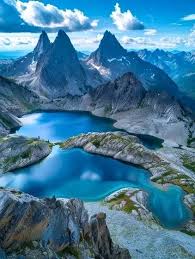
We graduated from St. George’s in June of 1992 and, like many newly minted high-school graduates, we had what we considered a very solid plan. We were going to drive from Spokane into the Selkirk Mountains in Idaho and spend several days trekking around in the wilderness like the rugged outdoorsmen we assumed we were.
The crew consisted of myself, Kelly, and Richard Barkley, along with a fourth member whose identity I am currently attempting to reconstruct through the miracles of modern group text. Mason Anderson, when contacted for this oral history, quickly clarified that he had nothing to do with the expedition whatsoever, as he was living with an uncle in Key West that summer and therefore cannot be blamed for any of the events that followed.
I had just gotten my driver’s license—rather late by American teenage standards—and was eager to demonstrate that I was now a fully functioning member of the motoring public. Richard had the car, Kelly had the confidence, and somewhere along the way we acquired a gun which I believe belonged to Will Rafferty, a year behind us at school.
Right away you may notice that this was not shaping up to be the most carefully planned expedition in the annals of Pacific Northwest mountaineering.
The Tarp
One of the first disagreements arose over equipment. I had suggested, quite reasonably I thought, that we bring a tent. Kelly rejected this idea outright.
A tarp, he assured us, would suffice.
Now, the Selkirks are a beautiful range, but they are not known for their gentle weather. Sure enough, as soon as we reached the foothills it began to rain. Not a polite drizzle either, but the kind of steady mountain rain that makes you realize nature has the upper hand.
Nevertheless we pressed on and eventually found a place to bivouac for the night.
We rigged Kelly’s tarp as best we could, laid out the sleeping bags, and attempted to cook something on the camp stove while water ran in small rivers through the campsite. At a certain point, after watching the tarp sag ominously under the weight of the rain, I reached what seemed to me the obvious conclusion.
“Dudes,” I said, “I don’t know about you, but I’m sleeping in the car.”
Kelly immediately objected. What followed was one of the great scientific claims of our generation.
“That’s a bad idea,” he said. “You’ll get more wet in the car because of the condensation.”
Now I’m no meteorologist, but even at eighteen this struck me as extremely unlikely. Outside the rain was falling steadily. Inside the car was, well, a car.
Nevertheless Kelly was confident in his theory. I was confident in my skepticism. We agreed to disagree.
Kelly, Richard, and at least one other member of the expedition slept under the tarp. I reclined the passenger seat of the car and slept quite comfortably.
In the morning, everything under the tarp was soaked.
To this day Kelly maintains that the condensation principle was sound.
The Pasta
Having discovered that trekking in the Selkirks during a mountain downpour was not especially enjoyable, we decided to improvise. The road trip continued deeper into Idaho, or perhaps Montana, where we eventually stopped beside a river to camp for the night.
This time tents were involved, which was already a step forward.
Kelly assumed responsibility for dinner and set about cooking pasta on the camp stove. Things seemed to be going well until he produced a cigar, lit it, and began tapping the ash—quite generously, I might add—into the simmering red sauce.
I objected immediately.
“Knock it off,” I said.
Kelly waved away my concerns.
“No, no,” he said. “Italian guy Joe does this. He says it’s the secret to a great sauce.”
I have never met Italian guy Joe, but I remain confident that he does not exist.
Kelly continued tapping ash into the pot. At that point I made the executive decision not to eat the pasta.
Kelly and I, despite being great friends, were at philosophical loggerheads for the first two days of the trip.
The Gun
At some point we decided to drive into California. This raised a new issue, namely that we were traveling with a gun.
I had been against the gun from the start. Kelly, however, had insisted that it was necessary. Necessary for what exactly was never entirely clear, but the gun had come along anyway.
Approaching the California border, we held a brief council and concluded that crossing state lines with a borrowed firearm might not be the wisest course of action.
The solution we arrived at was simple.
We would hide the gun in some bushes and retrieve it on the way back.
I pointed out that once a gun was hidden in random roadside bushes somewhere near the California border, the odds of ever finding it again were approximately zero.
Kelly disagreed.
We hid the gun.
We crossed into California without incident.
Later, as it turned out, we headed east anyway and never went back for it. Somewhere in a patch of roadside shrubbery, the gun presumably remains to this day.
Wyoming
Eventually the road carried us into Wyoming. We drove up onto a plateau above a large spread owned by the Mann family, who were something like Spokane and St. George’s royalty. My family and the Innes family had visited the place in previous summers to fish and wander around.
We had no invitation.
For a moment there was some discussion of whether we might simply camp there anyway, but cooler heads prevailed. As we were debating the matter, a caretaker appeared and asked what we were doing.
We explained that we were friends of the Manns and asked if it would be alright if we camped for the night.
He was entirely copacetic.
“Sure,” he said. “No problem.”
And just like that, after tarp disasters, pasta controversies, and the abandonment of a firearm somewhere in California shrubbery, we finally spent a perfectly pleasant night camping.
The Drive Home
The next day we drove back to Spokane, which I remember as being about fourteen hours straight.
It was Richard’s car. He asked me at one point if I wanted to take the wheel for a while, but I had only recently gotten my license and didn’t feel especially confident about highway driving yet. I declined and slept in the back seat while Richard drove most of the way and Kelly took a few turns.
Eventually we rolled back into Spokane.
We had not trekked the Selkirk Mountains.
We had lost a gun somewhere near California.
And we had proven absolutely nothing about condensation.
But we did come home with stories for life
Dedication:
For legal professionals everywhere.
 The Kyoto Kibbitzer