On Larry King, the Radio GOAT

Epigraph:

“I listened to the radio / I waited all night long…”
— Radio Radio, Elvis Costello

Note: This piece reflects my personal memories of listening to Larry King’s overnight radio show in the late 1980s and early 1990s, along with later impressions from television appearances, interviews, and conversations with people who knew him. It is written in the spirit of appreciation and nostalgia rather than media criticism, and emphasizes the uniquely loose, humane, and unpredictable quality of King’s radio work, which for me remains the defining core of his legacy.

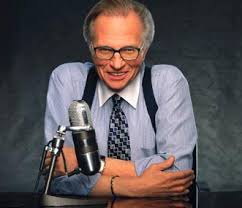
I grew up listening to Larry King’s overnight radio show between roughly 1988 and 1992, and in my opinion — which happens to be correct — the radio show was much better than the television version that later made him famous. The TV show was good, even great at times, but radio was longer, looser, freer, and far more unpredictable. It had weird guests, weirder callers, and the feeling that anything might happen at two in the morning. That’s where Larry really lived.

I would listen in my bedroom at my parents’ house in Spokane, Washington, the volume turned low, the house quiet, insomnia hovering. The Spokane AM station — KGA 1510 — carried the show from around 9 PM Pacific time, and then, wonderfully, they would run it again. So I’d listen from nine to midnight, fade, wake at two or three, and hear the same segment again in a half-dream. The effect was surreal. Didn’t I just hear that caller? Didn’t Larry just say that? It created a strange loop of late-night déjà vu that only made the whole thing more atmospheric. The show felt less like programming and more like a continuous nocturnal conversation.

My friend Kelly Rudd loved Larry too. When we were in high school we were both big fans of the radio show, and we talked about it constantly. There were a couple of things that we especially liked. The first was that Larry famously did no preparation. He knew a huge amount about the world, of course, but he didn’t read guests’ books ahead of time. He wanted to come in cold. If his guest was a firefighter, he’d ask, “So what’s it like to be a firefighter?” It sounds lazy, but it was brilliant. By staying open and getting out of the way, he let the conversation go anywhere. This way the show became eventful.

Another thing we loved was what happened after the guest left. Larry would open the lines and take questions about absolutely anything. Most of the time he was generous and patient, but when callers went off the rails he had a signature phrase. He’d cut them off gently: “Cold compress, ma’am,” or “Cold compress, sir.” Basically: lie down, ice your head, regroup. It was hysterical, especially because he used it sparingly. When “cold compress” dropped, you knew things had gotten weird.

Anyway, Kelly and I loved Larry so much that when the station suddenly dropped the show, Kelly proposed we drive to the radio station and protest. So we skipped school, drove across town, and rang the intercom demanding to speak to someone about the cancellation. The station manager eventually came down and heard us out. We knew we weren’t changing anything, but it felt right to try. Larry never came back to Spokane radio, and the show faded not long after, but the whole episode captured what the show meant to us. It wasn’t just background noise. It felt alive.

Larry’s on-air style was the key. He was unbelievably relaxed. By the late ’80s you could tell he had done thousands of hours. Nothing fazed him. Weird guests, drunk callers, eccentrics — all the same to Larry. He absorbed everything. He had pet phrases — “cold compress” chief among them — and he deployed them like a veteran reliever, only when needed. He famously did no prep, and he leaned into naïve questions. He’d ask something simple and let the guest do the work. The effect was disarming. People opened up. He also had real humanity. He listened. He didn’t mock callers. He didn’t rush them. There was compassion there, and I think that’s what I loved most.

And the show could get wonderfully out of control. In one story Larry told from his old Miami days, an adult actress he was interviewing suggested they just have sex during the commercial break. Larry, amused, asked the producers to clear out — but there wasn’t enough time. That kind of anecdote captures the looseness of late-night radio. It wasn’t polished. It was alive.

Larry left the overnight Mutual Radio show in 1994 to focus on television. By then I had already drifted away, but I still caught Larry King Live on CNN over the years. I remember watching during the O. J. Simpson trial while at Otago University in New Zealand, when the show became part of the nightly noise. Later there were the Vladimir Putin interviews — classic Larry, conversational and oddly disarming. And of course there were the great comic moments, like the interview with Jerry Seinfeld where Larry suggested the show had been canceled and Seinfeld snapped back in disbelief, and the Norm Macdonald appearance where Norm kept repeating, “I’m a deeply closeted homosexual,” and Larry tried earnestly to parse it. “So that means you’re gay?” “No, Larry,” Norm replied, “it means I’m deeply closeted.” Pure Larry: sincere confusion meeting absurdist comedy.

Larry’s personal life was famously complicated. He married eight times, had several children — including sons Chance and Cannon later in life — and lived in a kind of perpetual romantic improvisation. The marriages came and went. The last ended painfully and publicly. He once joked he’d never leave his wife unless Angie Dickinson came along — and when she did, he married her. That was Larry: impulsive, affectionate, slightly chaotic. Despite decades of success, he didn’t leave the kind of massive fortune people assumed. The money came and went, as did the marriages. It was a life lived in motion.

My friend Sergio Mandiola actually knew Larry in his later years in Los Angeles. Sergio was running an independent studies program at Beverly Hills High School, and Larry’s sons Cannon and Chance, and he taught his sons for three years. Larry would come by for open nights or just to chat.

Sergio Mandiola: “Larry would come in from time to time and we would talk. He was lovely and open. He talked about his family and his career. One time he told me, ‘Sergio, you should totally have a radio show!’ I was flattered. One thing about Larry is his politics were more to the left than he let on on air. He had strong views and wasn’t afraid to share them in person. Larry was a true mensch and I’m glad I got to spend time with him. I miss him.”

In the end, I’ll say it plainly: for me, Larry King is the radio GOAT. There was no one like him, and there probably never will be. It wasn’t just longevity. It was the curiosity, the looseness, the humanity, the love of people, politics, baseball, and life. He trusted the conversation. He let the night unfold.

And then there was that absurd, wonderful USA Today column, which read like a diary gone completely outta control. Mets lose 6–4…Rain in Baltimore…Clinton flies to Ireland…You’d read it and think, Larry, baby, WTF is this? And also, Mr. USA Today, WTAF are you doing paying for this? But somehow it worked. It was pure Larry — fragmentary, observational, intimate.

And that’s how I remember him most clearly: late nights in high school, the radio turned low, insomnia hanging in the room, Spokane quiet outside.. Sometimes I’d listen from nine to midnight, fade, then wake again to the rerun, half-dreaming, half-aware, caught in that strange déjà vu — didn’t I just hear this? — while Larry kept talking, calm as ever, taking calls from truckers and insomniacs and eccentrics. My listening years were brief, but they stuck. And when I think of Larry now, that’s where I go back to: the low hum of AM radio, the half-fade, and the sweet sounds of his voice in my ear.

Dedication:

For the one and only GOAT, Larry Motherfucking King. RIP baby.

On it, Pete

Note: Some stories get better in the telling. This one doesn’t need to. It arrives fully formed—one line, perfectly placed—and has stayed that way ever since. I’ve told it for years and it still lands exactly the same. No embellishment required.

It’s September, 1989.

Two new teachers had just arrived at St. George’s School in Spokane, WA. These are Paul Hogan and Pete Aiken. Paul would go on to have a long and distinguished career, eventually becoming Principal of Jesuit High School in Portland—a major job, the kind that makes a life. I have no idea where Pete is today.

That night, my dad Ross invited them over to the house for dinner. It was one of those late-summer evenings that still carried a little warmth but hinted at the coming turn. Ross was out back at the grill, working over the barbecue with a beer in hand. The adults clustered nearby, talking, drinking, getting to know the new arrivals. There was that particular tone of adult conversation—half-professional, half-social, everyone just slightly aware of roles and impressions.

Out in the yard, it was just the three of us: Pat, Mike, and me. We were playing catch with a tennis ball. Nothing serious. Just throwing it around, loose, casual, the way kids do when the game isn’t really the point. At some point, either Mike or I made a bad throw. It sailed wide of Pat—too far, too high—and rolled past him.

A completely ordinary moment. The kind of thing that happens a hundred times in a backyard, in a summer, in a childhood.

Pat was six. He didn’t chase the ball. He didn’t complain. He didn’t turn to us. Instead, he turned—calmly, deliberately—and looked over at Pete Aiken, one of the brand-new teachers, a guest in our home, a man he had just met. And in a tone of quiet assurance, as if assigning responsibility in a meeting, he just said:

“On it, Pete.”

That was it. No smile. No wink. No awareness of what had just happened. The ball was recovered. The game went on. The adults kept talking. The evening continued. But something had shifted, just slightly, just enough.

Because in that moment, a six-year-old child had somehow crossed the boundary between worlds—between kids and adults, between play and work—and issued a line that did not belong to him, but fit him perfectly.

I don’t remember what happened next. I only remember that line. And I remember that we have been laughing about it ever since.


The On It Pete Blues (Pete’s POV)

I was new to the city, new shirt, new street,

Standing in a backyard trying hard to be discreet,

Ross on the grill and the talk running deep,

Just another first night—then I heard, “On it, Pete.”

I hadn’t been briefed, hadn’t learned the terrain,

Didn’t know the house or the shape of the game,

Just a beer in my hand, trying not to overreach,

Then a six-year-old turned and delegated to Pete.

Now I’ve worked in schools, I’ve handled my share,

Rooms full of noise, moments needing repair,

But nothing quite like that clean little feat—

Being calmly assigned by a kid in bare feet.

No panic, no pause, no doubt in his beat,

Just a glance and a nod—“On it, Pete.”

And the ball got found, and the night rolled on,

But I knew right then something strange had gone on—

In a yard full of voices, one line cut through the heat:

I wasn’t just visiting.

I was on it.

Pete.

Dedication:

For my brother Pat. And for Pete. Just get on it already baby.

Note: If you liked this story you may also like the stories below, which also cover my time at St. George’s High School.

On the Ump

The old line about how it’s “better to burn bright than slowly fade” still haunts me.
after Neil Young

That old feeling — being strapped to the dynamite truck of your own luck — still rings true.
after Breaking Circus

Anything can come

John O’Donohue

New Note: I first wrote and published this piece in September of 2018, after I left my job, temporarily, and was casting about in a somewhat indistinct way. It’s about 1200 words, and I wrote in about 12 minutes on my phone, which is not normal. What was happening of course was, I was recovering my childhood abuse through PTSD symptoms, and this led me, at least at this moment, to a kind of hyper-clarity. PTSD is really quite interesting, in that it can lead to hyper-clarity and the total opposite, sometimes within the course of a pretty short amount of time. Such it was with this time period.

This piece was about me trying to enlist my father, specifically, into understanding and taking some kind of action, on the abuse that I had suffered. This was not happening at the time, and I was a little frustrated by it, but then I hadn’t fully worked out all the pieces, so how could he have, I guess? Basically, I was saying “read what I have to say and you be the judge.” Instead, other things occurred, which I won’t get into at this time; I got over the immediate PTSD phase, and went to New York to see rock bands. 

I am still working on getting my father to come up to the plate on this whole issue, and I think he is getting there. The other night I discussed with him Oedipus at Colonus, the play by Sophocles, written between 406 and 405 BCE. That’s a while back. Here is the AI summary (yes I’m giving way to AI summaries):

Oedipus at Colonus is a Greek tragedy by Sophocles that follows the blind and exiled king Oedipus as he arrives in Colonus, near Athens. Accompanied by his devoted daughter Antigone, Oedipus learns that this sacred ground is prophesied to be the place of his death, and his burial there will bring blessings to Athens. The play chronicles his final days as he confronts his past, is threatened by his brother-in-law Creon, and is unlimitedly received by King Theseus of Athens, who helps him find a peaceful end.

That’s a pretty heavy plot; the ancients knew their business for sure. My own father is neither blind nor exiled, although he is a little deaf and tends to repeat himself from time to time, but I think he is still on top of things, or has the capacity to be. What I believe is, there is still time, because there is always time.
=====

Original Preface: This little piece alighted on the author a few weeks ago when he was undergoing a bit of a midlife re-orientation.  The piece is presented as it presented itself, with edits for cleanliness only. 

Karma is simply the field of what you put in place in your last lifetime.  As a person you arrange your life in such a way that it leaves clues as to the road you took.  When it’s time to switchback, all you have to do is have the courage to take the turn.  After the turn, it’s basically just a matter of reading the tree markers in the forest.  The challenge is, some of the tree makers have fallen in the leaves, been washed out by rain, or moved by the wind.  So you are in new territory.  The map, the degraded set of markers you left behind, is not the territory.  However the last path was so densely specific that we keep trying to use our old map on the new path.  We need that old map for a bit because those markers are the only ones we have.   However we need to find our footing pretty darn quick in order to learn to navigate the new territory.  Otherwise, we follow the markers and mistake them for fresh signs.  Very quickly, the old signals become noise. And then we are in a deep dark wood and are in danger of over-exposure, or, worse, pure confusion and terror about where the path may lie.

The individual is mortal, and beyond mortality is the mystery.  Tribes and societies are forms of collectives, and collectives form a spiral pattern that we call a system. Collectives, and spirals, are mortal as well, and when a spiral approaches its switch back point, the map begins to degrade and the particles of the spiral, the people in the current incarnation of the pattern, must attempt to discriminate the signal from the noise.  Of course this is a much more difficult task than it is for an individual because there are many more tree markers and the winds and rains are howling all about.  This is simply because the field is larger to accommodate so many souls.  So instead of just having to read a few old tree markers, folks must try to receive the field.

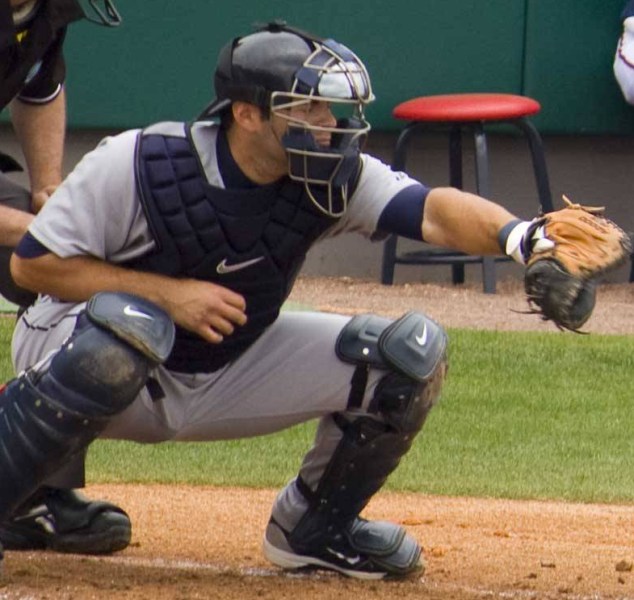
To receive the field you have to read the field, and the only way to read the field is to be looking right at it.  In baseball, there is only one position that can see the field and this is the catcher.  That’s why catchers are said to be good management material in general. Another way to say this is they have a wider view of the constraint set.  However, although the catcher can see the field and understand the constraint set in front of him, there is one variable he cannot control.  And this is, of course, the umpire.  The ump.

The ump calls the balls and strikes and the ump is a court of no appeal.  After all, he has the power to toss you from the ballgame altogether.  The only way to deal with this particular variable is to hone the craft of a catcher.  The first piece of craft is the act of framing a pitch.  Here the catcher subtly adjusts his glove in order to obstruct the ump’s view of the location of the pitch.  It is easy for the catcher to whip his glove on a ball in the dirt back to the strike zone, but the ump will spot that in a second.  So a catcher, if he wants to be any good, has to learn a little guile.

This guile can taken pretty far; and there are other ways to work an ump as well.  The classic, “ah come on ump,” is OK, but it’s the same as whipping the bill out of the dirt really.  A more effective trick is chatting the ump up.  Becoming his friend and letting him think you are actually on his side.  This is effective to a point as well, and extends the craft.   However here is where we need to remember our Dylan.  From “Just Like the Tom Thumb Blues,” we learn the following:

As Dylan once sang, you can start out soft and end up hitting the hard stuff — thinking people will stand behind you when things get rough, only to find out the bluff was your own. Sometimes you just want to go back to New York City and say you’ve had enough.
after Bob Dylan

Dylan is saying that though the use of guile helps you work the ump, you can start to mistake guile for the deeper craft.  You start to fall into your own trick.  You start to think you are the ump.  And these are deeper waters indeed.  In fact, this is the most dangerous game.  And in this zone, we need a secret weapon.

The idea of a secret weapon is apparently popular in many superhero movies these days, and we can read the field just a little to see why.  These so-called secret weapons may take the outward form of a literal weapon, one which defends against the apparent enemy and leaves death and destruction in its wake.  However when we use this kind of weapon, the forest we are in is in fact that of the irreal, where the furies shriek and howl.  However the superhero’s true secret weapon is something altogether different.  His true secret weapon is the light within, which can be transmuted into gold and used to navigate the irreal, and hunt the most dangerous game.  Where is that light within?  To find it, the catcher has to go pretty far back into things to find it.  In certain eras, folks may need to do something a little difficult to get there—as the Chinese say, may you live in interesting times.  The catcher, here, has to remember.

The first song I remember my own father singing, and one of the only ones I head from him, was from Bob Dylan.  I didn’t know who Dylan was, nor did I know the name of the song. The line my father sang was one of those old Dylan riddles — something about a pump that won’t work because someone stole the handles. I didn’t understand it then, but it landed in me like a talisman.
after Bob Dylan .

If the catcher is blessed to have such a talisman, he has a fighting chance.  The thing to do here is to keep your eyes and ears on the field and your gut and your body tuned into the ump.  Only this way can the little catcher tell when it’s time to play his card, which is of course the joker.  People have sought Dylan in all his guises to the ends of the earth and no one, to my knowledge, has caught onto his tricks.  I can’t say for sure that I’m onto all of them either, but I knew one thing.  When the vandals have those handles, the pump ain’t working. This is the moment the catcher makes his break with the ump. This is when he calls his bluff.

Dedication: For my Father, who caught me how to catch.

My Brother Mike’s Bad Book

Subtitle: A Mariners game, a rowdy night, and the moment my brother defined himself with four perfect words

Several years ago I attended a Seattle Mariners baseball game with my bother Mike. The Mariners were playing the Toronto Blue Jays, and we went out for a few drinks before the game right next to the stadium. I was amazed by just how many Blue Jays fans there were in town for the game. They were all over the place.

Now, although I grew up in a baseball family, as I got older I kind of lost interest. The games are just too long and there are too many of them. However, going to a game in person is pretty cool. Mike is still a hardcore Mariner fan, which I respect. On this night the Mariner’s star pitcher Felix Hernandez was pitching, and the Mariners won the game. However, the result is far from the most memorable aspect of that night.

Our seats were pretty good, right next to, but not actually in, the “K Zone” where the Hernandez heads were. Over the course of the first few innings, Mike downed several more beers and he got a little rowdy, as he sometimes does. Mike, in Freudian terms, has more than a little “id” in him. As I mentioned, there were a lot of Blue Jays fans in town and Mike, as a good Seattleite, took this as a challenge. As the game went on he began calling out, loudly, various Canadian cities.

“Calgary suuuucks…Winnipeg suuuucks…Lethbridge suuuucks.” Like that.

I found this all pretty amusing, if a little unorthodox. It wasn’t how I would chose to enjoy the game, but this was Mike’s style. As the Mariners built a lead Mike’s chants started to escalate, and some Blue Jays fans began to take offense. Probably this was the point. These dudes were looking at Mike, pointing, saying things. There was no real risk of a fight; however Mike was mixing it up no doubt.

Around the 5th inning or so another dude in a Shawn Kemp jersey started making noise of his own. (Shawn Kemp was a star player for the Seattle SuperSonics back in the day before some asshole stole the franchise and moved them to Oklahoma City. Fuck that guy.) At first this was all fine, because anyone in a Sonics jersey was OK with Mike. However the Sonics fan started getting a little out of line and dropping the f***** slur.

“Look at this fucking f*****. Fuck this f*****,” stuff like that.

As far as I could tell there was no reason that this guy had to target an individual in this fashion. The difference, as I saw it, between his action and Mike’s was that Mike was basically operating in good humor and calling out all the Blue Jays fans present in the spirit of friendly competition, while the Sonics fan was picking on an individual, and using a slur. Although the exact nuances of the difference are perhaps debatable, the dude was definitely out of line.

Mike noticed this guy and didn’t like what he saw. He began saying so, and someone not in our group took notice. This other guy, in regards to the Sonics fan, said something to the effect of “he’s ok in my book.” Mike didn’t miss a beat at he uttered the classic line, one I will never forget.

“That’s a bad book,” he said.

That’s all he said; he didn’t challenge the guy to a fight or anything, didn’t even directly address him. The Sonics fan was getting so abusive that someone called security, and he was escorted out.

“That’s a bad book,” reminds me of my friend from high school Cameron Turner who liked to say of something he didn’t approve “that’s sick, and wrong.” Both of these are super memorable phrases, and highly redolent of the person behind them. Mike was a little lit. Mike was razzing Blue Jays fans as a collective. Mike was attracting attention. At the same time he felt that there was no need for gratuitous gay slurs. And he was right.

One of my favorite phrases in the world is “that’s some bad action.” Mike was speaking in the same vein with “that’s a bad book.” I’ve never been prouder of anyone in my life than when Mike called this guy out.

I fuckin’ love my brother Mike.

Postscript: Just a little while ago Mike and his fiancee had a baby, Felix. Named, of course, after the pitcher. So that’s pretty cool. I just hope he doesn’t grow up to be a Blue Jays fan.

The Ump

well it’s always been my nature
to take chances
my right hand drawing back

while my left hand advances

Bob Dylan, Angelina.  Circa 1981, A.D.

Preface: This little piece alighted on the author a few weeks ago when he was undergoing a bit of a midlife re-orientation.  The piece is presented as it presented itself, with edits for cleanliness only. 

Karma is simply the field of what you put in place in your last lifetime.  As a person you arrange your life in such a way that it leaves clues as to the road you took.  When it’s time to switchback, all you have to do is have the courage to take the turn.  After the turn, it’s basically just a matter of reading the tree markers in the forest.  The challenge is, some of the tree makers have fallen in the leaves, been washed out by rain, or moved by the wind.  So you are in new territory.  The map, the degraded set of markers you left behind, is not the territory.  However the last path was so densely specific that we keep trying to use our old map on the new path.  We need that old map for a bit because those markers are the only ones we have.   However we need to find our footing pretty darn quick in order to learn to navigate the new territory.  Otherwise, we follow the markers and mistake them for fresh signs.  Very quickly, the old signals become noise. And then we are in a deep dark wood and are in danger of over-exposure, or, worse, pure confusion and terror about where the path may lie.

The individual is mortal, and beyond mortality is the mystery.  Tribes and societies are forms of collectives, and collectives form a spiral pattern that we call a system. Collectives, and spirals, are mortal as well, and when a spiral approaches its switch back point, the map begins to degrade and the particles of the spiral, the people in the current incarnation of the pattern, must attempt to discriminate the signal from the noise.  Of course this is a much more difficult task than it is for an individual because there are many more tree markers and the winds and rains are howling all about.  This is simply because the field is larger to accommodate so many souls.  So instead of just having to read a few old tree markers, folks must try to receive the field.

To receive the field you have to read the field, and the only way to read the field is to be looking right at it.  In baseball, there is only one position that can see the field and this is the catcher.  That’s why catchers are said to be good management material in general. Another way to say this is they have a wider view of the constraint set.  However, although the catcher can see the field and understand the constraint set in front of him, there is one variable he cannot control.  And this is, of course, the umpire.  The ump.

The ump calls the balls and strikes and the ump is a court of no appeal.  After all, he has the power to toss you from the ballgame altogether.  The only way to deal with this particular variable is to hone the craft of a catcher.  The first piece of craft is the act of framing a pitch.  Here the catcher subtly adjusts his glove in order to obstruct the ump’s view of the location of the pitch.  It is easy for the catcher to whip his glove on a ball in the dirt back to the strike zone, but the ump will spot that in a second.  So a catcher, if he wants to be any good, has to learn a little guile.

This guile can taken pretty far; and there are other ways to work an ump as well.  The classic, “ah come on ump,” is OK, but it’s the same as whipping the bill out of the dirt really.  A more effective trick is chatting the ump up.  Becoming his friend and letting him think you are actually on his side.  This is effective to a point as well, and extends the craft.   However here is where we need to remember our Dylan.  From “Just Like the Tom Thumb Blues,” we learn the following:

I started out on burgundy, but soon hit the harder stuff/ everybody said they’d stand behind me, when the game got rough/ but the joke was on me, there was nobody even there to bluff/ I’m going back to New York City, I do believe I’ve had enough.

Dylan is saying that though the use of guile helps you work the ump, you can start to mistake guile for the deeper craft.  You start to fall into your own trick.  You start to think you are the ump.  And these are deeper waters indeed.  In fact, this is the most dangerous game.  And in this zone, we need a secret weapon.

Read more