On the Stage Banter of Matthew Houck and Dean Wareham

Introduction:

This post takes up the subject of stage banter with the hopes of gaining a window into what makes a great artist great. Before we get to stage banter, however, I want to look at Howe Gelb’s spoken introduction to Giant Sand’s cover of “The Pilgrim (Chapter 33).” Stage banter and spoken introductions are, clearly, related animals.

Gelb is the lead singer of the band Giant Sand, and the cover in question first appeared on Nothing Left to Lose, a Kris Kristofferson tribute album. The song was later collected on Giant Sand’s album Cover Magazine. You may know the song–it goes:

he’s a poet/ he’s a picker/ he’s a prophet/ he’s a pusher/ he’s a pilgrim and a preacher and a problem when he’s stoned/ he’s a walking contradiction/ partly fact and partly fiction/ taking every wrong direction on his lonely way back home.

It’s a good song, and Gelb turns in a sound version. But it’s his spoken introduction that really peaks my interest. On Kristofferson’s original he name-checks a number of folks who “had something to do with” the genesis of the song. Gelb repeats the original name-checks, slightly out of order, before listing a set of artists that he, Gelb, learned the song for:

Well, I guess when Kris wrote this song he wrote it for Chris Gantry-he started out doing it though by-ended up writing it for Dennis Hopper, Johnny Cash, Norman Norbert, Funky Donny Fritts, Billy Swan, Paul Seibel, Bobby Neuwirth, Jerry Jeff Walker. Ramblin’ Jack Eliot had a lot to do with it. Me I ended up learning this song for Vic Chesnutt, Jason Lytle, Evan Dando, Polly Jean, Paula Jean, Patsy Jean, Juliana, Victoria, Bobby Neuwirth, Bobby Plant. Curtis John Tucker had a lot to do with it.

The alliterative Bobbys and the matching of Ramblin’ Jack Eliot and Curtis John Tucker make this speech into a mini-poem of sorts, and we know many of the protagonists. Hopper and Cash of course; Jerry Jeff Walker and Ramblin’ Jack Eliot are folk singers, older than Kristofferson; Bobby Neuwirth is a folk singer, multimedia artist, and Dylan confidant in Don’t Look Back. Funky Donny Fritts is a session keyboardist, and I believe Norman Norbert and Billy Swan were session musicians as well. Paul Seibel was also a folksinger-I don’t know him; maybe you do. Kris’ meaning is pretty clear-a song like The Pilgrim doesn’t come from nowhere, and the folksingers he learned from are portals back in time to an earlier tradition to which he generously pays tribute.

Not being myself a 70’s session musician completist I did have to look up a few of the names. The Gelb names are more familiar, expect one. Vic Chesnutt, Jason Lytle and Victoria (Williams) are folk singers (or were, as sadly Chesnutt has passed). Evan Dando, Juliana Hatfield, and P.J. Harvey are/were alt-rock superstars. Bobby Plant would be Robert Plant of Led Zeppelin fame, Bobby Neuwirth is Bobby Neuwirth.

But here’s the point, after listening to Kristofferson and Gelb name-check Funky Donny and Curtis John, I feel an affinity for them-were I to bump into Funky Donny in an airport bar or lounge his presence would resonate with an essential familiarity. Even if I didn’t know precisely that it was he, I would recognize immediately that he was indeed funky, not to mention a serious problem when he’s stoned. And Curtis John Tucker, well, his role is still opaque to me, but he clearly had a lot to do with it.

What both singers hint at in their evocation of the circumstances surrounding the creation of a song is the presence of community behind the music. Behind or beside every Kristofferson is a Norman Norbert, behind every an a Bobby Neuwirth, every Gelb a Curtis John Tucker.

The humanity and camaraderie inherent in the spoken introductions to The Pilgrim remind us that artistic communities are vital in the creation of lasting artistic production–Neuwirth may not have been essential to Dylan’s art in the mid-60’s, but he was instrumental to its vitality; Kristofferson wrote “The Pilgrim” but it wouldn’t have been as good without Paul Seibel. And as for Curtis John Tucker, well he had a lot to do with it.

On the Spoken Introduction of the Band Members of Phosphorescent by Matthew Houck on Live at the Music Hall

On side two of Phosphorescent’s majestic 2015 live album Live from the Music Hall, the band plays a song from their 2005 album Aw Come Aw Wry, called “Joe Tex, These Taming Blues.” Houck’s early Phosphorescent albums are interesting–they are more ambient and keening than his mature work and some of the songs are really long.  Joe Tex is one of the better early songs, and Houck puts a little something special into the first couple lines on the live version: 

Is it ever gonna not be so hard to see you around/ or am I really really really really gonna have to really gonna have to really have to leave town

Houck is a master at harnessing the power of repetition—here each “really” takes on its own character and valance.  The band gives an excellent performance, which goes for about 4 minutes. It is apparently the second last song of the night, because at the end of the song Houck moves to introduce the band. Here he goes, as the band chugs on behind him:

Brooklyn, that’s Scott Stapleton playing that piano right there…

The first “Brooklyn” is loaded with import–Houck is going to drop some wisdom on the folks tonight. Stapleton plays a few understatedly beautiful lilting keys and…

Brooklyn, that’s David Torch playing that percussion right there…

Torch gives a little maracas shake, right on time, as Houck establishes the rhythm and flow of the introductions. The basic elements include a “Brooklyn,” which shifts in valance a little each time, and the band member playing “that (instrument),” “right there.”

Brooklyn, this is Rustin Bragaw playing that bass guitar right there…

A slight shift in the pattern–probably Rustin is standing next to Houck. Bragaw drops a couple of notes on his funky bass and on we go–naturally, the bassist gets the lowest key introduction.

Brooklyn, Christopher Showtime Marine playing those drums right there…

Houck reaches for a higher register here, both on the slightly more breathless and rushed “Brooklyn” and an uptone delivery of Marine’s nickname. Another shift in the pattern–Marine has a moniker. Showtime delivers a healthy drum piece and…

Brooklyn, the trigger finger Ricky…Ray…Jackson playing that guitar and that pedal steel right there, come on…

We’re getting there. The crowd is excited for this one; the pedal steel player is clearly a star. Houck pauses a beat on each name, “Ricky…Ray…Jackson, come on,” and the come on is both an entreaty to the crowd and also a general “come on can you believe this guy!” from the lead singer. Pedal steel is no joke. Also, Ricky Ray’s nickname comes before the name–he is in fact the trigger finger here tonight, his birth name is just data.

The trigger finger plays a couple of high notes and…

Brooklyn, last but certainly not least, the best looking one in the group, Joe Help, playing those keyboards right there, come on.

No fuss around the two-syllable “Joe Help,” which Houck delivers as if it was one word. Joe Help and Joe Tex, good looking guys that’s all.

I can’t tell you what a pleasure this has been y’all. Thank you for being here. Hope you come back again.  We’re going to play one more song; thank you guys so much again.  This is a song called Los Angeles; this is how it goes.

And the band plays a stunning closer.

Read more

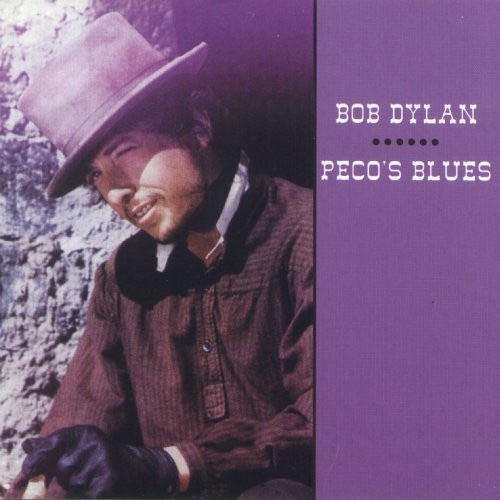
On the Between-Song Patter on the Bob Dylan Bootleg Record “Peco’s Blues”

Introduction

Behind any work of art, pretty much, there is some kind of “process.” The scope and complexity of this process differs across art forms, of course. The writer’s process is rather different than that of, let’s say, the magician David Copperfield. I find all artistic processes fascinating, and am drawn specifically to what happens “backstage.” Backstage is a world unto itself.

In the early 1970’s, the film director Sam Peckinpah was making a film called Pat Garrett and Billy the Kid, and he asked Bob Dylan to do the soundtrack. He also offered him a small role in the movie, a character called Alias. Dylan hadn’t really done a soundtrack before, nonetheless he headed down to Mexico to work on the film with Peckinpah. Pat Garrett and Billy the Kid the film is ok; it’s not my favorite Peckinpah by any means. (That is reserved for Bring Me the Head of Alfredo Garcia, with the one and only Warren Oates in the lead role. Oates around this time also starred in the film Cockfighter, which features the greatest rejected tagline of any film even “he came into town with his cock in his hands and what he did with it was illegal in 48 states.”) The Pat Garrett soundtrack in many ways transcends the film, mostly because this is where we are first introduced to “Knockin’ on Heaven’s Door,” which would go on to become one of Dylan’s best known songs, and is a really good soundtrack overall, however I am more interested in an extended set of outtakes from the sessions which are collected on a bootleg record called Peco’s Blues. Peco’s Blues features a number of alternate versions of the best known songs on the soundtrack, including Heaven’s Door and “Billy,” however the most interesting part of Peco’s Blues for me is the black and forth patter between Dylan, his sound engineer Chuck, and his band. This patter, I suggest, opens a fascinating and unique window into Dylan’s working methods and general approach to art. In what follows we will look at each incident of patter or conversation in the order they occur. All of the instances occur within the first 20 minutes of the nearly 70 minute recording as Dylan, his band, and the engineer endeavor to get on the same musical page.

Patter at the End of “Billy 2,” around the 7:34 Mark:

Dylan (D) wraps up a lengthy take of Billy 2 and asks his engineer Chuck (C):

D: Was that any good?

C: Pretty good Bob. What happened was was you hit the mic twice when you were moving around out there and we had a couple of clunks on it.

D: That’s too bad (…) Shit, I wish Sam was here. He’d know what to do.

C: That mic’s just a little more sensitive than the Sennheiser’s and I’m getting a little…

D: That’s too, uh…that’s…

C: And I’m getting a little puff of wind sometimes when you get real close to it when you sing.

D: That’s too sensitive.

C: Let me move it back a little for you Bob.

D: I think we must have got it though Chuck.

C: (with what sounds like a pencil in his mouth) Oh I recorded it, darn tootin’. I had a little puff from your voice once and you knocked the mic twice.

D: Well that might have been alls that we need.

C: You wanna, you wanna hear a playback on it?

D: Yeah, I would.

Comment:

We see right away here that Dylan is the boss and that the engineer is walking on eggshells a little bit. This is made clear by Dylan’s reference to “Sam,” who he obviously thinks is a better engineer than Chuck. We have more than a little sympathy for Chuck, as it wasn’t he that knocked the mic and he is trying his best to give Dylan the relevant information.

I love how Dylan here, while implicitly criticizing Chuck, also picks up on Chuck’s framing of the microphone situation and agrees that “that’s too sensitive.” However, the relative sensitivity of the mic is not Dylan’s main concern. Dylan, famously, likes to work fast. For some of his records that has been a positive, on these the sound and performances come across as organic and coordinated, like all of the players grasped their roles and just ran with them. On other records, Dylan’s preference for speed let’s him down, and songs, and especially the production, can feel rushed, even a little sloppy. Dylan famously warred with Uber-producer Daniel Lanois, who had produced U2 and Peter Gabriel among others before Dylan asked him to produce 1989’s Oh Mercy. Oh Mercy sounds great and was Dylan’s “comeback” album after a mixed, to say the least, mid 80’s period, however Lanois’ sonic fingerprints are all over it. Too much so for Dylan, who wanted a faster, looser approach. Lanois is no pushover, and held his own with Dylan. We get the sense that Chuck is no Lanois.

So, despite the knocks on the mic and the puff of wind, Dylan is going to be fine with using this version on the record. Chuck, of course, is going to want Dylan to play it again. Chuck, or someone, would win this one because the extended take of Billy 2 here is not the one used on the final album. The little tussle between Dylan and Chuck ends in a draw as they agree to listen to the playback.

Patter at the Beginning of “Turkey,” around the 8:40 Mark:

D: Hey Roger, when I stop, when I stop, you stop. I’ll do something else and you figure it out. So it might go like this (Dylan starts playing and the band fills in a little hesitantly behind him).

D: Say Chuck, Chuck?

C: Yeah

D: Let’s take this down and mark it under, uh, Turkey…We got a buzz in the amp.

C: I’m not picking it up.

D: OK come on now.

The band plays on the instrumental Turkey for about a minute before Dylan stops.

D: OK, this is under Turkey.

Dylan begins again, and this time the band fills in much better, the song sounding fuller and tighter in all ways.

Comment:

This is in my opinion the most illuminating of Dylan’s comments and gives us a window into his way of working throughout his career. As mentioned above, Dylan works fast and expects his musicians to do the same. Thus he instructs Roger that when he Dylan stops, Roger is to stop, Dylan will “do something else” and Roger needs to “figure it out.” Dylan’s instructions may not sound very fair to poor Roger, but I think they actually are. A musical team is in this case not unlike a sports team, say a basketball team, where even if an offense is running a designed play or “set,” players need to figure out what’s going on and adjust their own position and movements constantly and on the fly. There is no playbook, not set of absolute rules about how to accomplish this any more than there is a set of rules about how to follow Dylan musically. The musician, like the athlete, just has to work by feel, take in all the information around him or her, and figure it out. If they can, they will keep their job; if not, not.

Patter at the Beginning of “Billy Surrenders,” around the 18:10 Mark:

D: Let’s see now. You know, you know what we want when Billy starts (laughs) this guy Jerry Fielding’s gonna go nuts man when he hears this (laughs). You know what we want when like Pat Garrett comes down from the hills right, and all these guys come out like one by one. And Billy comes out, he’s almost standing in a circle you know, so like (indistinct) one by one and then there’s like a big pause and he stops and there’s silence. You know those big organ notes, those scary things (hums organ notes) (laughs). Can you get behind that? (Dylan and the band laughing.)

Comment:

The recording of the Pat Garrett soundtrack was pretty complicated, in large part because Jerry Fielding, Peckinpah’s usual composer, was relegated to a supporting role and apparently resented it. Accounts differ as to whether Fielding quit, walked off set (and maybe came back), actually did try to advise Dylan as requested, or some combination of the above, however the history of the film makes clear that there was friction. Dylan is clearly aware of the tension with Fielding, and makes a joke about it in a place where it doesn’t even seem relevant. Dylan seems to almost revel in the conflict, setting up Fielding to his band as a “suit” who is not in the field so to speak, and who Dylan enjoys winding up with his musical choices. Whatever the exact situation with Fielding was, the issue is clearly a live one at the time of recording.

My sense is that Dylan is mostly talking to his band here, as there are a number of people in the background laughing along with Dylan through this monologue. Despite his reputation for playing fast and loose most of the time, Dylan shows a pretty good grasp of particular scenes in the film and clearly knows what he wants. The “big organ notes” he mentions do indeed feature on the soundtrack, however maybe not to the extent Dylan wanted. I have to laugh at the very 1970’s question “can you get behind that?”

Conclusion

Overall, Peco’s Blues provides a fascinating window into Dylan’s working methods and expectations for his crew. Of course not every musician works this way; many will give much more precise instructions I am sure, and in the era of computer aided music Dylan’s approach on Pat Garrett is certainly a old-fashioned one. But I like it. It is absolutely worth listening to the entirety of Peco’s Blues to get a sense of Dylan’s working methods as well as how a band, here playing together live and recorded live, “figures itself out” and gets from sketch to finished product. I am myself not a musician but a writer, and the writing process, although never exactly easy, is perhaps a little less complex, mostly because most writers write by themselves, with an editor or editing team looking over the work at a later date. There is nothing in writing quite like “I’ll do something else and you figure it out,” and it is the shifting, quicksilver like nature of Dylan’s approach to music making here that continues to interest me and draw me in.

Scenes from St. George’s, Part IV: Mason Anderson’s Seven-Step Method for Picking Up Women

Note: This is installment four of our scenes from Saint George’s (SGS). Part I is here, Part II is here, and Part III is here.

Mason Anderson Fails to Pick Up Chicks

Classes at Saint George’s were not so large; I think our class graduated around 28 or so. The school is a private school, and relatively expensive for Eastern Washington, but I don’t believe it was that expensive, so I wonder what the school’s budget was like. I bet it was tight. There were a handful of students, including J.T., Kelly, our friend S.C., his younger brother Ben, L.W., and a few others, who were there from lower school all the way through high school. Others, tragically including N.C., left, while others still joined later on.

One student who joined I think in 9th grade was Mason Anderson. Mason’s had a younger brother named Mark whom Mason called “Marky J. Muffin” for some reason. Mason and Marky J.’s parents were divorced and they lived with their mother who Mason called Robbie A. (A for Anderson.) My sense is that Robbie A. was working pretty hard to keep everything organized on the financial front. Mason’s dad was a big churcher, and I don’t think Mason saw him all that much. Sometimes Mason would report that his dad had given him some money, but overall I think his dad was too busy churching to provide much oversight. As a result of all of this, Mason was pretty much left to his own devices most of the time. Also, whatever the family situation, Mason didn’t do much to keep things together because although he’s a great guy and totally hysterical, he was, and still is, chronically lazy.

Lazy as he may have been, Mason actually had a job at a sports cards shop called Chalmer’s. I guess Chalmer’s was owned by some guy called Chalmer, and this dude thought it would be a good move to just leave the shop in Mason’s hand for extended periods of time so he could enjoy the sweet life of a successful businessman. This, however, was not a good move at all, because Mason stole all his baseball cards and all his money and Chalmer’s had to go out of business. Mason never stole from his classmates as far as I know, but he felt Chalmer was fair game.

As I mentioned, our class was pretty small and John Innes, who joined in middle school, and I got to know Mason pretty quickly. High school life can be a little repetitive and it’s good to break things up with a little humor. Mason may have been a lazy thief (or perhaps more charitably an indolent appropriator) but in the humor department he was a solid addition to the school. Mason had a particular way of speaking where he would add emphasis to certain words to make them funny, and he also loved the words “total” and “totally.” My own speech and writing has been totally influenced by this habit of Mason, an influence apparent on this blog. Mason also liked to abbreviate noun phrases.

All these quirks came together in Mason’s favorite term, which was “total babe,” or more commonly, “TB.” He would use this appellation dozens of times a day to describe various girls in our class and the classes above and below us. Although SGS classes were small, there were definitely some TBs running around, and some regular old Bs as well. My own tastes in this area were less for the TBs and more for the SBs (“sneaky babes”). I like sneaky anything, sneaky babes, sneaky favorites, sneaky staircases, the whole deal. Probably my theory was that TBs were already out of my league, and SBs were just more on my level. Also, I just thought SBs were cuter than TBs. I still think I’m right about this, but Mason disagreed. He was into the TBs, the totaller the better. Now one thing about TBs, obviously, is they can be super selective. Craig Finn says “boys go for looks/ and girls go for status.” I’ve found this to be pretty true, and TBs also like money as well as, I think, funny guys (or gals depending on a given TB’s particular orientation). Although he played on the baseball team, Mason was not exactly “high status,” whatever that consisted of back then, and although he had the Chalmer’s money he certainly wasn’t loaded. He was very funny, and should have leaned into this with the TBs, but for some reason his method for TB intriguing didn’t quite see him leaning into his strengths.

Mason’s interest in TBs was not limited to mere expressions of appreciation; instead he would work out elaborate TB seduction campaigns in his head, which he would describe to John Innes and me at great length. Mason was, for some unknown reason, a huge fan of the professional hockey team the Philadelphia Flyers and their goalie Ron Hextall, and he had one, or maybe several, Philadelphia Flyers pins that he would wear on the outside of his jacket. His TB pick-up plans always revolved around the Flyers’ pin and associated Flyers paraphernalia. I am not going to be able to do justice to the complexity of Mason’ campaign plans, however they would have gone something like this (I don’t believe he has taken the time to patent this method so I think this is fair use):

Step 1: Select a TB to approach.

As mentioned, Mason would choose one of the biggest TBs, a girl who was obviously completely out of his league, and start putting together a sequence of moves.

Step 2: Name the campaign.

Mason’s campaigns would be named after the first initial of the TB’s first name; thus if the TB was called “B…” the B campaign would just be “Plan B.”

Step 3: Pick a location to approach the TB.

Mason would specify a certain spot where he planned to initiate his campaign, say at the TB’s locker, while waiting for the bus before a basketball game, or when she first came in the door of the school in the morning.

(As a side note, John Innes also employed the locker move when in 9th grade he offered me 10 dollars to switch lockers with him so he could have the locker next to a certain TB called S. I agreed, but John Innes didn’t really have any money because his father had spent it all on his political aspirations, and I don’t think he ever paid me. That was a bad deal on my part; I should have stuck with the locker.)

Step 4: Lead with the Flyers’ pin.

Mason would design the first actual contact with the TB to center on the Flyers’ pin, as noted above. In John Innes’ and my opinion, this is where the plan started to wobble. Mason would specify exactly what he would say to the TB as an opening salvo. This would be something like:

“Hey there B, I couldn’t help but see you hanging out by your locker here. I wonder if you’ve seen my new Philadelphia Flyers pin?“

Now I don’t know a huge amount about hitting on women, but I know a little bit, and I’m just not sure this is the right first move. Guys who are really good at picking up women (I’m not referring to the super sus subculture of PUAs, but to individual guys who just happen to have a lot of game) usually start with something a little more open-ended, and also maybe focussed on some aspect of the girl, not one of their own accessories. I mean I don’t know, maybe this can work—can you picture a guy at a bar approaching a woman and saying something like:

“Hey there, I don’t know you but I just wanted to let you know I bought this new scarf today. Isn’t it something?”

The more I look at it the more I lean no. The Flyers’ pin opener was not, however, the biggest issue with Mason’s approach. The biggest issue was that he expected the TB to come back with a very specific, indeed exact, reply.

Step 5: Elicit a specific TB response.

After Mason had asked the TB to check out his Flyers’ pin, she was supposed to come back with the right answer, which is this case would be something like:

“Wow there Mason Anderson. I didn’t know you had a new Flyers pin. That’s a pretty sexy pin you got there.”

Now I respect the effort that Mason put into his plans, but I’m sorry, this is just all wrong. First of all, this is a pretty unlikely answer for a TB. I mean, something like this is theoretically possible; however there are a lot of other possibilities that Mason was not accounting for. You see, he needed the TB to stick pretty much exactly to the script in order to get to his next move. But the problem was, the TB didn’t have the script in advance. I mean imagine you’re a TB and some medium dorky guy comes up to you and flashes his new Flyers’ pin. I think you might respond in one of the following ways, ranging from more to less promising:

i) “I haven’t seen your pin. Where did you get it?”

ii) “Who are the Philadelphia Flyers?”

iii) “Why are you showing me this?”

iv) “What are you talking about?”

v) “You’re weird. Go away.”

My theory is that Mason really needed to be prepared for all of these possible responses, and many others. He needed, in other words, to build a little flexibility into his plan. And John Innes and I would tell him this.

“I don’t know Mason, I mean the Flyers’ pin is great and all, but I don’t think you can count on her telling you it’s sexy. She might come back with something else you know.”

“No,” Mason would reply. “She’ll come back with what I have planned. It’ll work.”

But she wasn’t going to come back with what he had planned. She just wasn’t. John Innes and I knew this, but there was no talking Mason out of it. Plan B was full steam ahead.

Step 6: Get to the end game.

After the TB came back with the right Flyer’s pin response, the next two items in the plan would be designed to get Mason to the close. This would go like something like this:

Mason: This is a sexy pin. But it’s not as sexy as you are.

TB: Oh my god, you’re so charming and funny.

Now, the dialogue is approximate, however the idea remained the same—the conversation had to go exactly this way. In military circles there is a saying that goes something like “no battle plan survives the first shot fired” or whatever. The point being, once a campaign kicks off there is no telling what the actual sequence of events is going to be. A good plan, in war, with TBs, or just in life in general, needs to be adjustable. Or, in NLP terms, the planner needs to understand that the map is not the territory. Mason had the map, but his map was not going to get him safely though the territory.

In any case, by this point Plan B would be pretty far advanced. It was time to seal the deal.

Step 7: Close.

This stage, obviously, was where Mason would throw down his final zinger and the TB would be won. The last part of Plan B would have Mason saying something like:

“I know I’m charming and funny. I guess I just can’t help it. Hey I’ve got a great idea. Why don’t you and me get together and call ourselves an institute?”

And the TB would swoon into his arms.

=====

Now, we have already identified a number of holes in Mason Anderson’s Seven-Step Method for Picking Up Women. And these holes are significant. But the biggest hole in Plan B, or Plan C, and any of his other plans is that he never tried to implement any of them even once. All of this, the casual approach, the Flyers’ pin, the elaborate conversational sequencing, was entirely theoretical. Mason would talk about Plan B incessantly, workshop it with us, and generally refine and tinker with it, but he would never actually put in to the test. I don’t know why this was. Was it because Mason knew the TBs were out of his league and just enjoyed fantasizing about his campaigns? Or did he actually intend to put Plan B into practice sometime and just never had the nerve to try it? Or, perhaps, the plan was never totally good enough in his own eyes and just needed that last little tweak to get it perfect? I don’t know, but man were Plan B and Plan C entertaining.

Today Mason lives in the tri cities area of Washington State where he messes around with nuclear energy or something, believe it or not. In his free time he makes a lot of pizza and instagrams about it. I believe he has also had some success on the Tinder there—John Innes told me he was mixed up with at least one women of that ilk a few years back. I’ve never met any of Mason’s Tinder connections, and I don’t know if they are TBs or not, but I know one thing. Deep down Mason still wants to lead with that Flyer’s pin.

to be continued…

Dedication: For Mason, you totally rock baby.

Postscript: It turns out that Mason Anderson will be cooking pizza for my brother Mike’s wedding this coming summer. Weddings are a good place to score, so I do hope he is working on a plan. Pizza might just be a better hook than the Flyers…

My Brother Mike’s Bad Book

Subtitle: A Mariners game, a rowdy night, and the moment my brother defined himself with four perfect words

Several years ago I attended a Seattle Mariners baseball game with my bother Mike. The Mariners were playing the Toronto Blue Jays, and we went out for a few drinks before the game right next to the stadium. I was amazed by just how many Blue Jays fans there were in town for the game. They were all over the place.

Now, although I grew up in a baseball family, as I got older I kind of lost interest. The games are just too long and there are too many of them. However, going to a game in person is pretty cool. Mike is still a hardcore Mariner fan, which I respect. On this night the Mariner’s star pitcher Felix Hernandez was pitching, and the Mariners won the game. However, the result is far from the most memorable aspect of that night.

Our seats were pretty good, right next to, but not actually in, the “K Zone” where the Hernandez heads were. Over the course of the first few innings, Mike downed several more beers and he got a little rowdy, as he sometimes does. Mike, in Freudian terms, has more than a little “id” in him. As I mentioned, there were a lot of Blue Jays fans in town and Mike, as a good Seattleite, took this as a challenge. As the game went on he began calling out, loudly, various Canadian cities.

“Calgary suuuucks…Winnipeg suuuucks…Lethbridge suuuucks.” Like that.

I found this all pretty amusing, if a little unorthodox. It wasn’t how I would chose to enjoy the game, but this was Mike’s style. As the Mariners built a lead Mike’s chants started to escalate, and some Blue Jays fans began to take offense. Probably this was the point. These dudes were looking at Mike, pointing, saying things. There was no real risk of a fight; however Mike was mixing it up no doubt.

Around the 5th inning or so another dude in a Shawn Kemp jersey started making noise of his own. (Shawn Kemp was a star player for the Seattle SuperSonics back in the day before some asshole stole the franchise and moved them to Oklahoma City. Fuck that guy.) At first this was all fine, because anyone in a Sonics jersey was OK with Mike. However the Sonics fan started getting a little out of line and dropping the f***** slur.

“Look at this fucking f*****. Fuck this f*****,” stuff like that.

As far as I could tell there was no reason that this guy had to target an individual in this fashion. The difference, as I saw it, between his action and Mike’s was that Mike was basically operating in good humor and calling out all the Blue Jays fans present in the spirit of friendly competition, while the Sonics fan was picking on an individual, and using a slur. Although the exact nuances of the difference are perhaps debatable, the dude was definitely out of line.

Mike noticed this guy and didn’t like what he saw. He began saying so, and someone not in our group took notice. This other guy, in regards to the Sonics fan, said something to the effect of “he’s ok in my book.” Mike didn’t miss a beat at he uttered the classic line, one I will never forget.

“That’s a bad book,” he said.

That’s all he said; he didn’t challenge the guy to a fight or anything, didn’t even directly address him. The Sonics fan was getting so abusive that someone called security, and he was escorted out.

“That’s a bad book,” reminds me of my friend from high school Cameron Turner who liked to say of something he didn’t approve “that’s sick, and wrong.” Both of these are super memorable phrases, and highly redolent of the person behind them. Mike was a little lit. Mike was razzing Blue Jays fans as a collective. Mike was attracting attention. At the same time he felt that there was no need for gratuitous gay slurs. And he was right.

One of my favorite phrases in the world is “that’s some bad action.” Mike was speaking in the same vein with “that’s a bad book.” I’ve never been prouder of anyone in my life than when Mike called this guy out.

I fuckin’ love my brother Mike.

Postscript: Just a little while ago Mike and his fiancee had a baby, Felix. Named, of course, after the pitcher. So that’s pretty cool. I just hope he doesn’t grow up to be a Blue Jays fan.

On “Dude” Usage

Note: This piece is a re-worked version of one of our early attempts at what might be called “linguistic ethnography.” Linguistic ethnography, as I see it, is basically the study of how language is used and evolves with special attention to the social role of language. A comprehensive look at dude usage is a bit beyond the scope of this blog; therefore, what follows is a breakdown of some of the more interesting dude variants as used, primarily (although not exclusively) by and between North American males. Longtime readers may recall the original version of this piece, which has been updated with a brand new dude variant.

Introduction:

“Dude” I think, goes back to cowboy culture and something called “dude ranches.” I don’t really know what a dude ranch is, however I suspect it is horse-related. I do though know a bit about the modern use of “dude.” Below are some examples of “dude variants in the wild.” I am neither endorsing or critiquing and of the phrases or behaviors described. Dude variants simply abide.

I: “Dude, what the fuck?”

One of the classic dude phrases, this is used to register sincere umbrage, usually with a friend or “mate.” Examples include: a friend says something unkind about a woman you both know, a friend steps in front of your putt on a golf course, a friend takes the last juice from your refrigerator without asking, etc. “Dude, what the fuck?” is a little tart, however it contains an opportunity for the offender to “climb down.”

Example:

Guy 1: Dude, I don’t know about that chick Tracy. She’s blowing me off and she’s really becoming kind of a bitch.

Guy 2: Dude, what the fuck? You know Tracy’s a friend of mine and she’s cool people. Come on man.

Guy 1: Sorry man, you’re right. It’s just been a rough week.

Guy 2: Dude that’s totally understandable. We love you man—we got you.

Comment: Illustrated here is a principal of male friendship where guys can speak sharply to each other, offend, and just totally get over it the next moment. Guys marvel at women, who seem sometimes to drag reconciliation after a conflict across a greater expanse of time, and count themselves lucky, in this instance, to be guys.

II: “Duuuuuude”

This is used when a guy sees a guy he knows and hasn’t seen for a while. It is often coupled with a hand shake and “bro-hug” and/ or a slap on the back.

Example:

Guy 1 (seeing his friend approaching): “Duuuuude”

Guy 2: Hey buddy, what’s up man?

Guy 1: Duuuude, how the fuck are you?

Guy 2: Dude, it’s crazy to see you man.

Guy 1: Dude, I know right. So what are we doing? Are we drinking yet or what?

Comment: Illustrated here is the multi-purpose functionality of both “dude” and “man,” which may seem interchangeable to the untrained ear, but in fact have different nuances and ideal placements in male patter. And, a good long “duuuuuude” can be very satisfying to unleash.

III: “Dude, that’s not the way we need to go here”

“Dude, that’s not the way we need to go here” exists in a family of phrases which includes for example, “dude, that’s really not gonna get it done,” “dude, I’m going to ask you to take a step back and check yourself for a second,” etc. These are all part of the very wide set of phrases that a manager can use with a direct. Modern managerial theory is divided on whether or not “dude,” is acceptable in supervisory conversations of this sort, and strong opinions exist on both sides. I side with the “yes” camp, but only in a basically dude-centric culture. As a middle-manger for many years I have often used phrases such as these while perhaps using the person’s name or just “hold on” in place of “dude.” But in my head, I’m saying “dude” every time.

IV: “Dude I’ve been thinking…”

This can go a lot of ways. It’s a crisper “dude,” and an entry into a SERIOUS TOPIC. Often found towards the end of drink two or into drink three, when guys are staring to get comfortable with their feelings, this phrase is usually either a precursor to a promise to spend more time together, or to a project or idea the guy has that he wants to share with his buddy.

Example:

Guy 1: Dude I’ve been thinking…

Guy 2: Uh oh. That’s never good…

Guy 1: Shut up dude and just listen for a second, man. I’m seriously thinking about building a greenhouse. Like seriously dude.

Guy 2 (thinking): Man, that actually sounds pretty sweet. A greenhouse. Cool man. That’s really cool.

Guy 1: I’ve got a line on this guy who can get me the parts for like $400. I just have to assemble it. Man, this could really be big.

Guy 2: Fuck, man. That’s awesome dude. I’m proud of you.

Comment: An exchange such as the above will often be accompanied by some light physical contact, actual or attempted, if not a full-on “bro-hug.”

V: “Dude, I’ve got this”

“Dude, I’ve got this” is used to tell a friend to back off from attempting to assist with a task a guy thinks he has under control.

Example I:

Guy 1 (seeing his friend trying to carry two beers up a narrow set of stairs at the bar): Dude, let me give you a hand.

Guy 2: Thanks dude, I’ve got this.

Guy 1: Of course you do dude. But we’ve all had a few and I just don’t want you to spill anything.

Guy 2: Dude, I said I’ve got this.

Example II:

Guy 1 (watching his friend trying to fix a flat tire on another friend’s bicycle): Dude I think you may need to take the tire all the way off first.

Guy 2: Thanks dude, I’ve got this.

Guy 1: Sure dude. I’m just not sure you’re gonna be able to fix it like that.

Guy 2: Dude. I’ve got this.

Comment: “Dude, I’ve got this” is clearly a softer way of saying “back off,” and if you push a guy who is in “I’ve got this” mode, you may in fact elicit a “back off.” Because in most cases neither guy wants to get to the “dude back off” stage, most of the time Guy 1 will concede after the second “I’ve got this” is played. In Example I, Guy 2’s repetition of the phrase is more or less in the same tone as its initial use. In Example II however, we see the tone of Guy 2 shift with the repetition. While “thanks dude, I’ve got this,” is said in a light, casual tone, “Dude. I’ve got this” sees him breaking out the pause-as-warning. So in fact it would sound something like this: “Dude (pause) I’ve got this.” As implied above, this guy usually ends the conversation.

VI: “Alright dude”

“Alright dude,” is usually said towards the end of a conversation or phone call and serves as an indicator of a positive conclusion to the encounter.

Example:

Guy 1: Alright dude, it’s been good catching up.

Guy 2: Dude, for real. Always fun man.

Guy 1: Let’s do it again.

Guy 2: Cool man—I’d like that.

Guy 1: Alright dude. You be good.

Guy 2: Dude, bro, it’s all good. Check you later.

VII: “Dude, check this out”

“Dude, check this out” is a highly versatile phrase used to draw a friend’s attention to a matter of interest.

Example I:

Guy 1: Dude, check this shit out. It’s a shuffleboard, man. Whaddya say?

Guy 2: Duuuuude, shuffleboard…

Example II:

Guy 1: Dude check this chick out right over there, behind the begonias. She’s just looked your way, like three times.

Guy 2: Shut the fuck up man. She’s not looking at me. Get out of here, dude.

Guy 3: Dude, she totally is. You should totally go over and say hi.

Guy 2: Come on guys. Knock it off.

Guy 1: Dude, she just did it again…

If you have come across a dude variant that you think merits inclusion pop it in the comments with an example or two and we’ll see what we can do.

Notes on “Dude” Usage

Yo dude, he’s the stallion

Ween

Author’s Note: The following is essentially a piece of linguistic ethnography.  Here on the kyotokibbizer, we are interested in how language is used and how it evolves.  Today, we are taking a look at the word “dude.”  A comprehensive look at dude usage would, of course, rival War and Peace in length, and we only ever got to page 330 or so of that SOB.  Therefore, what follows is a breakdown of some of the most common dude variants as used between, primarily, the American male of a certain demographic complexion.

Dude” I think, goes back to cowboy culture and something called “dude ranches.” I don’t really know what a dude ranch is; naturally I know a bit about the modern use of the term.  Below are some examples of “dude in the wild.”  The examples given are intended as neither endorsement or critique.  Dude variants simply abide.

I. “Dude, what the fuck?”  One of the classic dude phrases, this is used to register sincere umbrage, usually with a friend or “mate.”  Examples include: a friend says something unkind about a woman you both know, a friend steps in front of your putt on a golf course, a friend takes the last juice from your refrigerator without asking, etc. “Dude, what the fuck?” is a little tart, however it contains an opportunity for the offender to climb down. Example:

Guy 1: Dude, I don’t know about that chick Tracy.  She’s blowing me off and she’s really becoming kind of a bitch.

Guy 2: Dude, what the fuck?  You know Tracy’s a friend of mine and she’s cool people. Come on man.

Guy 1: Sorry man, you’re right. It’s just been a rough week.

Guy 2: Dude that’s totally understandable. We love you man—we got you.

Comment: Illustrated here is a principal of male friendship where guys can speak sharply to each other, offend for a moment, and just totally get over it the next second.  Guys marvel at women, who sometimes seem to drag this reconciliation process out for aeons, counting count themselves lucky, in this instance, to be guys. 
=====
II. “Duuuuuude.”  This is used when a guy sees a guy he knows and hasn’t seen for a while.  It is often coupled with a hand shake and “bro-hug” and/ or a slap on the back. Example:

Guy I (seeing his friend approaching): “Duuuuude”

Guy II: Hey buddy, what’s up man?

Guy I: Duuuude, how the f*** are you?

Guy II: Dude, it’s crazy to see you man.

Guy I: Dude, I know right.  So what are we doing?  Are we drinking yet or what?

Comment: Illustrated here is the multi-purpose functionality of both “dude” and “man,” which may seem interchangeable to the untrained ear, but in fact have  different nuances and ideal placements in male patter. And, a good long “duuuuuude” can be very satisfying to unleash. 
=====

III. “Dude, that’s not the way we need this to go here”/ “Dude, that’s really not gonna get it done,” “Dude, I need you to take a step back and check yourself for a second,” etc.  These are all part of the very wide set of phrases that a manager can use with a direct. Managerial theory is divided on whether or not “dude,” is acceptable in supervisory conversations of this sort and strong opinions exist on both sides.  I side with the “yes” camp, but only in a basically dude-centric culture. As a middle-manger for many years in a former life, I have many times said things very similar to the above, using the person’s name or just “hold on” instead of “dude” as nods to a cross-cultural workplace. But in my head, I’m saying “dude” every time.

Read more

Breakdown: The Stage Banter of Matthew Houck and Dean Wareham

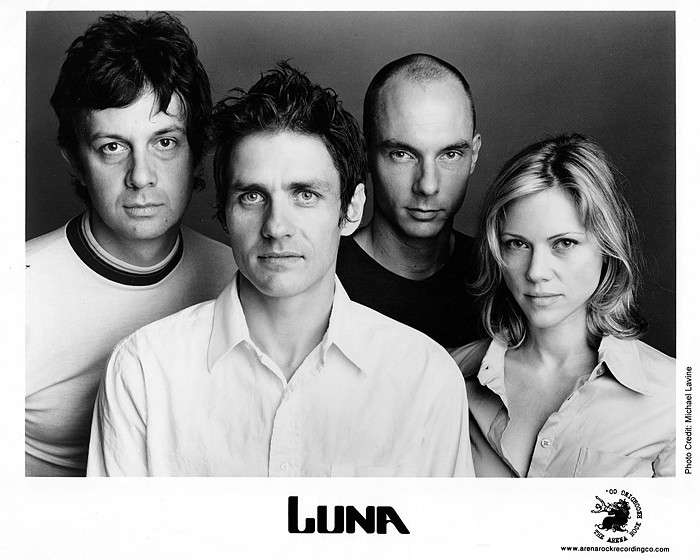
After the rousing success of our first breakdown here on the kibbitzer, we have doubled down on the form.  Here we will be exploring two incidences of stage banter by musicians captured on live albums.  We will look at Matthew Houck from Phosphorescent introducing his band, and Dean Wareham from Luna riffing with a French audience.  Phosphorescent and Luna are two of our most beloved bands, and the proto-thesis of this piece is that through their stage banter we can see into the core of what makes Matthew and Dean who they are as artists and entertainers, and in so doing discover anew what makes them great.  Stage banter, in short, may be the royal road to stylistic explication.

That all sounds pretty good, though we aren’t actually going to start with stage banter. Instead, we will take a quick stroll through the archives, back to 2009 when we published a little piece on our first blog, Classical Sympathies called “Curtis John Tucker Had a Lot to Do With It.”  Around this time, I was interested in artistic communities, artistic communes really, I guess.  My Dinner with Andre was a huge influence.

Around that time I was also listening to a bit of Giant Sand.  Giant Sand is an ever-evolving group of musicians around the enigmatic Howe Gelb, a shape-shifting Southwest troubadour who makes a lot of music, some of which is really good.  On the record Cover Magazine, the Sand covers a Kris Kristofferson song called “The Pilgrim (Chapter 33)“.  It is this song that the Curtis John Tucker piece took up.

The themes that occupy a Gemini through life, though certainly never stable, do have a certain macro-coherence.  Such is it with stage banter—our current focus calls back to this little piece on Giant Sand.  What follows then is a re-write of the original piece as an introduction to our main topic.


Re-write of “Curtis John Tucker Had a Lot to Do With It;” original version July, 2009.

On Nothing Left to Lose, a Kris Kristofferson tribute album, and later collected on Giant Sand’s Cover Magazine Howe Gelb covers the song “The Pilgrim (Chapter 33).”  You may know the song; it goes:

he’s a poet/ he’s a picker/ he’s a prophet/ he’s a pusher/ he’s a pilgrim and a preacher and a problem when he’s stoned/ he’s a walking contradiction/ partly fact and partly fiction/ taking every wrong direction on his lonely way back home.

Yeah, you know the one.

It’s a good song, and Gelb turns in a sound version.  But it’s his spoken introduction that really peaks my interest.  On Kristofferson’s original he name-checks a number of folks who “had something to do with” the genesis of the song.  Gelb repeats the original name-checks, slightly out of order, before listing a set of artists that he, Gelb, learned the song for:

Well, I guess when Kris wrote this song he wrote it for Chris Gantry–he started out doing it though by–ended up writing it for Dennis Hopper, Johnny Cash, Norman Norbert, Funky Donny Fritts, Billy Swan, Paul Seibel, Bobby Neuwirth, Jerry Jeff Walker.  Ramblin’ Jack Eliot had a lot to do with it.

Me I ended up learning this song for Vic Chesnutt, Jason Lytle, Evan Dando, Polly Jean, Paula Jean, Patsy Jean, Juliana, Victoria, Bobby Neuwirth, Bobby Plant.  Curtis John Tucker had a lot to do with it.

The alliterative Bobbys and the matching of Ramblin’ Jack Eliot and Curtis John Tucker make this speech into a mini-poem of sorts, and we know many of the protagonists.  Hopper and Cash of course; Jerry Jeff Walker and Ramblin’ Jack Eliot are folk singers, older than Kristofferson; Bobby Neuwirth is a folk singer, multimedia artist, and Dylan confidant in Don’t Look Back,  Funky Donny Fritts is a session keyboardist, and I believe Norman Norbert and Billy Swan were session musicians as well.  Paul Seibel was also a folksinger–I don’t know him; maybe you do.  Kris’ meaning is pretty clear—a song like The Pilgrim doesn’t come from nowhere, and the folksingers he learned from are portals back in time to an earlier tradition to which he generously pays tribute.

Not being myself a 70’s session musician completist I did have to look up a few of the names.  The Gelb names are more familiar, expect one.  Vic Chesnutt, Jason Lytle and Victoria (Williams) are folk singers (or were, as sadly Chesnutt has passed).  Evan Dando, Juliana Hatfield, and P.J. Harvey are/were alt-rock superstars.  Bobby Plant would be Robert Plant of Led Zeppelin fame, Bobby Neuwirth is Bobby Neuwirth.

But here’s the point, after listening to Kristofferson and Gelb name-check Funky Donny and Curtis John, I feel an affinity for them–were I to bump into Funky Donny in an airport bar or lounge his presence would resonate with an essential familiarity.  Even if I didn’t know precisely that it was he, I would recognize immediately that he was indeed funky, not to mention a serious problem when he’s stoned.  And Curtis John Tucker, well, his role is still opaque to me, but he clearly had a lot to do with it.

What both singers hint at in their evocation of the circumstances surrounding the creation of a song is the presence of community behind the music.  Behind or beside every Kristofferson is a Norman Norbert, behind every Dylan a Bobby Neuwirth, every Gelb a Curtis John Tucker.  In 2009 I wrote that “this thought fills me with a little jealously and a little sadness; I’m not at all sure that such communities of practice are as common as they once were; (there is) something about the atomisation of human affairs in the first world in the 21st century means that the idea of an artistic community where minor but still vital players such as Norman Norbert is no longer viable.” Today, although this statement still rings somewhat true, things appear rather different to me.  It seems that at least two things are occurring: first the internet has evolved such that any artistically minded person can find a niche community(s) that fits their style, and live with a foot in this community.  The second is that an apparently opposite, and actually concomitant, vitalisation of local community is underway all over the world, and a vitalised local community by necessity contains a vitalised local artistic scene.

Whatever the case, the humanity and camaraderie inherent in the spoken introductions to The Pilgrim remind us that artistic communities are vital in the creation of lasting artistic production–Neuwirth may not have been essential to Dylan’s art in the mid-60’s, but he was instrumental to its vitality; Kristofferson wrote “The Pilgrim” but it wouldn’t have been as good without Paul Seibel.  And as for Curtis John Tucker, well he had a lot to do with it.


On the spoken introduction of the band Phosphorescent by Matthew Houck between the songs “Joe Tex, These Taming Blues” and  “Los Angeles,” from Live at the Music Hall.

On side two of Phosphorescent’s majestic 2015 live album Live from the Music Hall, the band plays a song from their 2005 album Aw Come Aw Wry, called “Joe Tex, These Taming Blues.”  Houck’s early Phosphorescent albums are interesting–they are more ambient and keening than his mature work and some of the songs are really long.  Joe Tex is one of the better early songs, and Houck puts a little something special into the first couple lines on the live version: 

Is it ever gonna not be so hard to see you around/ or am I really really really really gonna have to really gonna have to really have to leave town

Houck is a master at harnessing the power of repetition—here each “really” takes on its own character and valance.  The band gives an excellent performance, which goes for about 4 minutes.  It is apparently the second last song of the night, because at the end of the song Houck moves to introduce the band.  Here he goes, as the band chugs on behind him:

Brooklyn, that’s Scott Stapleton playing that piano right there…

The first “Brooklyn” is loaded with import–Houck is going to drop some wisdom on the folks tonight.  Stapleton plays a few understatedly beautiful lilting keys and…

Brooklyn, that’s David Torch playing that percussion right there…

Torch gives a little maracas shake, right on time, as Houck establishes the rhythm and flow of the introductions.  The basic elements include a “Brooklyn,” which shifts in valance a little each time, and the band member playing “that (instrument),” “right there.”

Brooklyn, this is Rustin Bragaw playing that bass guitar right there…

A slight shift in the pattern–probably Rustin is standing next to Houck.  Bragaw drops a couple of notes on his funky bass and on we go–naturally, the bassist gets the lowest key introduction.

Brooklyn, Christopher Showtime Marine playing those drums right there…

Houck reaches for a higher register here, both on the slightly more breathless and rushed “Brooklyn” and an uptone delivery of Marine’s nickname.  Another shift in the pattern–Marine has a moniker.  Showtime delivers a healthy drum piece and…

Brooklyn, the trigger finger Ricky…Ray…Jackson playing that guitar and that pedal steel right there, come on…

We’re getting there.  The crowd is excited for this one; the pedal steel player is clearly a star.  Houck pauses a beat on each name, “Ricky…Ray…Jackson, come on,” and the come on is both an entreaty to the crowd and also a general “come on can you believe this guy!” from the lead singer.  Pedal steel is no joke.  Also, Ricky Ray’s nickname comes before the name–he is in fact the trigger finger here tonight, his birth name is just data.

The trigger finger plays a couple of high notes and…

Brooklyn, last but certainly not least, the best looking one in the group, Joe Help, playing those keyboards right there, come on.

No fuss around the two-syllable “Joe Help,” which Houck delivers as if it was one word.  Joe Help and Joe Tex, good looking guys that’s all.

I can’t tell you what a pleasure this has been y’all. Thank you for being here. Hope you come back again.  We’re going to play one more song; thank you guys so much again.  This is a song called Los Angeles; this is how it goes.

And the band plays a stunning closer.

=====

So what’s going on here?  On the one hand, Houck is just introducing the band like any other bandleader might.  However there are layers to what he is doing that are really interesting.  First, the introductions take up a good 2 minutes 20 seconds, more than a third of the 6:13 running time of the track.  Second, the whole thing is a mini-performance in and of itself.  It has an introduction, momentum, a high point at “the trigger finger Ricky Ray Jackson,” and a come down in the clipped, humorous Joe Help introduction.  Houck is doing a little “bit,” where each introduction, although seemingly quite similar, is actually it’s own piece, with his own special kind of appreciation for each band member. Read more