My Time At Northern Arizona University Interlude and Part V: Return to Japan and Year II Term I

Interlude — Return to Japan, Winter 1999

I flew back to Japan in early December ’99, eleven months after Flagstaff, twenty six years ago today.

My girlfriend — soon to be my wife — met me in Kumamoto and before we went anywhere near a city office we took a bus tour of Kyushu. One of those packaged trips where the landscape is real but the schedule isn’t — temples, viewpoints, souvenir shops engineered into the route because somebody is getting a cut. I’ve never liked bus tours. Too passive. Too commercial. A landscape you watch instead of inhabit.

The first night in the hotel we were intimate for the first time in a year. It was good enough — tentative, self-conscious on my part, like we were remembering choreography rather than improvising. It would all come back pretty quickly.

After the tour we stayed with her parents in Uto City — small house, tatami floors, her childhood bedroom upstairs. We shared a single futon where she had slept alone as a girl. I remember the narrowness of it, two adults lying in a past built for one. The walls thin, the air still, her parents downstairs, in their own world.

.We went to the city office the first week of December and signed the papers — no ceremony, no white dress, no crowd, just bureaucracy, and permanence I suppose. A moment small in appearance and enormous in consequence. One pen stroke and we weren’t dating across continents anymore — we were married.

I flew back to Arizona before the semester resumed. I was a married man. Small ring. Big life. My cold room waiting.

That was the hinge — Japan in winter, Flagstaff in spring, and me between two homes that I didn’t yet know they would trade places for good.

NAU Year Two — Term One

I flew back to Spokane that winter the same way I had the year before — no plan except back to NAU and see what I could do. The red Toyota pickup was waiting for me, still running, still mine, connecting Washington and Arizona. I drove south again — long highways, cheap motels, maps instead of GPS, how I knew what I was doing I have no idea.

Flagstaff was colder that winter, or maybe I had just forgotten what dry cold felt like. I didn’t keep the old room near campus, and I didn’t want to. I spent two nights in a budget hotel, stretching my graduate-tutor income across meals and rent in my head. Still — I was back, and that is what mattered.

A classmate pointed me toward a woman named Bev who had a room for rent. She lived twelve minutes from campus. She has a big house — divorce settlement money, and a shoo downtown that sold wood furniture she built by hand. The furniture was bad, and she told had sold exactly zero pieces. That alone told me she was operating on a different financial zone than the rest of us.

I moved in. My own room, my own bathroom, access to the kitchen, $700 a month. Not luxury, not struggle — just workable. I drove to campus every day, which meant less drinking, more structure. Only once did I drive home drunk, and it scared me enough to make sure it stayed a single incident. Mostly, I left the truck downtown and taxied home, or I didn’t drink at all.

Academically, the rhythm was set — Said, Ray Huang’s 1587, Braudel, Portelli, more Bourdieu when I could manage it. The hardest class was Bob Baron’s Marx seminar. Everything else felt manageable, maybe even easy when I had momentum. My friendship with Mandiola deepened that semester — sharper, closer, more real — the two outsiders orbiting the same department.

That was also when I noticed Sonia. First as a presence — around campus, then behind the counter at the organic market I could barely afford. The book van outside sold $1 paperbacks, and I bought more of those than groceries. We exchanged looks — recognition, curiosity — but nothing more. Later I realized she was an undergrad in the Post-War German History class I lectured in. That alone helped keep the boundary clean.

By late fall the loneliness was real. I was married, but alone. She missed me. I missed her. She was thriving at work — promoted to Head Nurse at 24 — and still, distance was beginning to feel like erosion rather than opportunity. So we made a plan:

So in the Fall of 2000 my wife would come to Flagstaff and take part-time English classes. We would be in the same place again.

Around that same time the last of my Hamilton debt — $17,000 — was paid off by her or by her mother. I’m still not certain which. Either way, relief arrived quietly. I would repay it not as a transaction but by building a life — covering everything from 2002 onward.

And that was the first term of year two. Cold roads, heavy reading, a quiet spark at the edge of ethics, and the decision that distance had served its purpose.

My wife would come next term.

My Time at Northern Arizona University Part II: The Other Graduate Students

Note: This is Part II of my series on my time at Northern Arizona University between 1999-2001. This post takes up the other graduate students in the History Department. Part I, Decision and Arrival, can be found here.

NAU — The Graduate Students

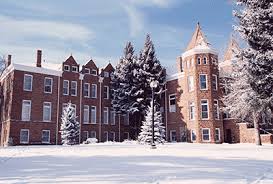
The History Building was located near the northeast of campus, and as I mentioned in Part I it was mere minutes for where I was staying in my first year of the program. There was one graduate office on the second floor — a narrow room with four aging computers, a stubborn printer, and more bodies than desks. Some students shared chairs. Some wrote standing up. You could hear arguments through the walls, even with the door closed. It wasn’t glamorous, but it was the whole ecosystem: every thesis, every grudge, every friendship, every theory, all pressed into what was a pretty small space.

Cindy

The center of the room was Cindy. Early thirties, beautiful, charming, half-brilliant and fully aware of her own gravity. She studied the Southwest like almost everyone else in the cohort, but she made scholarship look like a party you had to be invited to. Men tried. None succeeded. She never dated within the department, but she flirted like a form of cultural exchange — a compliment, a smirk, a dismissal, repeat.

A number of us would go bowling from time to time, and when I bowled a clean 200 one night (still my best score ever) she called me Zen — partly for Japan, partly for the way I moved through things without forcing them.

As mentioned, Cindy flirted lightly with all the single guys in the department, and she and Mandiola had a particular dynamic going on. More on that below.

Lance and Gretchen

Orbiting Cindy were Lance and Gretchen, a long-term unmarried couple renting a big place in the low hills behind campus. Lance was military reserve — rigid posture, some money behind him. Gretchen was smart and generous; they held Thanksgiving at their house and the whole department came. It was clear to me, however, that she lived in Cindy’s shadow a fair bit.

Their relationship read like a stable table with a crack underneath. They had been together for a while at that point, though I don’t believe it ultimately survived.

Dave Diamond, Patrick, and Gary

At the other end of the room sat three men who could fill a bar with argument, and did.

Dave Diamond — mid-fifties, blue-collar history etched into him. Fishing boats, oil platforms, mines. He smoked dope daily like other people drink coffee. His thesis was on one apple orchard. Not agriculture policy in general — one orchard. He traced labor, yield, frost, policy, immigration, machinery, exploitation and renewal through a single patch of earth. That was Diamond: narrow focus, infinite depth. He was grumpy in the best possible tradition, and as I’ll mention later hooked me up with a little green from time to time, and I liked him.

Patrick was about twenty-two, a conservative, and worshipped Ronald Reagan. He believed the free market solved more problems than it created. Diamond thought Reagan had gutted the working class and could give footnotes from memory. They shouted at each other constantly, sometimes in the office, more often over drinks— full volume, full conviction — then they would move on like nothing had happened. They weren’t enemies. They were the ongoing argument.

Gary stood between them philosophically but never took the middle. Libertarian, Western-minded, big on personal risk and responsibility. Motorcycle helmets should be optional, ICU bills be damned. A man should be free to crack his skull if he wants to. You couldn’t move him. His logic was dry and clean. I wrote about Gary and his helmet policy at length here, and here is an excerpt:

Later that year Gary’s brother, also a biker, died in a motorcycle accident on a New Mexico mountain. It was a sad day for the department and for Gary. His brother was a biker and a cop, and I happened to walk past the church where the funeral was being held. There were dudes in Hell’s Angels jackets and cops in dress uniform side by side. Gary came by the graduate student office a day or two later. Yeah, he said, a funeral like that is the only time you’ll see bikers and cops side by side. He talked about his brother and how much he loved his motorcycle. I offered my condolences, but then curiosity got the better of me, as per usual.

“Gary, I have to ask, was your brother wearing a helmet?”

“Of course not. He died like he lived, free.”

“Does the accident make you think any differently about helmet laws?”

“If anything, it makes me more opposed to them. The right to ride without a helmet is what makes a biker a biker. Without that, we have nothing. My brother would feel the same.”

The three of them — Diamond, Patrick, Gary — were a triangle of conflict that never quite resolved. I liked them all in different ways and they all added color to the department.

Scott Fritz

Then there was Scott Fritz — early thirties, soft-spoken, spaced-out, gentle. Loved Las Vegas with an almost devotional sincerity. Not for gambling. For cocktails at 3 a.m. in glass palaces of light. He was in line for a major scholarship until Mandiola took it out from under him. I’m not sure what Scott was studying, but probably the American Southwest as well.

Mandiola

Mandiola and I were the outsiders. Not Southwest scholars. He was studying semiotics. I was studying Asia, oral history, and collective memory.

He was born in Chile, raised in LA, carried two languages without ceremony. His mind was fast — too fast in many ways. He had been married, and at this time was seeing P., an English professor who was at NAU on sabbatical. I met her twice; once over pizza with other members of the department and once more. We didn’t like each other at all, which Mandiola found hysterical. That was him: always drawn to drama — either generating it or laughing at it.

He was the loudest voice in the room. His banter with Cindy dominated the grad office for weeks — compliments tangled with insults. It wasn’t romantic. It was force meeting force, and they both held their ground. I also wrote about becoming friends with Mandiola in my piece I Have a Crush on Katie Park of the Bad Moves; here is a little bit of that:

A good friendship, in my opinion, is one where no matter how long you and your friend have not hung out, if you see them it’s as if not a day has passed. With this sort of friend, I’ve found, there is between yourself and them something fundamental shared. It can be anything really. For example, I first met my good buddy when we were both in graduate school in Arizona, and at first I thought he was a total dick. He was loud, interrupted people constantly, and loved being the center of attention. One night we were drinking as a department and he started razzing me there on the street, just casually insulting me left and right. Suddenly I got where he was coming from. This was, in fact, his way of offering to be friends. Once I understood this, I began to give it right back to him. Called him every name in the book. And he ate it up. By the end of the night we were fast friends and have been ever since, because we share an understanding that our friendship is based, in part, on ripping on each other.

Me

I was twenty-four, newly returned from Japan, married but alone in Flagstaff. I ran most mornings, didn’t drink in my tiny freezing room, and wanted to get straight As. And I got them, with just one A- to keep me honest I guess.

Summary

  • Cindy had presence.
  • Lance and Gretchen had the house on the hill.
  • Fritz had Vegas dreams.
  • Patrick had Reagan.
  • Gary had principles made of stone.
  • Diamond had an orchard.

And Mandiola and I — for all our differences — were the sharpest minds in the room, and it is he that I would spend the most time with and remember the best.

My Time at Northern Arizona University Part I: Decision and Arrival

Dateline: Kumamoto, Japan. Fall of 1998.

I am living in a small apartment near downtown, tatami under my feet, a low loft overhead, the city moving quietly outside. I’d been teaching English conversation long enough to know I was going nowhere in that job. It wasn’t a crisis; it was a slow stalling-out. Good enough money, students I liked, but no real future. A life you could idle in forever.


Most nights I sat on the floor with a notebook, paging through information on American graduate programs. I wasn’t dreaming about tenure, an academic ladder, or a nameplate on some elite office door. I wasn’t trying to become a history professor at all. What I wanted was simpler and sharper: a way back to the U.S., a life I could actually live inside, and a path that might let the woman I loved come over later, maybe as a nurse, once her father’s condition — only after marriage — was met.

I emailed Tom Wilson, my old Asian History professor from Hamilton, and asked if he would write on my behalf. He agreed, and somewhere out in the system his recommendation went off to people who would never meet him. He also wrote back: don’t go to Northern Arizona; go to Chicago, my school. You can become a professor. It was kind and sincere and completely beside the point. He was thinking career. I was thinking oxygen.

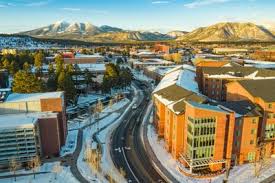
The search itself was slow. I compared cities, programs, costs, climates. When I landed on Northern Arizona University and started looking at Flagstaff, it just felt right: high desert, pine trees, a small city you could walk, not a sprawl you endured. The history program was solid enough, and it wasn’t a teaching-credential track. It looked like a place where I could move forward, not just sideways.

When the offer came back, it was more than just admission. NAU gave me a scholarship and in-state tuition, even though I had never lived in Arizona. That got my attention. Schools don’t hand out cheaper rates to out-of-staters for fun. For whatever mix of reasons — Japan, Hamilton, Tom Wilson’s letter, my file on someone’s desk — they wanted me. That was enough.

I packed up my life in Kumamoto, said goodbye to Washington — my second English conversation school, not the state — and flew back to Spokane. From there I bought a red Toyota pickup for four thousand dollars from a teacher’s husband at St. George’s; he was a cop. It was almost all the money I had. I drove away with a truck, an acceptance, and not much else.


The road south was long and winter-empty. I followed a paper map through states I barely knew, slept in a couple of cheap motels under thin blankets, and kept going at first light. The truck held together. I did too.

Early January, I rolled into Flagstaff. Cold air, bright sky, nothing arranged. I had no housing lined up and almost no cash. I parked on campus, put on black trousers, a black turtleneck, and a black blazer, and walked straight into the History building like that was a normal thing to do.


Karen Powers, the chair, treated it as if it was. I told her I’d just arrived and had nowhere to stay. She didn’t flinch. A friend of hers, she said, had a room to rent a minute from campus, three minutes from the department. We walked over.


It was a small back bedroom, six hundred a month, a parking space in the yard, and a shared bathroom with the guy in the next room. No kitchen, no run of the house. Not ideal. But it was available, and it was there.

I took it on the spot. That same day, I moved in.

On Gillian Welch and John Innes’ Wedding (with a cameo from two Jewish revivalists and the Sabian Symbols)

New Note: My great friend John Innes and his now wife Kristi’s wedding in August 2018 in Redfish Lake, Idaho was ultimately defined not by chronology but by attunement: the way memory moves not as a straight line but as a series of charged returns to people, places, and emotional registers that refuse to sit still. The Idaho weekend is never just “what happened,” but how it felt to drift between social orbits without fully belonging to any single one of them—listening more than participating, absorbing more than declaring, and finding meaning in the small overlaps where lives briefly align before separating again. In that sense, the writing itself behaves like Gillian Welch’s line: “I wanna do right, but not right now”—a suspended ethics of attention, where clarity exists, but timing remains its own force.

Epigraph I:

Take a look on your wedding night
in your wedding book —
see what name I signed.
— Paul Westerberg, “Nobody”

Epigraph II:

I wanna do right / but not right now.
— Gillian Welch, “Look Out Miss Ohio”

Gillian Welch: Look Out Miss Ohio

The singer/ songwriter Gillian Welch writes characters who are honest long before they are virtuous. “I wanna do right, but not right now” from “Look Out Miss Ohio” (Soul Journey, 2007, track 1) isn’t a confession — it’s a stance. The speaker understands the weight of responsibility, feels the moral horizon, knows exactly what she should be doing.

She just isn’t there today.

There’s no apology in the line and no rebellion either. It’s human suspension — the gap between intention and timing.

That’s why this line belongs at the start of the story of John Innes‘s wedding to his now wife Kristi up in Redfish Lake, Idaho. The entire weekend lived inside that same tension: wanting to be steady, grounded, present, clear — but feel ever so gently tugged in the direction of just a little trouble. Fatigue, history, travel, and emotion all pulled on us at the wedding, and Gillian Welch speaks to that moment better than anyone.

Gillian Welch is at her sharpest when she performs micro-anthropology — cataloguing the small human behaviors that make a place feel alive. “April the 14th” {Time (The Revalator, 2001, track 5} is basically a field report: burned couches, local bands, odd events held in anonymous spaces. It’s observational, almost ethnographic, but warm.

What you get is:local color, emotional temperature, social microclimates, and.the way a place feels from the inside, not the map.

And when I travel I enter the micro-anthropologist mode, big time. April the 14th has the band out in front from Idaho and the girl passed out in the backseat trash. I have all the wonderful, strange, moving, funny, and sometimes sad recollections from the weekend at Innes’ wedding.

CHAPTER 1: ARRIVAL IN IDAHO

I flew into Idaho from Japan via L.A.. late in the day on I think it was a Friday in early August, 2018, and checked into a roadside motel. Nothing memorable about the place except proximity, but it was pretty nice, had a pool I didn’t use, and provided the privacy I needed.

I dropped my bags and went out for food. There was a taco spot near the motel — simple, quick — and I ordered tacos and a beer. I remember listening to the locals around me. They were fascinating in that regional, unselfconscious way: talk I don’t hear in my normal life, a small window into Idaho that I only caught by overhearing. I was mostly fascinated by how people made a living up here. I didn’t join in. I just listened.

After eating I walked back to the motel and slept. Not deeply, not badly — just normal. In the morning I woke medium early to catch the bus up to town. Travel mode. No rush, no drama.

CHAPTER 2: THE MARKET, THE BOOKSTORE, THE JEWISH PAIR, THE STARBUCKS SINGER

I got into town around 10:30 and walked over toward the open-air market. It was already busy — not crowded, just alive in that small-town summer way. Stalls with produce, crafts, the usual mix of local pride and tourist bait. I didn’t buy anything. I wasn’t really looking to buy; I was just passing through.

After a lap of the market I headed to a bookstore — the small independent one you always find in places like this, curated enough to be interesting but not pretentious about it. I browsed for a few minutes and then bought a copy of the Sabian Symbols, an astrological work from Elsie Wheeler from the 1920’s that was channeled and all about symbolism of each birthday. I was actually looking for this exact book, so it felt just a little fated.

I took the book and my suitcase and walked a few blocks until I found a coffee shop with outdoor seating. I was reading, or trying to, when a couple about my age — maybe a little younger, late thirties — stopped near my table. This was a couple, a man and a woman, and they said to me right away:

“Are you Jewish?”

I said no. I told them I was reading the Sabian Symbols, and they said, “Oh,” in that way people do when they’re trying to place you — trying to make sense of a stranger’s choices. It turns out that they were on a sponsored trip around the American West and their job was to “find Jews and remind them of their obligations.” This seemed like a pretty good gig to me, and I said so.

This all led to a short conversation, maybe five minutes at most. We talked about astrology — nothing deep, nothing personal, just the light kind of chat you have with people you’re never going to see again. They were curious, open, friendly enough. Then they left. No strong emotion, no lesson, no coincidence. Just a small morning encounter in a small Idaho town.

After the coffee and the brief conversation with the Jewish pair, I walked over to the reception site — the place where the wedding reception was set to happen. It was closed when I got there. I’d misjudged the timing. Nothing was set up yet, no people, no noise, just an empty space waiting for the event to begin.

With time to kill, I headed to Starbucks. Small-town energy — a mix of locals, travelers, and people who look like they’ve been sitting in the same chair since breakfast.

Inside, there was an older guy, late 50s or early 60s, and he was singing for the store. No stage, just a dude with a guitar case in the corner. Seeing him made me think of Bruce Innes, John’s dad who had had so much success with the band The Original Caste with his then wife Dixie, and had a hit song called “One Tin Soldier.” However, Bruce’s life had taken several turns, and in his later life he was performing for rich people’s parties in and around Sun Valley. Bruce had had a bad accident when he was struck by a car a few years prior to this, and I think he was retired from full time gigging, and it occurred to me that Bruce was but one or two steps up from the Starbucks player. Must be a tough life I thought, unstable gigs, possibly no insurance, no security, just the hustle and the tunes What did he make? What were his days like? Did he have other work? Did he play this store every day? A million little questions on how people make ends meet in this mountain town.

I stayed put at Starbucks for a while because it was still early and the reception wasn’t set to start until 6 PM. A few hours of nothing in particular — just sitting, watching the door open and close, letting the day stretch out around me. Small-town time. Travel time. The kind of hours that don’t count as waiting because you’re not in a hurry.

People cycled through the Starbucks — commuters, tourists, locals who clearly had a routine. I stayed at my table, read a bit, drifted, watched the singer come and go in my peripheral vision. He had his own rhythm, his own orbit, and I stayed in mine.

At around 5:45, I headed to the restaurant where the reception was to be held. People were starting to gather, the early movements of a wedding weekend folding into place: staff preparing, guests milling around, the faint hum of logistics turning into occasion.

Nothing dramatic happened on the walk over. It was simply time to join the weekend.

CHAPTER 3: THE RECEPTION


When I got to the reception area around 5:45, the first familiar face I remember seeing was my mom. That made sense — she was the one I could approach without any social calibration. I wanted to let her know, gently, that I hadn’t gotten any clear information about the actual start time. I’d been floating most of the day. No ride, no schedule, no coordinated entry — just me making my way through the town, the market, the bookstore, and the Starbucks hours. It wasn’t an apology. Just a check-in.

She took this in, and I shifted from solo traveler to being folded back into the fabric of the weekend, embedded in shared, and in my case somewhat distant, history. At the reception, the clusters formed naturally—Spokane people on one side of the small garden, Hamilton College people on the other, with the familiar drift between them. My brother Mike and Mason Anderson were from Spokane by origin but moved easily in the Hamilton orbit; they had enough cross-history with John, and I to did as well.

There were appetizers going around, the kind people take absent-mindedly while scanning the crowd. Early reception energy—light, warm, slightly chaotic but in a pleasant way. The food was amazing and I learned that Bruce Innes has paid for the reception while Kristi’s parents covered most of the wedding. Given what I knew of the two families relative finances, this seemed reasonable.

It was time for dinner, which was steak and lobster with plenty of drinks for all. I ended up sitting with Marc Campbell, my close friend from Hamilton, and his wife, who happened to be Jewish herself. At some point I told the story of meeting the Jewish couple that morning—the pair who stopped at my table outside Starbucks and asked if I was Jewish, and then shifted immediately into a short, funny, totally nonchalant conversation about astrology when I told them I was reading the Sabian Symbols.

When I finished the story, Marc didn’t miss a beat. He looked at his wife, grinned, and said:

“Yeah—she needs some reminding.”

And everyone cracked up.

It was one of those jokes that lands because it’s affectionate and slightly self-incriminating, and because everyone in the circle understands the marriage dynamic without needing it explained. It was warm, disarming, and exactly the kind of humor that loosens the first hour of a reception.

Around me the conversations deepened. The clusters held but bled into each other just enough—the Spokane families, the Hamilton set, and anyone else in the Innes inner-circle. After a few hours the reception wrapped and it was time to take the bus up to Redfish Lake where the wedding would take place.

CHAPTER 4: THE BUS TO REDFISH LAKE AND DRINKING AT CAMP


There were two buses to Redfish Lake and we left the reception around 8:30 PM. On the bus I ended up talking to Claire Innes, John’s sister, for the first time at any real depth. That was nice. The bus gave us that suspended space where small talk can turn into something more—a 40-minute window where you’re not going anywhere except where the bus is going, and conversation happens because there’s nowhere else for the energy to go. It wasn’t all that deep, but it was real.

The landscape started to shift as we got closer—pine, lake light, that kind of thing. I was tired and slept a little on the 90 minute drive. People on the bus were in a good mood, half-travel, half-weekend, half-wedding expectation. When we arrived at Red Lake, the bar was open. Open open.


The open bar was one of those facts that tells you everything you need to know about the atmosphere at camp. It was close to 10 PM when we dropped our bags and hit the bar. It was: this is where people gather; this is where the weekend lives.

Now I know for sure that Mason, Mike and I were drinking at the bar that night and I think perhaps John Slack and Chris from Hamilton were there but I may be conflating this night with the next. As Ian Murphy, my great friend from Hamilton says, “Matthew is the writer; he’s allowed some artistic lefts.” In any case, we were all drinking pretty heavily but the alcohol was moving through me like water and did so all weekend. I guess I was just keyed up and the booze couldn’t touch me. Mason, on the other hand, was another matter.

Mason Anderson via Group Chat: I got trashed the night before the ceremony and couldn’t get out of bed day of, I struggled through ceremony in bad shape, didn’t feel good during dinner, gave my speech after Kristi’s brothers but before Marc. Hangover immediately lifted after speech, I drank a normal amount ceremony night after that speech fog lifted. Matt, you saw me drinking after the speech and kind of warned me to be careful considering my condition just a few hours earlier, but I knew I wasn’t going down that path two nights in a row.

Now the artistic left — was Slack there? I tend to think maybe no because Slack and Chris and Brett Stratten were staying in a cabin up in the hills above the camp, but I remember so vividly drinking with Slack that night and/ or the next that I’ll put it here. Let’s place Slack here on night one because on night two there was a lot of other action that will distract from the focus and attention that Slack deserves.

So, Slack was already drinking heavily by the time the bar pulled into focus, and as he drank, he talked about San Francisco. Not the postcard version — the part he lived through. He told me how the city burned him out, how by the end it felt unlivable: the homelessness, the open drug use, people using the bathroom on the street. He’s socially liberal and doesn’t posture about politics, but he said plainly that the city’s condition broke something in him.

He had been working in micro-tech, something with a social angle to it — not pure profit, but not nonprofit either I gathered— and that sector has its own kind of moral exhaustion I guess. Slack carried that. He said San Francisco didn’t just overwhelm him; it took something out of him that he was still trying to get back.

He was still coming down from that era, still coming to terms with what those years did to him. He wasn’t dramatic about it, but he was pretty emotional, and I could see he had been through it. I had been through it too, and was about to go through it more, so I could empathize. Red Lake wasn’t just a wedding for him; it was one of the spaces where he could be himself without any excuse.

We all wrapped up the session sometime after 1 AM and went to our rooms.

CHAPTER 5: NIGHT ONE / MORNING ONE


Night one at Redfish Lake, I slept almost not at all. I shared a room with Mason, and he had his sleep apparatus going — loud, steady, intrusive in a way that made real sleep basically impossible. A whole machine-respiratory rhythm filling the cabin. Anyone who knows that sound knows it’s not malicious, it’s just incompatible with light sleepers. I spent most of the night drifting in and out of shallow sleep, more tired than asleep.


Mike slept well. He was in the other bedroom, and he hadn’t had too much to drink that night, so he got a full night’s sleep — or close to it. Different room, different conditions.


When the first real light came in, I got up. No point in staying in bed when there’s no sleep left to chase. I threw on shorts and ran down to the lake to swim. The water was freezing — the good kind of freezing — the kind that shocks everything awake and resets the system. I didn’t warm up first, didn’t hesitate, just ran and got in. It was early enough that the camp was quiet, no one moving yet, just the trees, the air, and the cold water.


After the swim I ran barefoot through the camp back to the cabin — towel, shorts, nothing else — the same way you do when you’re in a place that isn’t yours but feels momentarily free.

Breakfast opened at I think 7:30, and I went right when it did. I was one of the only ones up. The only people I saw were Marc and his family. Everyone else was sound asleep. That was morning one: no sleep, cold lake, early breakfast, chatting with Marc in a quiet camp.

CHAPTER 6: LATE MORNING INTO AFTERNOON


After breakfast with Marc and his family, I walked back to the cabin. By then more people were starting to stir — my mom and dad, Mike, and Pat’s family. They weren’t heading to the lodge for breakfast; they were eating from the coolers and provisions they’d brought in their cars. That’s the Spokane way, the camp way — practical, self-contained, familiar. I’ve never been a cooler person, but it works for them.

Mike wasn’t eating. He never eats in the morning — at least not in that era. Morning food wasn’t part of his rhythm. He would eat later, and when he did, it would be a lot at once, not spaced out across the day. At some point I noticed Mike and my mother talking off to the side. It was a complex financial discussion — one of those conversations where you catch only the edges and know immediately you’re out of your depth or simply not part of that pattern. Their tone made it clear it was serious but controlled. I didn’t follow the content; it wasn’t for me.


The late morning drifted into early afternoon. Everyone was in their own pre-wedding mode — some getting ready early, some not ready at all, the usual mix of prep and pacing.

I just hung around, balanced between worlds, waiting for the time to come. I didn’t need anything, didn’t have anywhere particular to go. Eventually the clock got close enough to the start that it was time to get dressed.


I got ready and headed over to the wedding site a little before 4 PM. Early enough to be in place, late enough not to look too eager. The air had shifted — you can always feel when the wedding part of a wedding weekend is starting to switch on.

CHAPTER 7: THE WALK TO THE WEDDING/ THE WEDDING


When it was finally time, I left the cabin and started the walk to the wedding. It was about twelve minutes from the camp down to the beach — long enough to feel like a transition, short enough to do alone without thinking about it. I walked by myself.


That was fitting. The whole weekend had that shape for me — moving between people, never fully anchored in one group, carrying my own thoughts through the motions. Halfway down the path, I saw Brett Stratten.

I hadn’t expected to run into him in that exact moment, but there he was — familiar posture, familiar presence. And the first thing out of my mouth was:

“Is that Brett motherfucking Stratten?”

That line is the real bond — twenty years of friendship in five words. He grinned, and we slipped into step together, the two of us walking the final stretch as a pair. When we reached the wedding site, we filtered into the group. I wasn’t a reader — Mike, Mason, and Pat were. Those roles made sense: they fit the Spokane-Hamilton-family lattice in a way I didn’t. I was a guest, and that was correct. I was there for John, not for ceremony.


The air had that pre-wedding calm — the quiet before everyone stands, the moment where the lake holds all the sound and the trees feel like part of the architecture. People found their seats. The energy settled. And Brett and I took our place in the gathering, ready for the ceremony to begin.

The ceremony itself is mostly a blur in my memory. I remember pieces, impressions, more than the sequence and exact events. Everyone did great — the readers, the families, everyone who was part of the choreography.

John was nervous as hell, but he handled it beautifully. You could see it in his posture, in the way he looked out at the crowd, in the way he held himself steady against the moment. There’s a specific kind of nervousness that comes from caring deeply and wanting to do something right. That was John’s energy that day.

Kristi seemed solid — grounded, composed, exactly where she needed to be. She moved through the ceremony with a steadiness that matched the setting: the water behind them, the small arc of guests gathered, the quiet confidence of someone marrying the person she loves in a place that fits her life.

Everything went smoothly; nothing slipped. The ceremony did what ceremonies are supposed to do: mark the moment and then move everyone into the next phase of the evening.

After that, the energy shifted — the applause, the small laughter, the collective exhale. The blur dissolved into the flow of the reception and the night that followed.

CHAPTER 8: THE AFTER-PARTY AND THE NEXT MORNING


The after-party started early — before 5 PM — under the tents near the reception grounds. People drifted in from the ceremony, and the energy shifted from formal to loose almost immediately. The crowd was a mix of Hamilton, Spokane, family clusters, and random older people whose connections would make sense if you’d grown up in that world. A few were old teachers, including Betty Barber, which was great. I was hungry.


For the main course we had to choose between salmon and beef; I went with salmon. The food came quickly, and so did the drinking. Slack was drinking heavily right away.


Mike was drinking too, but looser, easier. John Innes’ cousin Dean was drinking heavily as well — loud, emotional, open. At some point Dean made an unscheduled speech. It went off the rails fast — not in a dangerous way, just in the way emotional men sometimes lose the center at weddings. People were kind, but there were raised eyebrows. It shifted the entire energy of the party.


After that, John and Kristi went back to their cabin early. The rest of us — the Hamilton group, Spokane, and Dean — moved to the bar. And this is where the night flipped.

Dean threw enough money down to cover almost the whole night for the entire crew.

No one argued. No one questioned it. It was pure chaotic generosity, the kind that can only happen in the exact emotional temperature of a wedding after-party. The vibe became: “Fuck it, we ball.” That’s the only accurate summary.


Before the bar a funny thing happened. Mike and I queued up to sign the wedding book came around. People signed it the way people do — polite congratulations, best wishes, etc. But I had a streak of mischief so I reminded Mike about the line from Paul Westerberg cited in the epigraph. And MIke, in a move that still makes me laugh, simply signed the book “Paul Westerberg.”


Not a joke spoken out loud — a joke left on the page, waiting for someone to notice days or weeks later. The perfect nod to Nobody, the perfect Westerberg gesture, and the perfect imprint of that night. It belongs in the wedding book exactly as he wrote it.

As the night deepened, the drinking picked up across the whole crew. Slack kept going hard — the same charged San Francisco energy running through him that had been simmering all day. He was animated, intense, talking fast and drinking fast.

Mike and cousin Dean were off together, and their drinking got a little messy — not dangerous, not out of control, just loose, loud, and emotional in that late-night, wedding-weekend way. Two guys feeding off each other, the volume creeping up, the edges getting softer.

I spent the night toggling between groups — Slack on one side, Mike and Dean on the other, Brett drifting through, Chris keeping steady because he was driving. People peeled off slowly as the hours passed. No one announced they were leaving; the night just thinned out.

By around 4 AM, we finally got everyone to bed. Not gracefully. Not disastrously. Just the natural end of a long, full, chaotic night.

I never slept. Not a minute. By the time the light began to seep into the cabin, I was fully awake in that wired, hollow way that comes after a four-hour slide from loudness into silence.

At 7:30, when the lodge opened for breakfast, I went straight there. I was one of the only ones up.

Marc and his family were already eating — they were always the earliest risers on that side of the weekend. The familiarity of their presence steadied the morning. We talked a little, easy and tired, and at some point Marc asked if I’d be willing to read his wife’s book — about “having it all” before it was published. I said I would.

A little later, my mom came to see me off. She’d woken up early just for that. My dad was still asleep, which was also completely in character.

Breakfast was $15, exactly the kind of fixed-price lodge breakfast that hits differently when you haven’t slept at all. Coffee, food, quiet. Functional. Then it was time. My ride to the airport came right on schedule, and I said my goodbyes and headed out.

CHAPTER 9: THE AIRPORT AND THE FLIGHT TO LA


The ride to the airport was quiet in the good way — that calm, reflective space after a long wedding weekend. The Idaho morning was bright, the roads almost empty. I felt the exhaustion from two nights of missing sleep in my bones, but it was a clean exhaustion, not tangled with worry or unfinished business.

At the airport, I ran into Marc and his wife again. Small airport, small plane. We talked a bit before boarding, easy conversation, the soft landing after a heavy night.


We boarded the small plane to Los Angeles — the kind with low ceilings and propellers you can almost feel spinning. The flight wasn’t long, but it was enough to let my brain downshift.


When we landed in LA, I headed to the airport hotel I’d chosen on purpose — two days of decompression before returning to Japan. It wasn’t a luxury choice, it was a necessity. I really wanted to decompress before flying home to Japan. The hotel was simple and clean, but it had no restaurant, just fast food outlets underneath.


So I walked about five minutes to a Marriott or something similar — one of those mid-range hotels with a real restaurant, real food, real wine. I sat at the bar, ordered beer and then wine, and ate properly for the first time in a day.

Then came the real moment of the night: I started reading Dean Wareham’s Black Postcards on my Kindle. And then, after finishing it, I immediately reread it in the hotel room. I devoured it.


It was so honest — painfully, beautifully honest — the kind of musician’s memoir that refuses myth making and instead talks about life exactly as it is lived. I’ve always resonated with Wareham’s tonal clarity: the unsentimental self-observation, the refusal to lie to himself on the page, the gentleness underneath the bluntness. That book met me right where I was — exhausted, reflective, a little cracked open. It’s one of those moments where the right book finds one at exactly the right emotional aperture.


I read until I finally slept properly — the first real sleep since the motel three days ago.

CHAPTER 10: RETURN TO JAPAN

I returned to Kyoto and re-entered my summer break. In two weeks I was scheduled to attend the Faculty of Astrological Studies at Oxford for summer school so I was getting geared up for that. That is a whole other story, so in the meantime thanks for reading about John Innes’ wedding.

Dedication:

For John and Kristi —
it was one hell of a wedding.

And for the Jewish couple —
thanks for talking a little astrology with me, baby.

On the Safe Space (aka Corner Girl)

Epigraph:

Heather, remind me how this ends

Dolorean

I’ve been trying, lately, to understand the early spaces in my life where safety and memory intersect — the brief rooms in time that opened something in me before I even had language for it. Some moments don’t turn into stories, but they still leave a shape. This is one of those moments.

The Christmas Dance wasn’t held in the high school that year at all. It was downtown, in one of those Spokane venues that tried to look older than the city around it — chandeliers, carpeted floors, bathrooms with real mirrors. We had been dancing all night, the kind of teenage drifting where everyone is shy and bold by turns. And then it was over, and people were peeling away, breaking into rides and carpools and winter air.

She and I ended up in the hallway.

We were already wrapped into each other — that soft, accidental teenage cuddle that feels both unplanned and absolutely right. The near-near kiss wasn’t something either of us aimed for. It was just the way our faces happened to be turned, the warmth, the pause, the sense that one more inch would have turned the moment into something else entirely. Instead it stayed suspended, held in the exact shape it needed to take.

Her name was Blythe.

I used to say I wrote poems “for girls who told me they were pearls,” but that was just self-mythology. In truth, I only ever wrote for one girl. And she never asked for anything.

Most of the real fun we had wasn’t during dances at all. It was in the gym at Saint George’s in Spokane. For high school games, boys and girls, the gym would be packed, and during the boys games she would sit in the front-row, and every single time I did anything even vaguely ok — a decent pass, a shot that actually went in, a little rebound — I’d look over mid-play and smile, and she’d already be smiling. She was in my corner before I understood what that meant. She didn’t push. She didn’t need to. She just stayed.

There was a suspended electricity in those years — innocent, unclaimed, lightly glowing. We never really dated. We never made a move beyond the moment that almost happened and didn’t. But she calibrated me. She was my corner girl. And that mattered.

The ending came the way some endings do when you’re young — clean as scissors. She graduated. Life tilted. The season shifted. Nothing dramatic, nothing painful. Just a quiet snap. A door that didn’t slam but simply shut.

I miss what we could have been, but I don’t regret a thing.
Some connections aren’t meant to become stories.
They’re meant to become orientation.

I don’t go back to that time for longing. I go back because that was the first time safety arrived before desire — and because that pattern stayed with me. It’s how I know when something is real.

I don’t need anyone to remind me how it ends.
A hallway, a graduation, a clean break.
What I keep going back for isn’t the ending anyway.
It’s the part before — the girl in my corner,
the room that opened in front of me,
the feeling I carried forward.


Dedication


For Blythe, who stood in my corner before I even understood what that meant.

Note: If you enjoyed this piece, you might also enjoy the ones below which take up somewhat similar themes.

https://thekyotokibbitzer.com/2026/02/10/simona/

On Childhood Abuse

Epigraph I:

Well it’s always been my nature/ to take chances/ my left hand drawn back/ while my left hand advances.

Bob Dylan, Angelina

Epigraph II:

I’m glad I did it all then you know that I didn’t listen/ glad I went and got it all outta my system.

My Morning Jacket, Outta My System

Epigraph III:

It’s never been a fair fight.

Craig Finn. It’s Never Been a Fair Fight

Note: What follows is a direct and somewhat graphic account of my experience of being badly abused as a child. The abuse happened at the hands of my aunt’s (father’s side) first husband when I was six and seven years old in the very early 1980s. As I will recount, the abuse had deep and lasting impacts on me and it took me years, decades, to process and understand what it did to me.

I make absolutely no claim to be an expert on childhood abuse or to speak to anyone else’s experience of this all too common problem. My experience is my own, and that’s all I can really speak to. In addition, although he conducted what I consider to be vicious abuse of my brother, I understand that anyone impacted by abuse may categorize events in different ways. Therefore, I will allude only glancingly to these aspects, and only through the lens of how this impacted me personally. I will, inevitably, make reference to the role of my parents and my aunt in the events, and as I mention below when I began to fully process the abuse I directed a certain degree of anger at these adults. As time has passed, however, I have come to understand that although they were not able, for whatever reason, to stop the abuse, and although it was conducted, at least in my case, in their direct view, the primary responsibility lies with the abuser himself.

In early 2024 I did seek out legal advice from a firm that specializes in childhood sexual abuse, and they gave me a professional and compassionate hearing, however in the end declined to take up my case and directed me instead to the Washington State public system. I will detail those events below. I am not currently pursuing legal avenues, and instead am hoping that by making this public I can finally fully exorcise the lasting damage that was done to me. I take full responsibility for the content of this piece.

I was born in South Bend, Indiana in June of 1974. My father was pursuing a master’s degree at the University of Notre Dame at the time, however when I was around six months old my parents moved back to Santa Clara, California, where my mother’s parents were living. My father did not finish his master’s at Notre Dame because of some issue with the faculty there, however I believe that he did later finish at Santa Cruz University in California. In an interesting side note I also pursued a master’s degree, in History at the University of Northern Arizona in the late 1990s, and did not finish because of a conflict, or disagreement, with my thesis advisor. Life has a funny way of repeating itself.

We lived in Santa Clara until I was, I believe, two years old, and then my parents moved us to Gig Harbor, Washington. My understanding is that my father wanted to move to Washington State to be closer to his sister, Nancy (Nan) Thomas. Nancy is my father’s younger sister and it was she, I believe, that introduced my father to my mother, who was Nancy’s friend when they all attended Santa Clara University.

It just so happened that Nancy was then married to a man who would become my abuser. My first memory of this guy, just some fucking guy as far as I’m concerned, is also my first real memory in life (Note: This has since been revised to happier memories when I was two in California. I will detail these at a later date). It goes like this:

When I was very small, two going on three, (I know I was three in Gig Harbor because my brother Mike was born there in June of 1977), we lived in a small house right next to the Pacific Ocean. What I recall about this time was, we had a dog. My father was working at a nearby lumberyard which I occasionally visited, and, I think, was sort of seeking what would be the next stage of his life. My parents had no money, but I didn’t understand this at the time.

My first vivid memory is of playing a game called “Shovelman” on the beach of the Pacific Ocean right by our house. I don’t remember the rules of Shovelman, but it involved a frisbee. However I do recall, with absolute precision, that one time the frisbee was thrown out into the ocean, which, in western Washington, was very cold. This guy ordered me to swim for the frisbee, and when, predictably, I struggled mightily to reach the frisbee in the freezing water and came out gasping for breath, he laughed and laughed, like a total sadist. Of course I didn’t know what a sadist was at the time, but I recognized his essential nature even then. I knew for sure at that moment that he was a bad guy. Now I don’t fully know if my father and mother liked this guy or considered him a friend. All I know is, he was around some. I later learned that my uncle Kim did not like him. Hated him in fact. Kim has had an interesting and varied life, and is my godfather. I love Kim, and salute him here for his instincts.

While my first memory is a negative one, presaging as we will see later events, I also have positive memories from this time. I recall right around this time the days after my brother was born that some of my mother’s family visited us including her mother Barbara and her youngest sister Leslie. My mother has nine siblings, all, fortunately, still alive and all wonderful people. Leslie was quite young at the time and is only a few years older than myself I believe. Anyway, I looked up to Leslie and thought she was cool, so when we all went to a restaurant I sneaked under the table and pulled on her leg, like little children do. I wanted her attention, but I’m not sure if I got it. As I mentioned above, I also recall visiting my father at the lumberyard and thinking he also was cool and had a cool job. I don’t know if he would remember that line of work the same way or not.

In any case, my family did not stay in Gig Harbor very long, and pretty soon we were back in California, this time in Palo Alto, which is a town adjacent to Santa Clara. These days, Palo Alto, Santa Clara, and the nearby San Jose are well known for being sort of the heart of Silicon Valley, but back then they were not really on the map in that way. My mother was working as a swim coach at Stanford University and my father was working at a school in town. This was a wonderful period of my life as I spent time at Stanford hanging around the pool while my mother was coaching which was a total blast. I may recount this time in more detail at a later date. Suffice it to say I was an outgoing, curious, and happy child, eager to see what the world had in store for me. As I will detail below, I believe I was at this time essentially an extravert, and the primary, from my perspective, impact of the later abuse would be to turn me into a somewhat serious introvert. Over and above all other impacts of the abuse, this is the one I resent the most. It is my belief that my natural extraversion, my interest in and ability to trust and like people, was deeply damaged by the actions of my abuser. I will never fully get over this aspect of the situation, and have had to work very, very hard to overcome what I see as a kind of inversion of my essential nature.

In the year 1980 my family moved once again, this time to Spokane, Washington. And again, this was, as I understand it, for my father to be closer to his sister who was by that time working as a young lawyer in the same city. My abuser was also, I believe, a lawyer. It is certainly true that, although younger, Nancy was on the upswing of her career much more quickly than my father. Other than that I don’t know the exact reasons for this following of his sister, however my father found a teaching job at St. George’s school in Spokane WA. I would attend St. George’s from grade 1 through 12, and have written rather extensively about my time there. Interested readers can find these pieces on this blog.

St. George’s was great, and overall, although my parents were still broke, I had a good childhood. However, there was one dark aspect, which was we would regularly visit Nancy and this guy at their home on the South Hill in Spokane. On occasion, but much less regularly, this couple would visit us at our house on the outskirts of the city. I believe that all of the incidents recounted below occurred in 1980 and 1981. I know this for a couple of reasons, first of all because the volcano Mount Saint Helens erupted in 1980 and at Nancy’s house in the backyard there was a big craggly rock which had pockets of ash residue from the eruption and this event was a big topic at the time. Secondly, I know that I was enrolled in first grade at St. George’s so I must have been six. My brother Mike then would have been three going on four. I wrote about my wonderful brother Mike before here.

The action at the Thomas household there was not all bad–there was the ash and a nearby park called Cannon Hill Park which was pretty cool. The house on the South Hill was pretty large, certainly larger than our own, and I got to know my cousins, both of whom were even younger than myself. I would say we visited dozens of times over the course of a year or two, and I remember the house and its environs well. In any case, ash and parks aside, the main event at the Thomas house turned out to be regular and vicious abuse from this guy which was conducted in full view of everyone in the living room of the house. After a little dinner or whatever, he would “tickle” myself, my brother, for extended periods of time, 20-30 minutes at a time or so or more. This “tickling” was not in any form playing; it was, instead, a totally vicious fully body attack.

It was absolutely excruciating and horrible, and he would touch every single part of my body and dig his fingers in as deep as possible and screw them around. At first I didn’t know what to make of this or what to do, but overtime I came to hate this so much that I began to fight back. My bother Mike, at three, was obviously in no position to do so, and so he, in my recollection, absolutely got the worst of this. The amazing thing, amazing to me to this day, is that the three other adults, my mother and father and this guy’s wife, would just stand there and watch. There is something deeply sad about adults that cannot, for whatever reason, stand up to a bully.

Later, much later, I would confront my mother about all this, and she has since said that her inability to intervene is one of her deepest regrets.

What I think happened was, when I began to fight back he gave up on abusing me. Also, I suspect, from my understanding of abuser psychology, that I had, essentially, “aged out” of whatever his mindframe was. My sense is that he preferred his victims to be as helpless and defenseless as possible, and I was no longer fitting the bill.

Now I should note that I don’t know what his problem was or what he thought he was getting out of this abuse. And, I don’t wish to research it really, because I would prefer to spend as little time as possible engaging with people of this sort. What I know for certain is that in the early 1980s he was a brutal man. That’s a flat fact.

I will detail what I understand to be the effects on myself and some of the later repercussions of his abuse a little later, but first of all I will recount my attempts to engage with the legal system over this issue, as well as indicate, in a compressed form, how I came to process and understand the abuse. Now I wish to tread carefully here because I do not want to get sucked into a discussion of, or really even take a position on, what is known as repressed memory. I understand that this topic is highly controversial, with strong opinions on all sides. Although I have read a lot, I am not an expert on psychology, much less a topic as fraught as this. What I will say is that I never repressed the memory of the abuse; if you had asked me at any given time in my life if I was brutally attacked by this guy, in full view of other adults, I would have said absolutely yes, that happened. However, what took time was to fully work out how deeply and negatively it impacted me, and in what ways. I think I always intuited it, however it took a some very difficult life experiences to get to the bottom of it.

The first of these was in 2010, when I was already 36 years old. It was at that time that I began spiraling into my memories and trying to uncover some kind of nugget that would unlock a range of issues that I was encountering at the time. In this year, and on a few other occasions after, I would, somewhat obsessively, go over events from my sixth and seventh year, always centering around my aunt Nancy, her house, and what I perceived to be my essential ambidexterity. More on this point later. At some point I intuited, in some way, that Nancy may have had a miscarriage before the birth of her first child. My mother, when I asked her, confirmed that this had taken place, and asked how I knew it. I didn’t, but somehow worked it out, just because I was spending so much time thinking this constellation of issues. It was also during this times that I was also trying to get to the bottom of my sexuality, my introversion, and my inability to learn to play the piano because of seriously weak left hand. I will detail these, and other aspects of the situation, later.

In any case, it was in 2022 that I fully worked out the effects that the abuse had had on me over time, and began, for the first time, to identify as a sexual abuse survivor. This was not something that I wanted to have to incorporate into my personal narrative, however it became inevitable. I looked into the law in Washington State, and as I recall, as I understood it at the time, the statute of limitations was three years which began at the moment that the victim became fully aware of their injury. From my point of view, I became fully aware of my injury in 2022, and therefore, after thinking about it, I contacted a law firm in Washington State in early 2024. This firm specialized in sexual abuse cases, however they were pretty high-powered and I got the impression from their website that they specialized in suing institution, schools, churches, and the like. On this basis I felt that it was somewhat unlikely they would take up my case–there was probably just not enough percentage in it. Nonetheless, their website indicated that they meant business, so I contacted them and a little while later had a call with an associate from the firm. He told me that all the lawyers were all in court, but gave me a full and proper hearing and said that he believed my story. He also asked me an interesting question, which was, did the abuse happen more or less than 20 times? I said my recollection was that yes, it was over 20 times, and he took a note of this. My impression was that for a case like mine, 20 times was some kind of legal threshold.

A few weeks later the associate got back to me via email. As mentioned above, he said that the firm would decline to take my case, and recommended I pursue the public legal system. He also said that he hoped that I got justice. I thanked him in response, and was not overly disappointed because it was clear that their focus was on institutions and I had done my best.

Now I should mention that before I contacted the law firm, I did Google this fucking guy to see what came up. It is true that I didn’t want to, and still don’t really want to, research this guy, however I wanted to see at a minimum what internet footprint he had. It turned out that he had a website where he described himself as some kind of elite international mediator and the site had a picture of him climbing a mountain.

So I guess he leveraged his legal background into some kind of mediation role, which is guess is all related. And I have no idea, he may have had success as a mediator. In actual fact, it is not even my intention to comment at any length on who or what he is today (I do believe he is still alive). Is it possible that he cleaned himself up in some respect? Maybe. But actually I doubt it. It is my opinion that someone as twisted as he was in his early adulthood doesn’t really get over that. I can forgive a lot of things–for example taking a life when drunk driving or something of that nature. Mistakes are made, and mistakes of that sort are basically unintentional. However, this guy, with his Shovelman action and his subsequent brutality, in my estimation, doesn’t really ever get better. Am I being unfair? Perhaps. It’s really hard to say.

In any case, although the firm turned me down, reaching out to them was one of the best decisions I have ever made. By attempting to work through the legal system I had engaged, fairly and properly, with the available channels, and I felt immeasurably better about the whole thing. I did not at that time decide to pursue the public option, because I am not located in Washington State, and I didn’t feel that taking this route any further would be feasible. Instead, I thought about using the only real platform I have, my blog, to discuss my thoughts on the matter. Aside from the legal system, this seemed to me to be the next best thing. And so here we are.

In what follows I wish to enumerate what I understand to be the long-term effects of my abuse. I will, in the interest of my own privacy and that of others, somewhat undersell these, and it is not my intention to burden the reader with my own issues over time. In addition, I would like to make clear that my encounter with the legal system as well as my somewhat long-gestating decision to go public with my story and my conversations with a few trusted friends, has ameliorated, to a significant degree, the effects of my personal abuse. In any case, here is what I feel:

From my earliest memories I wanted to play the piano. When I was in first or second grade I asked my mother to enroll me in piano lessons, and she declined, saying that she had no money. A few years later my brother Mike was allowed to take cello lessons, and he became very good very fast. I would wait in the car while my brother and my mother attended cello lessons there on the South Hill in Spokane. Naturally, I never held this against my brother, who was an awesome musician and I was proud of him, however I did resent, for a very long time, being denied the opportunity to pursue music. It is my understanding that although people can learn music at different times in life, the earlier the better. I have subsequently tried to learn the keyboard by myself, and somehow was able to play “Ocean Rain” by Echo and the Bunnymen and “Someone I Care About” by the Modern Lovers. I didn’t dominate Ocean Rain, but it was least passable. But I still can’t really read or play music. I wish, beyond almost anything, that I would have had the chance to learn music at an early age.

However, my strong feeling, underlined by years of reflection and memory spiraling, is that the abuse from this guy essentially crippled my left hand. I don’t know exactly how I know this, but I have always known it. So I probably wouldn’t have been that great at piano anyway, because the left hand is pretty important. And, the destruction of my left hand is intimately and directly connected to my crippled ambidexterity, the inversion of my extraversion, as well as my somewhat ambiguous sexuality. I will take up these issues in turn.

First, as mentioned above, there was as a result of the abuse, a long-term impact on my left hand. When I was very young, maybe four, I learned to swim in the pool at Stanford, and my strong memory is that I was developing a certain ambidexterity. Ambidexterity is related in some respects to dyslexia, which I also have a very mild case of, however it also has some salubrious aspects, for example in sports and music. I understand this intuitively and experientially, that I could have been a good piano player if I had been able to take lessons and if I had not been, essentially, crippled from the repeated abuse. Thus, the epigraph from Dylan at the top. It’s been forty-five years since I was first abused by this guy, and only now is my left hand, so to speak, advancing.

Second, as mentioned above, I was an extravert until I was six years old when I suddenly turned into a pretty serious introvert. Now, I absolutely don’t wish to imply at all that one orientation is better than another–both have great strengths. However, the issue here is that I was one thing, and then became another. And this corresponded to, and was directly triggered by, the abuse that I suffered. Somehow, the repeated and protracted abuse turned me inward. I no longer trusted people, essentially, and although I still liked, and still do, many people, something went off track. This is the reality.

Third, I know for an absolute fact that my sexuality was deeply damaged by this guy. I can’t speak to any other form of abuse, however my case of male on male abuse, which I experienced (and yes I absolutely categorize my experience as sexual abuse because he violated every part of my body including my genitals) led to a situation where it became for me, once I hit puberty, somewhat difficult to work out what my sexuality was and in what direction it ran. I was, without doubt, attracted to girls, however in the back of my mind there was some kind of lingering, and for me uncomfortable, ambiguity, as well as a distinct inability to approach women. Now, I fully understand that the inability to approach women is a pretty normal aspect of heterosexual teenagers, who are awkward at the best of times, but I always sort of knew that there was something else going on. And what was going on was, my genitalia was first touched, without my consent obviously, for lack of a better term, by an adult male when I was six years old. And that damaged me.

In essence, and again I know instinctively this to be the case, the abuse was so brutal and so protracted that it in essence re-wired my brain. As with repressed memory, I don’t wish to take a strong position on the issue of the left-brain and the right-brain, although I have read and deeply integrated the book The Master and His Emissary, by Iain McGilchrist, which goes into this matter in far greater detail, and with far greater insight, than I will ever achieve. What I know is the connections within my brain were compromised, indeed fractured, by the abuse. Although it took years for me to fully work this out, I have absolutely no doubt that this is the case. It was, in my belief, something about the pure digging of his fingers that did the damage. Some light tickling would not, I think, have had this effect, however the intensity and depth of his action were, I know, of a completely different level.

Basically, I have been dealing with long-term PTSD from his attacks, dealing with it for 45 years in one way or another, and 15 years more intensely. And you might say “hey there Matty baby, how do you know that your supposed ambidexterity, for example, was so compromised by this guy’s actions?” In answer to that I wish to make an analogy to the trans issue. Now I understand that the trans issue is highly political, and, I guess, pretty complex. However my basic stance is as follows: I do not believe that people who experience feelings of transsexuality or gender dysphoria, basically, are “making it up.” A few may be for various reasons, however I believe that, generally speaking, the set of feelings they experience are real, and also because I have never had them, I cannot speak to them with any authority. Such it is with sexual abuse. The feelings and understandings of sexual abuse victims are, I believe, valid and need to be understood in the context of they know best what the effects of the abuse were. While I cannot perhaps fully explain how I know what I know, I know.

I have a few final thoughts. The first is, as mentioned above and now underlined, my bother also received similar treatment from this guy. I mention this only because I have, ever since, suffered from a great degree of guilt for my inability to protect my brother at that time. Indeed, it was primarily this aspect of the situation, more so than the damage to myself alone, that caused me to direct my anger at my abuse to my mother, and by extension my father and Nancy. I still carry this guilt, and don’t suppose I will ever really get over it. Once again, there is a good deal more to the story, but that’s all I really wish to say at this point.

The second refers to what I described above as the re-wiring of my entire mind and body. Perhaps there is a more clinical term for this, and I think that psychologically alert readers will be able add understanding around this, however this is the best description I can offer. As the second quote at the top of this piece alludes to, the life we have led has been what it has been. I strongly wish I had never suffered the abuse that I did, and have had as a consequence, some of the most painful imaginable situations, however the mere fact that I cannot turn back the clock means that the life I have lived will have to stand, in all of its glory and messiness. This is true, I think, for everyone.

Finally, and I am in no way being facetious, I want to express my deep indebtedness to the great Craig Finn. Craig Finn is the lead singer and songwriter from the bands Lifter Puller and The Hold Steady, and has also had a substantial solo career. One of my very favorite songs of all time is “It’s Never Been a Fair Fight,” by Finn, which I have written about at some length here, and from which the third epigraph for this piece comes from. I am not exaggerating when I say that Finn saved my life, probably more than once, and has, over time, helped me overcome the damage done by my abuse. Thank you Mr. Finn sir. I love you.

I will choose to close this narrative here. As alluded to above, there is a lot more to the story, however in the interest of the privacy of a range of people, not the least of which myself, I will desist. What I would like to say at the end of the day is, abusing a child is never a fair fight. And so I am deploying the only real tool that I have at my disposal, my pen. Thank you for reading.

Dedication:

For all my friends and family who have taken such good care of me over the years. I wouldn’t be here without you. And for Spencer Krug, the greatest piano player I am aware of.

Note: It you enjoyed this piece, you may also enjoy the other pieces below which take up somewhat similar themes.