On Comebacks and Failed Comebacks III: Amy Winehouse

Note: This short piece reflects on the strange artistic tension that defined the career of Amy Winehouse: the way her extraordinary authenticity as a singer seemed inseparable from the personal instability that surrounded her life.

Winehouse’s music—especially the songs on Back to Black—felt at once timeless and painfully immediate. The sound drew deeply from earlier traditions of soul and rhythm and blues, yet the emotional directness of the lyrics was unmistakably modern. Few artists have managed to sound so rooted in musical history while simultaneously feeling so exposed to the present moment.

The song Rehab stands as the clearest example of this tension. Its humor, defiance, and vulnerability all exist in the same breath, making it one of the most distinctive pop recordings of the twenty-first century.

Like many listeners, I remember the late-2000s period—particularly around the Glastonbury era—when Winehouse was both an enormous star and visibly struggling. Watching those performances could feel uneasy, yet the brilliance of the voice was undeniable. The same intensity that made the music so compelling also made her career difficult to sustain.

This piece is simply an attempt to think about that paradox: how authenticity and self-destruction can sometimes become intertwined in the lives of great artists.

There are many great singers, but very few voices that feel instantly definitional—voices that seem to arrive already carrying an entire world inside them.

Amy Winehouse was one of those voices.

By the time her second album, Back to Black, exploded in the mid-2000s, it already felt as though she had stepped fully formed out of some earlier musical era. The sound was unmistakably rooted in Motown and 1960s soul, yet the lyrics were brutally modern—messy, confessional, sometimes almost painfully direct.

Winehouse didn’t just sing about heartbreak and addiction. She sang about them as if the audience had wandered into the middle of a private argument she was having with herself.

That tension—between authentic confession and visible self-destruction—became the defining element of her career.

You could hear it most clearly in Rehab, which remains one of the most distinctive pop songs of the twenty-first century. The song is catchy, almost playful on the surface, driven by a swinging brass section that feels lifted from a lost Stax session.

But the lyrics are something else entirely.

They tried to make me go to rehab / I said no, no, no.

It’s funny. It’s defiant. It’s also deeply unsettling, because the listener quickly realizes that the singer is not playing a character. The refusal at the center of the song is real.

In that sense “Rehab” became more than a hit single. It became a kind of thesis statement for the strange artistic space Winehouse occupied. The same vulnerability that gave her music its emotional power also exposed the raw nerves of her life to public view.

You could feel that tension during the years when she was both at the height of her fame and visibly unraveling.

The Glastonbury era captured this perfectly. Winehouse had become a massive international star, yet her stage presence could swing wildly from moment to moment. One minute she would be commanding the crowd with that huge, smoky voice; the next she might appear distracted, fragile, or physically unsteady.

Watching those performances could be oddly uncomfortable. The audience was witnessing genuine brilliance, but it often felt as though the brilliance was emerging from a life that was spinning out of control.

And yet the authenticity of the music was inseparable from that volatility.

Winehouse sang as if every lyric had been torn directly out of lived experience. There was no polite distance between the artist and the material. When she sang about jealousy, addiction, or heartbreak, it sounded less like performance and more like confession.

That quality made her music electrifying. It also made her career precarious.

Pop music has always had a complicated relationship with self-destructive artists. Audiences are drawn to performers who seem emotionally transparent, but the same intensity that produces great art can also be difficult to sustain under the glare of fame.

Winehouse lived inside that contradiction.

The tabloids followed her relentlessly. Every public misstep, every argument, every sign of physical decline became part of a growing media narrative. The spectacle sometimes threatened to overwhelm the music itself.

Yet when she stepped to the microphone and began to sing, the spectacle vanished.

What remained was that extraordinary voice: raw, soulful, and oddly timeless, as if it had traveled forward from another musical generation. In a pop landscape often dominated by carefully engineered personas, Winehouse sounded startlingly real.

That authenticity is why her work still resonates long after her death in 2011.

Many talented singers release successful albums. Only a handful manage to create songs that feel permanently etched into the culture. “Rehab” is one of those songs. The moment those opening horns start, the listener knows exactly what world they are entering.

It is the world of Amy Winehouse: funny, defiant, wounded, brilliant.

A place where honesty and self-destruction were never quite separable—and where the truth of the music was powerful enough to survive them both.

Note:

On Comebacks and Failed Comebacks II: Joe Nash

Note: This essay is the second entry in a small series called “On Comebacks and Failed Comebacks.” The first piece looked at a moral and political comeback through the career of Kofi Annan. This one turns to a very different arena: professional football.

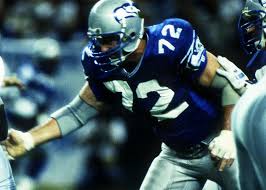
I grew up watching the late-1980s and early-1990s teams of the Seattle Seahawks, and Joe Nash was always my favorite player. Defensive tackles rarely receive much attention, but Nash possessed a peculiar form of genius—part toughness, part humor, and part gamesmanship.

The famous “trick knee” that forced him to limp off the field again and again was not simply a medical misfortune. It became a small tactical instrument, a way of disrupting the rhythm of an opposing offense and giving his defense a moment to reset. Over the course of a single game Nash might stage several miniature comebacks, disappearing briefly and then reappearing in the middle of the line a few plays later.

In that sense, his career offers a different kind of comeback story. Not the grand dramatic return that headlines sports history, but the quieter persistence of a player who simply refused to stay out of the game.

Some comebacks are dramatic.

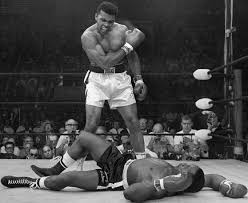
A politician loses an election and returns years later to reclaim power. A boxer is knocked down and rises again to win the fight. These are the stories we tend to remember, the great single reversals that change the outcome of a contest.

But sometimes a comeback happens on a smaller scale, again and again, inside the same game.

For this kind of comeback, few players were more accomplished than Joe Nash, longtime defensive lineman for the Seattle Seahawks and possessor of what teammates and fans came to call the trick knee.

Joe Nash was also, for reasons that will become clear, my favorite player, and in his own understated way a total genius.

To appreciate Nash properly you have to picture the Seahawks teams of the late 1980s and early 1990s. These were not yet the sleek modern Seahawks of the Legion of Boom era. They were something scrappier and stranger: a Northwest football team that still felt a little rough around the edges, playing in the echoing concrete bowl of the Kingdome, often good enough to compete but rarely treated as the center of the NFL universe.

The roster had its share of memorable characters. Steve Largent, already a legend, running precise routes and catching everything thrown his way. Dave Krieg, forever scrambling out of trouble, sometimes heroically and sometimes disastrously. On defense there were hard-nosed players who seemed built for the damp Northwest afternoons when the crowd inside the Dome could turn deafening.

And somewhere in the middle of the defensive line was Joe Nash.

Defensive tackles rarely become fan favorites. Their work is too close to the ground, too buried inside the pile. But Nash had something else going for him: the famous trick knee.

The story of the trick knee was simple enough. Nash had injured it badly early in his career, and the joint developed a habit of collapsing at inconvenient moments. One minute he would be battling a guard at the line of scrimmage, the next he would be down on the turf clutching the leg while trainers rushed out to examine the damage.

At least that was how it looked.

Nash would limp slowly toward the sideline, the injured leg dragging slightly behind him. Opposing linemen would shake their heads sympathetically. The crowd would murmur. It appeared that the veteran tackle had once again been forced out of the game by his unreliable knee.

Then something curious would happen.

A few plays later—sometimes only a few plays later—Joe Nash would jog back onto the field as if nothing had happened.

The knee, it seemed, had recovered miraculously.

Over the course of a game the sequence might repeat itself several times. Nash would go down, limp off, disappear briefly from the action, and then return again. By the fourth quarter the trick knee might have produced not one comeback but several.

Eventually the truth became clear.

The knee was real enough, but the timing of its collapse was often anything but accidental. Nash had discovered that the injury rules and clock management of the NFL created certain small openings that a clever player could exploit. A defensive lineman who went down injured could slow the pace of the offense, disrupt the rhythm of a drive, and buy his teammates a moment to regroup.

So the trick knee became a kind of tactical instrument.

The opposing offense would be moving quickly. The defense would need a breather. Suddenly Nash would be on the turf again, clutching the leg while trainers jogged out to assist him. The offense’s momentum would stall. The huddle would break. The rhythm of the drive would shift.

And then, a few plays later, Nash would return.

It was not the most glamorous form of gamesmanship, but it was undeniably effective. Defensive linemen make their living in the narrow, violent spaces at the center of the field, where subtle advantages can matter enormously. Nash had simply found a way to create one more advantage for his side.

And he did it with a kind of quiet humor. The whole thing had the feel of a running joke that everyone eventually understood but no one could quite stop. The knee would “go,” Nash would limp dramatically to the sideline, and then—inevitably—there he was again, back in the middle of the line a few minutes later.

Which meant that Joe Nash’s comebacks were not quite what they appeared to be.

Most comeback stories celebrate a single dramatic return: the fallen champion rising again to claim victory. Nash’s version was more practical. His comebacks came in small installments, scattered across the course of a game. One trip to the sideline. Then another. Then another still.

By the fourth quarter he might have staged half a dozen of them.

The trick knee, in other words, was not merely an injury. It was part of a strategy. A small deception woven into the fabric of the contest.

And perhaps that is the most interesting lesson Joe Nash offers to a series about comebacks.

Not every comeback needs to be heroic.

Sometimes the smartest players simply refuse to stay out of the game.

Some Everyday Catalyzed Emergencies

Note: The examples in this piece are drawn from moments in my own life where the structure I call a catalyzed emergency appeared in miniature.

What these moments share is not their subject matter but their pattern. A system—whether emotional, institutional, or social—exists in a temporary equilibrium. Then a relatively small catalyst activates tensions that were already present beneath the surface. Once activated, the situation accelerates and decisions that previously seemed distant are suddenly made in real time.

In each case, the catalytic moment itself was small: a candid remark during a conference break, a humorous but revealing line in a professional meeting, or a single sentence spoken in a social situation. Yet in each instance the effect was immediate. The atmosphere shifted, ambiguity collapsed, and the underlying structure of the situation suddenly became visible.

The personal examples described here are therefore not offered as dramatic events in themselves. Their significance lies in the way they illustrate, at the scale of everyday life, the same structural pattern that appears in larger historical crises.

Catalyzed emergencies, it turns out, are not rare occurrences reserved for moments of world history. They happen quietly and frequently in ordinary human experience.

Once you begin thinking about catalyzed emergencies, it becomes difficult not to see them everywhere.

Most of life proceeds in a kind of provisional calm. Conversations unfold along familiar paths. Institutions conduct their meetings, relationships drift through their usual rhythms, and the tensions that exist beneath the surface remain politely contained. Decisions are postponed. Conflicts are softened by habit. The system holds together because nothing has yet forced it to reveal its deeper structure.

Then something small happens.

A sentence is spoken a little too plainly.
A truth appears unexpectedly in the middle of a casual conversation.
Someone says something in a meeting that suddenly exposes the machinery of the institution.

The catalyst itself is often tiny compared to the shift that follows. Yet once it occurs, the atmosphere changes almost immediately. Decisions that once felt distant suddenly move into the present. The underlying structure—emotional, institutional, or relational—becomes visible.

Once you start noticing these moments, you realize they are everywhere.

I remember one such moment during a conference break with the young woman I call Isobel. We were talking in that loose, slightly intimate way people sometimes do between sessions, when the formal structure of the day has momentarily dissolved. The conversation drifted into unexpectedly personal territory, and at one point she mentioned something about her private life that was startlingly candid.

The remark itself was quiet and almost offhand. Nothing in the hallway changed. People were still pouring coffee, drifting between rooms, checking their schedules. The conference continued exactly as it had a few minutes before.

Yet internally something shifted very quickly.

A boundary that had previously existed only as an assumption was suddenly visible. The emotional geometry of the situation rearranged itself in an instant. It was one of those moments when the surface calm of an interaction suddenly reveals the deeper structure beneath it.

Looking back, it was a perfect example of a small catalyzed emergency. The remark itself did not create the tension that followed. It simply activated something that had already been present but unspoken.

Institutional life produces similar moments, though usually in a different register.

Years ago I attended a meeting where Steve Keegan, then responsible for development at the International Baccalaureate, delivered one of the most unintentionally perfect lines I have ever heard in a professional setting. Attempting to strike a tone of humility, he reassured the room that the organization should not think too highly of itself.

“We are not special,” he said.

Then, after a brief pause that only improved the effect, he added:

“Of course we are unique and special in many ways.”

The room erupted in laughter, not because anyone intended to mock him but because the remark revealed something everyone recognized instantly. Institutions often survive on carefully balanced narratives about themselves—humble yet exceptional, ordinary yet distinctive. When those narratives momentarily contradict themselves in public, the entire room suddenly becomes aware of the structure holding the organization together.

Again, the catalyst was small: a single sentence.

But in that moment the underlying psychology of the institution briefly revealed itself. Everyone in the room could see the gears turning.

The same pattern appears in more personal moments as well, sometimes with surprisingly decisive consequences.

I remember a night when a man was attempting to pick up Mariko. It was the sort of situation that unfolds quietly in bars and restaurants all over the world—nothing dramatic, just two people talking while someone else tries to determine what role they themselves are supposed to play in the unfolding scene.

For a while the equilibrium held. The conversation drifted, the man continued his efforts, and I watched the situation with the vague uncertainty that sometimes accompanies these moments. Was I a bystander? A friend? Something else?

Eventually I said something very simple.

“We’re together.”

That was it. A single sentence. A declaration that had not existed in explicit form until the moment it was spoken.

But the effect was immediate.

The conversation stopped. The geometry of the room rearranged itself instantly. What had previously been ambiguous became clear. The situation resolved itself within seconds.

Looking back, it was another catalyzed emergency. The sentence itself did not create the underlying possibility. That possibility had already been present in the emotional structure of the evening. What the sentence did was activate it, collapsing uncertainty into decision.

The remarkable thing about these moments is how small they often appear at the time. They do not arrive with the dramatic clarity of historical turning points. They slip quietly into the flow of ordinary life—a conversation during a break, a remark in a meeting, a sentence spoken in a bar.

Only later does the pattern become visible.

Most of life feels gradual while we are living it. Days follow one another in a steady rhythm. Institutions maintain their procedures. Relationships drift along familiar channels. The tensions that shape events accumulate quietly beneath the surface, rarely forcing themselves into view.

Then something small happens.

A remark.
A confession.
A declaration.

And suddenly the structure reveals itself.

The catalyst may be nothing more than a sentence spoken at exactly the right moment. But once the reaction begins, the system rarely returns to its previous state unchanged.

Note: This is Part III is our series on the concept of the “Catalyzed Emergency.” You can read the other two essays below.

On the Origin of the Phrase “A Catalyzed Emergency”

Note: The idea for what I have been calling The Theory of Catalyzed Emergency came to me unexpectedly during a moment of real-life crisis.

On a Friday morning at a conference, a young woman I refer to here as Isobel suffered a severe breakdown in a nearby park. I helped walk—at times half carrying—her back across campus so she could be seen by the astrologer and therapist Claire Martin, who was present at the event.

Somewhere along that walk, amid the urgency of the situation and the strange clarity that accompanies emergencies, the basic idea arrived all at once. It occurred to me that the crisis unfolding around us had not really begun in that moment. Rather, something latent had been activated by a catalytic event.

The breakdown itself was not the origin of the underlying instability. It was the moment that revealed it.

In that instant the pattern seemed recognizable across many domains of life. Historical turning points—from the Assassination of Archduke Franz Ferdinand to the September 11 attacks, or the emergence of HIV/AIDS—often appear to follow a similar structure: a relatively small catalytic event activates tensions that have long been accumulating beneath the surface.

The phrase “catalyzed emergency” came to me then as a way of naming that pattern. Everything written since has been an attempt to describe and understand it.

It happened on a Friday morning, walking back from the park.

Isobel had broken down there. The morning had begun quietly enough — the sort of ordinary conference morning that moves along on coffee and small talk and the mild unreality of academic conversation. People drift in and out of sessions, the air thick with polite attention and quiet fatigue. Nothing dramatic is supposed to happen in such places. The whole structure exists to keep things calm, thoughtful, and contained.

But in the park the calm gave way.

Isobel had collapsed into tears, the kind that come from somewhere deeper than embarrassment or momentary distress. It was not theatrical and it was not brief. Something inside her had broken open, and the situation shifted instantly from awkwardness to emergency. By the time we began moving back toward campus there were ambulances arriving, security personnel speaking in low voices, and that peculiar atmosphere that forms whenever a crisis suddenly interrupts the smooth surface of an ordinary day.

She was in terrible shape, barely able to walk. I put my arm around her and half carried her along the path back toward campus, toward the office where help might be found. The task became simple: keep moving, slowly and steadily, one step after another.

There is a strange clarity that sometimes accompanies moments like this. The world narrows. Conversation disappears. What matters is simply the next movement forward. Someone opens a door. Someone else steps aside. The rhythm of the morning continues around you, but you are moving inside a different kind of time.

The air seemed unusually bright that morning, the light sharp on the grass and the stone paths. I remember noticing small details — the sound of footsteps behind us, the distant murmur of voices, the quiet professionalism of the emergency crews who had arrived. Everything felt both intensely present and strangely distant, as though the scene were unfolding inside a narrow corridor cut out of the larger day.

It was somewhere along that walk that the idea came to me.

Not gradually. Not as a chain of reasoning built step by step. It arrived all at once, in the way that genuine inspiration sometimes does — a sudden recognition of a pattern that had been present for years without quite being articulated.

What struck me was that the emergency we were moving through had not truly begun that morning. The breakdown in the park had not created the crisis. Something had been building before any of us saw it. The moment in the park had simply triggered the visible collapse.

The crisis had been latent.

Walking there with Isobel leaning heavily on my arm, I realized that this structure appears again and again in human life. Systems — whether personal, institutional, or political — often exist in a kind of provisional calm. Beneath that calm lie pressures that remain invisible so long as the surface equilibrium holds. People postpone decisions. Institutions defer conflict. Emotions remain contained.

Then something small occurs.

A remark. A meeting. A moment when composure slips. An encounter that reveals what had previously been hidden.

The event itself may appear trivial compared to what follows. Yet once it occurs, the situation begins to accelerate. Decisions that once seemed distant suddenly demand immediate answers. People reveal their positions. The underlying structure of the situation — alliances, tensions, loyalties, vulnerabilities — becomes visible almost overnight.

The phrase that came to me then was catalyzed emergency.

Borrowed from chemistry, a catalyst is something that activates a reaction already waiting to occur. It does not create the reaction itself. It simply releases a process that was structurally possible all along.

Seen in this light, many of the turning points of history begin to look less like isolated shocks and more like examples of the same structural pattern. The assassination of Archduke Franz Ferdinand did not create the tensions that produced the First World War; those tensions had been accumulating for years within the European alliance system. The September 11 attacks did not invent the geopolitical structures that followed; it activated forces that were already in motion. The emergence of HIV/AIDS revealed vulnerabilities in public health and social life that had long existed beneath the surface.

In each case the catalyst was real and significant. But its power came not from its scale alone. Its power came from the fact that the system was already unstable.

That morning in the park I was not thinking about geopolitics or epidemiology. I was thinking about the young woman beside me, struggling to keep her footing as we crossed the campus lawn. The theory arrived quietly, almost as a kind of private astonishment: the same structural pattern might govern moments of intimate human crisis and the great turning points of history alike.

In both cases the underlying pressures accumulate slowly and invisibly. Life continues. Conversations proceed. Institutions function. Then suddenly something small shifts, and the entire structure reveals itself.

We reached the office where help was waiting. People took over gently and efficiently. The corridor of urgency closed behind us, and the day resumed its normal rhythm, as days tend to do.

But the idea had already arrived.

I did not yet know exactly what it meant, only that the pattern felt unmistakable. The phrase The Theory of Catalyzed Emergency came with it, as though the concept had brought its own name along.

Everything since has been an attempt to explain what first appeared in that brief flash of recognition, walking across the campus lawn on a bright Friday morning.

Note: This is Part II is our series on the concept of the “Catalyzed Emergency.” You can read the other two essays below.

The Theory of Catalyzed Emergency

Note: The concept presented here emerged from a recurring observation: certain events appear to produce consequences vastly disproportionate to their scale. Assassinations, attacks, epidemics, or even seemingly minor encounters can trigger transformations that reshape entire systems. Yet these events rarely create the underlying crisis themselves. More often, they activate tensions that already exist beneath the surface of an apparently stable order.

The Theory of Catalyzed Emergency proposes that many systems operate in a state of provisional equilibrium that conceals latent instability. Political alliances, institutions, and social relationships often persist through the management or postponement of unresolved tensions. Under such conditions, relatively small incidents can function as catalysts, accelerating processes that were already structurally possible.

Historical examples illustrate the pattern. The Assassination of Archduke Franz Ferdinand triggered a general war within a European system already strained by militarization and alliance commitments. The September 11 attacks catalyzed geopolitical tensions that rapidly transformed global security policy. The emergence of HIV/AIDS likewise revealed vulnerabilities embedded in medical, social, and political institutions.

What these events share is structural rather than causal similarity: a relatively small catalyst activates latent instability, compresses decision time, and forces a system into crisis. The theory proposed here attempts to describe this recurring pattern.

A Structural Model of Crisis Activation

Abstract

This paper develops a formal framework termed the Theory of Catalyzed Emergency, which explains how large-scale transformations in social, political, and interpersonal systems often arise from relatively minor triggering events. Rather than treating these events as primary causes, the theory proposes that they function as catalysts that activate latent instabilities already present within complex systems. Once activated, these instabilities compress the temporal horizon of decision-making and produce what may be termed a decision emergency, in which actors must rapidly commit to positions that reveal underlying structural relationships. Historical cases—including the Assassination of Archduke Franz Ferdinand, the emergence of HIV/AIDS, the September 11 attacks, and the 2008 global financial crisis—demonstrate recurring patterns in which catalytic incidents transform latent structural tensions into overt crises. The model integrates insights from historical sociology, crisis theory, and complex systems analysis.


1. Introduction

Major historical transformations are frequently narrated through trigger events: assassinations, terrorist attacks, market collapses, or disease outbreaks. Yet these explanations often obscure the deeper structural conditions that render systems vulnerable to crisis.

The Theory of Catalyzed Emergency proposes that crises arise when pre-existing instabilities within complex systems are activated by catalytic events that dramatically accelerate underlying processes. The catalyst itself is rarely proportional to the transformation it produces. Rather, it functions as a structural ignition point, collapsing decision horizons and forcing actors to reveal latent alignments.

This perspective intersects with several intellectual traditions. The sociology of knowledge associated with Peter L. Berger and Thomas Luckmann highlights how social realities are actively maintained through everyday institutional practices. Similarly, the philosophy of history articulated by Walter Benjamin emphasizes moments in which historical time is suddenly ruptured, exposing underlying tensions previously masked by routine order.

The present framework seeks to formalize these insights by identifying the structural conditions under which catalytic events generate systemic crises.


2. Latent Instability

All complex systems contain internal tensions. Political alliances, economic networks, institutional hierarchies, and interpersonal relationships operate through temporary equilibria maintained by norms, expectations, and procedural delays.

Latent instability emerges when such systems exhibit:

  • unresolved structural contradictions
  • suppressed or deferred conflicts
  • asymmetrical power distributions
  • unresolved decision pathways

These tensions do not immediately produce crisis because systems possess mechanisms of equilibrium maintenance—diplomatic negotiation, bureaucratic inertia, cultural norms, or emotional restraint.

However, this equilibrium remains contingent rather than permanent.


3. Catalysts

A catalytic event is defined as a relatively small incident that dramatically accelerates the activation of pre-existing structural tensions.

Unlike direct causes, catalysts function through activation rather than creation. They do not introduce instability into the system; rather, they trigger the release of instability already embedded within it.

Historical examples illustrate this mechanism.


3.1 Geopolitical Catalysis

The Assassination of Archduke Franz Ferdinand is widely treated as the immediate cause of the First World War. Yet the European political system in 1914 was already characterized by rigid alliance structures, militarization, and nationalist tensions. The assassination catalyzed these conditions, triggering rapid mobilization across the alliance network.

Similarly, the September 11 attacks activated structural tensions surrounding transnational terrorism, Middle Eastern geopolitics, and global security policy, initiating a prolonged transformation of international relations.


3.2 Epidemiological Catalysis

The emergence of HIV/AIDS catalyzed profound transformations in public health, sexuality, and medical research. The virus interacted with pre-existing social and epidemiological structures—dense urban sexual networks, stigmatized communities, and fragmented health infrastructures—producing a global crisis that reshaped cultural and scientific discourse.


3.3 Economic Catalysis

The 2008 global financial crisis similarly illustrates catalytic activation. Years of accumulated financial risk within global credit markets were activated by the collapse of mortgage-backed securities, rapidly transforming localized financial instability into a systemic crisis.


4. Temporal Compression

A defining feature of catalyzed emergencies is temporal compression.

Before the catalytic event, systems operate under conditions of extended decision time, allowing actors to defer commitments. Once the catalyst occurs, however, the system enters a phase in which decisions must be made rapidly.

Actors suddenly confront binary choices:

  • mobilize or delay
  • intervene or abstain
  • acknowledge or suppress
  • cooperate or defect

The system thus enters what may be termed a decision emergency, in which the range of possible actions narrows dramatically.


5. Structural Revelation

Catalyzed emergencies perform an important epistemic function: they reveal the underlying structure of systems.

During periods of equilibrium, alliances and loyalties may remain ambiguous. Crisis moments force actors to declare positions, thereby exposing hidden relationships of power, ideology, or affinity.

In this sense, catalyzed emergencies serve as diagnostic events that illuminate structural features otherwise concealed by routine stability.


6. Formal Propositions of the Theory

The Theory of Catalyzed Emergency can be summarized through six formal propositions.

Proposition 1: Latent Instability

All complex social systems contain latent instabilities arising from unresolved structural tensions.

Proposition 2: Equilibrium Maintenance

Such systems maintain temporary stability through institutional norms, procedural delays, and conflict suppression.

Proposition 3: Catalytic Activation

A catalytic event activates latent instability when it triggers processes already embedded within the system.

Proposition 4: Disproportion

The magnitude of systemic transformation following a catalytic event is often disproportionate to the scale of the triggering event.

Proposition 5: Temporal Compression

Catalytic activation compresses the temporal horizon of decision-making, forcing actors into rapid commitments.

Proposition 6: Structural Revelation

During catalyzed emergencies, underlying structures of power, alliance, and vulnerability become visible through the actions taken by actors under pressure.


7. The Catalytic Cycle

The dynamics of catalyzed emergency can be represented as a cyclical process.

LATENT INSTABILITY

STRUCTURAL EQUILIBRIUM

CATALYTIC EVENT

TEMPORAL COMPRESSION

DECISION EMERGENCY

STRUCTURAL REVELATION

SYSTEM TRANSFORMATION

NEW EQUILIBRIUM

This cycle explains why many historical transformations appear both sudden and inevitable: the underlying tensions accumulate gradually, yet the catalytic moment that activates them may occur abruptly.


8. Scale Invariance

One of the most striking features of catalyzed emergency is scale invariance. The same structural pattern appears across multiple levels of social organization.

At the civilizational level, catalytic events may trigger wars, revolutions, or global crises.

At the institutional level, leadership changes or policy decisions may catalyze organizational transformation.

At the interpersonal level, seemingly minor encounters may activate latent emotional dynamics that permanently reshape relationships.

This cross-scale recurrence suggests that catalyzed emergency may represent a general structural property of complex adaptive systems.


9. Conclusion

The Theory of Catalyzed Emergency reframes the relationship between events and historical transformation. Rather than treating crises as the direct consequences of triggering incidents, the theory emphasizes the role of latent instability and catalytic activation in producing systemic change.

By identifying the structural conditions that make catalytic activation possible, the theory offers a more nuanced account of why certain events produce transformative consequences while others do not. In doing so, it highlights the importance of analyzing not only the catalysts themselves but also the underlying tensions that render systems susceptible to catalytic rupture.

Note: This essay is Part I of our series on the concept of the “Catalyzed Emergency.” You can read the other two essays below.

In Defense of the Mendoza Line Universe: The Most Underrated Emotional World in Indie Rock

Note: This essay reflects on the body of work created by The Mendoza Line across their full run of albums from the late 1990s through the 2000s. Rather than focusing on any single record, the piece treats the band’s catalog as a continuous emotional landscape shaped by the songwriting partnership of Tim Bracy and Shannon McArdle.

Listeners often encounter Mendoza Line songs individually, but much of the band’s power emerges through the cumulative experience of their discography. Themes of adult friendship, romantic complication, and the passage of time echo across multiple records, giving the catalog a novelistic quality that rewards long listening.

The essay also briefly notes the continuing literary sensibility present in the later work of Elizabeth Nelson and her band The Paranoid Style, whose writing carries forward some of the same attention to language and emotional nuance that defined the Mendoza Line’s universe.

There are bands that produce great songs, and there are bands that create something more elusive: a world. A place listeners gradually learn to inhabit. The details accumulate across albums — the same emotional terrain, the same types of characters, the same quiet dramas unfolding in apartments, bars, late-night conversations, and long walks home after things didn’t quite work out the way anyone hoped.

The Mendoza Line built one of the most coherent emotional worlds in indie rock. Yet somehow that universe has remained strangely under-discussed. Their records are beloved by those who found them, but the band rarely appears in the simplified historical narratives that dominate discussions of the early-2000s indie era.

Which is a shame, because the Mendoza Line did something unusually difficult. They built not just songs, but an emotional ecosystem — a body of work in which relationships evolve, perspectives shift, and the same themes reappear across albums like chapters in an ongoing novel.

At the center of that universe were the complementary voices of Tim Bracy and Shannon McArdle. Their interplay gave the songs an unusual depth. Bracy’s delivery often carried a mixture of irony and quiet vulnerability, while McArdle brought a steadier, observational clarity to the band’s emotional landscapes. The result was a kind of dialogue — two perspectives navigating the complicated terrain of adulthood together.

Before we even reach the peak records, the early Mendoza Line albums already reveal the shape of the world they were building.

The band’s debut, Poems to a Pawnshop (1998), arrived like a sketchbook. The songwriting was still forming its voice, but the themes were already present: urban melancholy, friendships under strain, characters trying to maintain dignity in the face of disappointment. The album hinted at something larger than a conventional indie record. Even then, the songs seemed less concerned with spectacle than with capturing moments of emotional recognition.

That sensibility expanded on Like Someone in Love (2000). Here the band began refining the tone that would define their work: literate, quietly devastating, and grounded in adult emotional experience. The arrangements grew more confident, and the songwriting displayed the narrative patience that would become their hallmark. Rather than rushing toward climaxes, the songs unfolded gradually, allowing the emotional implications of each line to settle.

Then came the record that truly opened the Mendoza Line universe: We’re All in This Alone (2002).

This album remains one of the great underappreciated statements of its era. The title itself captures the paradox the band explored repeatedly: the tension between isolation and community, between private disappointment and collective endurance. The songs feel like dispatches from adult life — not the romanticized version pop music often celebrates, but the real thing, where people struggle to remain generous and decent even when circumstances grow complicated.

It is here that the Mendoza Line’s narrative sensibility becomes unmistakable. The songs begin to feel interconnected, as though the same characters might wander through multiple tracks. The emotional terrain — bars, apartments, quiet reflections after midnight — becomes familiar to the listener.

By the time the band reached Lost in Revelry (2005), that universe had become fully inhabited.

This is perhaps the Mendoza Line’s masterpiece. The record captures the band at the height of its emotional and musical powers. The songwriting is confident without becoming grandiose. The arrangements remain understated, allowing the lyrics and vocal interplay to carry the emotional weight.

But the Mendoza Line story reaches one of its most powerful emotional statements with the next record, Full of Light and Full of Fire (2006). If Lost in Revelry feels like a moment of clarity, Full of Light and Full of Fire feels like the long reflective walk that follows. The songs explore what happens after the drama fades — how people continue living with the decisions and disappointments that accumulate over time.

Then, in 2008, came the band’s final studio album, Final Remarks of the Legendary Malcontent. By this point the Mendoza Line universe had reached its fullest expression: reflective, humane, and quietly philosophical about the passage of time.

It is here that we find “31 Candles.”

And “31 Candles” stands as one of the greatest breakup songs ever written.

What makes the song extraordinary is its restraint. It does not rely on grand declarations or bitterness. Instead it captures the emotional reality of a relationship reaching its natural end — two people recognizing, with sadness but also clarity, that their story has run its course. The lyrics move through small observations and gestures, allowing the emotional truth to emerge gradually.

Breakup songs often dramatize conflict. “31 Candles” does something harder. It captures the dignity of acceptance.

The band’s understanding of time also finds beautiful expression in another Mendoza Line classic: “It’s a Long Line (But It Moves Quickly).” For me this song sits comfortably in my personal top fifty songs of all time. Its brilliance lies in its metaphor. Life becomes a slowly advancing line — one we all stand in as friendships evolve, ambitions change, and years pass almost without our noticing. The song holds humor and melancholy in perfect balance, acknowledging both the absurdity and quiet beauty of the situation.

Few bands have written about adulthood with this level of honesty.

What makes the Mendoza Line universe so compelling is that the songs resist simplification. Relationships in these stories are not tidy narratives with heroes and villains. People make mistakes. They try to remain kind despite disappointment. They fail and try again. The songs treat these struggles with empathy rather than judgment.

The influence of that sensibility extends beyond the band’s own records. One of the pleasures of revisiting the Mendoza Line today is noticing how its literary intelligence echoes through later projects connected to its members. In particular, the work of Elizabeth Nelson — especially through The Paranoid Style — carries forward some of the same fascination with language, irony, and the strange comedy of modern life. The lineage is not identical, but the spirit feels unmistakably related.

Looking back now, it seems clear that the Mendoza Line were never chasing the kind of breakthrough moment that defines rock mythology. They were doing something quieter and arguably more enduring. Instead of building a career around spectacle, they built a body of work that rewards listeners who return to it slowly over time.

Their songs feel less like artifacts of a musical era and more like rooms in a house one can revisit years later. The characters still live there. The conversations continue. The emotional truths remain recognizable.

In an age when so much music competes for instant attention, the Mendoza Line trusted patience. They believed that listeners would eventually discover the world they had created.

For those who have spent time there, the conclusion is obvious.

The Mendoza Line did not merely write songs.

They built a place.

Note: If you liked this piece, you may also like this piece:

On a run-in with Damon Krukowski in a Kyoto Basement

In Defense of Mayo Thompson

Note: This essay reflects on the artistic approach of Mayo Thompson and the work of Red Krayola, particularly the band’s deliberate challenge to conventional ideas of musical skill. The famous observation that Thompson plays the guitar “badly, on purpose,” often cited in critical discussions of the group’s work — including later reassessments of records such as Malefactor, Ade — captures something essential about that approach.

The phrase can sound dismissive at first, but it also points toward a deeper artistic intention. From the late-1960s underground scene through later recordings, Red Krayola consistently treated rock music less as a polished craft than as an open field for experimentation. Imperfection, disruption, and instability were not accidents but part of the aesthetic design.

Whatever one ultimately makes of the results, Thompson’s work continues to raise an interesting question: how much of what we call musical “skill” is simply a set of habits that artists occasionally need to break.

There are certain musicians whose reputations survive largely through footnotes. They appear in the histories. Critics cite them as influences. Other artists speak their names with reverence. Yet relatively few listeners spend their evenings actually playing the records.

Mayo Thompson, the guiding figure behind Red Krayola, occupies precisely that strange territory. His band is frequently described as “important,” “experimental,” or “avant-garde,” words that often function as polite signals that the music itself may not be especially enjoyable. Red Krayola records circulate through the culture like curious artifacts — admired, studied, but approached cautiously.

And the most famous criticism of Thompson’s musicianship captures the problem perfectly.

A critic once observed that Thompson plays the guitar “badly, on purpose.”

The line, often repeated in retrospective discussions of Red Krayola’s music, originally surfaced in commentary surrounding the band’s 1989 record Malefactor, Ade. Whether in a Pitchfork reassessment or earlier critical recollection, the phrase stuck because it seemed to summarize the entire aesthetic in five devastating words.

Badly. On purpose.

For many listeners the sentence reads like a dismissal. But read another way, it becomes the most accurate description of Thompson’s artistic method ever written.

Because the key word in that sentence is not badly.

It is purpose.

From the beginning, Red Krayola treated rock music not as a set of rules to master but as a field of possibilities to disrupt. When the band first appeared in the late 1960s, rock was rapidly developing its own conventions — tighter songwriting, increasingly polished production, guitar virtuosity becoming a badge of seriousness. Thompson responded by moving in the opposite direction.

Instead of improving technique, he destabilized it.

Instead of polishing songs, he dismantled them.

Instead of reassuring the audience, he occasionally seemed to provoke it.

To understand this impulse, it helps to remember the strange cultural environment out of which Red Krayola emerged. The late-1960s underground was full of what might loosely be called the freak scene — a loose constellation of psychedelic bands, communal happenings, and avant-leaning musicians who were less interested in building careers than in testing the boundaries of sound itself. In Texas, where Red Krayola formed, that scene intersected with the surreal humor and anarchic spirit of the local counterculture. Musicians were experimenting with noise, collective improvisation, and absurd theatrical gestures long before those practices acquired respectable academic labels.

Red Krayola fit naturally into that environment. Early performances sometimes resembled happenings more than concerts. Songs dissolved into noise. Improvised ensembles wandered across the stage. Audience expectations were occasionally disrupted on purpose. It was not chaos exactly — more like a deliberate challenge to the idea that a rock performance had to behave in a predictable way.

Thompson understood something fundamental about rock music that many technically superior players missed. The genre had always contained a certain productive roughness — a willingness to accept imperfection as part of its expressive vocabulary. Chuck Berry’s guitar was not elegant in the classical sense. Early garage bands could barely tune their instruments. Punk would later turn this roughness into a formal principle.

Red Krayola pushed that principle further than almost anyone else.

By “playing badly on purpose,” Thompson exposed the hidden assumptions behind musical skill. What does it actually mean to play well? To hit the expected notes? To follow the established structure of a genre? To demonstrate control over the instrument?

Or might it mean something else entirely: the ability to reshape the instrument so that it produces new kinds of thought?

Listen carefully to Red Krayola’s recordings and the supposed incompetence begins to look suspiciously intentional. The guitar lines wobble, fragment, and reassemble themselves in unexpected patterns. Rhythms appear and disappear. Melodies emerge briefly before dissolving into something stranger. The music behaves less like a traditional composition and more like an argument unfolding in real time.

The phrase “avant-rock” is often used to describe this territory, but the label can make the music sound colder than it actually is. Beneath the disruption lies a restless curiosity about what rock music could become if freed from its habits. Thompson’s playing does not reject the guitar so much as treat it like a tool for questioning the very idea of guitar playing.

Which brings us back to that famous line of criticism.

“Playing the guitar badly, on purpose.”

For some listeners the sentence still reads as an indictment. But for others it begins to sound like a manifesto. What if the deliberate abandonment of technical mastery allows a musician to explore new expressive territory? What if awkwardness becomes a form of freedom?

The history of experimental music is filled with similar gestures. Artists deliberately violate the rules of their medium in order to discover what lies beyond them. Painters distort perspective. Writers abandon traditional narrative structure. Filmmakers fracture chronology. Thompson simply applied the same logic to the electric guitar.

And the results, while sometimes difficult, have proven surprisingly durable. Decades after Red Krayola’s earliest recordings, the band’s influence can be heard echoing through the strange corners of indie rock, post-punk, and experimental pop. Musicians who grew up absorbing Thompson’s restless attitude toward form learned an important lesson: rock music does not have to choose between intellect and instinct. It can contain both.

Thompson himself has often downplayed his role in the process, describing music as merely a “means to an end.” That humility is part of the puzzle. The work was never about demonstrating personal virtuosity. It was about using the medium of rock music as a way of thinking — testing ideas about sound, structure, and audience expectation.

Which explains why Red Krayola’s catalog continues to feel oddly alive. The records are not polished monuments to technical achievement. They are documents of exploration, full of wrong turns, strange detours, and flashes of accidental beauty.

In a culture that often equates artistic success with increasing refinement, Mayo Thompson chose the opposite path. He embraced awkwardness, instability, and deliberate imperfection as creative tools.

And if that occasionally meant playing the guitar badly — well, that too was part of the design.

Badly, perhaps.

But never accidentally.

In Defense of Bob Dylan’s Voice

Note: This essay addresses the vocal style of Bob Dylan rather than attempting to summarize or evaluate his entire career. Few artists have produced a catalog as vast and stylistically varied as Dylan’s, and any short reflection necessarily highlights only a handful of examples.

The focus here is narrower: the persistent criticism of Dylan’s voice itself. What is often described as a flaw — the nasal phrasing of the early years, the shifting timbre across decades, the later gravel and wear — may actually be central to the expressive power of the songs. From the relaxed baritone of “Lay Lady Lay” to the weathered storytelling of later pieces like “Key West (Philosopher Pirate),” Dylan has treated the voice less as a fixed instrument than as something that evolves alongside the writing.

Whatever one ultimately thinks of Dylan as a singer, it is difficult to separate the sound of that voice from the way the songs themselves think and move.

For more than half a century now, the most common criticism of Bob Dylan has been delivered with a kind of amused certainty. The songs are brilliant, people say. The lyrics changed popular music. The cultural influence is beyond dispute. But then comes the familiar caveat: that voice.

It has been called nasal, abrasive, cracked, tuneless, irritating. Entire generations of listeners have learned to preface their admiration for Dylan with the same apologetic formula: I like the songs, but I can’t stand the voice.

The curious thing about this complaint is that it misunderstands what Dylan has been doing from the very beginning. The voice was never designed to function like a conventional pop instrument. Dylan did not arrive in the early 1960s trying to compete with the smooth professionalism of singers trained to project warmth and polish. His voice was something else entirely — a narrative instrument, flexible and expressive, capable of bending itself around the demands of language.

Dylan sings the way a storyteller speaks. He stretches syllables, clips phrases, pushes words slightly ahead of the beat when the meaning requires urgency. The phrasing follows the thought rather than the melody. In that sense the voice is inseparable from the writing. It carries the emotional intelligence of the lyrics themselves.

Listen to the early recordings and the intention becomes clearer. Dylan’s adoption of a Woody Guthrie–inflected nasal tone was not an accident or a limitation. It was a conscious refusal of the polished vocal style that dominated American pop music at the time. That sharp, cutting tone allowed the lyrics to arrive with unusual clarity. When Dylan sang a line, it sounded less like a performance than like a declaration.

The voice was never meant to be pretty. It was meant to be distinct.

What makes Dylan’s vocal history especially interesting, however, is that he never treated the voice as a fixed identity. Most singers spend their careers protecting the sound that first made them famous. Dylan has spent his career reinventing his instrument.

Consider “Lay Lady Lay.” When the song appeared in 1969 it startled listeners precisely because Dylan suddenly sounded like a different singer. The voice drops into a relaxed, warm baritone that almost resembles a country croon. The performance feels intimate and unhurried, floating gently across the melody. For listeners who had grown accustomed to the sharp nasal delivery of the mid-sixties records, the shift was almost surreal. Yet the moment reveals something essential about Dylan’s approach: the voice was always a tool, something he could reshape to serve the emotional temperature of a song.

That willingness to reshape the instrument continued across the decades. By the time Dylan reached the late 1980s and recorded Oh Mercy, the voice had grown darker and more weathered. The nasal sharpness softened into something more reflective, almost conversational. Songs like those on that record carry the sound of someone who has traveled long enough to lose interest in youthful urgency. The phrasing slows. The lines drift into place with the patience of a writer thinking aloud.

Then came one of the most revealing turns in Dylan’s career: the acoustic folk return of Good as I Been to You. Here the voice is noticeably rougher — craggy, even fragile in places — but the effect is strangely beautiful. Stripped of studio polish, the performances feel intimate and direct. Dylan leans into the imperfections rather than hiding them, allowing the cracks and worn edges to become part of the storytelling. The voice sounds like the voice of someone who has lived inside these songs long enough for them to feel personal.

By the time we reach “Red River Shore,” one of the most quietly devastating pieces in Dylan’s later catalog, the vocal approach has evolved again. The singing drifts between speech and melody, sometimes barely holding the line of the tune. Yet the emotional clarity of the performance is unmistakable. The voice carries longing, regret, and memory in equal measure. A smoother instrument might have delivered the melody more elegantly, but it would not have carried the same weight of experience.

This is where the criticism of Dylan’s voice begins to collapse under its own logic. What many listeners describe as a flaw is actually the source of the music’s emotional credibility. Dylan does not sing as if he is demonstrating technique. He sings as if he is living inside the narrative of the song.

The culmination of this approach arrives late in his career with songs like “Key West (Philosopher Pirate).” The voice now sounds almost spectral — gravelly, patient, slightly detached from ordinary time. Dylan sings like someone wandering slowly through the ruins of American memory, pausing occasionally to remark on the strange persistence of its myths and melodies. The performance feels less like a conventional vocal interpretation than like an old storyteller recounting fragments of history.

What becomes clear across these transformations is that Dylan has allowed his voice to age openly. Instead of fighting the passage of time, he has incorporated it into the music itself. Each decade introduces a new vocal texture: the sharp folk nasal of the early years, the relaxed croon of Nashville Skyline, the reflective tone of Oh Mercy, the craggy intimacy of Good as I Been to You, the haunted narrative voice of his later work.

The result is something unusual in popular music. Dylan’s catalog does not simply document the evolution of a songwriter. It documents the evolution of an instrument — an instrument that carries the marks of time just as visibly as the songs carry the marks of history.

In a culture that often treats youth as the standard for artistic vitality, Dylan has done something quietly radical. He has allowed his voice to become older, stranger, and more idiosyncratic with each passing decade. The roughness critics once mocked has turned into a kind of authority. When Dylan sings now, the voice carries the sound of someone who has traveled a long road and has no interest in pretending otherwise.

Which brings us back to the original complaint. Yes, Dylan’s voice can sound abrasive. It can wander away from conventional melody. It can refuse the kind of polished beauty audiences expect from great singers.

But that resistance is precisely what gives the music its power. Dylan’s voice does not float above the songs like an ornament. It digs into them, pulling the meaning up from somewhere deeper than technique.

For listeners willing to follow it, the reward is a rare experience in modern music: a voice that has never stopped evolving, never stopped experimenting, never stopped chasing the emotional truth of the song.

Not perfection.

Truth.

Note: If you enjoyed this piece you may enjoy the there pieces in this series. This is the fourth piece in our “In Defense” of series. The first piece is on Ryan Adams. It can be found below.

In Defense of Ryan Adams

Note: This essay is not an attempt to defend Ryan Adams the person. It’s an attempt to defend the continued seriousness of the music. The distinction matters, even if our cultural conversations sometimes pretend it doesn’t. Also, I fucking love Ryan Adams. He is the motherfucking man.

Epigraph:

“When the stars go blue.”
— Ryan Adams

For several years now it has been socially safer to treat Ryan Adams as a closed case: talented songwriter, personal flaws, cultural exile. The outline is familiar enough that most people no longer bother to revisit the work itself. But the strange thing about Adams is that the songs refuse to cooperate with the narrative. They remain stubbornly alive — hundreds of them scattered across albums, demos, and late-night recordings — carrying the same bruised intelligence that first made people pay attention twenty-five years ago. At some point the question stops being whether Ryan Adams is an admirable person. The real question becomes harder and less comfortable: what do we do with an artist whose flaws are obvious but whose music continues to tell the truth in ways very few writers can manage?

Part of the problem is that Ryan Adams belongs to an older model of songwriting — the kind where the emotional life of the artist is inseparable from the work. The songs are confessional without being literal, personal without being autobiographical in any simple way. From the early Whiskeytown albums, to his solo debut Heartbreaker, on to today, Adams has always written like someone sitting in the wreckage of his own choices and trying to understand what just happened. That voice — raw, impulsive, often heartbroken, sometimes self-pitying, often painfully perceptive — was never tidy. It wasn’t supposed to be. The appeal of Adams at his best has always been that the songs arrive before the moral cleanup crew.

When the accusations against him surfaced in 2019, the cultural machinery moved quickly. Adams’s shows were cancelled for a while, he was dropped from projects, and reclassified overnight as an artist whose work had become morally contaminated. Some listeners stopped listening immediately. Others quietly kept listening but stopped talking about it in public. The silence that followed was oddly complete. In a culture that usually thrives on argument, the Ryan Adams conversation simply evaporated.

That disappearance is revealing. It suggests that many people were less interested in wrestling with the complexity of the situation than in resolving it as quickly as possible. Once the story had a clear villain, the cultural instinct was to move on.

But the songs remain.

Listen again to Come Pick Me Up, and you hear a man cataloguing his own emotional incompetence with surgical clarity. Oh My Sweet Carolina still carries that strange mixture of homesickness and resignation that only a handful of songwriters ever capture. Later work — Ashes & FirePrisoner, Chris, the better moments of the sprawling archive that followed — continues the same project: the slow documentation of a person trying, often unsuccessfully, to live with himself.

None of this absolves Adams of anything. It doesn’t erase the accounts of people who describe him as manipulative, volatile, or worse. If anything, the songs themselves suggest that those accounts are not entirely surprising. Adams has been writing about his own volatility for decades. The records are full of it — jealousy, insecurity, emotional chaos, the constant sense of someone struggling to regulate the intensity of his own personality.

What the songs also reveal, though, is a rare level of self-awareness about his own condition. Adams’ best work doesn’t present him as a romantic hero. It presents him as part of the problem.

And that distinction matters.

One of the stranger habits of contemporary cultural criticism is the belief that the value of a work of art should track the moral cleanliness of the person who made it. This is a comforting idea, but it collapses under the slightest historical pressure. Much of the art people still revere emerged from personalities that were messy, selfish, unstable, or worse. Songwriters, perhaps more than most artists, tend to write directly from the fault lines of their own lives.

If we demanded perfect character from every songwriter whose music we admire, the history of popular music would shrink dramatically.

The more interesting question is not whether Ryan Adams deserves redemption. That is not something critics or listeners are qualified to grant. The question is whether the songs themselves still carry meaning once the mythology surrounding the artist has been stripped away.

In Adams’ case, the answer seems to be yes.

The songs are still precise. The emotional details still land. Lines that once felt like romantic exaggeration now sound more like documentation — the sound of a man who understands, perhaps too late, the patterns that keep repeating in his life.

There is something oddly honest about that.

The best Ryan Adams songs have always sounded like dispatches from someone who knows he is partly responsible for the wreckage he is describing. They are not pleas for sympathy so much as attempts at recognition — moments where the singer steps outside himself long enough to see the pattern clearly.

That is why the music persists even when the cultural narrative surrounding it has hardened.

The songs were never about innocence. They were about self-knowledge.

And self-knowledge, even when it comes from flawed people, is still one of the things art is uniquely good at revealing.


Dedication

For Ryan, one of the five greatest songwriters ever and the motherfucking man. I love you baby.

Note: If you like this essay, you may like these others in the same “In Defense Of” series.

On the Song The Hula Hula Boys

Author’s Note

This piece started with a Zevon lyric and ended somewhere closer to everyday life — school, work, home. The theme that connected them was simple: the difference between being projected onto and being recognized accurately.

Warren Zevon had a way of telling the truth sideways. He’d take a tiny humiliation — a smirk from someone who shouldn’t matter — and turn it into a whole portrait of misread identity. That moment where the bellboys smirk in Hula Hula Boys isn’t really about Maui. It’s about the particular sting of being assigned a character you never auditioned for — a whole world deciding who you are based on five seconds of surface reading.

Zevon never explained it.
He just let you feel the bruise.

Lately I’ve been thinking about how often this happens in real life — not the dramatic betrayals, but the smaller misalignments, the places where people look at you and somehow see the wrong outline.

There’s a certain kind of woman the world keeps getting wrong in exactly the same way. She walks in with confidence — not bravado, just a grounded sense of self — and somehow that’s all people need to begin building a fantasy around her. Projection is fast. A steady gaze, a self-contained presence, and suddenly she’s not a person anymore; she’s a symbol.

People read her confidence as permission. They take her self-possession as invitation. Because she doesn’t apologize for existing, they assume she’s available for whatever version of her they want to imagine.

She handles it with weary humor, the practiced deflection of someone who’s been projected onto for years. She knows the pattern by heart: magnetism mistaken for access, curiosity mistaken for claim. People want the glow without the history. The presence without the person.

The toll isn’t theatrical.
It’s persistent.

A quiet erosion caused by being flattened by people who don’t realize they’re doing it.

It’s the Zevon problem: being assigned a role by strangers who think they already know the script.

My own version has never really been about projection. It’s about absorption.

For years people assumed I would figure things out simply because I usually did. Problems rolled downhill toward me by some natural law, and I didn’t complain — which only strengthened the gravity. Competence is its own trap. Once people realize you can hold the structure together, they stop asking whether you should.

Things shift, though. And lately I’ve noticed a small pattern unfolding in real time — a micro-pattern made visible by something as ordinary as Google Chat.

Each grade level has its own chat, and I’m on all of them. That means I get to watch what happens when a problem appears: who moves first, who coordinates, who quietly solves the thing before it grows teeth.

In the past, I could feel the vacuum forming the moment an issue appeared. People would glance in my direction, explicitly or implicitly, waiting for the gravitational pull to do its work.

But that’s not happening now.

Teachers read the situation.
They coordinate among themselves.
Pieces move before I even need to think about moving them.

The day gets handled in real time.

Good stuff.
Really good stuff.

Not dramatic, not heroic, not a speech. Just the quiet sound of a mature team taking weight off one of the people who used to carry too much of it without saying a word.

The feeling is surprisingly powerful: being seen accurately for once. Not as the backstop, not as the default fixer, but as one person inside a functioning system.

It’s the opposite of projection.

It’s recognition.

A quiet form of respect delivered through action.

The same thing shows up at home.

Sometimes I’ll ask my wife if I can hang the laundry and she’ll say yes. It’s such a small thing, barely a conversation, but it lands deeper than it should. Not because the task matters, but because of what it represents: ordinary work, passed back and forth without ceremony.

No projection.
No silent expectations.
No roles invented by other people.

Just two people in a house handling a life together.

Some of us carry the bruise longer than others. Zevon turned his into art — those sideways little stories where a single smirk can reveal an entire misunderstanding about who someone is.

The rest of us learn to recognize the moment when the smirk doesn’t arrive.

When people see you clearly.
When the system holds itself together.
When the work moves forward without anyone needing to play the part that was written for them years ago.

It’s a quiet victory, almost invisible. But once you notice it, you understand what Zevon was really writing about all along: not humiliation, but the strange relief of stepping out of a role you never agreed to play.


Dedication

For the one who knows the difference between energy and intention — and listens only to the real thing.