Note: Today I am releasing the first of four pieces in a long-gestating project on the greatest athletes of all time. Like all lists, I am fully aware that this will engender disagreement, and that’s part of the point. My criteria include sporting accomplishments — championships, MVPs, world records — as well as off-the-field impact and historical significance. Some figures, like Michael Jordan, have a mixed legacy; others, like Pelé, have an almost unblemished one. I would love to hear your thoughts, so please do consider dropping a comment whether you agree or disagree. This piece will be followed by numbers six through ten for the men, and then a separate top ten for women.
1. Babe Ruth
Babe Ruth remains the number one choice. He completely changed the game of baseball with his power hitting and his two-way play. America’s game would never be the same. From humble beginnings in Baltimore, he became the highest-paid and most visible athlete in the world. His larger-than-life personality — the booze, the women, the cigars — all contribute to his myth.
The 1927 Yankees remain shorthand for the greatest team ever assembled, and Ruth’s pairing with Lou Gehrig gave baseball one of its most iconic duos. The relatively early deaths of both men add a certain pathos to the story. Ruth won seven World Series titles, hit 714 home runs in an era when power was rare, and essentially invented the modern slugger. He even has an iconic candy bar named after him. Unassailable.
2. Muhammad Ali
Next to Ruth, Ali is 1A. You could argue Jordan for pure dominance and brand success, but Ali was not only great in the ring — he intersects with 20th-century history in ways that put him over the top.
From his origins as Olympic gold medalist Cassius Clay to his name change, his foregrounding of Muslim identity, his refusal to fight in the Vietnam War, and his connections to the Black Power movement and Malcolm X, Ali became far more than a boxer. He later paid a tragic physical price for fighting too long, and his public battle with Parkinson’s disease only deepened his stature.
Ali talked better than anyone before or since, floated like a butterfly, stung like a bee, and was a three-time heavyweight champion of the world. He looms large not just in sport, but in global cultural memory. A clear number two.
3. Michael Jordan
Jordan comes in at number three — though among younger generations he is arguably better remembered than Ruth or Ali, which suggests that his status may continue to rise.
From his famous early cut from his high school varsity team, to the game-winning shot as a freshman at North Carolina in 1982, to his early playoff frustrations against Boston and Detroit, Jordan’s arc is mythically clean. Once he broke through, the dominance was total: six NBA championships, five MVPs, ten scoring titles, and an undefeated Finals record.
Off the court, Jordan became the most successful sports marketer in history. His shoe deals and advertising footprint dwarfed anything that came before. His legacy is not without complications — gambling rumors, the David Stern suspension theories, a rocky tenure as owner of the Charlotte Hornets, and an ongoing public feud with Scottie Pippen — but none of that erases what he was on the court. An undeniable number three.
4. Pelé
Pelé belongs at number four because he remains the single greatest icon in what is almost certainly the world’s most popular sport. I grew up on basketball, baseball, and football, yet even I knew who Pelé was by the age of six.
For people like my son — a soccer fan and influencer — Pelé is bigger than Ruth or Ali. Other players, Messi included, may rival or surpass him on pure technical grounds, and Maradona has a competing mythos, but Pelé’s status as a hero from the global south remains unmatched.
He won three World Cups with Brazil, scored over 1,000 career goals depending on how one counts, and became the first truly global sports celebrity. By all accounts, he was also a gracious and generous human being. There is little that detracts from his legacy. A natural number four.
5. Jackie Robinson
Jackie Robinson belongs on this list for his brave and immensely graceful breaking of baseball’s color barrier — and by extension, professional team sports in America.
Credit is due to Branch Rickey for taking the risk, but it was Robinson who carried the weight. Through his base stealing, his hitting, his defense, and above all his composure, Robinson became a model of quiet strength and dignity under pressure. He won the inaugural Rookie of the Year award, an MVP, a World Series title, and was a perennial All-Star.
One may admire Jordan without loving him, but Robinson is universally — and rightly — beloved. He helped reshape not just baseball, but American race relations more broadly. A fitting number five.
Dedication:
For Steve Treader, the greatest sportswriter I know.
Epigraph “If we have to go extra long we’ll do your chart for you.” —Alex Chilton, spoken intro, Live in Anvers
One of the strangest and most beautiful things about Live in Anvers is how Alex Chilton opens the show: with a joke about astrology. Not even a real joke — more like a sly provocation. “If we have to go extra long we’ll do your chart for you.” He says it like someone who halfway believes in fate and halfway believes it’s all a scam, but is charming enough to let you decide which half you prefer.
This is Chilton in his final form: loose, amused, sweet, slightly mocking, fully present but refusing to take presence too seriously. It’s astrology as banter, metaphysics as stagecraft, irony as prelude. And it sets the tone for what comes later in the set: a version of “Claim to Fame” so casually perfect, so gently killed, it becomes the quiet centerpiece of the whole night.
People forget that Anvers wasn’t Big Star, and it wasn’t the Box Tops. It was a pickup band — session pros from the Low Countries who got the call and showed up to do a gig with Chilton, no rehearsal, no long history, just charts and instincts. Professionals first, and then something else entirely: Chilton’s field, Chilton’s pocket, Chilton’s gravity.
When Claim to Fame hits — relatively late in the show — something happens you can hear instantly. The whole band breathes together. The horns fall into place with an ease that should be impossible. The drummer slides into Chilton’s behind-the-beat phrasing like he’s been waiting for it all night. The guitarist and keys stop “accompanying” and start listening. And Chilton? He’s singing like a man who doesn’t need to hit anything hard because he knows he can hit anything he wants.
It’s sweet. It’s gentle. It’s unforced. It’s a man killing it softly because softness is the point.
That’s the part people miss about Chilton — the late-career sweetness. Not the wounded sweetness of Thirteen, or the teenage ache of the Box Tops. This is middle-aged sweetness: warmth without sentimentality, looseness without sloppiness, charm without calculation.
Chilton’s magic in Anvers isn’t that he doesn’t care — it’s that he cares only in the ways that matter. He cares about feel, about timing, about tone, about leaving space for the horns to shine and the drummer to speak. He cares about the room. He cares about the night. He cares just enough to be dangerous.
That danger is key. Chilton sings “Claim to Fame” like he could tip the whole thing over if he felt like it — but he won’t. Because tonight isn’t about tearing anything down. Tonight is about letting everything be exactly what it is. A good band, a warm room, a late-set groove, a song breathing the way it was always meant to breathe.
When he swings into the chorus you can hear it: he’s not performing, he’s allowing.
And that’s the moment I recognize something of myself.
Because when I’m in the right performance space — a school speech, a good karaoke set, a future book night — the same thing happens. Self-consciousness drops out first. But awareness stays. I always know I’m being watched; that’s part of the voltage. When that happens, instead of tightening up, I loosen. Play rises. Warmth rises. The room becomes a call-and-response, not a test.
The performance isn’t something I put on —it’s something I stop resisting.
That, more than anything, is why Live in Anvers feels like a secret manual for a certain kind of adult performance. Chilton isn’t trying to impress anyone. He’s not chasing legacy. He’s not reenacting the myth of the young genius or repenting for the years he walked away from fame. He’s simply showing up as himself — and because he’s himself, the whole room recalibrates.
When my self-consciousness dissolves, the same three things come online for me:
Play. Warmth. Call-and-response.
Play is the improvisation — the micro-timing, the shifts in tone, the risk of letting the moment lead me.
Warmth is the generosity — the willingness to let the room in, to let people feel something real.
Call-and-response is the connection — the vibration between me and the crowd, whether that’s a gym full of students or nine people in a Kyoto karaoke bar.
This is what Chilton is doing in Anvers. This is what makes it so sweet. This is what “killing it gently” actually means.
The band may be all session pros, but by the time they hit Claim to Fame, they’ve crossed over from professional competence into something more mystical: fluency in Chilton’s wavelength. They’re not following charts anymore. They’re following him. And he’s following the room. And the room is following the looseness.
It’s adult music by an adult man, played by adults who know how to leave space. And space is everything in this performance.
Listening to the Anvers version now, I hear something I couldn’t have understood in my twenties: the sweetness of someone who’s already lived through the first fame, the second fame, the backlash, the retreat, the rediscovery, the ambivalence, the refusal, and the acceptance.
Claim to Fame becomes, in this version, neither a boast nor a lament. It’s a shrug, a smile, a wink, a truth. Not bitter. Not triumphant. Just real.
A man with a gift he can’t turn off, killing it gently, in Belgium, on a night the world wasn’t even watching, and doing someone’s star chart if they needed it.
Dedication: For the players who show up cold and make the room warm.
I’ve worn stranger versions of myself than I care to admit, and somehow they all felt natural at the time. Happyness, refracted
I juggle money, fear, and bad habits like they’re part of the same routine, and I run my mouth most when I’m scared. The Felice Brothers, refracted
Dateline The Jazz Club: November 5th, 23:11
Grey led the way to a backroom at the club he knew about. It was not the green room, but was rather a dingy room that barely fit the six members of the group. Grey led off, seemingly determined to do the talking.
“Look here boys,” he began, “we know Maya was sent to entrap McKnight and she has done so successfully. That ends tonight.”
The heavyset Italian looked Grey up and down, not for the first time. “And what is it that you intend to do about it?”
“Well, that’s the thing,” said Grey. We intend to grease the wheels just a little.” He paused for effect, then continued, “here are three envelopes. They contain $10,000 in cash each. We are not asking for your allegiance, or for any inside information. Instead, we want you to have these envelopes. And when your paymasters ask, and they will, what happened tonight at the club just tell them McKnight broke it off suddenly and is leaving town.”
“That’s all?” inquired the German.
“That’s all” said Grey.
Now during all these proceedings the Thin Man felt a little odd—it was Grey’s show now. He thought about Vivian; maybe she was still at the bar? He could go back to her, he thought, if the club remained open.
In the meantime, the three associates of Pelican Corp. looked at one another. Finally, the heavyset man shrugged. “It’s pretty much what happened anyway. We get paid for telling the truth, essentially.”
Maya chimed in. “We have a good thing going and I’m good at what I do. The Thin Man even said so. We can parlay our little gig to new opportunities, in or out of Pelican Corp.” It was clear to the Thin Man that this threesome were freelancers, contractors at best. They would look after their own, a fact Grey would have anticipated.
“OK, deal,” said the heavyset man, who was clearly calling the shots. Now what do we get in return?”
“Apart from the cash?” asked Grey. “You also get my word on behalf of the three of us that we will make no mention of you two gentlemen’s role here tonight. Our story is the same as yours. The true story.”
The exchange was over and Maya and the men left the room quickly. The Thin Man looked at Grey. “I’m going back to the bar. What is my end tonight?”
“Well, you did flush out the two misguided tough guys and charmed Maya, however you needed my help to finish the deal. How about this, another $20,000 and an apartment for a few weeks while things calm down?”
The Thin Man thought about it. On the one hand, it was not a raise. On the other hand, Grey was not wrong, he had carried the day but for the grace of god and played things a little close to the line. “OK, I’ll take it. Can I get a fully furnished apartment with in-house laundry?”
“I think we can sort that out” said Grey. “And now you are free to pursue the night. I’ll have the money wired within 24 hours.” He stuck out his hand, which the Thin Man accepted. He turned to Ali. “Next time, Red Krayola, yeah?”
Ali just smiled that thin smile, the only one he seemed to possess. “Sure thing boss,” he said. “I’ll upgrade.”
The Thin Man retuned to the bar where Vivian was, maybe, waiting. He sat down and ordered a Negroni. Vivian was having another Manhattan, she’d had four or five the Thin Man guessed. Within mere seconds there were touching, petting, stroking each other. It was electric, automatic. The Thin Man felt a little overt, however the jazz band was still playing, quietly as if wrapping up. The theremin was over and they were playing straight jazz. Peter Andreessen was indeed the lead; he had actually introduced himself at some point. The atmosphere allowed for a little action.
“Where are you staying tonight?” Vivian asked.
“I have a hotel. Will you come?”
“Yes” And that was that. Vivian and the Thin Man exited the club and the Thin Man ordered an Uber on his phone. They sat at a respectful distance in the car and walked through the hotel lobby to the elevator. No one batted an eye; they never do. They rose to the sixth floor and entered the Thin Man’s room. The Thin Man could barely get the Clientele dialed up on his phone before Vivian was all over him. He loved “The Violet Hour” the most of all.
They made out passionately and soon ended up in the shower, fully naked. Vivian washed the Thin Man with care and the Thin Man returned the gesture. Vivian had long hair and said she wouldn’t wash it, so the Thin Man washed every other area. They began to couple, but shower sex, well shower sex is an operation. After a bit the Thin Man led her out of the shower where they semi-dried off and to the bed where he climaxed, spilling on her belly. They spent the rest of the night kissing and listening to music. She liked Poison and The Rolling Stones; the Thin Man played Wild Pink and the Clientele. Vivian explained that she didn’t sleep much, and the Thin Man, though pretty beat, managed to stick with her for three or four hours before he dozed.
The Thin Man woke, fully nude, at 8 AM sharp. Vivian was sitting up in bed, also nude. The Thin Man did not make a habit of sleeping naked, so this was, at a minimum, interesting. The kissed for a moment and the Thin Man proposed breakfast at the restaurant. They dressed, without re-showering, and took the elevator down.
It was summer 2013 in Portland as I recall. Hugh was nine. We stayed with my parents, and my grandmother Barbara was there too—eighty-eight at the time, lucid, funny as hell. All the relatives were around. It was that kind of week: people coming and going, meals stretching, the house absorbing it.
On the day of the rehearsal we took Hugh to the Science Museum—Sachie, Hugh, Claudia, and me—and we ran late because of it. That was the trade. By the time we got to the rehearsal dinner the mojitos were gone. This had been the big promise. Everyone laughed when we found out Barbara had had three of them. It wasn’t scandalous. It was just Barbara.
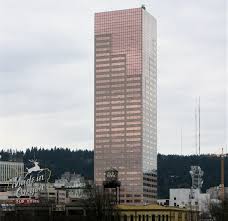
The rehearsal dinner was in a tall pink building downtown, or near it—one of those Portland landmarks that stays more as color than address in memory. The night had that soft, anticipatory feeling rehearsals sometimes do: no one tense yet, no one released either.
Junko was there. She was Sachie’s aunt on her mother’s side, and we had paid for her to come. Sachie wanted to repay her for years of quiet kindness. Junko was a nurse, like Sachie. At the time there was nothing remarkable about her being there, except that she was there, which later would come to matter more than anyone knew.
II
After the rehearsal dinner there was movement in different directions. Kate was around, her husband too. Later—after drinking somewhere else—he got into an actual fight. Not an argument, not raised voices: a fight. I don’t remember the details and don’t need to. Kate and Matt are divorced now. At the time it registered only as background noise, the kind you note and then step away from.
At the party Junko danced. She danced and danced, and people noticed. They commented on it, openly, approvingly. She was light on her feet, joyful, fully there. Jeff was dancing with her—this was when he was still with his second wife, Lisa—and everyone seemed pleased by the sight of it. It was one of those moments that didn’t announce itself as anything special, except that later it would become impossible not to remember.
That night back at the hotel, Mike and I went down to the bar with Pat. We ordered a bottle of champagne. I’d had a few drinks already at dinner, but Mike wanted it and I was up for one bottle. We drank it and immediately ordered another. I was less up for that, but I went along. When it came time to pay, Mike said, “No money until October. Peace out.” He was in a career transition, trying to get back to Seattle, broke. I picked up the bill.
It didn’t feel dramatic. Just one of those small, late-night imbalances you carry quietly and don’t do anything with.
III
In the morning Mike wanted to go running. He was hungover. I wanted coffee. We walked together for a while along the river, then I peeled off to find caffeine. Mike puked, rallied, and went running anyway. Classic Mike.
I was hungover too. The ceremony started around one. We went back to the hotel and got dressed. I was glad I wasn’t in the ceremony. Sarah had insisted on tuxes, which meant fittings and mild resistance and then compliance. It was fine.
We drove to the church and met some of Sarah’s brothers—she has a few. Everyone was nice. The ceremony itself was intensely Catholic. Very Catholic. All the rituals, all the structure. It didn’t alienate me or convert me. It just was. I don’t remember much beyond the density of it, the sense of time being held in place by repetition.
There’s a photo from that day that I still have. Mike and Pat and me, all in tuxes. I look impossibly thin. I look young. I was thirty-nine.
IV
We stayed a few more days. At some point Glenn and Barbara were at my parents’ house together. My parents have a big place, the kind that can absorb people overnight without strain. Barbara was leaving. Glenn—her only son—was staying the night.
She was saying goodbye, already halfway turned toward the door, when she stopped and looked at him.
“Glenn,” she said, “I love you, but hit the gym.”
She said it without malice and without hesitation. Love first, then truth. Glenn loves his food and drink. Everyone laughed. Barbara was eighty-eight. She was lucid. She was still very much herself.
That’s what I remember.
Dedication: For Pat and Sarah, and their three lovely girls. You still owe me a mojito, though.
“All we need is just a little patience.” — Guns N’ Roses
I. Leaving Anyway
The wedding was in June, which was just a little inconvenient for me. School was still in session, and I had to miss work to go. I remember wishing that it had been in August. But once I decided I was going, the resistance fell away. I locked it in, and then I was genuinely excited—mostly to see my family.
I hadn’t seen my mom, Mike, or Pat since January 2018, before COVID. I hadn’t seen my dad since October of that year. That mattered more to me than the logistics or the calendar. So my wife Sachie and I flew from Japan to Seattle, and my son Hugh flew in separately from New Zealand, via Auckland and Los Angeles.
We landed at Sea-Tac and cleared international arrivals quickly. We had a few hours before my parents arrived to pick us up. They had rented a van, partly because it was a three-day event and partly because they were making breakfast on the last morning, which required supplies. While we waited, Sachie and I sat in the only open area we could find outside arrivals. We both needed a cigarette, so we took turns—one of us watching the bags while the other smoked. We bought two Starbuckscoffees, which cost sixteen dollars. I ordered an extra shot in each, not realizing the Americanos already contained doubles.
While we were there, a man nearby was clearly overdosing—probably fentanyl, maybe heroin. He was nodding, drooling. The police came first, then EMTs. They all knew him by name. Sylvester. After about an hour, they took him away on a stretcher. No one around reacted much. It felt routine. I was just sad, thinking about how much damage fentanyl has done in the U.S.
I texted my mom. They were running late. Hugh arrived through domestic customs and joined us. When my parents finally came, they looked good—just older, of course. We hugged and walked back through the airport to the van. My dad had forgotten where he’d parked it, so that took a while too.
Once we got moving, things settled. Sachie, Hugh, and I loaded into the van and drove north to Anacortes, about two and a half hours. It was mid-afternoon. Hugh slept most of the way. Conversation came easily. It felt natural, like time hadn’t broken anything, just stretched it.
We had an early dinner at a restaurant on the water in Anacortes. Pat and Sarah drove up from Portland with their three girls and joined us. John Innes and Kristi had been invited but were tired from the drive and didn’t come. I had raw oysters, another seafood dish, and a margarita. My dad ordered one beer and then told the server, “Please bring another one in exactly twelve minutes.” He always does this. He usually has two beers this way; that day he had a third later. I find the whole thing very funny.
I ordered a second drink—a Negroni, which wasn’t on the menu. The waitress said she thought the bartender could figure it out. It arrived with no ice. I considered sending it back but she was busy, so I let it go.
It was sunny. I sat in the sun so Sachie could have the shade. After dinner, Pat, Hugh, the two older girls, and I walked down over some stones to the water for a while. Then we went to a supermarket for beer, wine, and light provisions. I wasn’t sure how I’d sleep—I don’t always sleep well when traveling—so I bought a bottle of wine just in case.
We drove to the lodge where we were staying. It was really nice. Sachie, Hugh, and I had our own apartment. I took a walk behind the lodge to sneak a cigarette. Sachie probably found somewhere to smoke too, but I’m not sure.
Later that evening, we went down to Pat’s room for beers. The girls played on the lawn outside, and Pat chased them around until they were breathless and laughing. Watching him with them, I was struck again by what a great dad he is. I drank wine instead of beer—I was still dealing with a lingering COVIDhangover and a newer gluten intolerance—and eventually drifted off and fell asleep on the couch.
That was the first night.
II. Crossing Over
In the morning, I woke first. No one else was up yet. Eventually my mom got up too, and we drove back to the supermarket for coffee. She bought me a pair of sunglasses—nothing fancy, just functional—and it was good to have time with her, talking at length. The coffee place sold Turkish coffee and tried to upsell me on baklava, which I regretted again not being able to eat because of gluten.
We all had breakfast later. It was underwhelming. I had yogurt. Around eleven, we drove out to the ferry terminal and got into a long line of cars. Sarah handed me one of those popular sparkling drinks in the U.S.—sweet, artificial—and I couldn’t finish it. The wrong kind of sweet.
On the ferry, I fell asleep. People were working on puzzles at tables. My parents stood outside because my mom has vertigo and gets dizzy. When we arrived at Friday Harbor, we went straight to the supermarket. There was no food at the camp except the rehearsal dinner and the wedding dinner, so I stocked up: hummus, corn chips—my mom handed me a huge bag of them—cheese, olives. I also had some soup at the market, which was excellent. I tried to get as much as I could because I knew options would be limited. I also bought wine.
The drive to the camp was supposed to be ten minutes, but the sign was tiny and we missed it. We overshot the turn and had to double back using Google Maps. We arrived mid-afternoon.
The camp was down a dirt road off the highway and much larger than I expected. There was a main lodge, a big lawn, a collection of cabins in different shapes and sizes, a barn where the wedding would be held, and a garden set up for the rehearsal dinner. We used metal push carts to haul our things from the parking lot to the cabins.
My parents were staying in the main lodge. Our cabin was about 150 meters away, next to Pat’s family. It was clean but very small: a tiny kitchen, a bedroom, a cramped closet you could barely move around in, a loft for Hugh, and a bathroom awkwardly placed between the kitchen and the bedroom. Kelly, his wife Courtney, and their kids Jacob and Ang were in another cabin. John and Kristi were nearby as well. Mason was staying in some kind of shared space. Between our cabin and Pat’s was a fire pit, and Sarah had already hung laundry over the chairs.
Smoking was allowed, but only at a few designated ashtrays—those tall black plastic ones on poles. The signs said that if you littered, the fine was one thousand dollars per cigarette butt.
I was a little concerned about whether the food I’d bought would last. I ate chips and hummus. Sachie went into the woods to smoke and put her cigarette butts on top of our garbage can. I told her about the rule and asked her to use the ashtray instead. She did.
Later, we gathered at the lodge. I brought wine. One of the camp staff asked if we wanted to hear the house rules. Mike said, “Lay them on us.” The rule was one open drink at a time in the lodge. It closed at ten, but we could use the nearby fire pits and deck afterward. I put my bottle of wine out of sight. Mike responded to the rule with a polite “Uh-huh, sure,” and I got the impression he had no intention of following it.
My dad, Hugh, and I drove back into town to pick up pizza for dinner. I ordered a cauliflower-crust pizza because of my gluten intolerance. We ordered too much—one pizza each plus one for my mom and Sachie—but that was fine. We ate, talked, and I drank wine. Mike, Colleen, and Felix were there. Colleen took Felix to bed. Later, Sachie asked me to go back to the cabin to get a bottle of white wine. I did, and we drank it. The rule wasn’t enforced. It was a relaxed evening.
That was also when I saw Eric Hillyard for the first time.
III. The FIRST NIGHT AND NEXT MORNING
Eric Hillyard is a character and a half. He’s one of Mike’s good friends from high school at Saint George’s, and one of only two people from that era who were there. The other was Dan Clarke—known as Jerry—who was officiating the wedding. Eric didn’t have a formal role. He didn’t need one.
I gave Eric a big hug when I saw him. I hadn’t seen him since high school. He razzes Mike like nobody else, but he was polite and warm with me and bowed to Sachie. He was drinking quite a bit. After ten, my parents went to bed, and Eric, Mike, and I gathered around the fire pit between the cabins.
Eric smoked a cigarette. I smoked two. We tossed them into the fire pit. Later, back at the cabin, it occurred to me that the cigarettes probably wouldn’t burn up completely. I was pretty cooked, but I walked back in the dark with my phone light, dug around in the ashes, found all three cigarette butts, and put them in the ashtray. I figured I’d just saved Mike and Colleen three thousand dollars.
Eric had told a joke that landed too close to home with Mike. Mike said it went too far. I got the impression this wasn’t the first time. It didn’t blow up, but it didn’t land well either.
I went to bed. Sachie and Hugh were already asleep. I slept fine.
The next morning I woke up first again. I ate more hummus and corn chips and went down to the lodge for coffee to see who was around. Free coffee was available. It was rehearsal day.
I don’t remember much of the day before the rehearsal itself. Earlier, when Hugh and I had gone into town on the pizza run, we’d stopped at a hardware store and bought a frisbee. Hugh played with the little kids—Colleen’s brother’s kids and others—on the lawn. I mostly hung around. Food was running low, and I was looking forward to dinner, which was scheduled for around five.
Before dinner there were family pictures, but before that something happened that I didn’t witness directly. Mike told me about it afterward.
They had hired a photographer, a makeup artist, and a band. All freelancers. The food was provided by the camp staff. Colleen was getting her makeup done and had asked for it to be light. Apparently it wasn’t. Mike saw it and said, “Babe, she pancaked you.” Colleen initially wanted to let it go, but they talked and then fired the makeup artist on the spot. Mike told me about it calmly and said that decision was kind of on him.
I didn’t judge it. What I found myself wondering was how much of her fee she got paid. I didn’t ask. I assumed she was paid for the day. The photographer had traveled a long way. I didn’t know whether the makeup artist was local. I hoped she was.
That evening, people gathered in the garden. Both sides of my family were there, along with Eric, Jerry, Mason, Kelly, John Innes, and others, as well as Colleen’s friends and family. The mood was good. But John was in bad shape.
By his own admission, John was pretty depressed. Both his parents had died, and something unresolved involving his father had happened before his death. He hadn’t been able to say goodbye properly. He’d had to have a few just to get ready to come to dinner and face people.
John and Kristi left early and Mason and I walked to the parking lot for a cigarette. There were ashtrays there, and I didn’t want to risk a fine. Colleen’s friends were smoking weed cigarettes back in the garden. Mason told me about a recent breakup that had been serious. He said he’d been immature for a long time and that the relationship and life had forced him to grow up. From his demeanor, it was clear that was true.
That night I also saw my Uncle Jeff’s third wife for the first time—she is from Mexico. Hugh talked with Jeff about his soccer influencer work. Jeff was impressed and invited Hugh to stay at his place in California anytime, for any length of time. Hugh was flattered and grateful.
Things wrapped up early. There was no repeat of the fire pit scene from the night before. I talked a lot with Amy, but mostly I was with Mason. Then we went back to the cabin and went to bed.
IV. DAN CLARKE/ BILL CLARKE DREAM
Wedding day morning felt like more of the same. I was low on cigarettes. I ate more corn chips and hummus from the seemingly endless bag and got coffee in the lodge and waited. Jerry was around. We talked. He’s had an interesting life—some wildness there—and I could see why Mike likes him so much.
Dan Clarke’s father is Bill Clarke, brother of Janet Mann and brother-in-law of Paul Mann. All Saint George’s power brokers. My dad and Bill Clarke were friendly once, but it went sideways. After that, my dad would complain about him endlessly in the car to my mom. Typical Ross behavior at the time, although I never understood the core issue
At some point that morning I thought about a dream I had years earlier, one that has stuck with me. I’m including it here as I wrote it at the time.
2/27/18:
Two intersecting and yet separate dreams about Bill Clark. These will take some unpacking.
I. I am with my father and someone else in a car on a rainy day. We are parked and Bill Clark is there. He looks like the real Bill Clark as I remember him, overweight and not too smooth. Bill Clark was an intermittent arch-enemy and then sometimes ally of my father at Saint George’s in the 90s. The encounter in the car is the culmination of several encounters with Bill in the dream and some of these have been just he and I. Bill is telling me through these encounters how much he admires our IB program and what I am doing with it. He stresses how important it is that I keep going. At the car, he does this again and looks a little desperate. Because he is so clearly sincere even my father who was his enemy gives him the space to say his piece. For my part, I am grateful for his kind words however the car kind of needs to get moving. I thank him from the window. I think he is about to get wet from the rain.
II. I am meeting with Bill Clark again, however a very different looking Bill Clark. Here he is trim with a wire grey beard cut short and a nice suit. He looks very distinguished and a little intimidating. This Bill Clark is also supportive however is much more firm with me. He tells me that I need to get on my hands and knees and beg and plead for resources. Somehow I get the image of a turtle on its back, open to the sky. This is the posture I need to adopt according to Bill. Nothing can be taken for granted and I have to beg. He is quite clear and I understand the wisdom in what he says.
Comment: This is a super interesting dream that bears unpacking. The two Bill Clarks are polar opposites and the second one is more regal and correct in every way. Why the former enemy of my father? This dream is so packed with symbolism.
Not long after that, it was time to shift gears and get ready for the ceremony.
V. The Ceremony
Before the ceremony began, I practiced rope-tying with Colleen’s brother and Pat. I hadn’t mentioned it earlier, but I had been enlisted to help tie Mike and Colleen’s hands together at the end of the ceremony. I was nervous. I had to go first, and as with the e. e. cummings poem years earlier at Mike’s first weeding, I had limited information. Mike told me it would be fine. Colleen’s brother Kevin and I made a joke of it together. Don’t fuck the whole wedding, bro. We got on well.
The rope was thin. There were several strands, intertwined.
Around four, people gathered again at the lodge. Only certain people had drinks. The rehearsal had gone smoothly. We had a clear walk-out order. My family walked out right after Mike and Colleen so I could be in the front row and step forward when it was my turn.
Everyone took their places. Jerry gave a classic, funny speech about being unprepared. Mike’s vows were sincere. Colleen received a huge round of applause when she walked out.
The ceremony was short. The moment came quickly. I stepped forward and did the tying. The ropes were longer than I expected and hung down toward the ground. I stumbled and nearly tripped over them, but I didn’t fall. Thank God.
The ceremony ended, and we moved directly into the barn for dinner.
VI. The WEDDING DINNER
Dinner started with oysters and a watermelon margarita, which I passed on. I drank red wine and hit it pretty hard. Dinner proper was pasta with sauce made by Colleen’s dad. I couldn’t eat it. I was hungry and ate oysters until there were literally none left. I got the last ones.
I spent some time standing outside with Kelly and his kids, Jacob and Ang. We talked. Inside, I sat with family. Hugh had the pasta and then went over to Colleen’s father to thank him for the sauce, which was a classy move.
After dinner, Kelly, Mason, Sachie, and I went out back for a cigarette. I was out and bummed one from Sachie, and it was the first time I’d ever seen Kelly smoke. I got to know Jacob, who was almost done with high school, and Ang, who was a couple of years younger.
I was wiped and left early. Sachie and Hugh came back later. Colleen’s dad gave a speech. My dad didn’t. Katie—my cousin through Amy—gave a great speech. Katie has Down syndrome, and everyone applauded.
That was the night.
VII. Dispersal
The next morning my parents were making breakfast, and the relatives who had stayed in town came back for it. My mom was prepping food. Amy brought gluten-free bagels. I had half a bagel, some fruit, and coffee and talked with people as they moved in and out. Breakfast was a performance, and it justified the van rental entirely.
We packed up and said goodbye to Mike, Colleen, and Felix. They were heading to a nearby island for a short honeymoon. From there, we drove first to the rental house where Pam and Steve were staying. I did laundry while everyone else went whale watching. I was keyed up about it—laundry had accumulated, and I don’t like traveling with dirty clothes. The door was left open, so I walked to the market for more soup and found my way back.
That evening we went back to the same pizza place. I had another cauliflower-crust pizza, a gluten-free beer that was just okay, and a glass of wine. I sat with Amy, her husband David, Sachie, Hugh, and Katie. I paid attention to Katie—she’s been developing early-onset dementia and I wanted to see how she was doing. My mom paid for dinner, which I appreciated.
We stayed at a hotel five minutes away that my parents had pre-booked. It was a large suite. Sachie and I took one room, my parents took the other, and Hugh slept on a cot in the living room. Hugh, my dad, and I played shuffleboard downstairs. I won. It was very relaxed. I had what was left of a small bottle of vodka, drank some, and poured the rest out.
The next morning we went to the ferry terminal. We ran into Jeff’s family again. My parents talked with them while Sachie, Hugh, and I got coffee and bought chocolates as omiyage. On the ferry back, a young naturalist gave a talk about whales. I listened and didn’t fall asleep this time.
Once we reached Anacortes, we drove the wrong way for about half an hour before my dad realized it. We turned around and headed toward Sea-Tac, staying near the airport. I was starving. We said goodbye to my parents. I cried a little. My mom did too.
At three in the afternoon we went straight to a steakhouse. I had steak, fries, and a Negroni. Hugh and Sachie ate as well. We sat in the regular dining section, not the bar, because Hugh was still twenty. We slept early.
The next morning we took a bus to the airport. Hugh left earlier, and Sachie went with him while I tried to sleep. At the airport, Sachie wanted to buy a specific bottle of whisky as a gift. The plane was already boarding. She ran off and made it back just in time. I was anxious, but she made it.
We flew back to Japan. I went back to work the next day and thanked everyone for covering for me while I was gone.
Dedication
For my family, with love and gratitude.
Note: If you enjoyed this piece, you may also enjoy the pieces below which also take up the topic of weddings.
“Wake me up before California Darling boy I’ve never known ya”
— Annie Hardy
1. Periscope (2018): Ambient Human Contact
In the fall of 2018, before TikTok Live and before Instagram learned how to professionalize everything, there was Periscope.
It was a live-video app owned by Twitter, but it never really felt like social media. It felt more like radio—with pictures. You could open it and see who was live anywhere in the world, zoom in on a city, drop into a stream, leave, move on. The scale was small enough that you could more or less take in the entire active population at any given moment. There was no sense of infinite scroll. The world was navigable.
It was also completely unpoliced. People streamed whole songs, movie clips, televisions playing in the background, themselves half-asleep or wandering around or doing nothing at all. No one cared. There were no warnings, no copyright bots, no friction. It was a free-for-all in the literal sense: free time, free speech, free form.
What Periscope allowed—what it uniquely allowed—was time. Long stretches of it. Silence. Repetition. Boredom. People would just sit there and talk, or not talk, or smoke on their porch and complain about their day. That kind of stream simply does not exist on Instagram Live. Instagram demands a reason. Periscope didn’t.
I loved it because it matched my temperament. I wasn’t looking to build anything. I wasn’t trying to grow an audience or perform a version of myself. I liked cursing around on the app, listening, occasionally speaking back. It was ambient human contact: voices moving through time, present but not demanding anything in return.
Most people didn’t want that. Periscope never offered a ladder—no clear path to recognition, no reliable virality, no payoff for effort. It didn’t protect users from themselves, and it didn’t compress experience into highlights. For most people, that felt pointless. For a few of us, it felt like oxygen.
I didn’t think of it as important while it was happening. It was just there, like a short-lived commons where people killed time together. Looking back, I’m amazed it existed at all.
2. Time, Leave, and the Split Feed
From September 2018 through February 2019, I was on leave from my school. The reasons sit elsewhere and don’t need explaining here. What mattered was that, for once, I had time—real time, not time carved out between obligations. I was based in Kyoto, and in October and November I spent long stretches staying in a hotel in Akasaka, moving back and forth between the two cities.
At the same moment Periscope entered my life, I started a new blog, The Kyoto Kibbitzer. The original idea was simple: walk around, notice things, write about bars, art, neighborhoods. Periscope became a sister project—not an escape from writing, but a parallel way of paying attention. One was private and slow; the other was live and provisional. They fed each other.
I quickly settled into two distinct kinds of streams.
During the day, I walked. Downtown Kyoto, north Kyoto, sometimes Tokyo. I talked, observed, played music, responded to comments. I never put my face on camera—not once. The camera always faced outward, toward streets, storefronts, light, movement. I got a simple phone holder so I could film without fuss. The stream wasn’t about me; it was about what I was seeing.
At night, I streamed from my desk in the upstairs room of my house. I usually stood, like a DJ or a lecturer, sitting only when I was reading something. The night streams were almost entirely art: music, films, writing. I’d play songs and talk about them, read long passages from essays or movie reviews, sometimes even play sections of films on my laptop and film the screen. It was all technically a grey area, but Periscope didn’t care, and neither did anyone watching.
Once I read an entire Roger Ebert essay on air—an interview he’d done with Lee Marvin—and laughed out loud the whole way through. “If I want to be an icon I’ll do it my own way, baby,” Marvin said. Mostly, that was the night feed: attention without urgency, commentary without stakes. Occasionally I’d take it back outside to a bar, or, early on, stay up all night wandering and streaming, the phone dying fast enough that I had to carry two battery packs. But those were exceptions. The form settled quickly.
The split mattered. Day feeds faced the world. Night feeds faced ideas. Both were ways of being present without self-display. Together, they created a rhythm that made Periscope feel less like a platform and more like a place of its own.
3. A Small World with Names
The audience was small, but it existed.
A few people watched consistently. My friend Andrew, who lives in Japan but not Kyoto, would sometimes tune in live or catch the replay later. John Innes watched as much as he could, and sometimes his wife, Kristi, would drop in too. When John commented, I’d usually stop whatever I was doing and talk with him at length. Conversation mattered because it was rare.
There were others who hovered at the edges. A French guitarist would sometimes watch silently for long stretches. Later, Mela would too, though I watched her far more than she watched me—mostly because she streamed for even longer than I did. And then there were the Periscope regulars: people who drifted in and out, stayed for a few minutes, disappeared, reappeared weeks later. That was the rhythm.
Periscope allowed replays, which changed the feel of everything. Not all attention was synchronous. A stream could be watched hours later, like a letter someone opened when they had time. It softened the sense of performance. You weren’t always talking to people; sometimes you were just sending something out into the day.
What mattered wasn’t numbers. Most streams—mine included—had only a handful of viewers at any given time. Even the people who seemed central to the platform often streamed to three or four names. The world was small enough that you could recognize it. You learned who was usually awake when you were. You noticed when someone stopped streaming altogether.
Because of that scale, recognition carried weight. When someone you knew appeared in the comments, it felt like a real arrival. The back-and-forth could stretch without interruption. There was no pressure to keep things moving, no sense that you were losing an audience if you paused to respond.
It didn’t feel lonely in the usual way. It felt communal in miniature. A village square that never got crowded enough to become anonymous.
4. Killing Time Together
I was somewhat lonely during that period, and looking for human companionship. Not intensity, not rescue—just being awake with other people. Periscope worked because it was like radio, only you could talk back. You could toggle around the world and find whatever level of interaction you wanted, then move on without consequence.
Some streams were playful and I would play along. There was a beautiful Russian woman who spoke mostly in Russian and replied to my comments in halting English. She’d do things like eat honey off a spoon, theatrically, and I’d type something juvenile and she’d play along too. It sounds silly, and it was, but it was also light. Once we talked longer and she told me she wanted to go to medical school but couldn’t afford it. I’d guess she was in her mid-to-late twenties. After that, I drifted away. The language barrier was real; the connection couldn’t sustain itself. That was normal.
There was a French guitarist I watched early on. He was very good—technically accomplished, friendly—and he seemed to have infinite time. He’d sit in my stream silently for long stretches, just there. Periscope people had time; that was one of the defining traits. After a few weeks I stopped watching him. Not because anything was wrong, but because it was all one thing. Skill without movement. No arc. Attention drifted, and that was allowed.
Other streams were even more minimal. I remember a woman in Oklahoma who would sit on her porch, rip bongs, and talk about her day. That was it. No premise, no performance. Just presence. That kind of stream doesn’t exist on Instagram Live. Periscope tolerated people doing nothing in public.
There was also Max, a trans woman from eastern Canada. She complained about her mother, about being broke. She usually had no viewers. Every time I came into her stream she lit up. Once I sent her fifty dollars for an art commission, and she reacted like she’d won the lottery. It wasn’t about the money. It was about being seen. On Periscope, small gestures carried disproportionate weight because the economy of attention was so thin.
People weren’t looking for transformation. They were killing time. Talking. Waiting. Passing hours together across time zones. The platform allowed that without apology. It was so free-form that it’s hard to explain now without it sounding unreal.
But that was the baseline. That was what “normal” looked like.
5. Mela: Process Recognizes Process
I didn’t find Mela right away. It wasn’t until mid-October that her stream appeared on my map. By then I already knew how Periscope worked—what it rewarded, what it ignored, what kinds of attention lasted.
The first stream I remember, she was just walking around New York City. Not driving. Walking. Taking stairs. Cutting through neighborhoods. Letting the city decide the route. Almost immediately I felt a shock of recognition: she’s me. Not biographically, not emotionally—procedurally. We were using the same method.
She would ask, “left or right?” I’d type “left,” and she’d take a left. That was it. No drama. No explanation. A shared orientation, moment to moment. I’d stay with her for hours, wandering the city together at walking speed.
People who showed up looking for something else—someone conventionally attractive to perform, flirt, deliver a payoff—would drift off. The stream filtered itself. What remained was patient, non-demanding attention. Process over outcome.
She was in her mid-to-late thirties and had worked in film props on sets around New York. At the time she was on sick leave after a back injury, which explained the free time. She streamed from her apartment, sometimes from a friend’s place she was house-sitting, and often from the streets and trains. The life context was legible. Nothing felt invented for the stream.
Eventually we connected on Instagram, but that’s not the story here. What mattered was simpler: real, undemanding, non-sexual attention feels good. In a micro-attention economy, it feels enormous.
Mela mattered because she showed that Periscope could sustain healthy, lateral connection—companionship without escalation, presence without claim. That mattered later, because it proved the platform itself wasn’t the problem. It was capable of holding something gentle and durable.
That made what came next easier to recognize as different.
6. Giant Drag (Came Late, Stayed Forever)
I came to Giant Drag late.
I first heard them sometime around 2015, years after their debut. The song was “Kevin Is Gay,” and I heard it on All Things Considered on NPR. I remember stopping short. It sounded like shoegaze, but with attitude—guitars that rang and crunched at the same time, a voice that was sharp, funny, unsentimental. I thought: who on earth is this woman?
I bought the CD immediately. The record was Hearts and Unicorns. There was “This Isn’t It,” “Slayer,” and a sense that this wasn’t a novelty discovery. It didn’t feel like a phase. It felt like something I’d been missing and had finally caught up to. Ten years later, the music is still with me.
Learning afterward that the album came out in 2005 only clarified things. I hadn’t encountered Giant Drag as part of a moment or a scene. There was no social reinforcement, no sense of being early or late. The music arrived on its own terms and stayed because it deserved to. It became part of my listening life in a quiet, durable way.
That matters here, because when Annie Hardy later appeared on Periscope, she didn’t arrive as a stranger or as “a streamer.” Her voice was already familiar to me. Not biographically, not personally—but aesthetically. I knew the intelligence. I knew the precision. I knew the attitude. What I didn’t expect was where or how I’d encounter it again.
At the time, none of this felt connected. It only looks that way in retrospect. Back then, Giant Drag was just music I loved, and Periscope was just a place people killed time together. I had no reason to think those two tracks would ever overlap.
Then they did.
7. Band Car → Band House
Because the number of active streams was limited, as I have said, I spent a lot of time just cruising around the map. One night in September 2018, I landed on Annie Hardy without looking for her. The stream was called Band Car, which turned out to be exactly what it sounded like.
She was driving. Talking. Rapping. Singing into some kind of vocoder or effects chain. Swearing at other drivers. There was no Giant Drag material, no backstory, no explanation. She’d say, “Give me three words,” and then build a rap off whatever came in. I gave her words. Over and over. It never went stale. The language was filthy—relentlessly so—but also precise. The filth wasn’t sloppy; it landed because it was aimed.
I watched every day. She streamed every day. She had no job and very little money, and she drove for hours, talking, rapping, improvising, stopping occasionally to run into Home Depot or some other errand. I’d wait. Dead air didn’t bother me. This was how Periscope worked.
Sometimes she used gay slurs, and I balked internally. That wasn’t my thing at all. But the space itself was unfiltered by design, and she used every word under the sun. I didn’t intervene or moralize. I noted it and stayed. Admiration and discomfort existed side by side.
I talked about her on my own stream. I told people she was the best thing on Periscope. I couldn’t believe I had such unfettered, generous access to a high-level artist just living inside her process. There were others watching too, but not many. I was probably her biggest fan, or one of a few. In a micro-attention economy, that mattered.
One night, very late in Los Angeles, I’d been with her for hours. The audience thinned until it was just me. She parked the car, got out, and said, almost casually, “Do you want to do band house?” It was a first. I said of course.
She went into her garage, then into a music room. There was a piano. She asked, “What do you want to hear?” I said how about After the Gold Rush. She sat down without ceremony and played the entire song. No sheet music. No warm-up. She hit the high parts cleanly. Musicians have an astonishing memory for songs, and she had it in full.
It was the greatest musical moment of my life, bar none. The only thing that comes close is hearing Spencer Krug play “Julia with Blue Jeans On” at Urbanguild in Kyoto. This was different. This was private, unadvertised, unrepeatable. When she finished, she said, “Okay, that’s band house,” and wrapped it up.
No encore. No processing. Just the sound, then silence.
That was the miracle. And it was already complete.
8. Running Its Course
In December, I used Periscope again in New York and Boston, mostly with Mela. The rhythm was familiar by then—long stretches of time, nothing urgent, companionship without demands. One night in a Boston hotel room, where I was staying to see Phosphorescent and Jay Som, I streamed the entire film Michael Clayton from my laptop. It was a grey area, as everything on Periscope was. She watched the whole thing with me, commenting occasionally—“bad guy, ooh”—the way someone does when they’re present but not trying to perform being present. It was fun. That was enough.
After that, things ended. Not abruptly. Not painfully. Periscope had simply ran its course.
Mela moved to Oklahoma and stopped streaming. I stopped too. The app thinned out. People disappeared. The small world became smaller and then, effectively, gone. There was no sense of loss that needed narrating, no aftermath to dramatize. The conditions that made Periscope feel possible—time, openness, a tolerance for doing nothing in public—shifted. Life resumed its usual density.
Looking back, what remains isn’t a lesson or a warning. It’s a memory of a brief commons where attention wasn’t monetized and presence didn’t have to justify itself. A place where someone could play a song once, perfectly, for one person, and then stop. And that could be enough.
That was Periscope. And then it wasn’t.
Dedication:
For the micro-attention economy. I had a total blast. And for Annie and Mela. Babes I love you both is very much.
Note: This is the third and for now final position of the Trans-Pacific Political Partnership known as The Splinter Fraction. Our first position is about the Age of Consent in the U.S. Our second position is about privileged access for Medecins Sans Frontieres to all war zones and protection from the powers that be for their operations. Our final position is to spread karaoke as widely as possible. We are entirely serious.
We affirm karaoke as one of the last remaining civic rituals in which strangers meet without preconditions and leave with fewer barriers than they arrived with. A microphone passed between an office worker, an American traveler, an Indian engineer, an older Japanese gentleman, a young woman finding her voice again — this is not entertainment alone. It is a brief suspension of hierarchy, suspicion, and self-protection. In these small rooms people remember how easy it is to be together.
Karaoke is not mandatory, nor do we idealize it. We simply encourage every citizen — once in a while, or for the first time — to step into a space where age, gender, profession, and political commitments dissolve for the length of a verse. It is a civic practice hiding in plain sight: a low-cost, low-risk release valve healthier than most vices and far more generous in its returns.
Society is fraying at the edges. But give people one Tom Petty track, one “What’s Up” howl, one chance to sing badly but sincerely, and cohesion begins again — not through policy, but through the ordinary bravery of shared song. The Splinter Fraction supports public encouragement and, where possible, public subsidy of these communal singing rooms, as engines of ease and democratic belonging.
Karaoke will not fix the world. But it will bring us back into easy congress with one another, which is more than most programs can claim.
My first year at NAU was sober in the daylight and loosely intoxicated at the edges. I lived in a freezing back room one minute from the History building—space heater struggling, breath visible some mornings, blankets pulled over my head like I was camping indoors. I drank only socially, worked hard, slept irregularly but not disastrously. My focus was sharp. Sanjay told me I was a tough grader, precise to the point of severity. I softened slightly, not because he demanded it, but because I understood I was being a little pedantic.
Most nights I walked everywhere—my location meant I barely needed a car. Campus was small, my room was close, and the world narrowed down to the few places I traveled on foot: the History office, Safeway for cheap groceries, the bowling alley, Gabe’s apartment. Gabe—Mexican-American, small flat, Friends reruns on VCR—was the first true companion of that year. We smoked weed twice, only twice, but years later those two nights glow brighter than whole weeks of coursework.
One evening before bowling we got high at his place. He drove the back roads with “Tennessee Jed” by the Grateful Dead blasting from the speakers. I’d heard the song before but never like that. The asphalt felt lunar, pale and distant, as if we were driving the dark side of the moon. For fifteen minutes I thought it was the greatest song ever written. I bowled maybe a 160 that night—no 200—but it didn’t matter. Those early nights had the glow of being young enough to change and old enough to notice.
The department didn’t gel immediately. It wasn’t love at first seminar; more like gradual accumulation—papers returned, conversations after class, cigarette breaks, laughter by vending machines. And then November arrived, Day of the Dead, Día de Muertos, and everything clicked. Nearly the whole cohort went out to a bar within walking distance of my house. Warm light, cool air, no need for taxis. I stepped onto the second-floor balcony with a drink despite the sign forbidding glassware outdoors. Liability. Potential weapon. Potential fall. Of course that’s where I stood.
Everyone arrived a little looser than usual. Cindy loud and magnetic, Diamond telling labor-movement stories, Patrick pushing Reagan just to watch Diamond combust, Mandiola ready for his close-up. The night had the feeling of a department not performing collegiality but genuinely inhabiting it. For the first time it felt less like I’d transferred into a system and more like I belonged to one. Somewhere near the second round I knew: I liked these people. Not tolerated them. Not simply studied with them. Liked them.
A few weeks later Patrick hosted a house party north of campus—big place, temporary-feeling, the kind of grad-student rental that looks like three relationships and a semester of chaos have already happened there. I arrived early, around seven, beer in hand before anyone arrived. By eight it was full—grad students I knew, professors, plus strangers whose relationship to Patrick was unclear.
A young Russian woman approached me, dark hair, quick smile, zero hesitation. She asked if I was married. I said yes. She asked if I wanted to get married anyway. Straight to it. No preamble. No seduction arc. Just proposition → outcome. Gabe leaned over, grinning: “It is flattering, isn’t it?” And it was. Even as I understood what she might actually want—a visa, a foothold, a passport through me. Desire and practicality often wear the same mask. Still, it gave the night a story.
The house was loud by then. Diamond and Patrick shouting Reagan versus labor history like two men paid by volume. Fritz drifting through with Vegas cocktails on the brain. Cindy incandescent. Mandiola’s tooth aching but untreated, pride > pain. I wandered the rooms, comfortable but not consumed. Just observation, beer, and the sense of being part of something that didn’t need me to steer it—rare then, rarer later.
I left the party after a few hours, steady and untroubled. Year One closed gently. I finished with straight As, a department that had finally found shape, weed-echoes still in the brain, Dead songs drifting like ghost signals, and a girlfriend in Japan I was aching quietly to return to. It was a good year in many ways.
Note: This is Part II of my series on my time at Northern Arizona University between 1999-2001. This post takes up the other graduate students in the History Department. Part I: Decision and Arrival, can be found here, and Part II: The Other Graduate Students can be found here.
The Professors: Eight Points on a Compass
Graduate school I feel is often remembered less for the curriculum than for the people who taught it, and Northern Arizona University was no exception. The department wasn’t Ivy, wasn’t elite, wasn’t powered by grants or theory-cliques — but it had shape, it had character, and it had real smarts. Here is a quick portrait of the eight teachers that I remember. Some I took their class, some I tutored for, some both, and some I just got to know in the halls. Here they are.
Sanjay
My advisor by inevitability: the only tenured professor in the department who worked on Asia at all. Indian, Penn PhD, postcolonial thinker with a full loyalty to subaltern studies; ambivalent on Gandhi in that very specific way that people trained in the 90s often were. He let me study Japan inside his Indian frame, as long as I stayed inside the lines. It was generous, in one sense, and constricting in another. He wanted me to be Spivak or something adjacent — not who I was, not what I was built for.
We got along well for a while. I respected him, and he liked that I was a serious person. But eventually I started to lose respect for him, not dramatically, just gradually, because he wouldn’t quite let me go my own way. He believed in his model; he couldn’t imagine someone wanting another.
I tutored for him a few times. Early 1999, first term, he told me I was a tough grader — “especially on grammar,” he said, with a small smile. It was his way of telling me to ease up. I took the note and loosened up, but only slightly.
I’ll write more about Sanjay, and about the slow evolution of that relationship, in later pieces — there’s more there, and it shadows the next set of decisions I made
Sanjam
Sanjam was Sanjay’s wife — close to his age, maybe a little younger. She wasn’t tenured yet when I arrived, and they wanted that badly. Sanjay, in my opinion, crossed a line a bit with his advocacy for her, but I’ll get to that in a later piece.
She was brilliant where he was structured, but brittle where he was steady. I tutored for her a little later in my time there, and I once watched a lecture dissolve into chaos so completely that afterward I told the students I’d “take their temperature” after class. Several of them, half-joking, but actually not, called out, “Take my temperature, take my temperature.”
She stormed off to complain to Sanjay. He called me in and said, flatly, “I heard about it. Solve it with her — I’m not taking sides.”
I liked her, despite the fact that she couldn’t control a lecture room. I still remember her saying Gandhi “messed with her,” which she meant in a semi-endearing way, I suppose.
She eventually got tenure, and last I checked, she and Sanjay were still at NAU.
Karen Powers
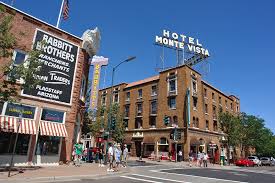
As I mentioned in Part I, Karen was the first person I met at NAU. I walked in cold off the road — black turtleneck, black blazer, no housing, no plan. Karen shrugged like this happened every Tuesday and found me a room one minute from campus. That was her superpower: frictionless authority, no drama.
She was chair of the department for a while before John Leung took over, and she was a much better chair than Leung. That said, Mandiola knew her far better than I ever did; I never took her class and I didn’t tutor for her either.
Susan Deeds
Susan was older than Karen — early sixties, I think, though I never knew for sure. She was beloved by students and professors alike: warm, intellectually generous, and possessed of a kind of quiet emotional intelligence that set her apart. She carried herself with ease, without self-importance, and people naturally gravitated toward her. She wasn’t chair during my time there, but she functioned as the department’s emotional center of gravity anyway.
I never took her class and didn’t tutor for her, but she was unfailingly kind whenever our paths crossed. She gave good, grounded advice and I benefitted from that. Even with no formal tie between us, I always felt better knowing that she was around.
John Leung
John Leung was a Mao specialist, a gout sufferer, and later chair of the department. He was an odd fit among the mostly Southwest historians — solitary, limping, sometimes using a cane, half-in the building, half-out. During my first year, when I was tutoring for Sanjay, he came in to give a guest lecture at the end of the term. He delivered one kick-ass lecture — the best of the year.
But when I later tutored for him and had to sit in his class every day, it was pretty poor, to be honest. Everyone has one great lecture in them, I guess.
In my final term I took an independent study with him and wrote a long, decent paper on Tanizaki’s Some Prefer Nettles. He never read it and didn’t pass me. So from my point of view he was lazy, and I don’t have a great deal of respect for him, though he was always polite and warm in person.
Dave Kitterman
Kitterman was the Germanist and European historian in the department. He was writing a book on ordinary Germans and complicity when Christopher Browning’s Ordinary Men landed first and ended the race before he reached the track. It didn’t break him — it just redirected him into steady teaching. I would go to his office hours and he would talk about losing the race to Browning. It was a career disappointment.
When I was tutoring for his post-WWII Germany class, he eventually allowed me — after a bit of pushing on my end — to lecture on the Baader-Meinhof group in the 1970s, the left-wing (sort of) terror group in Germany with links to Palestinian organizations. The lecture came just before exams, and not only did he trust me with the room, he let me put a Baader-Meinhof question on the final. I felt like I earned the chance, and I’ve always been grateful for the opportunity. I’d give the lecture a B+ — I was a little too into Luke Haines, the singer and songwriter for The Auteurs, who made an eponymously titled concept record about Baader-Meinhof that genuinely rocks. Haines sings:
“Some of the dumb ones just don’t understand there’s no manifesto there’s no formal plan it’s just burn warehouse burn burn warehouse burn”
Kitterman also let me give student essays back one by one over the course of weeks, which was a real bonus for my schedule. Overall, he was an important and respected professor, and I learned a great deal from him.
Bob Baron
Bob Barron was in his late fifties or early sixties. I believe he taught general U.S. history, and he also offered a Marx seminar, which I took in my second year. It was the only class at NAU that actually challenged me, other than Linguistic Anthropology, which I’ll get to later. Barron had a favorite line; he dropped it often:
“My goal isn’t to teach you everything — just enough to be dangerous.”
He meant it — knowledge as edge, not encyclopedia. And then the twist: he ran a side business as a grant doctor. Five hundred dollars an hour, guaranteed success. A Marx scholar monetizing academia better than the capitalists he assigned.
Barron was a funny guy, and I worked my ass off in his seminar.
Mike Adamson
Finally, Mike Adamson. 6’7”, basketball-big, American Southwest scholar. Mandiola tutored for him I believe and talked about him, but he was pretty peripheral to my path through the school.
Eight professors, little hierarchy, some ego. NAU wasn’t a prestigious place to teach, but I think it was a decent one. The professors could be themselves with almost no pushback, and each of them was their own little world — their own graduate tutors, their own quirks, their own ways of working.
And Kitterman let me talk Baader-Meinhof, which was a big moment for me, actually.
Note: This is Part II of my series on my time at Northern Arizona University between 1999-2001. This post takes up the other graduate students in the History Department. Part I, Decision and Arrival, can be found here.
NAU — The Graduate Students
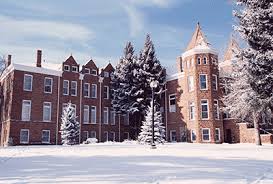
The History Building was located near the northeast of campus, and as I mentioned in Part I it was mere minutes for where I was staying in my first year of the program. There was one graduate office on the second floor — a narrow room with four aging computers, a stubborn printer, and more bodies than desks. Some students shared chairs. Some wrote standing up. You could hear arguments through the walls, even with the door closed. It wasn’t glamorous, but it was the whole ecosystem: every thesis, every grudge, every friendship, every theory, all pressed into what was a pretty small space.
Cindy
The center of the room was Cindy. Early thirties, beautiful, charming, half-brilliant and fully aware of her own gravity. She studied the Southwest like almost everyone else in the cohort, but she made scholarship look like a party you had to be invited to. Men tried. None succeeded. She never dated within the department, but she flirted like a form of cultural exchange — a compliment, a smirk, a dismissal, repeat.
A number of us would go bowling from time to time, and when I bowled a clean 200 one night (still my best score ever) she called me Zen — partly for Japan, partly for the way I moved through things without forcing them.
As mentioned, Cindy flirted lightly with all the single guys in the department, and she and Mandiola had a particular dynamic going on. More on that below.
Lance and Gretchen
Orbiting Cindy were Lance and Gretchen, a long-term unmarried couple renting a big place in the low hills behind campus. Lance was military reserve — rigid posture, some money behind him. Gretchen was smart and generous; they held Thanksgiving at their house and the whole department came. It was clear to me, however, that she lived in Cindy’s shadow a fair bit.
Their relationship read like a stable table with a crack underneath. They had been together for a while at that point, though I don’t believe it ultimately survived.
Dave Diamond, Patrick, and Gary
At the other end of the room sat three men who could fill a bar with argument, and did.
Dave Diamond — mid-fifties, blue-collar history etched into him. Fishing boats, oil platforms, mines. He smoked dope daily like other people drink coffee. His thesis was on one apple orchard. Not agriculture policy in general — one orchard. He traced labor, yield, frost, policy, immigration, machinery, exploitation and renewal through a single patch of earth. That was Diamond: narrow focus, infinite depth. He was grumpy in the best possible tradition, and as I’ll mention later hooked me up with a little green from time to time, and I liked him.
Patrick was about twenty-two, a conservative, and worshipped Ronald Reagan. He believed the free market solved more problems than it created. Diamond thought Reagan had gutted the working class and could give footnotes from memory. They shouted at each other constantly, sometimes in the office, more often over drinks— full volume, full conviction — then they would move on like nothing had happened. They weren’t enemies. They were the ongoing argument.
Gary stood between them philosophically but never took the middle. Libertarian, Western-minded, big on personal risk and responsibility. Motorcycle helmets should be optional, ICU bills be damned. A man should be free to crack his skull if he wants to. You couldn’t move him. His logic was dry and clean. I wrote about Gary and his helmet policy at length here, and here is an excerpt:
Later that year Gary’s brother, also a biker, died in a motorcycle accident on a New Mexico mountain. It was a sad day for the department and for Gary. His brother was a biker and a cop, and I happened to walk past the church where the funeral was being held. There were dudes in Hell’s Angels jackets and cops in dress uniform side by side. Gary came by the graduate student office a day or two later. Yeah, he said, a funeral like that is the only time you’ll see bikers and cops side by side. He talked about his brother and how much he loved his motorcycle. I offered my condolences, but then curiosity got the better of me, as per usual.
“Gary, I have to ask, was your brother wearing a helmet?”
“Of course not. He died like he lived, free.”
“Does the accident make you think any differently about helmet laws?”
“If anything, it makes me more opposed to them. The right to ride without a helmet is what makes a biker a biker. Without that, we have nothing. My brother would feel the same.”
The three of them — Diamond, Patrick, Gary — were a triangle of conflict that never quite resolved. I liked them all in different ways and they all added color to the department.
Scott Fritz
Then there was Scott Fritz — early thirties, soft-spoken, spaced-out, gentle. Loved Las Vegas with an almost devotional sincerity. Not for gambling. For cocktails at 3 a.m. in glass palaces of light. He was in line for a major scholarship until Mandiola took it out from under him. I’m not sure what Scott was studying, but probably the American Southwest as well.
Mandiola
Mandiola and I were the outsiders. Not Southwest scholars. He was studying semiotics. I was studying Asia, oral history, and collective memory.
He was born in Chile, raised in LA, carried two languages without ceremony. His mind was fast — too fast in many ways. He had been married, and at this time was seeing P., an English professor who was at NAU on sabbatical. I met her twice; once over pizza with other members of the department and once more. We didn’t like each other at all, which Mandiola found hysterical. That was him: always drawn to drama — either generating it or laughing at it.
He was the loudest voice in the room. His banter with Cindy dominated the grad office for weeks — compliments tangled with insults. It wasn’t romantic. It was force meeting force, and they both held their ground. I also wrote about becoming friends with Mandiola in my piece I Have a Crush on Katie Park of the Bad Moves; here is a little bit of that:
A good friendship, in my opinion, is one where no matter how long you and your friend have not hung out, if you see them it’s as if not a day has passed. With this sort of friend, I’ve found, there is between yourself and them something fundamental shared. It can be anything really. For example, I first met my good buddy when we were both in graduate school in Arizona, and at first I thought he was a total dick. He was loud, interrupted people constantly, and loved being the center of attention. One night we were drinking as a department and he started razzing me there on the street, just casually insulting me left and right. Suddenly I got where he was coming from. This was, in fact, his way of offering to be friends. Once I understood this, I began to give it right back to him. Called him every name in the book. And he ate it up. By the end of the night we were fast friends and have been ever since, because we share an understanding that our friendship is based, in part, on ripping on each other.
Me
I was twenty-four, newly returned from Japan, married but alone in Flagstaff. I ran most mornings, didn’t drink in my tiny freezing room, and wanted to get straight As. And I got them, with just one A- to keep me honest I guess.
Summary
Cindy had presence.
Lance and Gretchen had the house on the hill.
Fritz had Vegas dreams.
Patrick had Reagan.
Gary had principles made of stone.
Diamond had an orchard.
And Mandiola and I — for all our differences — were the sharpest minds in the room, and it is he that I would spend the most time with and remember the best.