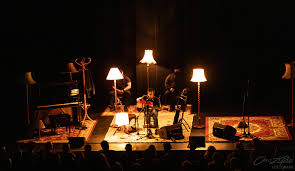
Scenes from Hamilton College I: Meeting Ian and Jake

New Note: It’s been a while since I last posted this piece, and I’m glad to bring it back here as a republication. “Hamilton I” remains one of my favorite entries on the Kyoto Kibbitzer—an early chapter built around friendship, music, and the strange, formative textures of freshman year, especially the central presence of my good friends Ian and Jake, who shaped so much of that time. It’s also one of the more widely read pieces on the site, which I appreciate. Re-reading it now, I’m struck by how much of what came later was already there in embryo: the scenes, the sounds, the late nights, and the people who mattered. As always, thanks for reading.

And I recall the moment
More distant than it seems
When five green queens
On a black bin bag
Meant all the world to me

The Pogues

I attended Hamilton College, and managed to graduate–possibly in linen. At Hamilton I was an English major, and intended to be from when I enrolled. This was a decent choice; however both Hamilton and English were kind of my father’s choices. I also managed to cobble together an Asian Studies minor through the good auspices of my advisor who checked out my credits and told me I could put that together. This was a good call on his part, and even though I kind of stumbled into it, The Asian Studies minor was my choice.

I was pretty unprepared for college. Before going I was asked to fill out a kind of questionnaire to help the college place me with roommates. One of the questions was, are you clean, messy, or in the middle. I chose in the middle, which was sort of a mistake because it turns out men are pigs, and I was cleaner than most. At the same time though it wasn’t a mistake because if I had selected clean I may not have met Ian and Jake. Jake was my roommate, and we lived in a quad. The other two roommates were Brian and Geoff, and although I had a relationship of a sort with both of them freshman year, we were not really on the same page. Jake and I were. Ian was our next door neighbor, and he roomed with Marc Campbell, and two other people. Ian, Jake, and Marc are still in my life.

My parents came with me to upstate New York, and before I moved into the dorm we stayed for a few days in a hotel near campus. I was kind of apprehensive, and spent the days listening to The Pogues and quietly stressing. But when I moved into the quad things were fine. This was mostly because of Jake.

Jake was a bit of a wild character. He was from either New York or Connecticut as I recall, and I think he came from decent money. When I visited his house later that year it was very patrician, for lack of a better word. His father seemed like a super old-school WASP patriarch, and his mother didn’t work I don’t believe. His younger brother held right-wing political views at the time, while Jake was a lefty. This was a point of serious disagreement between the brothers, but other than that the family seemed pretty solid. I believe that his brother has since switched his political views.

I didn’t meet Jake’s family until Thanksgiving however, and got to know him first in the context of the quad. We lived in a dorm called North, on the first floor right by the door. (My buddy John Innes, who joined me at Hamilton from our high school lived in the neighboring dorm Kirkland, and next to that was South.) The door to North would be locked at night, and other dorm folks would regularly misplace their key and crawl through our always open window. Jake and I rarely slept, and I got in the habit of staying up until about five AM. After that I would get a little sleep before first period English class. Then I would attend Geology class, which satisfied some kind of Science graduation credit. For English class I was alert and on top of it, although I was still hand-writing my papers, which changed once I got in the habit of using the computers in the library. English class was small, maybe 12-15 people, whereas Geology was huge and held in a lecture hall. I would go lay down in the back in the aisle and try and sleep. I ended up getting As in almost all my English classes, and a C- in Geology, which was deserved to an extent because of the sleeping. However, the main question on the final was brutal and pretty unfair, which was to draw a seismograph. Literally, draw one, which we had never studied and I did cram for the final. Brutal action. Somehow I still made the honor roll that year, and every year, because of my performance in the humanities.

Jake was an English major as well as far as I recall, I kind of forget, but he knew a lot of the teachers I knew. In any case, we did not bond primarily in the classroom, but in the dorm and then at “Sig,” the frat he was associated with and later pledged. Sig was the alternative frat. I hung out there a bit, but when pledge season started they kind of cracked down on non-pledges attending parties. For Halloween, Jake snuck me in early, and although that night I got a few looks I was good with Jake’s blessing. That night I wore all black with a turtleneck and a paper sign on my back saying “No future for you.” As in the Sex Pistols. I was talking with an older guy, an alum (there were always some alums that hung at the frat parties at Sig) at the party and he said something to the effect of “I like you, but I don’t like your shirt.” OK dude.

That was the same night I believe that inspired the following little ditty I later shared with Jake:

I pissed in the toilet

He pissed in the sink

He said I haven’t got a god above

I haven’t got a drink

Jake later took umbrage with the lines, not the sink part, which was and remains credible, but the god part. I think he is, or was, a believer. In any case, he’s my friend and won’t sue.

I appreciated Jake showing me the ropes at Sig and elsewhere. In the dorm we would play his music–he was into the classics, Beatles and Stones, Kinks, Bowie. We would sing “The Ballad of John and Yoko,” and “Come Together,” mostly the former over and over, no doubt to the annoyance of our roommates. Jake also liked The Pogues, and this made me think even more highly of him.

Jake smoked, Marlboro Reds, and I soon started smoking too, the same brand. This was not out of a desire to be a smoker, but rather as a way to keep my hands occupied and look busy at parties, where I had some difficulty mixing. I picked up, or invented, a little trick where I would fold up the flaps of a cigarette pack so they looked like a paper airplane, and then lob the cigs around the room, usually to any girl that wanted one. This got me some attention and some affection, and I kind of became known for the move. It didn’t get me laid, but at least it was something. Jake and I were fast friends, and hung out a lot in the early part of the year, before he began to branch out. Once he started pledging Sig though I saw less of him, naturally enough I guess.

By the time Jake started pledging, and even before, I was spending more time with Ian. Ian was from Boston and his father was a medical doctor. He lived in a nice house in the suburbs–both Jake and Ian had quite a bit more money than I, a common feature at Hamilton where pretty much everyone had money expect me. I was on a pretty decent scholarship, despite my not so impressive high school record, and could not have afforded the school without the scholarship. I visited Ian once or twice I believe in college, and then stayed with his family for a few months in the fall after college, but that’s a story for a future post.

Ian had a massive record collection in his quad, next door to mine as I have said. I liked Jake’s music, especially “Rebel Rebel,” “Come Dancing,” and The Stones, however his selection was somewhat limited. Ian’s was capacious. He was into bands like The Stone Roses, The Charlatans, Ride, and a bunch of other British bands I didn’t know at the time. But he was really into everything. I spent hours in Ian’s room soaking up his music, and my association with him kind of took over where Dyche Alsaker’s left off. I think it was Ian who also introduced me to Luna, who was coming up at the time and is still one of my favorite bands to this day. Later, in senior year I think, Ian and I had a radio show together and one night we got to play records all night long when a few other people canceled suddenly. I would play The Replacements and the Pogues, and Ian would play his music, but I was also getting deep into the 4AD label and bands like Big Star, This Mortal Coil, and a little known band called The Binsey Poplars (who I’m not sure were even on 4AD), named after a Hopkins poem. But my favorite around that time was Nick Drake, who was on Rykodisc.

Drake is now pretty well known, mostly on the back of his song “Pink Moon,” which was featured on a Volkswagen commercial, but back then he was not well known outside serious music circles. I loved his song “Rider on the Wheel,” and was an evangelist for him, telling all and sundry to listen. Most people didn’t, of course, but the whole move was just odd enough to get a little attention, which I was definitely seeking. (Another friend from that time John mentioned to me a few years ago that I would sit on the front steps of his frat in my trench coat and read a book. I don’t really remember this, but if it’s true it was for sure for attention.) I remember one evening Ian had a kind of band that was playing and I “opened” for them. My act was simply talking about Nick Drake, painting him as a forgotten genius, which he was, and pleading with the crowd to listen. It went over pretty well, like I said probably just because it was different.

Later on, mostly the next year I think, Ian and I went to a few shows in Boston, including The Red House Painters, The Fall, and Love Spit Love. Ian would drive, and blast The Pogues with the window down to stay awake on the way home. Before one of these shows we managed to source a little green, which was enjoyable. We would park, illegally, in some lot Ian knew. In the lot, there were rats.

Jake and I were sort of on the same level–both semi-degenerate English majors–but Ian I looked up to. He was definitely the leader in the friendship, although he must have seen something in me because we hung out a fair bit. Ian was also friends with Marc, but he was perhaps closer to another group of guys who lived in two adjacent quads on the third floor. This included John and a guy called Will. I would go up there too, and Will would ask “what Dead do you want to listen to?” I always went with Reckoning because I liked the country-folk sound and the song “It Must Have Been the Roses.” I liked the third floor guys too, especially John.

Next door to Jake and my quad was Adam and Basmo. Adam and Basmo (a nickname) were seniors who for some reason decided to stay in what was basically a freshman dorm. Adam was cool, but pretty grown up. Basmo was still a kid, and loved to get high. Loved to get high. Early on in the year he would come over and ask “anyone want to get stoned and session?” A session, it turned out, was you would smoke, put on The Beatles, and watch Bugs Bunny or something with the sound down. The idea was the music would synch up with the cartoon and it would be hysterical. It totally worked, although I just liked to listen to music and bullshit rather than session. Real heads will remember the session. (Jake told me that sadly Basmo later took his own life as a result of the worsening effects of ef. That was really too bad because Basmo was just a pure open-hearted soul.) So basically we would get stoned when we could, smoke Reds, and stay up all night and listen to music, which was a pretty decent life all in all. Jake and Ian took me in, and made the first part of freshman year so much better in all ways than it would have been if I hadn’t known them.

Dedication: For Ian and Jake, for seeing something in me, and helping make me a little somebody.

to be continued…

Note: If you liked this piece, you may other like the other pieces below in the Hamilton series.

On Subcultures and Scenes in Craig Finn’s “It’s Never Been a Fair Fight”

New Note: It has been a little while since I last posted this piece, and I’m glad to bring it back into view. It remains my very favorite essay on the Kyoto Kibbitzer, and has continued to circulate far beyond what I ever expected, with many hundreds of reads over time. In an entirely unscientific but pleasingly persistent corner of the internet, it still seems to rank #2 in search results for the term “Katie Park Bad Moves,” just behind Wikipedia, which is pretty cool. I have no idea what to make of that, but I’m not complaining.

The piece itself—on Craig Finn’s “It’s Never Been a Fair Fight”—has always felt to me like one of the most complete things I’ve written about music, scenes, and subcultures, and I’m grateful for the continued readership and responses it has received. Reposting here in full for anyone who missed it the first time around, or wants to revisit it.

Original Note: This piece is about an absolutely amazing song by Craig Finn called “It’s Never Been a Fair Fight” released in 2020 on All These Perfect Crosses from Partisan Records. We will also expand on the song’s theme, which is how subcultures (and “scenes”) operate. Finn is, in my opinion, the greatest lyricist working today (not the greatest living lyricist, that’s still Dylan). I’ve written about about Finn before here, and here.

Craig Finn himself has commented on this song and says that “It’s Never Been A Fair Fight”:

“Is about the extreme difficulty of staying true to the rigid rules of a subculture as you get older. The character in the song revisits an old peer and finds struggle and disappointment in the place he left behind.”

In this case, the narrator had been part of the punk/hardcore scene in the 1980’s and 1990’s, has left the scene, and reflects on his time there and what it meant as he meets his old friend—and we suppose former lover—Vanessa. I’m not sure I understand the entire chronology of the song, as it engages in some apparent time jumps that can be a little hard to follow. Overall however, it is pretty clear what the song is about.

The opening verse sees the narrator (let’s call him C., because while we will grant Finn the understanding as an artist that his characters are characters, in this case the song feels pretty autobiographical) checking in with Vanessa. The song opens in the present day.

Finn has C. meet her “right in front of her building,” Vanessa “vague in taste and drowning,” telling him she’s “got a new man…in a new band,” and “they’ve got a new sound.”

We get the impression that C. has been out of the scene for a while, while Vanessa is very much still in it: new man, new band, new sound, same old place. Vanessa’s man, we assume, is in a hardcore band, and I believe it is the case that Finn came up through the hardcore scene before forming his first band Lifter Puller. Lifter Puller is not a hardcore band, and I don’t know if Finn was actually in a hardcore band or just in the scene.

Then comes one of Finn’s perfect little deadpan truths. C. shrugs that “hardcore’s in the eye of the beholder,” a funny line for a number of reasons (it also reminds me of the classic David Berman line: “punk rock died when the first kid said / punk’s not dead.”) The humor hits because it’s both self-aware and scene-aware.

After C. recalls his “broken heart from 1989,” Finn pivots the timeline. The song shifts back—back to when C. was attending hardcore shows, hot and sweaty, elbows in his eyes. The chronology bends, but the emotional logic stays firm.

Vanessa says there are “threads that connect us,” and “flags and wars we should never accept.” Angelo’s off seeing “snakes in the smoke” from someone’s cigarette. And Ivan? He isn’t concerned at all — for him it’s mostly just about “what you wear to the show.” C. admits he “heard a song…on the radio” that he liked, which we can assume violates at least one of Vanessa’s unwritten rules.

Finn is an absolute master of sketching characters in just a line or two. Here, he uses a sort of pointillistic approach to introduce us to two additional members of the scene, Angelo and Ivan. With just a few short verses we already understand a great deal about “the scene.” Here is what we can deduce:

i) All four members of the scene have very differently valenced loyalties. Put another way, they want different things from it. Vanessa is a purist; for her being part of the scene is like being part of an tribe, an army, and we take her to be a fierce protector of the in-group/ out-group aspects that tend to arise in subcultures. Angelo, it seems, is a little out there; he’s seeing snakes in the cigarette smoke and probably not all that interested in the ultimate nature or meaning of the scene. Ivan likes the t-shirts and jeans, likes the look. He’s not a purist either. And C., well he likes a little pop music, an inclination we assume is strictly verboten for folks like Vanessa.

ii) Probably because of the differences in ideas and ideologies between the scene members, C. sees things coming to an end, both with the scene and between he and Vanessa. Here we are reminded of the difficulty of keeping any kind of group together, whether a scene, a band, or just a group of friends. Everyone knows the feeling of having a group of friends who tell each other they will be tight forever, however life doesn’t usually work that way. The best film about this dynamic is Whit Stillman’s Metropolitan, which depicts a young group of friends in Manhattan who come together and then slowly, but inevitably, come apart over the course of a winter. There is a great moment in Metropolitan where the main character, Tom, looks around and realizes the scene is dead. Where did it go? It was here one day, gone the next. Scenes are like that, and this is what Finn is writing about.

iii) The inherent differences between people which make keeping the scene together are also something that Finn celebrates to a certain extent I think. One of the most salient features of Finn’s writing is his compassion. Finn has compassion for Angelo and his snakes, Ivan and his jeans, and for Vanessa, in all of her rigidity. As of the time of the song we know for sure that Vanessa is still in the scene and C. is not. I guess that neither Angelo nor Ivan is still around, however if only one of them is my money’s on Angelo, if he’s still alive.

Through the course of my own life, I have been involved, for a shorter or longer time, with a variety of subcultures. One category of subculture that I have frequented is what we could broadly call “new age.” My explorations of this category have been reasonably extensive. Back in my early 20s, I was involved for about 4–5 months with a Tibetan Buddhist group back in Washington State. I would get up at 4 AM, drive an hour across town to a beautiful old house on the hill, and meditate with the folks there. This group also organized some outings, such as mountain hiking.

I enjoyed the group and the meditation. The group leader, a slightly older woman who was lovely, asked me to pay like 6 dollars for a little book with chants in it, which I did. There was a total cross-section of people in the group of different ages and backgrounds, and all in all I liked it there. However, I peeled off from the group after a time for reasons very similar to those discussed by Finn. There were two specific things that led to me leaving. The second I’ll discuss a little later. The first was one day I was chatting with one of the members on the street outside after meditation. He was telling me how his daughter used to play chess, however he would no longer allow her to do so because it was interfering with her studies of Tibetan Buddhism. “There’s just not enough time,” he told me.

I had talked with this guy before and he was a perfectly nice guy, but I didn’t agree with his approach. I felt, in fact, that it was bad action. Now, I understood that people joined the group for different reasons and had different levels of investment. I was not looking to become a Tibetan Buddhist or anything—I was just “checking it out.” To circle back to Finn, the valence gap between this fellow’s take on the subculture and my own was vast, and his entire approach turned me off. This was the first step in my deciding to leave.

The next three verses of “It’s Never Been a Fair Fight” see C. trying to keep the door open to Vanessa even as he edges out of the scene. He wants to meet her and if she agrees he will know that she like him feels that “punk is not a fair fight.” Finn doesn’t say, but I’m guessing Vanessa doesn’t show.

If things change quickly/ just remember I still love you/ and I’ll circle ’round the block tonight/ between 9 and 10 o’clock tonight

If you’re still standing here, I’ll take that as a sign/ that you agree it was a sucker punch/ punk is not a fair fight/ it’s never been a fair fight

We said there weren’t any rules/ but there were so many goddamn rules/ we said that they’d be cool/ but then there were so many goddamn rules

Verse VII is the hinge-point of the song and basically its thesis. Finn’s point is straightforward: the appeal of the scene is the potential for freedom, exploration, rebellion, however once inside the subculture C. finds himself increasingly hemmed in by the strictures of that culture and the requirements necessary to remain within it. The very thing that drew C. to the subculture (flight from an over-determined social reality) is that thing that ultimately drives him away. “It’s Never Been a Fair Fight,” appears in two versions on All These Perfect Crosses; the main version is horn driven and upbeat, and there is also an acoustic version. On the main version, Finn, realizing perhaps that the repeated line is a bit poetically unorthodox, spits out a laugh on the “then” in “but then there were so many goddamn rules,” and in the process underlines the centrality of the sentiment to the song as a whole. It’s a great verse, and one which tells us something fundamental about C.’s nature: he likes the action, and as such needs to be free to pursue it wherever it may be. Action is not limited to the Minneapolis hardcore scene, after all.

Read more

On Larry King, the Radio GOAT

Epigraph:

“I listened to the radio / I waited all night long…”
— Radio Radio, Elvis Costello

Note: This piece reflects my personal memories of listening to Larry King’s overnight radio show in the late 1980s and early 1990s, along with later impressions from television appearances, interviews, and conversations with people who knew him. It is written in the spirit of appreciation and nostalgia rather than media criticism, and emphasizes the uniquely loose, humane, and unpredictable quality of King’s radio work, which for me remains the defining core of his legacy.

I grew up listening to Larry King’s overnight radio show between roughly 1988 and 1992, and in my opinion — which happens to be correct — the radio show was much better than the television version that later made him famous. The TV show was good, even great at times, but radio was longer, looser, freer, and far more unpredictable. It had weird guests, weirder callers, and the feeling that anything might happen at two in the morning. That’s where Larry really lived.

I would listen in my bedroom at my parents’ house in Spokane, Washington, the volume turned low, the house quiet, insomnia hovering. The Spokane AM station — KGA 1510 — carried the show from around 9 PM Pacific time, and then, wonderfully, they would run it again. So I’d listen from nine to midnight, fade, wake at two or three, and hear the same segment again in a half-dream. The effect was surreal. Didn’t I just hear that caller? Didn’t Larry just say that? It created a strange loop of late-night déjà vu that only made the whole thing more atmospheric. The show felt less like programming and more like a continuous nocturnal conversation.

My friend Kelly Rudd loved Larry too. When we were in high school we were both big fans of the radio show, and we talked about it constantly. There were a couple of things that we especially liked. The first was that Larry famously did no preparation. He knew a huge amount about the world, of course, but he didn’t read guests’ books ahead of time. He wanted to come in cold. If his guest was a firefighter, he’d ask, “So what’s it like to be a firefighter?” It sounds lazy, but it was brilliant. By staying open and getting out of the way, he let the conversation go anywhere. This way the show became eventful.

Another thing we loved was what happened after the guest left. Larry would open the lines and take questions about absolutely anything. Most of the time he was generous and patient, but when callers went off the rails he had a signature phrase. He’d cut them off gently: “Cold compress, ma’am,” or “Cold compress, sir.” Basically: lie down, ice your head, regroup. It was hysterical, especially because he used it sparingly. When “cold compress” dropped, you knew things had gotten weird.

Anyway, Kelly and I loved Larry so much that when the station suddenly dropped the show, Kelly proposed we drive to the radio station and protest. So we skipped school, drove across town, and rang the intercom demanding to speak to someone about the cancellation. The station manager eventually came down and heard us out. We knew we weren’t changing anything, but it felt right to try. Larry never came back to Spokane radio, and the show faded not long after, but the whole episode captured what the show meant to us. It wasn’t just background noise. It felt alive.

Larry’s on-air style was the key. He was unbelievably relaxed. By the late ’80s you could tell he had done thousands of hours. Nothing fazed him. Weird guests, drunk callers, eccentrics — all the same to Larry. He absorbed everything. He had pet phrases — “cold compress” chief among them — and he deployed them like a veteran reliever, only when needed. He famously did no prep, and he leaned into naïve questions. He’d ask something simple and let the guest do the work. The effect was disarming. People opened up. He also had real humanity. He listened. He didn’t mock callers. He didn’t rush them. There was compassion there, and I think that’s what I loved most.

And the show could get wonderfully out of control. In one story Larry told from his old Miami days, an adult actress he was interviewing suggested they just have sex during the commercial break. Larry, amused, asked the producers to clear out — but there wasn’t enough time. That kind of anecdote captures the looseness of late-night radio. It wasn’t polished. It was alive.

Larry left the overnight Mutual Radio show in 1994 to focus on television. By then I had already drifted away, but I still caught Larry King Live on CNN over the years. I remember watching during the O. J. Simpson trial while at Otago University in New Zealand, when the show became part of the nightly noise. Later there were the Vladimir Putin interviews — classic Larry, conversational and oddly disarming. And of course there were the great comic moments, like the interview with Jerry Seinfeld where Larry suggested the show had been canceled and Seinfeld snapped back in disbelief, and the Norm Macdonald appearance where Norm kept repeating, “I’m a deeply closeted homosexual,” and Larry tried earnestly to parse it. “So that means you’re gay?” “No, Larry,” Norm replied, “it means I’m deeply closeted.” Pure Larry: sincere confusion meeting absurdist comedy.

Larry’s personal life was famously complicated. He married eight times, had several children — including sons Chance and Cannon later in life — and lived in a kind of perpetual romantic improvisation. The marriages came and went. The last ended painfully and publicly. He once joked he’d never leave his wife unless Angie Dickinson came along — and when she did, he married her. That was Larry: impulsive, affectionate, slightly chaotic. Despite decades of success, he didn’t leave the kind of massive fortune people assumed. The money came and went, as did the marriages. It was a life lived in motion.

My friend Sergio Mandiola actually knew Larry in his later years in Los Angeles. Sergio was running an independent studies program at Beverly Hills High School, and Larry’s sons Cannon and Chance, and he taught his sons for three years. Larry would come by for open nights or just to chat.

Sergio Mandiola: “Larry would come in from time to time and we would talk. He was lovely and open. He talked about his family and his career. One time he told me, ‘Sergio, you should totally have a radio show!’ I was flattered. One thing about Larry is his politics were more to the left than he let on on air. He had strong views and wasn’t afraid to share them in person. Larry was a true mensch and I’m glad I got to spend time with him. I miss him.”

In the end, I’ll say it plainly: for me, Larry King is the radio GOAT. There was no one like him, and there probably never will be. It wasn’t just longevity. It was the curiosity, the looseness, the humanity, the love of people, politics, baseball, and life. He trusted the conversation. He let the night unfold.

And then there was that absurd, wonderful USA Today column, which read like a diary gone completely outta control. Mets lose 6–4…Rain in Baltimore…Clinton flies to Ireland…You’d read it and think, Larry, baby, WTF is this? And also, Mr. USA Today, WTAF are you doing paying for this? But somehow it worked. It was pure Larry — fragmentary, observational, intimate.

And that’s how I remember him most clearly: late nights in high school, the radio turned low, insomnia hanging in the room, Spokane quiet outside.. Sometimes I’d listen from nine to midnight, fade, then wake again to the rerun, half-dreaming, half-aware, caught in that strange déjà vu — didn’t I just hear this? — while Larry kept talking, calm as ever, taking calls from truckers and insomniacs and eccentrics. My listening years were brief, but they stuck. And when I think of Larry now, that’s where I go back to: the low hum of AM radio, the half-fade, and the sweet sounds of his voice in my ear.

Dedication:

For the one and only GOAT, Larry Motherfucking King. RIP baby.

On Being Early to Shows

Note: Getting to shows early, I realized, isn’t really about beating the crowd but about entering the space before it hardens into an event—when the room is still provisional, the bartender relaxed, the band half-mythical figures moving casually through soundcheck, and the whole night feels less like a performance and more like something forming in real time; you notice the lighting before it matters, the empty floor that will later surge, the stray conversations, the merch table still untouched, and sometimes—if you’re lucky—the musicians themselves, unguarded and human, which subtly rewires the experience so that when the set finally begins you’re not just watching a show but inhabiting a continuum that started hours earlier, a private prelude that rewards patience, sharpens memory, and turns what could have been just another concert into a small, self-contained narrative of anticipation, proximity, and the quiet pleasure of being there before everything becomes official.

Epigraph
“There’s a thin line between a guy with a backstage pass /
and a guy walking around with his gut hanging out like a jackass.”

— Sun Kil Moon, “Ben’s My Friend”

I’ve always been fascinated by the green room. First of all, why green? They can’t all be green. Second, there’s the whole rider situation. The rider is where things get really interesting. I think it was Van Halen who had in their rider that all the brown M&Ms had to be removed from a bowl. This sounds totally bizarre, but the point was attention to detail. If the venue screws up the M&Ms, they might screw up something much more important, like stage rigging or pyrotechnics. The M&Ms were just a test.

Other riders go in different directions. Iggy Pop reportedly asked for things like a Bob Hope impersonator and other surreal odds and ends, more like performance art than hospitality. Meanwhile Beyoncé is famous for highly controlled riders: temperature, lighting, water, environment, everything calibrated. One approach is chaos, the other total control. Both happen in the green room, which most of us never see.

My first concert was Dire Straits in Pullman, Washington, in a big arena. I was nowhere near the green room, of course. Most of us aren’t. So the real question becomes: what happens before the show, if you’re not backstage?

One answer came when I saw They Might Be Giants in Spokane with my friend Kelly Rudd. Kelly told me his cousin was in the opening band. They got paid twenty bucks for the show. The whole band. Twenty dollars. Totally unbelievable. Outta fucking control. TMBG were already a pretty big indie band, “Birdhouse in Your Soul” had been a hit, and I liked “Istanbul (Not Constantinople)” quite a bit. But after hearing that story I never quite looked at them the same way. The green room fantasy took a hit. Backstage wasn’t glamorous. It was twenty bucks and a handshake.

Another time I went to see Cat Power at the old Club Quattro in Osaka. I got there early, of course, and there was an opener dressed like a fairy with fuzzy, messed-up hair who sat down at the piano and proceeded to play dirge after dirge for what felt like an hour. Solo piano can be great, but this was brutal. I honestly thought I might have to cap myself. At some point I checked my ticket just to make sure this wasn’t actually Chan Marshall. It wasn’t. Thank god.

Then Chan came on and instead of playing from the stage like other artists do, she wandered through the crowd with a wireless mic, half-rapping, half-singing, talking, improvising. It wasn’t really a concert. It was more like some kind of performance art happening. Totally outta control. If I’d come late I would have missed the whole bizarre prelude. Being early meant enduring the dirges but also getting the full weirdness of the night.

Another early-arriver adventure came when I saw Deerhunter at the Hostess Club Weekender. These shows started early and stacked openers all day long. I once saw Mogwai at one of these and had to leave after fifteen minutes because I was hungry, tired, faded, and they were boring the living shit out of me. It happens.

The Deerhunter show in Osaka was even more outta control. The headliner was scheduled for 7 PM, but there were something like six openers. One of them was Ivo Watts-Russell of 4AD, a legendary figure, but he droned on so long that by the time Deerhunter came on they only had about forty minutes. Bradford Cox introduced him with dripping sarcasm, emphasizing “LABEL BOSS,” clearly taking the piss because the band’s time had been cut. I ended up having to see them again months later in Nagoya to get the full set. That’s the risk of being early: sometimes the openers eat the show.

The flip side came when I saw The Hold Steady at the Brooklyn Bowl in December 2018. I arrived two hours early, ate a hamburger, and smoked up outside. That’s where I met Austin, a total Steadyhead. He knew everything: lineups, labels, deep cuts, all of it. We talked music, smoked, and waited. When doors opened we grabbed territory near the stage with the other early-arrivers, a semi-cliquey group of diehards.

Later, when Austin wanted to get back to the front for the encore, he told me to follow him. He moved through the crowd at a half jog and the people parted in front of him like he was Barry Sanders hitting holes. Seconds later we were hugging the stage. I knew then I was in the presence of greatness. I also knew he was my friend. I didn’t get the VIP meet and greet, but getting there early gave me something better.

My one true VIP experience came when I saw The Afghan Whigs in Amsterdam in 2017 at the Paradiso Amsterdam, a beautiful converted church. I arrived three hours early, met Greg Dulli and the band, took photos, bought merch, and watched soundcheck with maybe fifteen people. They played “Going to Town” acoustically, which was a revelation. Later they crushed the full electric set, ending with “Faded.” I paid fifty bucks for that meet and greet and it was completely worth it. Being early paid off directly.

Getting to shows early, then, is not really about the green room at all. The green room is a kind of fantasy—green walls, bowls of M&Ms, riders with impossible demands. Most of us never see it, and even when we do, it turns out to be smaller and more ordinary than imagined. And probably not even green. The real action happens in that strange in-between space before the show: the smoking area, the empty floor, the long wait while the openers drift on and off.

If you arrive early, you get all of it. You get the terrible fairy-piano dirges and the label boss who drones on too long. You get the moment of doubt when you check your ticket and wonder if this could possibly be the headliner. You get the rail territory battles and the cliquey early crew. You get the conversations with strangers who turn into temporary friends, like Austin, who parts the crowd like a halfback and gets you back to the stage in seconds. You get the soundcheck if you’re lucky, the acoustic revelation, the quiet before the storm.

Most of all, you get time. And time at a show is a funny thing. Once the lights go down, everything compresses. The band plays, the songs blur together, and before you know it the encore hits and everyone spills out into the night. But if you were there early, the show feels bigger. It has a beginning, a middle, and an end. You saw the room empty and then full. You watched the night assemble itself.

So while some people drift in late, grab a drink, and wait for the headliner, I’ve always preferred the long route. Get there early. Kill time. Smoke a cigarette. Talk to whoever’s around. Endure the openers, good or bad. Maybe you meet someone. Maybe you don’t. Maybe the band walks through the room. Maybe nothing happens at all. But every once in a while, if you’re lucky, something does. And that, in the end, is why I like to be early to shows.

Dedication:

For music lovers everywhere. You are my tribe baby.

The Adventures of the Thin Man and Andrea Available Now!

Well everyone, today is the day. My first novel, The Adventures of the Thin Man and Andrea is now available on Amazon and wherever books are sold.

This one took a while—written in fits and starts, in bars and hotel lobbies here in Kyoto—but it finally found its shape. More than anything, today I just want to thank all the readers of The Kyoto Kibbitzer, wherever you hail from; I’ve always thought of this as an ongoing conversation, and a lot of this book grew out of that exchange.

If you do pick it up, I hope you enjoy the ride—and if it lands for you, a quick review on Amazon would mean a great deal. Thank you, as always, for reading.

Matt

On the Pre-Game (aka A Response to Neil Strauss’ The Game)

Note: This piece overlaps my three essays on my week with Isobel series (I–III), though it approaches that week from a different direction. Where those pieces follow the arc, this one lingers on the moment before it resolves—the pre-game, as I’ve come to understand it. It is also a direct response to the book The Game, by Neil Strauss. In what follows I don’t intend to rebut Strauss so much as correct what I see as a fundamental weakness in the subculture he dissects. The reader will judge whether I succeed.

Epigraph

“No one else could play that tune, you know it was up to me.”

— Bob Dylan, Up to Me


Part I: Ippei

I’m at Zaza, the club on Kiyamachi in Kyoto. It’s around 11 PM and just getting going. Zaza is a late night place. It doesn’t peak until well past midnight, and at this hour it’s still stretching, still finding its rhythm.

I’m there by myself, drinking a White Russian.

A Japanese guy comes up to me. He’s about fifty-five. No preamble, no easing into it. He introduces himself—let’s call him Ippei—and within seconds it’s on.

“See those two ladies over by the window,” he says. “Wanna help me pick them up?”

I’m intrigued. Not because I’m especially interested in the outcome, but because I’m a curious guy and I want to see what he’s doing.

“Ok,” I say. “What’s the play?”

He doesn’t hesitate.

“You’re my old friend from California. I haven’t seen you in twenty years. I just ran into you by chance here. Take it from there.”

That’s it. That’s the entire setup. Handed to me fully formed.

I ask him, just to check, “Is this going to work?”

He smiles, completely unbothered.

“Yeah,” he says. “I do this every night. Had a threesome last night.”

Well alright then.

We walk over. He starts talking immediately, in Japanese, smooth, fast, confident. “This is Matt, my best friend from California. Would you believe I just found him here?”

I met him five minutes ago.

It doesn’t matter.

In no time the two women are completely engaged. Smiling, leaning in, laughing. The story has landed. The reality has been accepted. They’re not being approached. They’ve been included.

And I’m there, but I’m not really there. I’m not trying to win anything. I’m not trying to escalate. I’m watching. Taking it in. The nightlife anthropologist, just observing the field.

After a while I step out to the balcony to smoke.

Twenty minutes pass.

When I come back down, he’s still there. Still going strong. Still inside the same story.

That’s when it clicks.

He didn’t need me.

He needed the role I filled.

He needed a premise.


Part II: Neil Strauss

Neil Strauss’ The game

That night at Zaza stuck with me, not because of what happened, but because of what it revealed.

There is a whole body of writing—call it a subculture, call it a system—that attempts to explain and formalize moments like that. The most famous version of it is The Game, by Neil Strauss, which I’ve read twice.

I want to be clear about something before I go any further.

I’m not anti–Neil Strauss. In fact, I respect him. He’s an elite investigator of subcultures, and I love subcultures. He embedded himself in a world, learned its language, mapped its hierarchies, and reported it out with real precision. That’s not easy to do. It’s a serious piece of work.

What follows is not a dismissal of Strauss.

It’s a response to what the game represents.

Because once you move from observing a system to adopting it, something changes.

At its core, the game assumes that attraction can be engineered. That with the right language, the right sequence, the right calibrated signals, you can break down a woman’s resistance and get to the desired outcome, which is of course bed.

It’s a kind of a linguistic technology and NLP at its worst. A system designed to move someone from one state to another.

And for me, that’s where I part ways.

For me The Game is a massive turnoff, because it flattens everything and kills any chance at romance.

It scripts what should be alive. It reduces seduction to a manual and turns something unpredictable into something repeatable. And in doing so, it drains it of the very thing that makes it worth pursuing in the first place.

There’s no space for real connection. No space for the unexpected. No space for the moment where something happens that neither person could have predicted. No space for the kind of encounter that might actually change your life.

And beyond that, it produces a life that I don’t want.

The guys in The Game end up living together in this kind of shared house—Mystery, Strauss, Courtney Love—surrounded by other guys, talking about women, thinking about women, analyzing women. It’s a sausage fest. And it’s not cool.

The Gamers think they’re players. I prefer to think of them as incel-adjacent. They’ve optimized the system, but they’ve lost the thing itself. They’ve mastered the game and stepped outside of life.


Part III: On Action

I’ve had a handful of sexual partners that I’ve gone all the way with. The precise number is under an NDA. I’ve made out with more. But I haven’t been especially active, at least not in the way the game would define it.

What I have done is, flirt with, connect with, and have crushes on dozens of women.

And the truth is, I enjoy it.

I actively enjoy the pre-game.

I enjoy getting close. The moment before something becomes something else. The tension. The ambiguity. The recognition that something might be there, and neither of you has named it yet.

The thrill of newness and the possibility of a spark. If it burns, great. If it flickers, that’s also good. For most men, the pre-game is a means to an end. For me, it’s the end.

And that’s the difference.


This doesn’t mean I’m not interested in action. I am. Very much so. In fact, I’m something of an action junkie. But I’m a highly specific kind of action junkie. Like Wittgenstein, who was said to have manufactured his own oxygen, I manufacture my own action.

I don’t chase it blindly. I don’t optimize for it. I don’t try to force it into existence through systems or scripts. I generate it. Selectively. Intentionally. And in moments where it actually means something.


Part III: Luna

I’m at Umineko with a friend—call him Mr. Editor. It’s early, maybe six in the evening. We’re mid-bar, having a beer, when I notice a woman sitting off to the side.

She’s stunning. And I HAVE to go talk to her. Not because I expect anything to happen. Not because I’ve calculated the odds. But because the moment demands it.

I tell Mr. Editor what I’m about to do. He nods. “Go for it,” he says. “I’ll watch.” I walk over and ask her name. She smiles. “Call me Luna.”

We speak in Japanese. The conversation flows. I bring everything I have to the moment—attention, presence, curiosity—and it lands. There’s a spark. Not forced. Not engineered. Just there.

We talk for a while. Long enough for the room to shift slightly around us. Eventually I ask for her Instagram. She gives it to me. I walk back to the bar and sit down next to Mr. Editor. I’m on Cloud 9. The next day, in the late afternoon, carefully timed, I send her a message but she doesn’t reply.

Failure? Not for the pre-gamer. Because the pre-gamer already got what he came for. The moment. The spark. The approach. The brief, electric possibility that something might happen. That was the action. That was the point. For the Strauss guys, the night ends when the text goes unanswered. For me, the night ended at the bar.


Up to this point, the pre-game is contained. Safe, even. A space where things can happen or not happen without consequence.

But sometimes it doesn’t stay that way.


Isobel Revisited:

I have written about my week with Isobel extensively elsewhere, however part of that story is relevant to what we are discussing here. I met her at the Faculty of Astrological Studies, held at Exter College, Oxford, in late August 2018. We spent the week together and I fell in love. But I didn’t sleep with her. My choice. What follows is a light re-write from my essay “On My Week with Isobel: Part II”:

Wednesday.

I wake up early and we have breakfast together in the dining hall. By this point, people are noticing us. Comments here and there, snickers, sideways smiles.

Morning and lunch blur into one long conversation—the garden, the bench, a little grass, nothing hidden. We’re finishing each other’s thoughts. I’m in deeper than I’ve ever been.

We don’t attend much of anything.

In the afternoon break she goes to change. I go back to my room and put on The Mendoza Line with the full weight of obsession. She comes back after and tells me, without shame, that she had pleasured herself during the break. Just fucking states it.

This is a complication.

That night she changes again. A red dress. Short, but not careless. Stunning. We sit at dinner whispering, touching lightly, laughing against each other. Everyone knows by now.

After dinner there’s wine again, talking with the tutors, the long courtyard. I meet Darby Costello in person for the first time. She’s fully alive, drinking wine, holding the room effortlessly. I’m so happy she’s my astrologer. But I’m elsewhere.

We stay late. Clear the courtyard. Around two in the morning we part. Cheeks touched. No bedroom. No act. No close. Back in my room, lights low, Mendoza Line still in my ears, I lie on the narrow bed and I know exactly where I am standing.

I will keep going. I will see where this leads. But I will not sleep with her. I can’t.

It’s not that I don’t want to. I do. Totally and much more. But I can see it. The complications. For her, for me. The chain of events that would follow. I’m old enough to see it coming. And I know, standing there in the courtyard, with the last of the wine and a cigarette burning down, that it’s on me.

I have to be the one to say no. That’s the shape. That’s the decision.

=====

Up to this point, the pre-game has been something I could enter and exit at will. A space I could step into, generate action, feel the spark, and leave intact.

With Ippei, the action was scripted. With Strauss, it was systematized. With Luna, it was self-contained.

But there’s another version of the pre-game, and it’s the one that matters most. The one where the moment doesn’t stay light. The one where it deepens. Where the spark doesn’t just flicker—it starts to take shape. And at that point, something shifts. Because now it’s not just about whether something will happen. It’s about whether it should.

This is where the line from Dylan starts to carry real weight. No one else could play that tune. There’s no system here. No script. No borrowed language. No Ippei handing you a premise. There is only the moment as it actually exists, and your ability to see it clearly.

And then the second part. It was up to me. Not to escalate. Not to optimize. But to decide. The game ends when something happens. The pre-game ends when you decide it should.

Dedication

For pre-gamers everywhere. May you get a little action tonight baby.

Note: If you liked this piece, you may also like the following pieces that also take up the themes of romance and seduction.

On The Dubious Anna Delvey

Note: This essay reflects on the curious cultural figure of Anna Delvey, whose rise and fall in the New York art and social scene became one of the stranger morality plays of the late 2010s. Delvey—born Anna Sorokin in Russia—gained notoriety for presenting herself as a wealthy European heiress while attempting to secure loans and social capital for an ambitious but largely imaginary cultural venture known as the Anna Delvey Foundation.

The events described here draw on widely reported elements of the case: Delvey’s years moving through luxury hotels in Manhattan, her efforts to obtain financing for a private art and social club, the unraveling of her financial claims, and the now-famous trip to Dubai in which a friend—later a magazine writer documenting the experience—was left responsible for an enormous hotel bill after promised funds failed to appear.

The piece does not attempt investigative reporting. Instead, it approaches the story in a spirit of cultural anthropology. Cities like New York have always attracted individuals engaged in various forms of self-invention. The line between ambition, performance, exaggeration, and outright fraud can sometimes appear only after events have run their course. Delvey’s story is compelling partly because it dramatizes this thin boundary in unusually vivid form.

If the tone here sometimes drifts toward sympathy rather than condemnation, that is intentional. Many urban cultural scenes—especially art worlds—operate on the energy of strivers who are, in one way or another, attempting to become something slightly larger than their present circumstances allow. Most of them eventually succeed or quietly disappear. A very small number, like Delvey, collapse in public.

Their stories reveal something not only about themselves, but about the environments that briefly believed in them.

Epigraph

“For all the crazy people who can never get it right.”
— Drugstore


I. The Entrance

There is a certain kind of person who arrives in a city not merely to live there but to declare themselves into existence. Cities like New York attract them the way bright lights attract moths. They arrive with luggage, ideas, clothes that signal belonging, and an almost reckless confidence that the future will eventually arrange itself around their intentions.

Anna Delvey was one of these people.

When she appeared in the New York art scene, she seemed to possess the basic ingredients required for entry into that peculiar ecosystem: style, confidence, and an air of European mystery. She wore expensive-looking dresses and shoes. She wore aa lot of make up and had her hair done at expensive salons. She seemed for a while to ooze money. She spoke casually about ambitious cultural projects. She moved through hotels and restaurants as if she had always belonged to that world. In New York, that is often enough.

The city runs on confidence performances. Every ambitious young person who arrives there is, in some sense, performing the life they intend to have. The art world especially is full of people who are not yet what they claim to be but are working very hard to become it.

Delvey fit into that theater perfectly.


II. The Vision

The striking thing about Delvey was that she didn’t simply want to attend the art scene. She wanted to build something inside it. Her idea was the Anna Delvey Foundation: a kind of private cultural club and exhibition space in downtown Manhattan. It would combine gallery spaces, social rooms, events, artists, patrons, and the atmosphere of a private cultural salon. A place where the city’s creative and wealthy classes might gather.

The plan was grand. But it also had a strange plausibility. New York is full of institutions that began with the ambition of a single person who simply decided that something should exist and then spent years convincing others to believe in it.

Delvey spoke about the project with total conviction. She behaved like someone who already possessed the financial backing required to make such a thing happen. And because she behaved that way, many people assumed the money must exist somewhere.

This is one of the basic mechanics of social confidence. If someone carries themselves like a person whose financial arrangements have already been verified by someone else, most people will not ask too many questions.


III. Hotels

Hotels played a central role in the Delvey story.

Luxury hotels are perfect environments for people living inside ambitious performances. They operate on the assumption that their guests are legitimate. The bill will eventually be settled. The credit line exists somewhere. The guest’s presence itself is treated as evidence of solvency.

Delvey floated through some of New York’s most expensive hotels as if she were simply another wealthy European visitor temporarily residing there while arranging various cultural affairs. The lobbies, the restaurants, the rooms—all of it provided a stage set that reinforced the story she was telling.

Hotels also create a particular social atmosphere. Everyone is temporarily suspended between identities. People are traveling, negotiating, arriving, leaving. It is a place where someone can exist slightly outside the ordinary structures of verification.

For a while, the performance worked.


IV. The Father

Like many figures who construct elaborate new identities, Delvey carried with her a somewhat murky origin story.

She spoke of family wealth. Of connections. Of a background that seemed to hover somewhere between Russia and Germany, between modest beginnings and more glamorous narratives.

Her real childhood was more ambiguous. Her father had worked as a truck driver and later operated a heating and cooling business. It was a respectable, ordinary life. But it did not contain the European aristocratic wealth that sometimes appeared in Delvey’s stories.

This kind of ambiguity is not unusual among people attempting radical self-invention. The past becomes something flexible, something that can be rearranged slightly in order to support the person one intends to become.

In cities like New York, such reinvention is practically a tradition.


V. Dubai

The most extraordinary episode in the Delvey saga took place far from Manhattan, on a trip to Dubai. Delvey traveled there with a friend—a magazine writer who was documenting the glamorous world that Delvey seemed to inhabit. The trip was meant to be luxurious: private villas, elaborate dinners, the kind of extravagant travel that confirms a person’s social status.

For a few days everything unfolded according to the script. And then the bill arrived. The charges for the trip reached roughly $60,000. Delvey’s payment arrangements suddenly failed. The promised wire transfers did not appear. The hotel demanded settlement.

And the friend—the magazine writer who had been invited along for the ride—found herself responsible for the enormous bill. So Delvey left her there. Super bad business Anna baby.

It was a moment that perfectly captured the strange mechanics of confidence artistry. The performance works right up until the moment when reality insists on payment.

Someone, eventually, must pay the bill.


VI. Collapse

Once the financial machinery began to fail, the unraveling accelerated. Banks wanted documentation. Hotels wanted payment. Institutions that had briefly entertained the idea of supporting Delvey’s foundation began to ask more detailed questions about the supposed trust fund that would finance it.

The answers did not exist. The performance collapsed. Delvey was eventually arrested, tried, and convicted of fraud.


VII. The Strange Sympathy

And yet the Delvey story produced a strangely sympathetic public response. Perhaps it was because she had not simply been extracting money for luxury purchases. She had been trying, in her own improbable way, to create something. A cultural institution. A social space. A downtown hub for art and ambition.

The plan was impossible, but the ambition was recognizable. Many people—especially those drawn to cities like New York—understand the impulse to reinvent oneself, to construct a future through sheer force of belief. Delvey simply pushed that impulse far beyond the point where the arithmetic could sustain it.


VIII. Coda

In the end, the most interesting thing about Anna Delvey may not be that she fooled people. New York has always been full of people attempting improbable social performances. The interesting thing is that, for a moment, she came very close to building the life she imagined. And perhaps that is why stories like hers continue to fascinate us. They remind us that the line between visionary and impostor is often visible only in hindsight.

Dedication: For Anna baby (you’re hot BTW) and all the beautiful strivers out there. May your world-curated art spaces someday come true.

On George Santos (aka The Fabulous Kitara)

Note: This piece uses the figure of George Santos as a kind of cultural parable. The story of Santos—his improbable congressional run on Long Island, the famous unraveling of his résumé (including the legendary and totally outta control Baruch volleyball claim), the rapid collapse of political support from fellow New York Republicans, his eventual expulsion from Congress, and his strange second act as a Cameo celebrity—forms one of the more surreal public morality plays of recent American politics.

The apartment story that frames the essay is not meant as a literal equivalence. Kitara is not Santos, and roommates are not members of Congress. The comparison operates at the level of archetype: the charismatic figure who arrives full of sunshine, quickly becomes central to a small social world, and then—through one small but revealing detail—forces everyone around them to confront the uneasy coexistence of charm and opportunism.

The name “Kitara,” Santos’ drag name from back in Brazil where he if from (Santos is gay of course) is used here in the spirit of narrative shorthand rather than biography. Anyone who has lived with roommates long enough will recognize the basic situation. Shared apartments are small republics built on trust, improvisation, and the quiet hope that everyone involved is playing roughly the same game. Most of the time that hope is justified. Occasionally it is not.

If the tone of the piece drifts toward amusement, and even affection, rather than outrage, that is deliberate. Characters like Santos—and the occasional fabulous roommate—have a peculiar ability to provoke both exasperation and reluctant admiration. The performance can be infuriating. But it can also be oddly entertaining.

Such people rarely disappear completely. They simply move on to the next stage. Sometimes that stage is Congress. Sometimes it is Cameo (get that scratch Georgie baby!). And sometimes it is just the memory of a roommate who once seemed almost too good to be true.

Epigraph

“People seldom do what they believe in.
They just do what is convenient, then repent.”

— Bob Dylan


I. The Fabulous Roommate

Every apartment has its mythology.

The quiet one who never emerges from his room except to microwave things at strange hours. The earnest one who tries to establish chore charts that everyone pretends to follow for about ten days. The one who adopts pets with a confidence that suggests the rest of the household has already agreed to care for them.

And then, once in a while, there is the fabulous roommate. Kitara was that roommate.

She arrived with the sort of personality that immediately rearranges the emotional furniture of a place. Cheerful without being cloying. Social without being exhausting. Organized without being smug about it. She seemed to understand, instinctively, the delicate social contract of shared living: when to chat, when to disappear, when to clean something quietly so no one felt guilty.

Visitors loved her. Friends who came by would inevitably say some version of the same thing: “Your roommate is amazing.”

And she was. At least at first.

She was the sort of person who made the apartment feel like a small, cheerful republic. There were occasional dinners, occasional drinks, occasional pets that appeared temporarily in the orbit of the household. Nothing dramatic. Just the easy, slightly improvised domestic life that happens when a handful of semi-adults share a roof and try to keep the machinery of living running smoothly.

There are people who move through life like that—people who bring lightness with them. People who make small environments work better simply by being present. You think, when you meet someone like this: what a lucky break.


II. The Sunshine Personality

There is another category of person, however, that resembles the fabulous roommate from a distance. These people also arrive with sunshine. They are charming. They are energetic. They seem to know how to move through rooms with effortless confidence. They shake hands warmly. They remember names. They tell stories. They radiate the sort of friendliness that makes everyone feel briefly like a co-conspirator in something cheerful.

The difference is subtle, and it often takes time to notice. These are not merely charming people.

These are the performers. And, one of the most remarkable recent examples of this type in American public life was George Santos.

Santos appeared, seemingly out of nowhere, in the political ecosystem of Long Island. His run for Congress was, at least initially, improbable in the way that many modern political stories can be. The district had long been competitive, but his rise through the local Republican apparatus was unusually smooth. There was little serious opposition within the party. The campaign itself unfolded with the sort of confident momentum that often accompanies candidates who seem, at least on paper, to possess a compelling life story.

And what a life story it was.

Santos presented himself as the son of immigrants who had risen through the financial world, a man with an impressive résumé and a philanthropic sensibility. He spoke of professional success, cultural fluency, and various achievements that painted a portrait of upward mobility and cosmopolitan competence.

The voters of Long Island sent him to Congress. And then, almost immediately, the details began to unravel.


III. The Volleyball Player

The first cracks appeared through the ordinary mechanism of local journalism. Reporters from Long Island newspapers began to do what reporters traditionally do: verify things.

The résumé turned out to be an imaginative document. The professional history did not quite match reality. The educational claims were questionable. Various details that had seemed impressive during the campaign began to dissolve under scrutiny.

One of the most memorable revelations involved an oddly specific athletic claim. Santos had described himself as a standout volleyball player during his time at Baruch College. Not merely a participant, but something close to a star—someone whose record-setting performance had been part of his biography.

There was just one problem. Baruch College had no record of him playing volleyball. None at all. Outta control. The story collapsed on that small detail. It is often the small details that do that.

A résumé can contain many large claims, and those claims can hover in a kind of vague plausibility for a surprisingly long time. But one precise, checkable fact—the volleyball team roster, the game statistics, the athletic department archives—can puncture an entire narrative.

The reporters pulled the thread and the sweater unraveled.


IV. The Grifter Archetype

Once the unraveling began, it accelerated. Claims about employment at major financial firms proved dubious. Educational credentials evaporated. Personal history mutated in various directions depending on which previous statement one examined.

Soon the story had migrated from the political pages into the broader theater of American spectacle. Late-night comedians noticed. Cable news panels convened. Social media filled with the strange, almost baroque details of the saga. Members of his own party began to distance themselves.

Several Republican members of the New York congressional delegation—figures who had initially welcomed a new colleague—publicly called for him to resign as the scope of the fabrications became clear. The situation became untenable. The House of Representatives eventually voted to expel him, a rare and historically notable step.

It was a dramatic fall.

And yet even during the collapse, Santos retained something remarkable.

Charm.

He gave interviews. He sparred with reporters. He adopted, at times, an almost mischievous tone about the entire affair. There was a faint air of theatricality to the proceedings, as though the story had become a kind of performance art about the boundaries of credibility.

The grifter archetype has a peculiar resilience. Even when the illusion collapses, the performer often remains oddly entertaining.


V. The Apartment

Watching the Santos saga unfold, I found myself thinking more about Kitara.

Because the thing about grifters is not simply that they deceive.

It is that they charm.

They charm their way into rooms, into institutions, into social networks. They radiate warmth. They build small communities of goodwill around themselves. And for quite a while, everything feels perfectly normal.

Until one day something small happens. Something missing.

In the apartment it was GM’s silver. Not a vast treasure. Not an heirloom of historic significance. Just a small, familiar object that lived in a particular drawer and had always lived there.

One morning it was gone. The initial reaction in situations like this is always practical. Maybe you moved it. Maybe it fell behind something. Maybe someone borrowed it.

The mind runs through a series of benign explanations, each one slightly less convincing than the last.

And then a thought appears.

Quietly.

Oh shit.


VI. The Knowledge You Don’t Want

Roommate life operates on a fragile form of trust.

You share space. You share kitchens. Sometimes you share pets, groceries, furniture, phone bills, music, stories. The arrangement functions because everyone tacitly agrees not to test the boundaries of that trust too aggressively.

When something disappears, the entire structure trembles.

But there is another complication.

Sometimes you realize what probably happened. And you also realize that confirming it would destroy the social equilibrium of the apartment.

So you do a strange psychological maneuver.

You know. But you decide not to know.

Life continues.

The dishes are washed. Conversations occur. The roommate remains charming. The apartment continues to function as a small republic of semi-functional adults.

But a hairline crack now runs through the arrangement.


VII. The Fall

For Santos the crack widened into a canyon.

The congressional investigation intensified. Ethical questions multiplied. Party support evaporated. Eventually the House voted to expel him, ending one of the most surreal political tenures in recent memory.

Yet even after the fall, Santos demonstrated a familiar trait of the charismatic grifter.

He adapted. He appeared on podcasts. He commented on political scandals involving others. He expressed a certain moral indignation about the ethical lapses of fellow politicians—including members of his own party—sometimes with a tone that was almost hilariously sanctimonious given the circumstances.

The performer remained on stage. And then came the truly modern twist.

Santos joined Cameo. And he’s fucking great on it!

For a fee, he would record personalized video messages: birthday greetings, congratulations, small performances of his peculiar brand of post-scandal celebrity.

The internet, as it often does, embraced the absurdity.


VIII. The Cameo

At some point I watched a few of his videos.

There he was, smiling warmly into the camera, delivering a cheerful greeting to a stranger somewhere in America. The tone was friendly, relaxed, slightly mischievous.

And I laughed.

Because the performance was genuinely funny. The charm, infuriatingly, still worked. It reminded me of the old fable about the scorpion and the frog.

The scorpion asks for a ride across the river. The frog hesitates, noting that scorpions have a reputation for stinging frogs. The scorpion assures him that such a thing would be irrational; if he stung the frog mid-crossing, both of them would drown.

The frog agrees.

Halfway across the river the scorpion stings him.

“Why?” the frog asks as they sink.

“I can’t help it,” the scorpion replies. “It’s my nature.”

The scorpion cannot help himself.

But every now and then the scorpion also sends someone a birthday message on Cameo, smiling warmly and wishing them a fantastic year ahead.

And you find yourself laughing anyway.

The truth about characters like Santos—and perhaps about certain roommates—is that their charm is not an illusion.

It’s real.

The trouble is that it coexists quite comfortably with everything else.

Dedication:

For Kitara. May you make a fucking mint on Cameo and look totally gorgeous while doing it.

Note: If you enjoyed this story, you might also enjoy these other pieces about American grifters.

In Defense of Ryan Adams

Note: This essay is not an attempt to defend Ryan Adams the person. It’s an attempt to defend the continued seriousness of the music. The distinction matters, even if our cultural conversations sometimes pretend it doesn’t. Also, I fucking love Ryan Adams. He is the motherfucking man.

Epigraph:

“When the stars go blue.”
— Ryan Adams

For several years now it has been socially safer to treat Ryan Adams as a closed case: talented songwriter, personal flaws, cultural exile. The outline is familiar enough that most people no longer bother to revisit the work itself. But the strange thing about Adams is that the songs refuse to cooperate with the narrative. They remain stubbornly alive — hundreds of them scattered across albums, demos, and late-night recordings — carrying the same bruised intelligence that first made people pay attention twenty-five years ago. At some point the question stops being whether Ryan Adams is an admirable person. The real question becomes harder and less comfortable: what do we do with an artist whose flaws are obvious but whose music continues to tell the truth in ways very few writers can manage?

Part of the problem is that Ryan Adams belongs to an older model of songwriting — the kind where the emotional life of the artist is inseparable from the work. The songs are confessional without being literal, personal without being autobiographical in any simple way. From Heartbreaker on to today, Adams has always written like someone sitting in the wreckage of his own choices and trying to understand what just happened. That voice — raw, impulsive, often heartbroken, sometimes self-pitying, often painfully perceptive — was never tidy. It wasn’t supposed to be. The appeal of Adams at his best has always been that the songs arrive before the moral cleanup crew.

When the accusations against him surfaced in 2019, the cultural machinery moved quickly. Adams’s shows were cancelled for a while, he was dropped from projects, and reclassified overnight as an artist whose work had become morally contaminated. Some listeners stopped immediately. Others quietly kept listening but stopped talking about it in public. The silence that followed was oddly complete. In a culture that usually thrives on argument, the Ryan Adams conversation simply evaporated.

That disappearance is revealing. It suggests that many people were less interested in wrestling with the complexity of the situation than in resolving it as quickly as possible. Once the story had a clear villain, the cultural instinct was to move on.

But the songs remain.

Listen again to Come Pick Me Up, and you hear a man cataloguing his own emotional incompetence with surgical clarity. Oh My Sweet Carolina still carries that strange mixture of homesickness and resignation that only a handful of songwriters ever capture. Later work — Ashes & FirePrisoner, Chris, the better moments of the sprawling archive that followed — continues the same project: the slow documentation of a person trying, often unsuccessfully, to live with himself.

None of this absolves Adams of anything. It doesn’t erase the accounts of people who describe him as manipulative, volatile, or worse. If anything, the songs themselves suggest that those accounts are not entirely surprising. Adams has been writing about his own volatility for decades. The records are full of it — jealousy, insecurity, emotional chaos, the constant sense of someone struggling to regulate the intensity of his own personality.

What the songs also reveal, though, is a rare level of self-awareness about his own condition. Adams’ best work doesn’t present him as a romantic hero. It presents him as part of the problem.

And that distinction matters.

One of the stranger habits of contemporary cultural criticism is the belief that the value of a work of art should track the moral cleanliness of the person who made it. This is a comforting idea, but it collapses under the slightest historical pressure. Much of the art people still revere emerged from personalities that were messy, selfish, unstable, or worse. Songwriters, perhaps more than most artists, tend to write directly from the fault lines of their own lives.

If we demanded perfect character from every songwriter whose music we admire, the history of popular music would shrink dramatically.

The more interesting question is not whether Ryan Adams deserves redemption. That is not something critics or listeners are qualified to grant. The question is whether the songs themselves still carry meaning once the mythology surrounding the artist has been stripped away.

In Adams’ case, the answer seems to be yes.

The songs are still precise. The emotional details still land. Lines that once felt like romantic exaggeration now sound more like documentation — the sound of a man who understands, perhaps too late, the patterns that keep repeating in his life.

There is something oddly honest about that.

The best Ryan Adams songs have always sounded like dispatches from someone who knows he is partly responsible for the wreckage he is describing. They are not pleas for sympathy so much as attempts at recognition — moments where the singer steps outside himself long enough to see the pattern clearly.

That is why the music persists even when the cultural narrative surrounding it has hardened.

The songs were never about innocence. They were about self-knowledge.

And self-knowledge, even when it comes from flawed people, is still one of the things art is uniquely good at revealing.


Dedication

For Ryan, one of the five greatest songwriters ever and the motherfucking man. I love you baby.

Note: If you like this essay, you may like these others in the same “In Defense Of” series.

On Why I Told the World to Fuck Off for 36 Hours

Subtitle: And Saved My Life in the Process

So I called you a cab and they called you a hearse,
and I knew what they were talking about.

— The Mendoza Line, “It’s a Long Line (But It Moves Quickly)”

Note: This piece pairs naturally with my recent essay On the Safe Space (aka Corner Girl). Both pieces are about the small moments that hold us together when we are breaking apart. You can read that piece here.

By 2012 I finally understood what I had been circling back in 2008 without fully naming: the business hotel wasn’t just a neutral space — it was a controlled dissociation chamber. A place where my mind could flatten without collapsing. A room where the world muted itself into CNN-colored soft focus, where time thinned out, where nothing asked anything of me. I didn’t know it then, but all those mid-range rooms — the bland art, the sealed windows, the gentle hum of an air conditioner tuned to the exact frequency of psychic anesthesia — were teaching me a skill I would need later: how to disappear just long enough to come back intact.

So when the pressure finally broke, when I had been working thirty straight thirteen-hour days and felt myself sliding toward the edge of something unnamed, I took the Shinkansen to Tokyo, checked into a business hotel, turned my phone off, and told the world — or most of it — to fuck off for thirty-six hours. And the shocking thing wasn’t that it worked. The shocking thing was realizing I had been preparing for it years earlier, in those identical rooms where the towels were always clean, the windows always closed, and 9-ball was always on.

So I ducked into the nearest konbini and bought a latte from the machine — the one small ritual that still made sense. The warm cup in my hand steadied me just enough to get through the turnstiles. Kyoto Station felt too bright, too full of intersecting lives and needs, the air full of other people’s urgency. I didn’t have the bandwidth to absorb anyone else’s story; I barely had enough for my own. All I knew was that the next Shinkansen to Tokyo was leaving in eleven minutes, and if I didn’t get on it, something in me would snap in a way I wouldn’t be able to walk back. The latte was cooling fast, my hands were shaking, and every part of my body was saying the same thing: Go. Now. Before you say yes to one more thing you don’t have the energy to carry.

Once the room was arranged — bag on the stand, shoes lined up by the door, Pocari Sweat sweating slightly on the desk next to the bottle of red — my whole system downshifted into something like relief. Not joy. Not peace. Just the quiet recognition that, for the next thirty-six hours, my time belonged to me and no one else. I didn’t have to speak. I didn’t have to answer. I didn’t have to hold anything together. All I needed to do was sit on the bed, take a long drink of Pocari, a short drink of wine, and let my body loosen by degrees. It wasn’t dramatic. It wasn’t cinematic. It was just freedom in the smallest, most essential sense: I get to be here, in this room, alone, and the world can wait.

After the first wave of relief, the question always arrived: Do I go out?

Tokyo was right there.

Akasaka-Mitsuke humming five floors beneath me, restaurants lit up like little stages, the crossing full of men in suits walking fast enough to convince you they knew exactly where they were going. I never did. So I’d sit on the bed and pull up the map — not to plan, but to orient. Izakaya here, ramen there, a bar tucked down some side street with red lanterns and a name I couldn’t pronounce. Nothing fancy. Nothing difficult. Just food, warmth, and maybe one drink that wasn’t red wine from a convenience store. I wasn’t looking for a night out. I was looking for simple movement, the kind that doesn’t require performance or decision-making. A walk, a meal, a seat at a counter. A single beer poured by someone who didn’t know my name and didn’t need to.
That was the whole question every time: stay in the bubble, or slip into the Tokyo night just long enough to remember I was a person.

Stepping out into Akasaka-Mitsuke wasn’t lonely — it was liberating. The air felt different the second the sliding doors breathed me out into the crosswalk light. I wasn’t hiding from anyone. I wasn’t avoiding anything. I was simply off the clock in a way that almost never happened in my real life. No one knew where I was, and for the first time in weeks, that fact didn’t carry a threat or a stain of guilt. It felt clean. It felt earned. I wasn’t missing; I was saving my own damn life by giving it a night without responsibility. The freedom wasn’t dramatic. It was simply this: I could walk in any direction, and every direction was allowed.

Out in the Akasaka night, I felt like the version of myself that gets buried under work and obligation — the real me, the one who just wants to wander and see who’s out, what’s open, what energy the city is holding. I wasn’t searching for anything dramatic. I wasn’t looking for revelation or escape. I was just checking things out — the izakaya with the red lantern, the alley with the quiet bar, the group of people laughing too loud on the corner. Dabbling. Moving lightly. Letting Tokyo show me whatever it wanted to show, without needing to make a night out of it. It was the simplest, purest freedom: explore until something feels right, and stop when it doesn’t.

I walked the Akasaka backstreets the way I always do when I’m in this mode — cutting down alleys, taking long cuts and shortcuts that don’t make geographic sense but feel right in my body. Tokyo is a city you navigate by instinct, not logic. You follow energy. You drift. You take the turn that looks interesting, then the one that feels safe, then the one that’s pulsing with life. Sometimes I’d follow the Google map to the place I thought I wanted to eat, only to walk past it and keep going. Other times I’d catch a glimpse of something through a noren curtain — warm light, the sound of laughter, a chef moving with the right kind of ease — and that would be the signal. It was never about the spot itself. It was about finding the right spot, the one that matched the night’s frequency. And over the course of the evening, I usually did both: follow the algorithm, then abandon it; trust the map, then trust myself.

Eventually I found the place — an oyster bar tucked behind one of those half-lit alleys where Akasaka feels a little European and a little dreamlike. Warm light, wood counter, the soft clatter of shells, and a chef who moved with the kind of quiet competence that settles you the moment you sit down. This was exactly my jam: an oyster platter arranged like a small geography, cold and briny and perfect, a bowl of clam chowder steaming in front of me, and a carafe of white wine that I poured slowly, deliberately, one glass at a time. Spendy, sure — but in this mode spendy isn’t excess. Spendy is permission. Spendy is dignity. Spendy is saying to yourself: I get to take my time with this. I get to have a meal that cares for me back. And in that moment, slurping an oyster with the city humming outside, I could feel the night open around me in the cleanest way.

The white wine hit me in that way good pairings do — not as a buzz, but as a reminder of how people take care of themselves when they’re not drowning. White wine and oysters belong together; everyone knows that, and sitting there I felt myself re-enter that understanding. The pairing wasn’t fancy. It was human. It was the kind of small, civilized pleasure most people allow themselves without thinking, and I’d been so buried under work and obligation that I’d forgotten what that felt like. The red I’d had earlier had already warmed me, softened the hard edges, and now the white layered over it, sharpening the night just enough to make everything shimmer. I was slightly buzzed and buzzing — not out of control, not hiding, just finally aligned with myself again.

I left the oyster bar with that warm, gentle buzz humming through me — the kind that makes Tokyo feel lit from within — and walked until I found the sort of place I always look for on these nights. A spendy cocktail bar: dim lights, bottles arranged like small works of art, a bartender in a crisp vest moving with that Japanese mix of precision and grace that makes you feel taken care of without being noticed. I took a high seat at the counter and ordered something I never drink in real life — a proper cocktail, layered, balanced, spendy. Spendy was the point. Spendy meant: I am worth slowing down for. Spendy meant: no one is waiting, no one is watching, no one needs anything from me. I sipped slowly, letting the night stretch out in front of me like a long exhale, feeling myself settle into the version of me that only Tokyo brings out — curious, quiet, open, free.

The bar I ended up in wasn’t some sleek Tokyo cocktail temple — it was better. Two bartenders from Nepal were working the counter, the kind of guys who’ve lived ten different lives before landing in Japan, commuting in from way out because Akasaka rent is a joke. We talked the way travelers talk when no one is trying to impress anyone — about where they were from, how far they lived, what Kathmandu feels like in winter. I wasn’t performing, just listening, rapping with them in that easy drift that happens when you’re slightly buzzed and buzzing in a foreign city. I ordered red wine — not more cocktails — because that was the right shape for the night, and when I finished my glass one of them poured me another, full to the brim, “for the gentleman.” It wasn’t flirtation. It wasn’t special treatment. It was the small grace of the night saying: You came to the right place. You came at the right time. And you’re not carrying anyone else’s weight right now.

When I stepped back out into the night after the second glass of wine, the whole neighborhood felt like it belonged to me. Not in a macho way, not in a performative way — just in that rare, private way where the city’s pace matches your own and you fall into step with its pulse. Akasaka was quiet but lit, humming but not crowded, and for five or six blocks I felt like I owned a slice of it. My slice. The alleys, the crosswalk glow, the last trains whispering underneath the city — all of it moved around me without touching me. I wasn’t hiding. I wasn’t disappearing. I was just walking back to my faded little hotel in a state of clean, earned sovereignty, knowing the world wasn’t tracking me for once. And for those fifteen minutes, Tokyo wasn’t a megacity. It was mine — exactly the size of the person I was in that moment.

Back in the room — my little faded Akasaka hideout five or six blocks from the bar — I didn’t overthink a thing. I drank more red wine, chased it with Pocari, stripped down to my boxers, and let my body fall exactly where it wanted to fall. There was nothing left to hold, nothing left to manage, nothing left to translate. I slept like a baby — a full, unbroken twelve hours, eleven to eleven — the kind of sleep that only arrives when you’ve been carrying too much for too long and finally set it all down in a room no one else can enter. No dreams, no interruptions, no alarms. Just the deep, uncomplicated sleep of someone who gave himself thirty-six hours of mercy and actually took them.

When I woke up around eleven, I felt clear-eyed and ready for more of exactly what the night had been—a continuation of me time. No urgency, no guilt, no one waiting on anything. Just hunger in my stomach and calm in my body. I didn’t rush. I stayed in the room for hours, drifting between the bed and the window, drinking instant coffee, sipping a little more Pocari, scrolling nothing, letting the quiet stretch. I could go out or stay in—either was fine. The whole point was that the day was mine to waste or spend however I wanted. After twelve hours of baby-level sleep, I wasn’t reborn—I was simply functional again. Hungry, steady, grounded, and free.

The next day I was set to return to Kyoto. When it’s time to go, it’s time to go — and the Thin Man cleans up quick. I showered, shaved, packed my bag with the same neat ritual I’d used the night before, and stepped back out into Akasaka like someone who had never been tired in the first place. Before heading to the station I picked up omiyage — the small gesture that makes the return feel seamless — something for the office, something for home. It wasn’t guilt; it was continuity. A way of saying: I left for a day and a half, and now I’m back in the world with all the edges smoothed. By the time I boarded the Shinkansen back to Kyoto, I was already shifting into IB mode — the coordinator, the problem-solver, the guy who keeps the whole thing moving. But now the engine was clean again. The reset had worked. Thirty-six hours alone in a faded Tokyo hotel, oysters, wine, a long sleep, a morning that belonged only to me — and suddenly I could re-enter at full tilt. Not as a martyr. Not as a runaway. Just as myself, restored enough to carry everything again.

Dedication:

For Akasaka — whoever designed that little slice of urban order also re-ordered my mind in the best possible way. Thanks there, baby.