What Ever Happened to the ACLU?

Note: This essay reflects a personal memory of what the American civil libertarian tradition once represented to many people who came of age politically in the late twentieth century. Organizations evolve, and the American Civil Liberties Unionhas played an important role in many areas of constitutional law and civil rights over the past century.

The purpose of the piece is not to dismiss that legacy but to reflect on a perceived cultural shift in how civil liberties—particularly free speech—are understood within contemporary progressive politics. The older civil libertarian framework emphasized neutral principles that applied equally to all speakers, even those whose views were widely considered offensive or dangerous.

Whether that framework still holds the same cultural authority today is an open question. This essay is simply one observer’s reflection on how that shift has felt from the inside.

Epigraph:

F the CC

Steve Earle

When I was younger, the American Civil Liberties Union had a certain reputation among politically attentive Americans.

They had balls.

The ACLU was the organization that defended people nobody liked. Neo-Nazis marching in small Midwestern towns. Communists during the Cold War. Religious cranks, fringe activists, offensive speakers. The principle was simple and bracing: civil liberties matter most when they protect speech we find offensive.

I admired that. Many people did.

In the 1990s the ACLU seemed to embody a kind of austere civil libertarianism. The idea was that the Constitution protected everyone equally, and that civil liberties meant very little if they only applied to people we already agreed with.

And there were plenty of examples that made the point vividly.

The most famous was the controversy over whether a small group of neo-Nazis had the right to march in the Chicago suburb of Skokie in the late 1970s.

National Socialist Party of America v. Village of Skokie

Skokie was home to many Holocaust survivors, which made the proposed march especially painful and inflammatory. But the ACLU nevertheless defended the Nazis’ right to demonstrate, arguing that the First Amendment could not be applied selectively. Free speech, if it existed at all, had to apply even to people whose ideas were repellent.

That case became a kind of civic legend among civil libertarians.

There were many others.

During the Cold War the ACLU repeatedly defended the rights of individuals accused of Communist sympathies, arguing that political belief alone could not be grounds for government punishment. In later decades the organization defended the speech rights of controversial artists, religious minorities, and political extremists across the ideological spectrum.

Every once in a while a case would appear that tested the principle in uncomfortable ways. I remember reading about things like the aftermath of Ruby Ridge and the legal questions surrounding the government’s conduct toward Randy Weaver. Weaver himself was hardly a sympathetic figure to most Americans, but the civil liberties questions raised by the incident were serious enough that organizations committed to constitutional rights had to pay attention.

That, at least in my memory, was the ACLU’s zone of operation: defending civil liberties even when the individual involved was politically or culturally radioactive.

For a long time that seemed like the organization’s defining characteristic.

Then something began to feel different.

My moment of realization came around 2017 at a conference at Case Western Reserve University. The event was filled with what felt like an entire arena of fucking international liberals—academics, activists, policy types, the whole familiar ecosystem.

At one point a speaker took the stage and launched into a full-throated denunciation of Donald Trump.

Now, criticizing a president is of course perfectly legitimate speech. But as I sat there listening, something about the moment felt off.

The energy in the room was not about civil liberties. It was about political opposition. The speech had the tone of a campaign rally rather than a lecture about constitutional rights.

And I remember thinking very clearly: this is not the ACLU I admired in the 1990s.

Something about the mission had shifted.

To be fair, institutions rarely change because they suddenly become foolish. They change because the culture around them changes first.

The older civil libertarian tradition that shaped organizations like the ACLU grew out of a very specific intellectual climate. It emphasized neutral principles, distrust of government power, and a willingness to defend speech even when that speech was deeply unpopular.

The logic was austere but powerful: the moment we begin deciding which speech deserves protection, the principle itself begins to erode.

But the dominant strain of progressive politics today often approaches these questions differently. Instead of asking whether a principle applies equally to everyone, the question increasingly becomes whether a particular form of speech contributes to harm, inequality, or social injustice.

That shift in moral emphasis naturally changes how civil liberties are understood.

Speech that once would have been defended in the name of neutral principle may now be evaluated in terms of its social consequences. And organizations that operate inside a particular political culture tend to absorb the assumptions of that culture over time.

The ACLU did not necessarily set out to abandon its older civil libertarian posture. It may simply have followed the broader ideological current of the progressive world in which it operates.

Still, for those of us who grew up admiring the older model, the change can feel disorienting.

The ACLU once stood for the uncomfortable proposition that freedom of speech requires defending people whose views we might find offensive, foolish, or even dangerous.

It is not entirely clear whether the culture that once sustained that belief still exists.

Are There Aliens In Our Oceans? An Objective Investigation

Note: This essay is written in the spirit of amused inquiry rather than firm conclusion. Human history is filled with reports of strange visions, unexplained lights, divine visitations, and unidentified aerial phenomena. The interpretation of such experiences has tended to shift with the cultural vocabulary of the time. Medieval Europeans often described encounters with saints or angels. In the twentieth century the language of extraterrestrials became available.

The psychologist Carl Jung famously suggested that UFO sightings may function partly as modern mythologies—symbolic attempts by societies to understand mysterious experiences in technological terms. Jung also observed, with characteristic dry humor, that UFOs often appear to be “somehow not photogenic.”

The present investigation was prompted by my brother Mike, who recently asserted via text message that extraterrestrials are currently residing in Earth’s oceans. His wife Coleen agreed. “They are everywhere,” she said. While this claim remains unverified, the oceans themselves are vast, poorly explored, and capable of sustaining a wide range of speculative hypotheses.

The purpose of the essay is therefore not to prove or disprove the existence of extraterrestrial life in the ocean. Rather, it is to examine why such ideas persist, how they resemble earlier historical visions—from medieval religious phenomena to modern UFO culture—and why the possibility continues to feel strangely plausible to otherwise reasonable adults.

Epigraph

There are aliens in our midst.

Wussy

The Jung Problem

At this point in the investigation one is reminded of a dry observation by the Swiss psychiatrist Carl Jung.

Jung noted that UFOs possess a curious property: they are “somehow not photogenic.” Sightings multiply, witnesses speak with conviction, yet the documentation remains just slightly blurry.

Jung’s larger argument was that such phenomena often behave like modern myths. They appear at moments when societies are under stress, technological change is accelerating, and people are searching for new symbolic explanations of the world.

In other words, the sky fills with things.


Medieval Precedents

This pattern is not entirely new.

During certain periods of medieval Europe, particularly when grain supplies were contaminated by the fungus ergot, communities reported vivid religious visions: glowing figures in the sky, saints appearing in fields, the Virgin Mary materializing in unexpected places.

Ergot poisoning, now understood scientifically, can produce powerful hallucinations. But to the people experiencing them the visions were not chemical side effects. They were divine manifestations.

Entire crowds could witness miraculous shapes in the heavens or detect holy images in the crust of bread. A modern observer might diagnose environmental intoxication or collective suggestion. The participants experienced revelation.

The important point is that the content of the vision reflected the cultural vocabulary available at the time.

Medieval Europe saw saints. Modern America sees aliens.

One can see this dynamic clearly in the case of Joan of Arc. Joan reported hearing voices and receiving instructions from heavenly figures whom she identified as saints.

Historians generally accept that Joan sincerely believed these visions were divine communications.

But it is difficult not to notice that saints were the most advanced category of non-human intelligence available in fifteenth-century France. The conceptual vocabulary for extraterrestrials would not be invented for several hundred years.

Had Joan lived in the late twentieth century, it is at least possible that the same experience might have been interpreted somewhat differently.

She might have reported a craft.


The Cold War Sky

By the late 1940s the heavens had acquired a new cast of characters.

The famous incident near Roswell occurred in 1947, just as the Cold War was beginning to reorganize the world’s imagination. Reports of flying saucers multiplied. The mysterious visitors were described with increasing consistency: small grey beings with large heads and enormous eyes.

The explanation most often offered by the authorities was considerably less glamorous.

Weather balloons.

Strange objects falling from the sky during the early Cold War often turned out to be classified surveillance equipment. Unfortunately, the phrase “weather balloon” never fully satisfied the public imagination.

Aliens, after all, are much more interesting than meteorology.


The Mulder Doctrine

By the 1990s the entire mythology had been carefully systematized by American television.

The X-Files:

In the series, FBI agent Fox Mulder dedicates his career to investigating extraterrestrial activity after his sister Samantha is abducted from their home during childhood.

The abduction occurs at night. A strange light fills the room. The sister disappears.

Mulder spends the rest of his life attempting to prove that what he witnessed was real.

His partner, Dana Scully, is assigned to bring scientific skepticism to the enterprise. Their relationship gradually becomes one of the most beloved partnerships in television history, built on the productive tension between belief and doubt.

Entire generations of viewers absorbed the idea that somewhere in the sky—or possibly beneath the ocean—extraterrestrial activity might be quietly unfolding.


A Modern Lens

Seen from a slightly greater distance, the pattern begins to look familiar.

Medieval villagers saw saints because saints were the explanatory language available to them. Cold War Americans saw aliens because aliens had become the new vocabulary of the unknown.

Both phenomena may reflect the same basic human impulse: when confronted with mysterious experiences, we populate the heavens with the most compelling figures our culture provides.

Which brings us back to Mike.


So Are There Aliens In Our Oceans?

It must be admitted that if an advanced civilization from another planet wished to observe humanity without attracting attention, the deep ocean would offer several practical advantages. The environment is dark, difficult to access, and rarely visited by surface-dwelling primates equipped with submarines that can only remain operational for limited periods of time.

From a strategic standpoint, it would be an excellent hiding place.

This possibility has occurred to more than one observer, including my friend Mason, who recently suggested that a technologically sophisticated off-world civilization might simply have decided that the bottom of the ocean was the most convenient place to avoid the rest of us.

Provisional Conclusions

My brother Mike believes there are aliens in the ocean.

Carl Jung might have suggested that mysterious phenomena often adopt the symbolic clothing of their era. The Middle Ages had saints. The twentieth century produced extraterrestrials.

Mike has simply moved the story offshore.

The oceans remain vast and poorly explored. The woods remain dark and occasionally unsettling at night. Both environments have the correct atmospheric conditions for unexpected encounters.

If extraterrestrials are present, they may well prefer the sea.

But it would be a mistake to rule out the woods.

In either case, it seems wise to remain polite.

Footnote: The Ocean Logic

It must be admitted that if extraterrestrials wished to establish a long-term observational presence on Earth, the ocean would offer several advantages. Humans rarely visit the deep sea, and when we do we tend to leave fairly quickly due to crushing pressure, darkness, and the general inconvenience of breathing water.

From the perspective of an advanced extraterrestrial civilization attempting to avoid unnecessary interaction with our species, the ocean may therefore represent the single most sensible real estate on the planet.

Mike may, in other words, be thinking strategically.

POSTSCRIPT: Supplemental Testimony

Shortly after the investigation began, the primary witness—my brother Mike—provided additional clarification regarding his position.

According to Mike, extraterrestrial life has not only visited Earth’s oceans but has been present there for a considerable period of time. The aliens, he explained, appear to prefer the environment and have constructed bases beneath the sea.

When asked for supporting evidence, Mike cited the well-known Navy pilot videos showing unidentified aerial objects performing unusual maneuvers.

These videos—often referred to as the “Tic Tac” incidents—have circulated widely in recent years and are frequently interpreted as evidence of advanced technology of unknown origin.

Mike considers them decisive.

A second observer, his wife Colleen, agreed with this general assessment while expanding the hypothesis somewhat.

In her view, extraterrestrials may not be confined to the ocean at all. Rather, they may be present around us at all times.

According to Colleen, it is entirely possible that aliens walk among us.

At this stage of the investigation, these claims remain under review.

Dedication: For my brother Mike. I love you bro, but I still thinks them shits are in the woods.

Note: If you liked this piece, you may also like the pieces below, which also discuss the famous psychologist Carl Jung.


On Why Sicario Is the Greatest Film of the 2010s

Note: This essay reflects on the film Sicario and its place within the cinema of the 2010s. It is written in the spirit of cultural criticism rather than formal film scholarship. My aim is not to produce a definitive ranking of the decade’s films, but to articulate why Sicario stands out as a particularly revealing work about power, violence, and the uneasy moral landscape of contemporary geopolitics.

The film’s depiction of the U.S.–Mexico borderlands and the covert war against drug cartels resonated strongly with me because it refuses many of the narrative comforts typical of American action cinema. Instead of heroic triumphs or clear moral resolutions, Sicario presents a world in which institutional power often operates through ambiguous methods and morally troubling compromises.

In that sense the film belongs to a small tradition of American cinema willing to look directly at the realities of U.S. involvement in Latin America. An earlier example is Salvador, which similarly attempted to depict American policy in the region without the usual patriotic framing.

Readers who disagree with the claim that Sicario is the greatest film of the 2010s are very much invited to do so. Film arguments are part of the pleasure of cinephile culture. The claim here is intentionally bold because bold claims tend to produce interesting conversations.

At the very least, the border extraction sequence alone earns Sicario a place among the most unforgettable cinematic moments of the past decade.

I first watched Sicario on Netflix.

Which is not the way great films are supposed to enter one’s life. Great films are meant to arrive in dark theaters, on enormous screens, in the company of strangers who feel the tension at the same moment you do. Netflix, by contrast, offers films casually, like items on a digital buffet.

But sometimes a movie survives even that.

Sicario does.

Within half an hour it becomes clear that the film is operating at a different frequency from most thrillers. The dialogue is spare. The pacing is deliberate. The camera lingers on landscapes and silences. Something about the atmosphere suggests that the story is heading somewhere morally uncomfortable.

Then comes the border crossing.


The Extraction

The convoy moves slowly toward the border crossing at Juárez. The mission seems straightforward: extract a prisoner from Mexico and return him to the United States. The vehicles move through traffic in tight formation. Nothing dramatic is happening yet.

And yet everything feels wrong. Cars begin to surround the convoy. Drivers stare from their windshields. Traffic slows to a crawl. The camera—guided by the extraordinary eye of Roger Deakins—cuts between glances, mirrors, steering wheels, hands resting near weapons. The tension builds with almost mathematical precision.

What makes the scene so powerful is not the violence itself but the certainty of its arrival. Everyone in the vehicles understands what is about to happen. The operators watch the surrounding cars with an eerie calm, as if they are simply waiting for a timer to run out.

Disaster is not possible. It is inevitable.

When the gunfire finally erupts it is sudden, efficient, and disturbingly professional. The scene ends almost as quickly as it began.

By the time the convoy crosses back into the United States, the viewer understands that the film is not interested in the usual heroics of the crime thriller. It is interested in something darker.


The Line Between Law and Power

Part of what makes Sicario extraordinary is the way it gradually dissolves the moral categories the audience expects.

Emily Blunt’s character, FBI agent Kate Macer, begins the film believing she is participating in a legitimate law enforcement operation. But as the mission unfolds, she begins to realize that the institutions she represents are operating according to rules that have very little to do with the law.

The key figure in this realization is the relaxed, almost cheerful CIA operative called Matt Graver played by Josh Brolin.

Graver is one of the film’s most fascinating characters because he openly blurs the lines between legality and strategy. He treats the war against the cartels not as a legal battle but as a geopolitical game in which certain rules simply no longer apply.

He jokes. He smiles. He reassures Kate that everything is under control. And yet the deeper the operation goes, the clearer it becomes that the “control” he represents has very little to do with justice.


Alejandro

If Matt Graver represents the pragmatic face of American power, Alejandro, played wonderfully by Benicio Del Toro, represents something older and more elemental. Alejandro is not a police officer or a soldier in any conventional sense. He is a weapon deployed inside the machinery of the state.

His presence reveals the film’s central truth: the war on drugs, as depicted here, is not really about drugs. It is about power, revenge, and the maintenance of geopolitical equilibrium through violence.

The final dinner-table scene—quiet, controlled, almost polite—delivers one of the most chilling moments in modern cinema.

Alejandro does not rage. He simply completes the task.


A Film Without Illusions

The reason Sicario stands above most films of the 2010s is that it refuses to decorate its subject with comforting illusions.

American cinema has often struggled to portray U.S. foreign policy in Latin America with any degree of honesty. Films frequently soften the narrative with patriotic framing or moral reassurance. Sicario does the opposite.

In that sense it belongs to a small tradition of films willing to examine American power without the usual gloss. One earlier example is
Salvador.

Like SalvadorSicario presents U.S. involvement in the politics and violence of the region not as a heroic intervention but as a complicated and morally ambiguous system of influence.

The film does not sermonize about this reality. It simply shows it.


The Craft

What elevates the film from strong political thriller to masterpiece is its extraordinary craftsmanship. Director Denis Villeneuve constructs the story with remarkable restraint. Exposition is minimal. Dialogue is sparse. Much of the narrative unfolds through mood and implication rather than explanation.

Roger Deakins’ cinematography turns the borderlands into a stark visual landscape of highways, deserts, and shadowy tunnels.

And the score by Jóhann Jóhannsson provides the film’s subterranean heartbeat—deep, rumbling tones that feel less like music than like distant artillery beneath the earth.

Together these elements create an atmosphere that is almost hypnotic.


The Film of the Decade

Every decade produces films that entertain, and a smaller number that capture the psychological mood of their time. Sicario belongs to the second category.

The 2010s were a decade in which institutions increasingly appeared opaque, power operated through indirect mechanisms, and the line between legality and strategy often seemed disturbingly thin.

Sicario does not attempt to solve these problems. It simply looks at them without flinching.

And that honesty may be precisely why it stands as the greatest film of its decade.

On The Dubious Anna Delvey

Note: This essay reflects on the curious cultural figure of Anna Delvey, whose rise and fall in the New York art and social scene became one of the stranger morality plays of the late 2010s. Delvey—born Anna Sorokin in Russia—gained notoriety for presenting herself as a wealthy European heiress while attempting to secure loans and social capital for an ambitious but largely imaginary cultural venture known as the Anna Delvey Foundation.

The events described here draw on widely reported elements of the case: Delvey’s years moving through luxury hotels in Manhattan, her efforts to obtain financing for a private art and social club, the unraveling of her financial claims, and the now-famous trip to Dubai in which a friend—later a magazine writer documenting the experience—was left responsible for an enormous hotel bill after promised funds failed to appear.

The piece does not attempt investigative reporting. Instead, it approaches the story in a spirit of cultural anthropology. Cities like New York have always attracted individuals engaged in various forms of self-invention. The line between ambition, performance, exaggeration, and outright fraud can sometimes appear only after events have run their course. Delvey’s story is compelling partly because it dramatizes this thin boundary in unusually vivid form.

If the tone here sometimes drifts toward sympathy rather than condemnation, that is intentional. Many urban cultural scenes—especially art worlds—operate on the energy of strivers who are, in one way or another, attempting to become something slightly larger than their present circumstances allow. Most of them eventually succeed or quietly disappear. A very small number, like Delvey, collapse in public.

Their stories reveal something not only about themselves, but about the environments that briefly believed in them.

Epigraph

“For all the crazy people who can never get it right.”
— Drugstore


I. The Entrance

There is a certain kind of person who arrives in a city not merely to live there but to declare themselves into existence. Cities like New York attract them the way bright lights attract moths. They arrive with luggage, ideas, clothes that signal belonging, and an almost reckless confidence that the future will eventually arrange itself around their intentions.

Anna Delvey was one of these people.

When she appeared in the New York art scene, she seemed to possess the basic ingredients required for entry into that peculiar ecosystem: style, confidence, and an air of European mystery. She wore expensive-looking dresses and shoes. She wore aa lot of make up and had her hair done at expensive salons. She seemed for a while to ooze money. She spoke casually about ambitious cultural projects. She moved through hotels and restaurants as if she had always belonged to that world. In New York, that is often enough.

The city runs on confidence performances. Every ambitious young person who arrives there is, in some sense, performing the life they intend to have. The art world especially is full of people who are not yet what they claim to be but are working very hard to become it.

Delvey fit into that theater perfectly.


II. The Vision

The striking thing about Delvey was that she didn’t simply want to attend the art scene. She wanted to build something inside it. Her idea was the Anna Delvey Foundation: a kind of private cultural club and exhibition space in downtown Manhattan. It would combine gallery spaces, social rooms, events, artists, patrons, and the atmosphere of a private cultural salon. A place where the city’s creative and wealthy classes might gather.

The plan was grand. But it also had a strange plausibility. New York is full of institutions that began with the ambition of a single person who simply decided that something should exist and then spent years convincing others to believe in it.

Delvey spoke about the project with total conviction. She behaved like someone who already possessed the financial backing required to make such a thing happen. And because she behaved that way, many people assumed the money must exist somewhere.

This is one of the basic mechanics of social confidence. If someone carries themselves like a person whose financial arrangements have already been verified by someone else, most people will not ask too many questions.


III. Hotels

Hotels played a central role in the Delvey story.

Luxury hotels are perfect environments for people living inside ambitious performances. They operate on the assumption that their guests are legitimate. The bill will eventually be settled. The credit line exists somewhere. The guest’s presence itself is treated as evidence of solvency.

Delvey floated through some of New York’s most expensive hotels as if she were simply another wealthy European visitor temporarily residing there while arranging various cultural affairs. The lobbies, the restaurants, the rooms—all of it provided a stage set that reinforced the story she was telling.

Hotels also create a particular social atmosphere. Everyone is temporarily suspended between identities. People are traveling, negotiating, arriving, leaving. It is a place where someone can exist slightly outside the ordinary structures of verification.

For a while, the performance worked.


IV. The Father

Like many figures who construct elaborate new identities, Delvey carried with her a somewhat murky origin story.

She spoke of family wealth. Of connections. Of a background that seemed to hover somewhere between Russia and Germany, between modest beginnings and more glamorous narratives.

Her real childhood was more ambiguous. Her father had worked as a truck driver and later operated a heating and cooling business. It was a respectable, ordinary life. But it did not contain the European aristocratic wealth that sometimes appeared in Delvey’s stories.

This kind of ambiguity is not unusual among people attempting radical self-invention. The past becomes something flexible, something that can be rearranged slightly in order to support the person one intends to become.

In cities like New York, such reinvention is practically a tradition.


V. Dubai

The most extraordinary episode in the Delvey saga took place far from Manhattan, on a trip to Dubai. Delvey traveled there with a friend—a magazine writer who was documenting the glamorous world that Delvey seemed to inhabit. The trip was meant to be luxurious: private villas, elaborate dinners, the kind of extravagant travel that confirms a person’s social status.

For a few days everything unfolded according to the script. And then the bill arrived. The charges for the trip reached roughly $60,000. Delvey’s payment arrangements suddenly failed. The promised wire transfers did not appear. The hotel demanded settlement.

And the friend—the magazine writer who had been invited along for the ride—found herself responsible for the enormous bill. So Delvey left her there. Super bad business Anna baby.

It was a moment that perfectly captured the strange mechanics of confidence artistry. The performance works right up until the moment when reality insists on payment.

Someone, eventually, must pay the bill.


VI. Collapse

Once the financial machinery began to fail, the unraveling accelerated. Banks wanted documentation. Hotels wanted payment. Institutions that had briefly entertained the idea of supporting Delvey’s foundation began to ask more detailed questions about the supposed trust fund that would finance it.

The answers did not exist. The performance collapsed. Delvey was eventually arrested, tried, and convicted of fraud.


VII. The Strange Sympathy

And yet the Delvey story produced a strangely sympathetic public response. Perhaps it was because she had not simply been extracting money for luxury purchases. She had been trying, in her own improbable way, to create something. A cultural institution. A social space. A downtown hub for art and ambition.

The plan was impossible, but the ambition was recognizable. Many people—especially those drawn to cities like New York—understand the impulse to reinvent oneself, to construct a future through sheer force of belief. Delvey simply pushed that impulse far beyond the point where the arithmetic could sustain it.


VIII. Coda

In the end, the most interesting thing about Anna Delvey may not be that she fooled people. New York has always been full of people attempting improbable social performances. The interesting thing is that, for a moment, she came very close to building the life she imagined. And perhaps that is why stories like hers continue to fascinate us. They remind us that the line between visionary and impostor is often visible only in hindsight.

Dedication: For Anna baby (you’re hot BTW) and all the beautiful strivers out there. May your world-curated art spaces someday come true.

On George Santos (aka The Fabulous Kitara)

Note: This piece uses the figure of George Santos as a kind of cultural parable. The story of Santos—his improbable congressional run on Long Island, the famous unraveling of his résumé (including the legendary and totally outta control Baruch volleyball claim), the rapid collapse of political support from fellow New York Republicans, his eventual expulsion from Congress, and his strange second act as a Cameo celebrity—forms one of the more surreal public morality plays of recent American politics.

The apartment story that frames the essay is not meant as a literal equivalence. Kitara is not Santos, and roommates are not members of Congress. The comparison operates at the level of archetype: the charismatic figure who arrives full of sunshine, quickly becomes central to a small social world, and then—through one small but revealing detail—forces everyone around them to confront the uneasy coexistence of charm and opportunism.

The name “Kitara,” Santos’ drag name from back in Brazil where he if from (Santos is gay of course) is used here in the spirit of narrative shorthand rather than biography. Anyone who has lived with roommates long enough will recognize the basic situation. Shared apartments are small republics built on trust, improvisation, and the quiet hope that everyone involved is playing roughly the same game. Most of the time that hope is justified. Occasionally it is not.

If the tone of the piece drifts toward amusement, and even affection, rather than outrage, that is deliberate. Characters like Santos—and the occasional fabulous roommate—have a peculiar ability to provoke both exasperation and reluctant admiration. The performance can be infuriating. But it can also be oddly entertaining.

Such people rarely disappear completely. They simply move on to the next stage. Sometimes that stage is Congress. Sometimes it is Cameo (get that scratch Georgie baby!). And sometimes it is just the memory of a roommate who once seemed almost too good to be true.

Epigraph

“People seldom do what they believe in.
They just do what is convenient, then repent.”

— Bob Dylan


I. The Fabulous Roommate

Every apartment has its mythology.

The quiet one who never emerges from his room except to microwave things at strange hours. The earnest one who tries to establish chore charts that everyone pretends to follow for about ten days. The one who adopts pets with a confidence that suggests the rest of the household has already agreed to care for them.

And then, once in a while, there is the fabulous roommate. Kitara was that roommate.

She arrived with the sort of personality that immediately rearranges the emotional furniture of a place. Cheerful without being cloying. Social without being exhausting. Organized without being smug about it. She seemed to understand, instinctively, the delicate social contract of shared living: when to chat, when to disappear, when to clean something quietly so no one felt guilty.

Visitors loved her. Friends who came by would inevitably say some version of the same thing: “Your roommate is amazing.”

And she was. At least at first.

She was the sort of person who made the apartment feel like a small, cheerful republic. There were occasional dinners, occasional drinks, occasional pets that appeared temporarily in the orbit of the household. Nothing dramatic. Just the easy, slightly improvised domestic life that happens when a handful of semi-adults share a roof and try to keep the machinery of living running smoothly.

There are people who move through life like that—people who bring lightness with them. People who make small environments work better simply by being present. You think, when you meet someone like this: what a lucky break.


II. The Sunshine Personality

There is another category of person, however, that resembles the fabulous roommate from a distance. These people also arrive with sunshine. They are charming. They are energetic. They seem to know how to move through rooms with effortless confidence. They shake hands warmly. They remember names. They tell stories. They radiate the sort of friendliness that makes everyone feel briefly like a co-conspirator in something cheerful.

The difference is subtle, and it often takes time to notice. These are not merely charming people.

These are the performers. And, one of the most remarkable recent examples of this type in American public life was George Santos.

Santos appeared, seemingly out of nowhere, in the political ecosystem of Long Island. His run for Congress was, at least initially, improbable in the way that many modern political stories can be. The district had long been competitive, but his rise through the local Republican apparatus was unusually smooth. There was little serious opposition within the party. The campaign itself unfolded with the sort of confident momentum that often accompanies candidates who seem, at least on paper, to possess a compelling life story.

And what a life story it was.

Santos presented himself as the son of immigrants who had risen through the financial world, a man with an impressive résumé and a philanthropic sensibility. He spoke of professional success, cultural fluency, and various achievements that painted a portrait of upward mobility and cosmopolitan competence.

The voters of Long Island sent him to Congress. And then, almost immediately, the details began to unravel.


III. The Volleyball Player

The first cracks appeared through the ordinary mechanism of local journalism. Reporters from Long Island newspapers began to do what reporters traditionally do: verify things.

The résumé turned out to be an imaginative document. The professional history did not quite match reality. The educational claims were questionable. Various details that had seemed impressive during the campaign began to dissolve under scrutiny.

One of the most memorable revelations involved an oddly specific athletic claim. Santos had described himself as a standout volleyball player during his time at Baruch College. Not merely a participant, but something close to a star—someone whose record-setting performance had been part of his biography.

There was just one problem. Baruch College had no record of him playing volleyball. None at all. Outta control. The story collapsed on that small detail. It is often the small details that do that.

A résumé can contain many large claims, and those claims can hover in a kind of vague plausibility for a surprisingly long time. But one precise, checkable fact—the volleyball team roster, the game statistics, the athletic department archives—can puncture an entire narrative.

The reporters pulled the thread and the sweater unraveled.


IV. The Grifter Archetype

Once the unraveling began, it accelerated. Claims about employment at major financial firms proved dubious. Educational credentials evaporated. Personal history mutated in various directions depending on which previous statement one examined.

Soon the story had migrated from the political pages into the broader theater of American spectacle. Late-night comedians noticed. Cable news panels convened. Social media filled with the strange, almost baroque details of the saga. Members of his own party began to distance themselves.

Several Republican members of the New York congressional delegation—figures who had initially welcomed a new colleague—publicly called for him to resign as the scope of the fabrications became clear. The situation became untenable. The House of Representatives eventually voted to expel him, a rare and historically notable step.

It was a dramatic fall.

And yet even during the collapse, Santos retained something remarkable.

Charm.

He gave interviews. He sparred with reporters. He adopted, at times, an almost mischievous tone about the entire affair. There was a faint air of theatricality to the proceedings, as though the story had become a kind of performance art about the boundaries of credibility.

The grifter archetype has a peculiar resilience. Even when the illusion collapses, the performer often remains oddly entertaining.


V. The Apartment

Watching the Santos saga unfold, I found myself thinking more about Kitara.

Because the thing about grifters is not simply that they deceive.

It is that they charm.

They charm their way into rooms, into institutions, into social networks. They radiate warmth. They build small communities of goodwill around themselves. And for quite a while, everything feels perfectly normal.

Until one day something small happens. Something missing.

In the apartment it was GM’s silver. Not a vast treasure. Not an heirloom of historic significance. Just a small, familiar object that lived in a particular drawer and had always lived there.

One morning it was gone. The initial reaction in situations like this is always practical. Maybe you moved it. Maybe it fell behind something. Maybe someone borrowed it.

The mind runs through a series of benign explanations, each one slightly less convincing than the last.

And then a thought appears.

Quietly.

Oh shit.


VI. The Knowledge You Don’t Want

Roommate life operates on a fragile form of trust.

You share space. You share kitchens. Sometimes you share pets, groceries, furniture, phone bills, music, stories. The arrangement functions because everyone tacitly agrees not to test the boundaries of that trust too aggressively.

When something disappears, the entire structure trembles.

But there is another complication.

Sometimes you realize what probably happened. And you also realize that confirming it would destroy the social equilibrium of the apartment.

So you do a strange psychological maneuver.

You know. But you decide not to know.

Life continues.

The dishes are washed. Conversations occur. The roommate remains charming. The apartment continues to function as a small republic of semi-functional adults.

But a hairline crack now runs through the arrangement.


VII. The Fall

For Santos the crack widened into a canyon.

The congressional investigation intensified. Ethical questions multiplied. Party support evaporated. Eventually the House voted to expel him, ending one of the most surreal political tenures in recent memory.

Yet even after the fall, Santos demonstrated a familiar trait of the charismatic grifter.

He adapted. He appeared on podcasts. He commented on political scandals involving others. He expressed a certain moral indignation about the ethical lapses of fellow politicians—including members of his own party—sometimes with a tone that was almost hilariously sanctimonious given the circumstances.

The performer remained on stage. And then came the truly modern twist.

Santos joined Cameo. And he’s fucking great on it!

For a fee, he would record personalized video messages: birthday greetings, congratulations, small performances of his peculiar brand of post-scandal celebrity.

The internet, as it often does, embraced the absurdity.


VIII. The Cameo

At some point I watched a few of his videos.

There he was, smiling warmly into the camera, delivering a cheerful greeting to a stranger somewhere in America. The tone was friendly, relaxed, slightly mischievous.

And I laughed.

Because the performance was genuinely funny. The charm, infuriatingly, still worked. It reminded me of the old fable about the scorpion and the frog.

The scorpion asks for a ride across the river. The frog hesitates, noting that scorpions have a reputation for stinging frogs. The scorpion assures him that such a thing would be irrational; if he stung the frog mid-crossing, both of them would drown.

The frog agrees.

Halfway across the river the scorpion stings him.

“Why?” the frog asks as they sink.

“I can’t help it,” the scorpion replies. “It’s my nature.”

The scorpion cannot help himself.

But every now and then the scorpion also sends someone a birthday message on Cameo, smiling warmly and wishing them a fantastic year ahead.

And you find yourself laughing anyway.

The truth about characters like Santos—and perhaps about certain roommates—is that their charm is not an illusion.

It’s real.

The trouble is that it coexists quite comfortably with everything else.

Dedication:

For Kitara. May you make a fucking mint on Cameo and look totally gorgeous while doing it.

Note: If you enjoyed this story, you might also enjoy these other pieces about American grifters.

In Partial Defense of Reddit

Note: This essay is not intended as a blanket endorsement of Reddit. The platform has many well-documented flaws: trolling, pile-ons, misinformation, and a general tendency toward chaos. Much of its reputation as one of the rougher corners of the internet is entirely deserved.

The point here is narrower.

Despite its disorder, Reddit also preserves something that has become rarer elsewhere on the modern web: large, open conversations among people who possess small but real pockets of knowledge about highly specific subjects. When these fragments accumulate—through correction, argument, memory, and curiosity—they can occasionally produce surprisingly informative results.

The examples in this essay range from the internal royalty disputes of Jane’s Addiction to a map of alleged sightings compiled by the Bigfoot Field Researchers Organization. In both cases the same phenomenon appears: individuals contributing small pieces of cultural memory that gradually assemble into something resembling a collective understanding.

This is the limited claim of the essay. Reddit is frequently messy and unreliable, but it also functions as a peculiar kind of public knowledge commons—one where curiosity, enthusiasm, and the occasional obsessive hobbyist can still combine to produce insights that might otherwise remain scattered or forgotten.

Everyone knows that Reddit is terrible.

It is chaotic. It is full of profanity, bad jokes, half-informed opinions, and the occasional theory that appears to have been typed at three in the morning by someone who has not slept since the Clinton administration. Entire careers have been built explaining why Reddit represents the worst tendencies of the modern internet.

And yet.

The other day I was reading a thread about the latest implosion of Jane’s Addiction, the once-great Los Angeles group whose internal tensions have been simmering since roughly the Reagan administration. The immediate subject was the collapse of a reunion tour following an onstage altercation involving frontman Perry Farrell. The comments were exactly what one would expect from Reddit: profanity, gallows humor, and several variations of “this band has been breaking up since 1991.”

But as the thread continued something interesting happened.

Between the jokes and one-line reactions, the users began reconstructing the band’s internal history. Someone noted that Jane’s had already declared itself finished several times across the decades. Someone else pointed out that the early sound of the band had been shaped heavily by bassist Eric Avery. Another commenter raised the eternal rock-band problem: royalties.

And this, as it turns out, is where the story becomes interesting.

Money has a way of dissolving even the most inspired musical partnerships. Bands begin as small utopian experiments—four or five people creating something new together—and then the checks begin to arrive. Once that happens, questions emerge that are almost impossible to resolve cleanly. Who wrote the song? Who contributed the riff? Who deserves the lion’s share of the publishing?

Rock history is essentially a graveyard of groups destroyed by arguments over fractions of ownership.

In the thread I was reading, one user mentioned a detail I had not known: a claim that Avery at one point wore or promoted merchandise suggesting a 51 percent stake in the band’s identity. Whether literally true or not, the anecdote captured something fundamental about how these disputes unfold. Creative partnerships may begin democratically, but the distribution of credit rarely stays that way.

The remarkable part was that I had learned all of this not from a music journalist or a band biography, but from a chaotic conversation among strangers.

Which brings me to the modest defense of Reddit.

The platform’s reputation is built on its worst features: trolling, argument, and endless bad takes. All of those things exist, of course. But what critics often miss is that Reddit also contains something else: an enormous micro-density of cultural knowledge.

The process is messy. Someone posts a half-remembered fact. Someone else corrects it. Another person adds a detail from an interview they once read fifteen years ago. Gradually, through the collision of dozens of small contributions, something resembling a coherent picture emerges.

It is not elegant. It is rarely authoritative in the traditional sense. But it is often surprisingly informative.

What Reddit does, at its best, is something the modern media ecosystem sometimes struggles to replicate: it gathers together thousands of people who care obsessively about very specific things. Musicians. Gearheads. Amateur historians. Programmers. Aviation nerds. Movie buffs. Backyard astronomers.

And when those people start talking, knowledge begins to accumulate.

The phenomenon becomes even clearer when the subject matter becomes absurd.

Consider a thread from the cryptozoology corner of Reddit devoted to a map of Bigfoot sightings. At first glance the discussion appears to be pure nonsense. The premise itself—tracking sightings of a large unidentified forest creature—is hardly the sort of topic one expects to produce serious information.

And yet the map itself is strangely compelling.

People immediately begin checking their regions. Someone from Maine wonders why Bigfoot seems to avoid the state despite its endless forests. Another user proposes that two “alpha Bigfoots” are fighting for territorial dominance between Maine and Canada. Someone else links to the sightings database maintained by the Bigfoot Field Researchers Organization. A commenter from rural Illinois notices that two reported sightings occurred along the same river that runs behind his property and proceeds to describe the terrain—swampy woods surrounded by miles of farmland where, he notes, something large might plausibly remain hidden.

The subject is ridiculous.

The conversation, however, is oddly informative.

You learn about geography. You learn about folklore. You learn where people live, how they interpret the landscapes around them, and how stories circulate through local communities. What begins as a joke about Bigfoot gradually becomes something like amateur field anthropology.

This is the strange virtue of Reddit.

The platform functions as a kind of digital commons in which thousands of small fragments of knowledge collide in public. No single commenter possesses the full story. But collectively they often assemble something larger than any individual source might provide.

Which leads to the modest conclusion of this essay.

If you want perfectly verified information delivered in polished and authoritative form, Reddit is not the place to go. But if you want to watch curiosity, memory, obsession, and local knowledge combine in unpredictable ways, it can be surprisingly useful.

It turns out that when enough ordinary people gather in one place to talk about the things they care about—even Jane’s Addiction royalty disputes or the migratory patterns of an imaginary forest giant—they occasionally produce something that the official channels of culture struggle to replicate.

Not perfection.

But knowledge, nonetheless.

On Comebacks and Failed Comebacks V: Rod Blagojevich

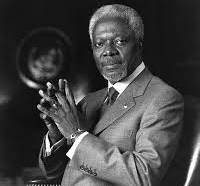
Note: This essay concludes the small series “On Comebacks and Failed Comebacks.” The earlier pieces explored several very different kinds of returns: the moral vindication of Kofi Annan, the sly tactical persistence of Joe Nash of the Seattle Seahawks, the tragic artistic authenticity of Amy Winehouse, and the mythic public legend surrounding Muhammad Ali.


The story of Rod Blagojevich introduces a different category altogether: the shameless comeback.

Unlike the other figures in the series, Blagojevich’s return to public life does not depend on moral vindication, heroic persistence, or cultural myth. Instead it illustrates something more peculiar about contemporary politics and media. In an age of fragmented audiences and constant attention cycles, a disgraced figure may sometimes reappear simply by refusing to leave the stage.

Whether one sees Blagojevich’s re-emergence as comic, absurd, or oddly instructive, it provides a fitting final example for the series. Not every comeback is admirable, but each one reveals something about the strange ways public life allows stories to continue.

Not all comebacks are noble.

Some are heroic, like the moral vindication of Kofi Annan. Some are tactical, like the sly fourth-quarter returns engineered by Joe Nash of the Seattle Seahawks. Some exist somewhere between tragedy and authenticity, like the brief blazing career of Amy Winehouse. And some, like the legend of Muhammad Ali, grow into something close to myth.

But there is another type of comeback altogether.

The shameless comeback.

For that, it is difficult to find a more perfect case than Rod Blagojevich, the former governor of Illinois whose political career once appeared to have ended in spectacular disgrace.

The original scandal is by now familiar. In 2008 federal investigators revealed that Blagojevich had been recorded on FBI wiretaps discussing how he might profit from appointing a replacement to the U.S. Senate seat vacated by President-elect Barack Obama. The recordings were devastating. In one of the most memorable lines in modern American political scandal, Blagojevich described the Senate seat as something valuable that he was reluctant to give away for nothing.

The fallout was swift. Blagojevich was impeached and removed from office by the Illinois legislature. Later he was convicted on multiple corruption charges and sentenced to federal prison. For most politicians, this sequence would represent the end of the story.

Disgrace. Prison. Silence.

But American public life has always contained another possibility: the comeback powered not by redemption but by spectacle.

Even before his imprisonment, Blagojevich seemed instinctively drawn toward the theatrical dimension of his situation. He appeared on television talk shows, launched media interviews, and treated the unfolding scandal almost as if it were a strange kind of reality program in which he remained the central character.

His appearance on The Celebrity Apprentice, hosted by Donald Trump, felt less like an attempt to restore dignity than a recognition that modern politics and entertainment had already merged.

Then came the commutation.

In 2020 Trump commuted Blagojevich’s prison sentence, releasing him after several years behind bars. The decision itself was controversial, but the effect was unmistakable: the stage was suddenly open again.

And Blagojevich, to his credit—or perhaps to his creditlessness—walked right back onto it.

The most striking feature of his post-prison public life has been the absence of embarrassment. Many disgraced politicians attempt some form of contrition when they re-enter the public conversation. Apologies are issued. Lessons are discussed. A tone of humility is adopted.

Blagojevich chose a different path.

Instead he embraced a kind of shameless persistence, appearing in conservative media outlets, repositioning himself politically, and speaking about his case with the tone of someone who believes the whole episode was misunderstood or exaggerated. The ideological shift from Democrat to Republican was particularly striking, not because party changes are unheard of but because in Blagojevich’s case it seemed less like a conversion than a strategic recalibration.

It was, in other words, a comeback powered by the modern media ecosystem.

In an earlier era, a corruption scandal of this magnitude might have consigned a politician to permanent obscurity. But the fragmented media landscape of the twenty-first century offers a different possibility. There is always another audience somewhere, another platform, another narrative waiting to be constructed.

Blagojevich appears to understand this instinctively.

Which is why his story belongs in a series about comebacks, even if the comeback itself is of a peculiar variety. Unlike the moral return of Annan or the mythic return of Ali, Blagojevich’s version depends less on redemption than on endurance.

The secret of the shameless comeback is simple.

You refuse to leave the stage.

You keep talking. You keep appearing. You keep telling your version of the story until, slowly but inevitably, the scandal itself begins to blur into just another chapter in the larger spectacle of American politics.

In that sense Rod Blagojevich may represent a distinctly modern form of comeback: not heroic, not tragic, but theatrical.

And in the strange carnival of contemporary public life, theatrical persistence can sometimes be enough.

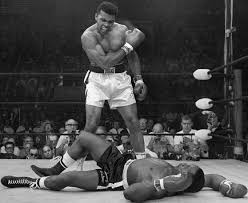
On Comebacks and Failed Comebacks IV: Muhammad Ali

Note: This essay is the third entry in the series “On Comebacks and Failed Comebacks.” The earlier pieces looked at very different kinds of returns: the moral vindication of Kofi Annan and the small, tactical in-game comebacks engineered by Joe Nash of the Seattle Seahawks.


The story of Muhammad Ali operates on a much larger stage. Ali’s exile from boxing after refusing the Vietnam draft and his eventual return to the championship ranks is one of the most famous comebacks in sports history. But the episode described here—the Los Angeles suicide rescue in 1981—is a smaller and stranger moment.


The event appears to have genuinely occurred, yet it also carries the faint aura of legend that often surrounds Ali’s public life. The champion arrives, speaks to a desperate man at a window, and the crisis resolves itself. It is almost too perfectly aligned with the myth of Muhammad Ali not to raise a few questions about performance, storytelling, and the way public figures sometimes inhabit the roles the world expects them to play.


In that sense the episode captures something essential about Ali’s comeback. By the time his boxing career entered its final chapters, he had become more than an athlete. He had become a figure whose life continually generated stories that felt larger than ordinary events.


Whether one treats the Los Angeles episode as simple heroism, public theater, or some mixture of the two, it remains a fascinating illustration of how Ali’s legend continued to grow long after the great fights were over.

Some comebacks are measured in championships.

Others are measured in stories.

The career of Muhammad Ali contains both. His return to boxing after the long exile of the late 1960s is one of the great sporting comebacks of the twentieth century. Stripped of his title for refusing induction into the Vietnam War, banned from the ring during what should have been his athletic prime, Ali eventually returned to reclaim the heavyweight championship and cement his place as the most famous boxer on earth.

But the Ali comeback is not just about boxing.

Long before the exile and the triumphant return, the story had already begun to take on mythic dimensions. In 1964 a young fighter from Louisville named Cassius Clay stunned the world by defeating Sonny Liston for the heavyweight title. Soon afterward he announced that Cassius Clay was a “slave name” and that he would henceforth be known as Muhammad Ali.

The change was shocking to much of the American public at the time. Ali aligned himself with the Nation of Islam, spoke openly about race and politics, and quickly became one of the most controversial athletes in the country.

Then came the draft.

In 1967 Ali refused induction into the U.S. Army during the Vietnam War. The consequences were immediate and severe. He was stripped of his heavyweight title, banned from boxing, and faced the possibility of prison. For several years the greatest fighter in the world was not allowed to step into the ring.

The exile transformed him.

When Ali eventually returned to boxing in the early 1970s, he was no longer merely a talented heavyweight with a flair for poetry and bravado. He had become something larger: a political figure, a symbol of resistance, a man whose name carried moral and cultural weight far beyond the sport.

The comeback fights that followed helped cement that transformation. In 1974 Ali traveled to Zaire to face George Foreman in the legendary The Rumble in the Jungle. Foreman was younger, stronger, and widely expected to win easily.

Instead Ali introduced the world to the “rope-a-dope,” leaning back against the ropes and absorbing Foreman’s punches until the younger champion exhausted himself. In the eighth round Ali knocked him out.

It was one of the great theatrical moments in sports history: the exiled champion returning to reclaim the crown.

But somewhere along the way Ali’s comeback had begun to operate on another level entirely.

He had become something more than a boxer. Part athlete, part moral figure, part living myth. And like all myths, the Ali story eventually began to generate episodes that feel almost too perfectly suited to the character.

One of the strangest of these occurred in Los Angeles in 1981.

A man was threatening to jump from the ledge of a ninth-floor building. Police had been negotiating for hours. Crowds gathered below, watching the terrible drama unfold at a distance.

Then Muhammad Ali arrived.

Accounts differ slightly in the details, but the basic outline is consistent. Ali spoke to the man from a nearby window, urging him not to jump. Eventually the man climbed back inside the building with Ali beside him. Photographs exist of the moment, and police officers later confirmed the story.

By all reasonable accounts, Ali helped save the man’s life.

And yet the story carries a faint aura of improbability.

Not because it didn’t happen—it clearly did—but because it feels so perfectly aligned with the Ali persona that one can’t help wondering about the role of performance in the moment.

Ali had always understood something most athletes do not: that being Muhammad Ali was itself a kind of public art.

From the beginning he blurred the line between competition and theater. The rhymes, the predictions, the playful insults directed at opponents—all of it was part of a larger performance. Ali didn’t simply fight boxers. He performed the role of the greatest boxer in the world.

By the early 1980s that role had evolved even further. Ali was no longer just the heavyweight champion. He had become a global cultural figure, a symbol of resilience after exile, a man whose public presence carried moral weight.

So when the story of the suicide rescue circulated, it seemed less like an unexpected episode and more like the natural continuation of the legend.

Of course Muhammad Ali would appear at the window.

Of course Muhammad Ali would talk the man down.

Of course the cameras would be there.

None of this means the moment was insincere. Ali may well have acted from genuine compassion. But it is also possible—one suspects just slightly—that he understood something about the scene as it unfolded: that the story would become another chapter in the larger narrative of Muhammad Ali.

If so, it was a brilliant instinct.

Because the image of the champion talking a desperate man back from the ledge captures something essential about the Ali comeback. After the long years of controversy and exile, Ali returned not merely as a boxer but as a figure people wanted to believe in.

The story may be small compared with the great fights—the Rumble in the Jungle, the Thrilla in Manila. Yet in its own strange way it may be just as revealing.

A champion reclaiming his title is impressive.

A champion stepping to a window and becoming, for a moment, exactly the hero the world expects him to be—that is something else entirely.

And Muhammad Ali, more than anyone, always understood the power of the moment.

On Comebacks and Failed Comebacks III: Amy Winehouse

Note: This short piece reflects on the strange artistic tension that defined the career of Amy Winehouse: the way her extraordinary authenticity as a singer seemed inseparable from the personal instability that surrounded her life.

Winehouse’s music—especially the songs on Back to Black—felt at once timeless and painfully immediate. The sound drew deeply from earlier traditions of soul and rhythm and blues, yet the emotional directness of the lyrics was unmistakably modern. Few artists have managed to sound so rooted in musical history while simultaneously feeling so exposed to the present moment.

The song Rehab stands as the clearest example of this tension. Its humor, defiance, and vulnerability all exist in the same breath, making it one of the most distinctive pop recordings of the twenty-first century.

Like many listeners, I remember the late-2000s period—particularly around the Glastonbury era—when Winehouse was both an enormous star and visibly struggling. Watching those performances could feel uneasy, yet the brilliance of the voice was undeniable. The same intensity that made the music so compelling also made her career difficult to sustain.

This piece is simply an attempt to think about that paradox: how authenticity and self-destruction can sometimes become intertwined in the lives of great artists.

There are many great singers, but very few voices that feel instantly definitional—voices that seem to arrive already carrying an entire world inside them.

Amy Winehouse was one of those voices.

By the time her second album, Back to Black, exploded in the mid-2000s, it already felt as though she had stepped fully formed out of some earlier musical era. The sound was unmistakably rooted in Motown and 1960s soul, yet the lyrics were brutally modern—messy, confessional, sometimes almost painfully direct.

Winehouse didn’t just sing about heartbreak and addiction. She sang about them as if the audience had wandered into the middle of a private argument she was having with herself.

That tension—between authentic confession and visible self-destruction—became the defining element of her career.

You could hear it most clearly in Rehab, which remains one of the most distinctive pop songs of the twenty-first century. The song is catchy, almost playful on the surface, driven by a swinging brass section that feels lifted from a lost Stax session.

But the lyrics are something else entirely.

They tried to make me go to rehab / I said no, no, no.

It’s funny. It’s defiant. It’s also deeply unsettling, because the listener quickly realizes that the singer is not playing a character. The refusal at the center of the song is real.

In that sense “Rehab” became more than a hit single. It became a kind of thesis statement for the strange artistic space Winehouse occupied. The same vulnerability that gave her music its emotional power also exposed the raw nerves of her life to public view.

You could feel that tension during the years when she was both at the height of her fame and visibly unraveling.

The Glastonbury era captured this perfectly. Winehouse had become a massive international star, yet her stage presence could swing wildly from moment to moment. One minute she would be commanding the crowd with that huge, smoky voice; the next she might appear distracted, fragile, or physically unsteady.

Watching those performances could be oddly uncomfortable. The audience was witnessing genuine brilliance, but it often felt as though the brilliance was emerging from a life that was spinning out of control.

And yet the authenticity of the music was inseparable from that volatility.

Winehouse sang as if every lyric had been torn directly out of lived experience. There was no polite distance between the artist and the material. When she sang about jealousy, addiction, or heartbreak, it sounded less like performance and more like confession.

That quality made her music electrifying. It also made her career precarious.

Pop music has always had a complicated relationship with self-destructive artists. Audiences are drawn to performers who seem emotionally transparent, but the same intensity that produces great art can also be difficult to sustain under the glare of fame.

Winehouse lived inside that contradiction.

The tabloids followed her relentlessly. Every public misstep, every argument, every sign of physical decline became part of a growing media narrative. The spectacle sometimes threatened to overwhelm the music itself.

Yet when she stepped to the microphone and began to sing, the spectacle vanished.

What remained was that extraordinary voice: raw, soulful, and oddly timeless, as if it had traveled forward from another musical generation. In a pop landscape often dominated by carefully engineered personas, Winehouse sounded startlingly real.

That authenticity is why her work still resonates long after her death in 2011.

Many talented singers release successful albums. Only a handful manage to create songs that feel permanently etched into the culture. “Rehab” is one of those songs. The moment those opening horns start, the listener knows exactly what world they are entering.

It is the world of Amy Winehouse: funny, defiant, wounded, brilliant.

A place where honesty and self-destruction were never quite separable—and where the truth of the music was powerful enough to survive them both.

Note:

On Comebacks and Failed Comebacks II: Joe Nash

Note: This essay is the second entry in a small series called “On Comebacks and Failed Comebacks.” The first piece looked at a moral and political comeback through the career of Kofi Annan. This one turns to a very different arena: professional football.

I grew up watching the late-1980s and early-1990s teams of the Seattle Seahawks, and Joe Nash was always my favorite player. Defensive tackles rarely receive much attention, but Nash possessed a peculiar form of genius—part toughness, part humor, and part gamesmanship.

The famous “trick knee” that forced him to limp off the field again and again was not simply a medical misfortune. It became a small tactical instrument, a way of disrupting the rhythm of an opposing offense and giving his defense a moment to reset. Over the course of a single game Nash might stage several miniature comebacks, disappearing briefly and then reappearing in the middle of the line a few plays later.

In that sense, his career offers a different kind of comeback story. Not the grand dramatic return that headlines sports history, but the quieter persistence of a player who simply refused to stay out of the game.

Some comebacks are dramatic.

A politician loses an election and returns years later to reclaim power. A boxer is knocked down and rises again to win the fight. These are the stories we tend to remember, the great single reversals that change the outcome of a contest.

But sometimes a comeback happens on a smaller scale, again and again, inside the same game.

For this kind of comeback, few players were more accomplished than Joe Nash, longtime defensive lineman for the Seattle Seahawks and possessor of what teammates and fans came to call the trick knee.

Joe Nash was also, for reasons that will become clear, my favorite player, and in his own understated way a total genius.

To appreciate Nash properly you have to picture the Seahawks teams of the late 1980s and early 1990s. These were not yet the sleek modern Seahawks of the Legion of Boom era. They were something scrappier and stranger: a Northwest football team that still felt a little rough around the edges, playing in the echoing concrete bowl of the Kingdome, often good enough to compete but rarely treated as the center of the NFL universe.

The roster had its share of memorable characters. Steve Largent, already a legend, running precise routes and catching everything thrown his way. Dave Krieg, forever scrambling out of trouble, sometimes heroically and sometimes disastrously. On defense there were hard-nosed players who seemed built for the damp Northwest afternoons when the crowd inside the Dome could turn deafening.

And somewhere in the middle of the defensive line was Joe Nash.

Defensive tackles rarely become fan favorites. Their work is too close to the ground, too buried inside the pile. But Nash had something else going for him: the famous trick knee.

The story of the trick knee was simple enough. Nash had injured it badly early in his career, and the joint developed a habit of collapsing at inconvenient moments. One minute he would be battling a guard at the line of scrimmage, the next he would be down on the turf clutching the leg while trainers rushed out to examine the damage.

At least that was how it looked.

Nash would limp slowly toward the sideline, the injured leg dragging slightly behind him. Opposing linemen would shake their heads sympathetically. The crowd would murmur. It appeared that the veteran tackle had once again been forced out of the game by his unreliable knee.

Then something curious would happen.

A few plays later—sometimes only a few plays later—Joe Nash would jog back onto the field as if nothing had happened.

The knee, it seemed, had recovered miraculously.

Over the course of a game the sequence might repeat itself several times. Nash would go down, limp off, disappear briefly from the action, and then return again. By the fourth quarter the trick knee might have produced not one comeback but several.

Eventually the truth became clear.

The knee was real enough, but the timing of its collapse was often anything but accidental. Nash had discovered that the injury rules and clock management of the NFL created certain small openings that a clever player could exploit. A defensive lineman who went down injured could slow the pace of the offense, disrupt the rhythm of a drive, and buy his teammates a moment to regroup.

So the trick knee became a kind of tactical instrument.

The opposing offense would be moving quickly. The defense would need a breather. Suddenly Nash would be on the turf again, clutching the leg while trainers jogged out to assist him. The offense’s momentum would stall. The huddle would break. The rhythm of the drive would shift.

And then, a few plays later, Nash would return.

It was not the most glamorous form of gamesmanship, but it was undeniably effective. Defensive linemen make their living in the narrow, violent spaces at the center of the field, where subtle advantages can matter enormously. Nash had simply found a way to create one more advantage for his side.

And he did it with a kind of quiet humor. The whole thing had the feel of a running joke that everyone eventually understood but no one could quite stop. The knee would “go,” Nash would limp dramatically to the sideline, and then—inevitably—there he was again, back in the middle of the line a few minutes later.

Which meant that Joe Nash’s comebacks were not quite what they appeared to be.

Most comeback stories celebrate a single dramatic return: the fallen champion rising again to claim victory. Nash’s version was more practical. His comebacks came in small installments, scattered across the course of a game. One trip to the sideline. Then another. Then another still.

By the fourth quarter he might have staged half a dozen of them.

The trick knee, in other words, was not merely an injury. It was part of a strategy. A small deception woven into the fabric of the contest.

And perhaps that is the most interesting lesson Joe Nash offers to a series about comebacks.

Not every comeback needs to be heroic.

Sometimes the smartest players simply refuse to stay out of the game.