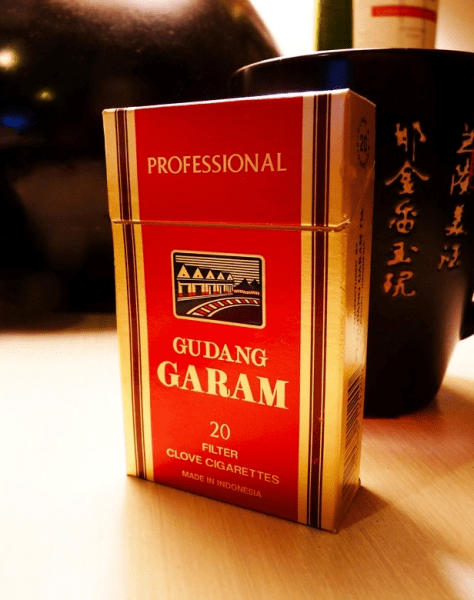
The Splinter Fraction: On Why Clove Cigarettes Should Be Legal in the US

Note: This is the fourth position of the Trans-Pacific Political Partnership known as The Splinter Fraction. Our first position is about the Age of Consent in the U.S. Our second position is about privileged access for Medecins Sans Frontieres to all war zones and protection from the powers that be for their operations. Our third position is to spread karaoke as widely as possible.

Full disclosure: I love clove cigarettes. I’m not here to pretend tobacco is harmless, but I do smoke and I love cloves specifically — their sweetness, their bite, the way they announce themselves rather than slip by unnoticed. They’re not a casual habit. They’re not cheap. They’re not especially forgiving. They are, unmistakably, a specialty product for adults who already know what they’re doing. Which is precisely why their disappearance from the United States strikes me as so strange. If public policy is supposed to focus on scale, harm, and likelihood, cloves barely register. And yet they were eliminated cleanly and completely.

This isn’t a brief for Juul, bubblegum vapes, or any product designed to recruit new smokers as efficiently as possible. Those deserve scrutiny, regulation, and in some cases outright prohibition. Clove cigarettes are something else entirely. They were never poised to take over American high schools. They were never discreet, never mass-market, never engineered for easy uptake. They appealed to a narrow, adult audience — travelers, artists, longtime smokers with particular tastes. Their banning didn’t meaningfully change youth smoking behavior; it simply removed a minor, culturally specific option from the legal market. Which raises a quiet but important question: why was such a small thing targeted so decisively, while other flavored cigarettes were not?

The answer, of course, is the carve-out. In 2009, when the United States banned flavored cigarettes, it did so selectively. Clove cigarettes were prohibited outright. Menthol cigarettes were not. This distinction was never really about flavor chemistry or relative harm; it was about politics, constituencies, and consequence. Menthol had a large, organized user base and a long, fraught history tied to race, policing, and targeted marketing. Regulators understood that banning menthol would provoke backlash, raise enforcement concerns, and create secondary harms. So menthol survived. Cloves, by contrast, had no organized defenders, no obvious political cost, and no plausible narrative of collateral damage. They were small enough to remove without resistance.

We don’t object to the menthol carve-out. In fact, I understand it. Public policy often has to weigh downstream effects as much as stated intentions, and there were legitimate fears about what a menthol ban might unleash. But that logic cuts both ways. If menthol was spared because its removal would have caused disproportionate disruption, cloves deserved consideration for the opposite reason. Their user base was tiny. Their market footprint was negligible. Their elimination solved no urgent public-health problem and prevented no foreseeable epidemic. It simply demonstrated how regulation tends to work in practice: not by calibrating rules to scale and risk, but by acting most decisively where the fewest people are able—or willing—to object.

What the clove ban reveals, more than anything, is how regulation actually moves through the world. It does not flow evenly from evidence to outcome. It flows through constituencies. Products with organized users, sympathetic narratives, and visible secondary effects are handled with caution. Products without those protections are handled cleanly. Clove smokers were never numerous enough, loud enough, or legible enough to matter. There was no lobby. No advocacy group. No credible fear of backlash. As a result, cloves became an easy victory: a flavored cigarette could be banned, a public-health win could be declared, and no meaningful political cost would be incurred.

This is not corruption so much as gravity. Policymaking, especially in public health, often advances where resistance is lowest. That doesn’t make it malicious, but it does make it uneven. And unevenness matters. When regulation targets the smallest, quietest practices first—those least likely to produce harm at scale—it risks confusing symbolic action with effective policy. The clove ban didn’t fail because it was harsh; it failed because it was misaligned. It addressed a marginal behavior while leaving far larger, more consequential ones to be negotiated indefinitely.

One of the unspoken assumptions behind the flavored-cigarette ban was that flavor itself was the problem. But not all flavors function the same way. Some are engineered for mass adoption: sweet, smooth, cheap, discreet, and easy to inhale even for first-time users. Those products lower the barrier to entry and deserve aggressive scrutiny. Clove cigarettes operate at the opposite end of the spectrum. They are pungent, smoky, and unmistakable. They announce themselves immediately. They are harder on the throat, more expensive, and far less forgiving to the uninitiated. In other words, they are an acquired taste by design.


This distinction matters because public health should be attentive not just to ingredients, but to uptake dynamics. Products that spread rapidly among new users pose a different kind of risk than products that remain confined to a narrow, self-selecting adult audience. Cloves never behaved like a recruitment tool. They didn’t mask tobacco; they added complexity to it. They weren’t optimized for stealth or scale. Treating them as equivalent to mass-market flavored cigarettes collapses important differences and replaces targeted regulation with blunt prohibition. If the goal is to prevent widespread initiation, then precision matters—and cloves were never the right target.

There is also the question of adult autonomy, which is often treated gingerly in tobacco policy but can’t be avoided entirely. Smoking remains legal. That fact alone establishes a baseline assumption: adults are permitted to make choices that carry known risks. Within that framework, the question is not whether tobacco should be virtuous, but whether adults are trusted to exercise discernment among legal options. Choosing a clove cigarette is not an attempt to evade regulation or denial of harm; it is an aesthetic preference exercised within an already constrained and taxed marketplace.

This is where the phrase “following the muse” matters. It sounds indulgent until you realize how narrow the claim is. It is not a demand for limitless choice or novelty flavors designed to entice new users. It is a request for consistency. If adults are allowed to smoke, they should be allowed to choose among products that differ meaningfully in character, tradition, and appeal—especially when those products are demonstrably niche and non-expansionary. Removing cloves didn’t protect children. It simply narrowed adult choice in a way that feels arbitrary rather than principled.

It’s reasonable to ask why any of this matters. Clove cigarettes are not a public-health crisis. Their absence does not rank among the great injustices of modern regulation. But small decisions often reveal larger habits of mind. When policy treats scale, intent, and impact as interchangeable, it stops distinguishing between meaningful intervention and symbolic tidying. The clove ban solved a rhetorical problem more than a real one. It demonstrated action without demanding precision.

What’s left behind is an inconsistency that never quite resolves. A flavored cigarette with massive market share remains legal because its removal would be disruptive. A flavored cigarette with negligible market share was eliminated because its removal was easy. That asymmetry doesn’t undermine public health as a goal, but it does weaken confidence in how that goal is pursued. If regulation is to be trusted, it should align most tightly with where harm is greatest—not where resistance is lowest.

This is not a call to roll back tobacco regulation or to relitigate every compromise embedded in public-health law. It’s a narrower observation. When a system is willing to make exceptions for powerful constituencies while eliminating marginal practices without consideration, it reveals something about how decisions are actually made. Clove cigarettes weren’t banned because they were uniquely dangerous. They were banned because no one important would miss them.


Even so, positions don’t need mass movements to exist. Sometimes they begin as a splinter fraction: a small, clear objection to an unnecessary loss. If smoking is legal, and if nuance still matters, then there is room—at least in principle—for a carve-out that acknowledges scale, intent, and adult choice. Even if only two people think so, even if it’s just me and Annie, that’s enough to say it out loud.


On David Bazan’s Crisis of Faith, and Mine

Note: This essay makes several references to my time as a teacher, coordinator, and administrator at Ritsumeikan Uji in Kyoto, Japan. I have written about my time at Ritsumeikan prior in my piece about good and great talkers, and in my piece about hiding in a hotel room for 36 hours after being seriously overworked for months in 2012.

In case parts of the timeline referred to above are not clear, I began working at Rits Uji in 2002, started with the IB program at Rits in 2008, left my job temporarily in 2018, and rejoined after COVID was settling down in 2021. Also, if you like this essay you will like my longform analysis of the great Michael Knott’s album “A Rocket and a Bomb.”

Epigraph:
“There’s real people in them big, big trucks…” 

David Bazan

I’ve always experienced David Bazan (the Christian-adjacent singer songwriter with Pedro the Lion and later solo) not as a songwriter but as a kind of emotional barometer for whatever stage of adulthood I’m in. Every few years I realize he’s already written the song I need, long before I know I need it. He’s not confessional; he’s just brutally, unfussily truthful in a way that feels like being read by somebody who doesn’t care whether you agree with him.


This is a field report on five Bazan songs—what they meant, what they revealed, and how they secretly mapped the last twenty plus years of my interior life.

1. BIG TRUCKS

I first heard “Big Trucks” in my early Ritsumeikan Uji years—2003 or 2004 when I was digging deeply on the site eMusic. The song was first released in 1998 on Pedro the Lion’s It’s Hard to Find a Friend on Made in Mexico records, and is track 3 of 12. There is also a single version which is track 6 on the 1999 EP The Only Reason I Feel Secure. I was into Pedro the Lion back when the air was still clean and my responsibilities hadn’t yet calcified into the adult structures that would come later. I was living in a rental apartment, and still had that sense that life was flexible: the rhythms of teaching, the long days, the long nights, all of it felt new and fresh.

The thing about “Big Trucks” is that it’s so effortlessly literal you almost miss the emotional charge. A child asking his father why he doesn’t respond when another driver flips him off. A parent trying to explain something unexplainable with reference to the humanity of truck drivers. The gap between innocence and knowledge opening in real time.

When I was 28, the resonance was simple: the world is bigger and harder than we think, and adulthood arrives the moment you realize you don’t get to choose the scale of the forces that hit you.

Even then, before IB coordination, before butting heads with my principal, before everything that happened in 2018 which led to me leaving my job, the line felt like a premonition. The big trucks are always coming after all.

2. BANDS WITH MANAGERS
Bands with Managers is the lead off track on Pedro the Lion’s 2004 record Achilles Heel. I was already into the band as mentioned above by this time, and Achilles Heel would prove critical listening in the years that followed. By 2007 the IB tidal wave was approaching, and my days were already starting to feel compressed. I was “going places,” as Bazan mocks himself for saying, which is exactly the problem: I actually was going places. I was acquiring managers, and then heavier managers, and then the structural expectations that come with being the adult in the room.

That’s why I love this song so much—because it’s funny, cutting, self-aware, and self-disparaging all at once:

“Bands with managers are going places.”

He’s laughing at the absurdity of ambition, the ridiculousness of believing your ascent is meaningful, and at the same time he’s wincing, because he knows he’s been swept up in the same machinery.

By 2007, I felt that too. The joke was aimed at me, but gently.

The line I lived was this:

“I’m going places, apparently — and it’s funny, and it’s ridiculous, and I think I’m about to be crushed.”

Ambition and pressure make strange bedfellows. Bazan gets that. He names what most adults won’t: that sometimes “success” feels like being hauled upward by a crane you didn’t ask for.

3. FOREGONE CONCLUSIONS
Foregone Conclusions is track two on Achilles Heel. This is one of his most devastating songs because of its simplicity. The line that gets me every time:

“I don’t wanna believe that all of the above is true.”

This is Bazan calling out doctrinaire Christianity and he’s not subtle about it. It’s almost embarrassingly plain. But middle-aged truth is often embarrassingly plain. For me the line hits in two places: first, in that long stretch where adulthood felt like a narrowing of options; and second, in the recognition of how many “beliefs” I’d inherited and carried long after they’d stopped serving me.


One idea that slowly died in me—over years, not months—was the belief that I could be happy in some uncomplicated, stable way. I don’t mean not depressed. I mean the fantasy that happiness arrives and then stays. By my early forties I knew better.


Happiness is local, flickering. It’s take what you can get. What lasts, perhaps, is meaning, purpose. Bazan already understood that twenty years ago. It took me a little longer.

4. YELLOW BIKE
Yellow Bike is track 2 on Pedro the Lion’s 2019 record Phoenix. If there’s a perfect adult loneliness song, this is it.

“My kingdom for someone to ride with me.”

This line is not necessarily about wanting a partner or romantic longing, although it could be. It’s about pace—finding someone who can move at the same internal speed as you without distorting your life. After 2018, I didn’t trust the world to ride with me in a clean way. Not institutions. Not leadership structures. Not women. The only sane posture was self-containment.


And then came Mela. Mela was first my Periscope friend (Twitter’s discontinued video live-streaming platform), and then my text buddy and then phone buddy in late fall and early winter, 2018. This was not a romance, nothing really other than hours on the phone, day after day. Neither of us were working, and we covered every subject under the sun, including prominently the boys she was with, the boys she was chasing, and the boys that were chasing here.

Mela was the first person after 2018 who matched my internal rhythm without triggering anything. She didn’t need anything from me; she didn’t misread me; she didn’t overstep. She just rode beside me lightly for a window of about six weeks.

That’s what Bazan means by “someone to ride with me.” Not permanence—just pacing. Not dependence—just parallel motion. A few blocks of shared speed. Enough to remember you’re not built for solitude.

5. LITTLE HELP
Little Help is track 3 on Pedro the Lion’s 2024 album Santa Cruz. This is the one that lands hardest in midlife.


“All I needed was a godsend/ All I needed was a little help from a friend.”

For me, that friend was Tommy. During COVID I was on sick leave, drifting, half-collapsed inside myself. Wine in bed, online chess all day, the sense of dissolving in slow motion. It wasn’t dramatic, but it was real. I wasn’t moving toward anything; I was sinking.

And it was Tommy who refused to let me disappear. Not gently. Not metaphorically. Literally. Texting. Calling. Telling me he’d drag me out of my house if he had to. Making me come out with him twice a week in Kyoto, even when I barely had a pulse.


One night we were in a tiny reggae club, drinking Red Stripe, and at around 10:30 p.m., in the restroom of all places, I felt happy for two seconds. Not enlightened. Not healed. Just briefly, unmistakably alive.

That moment didn’t save me. Tommy didn’t “fix” anything. But he interrupted the slide. He held me upright until I could stand on my own again. In the end, that’s what Bazan means. Not salvation. Not heroism. Just stubborn companionship. That moment when someone refuses to let you lose it. And that’s when the line stops being metaphor and becomes plain fact: All I needed was a little help from a friend.

6. CONCLUSION
Overall, I really like Pedro the Lion/ David Bazan. Even more so than Michael Knott, he is a kind of black sheep of the Christian rock movement, and he may even be cancelled by some, I’m not sure, but I think other people, even some of faith, appreciate his relentless questioning, his searing honesty. I don’t know what the state of his faith is today, but it’s been a fascinating and fruitful experience following along the twists and turns of his art and career.

Dedication:
For Tommy — I’ll knock down your door anytime.

The Splinter Fraction: On the Joys of Karaoke, Communal Song as Social Solvent

Note: This is the third and for now final position of the Trans-Pacific Political Partnership known as The Splinter Fraction. Our first position is about the Age of Consent in the U.S. Our second position is about privileged access for Medecins Sans Frontieres to all war zones and protection from the powers that be for their operations. Our final position is to spread karaoke as widely as possible. We are entirely serious.

We affirm karaoke as one of the last remaining civic rituals in which strangers meet without preconditions and leave with fewer barriers than they arrived with. A microphone passed between an office worker, an American traveler, an Indian engineer, an older Japanese gentleman, a young woman finding her voice again — this is not entertainment alone. It is a brief suspension of hierarchy, suspicion, and self-protection. In these small rooms people remember how easy it is to be together.

Karaoke is not mandatory, nor do we idealize it. We simply encourage every citizen — once in a while, or for the first time — to step into a space where age, gender, profession, and political commitments dissolve for the length of a verse. It is a civic practice hiding in plain sight: a low-cost, low-risk release valve healthier than most vices and far more generous in its returns.

Society is fraying at the edges. But give people one Tom Petty track, one “What’s Up” howl, one chance to sing badly but sincerely, and cohesion begins again — not through policy, but through the ordinary bravery of shared song. The Splinter Fraction supports public encouragement and, where possible, public subsidy of these communal singing rooms, as engines of ease and democratic belonging.

Karaoke will not fix the world. But it will bring us back into easy congress with one another, which is more than most programs can claim.

My Time At Northern Arizona University Interlude and Part V: Return to Japan and Year II Term I

Interlude — Return to Japan, Winter 1999

I flew back to Japan in early December ’99, eleven months after Flagstaff, twenty six years ago today.

My girlfriend — soon to be my wife — met me in Kumamoto and before we went anywhere near a city office we took a bus tour of Kyushu. One of those packaged trips where the landscape is real but the schedule isn’t — temples, viewpoints, souvenir shops engineered into the route because somebody is getting a cut. I’ve never liked bus tours. Too passive. Too commercial. A landscape you watch instead of inhabit.

The first night in the hotel we were intimate for the first time in a year. It was good enough — tentative, self-conscious on my part, like we were remembering choreography rather than improvising. It would all come back pretty quickly.

After the tour we stayed with her parents in Uto City — small house, tatami floors, her childhood bedroom upstairs. We shared a single futon where she had slept alone as a girl. I remember the narrowness of it, two adults lying in a past built for one. The walls thin, the air still, her parents downstairs, in their own world.

.We went to the city office the first week of December and signed the papers — no ceremony, no white dress, no crowd, just bureaucracy, and permanence I suppose. A moment small in appearance and enormous in consequence. One pen stroke and we weren’t dating across continents anymore — we were married.

I flew back to Arizona before the semester resumed. I was a married man. Small ring. Big life. My cold room waiting.

That was the hinge — Japan in winter, Flagstaff in spring, and me between two homes that I didn’t yet know they would trade places for good.

NAU Year Two — Term One

I flew back to Spokane that winter the same way I had the year before — no plan except back to NAU and see what I could do. The red Toyota pickup was waiting for me, still running, still mine, connecting Washington and Arizona. I drove south again — long highways, cheap motels, maps instead of GPS, how I knew what I was doing I have no idea.

Flagstaff was colder that winter, or maybe I had just forgotten what dry cold felt like. I didn’t keep the old room near campus, and I didn’t want to. I spent two nights in a budget hotel, stretching my graduate-tutor income across meals and rent in my head. Still — I was back, and that is what mattered.

A classmate pointed me toward a woman named Bev who had a room for rent. She lived twelve minutes from campus. She has a big house — divorce settlement money, and a shoo downtown that sold wood furniture she built by hand. The furniture was bad, and she told had sold exactly zero pieces. That alone told me she was operating on a different financial zone than the rest of us.

I moved in. My own room, my own bathroom, access to the kitchen, $700 a month. Not luxury, not struggle — just workable. I drove to campus every day, which meant less drinking, more structure. Only once did I drive home drunk, and it scared me enough to make sure it stayed a single incident. Mostly, I left the truck downtown and taxied home, or I didn’t drink at all.

Academically, the rhythm was set — Said, Ray Huang’s 1587, Braudel, Portelli, more Bourdieu when I could manage it. The hardest class was Bob Baron’s Marx seminar. Everything else felt manageable, maybe even easy when I had momentum. My friendship with Mandiola deepened that semester — sharper, closer, more real — the two outsiders orbiting the same department.

That was also when I noticed Sonia. First as a presence — around campus, then behind the counter at the organic market I could barely afford. The book van outside sold $1 paperbacks, and I bought more of those than groceries. We exchanged looks — recognition, curiosity — but nothing more. Later I realized she was an undergrad in the Post-War German History class I lectured in. That alone helped keep the boundary clean.

By late fall the loneliness was real. I was married, but alone. She missed me. I missed her. She was thriving at work — promoted to Head Nurse at 24 — and still, distance was beginning to feel like erosion rather than opportunity. So we made a plan:

So in the Fall of 2000 my wife would come to Flagstaff and take part-time English classes. We would be in the same place again.

Around that same time the last of my Hamilton debt — $17,000 — was paid off by her or by her mother. I’m still not certain which. Either way, relief arrived quietly. I would repay it not as a transaction but by building a life — covering everything from 2002 onward.

And that was the first term of year two. Cold roads, heavy reading, a quiet spark at the edge of ethics, and the decision that distance had served its purpose.

My wife would come next term.

On Michael Knott’s Record “A Rocket and a Bomb”: A Full Analysis

“Mr. God, is there a Mrs. God?

Michael Knott


Origin Story

I found Rocket and a Bomb the way you sometimes meet the most important things in your life: by accident, with no money, in a used bin on Division in Spokane, during a summer when nothing was happening and I had no idea who I was supposed to become.

It was 1994, the summer before junior year. I wasn’t working — not out of rebellion or laziness, but because I somehow never got pushed into getting a job. My parents were juggling one car between them, sometimes borrowing a second from St. George’s, and when that second car was free, I took it and drifted through Spokane.

I had a circuit — three places I visited almost every day, like a loop I barely knew I was running.

1. A random coffee shop off Division
They knew me as the quiet kid who ordered the same thing, sat alone, and had a half-crush on the barista for reasons I couldn’t articulate even then. I wasn’t flirting. I was just alive in her direction. It gave the day a shape.

2. A used bookstore in North Spokane
Le Carré, Christie, metaphysics, philosophy, sci-fi, old paperbacks with cracked spines. Books were two to five dollars, and the older woman behind the counter would chat with me as if I were a real adult. I was still in my 150-books-a-year phase. It felt like productivity disguised as escape — or maybe escape disguised as productivity.

3. A used CD store up Division
All used, because I was broke. Rows of mid-’90s detritus: dozens of copies of August and Everything After, inexplicable imports, promo discs dumped by radio stations. I’d flip through crates like a prospector searching for gold in a river everyone else had given up on.

And one day I found something.

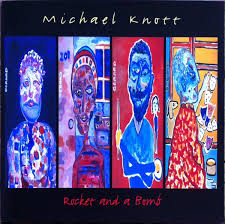
I pulled a CD I’d never heard of: Rocket and a Bomb by Michael Knott. The cover art — drawn by Knott — was strange and specific. The title was perfect. And for reasons I couldn’t explain, the whole thing felt special. Buried treasure. A private signal.

It was used. It was cheap. It felt like it had been waiting for me. I took it home, slid it into my boombox, and played it straight through. And something opened. Not revelation. Not identity. Not insight. Pure recognition.

The recognition that someone, somewhere, had lived inside a hallway-world that felt eerily close to my own. That someone understood the drift, the observation, the stasis, the human weirdness. This essay is about that record.


Jan the Weatherman

“Jan the Weatherman” was the first sign that Rocket and a Bomb wasn’t just another used-bin curiosity. The song opens with a portrait so sharp it bypasses metaphor entirely:

“Jan, Jan the weatherman
Lives across the hall in an old beer can.”

It’s not symbolic. It’s not poetic. It’s literal. It’s Knott standing in a hallway in Hollywood, looking across at a neighbor, and writing down exactly what he sees. No interpretation. No commentary.

Then the details:

— A stick and a pan.
— Sandwiches from questionable sources.
— A kid sister who could use a tan.
— Jan wanting to “join the band.”

Absurd and intimate at the same time.

I played the whole record constantly that Spokane summer. One afternoon, I was in the kitchen with my younger brother Pat, listening to “Jan the Weatherman” on the boombox. Pat — not a music obsessive — liked it immediately. At the same time, I was trying to get him to read Paul Auster’s New York Trilogy. In the first story, characters are named by colors: Mr. White, Mr. Black, Mrs. Blue.

While we were talking about that, the rotary phone rang.

One of us answered.

A man on the other end asked:

“May I speak to Mr. White?”

Pat froze, then fell backward onto the couch like he had been shot. It was uncanny. A Knott moment invading our Spokane kitchen. A micro-portrait becoming real.


John Barrymore Jr.

If Jan is the doorway, “John Barrymore Jr.” is the moment you step inside the building and realize what kind of place you’re in.

The title alone shocks you:
Yes, it is that Barrymore — the son of the actor, the father of Drew, apparently. A man who once lived inside Hollywood mythology now wanders Knott’s hallway wearing golf shoes with the spikes still inside.

Knott gives the greatest couplet in the neighbor cosmos:

“John Barrymore, Jr.
A weird guy
Wearing golf shoes down the hall
With the spikes still inside.”

It’s funny, and not funny at all. Funny because the image is ridiculous. Not funny because this is what happens when a life collapses out of frame. Knott doesn’t say “tragic,” or “fallen,” or “addict.” He doesn’t inflate or sanitize him.

Just:

“A weird guy.”

That’s compassion. That’s honesty. That’s Knott’s entire ethic. Barrymore isn’t elevated. He isn’t judged. He isn’t explained. He’s just a neighbor — one of the many ghosts drifting through the building.


Bubbles

“Bubbles” is where the neighbor songs turn dangerous.

Bubbles is a junkie. A rich man takes him into the hills in a limo. Bubbles gets beaten. He sleeps in the park. Knott reports the whole incident without emotion, elevation, or commentary. There is no moral, no sermon, no interpretation.

And the crucial detail — one of the most important on the album: Knott does not take Bubbles in.

No savior complex.
No rescue fantasy.
No sentimental lie.

His compassion is observational, not interventionist. He sees clearly, cares sincerely, and knows the limits of his own ability.

And then — astonishingly — the song becomes a banger. The ending is practically joyous. The dissonance is intentional.

Bubbles is still sleeping in the park. And the world keeps going. This is Knott’s ethics:
attention without illusion.


Kitty

“Kitty” is the rumor song — the sharpest, most volatile one in the neighbor sequence. And it gives you almost nothing:

A pot. A missing husband. A whisper that Kitty cooked him.

That’s it.

Knott doesn’t shape the rumor. He doesn’t validate it. He doesn’t sanitize it. He doesn’t enlarge it. He repeats what people say in buildings like these when they shouldn’t be saying anything.

It’s uncomfortable because it’s overt. A little too cooked, literally and figuratively. But it belongs. Because every hallway has a rumor threshold.


Skinny Skins

“Skinny Skins” has always been my favorite neighbor portrait — the one that shows Knott’s true position in the ecosystem.

The sketch begins with flat humor:

“When he turns sideways, he disappears.”

A man thin enough to be mistaken for absence. The kind of description you only make about someone you see daily, someone who exists in your peripheral vision.

Then:

“When he beats that drum, it hurts my ears.”

It’s affectionate exasperation — the exhaustion of living near someone inconsistent but familiar.

Then the key line:

“A fifth of gin will let him win.”

Meaning: the only way he can function is by numbing himself.

And then the reveal:

“I owe him money.”

This is the moment the whole neighbor cosmos locks into place. Knott is not an observer. He is inside the system. He owes. He receives. He participates.

The cello underneath everything — bowed, heavy, grounding — prevents the song from tipping into caricature. It gives the portrait gravity. It insists this man is real.

Then the hammer:

“If that’s him knocking, don’t let him in.
Let him in.”

That contradiction is the most human thing on the album.

You don’t want him in. You let him in. Because that’s what life is like in buildings full of people who can’t quite get it together but are still yours.

Skinny Skins is the final neighbor not because he is the strangest, but because he is the closest. He is the person Knott cannot shut out.


Jail

“Jail” is the first moment Knott points the camera inward. The entire song revolves around one line:

“I’m gonna meet the judge —
She don’t care.”

That’s the whole spiritual and emotional architecture of the album in eight words. The world is indifferent. You are accountable anyway.

He follows it with:

“What am I supposed to learn?
I haven’t learned it yet.”

Not rebellion. Not enlightenment.

Just the recognition that nothing about this system — legal, moral, spiritual — is designed to teach you anything.

And then there’s the public defender scratching a hundred-dollar bill with his ear — a line so strange and specific it has to be real. “Jail” is where the hallway turns into a mirror.


Serious

“Serious” used to be one of my favorites on the record, and it still holds a crucial position. It’s the first time Knott lets the internal crisis show without metaphor or disguise.

The plea:

“Someone get me a gun,
someone get me a shotgun.”

Delivered not theatrically, but flatly — almost bored. Like someone reporting the content of a mind in disrepair.

But the real center is:

“I wanna end it if I can’t learn to supply.”

Not love. Not hope. Not purpose. Supply.

He’s afraid he cannot be counted on. That he cannot provide what others need. That he cannot hold up his end of any relational economy. This isn’t melodrama. It’s inadequacy.

“Serious” is the sound of someone realizing he may not be equipped for the life he’s in.


Make Me Feel Good

“Make Me Feel Good” is the quietest of the confession tracks, but one of the most psychologically precise.

“When you’re down
No one wants you around.”

Not bitter. Not angry. Just a flat report of how people behave around the depressed or unstable. And then the devastating line:

“When you scream
It’s easier to be seen
But it’s harder to be missed.”

You get attention — but not presence. Visibility without care. Recognition without support. It’s the social physics of emotional collapse. This song is the exhale before the real reckoning.


Train

“Train” is the confession song that belonged to me long before I understood why.

Two lines define it:

“Maybe I won’t be on the list.”
“Maybe I’ll just drink like a sieve.”

Separate, they’re sharp. Together, they’re devastating.

“Maybe I won’t be on the list” isn’t a theological fear — it’s existential. It’s the fear of irrelevance, of invisibility, of not being counted. It’s the Spokane summer feeling I lived inside:

Not a crisis. Not ambition. Just suspension.

And “Maybe I’ll just drink like a sieve” is the fallback — the low door one walks through when the higher door doesn’t feel real.

That was the emotional geometry of that Spokane summer:

No job. No movement. Late-night Law & Order. Random drives. A sense of being off any meaningful list. The quiet pull toward dissolution, but not enough recklessness to act on it.

“Train” didn’t teach me anything. It acknowledged something inside me long before I could name it.


The Summer in Spokane

It wasn’t a crisis summer. It was a suspended summer.

Days drifting through bookstores and CD crates. Nights washed in the glow of crime procedurals. A sense of time passing without accumulating.

My father shoved me once — the only time — out of frustration that I was doing nothing, going nowhere, stuck in an unlit room with reruns. It wasn’t symbolic. It wasn’t trauma. It was pressure hitting stasis.

I told him never again. He never did, and we never talked about it.

Rocket and a Bomb became the shape of that summer. Not just a soundtrack.
A mirror.


Rocket and a Bomb

Then comes the title track — the cathedral of the album. The central contradiction:

“A good job and some bus fare
And a rocket and a bomb.”

He wants nothing. He wants everything. He wants stability. He wants detonation. This is one of the most honest lines in American songwriting.

And then the pivot that makes Knott impossible to classify:

“Mr. God, is there a Mrs. God?
Could she help me find a job…?”

It’s not blasphemy. It’s not a joke. It’s bleak sincerity.

Knott said in an interview he “knows Jesus,” and that doesn’t make him good, bad, saved, or functional. It just means he recognizes the presence. It doesn’t help.

This is not Christian rock. This is hallway theology — the kind where god is less a deity than a neighbor, and maybe his wife is the one responsible for the job-search department.

Knott kept re-recording this song because it wasn’t a hit. It was his self-portrait. And for a drifting kid in Spokane, it was the first real articulation of the contradiction I didn’t know had a name:

I want a simple life. And I want to blow it up.


Closing: Buried Treasure

I found Rocket and a Bomb for five dollars in a used bin. I didn’t know the name. I didn’t know the scene. I didn’t know the man. But I knew the feeling before I knew the language.

What stayed with me all these years wasn’t the stories, or the craft, or the persona. It was the attention without illusion. The way Knott saw people in hallways — and the way I felt like I was in one myself.

This album didn’t guide me. It didn’t rescue me. It didn’t fix me. It recognized me.

It saw the drift, the fear, the contradiction, the waiting. It saw the life before the life. It saw the hallway I didn’t yet have a vocabulary for.

It was buried treasure — not because it was rare, but because I was.


Dedication

To Michael Knott, Libra sun —
whose songs moved with the restless, twin-voiced brilliance of a Gemini mind, and whose hallway portraits taught me how to see without illusion.

From a Libra rising who recognized the air in your work — the balance forever chased, the contradiction forever held, the drift that becomes a doorway.


My Time at Northern Arizona University Part IV: First Year Social Life

My first year at NAU was sober in the daylight and loosely intoxicated at the edges. I lived in a freezing back room one minute from the History building—space heater struggling, breath visible some mornings, blankets pulled over my head like I was camping indoors. I drank only socially, worked hard, slept irregularly but not disastrously. My focus was sharp. Sanjay told me I was a tough grader, precise to the point of severity. I softened slightly, not because he demanded it, but because I understood I was being a little pedantic.

Most nights I walked everywhere—my location meant I barely needed a car. Campus was small, my room was close, and the world narrowed down to the few places I traveled on foot: the History office, Safeway for cheap groceries, the bowling alley, Gabe’s apartment. Gabe—Mexican-American, small flat, Friends reruns on VCR—was the first true companion of that year. We smoked weed twice, only twice, but years later those two nights glow brighter than whole weeks of coursework.

One evening before bowling we got high at his place. He drove the back roads with “Tennessee Jed” by the Grateful Dead blasting from the speakers. I’d heard the song before but never like that. The asphalt felt lunar, pale and distant, as if we were driving the dark side of the moon. For fifteen minutes I thought it was the greatest song ever written. I bowled maybe a 160 that night—no 200—but it didn’t matter. Those early nights had the glow of being young enough to change and old enough to notice.

The department didn’t gel immediately. It wasn’t love at first seminar; more like gradual accumulation—papers returned, conversations after class, cigarette breaks, laughter by vending machines. And then November arrived, Day of the Dead, Día de Muertos, and everything clicked. Nearly the whole cohort went out to a bar within walking distance of my house. Warm light, cool air, no need for taxis. I stepped onto the second-floor balcony with a drink despite the sign forbidding glassware outdoors. Liability. Potential weapon. Potential fall. Of course that’s where I stood.

Everyone arrived a little looser than usual. Cindy loud and magnetic, Diamond telling labor-movement stories, Patrick pushing Reagan just to watch Diamond combust, Mandiola ready for his close-up. The night had the feeling of a department not performing collegiality but genuinely inhabiting it. For the first time it felt less like I’d transferred into a system and more like I belonged to one. Somewhere near the second round I knew: I liked these people. Not tolerated them. Not simply studied with them. Liked them.

A few weeks later Patrick hosted a house party north of campus—big place, temporary-feeling, the kind of grad-student rental that looks like three relationships and a semester of chaos have already happened there. I arrived early, around seven, beer in hand before anyone arrived. By eight it was full—grad students I knew, professors, plus strangers whose relationship to Patrick was unclear.

A young Russian woman approached me, dark hair, quick smile, zero hesitation. She asked if I was married. I said yes. She asked if I wanted to get married anyway. Straight to it. No preamble. No seduction arc. Just proposition → outcome. Gabe leaned over, grinning: “It is flattering, isn’t it?” And it was. Even as I understood what she might actually want—a visa, a foothold, a passport through me. Desire and practicality often wear the same mask. Still, it gave the night a story.

The house was loud by then. Diamond and Patrick shouting Reagan versus labor history like two men paid by volume. Fritz drifting through with Vegas cocktails on the brain. Cindy incandescent. Mandiola’s tooth aching but untreated, pride > pain. I wandered the rooms, comfortable but not consumed. Just observation, beer, and the sense of being part of something that didn’t need me to steer it—rare then, rarer later.

I left the party after a few hours, steady and untroubled. Year One closed gently. I finished with straight As, a department that had finally found shape, weed-echoes still in the brain, Dead songs drifting like ghost signals, and a girlfriend in Japan I was aching quietly to return to. It was a good year in many ways.

On the Shisha Girls and Shisha Boys of Kyoto: Field Observations

Epigraph: Where is my nurse, my nurse with the pills? — Ryan Adams

When the world is too sharp, too fast, too opinionated, I do not go to bars.
I go underground.

Down the low-lit stairs in Gion — where tourists drift past overhead and never notice the door — there is a basement shisha den that looks closed even when it isn’t. Noon to 3:00 a.m. daily, 5:00 a.m. on weekends. A place you would miss unless you were meant to find it. Shoes off at the threshold. Warm air, low music, no urgency of any kind. Just couches — three of them — a handful of curtained recesses where people lie fully horizontal like monks or patients or dreamers, and a second floor with several cubbies up steep wooden stairs.

I take a couch, the one I always take — long enough to fully stretch out. Because I am a serious regular, the staff will bump me ahead of others in line to make sure I get my couch. I never asked for this privilege; the staff simply decided on my behalf.

Shisha here is not an accessory; it is the medium. A cappuccino-cinnamon-berry bowl — number four, Turkish — smooth draw, no burn, warmed through cassis if I want the smoke heavier on the lungs. One gin and tonic, maybe two over the course of a session and a glass of water. After thirty minutes, I’m steady. After two hours, I am gone — dissolved but aware, body slow, mind open like a lens on long exposure. Six hours is half a day and feels like two minutes.

This is how I work. I write here. I talk on the phone here. Parallel processing is possible here in a way the world never allows — one half of the brain in conversation, the other spilling sentences into the phone notes without friction. Time softens. Thoughts move without edges. I do not come here to escape the world. I come here to metabolize it.

And always — there are Shisha Girls, and occasionally Shisha Boys.

The girls are not bartenders. They are not hostesses. They are ritual nurses, the so-called nurse with the goods.

The first one I met — call her B. — recognized me early as a serious regular. Light build, hair tied back, barefoot, comfortable like someone who lives inside her own body without apology. She bends into the couch alcove, refills the charcoal, and takes two or three tester pulls through the mouthpiece she wears on a lanyard. That detail matters: they share your bowl to tend it properly. Their breath meets your breath. Their lungs judge the temperature. They diagnose by inhalation.

No plastic tips if you don’t want them — the gold mouthpiece direct to mouth, warm, personal, intimate in the way only unspoken trust is intimate.

K. is older — early thirties — and the one who opens at precisely noon. I give her three or four minutes to descend the stairs and switch on the lights. She’s the quiet boss, not by authority, but by ritual competence. She alone recommended berry + cinnamon when I asked for something special. She knows my bowl, my drink, my couch, my tempo. When she works, I settle in with the confidence of someone returning to a familiar bed in a hotel room booked under a different name.

There are Shisha Boys too. One rotates charcoal with the same practiced inhalation, hair slicked back, present but not overly personal. Another is stationed at the front like soft-security — staff-adjacent — always smoking, rarely speaking, cashing out customers with a nod. They do not socialize. They do not pitch stories. They do not extract biography. You might visit for years and never know their names, and this is deliberate.

In bars, the first currency traded is information: What’s your name? Where are you from?What do you do? Identity is the entry ticket; personality is the product.

But shisha does not trade identity. Shisha trades nervous systems.

You don’t bond through story —you bond through shared respiration.

The intimacy is somatic, not verbal. They watch breath, not face. They regulate heat, not conversation. They calibrate you the way a nurse adjusts an IV — quietly, competently, without inserting themselves. Bars escalate. Shisha deepens. Bars push energy outward. Shisha draws it inward like a tide at night. In bars, you hold yourself up. In Shisha, the room holds you.

After three or six hours, only one thing pulls me back to the surface — nicotine. Shisha gives without demanding, but you are not allowed to smoke a cigarette. A single drawback. So I rise, shoes on, payment made, nod to K. or B. or whichever quiet caretaker tended the bowl. I climb the dim stairs and push into daylight or dark, immediately searching for a legal ashtray on the street.

The re-entry cigarette is the punctuation mark. Shisha is the sentence.

Why do I go? Because here I can chill, dissolve, write, speak, breathe. Because every part of the ritual feels earned — the bowl, the gin, the charcoal refreshes taken communally through their own mouthpieces. Because I belong here in a way that requires nothing.

They are not my friends. They are not therapists. They are not bartenders.

They are my extended other family of lungs and smoke, a household without biography, without narrative — only breath.

Dedication: For B. and K., sneaky babes both of them.

My Time at Northern Arizona Part III: The Professors

Note: This is Part II of my series on my time at Northern Arizona University between 1999-2001. This post takes up the other graduate students in the History Department. Part I: Decision and Arrival, can be found here, and Part II: The Other Graduate Students can be found here.

The Professors: Eight Points on a Compass

Graduate school I feel is often remembered less for the curriculum than for the people who taught it, and Northern Arizona University was no exception. The department wasn’t Ivy, wasn’t elite, wasn’t powered by grants or theory-cliques — but it had shape, it had character, and it had real smarts. Here is a quick portrait of the eight teachers that I remember. Some I took their class, some I tutored for, some both, and some I just got to know in the halls. Here they are.

Sanjay

My advisor by inevitability: the only tenured professor in the department who worked on Asia at all. Indian, Penn PhD, postcolonial thinker with a full loyalty to subaltern studies; ambivalent on Gandhi in that very specific way that people trained in the 90s often were. He let me study Japan inside his Indian frame, as long as I stayed inside the lines. It was generous, in one sense, and constricting in another. He wanted me to be Spivak or something adjacent — not who I was, not what I was built for.

We got along well for a while. I respected him, and he liked that I was a serious person. But eventually I started to lose respect for him, not dramatically, just gradually, because he wouldn’t quite let me go my own way. He believed in his model; he couldn’t imagine someone wanting another.

I tutored for him a few times. Early 1999, first term, he told me I was a tough grader — “especially on grammar,” he said, with a small smile. It was his way of telling me to ease up. I took the note and loosened up, but only slightly.

I’ll write more about Sanjay, and about the slow evolution of that relationship, in later pieces — there’s more there, and it shadows the next set of decisions I made

Sanjam

Sanjam was Sanjay’s wife — close to his age, maybe a little younger. She wasn’t tenured yet when I arrived, and they wanted that badly. Sanjay, in my opinion, crossed a line a bit with his advocacy for her, but I’ll get to that in a later piece.

She was brilliant where he was structured, but brittle where he was steady. I tutored for her a little later in my time there, and I once watched a lecture dissolve into chaos so completely that afterward I told the students I’d “take their temperature” after class. Several of them, half-joking, but actually not, called out, “Take my temperature, take my temperature.”

She stormed off to complain to Sanjay. He called me in and said, flatly, “I heard about it. Solve it with her — I’m not taking sides.”

I liked her, despite the fact that she couldn’t control a lecture room. I still remember her saying Gandhi “messed with her,” which she meant in a semi-endearing way, I suppose.

She eventually got tenure, and last I checked, she and Sanjay were still at NAU.

Karen Powers

As I mentioned in Part I, Karen was the first person I met at NAU. I walked in cold off the road — black turtleneck, black blazer, no housing, no plan. Karen shrugged like this happened every Tuesday and found me a room one minute from campus. That was her superpower: frictionless authority, no drama.

She was chair of the department for a while before John Leung took over, and she was a much better chair than Leung. That said, Mandiola knew her far better than I ever did; I never took her class and I didn’t tutor for her either.

Susan Deeds

Susan was older than Karen — early sixties, I think, though I never knew for sure. She was beloved by students and professors alike: warm, intellectually generous, and possessed of a kind of quiet emotional intelligence that set her apart. She carried herself with ease, without self-importance, and people naturally gravitated toward her. She wasn’t chair during my time there, but she functioned as the department’s emotional center of gravity anyway.

I never took her class and didn’t tutor for her, but she was unfailingly kind whenever our paths crossed. She gave good, grounded advice and I benefitted from that. Even with no formal tie between us, I always felt better knowing that she was around.

John Leung

John Leung was a Mao specialist, a gout sufferer, and later chair of the department. He was an odd fit among the mostly Southwest historians — solitary, limping, sometimes using a cane, half-in the building, half-out. During my first year, when I was tutoring for Sanjay, he came in to give a guest lecture at the end of the term. He delivered one kick-ass lecture — the best of the year.

But when I later tutored for him and had to sit in his class every day, it was pretty poor, to be honest. Everyone has one great lecture in them, I guess.

In my final term I took an independent study with him and wrote a long, decent paper on Tanizaki’s Some Prefer Nettles. He never read it and didn’t pass me. So from my point of view he was lazy, and I don’t have a great deal of respect for him, though he was always polite and warm in person.

Dave Kitterman

Kitterman was the Germanist and European historian in the department. He was writing a book on ordinary Germans and complicity when Christopher Browning’s Ordinary Men landed first and ended the race before he reached the track. It didn’t break him — it just redirected him into steady teaching. I would go to his office hours and he would talk about losing the race to Browning. It was a career disappointment.

When I was tutoring for his post-WWII Germany class, he eventually allowed me — after a bit of pushing on my end — to lecture on the Baader-Meinhof group in the 1970s, the left-wing (sort of) terror group in Germany with links to Palestinian organizations. The lecture came just before exams, and not only did he trust me with the room, he let me put a Baader-Meinhof question on the final. I felt like I earned the chance, and I’ve always been grateful for the opportunity. I’d give the lecture a B+ — I was a little too into Luke Haines, the singer and songwriter for The Auteurs, who made an eponymously titled concept record about Baader-Meinhof that genuinely rocks. Haines sings:

“Some of the dumb ones just don’t understand
there’s no manifesto
there’s no formal plan
it’s just burn warehouse burn
burn warehouse burn”

Kitterman also let me give student essays back one by one over the course of weeks, which was a real bonus for my schedule. Overall, he was an important and respected professor, and I learned a great deal from him.

Bob Baron

Bob Barron was in his late fifties or early sixties. I believe he taught general U.S. history, and he also offered a Marx seminar, which I took in my second year. It was the only class at NAU that actually challenged me, other than Linguistic Anthropology, which I’ll get to later. Barron had a favorite line; he dropped it often:

“My goal isn’t to teach you everything — just enough to be dangerous.”

He meant it — knowledge as edge, not encyclopedia. And then the twist: he ran a side business as a grant doctor. Five hundred dollars an hour, guaranteed success. A Marx scholar monetizing academia better than the capitalists he assigned.

Barron was a funny guy, and I worked my ass off in his seminar.

Mike Adamson

Finally, Mike Adamson. 6’7”, basketball-big, American Southwest scholar. Mandiola tutored for him I believe and talked about him, but he was pretty peripheral to my path through the school.


Eight professors, little hierarchy, some ego. NAU wasn’t a prestigious place to teach, but I think it was a decent one. The professors could be themselves with almost no pushback, and each of them was their own little world — their own graduate tutors, their own quirks, their own ways of working.

And Kitterman let me talk Baader-Meinhof, which was a big moment for me, actually.

My Time at Northern Arizona University Part II: The Other Graduate Students

Note: This is Part II of my series on my time at Northern Arizona University between 1999-2001. This post takes up the other graduate students in the History Department. Part I, Decision and Arrival, can be found here.

NAU — The Graduate Students

The History Building was located near the northeast of campus, and as I mentioned in Part I it was mere minutes for where I was staying in my first year of the program. There was one graduate office on the second floor — a narrow room with four aging computers, a stubborn printer, and more bodies than desks. Some students shared chairs. Some wrote standing up. You could hear arguments through the walls, even with the door closed. It wasn’t glamorous, but it was the whole ecosystem: every thesis, every grudge, every friendship, every theory, all pressed into what was a pretty small space.

Cindy

The center of the room was Cindy. Early thirties, beautiful, charming, half-brilliant and fully aware of her own gravity. She studied the Southwest like almost everyone else in the cohort, but she made scholarship look like a party you had to be invited to. Men tried. None succeeded. She never dated within the department, but she flirted like a form of cultural exchange — a compliment, a smirk, a dismissal, repeat.

A number of us would go bowling from time to time, and when I bowled a clean 200 one night (still my best score ever) she called me Zen — partly for Japan, partly for the way I moved through things without forcing them.

As mentioned, Cindy flirted lightly with all the single guys in the department, and she and Mandiola had a particular dynamic going on. More on that below.

Lance and Gretchen

Orbiting Cindy were Lance and Gretchen, a long-term unmarried couple renting a big place in the low hills behind campus. Lance was military reserve — rigid posture, some money behind him. Gretchen was smart and generous; they held Thanksgiving at their house and the whole department came. It was clear to me, however, that she lived in Cindy’s shadow a fair bit.

Their relationship read like a stable table with a crack underneath. They had been together for a while at that point, though I don’t believe it ultimately survived.

Dave Diamond, Patrick, and Gary

At the other end of the room sat three men who could fill a bar with argument, and did.

Dave Diamond — mid-fifties, blue-collar history etched into him. Fishing boats, oil platforms, mines. He smoked dope daily like other people drink coffee. His thesis was on one apple orchard. Not agriculture policy in general — one orchard. He traced labor, yield, frost, policy, immigration, machinery, exploitation and renewal through a single patch of earth. That was Diamond: narrow focus, infinite depth. He was grumpy in the best possible tradition, and as I’ll mention later hooked me up with a little green from time to time, and I liked him.

Patrick was about twenty-two, a conservative, and worshipped Ronald Reagan. He believed the free market solved more problems than it created. Diamond thought Reagan had gutted the working class and could give footnotes from memory. They shouted at each other constantly, sometimes in the office, more often over drinks— full volume, full conviction — then they would move on like nothing had happened. They weren’t enemies. They were the ongoing argument.

Gary stood between them philosophically but never took the middle. Libertarian, Western-minded, big on personal risk and responsibility. Motorcycle helmets should be optional, ICU bills be damned. A man should be free to crack his skull if he wants to. You couldn’t move him. His logic was dry and clean. I wrote about Gary and his helmet policy at length here, and here is an excerpt:

Later that year Gary’s brother, also a biker, died in a motorcycle accident on a New Mexico mountain. It was a sad day for the department and for Gary. His brother was a biker and a cop, and I happened to walk past the church where the funeral was being held. There were dudes in Hell’s Angels jackets and cops in dress uniform side by side. Gary came by the graduate student office a day or two later. Yeah, he said, a funeral like that is the only time you’ll see bikers and cops side by side. He talked about his brother and how much he loved his motorcycle. I offered my condolences, but then curiosity got the better of me, as per usual.

“Gary, I have to ask, was your brother wearing a helmet?”

“Of course not. He died like he lived, free.”

“Does the accident make you think any differently about helmet laws?”

“If anything, it makes me more opposed to them. The right to ride without a helmet is what makes a biker a biker. Without that, we have nothing. My brother would feel the same.”

The three of them — Diamond, Patrick, Gary — were a triangle of conflict that never quite resolved. I liked them all in different ways and they all added color to the department.

Scott Fritz

Then there was Scott Fritz — early thirties, soft-spoken, spaced-out, gentle. Loved Las Vegas with an almost devotional sincerity. Not for gambling. For cocktails at 3 a.m. in glass palaces of light. He was in line for a major scholarship until Mandiola took it out from under him. I’m not sure what Scott was studying, but probably the American Southwest as well.

Mandiola

Mandiola and I were the outsiders. Not Southwest scholars. He was studying semiotics. I was studying Asia, oral history, and collective memory.

He was born in Chile, raised in LA, carried two languages without ceremony. His mind was fast — too fast in many ways. He had been married, and at this time was seeing P., an English professor who was at NAU on sabbatical. I met her twice; once over pizza with other members of the department and once more. We didn’t like each other at all, which Mandiola found hysterical. That was him: always drawn to drama — either generating it or laughing at it.

He was the loudest voice in the room. His banter with Cindy dominated the grad office for weeks — compliments tangled with insults. It wasn’t romantic. It was force meeting force, and they both held their ground. I also wrote about becoming friends with Mandiola in my piece I Have a Crush on Katie Park of the Bad Moves; here is a little bit of that:

A good friendship, in my opinion, is one where no matter how long you and your friend have not hung out, if you see them it’s as if not a day has passed. With this sort of friend, I’ve found, there is between yourself and them something fundamental shared. It can be anything really. For example, I first met my good buddy when we were both in graduate school in Arizona, and at first I thought he was a total dick. He was loud, interrupted people constantly, and loved being the center of attention. One night we were drinking as a department and he started razzing me there on the street, just casually insulting me left and right. Suddenly I got where he was coming from. This was, in fact, his way of offering to be friends. Once I understood this, I began to give it right back to him. Called him every name in the book. And he ate it up. By the end of the night we were fast friends and have been ever since, because we share an understanding that our friendship is based, in part, on ripping on each other.

Me

I was twenty-four, newly returned from Japan, married but alone in Flagstaff. I ran most mornings, didn’t drink in my tiny freezing room, and wanted to get straight As. And I got them, with just one A- to keep me honest I guess.

Summary

  • Cindy had presence.
  • Lance and Gretchen had the house on the hill.
  • Fritz had Vegas dreams.
  • Patrick had Reagan.
  • Gary had principles made of stone.
  • Diamond had an orchard.

And Mandiola and I — for all our differences — were the sharpest minds in the room, and it is he that I would spend the most time with and remember the best.

My Time at Northern Arizona University Part I: Decision and Arrival

Dateline: Kumamoto, Japan. Fall of 1998.

I am living in a small apartment near downtown, tatami under my feet, a low loft overhead, the city moving quietly outside. I’d been teaching English conversation long enough to know I was going nowhere in that job. It wasn’t a crisis; it was a slow stalling-out. Good enough money, students I liked, but no real future. A life you could idle in forever.


Most nights I sat on the floor with a notebook, paging through information on American graduate programs. I wasn’t dreaming about tenure, an academic ladder, or a nameplate on some elite office door. I wasn’t trying to become a history professor at all. What I wanted was simpler and sharper: a way back to the U.S., a life I could actually live inside, and a path that might let the woman I loved come over later, maybe as a nurse, once her father’s condition — only after marriage — was met.

I emailed Tom Wilson, my old Asian History professor from Hamilton, and asked if he would write on my behalf. He agreed, and somewhere out in the system his recommendation went off to people who would never meet him. He also wrote back: don’t go to Northern Arizona; go to Chicago, my school. You can become a professor. It was kind and sincere and completely beside the point. He was thinking career. I was thinking oxygen.

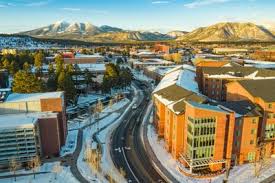
The search itself was slow. I compared cities, programs, costs, climates. When I landed on Northern Arizona University and started looking at Flagstaff, it just felt right: high desert, pine trees, a small city you could walk, not a sprawl you endured. The history program was solid enough, and it wasn’t a teaching-credential track. It looked like a place where I could move forward, not just sideways.

When the offer came back, it was more than just admission. NAU gave me a scholarship and in-state tuition, even though I had never lived in Arizona. That got my attention. Schools don’t hand out cheaper rates to out-of-staters for fun. For whatever mix of reasons — Japan, Hamilton, Tom Wilson’s letter, my file on someone’s desk — they wanted me. That was enough.

I packed up my life in Kumamoto, said goodbye to Washington — my second English conversation school, not the state — and flew back to Spokane. From there I bought a red Toyota pickup for four thousand dollars from a teacher’s husband at St. George’s; he was a cop. It was almost all the money I had. I drove away with a truck, an acceptance, and not much else.


The road south was long and winter-empty. I followed a paper map through states I barely knew, slept in a couple of cheap motels under thin blankets, and kept going at first light. The truck held together. I did too.

Early January, I rolled into Flagstaff. Cold air, bright sky, nothing arranged. I had no housing lined up and almost no cash. I parked on campus, put on black trousers, a black turtleneck, and a black blazer, and walked straight into the History building like that was a normal thing to do.


Karen Powers, the chair, treated it as if it was. I told her I’d just arrived and had nowhere to stay. She didn’t flinch. A friend of hers, she said, had a room to rent a minute from campus, three minutes from the department. We walked over.


It was a small back bedroom, six hundred a month, a parking space in the yard, and a shared bathroom with the guy in the next room. No kitchen, no run of the house. Not ideal. But it was available, and it was there.

I took it on the spot. That same day, I moved in.